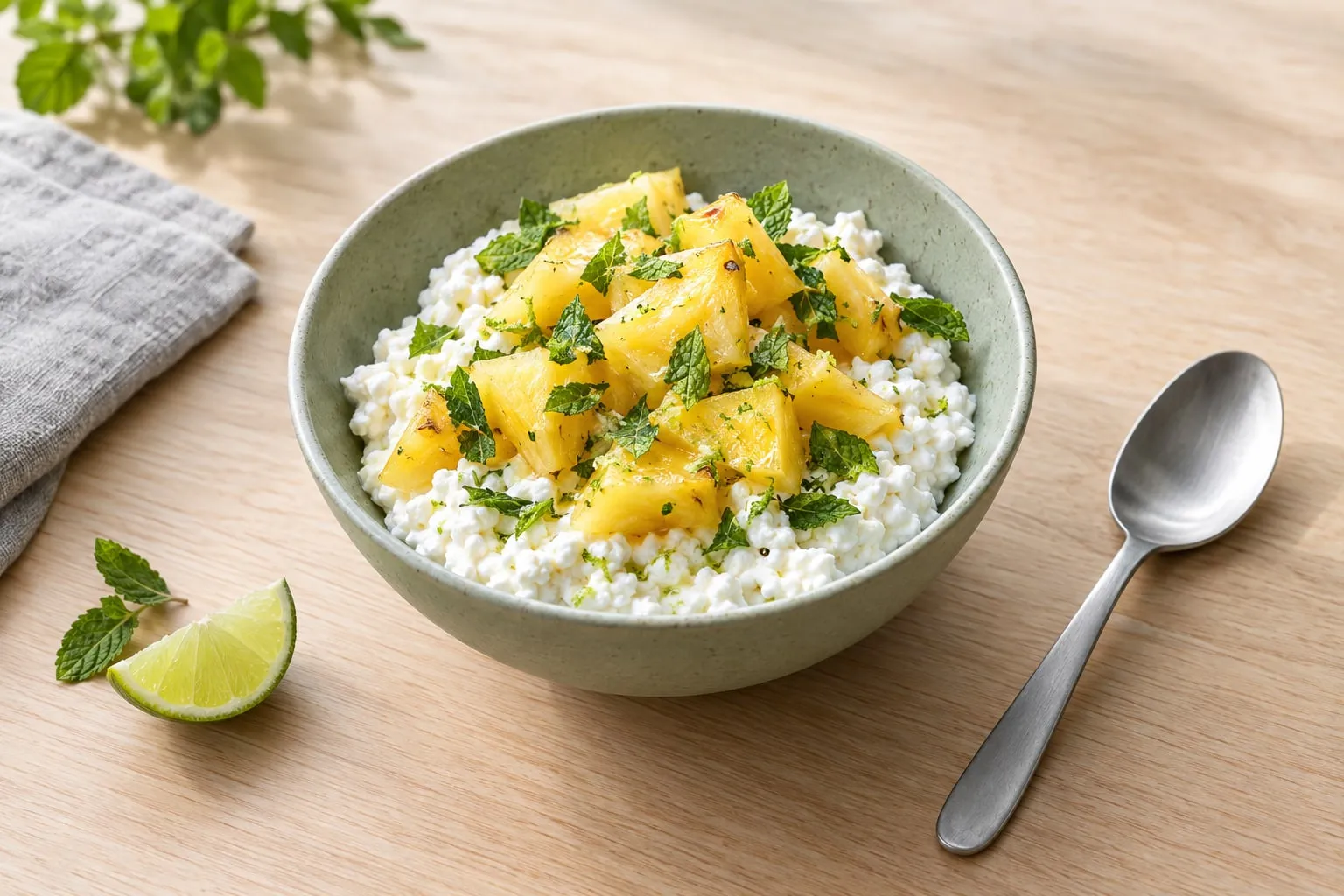
Cottage Cheese with Pineapple
17 g protein149 kcal3 minVegetarianGluten-free
A 150 g bowl with fresh pineapple, lime and mint, ready in 3 minutes – 17 g protein for about 150 kcal.
Ideas & collections · 7 recipes
What to eat with cottage cheese: pineapple, toast, a dip, crisps, flatbread, mousse and more, 11 sweet and savoury snacks with 12–23 g protein each.
12–23 g proteinper serving, calculated from CoFID
In short
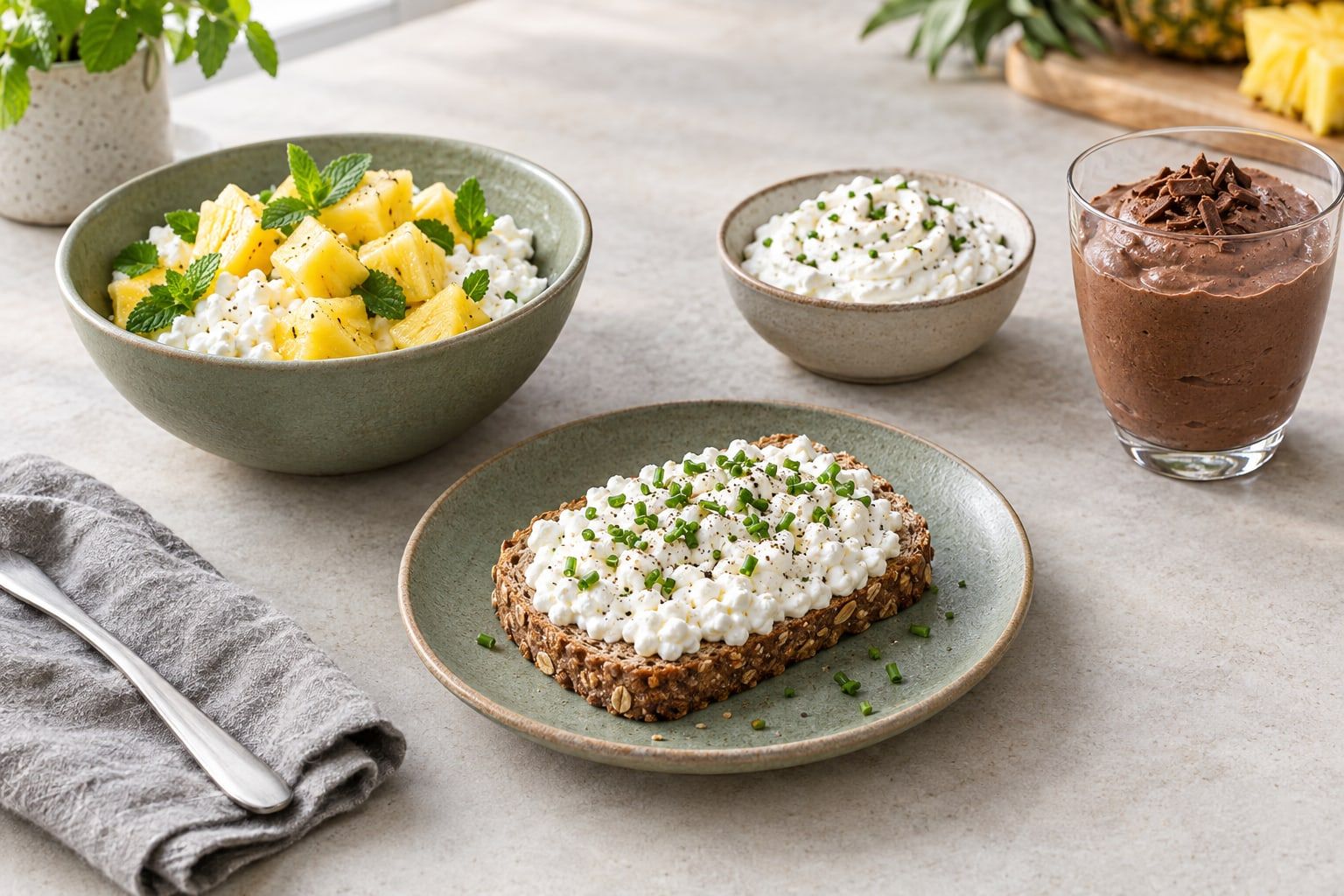
Pineapple, toast, a salad, a dip or a blended mousse all work with cottage cheese. The 11 snacks below give 12–23 g protein each, and the plain tub does most of the work.
What to eat with cottage cheese has a 3-minute answer: 150 g of the reduced fat kind with pineapple, lime and mint, for 17 g protein and about 150 kcal. The eleven snacks here cover sweet and savoury and give 12–23 g protein each.
The savoury ones, toast, a salad, a chive dip, crisps and flatbread, use the cottage cheese as a topping, a spread or a dough. The sweet ones, a mousse, a cookie dough and an ice cream, blend it smooth so no curds are left. Reduced fat cottage cheese has 10.6 g protein per 100 g, which is why a modest amount goes a long way.
Buy a 300 g tub and use it across a couple of snacks: a mousse for two takes the whole tub, and the toast and pineapple bowl use 100–150 g each. Keep the tub covered in the fridge and eat it within a few days of opening.
17 g protein149 kcal3 minVegetarianGluten-free
A 150 g bowl with fresh pineapple, lime and mint, ready in 3 minutes – 17 g protein for about 150 kcal.
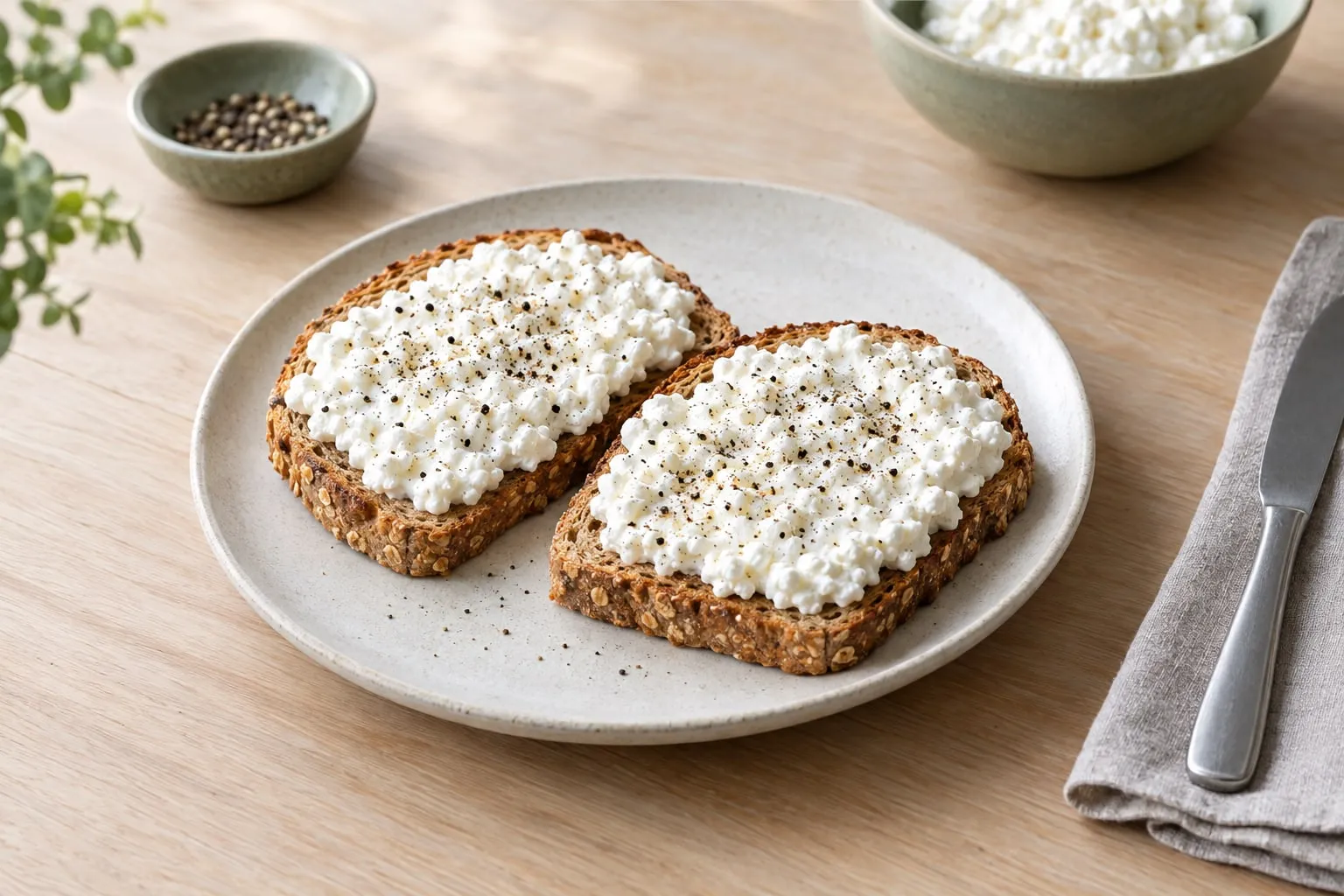
17 g protein224 kcal8 minVegetarian
Wholemeal toast with 100 g of cottage cheese, grilled for 3 minutes – 17 g protein.
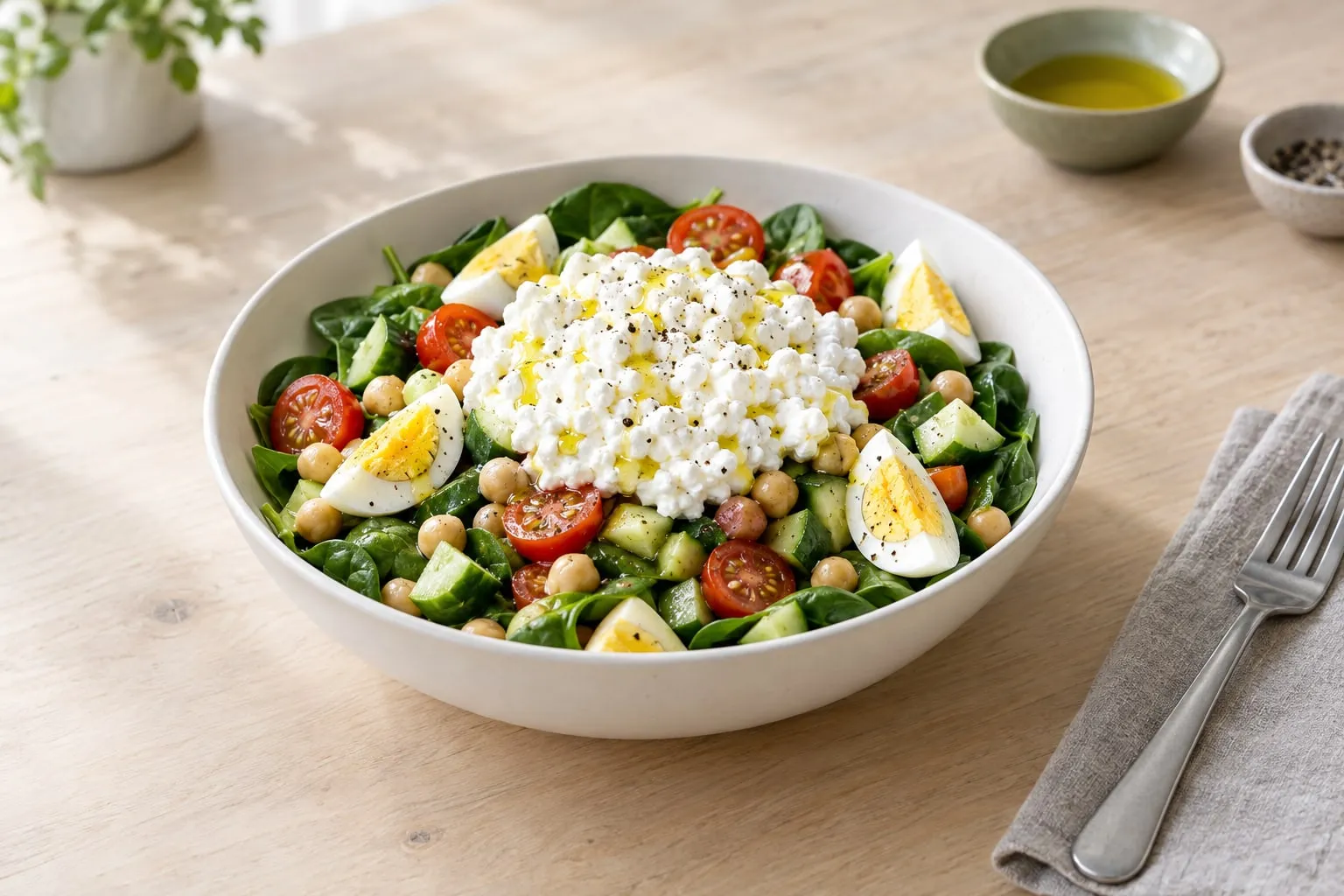
23 g protein252 kcal25 minVegetarianGluten-free
Cottage cheese over chickpeas, spinach, tomatoes and cucumber with a boiled egg – 23 g protein.
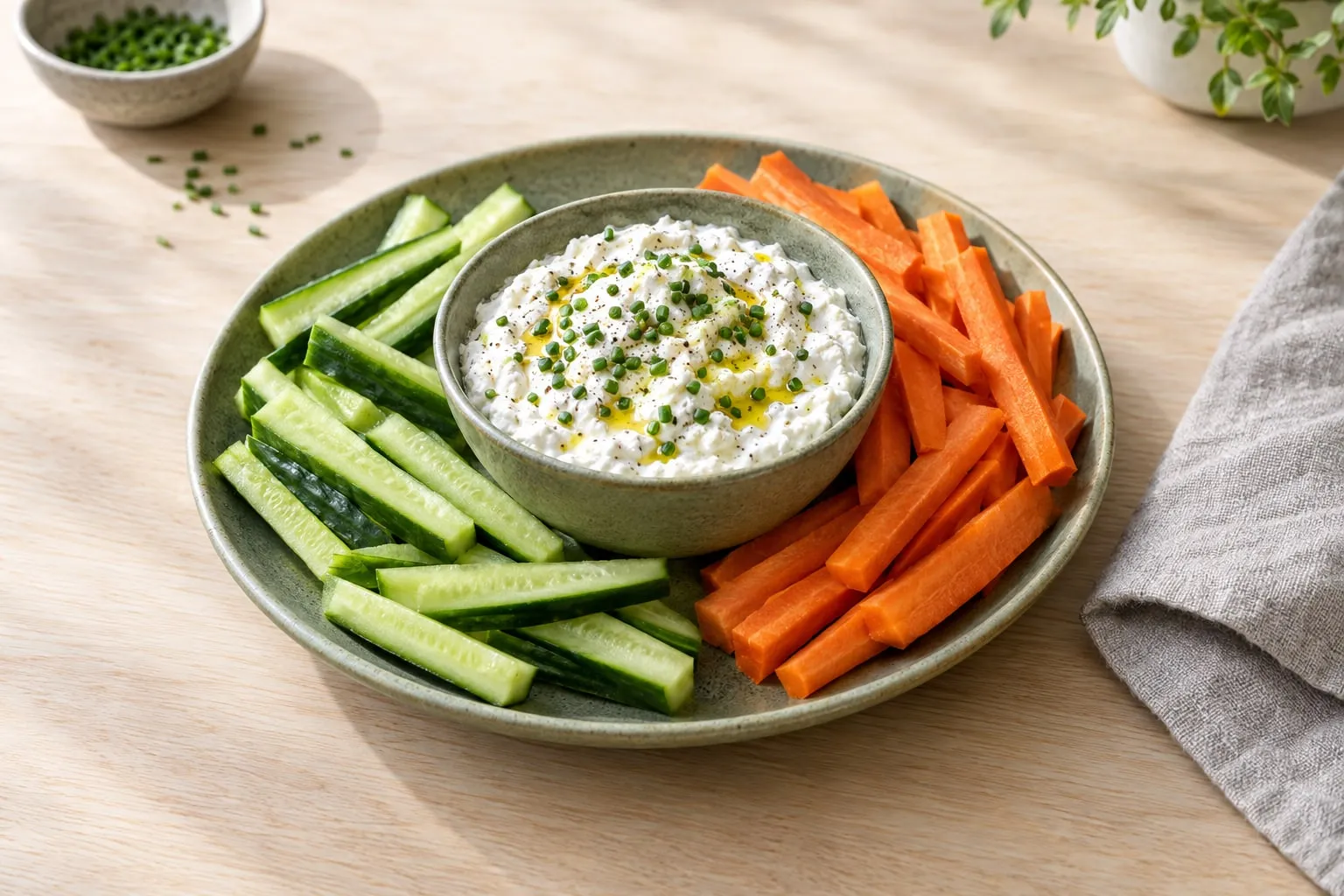
12 g protein88 kcal35 minVegetarianGluten-free
Blended with a little strained Greek yogurt, garlic, lemon and chives – 12 g protein per portion.
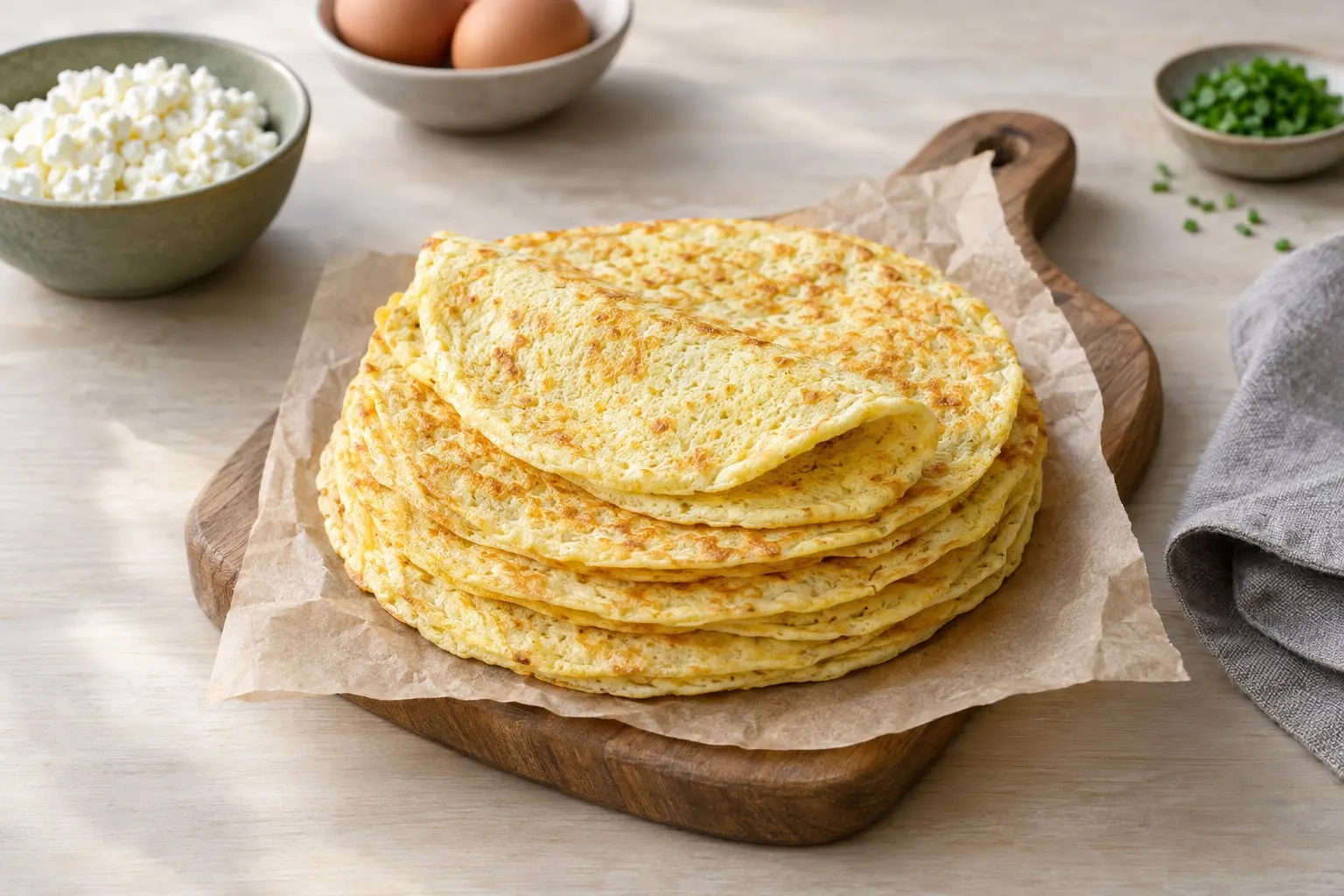
13 g protein110 kcal26 minVegetarianGluten-free
One blended batter baked into a flexible sheet and cut in four – 13 g protein and 110 kcal each.
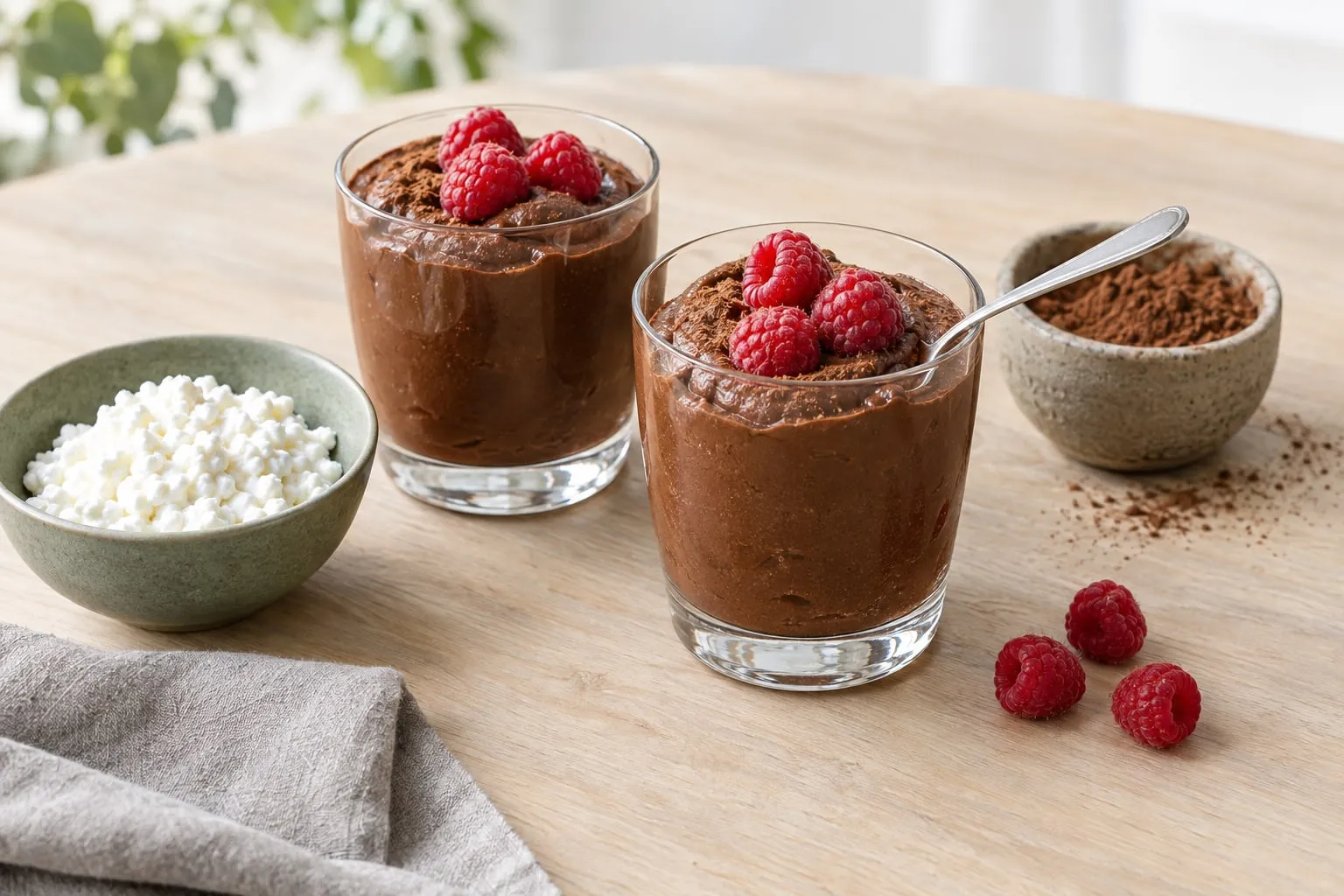
19 g protein193 kcal38 minVegetarianGluten-free
Cottage cheese blended with milk, cocoa and honey – 19 g protein per serving.
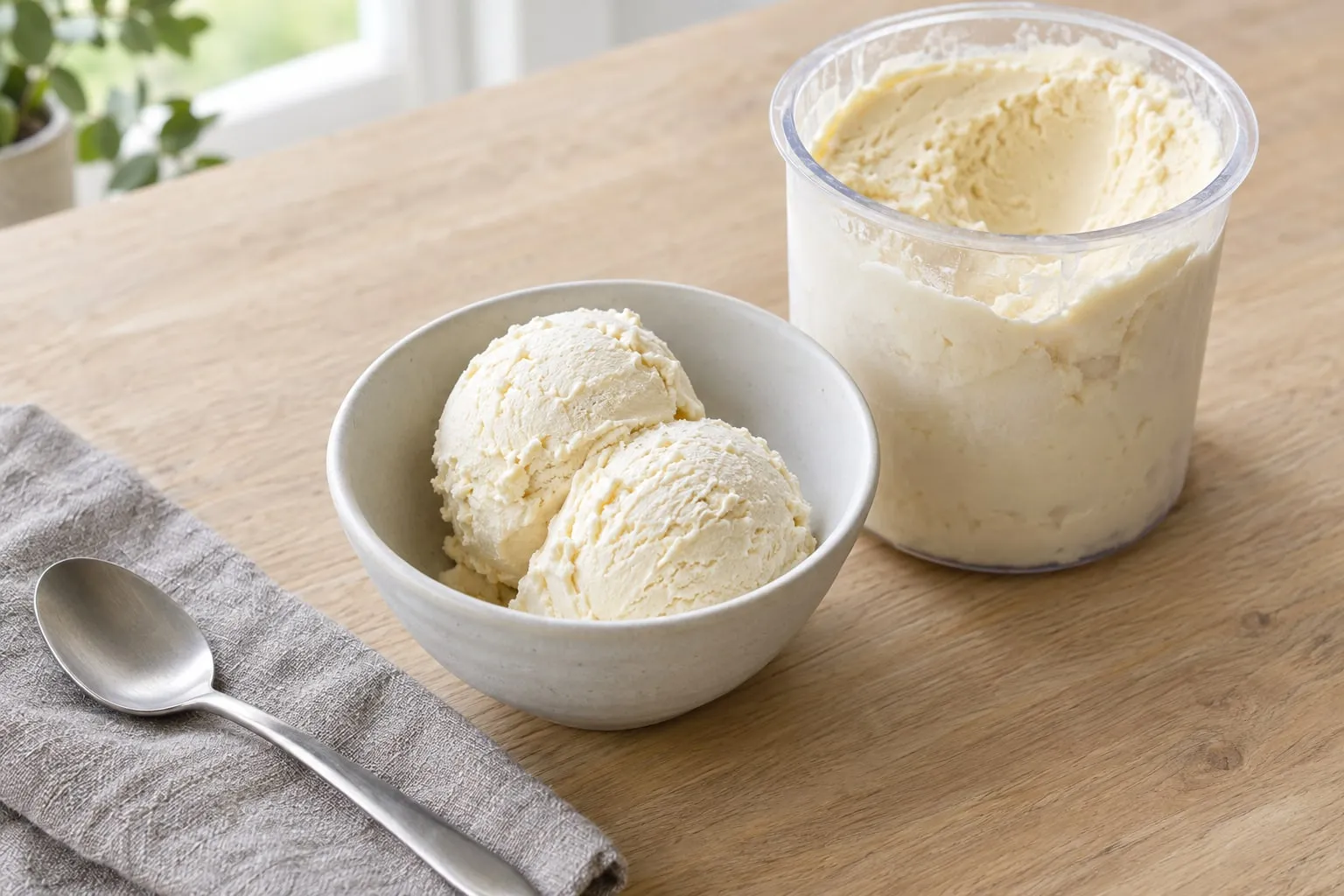
18 g protein168 kcal24 hr 10 minVegetarianGluten-free
Cottage cheese, milk, honey and vanilla, frozen in a pint and spun – 18 g protein per serving.
4 more recipes in this collection are being published over the coming weeks. Follow the RSS feed or browse all cottage cheese recipes in the meantime.
Both. Cottage cheese is mild and slightly salty, so it takes fruit as easily as tomato. For sweet, a 150 g bowl with 100 g of fresh pineapple, lime and mint gives 17 g protein for about 150 kcal. For savoury, it goes on wholemeal toast, over chickpeas and spinach in a salad, or into a flatbread dough. The recipes below call for reduced fat cottage cheese, which has more protein per 100 g than the plain kind.
The pineapple bowl takes 3 minutes. The salad, with chickpeas, spinach, tomatoes, cucumber and a boiled egg, takes 25. The dip is blended and chilled for 30 minutes, and the mousse and the cookie dough go into the blender and then the fridge. Cottage cheese toast needs only a grill for 3 minutes. For something baked, the egg muffins and the wrap keep well, and the crisps are crisped in the air fryer.
Blend it. A food processor or blender turns the curds into a silky cream in about two minutes, which is how the dip, mousse, cookie dough and ice cream are made, and none of them tastes of curds. Drain the tub first when the recipe says so, because extra liquid thins a dough or a mousse. For a more textured snack, such as toast or pineapple, leave the curds whole.
Follow the date on the tub, and most say to eat it within a few days of opening. Keep it covered in the fridge. If you are preparing snacks ahead, store the cottage cheese and the other ingredients separately and combine them just before eating, as the pineapple bowl and the toast recipes suggest. The egg muffins and cookie dough both keep for 3 days in the fridge in a covered container.
Every recipe on this page per serving, highest protein first. Figures are calculated from the ingredient list using CoFID.
| Recipe | Protein | Energy | From protein | Time |
|---|---|---|---|---|
| Cottage Cheese Saladper serving | 23 g | 252 kcal | 36% | 25 min |
| Cottage Cheese Chocolate Mousseper serving | 19 g | 193 kcal | 39% | 38 min |
| Cottage Cheese Ice Creamper serving | 18 g | 168 kcal | 42% | 24 hr 10 min |
| Cottage Cheese Toast (5 Ways)per serving | 17 g | 224 kcal | 31% | 8 min |
| Cottage Cheese with Pineappleper bowl | 17 g | 149 kcal | 44% | 3 min |
| Cottage Cheese Wrapsper wrap | 13 g | 110 kcal | 48% | 26 min |
| High Protein Cottage Cheese Dipper portion | 12 g | 88 kcal | 55% | 35 min |
Tip the tub into a sieve for a few minutes before blending dough or cookie dough. Less liquid gives a firmer result.
Cottage cheese turns toast soggy within minutes, so put it on just before eating. For a lunchbox, pack it separately.
A full 2 minutes in the blender turns the curds into a smooth cream for the dip, mousse and ice cream.
Plain cottage cheese has 9.4 g protein per 100 g and reduced fat has 10.6 g, so a 150 g portion of reduced fat gives about 16 g. Check the tub, as brands differ.
Yes. A bowl of cottage cheese with pineapple, lime and mint has 17 g protein and takes 3 minutes. Tomato, cucumber and black pepper are also common.
Blend it with a little milk or strained Greek yogurt until smooth, as in the dip and the mousse. Sweet toppings such as pineapple or honey balance the salt.
The ice cream is made to be frozen. The egg muffins freeze for up to 2 months, and the flatbreads for up to 2 months. The dip, mousse and toast are better kept in the fridge.
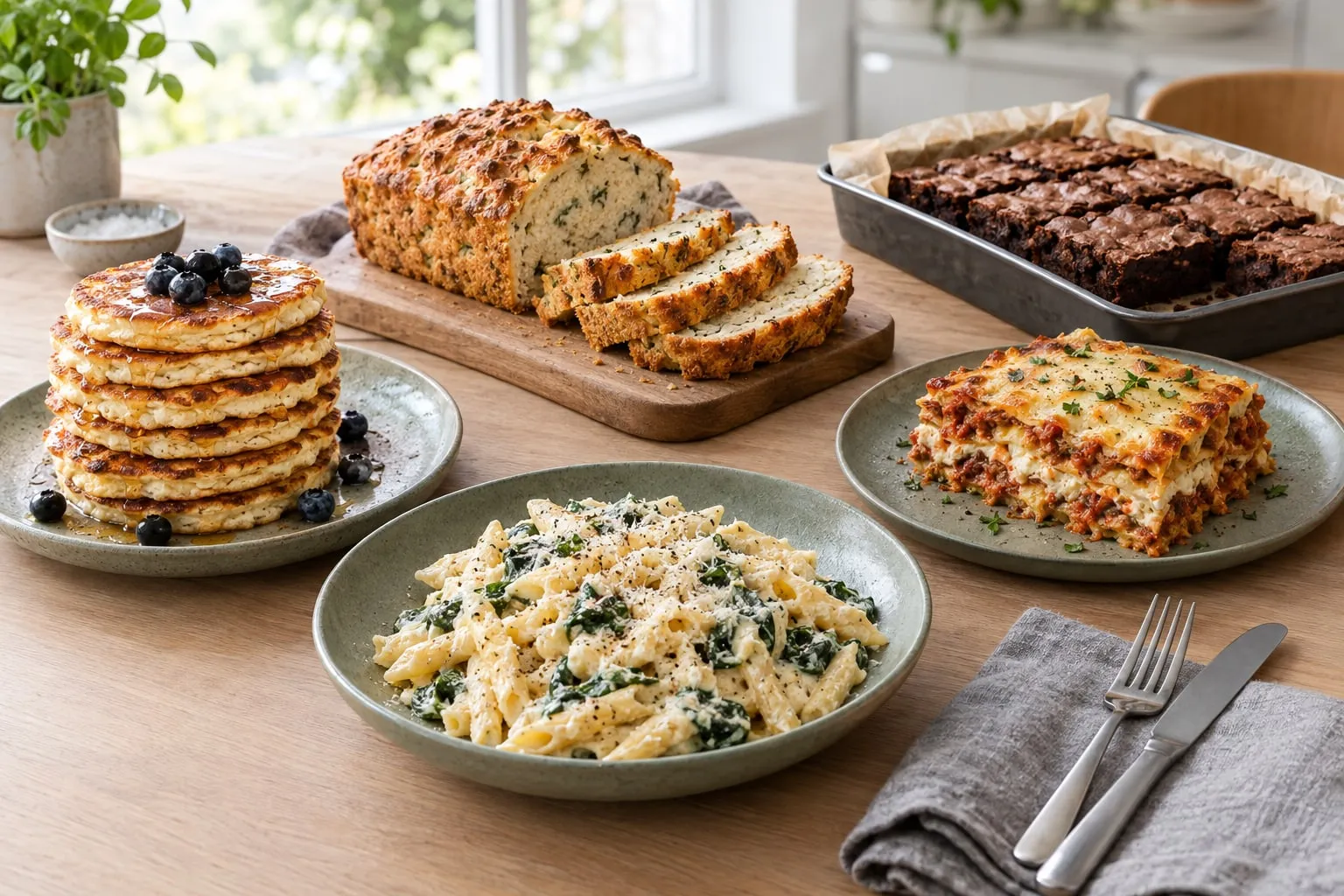
Ideas & collections
Cottage cheese recipes from pancakes, bread and wraps to pasta, lasagne and brownies: 15 dishes with 10–36 g protein per serving or slice.
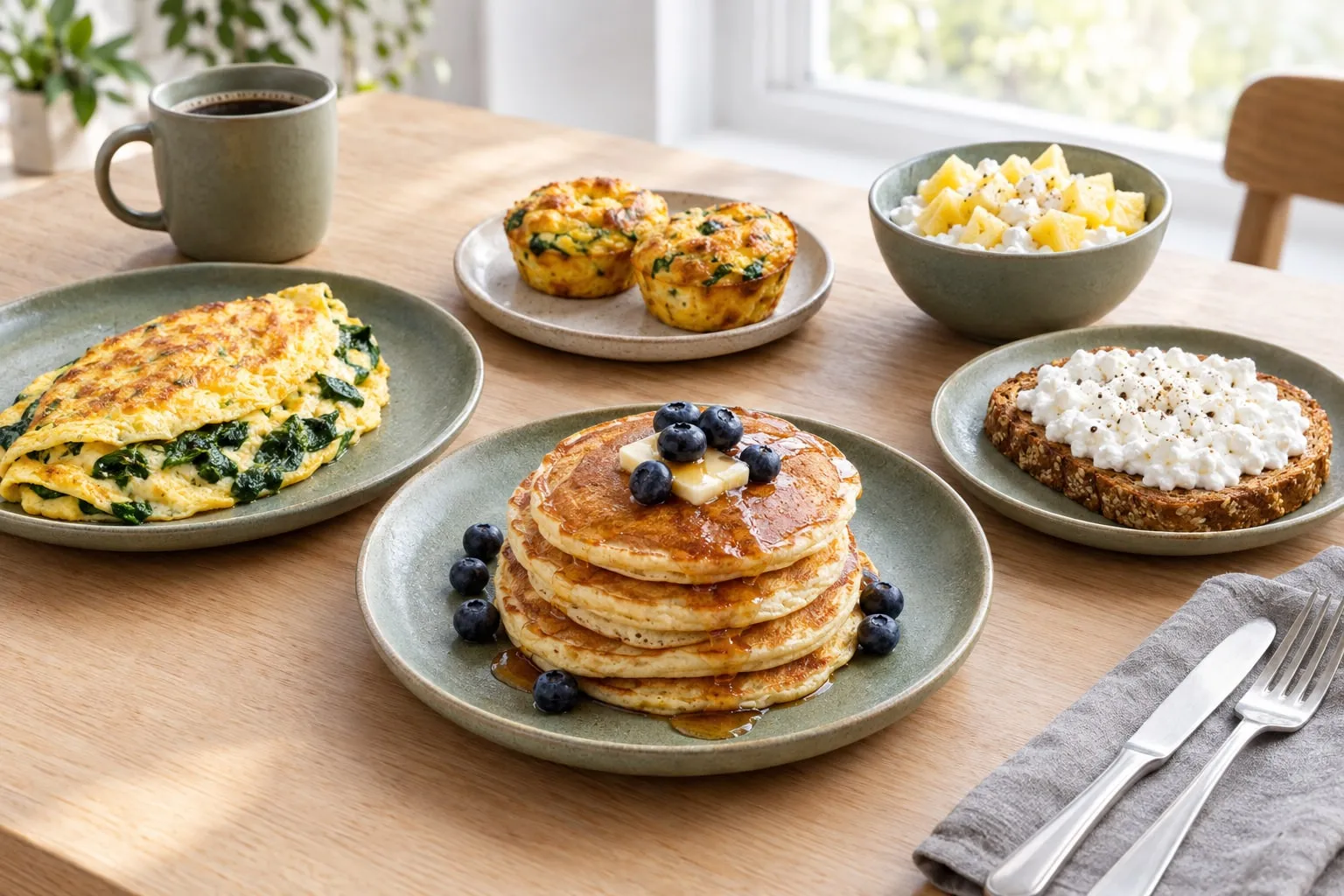
Ideas & collections
Recipes with cottage cheese breakfast ideas: pancakes, omelette, egg muffins, egg bake, toast and bagels, 8 mornings with 14–37 g protein each.
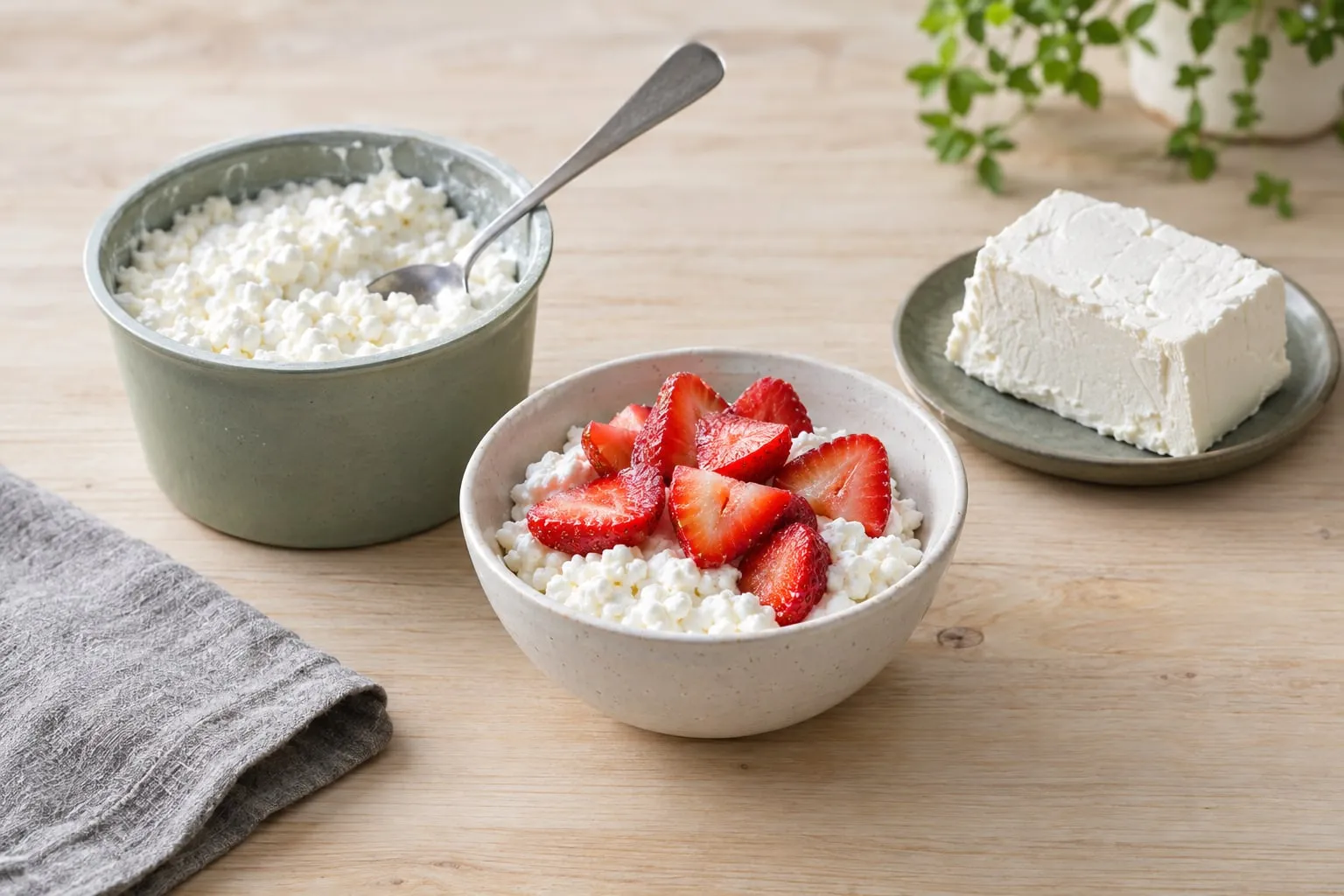
Guide
Protein in cottage cheese: 150 g plain has 14.1 g protein and 155 kcal, reduced fat has 15.9 g and 102 kcal. Values per 100 g, per portion and per tub.
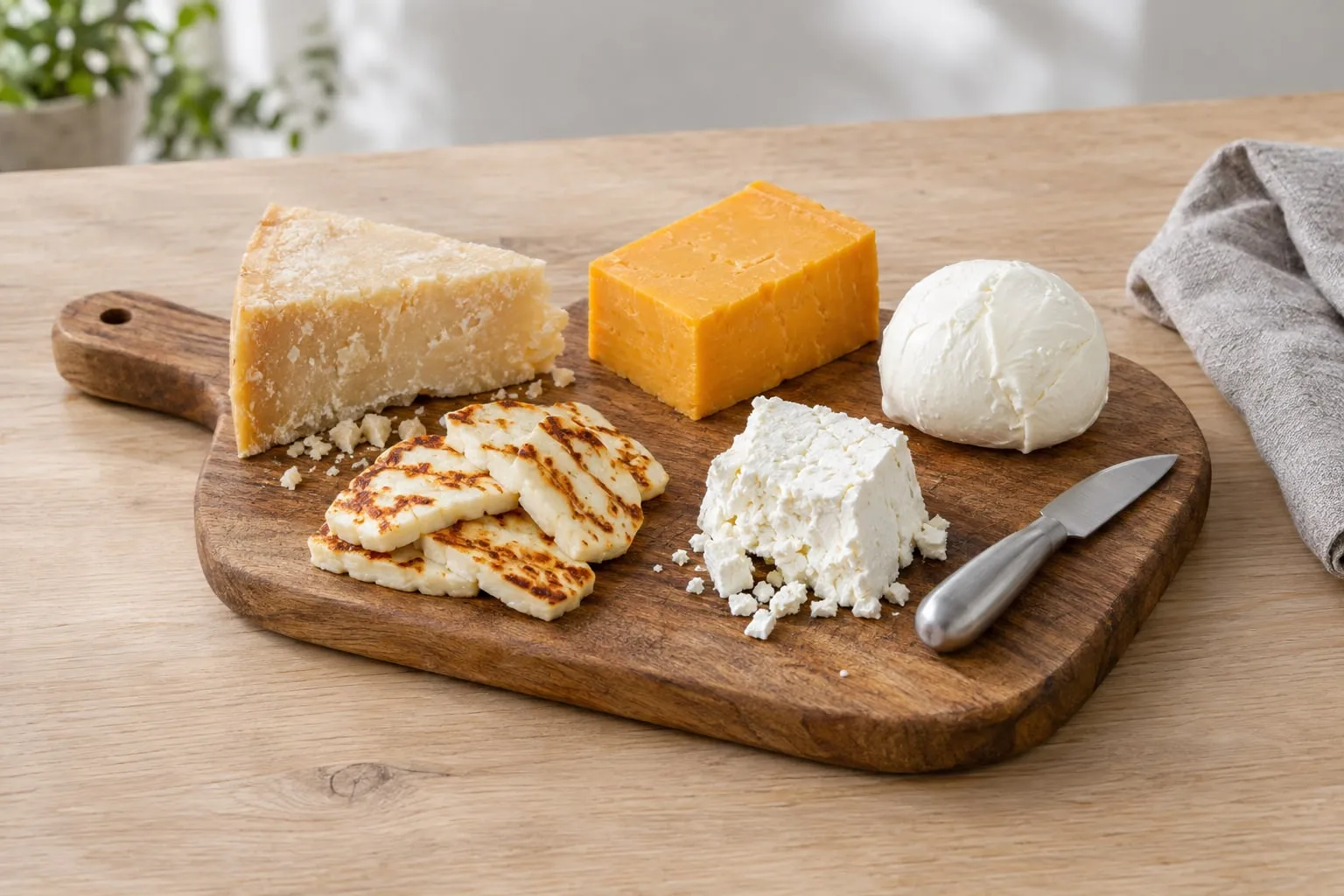
Guide
Protein in cheese per 100 g and per portion: Parmesan has 36.2 g, half-fat Cheddar 32.7 g and feta 15.6 g. Ranked by protein and per 100 kcal.
Updated 22 November 2026 by The Protein Recipes editorial team.