Method
Tap a time to start a timer.
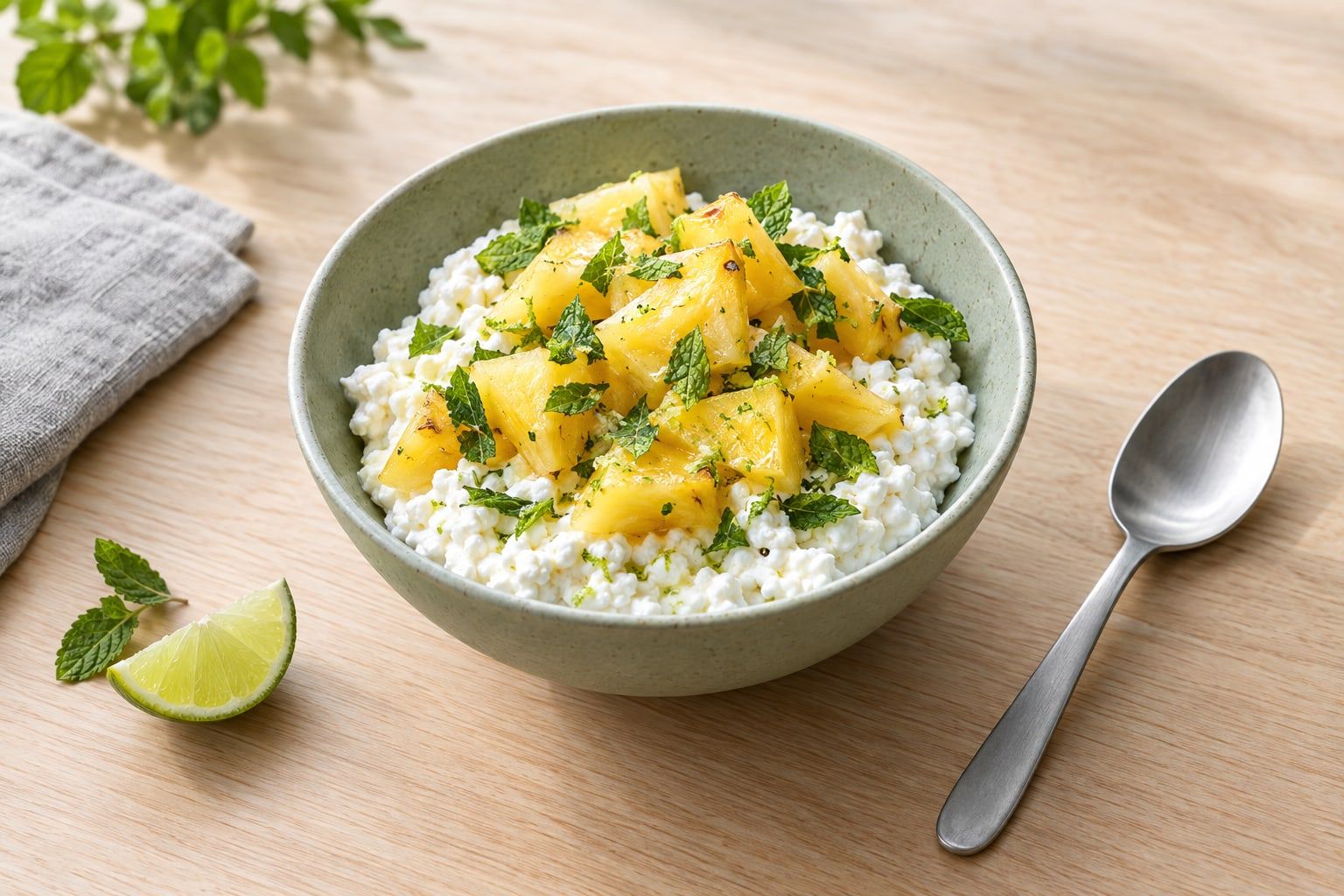
Cut the skin and core from the pineapple and cut 100 g of the flesh into 1 cm chunks. Pat the chunks dry with kitchen paper.
Spoon the cottage cheese into a serving bowl.
Scatter the pineapple chunks over the cottage cheese and drizzle with the lime juice.
Tear the mint leaves over the top and eat straight away.
How to tell it's done
- The pineapple chunks are bright yellow and juicy, and the cottage cheese still holds its shape in separate curds.
- There is no pool of watery liquid at the bottom of the bowl.
Tips for success
- Cut the pineapple small
Chunks about 1 cm across mix through the curds so each spoonful has both. Cut the pineapple on a board so the juice does not run out into the bowl.
- Eat it soon after mixing
Fresh pineapple contains bromelain, an enzyme that breaks down milk proteins. After about 30 minutes the cottage cheese can turn thin and slightly bitter, so add the fruit just before eating.
- Use lime to cut the sweetness
1 tsp lime juice and a few torn mint leaves make the bowl taste fresher and less sweet, with almost no extra calories.
Boost the protein
- Stir in 50 g strained 0% fat Greek yogurt: +5 g protein.
- Replace 75 g of the cottage cheese with 75 g quark for a smoother bowl: +3 g protein.
Choosing ingredients
Use reduced fat plain cottage cheese, which has 10.6 g protein per 100 g. Avoid flavoured pots with fruit already in them, as the sugar and fruit take the place of the protein.
A ripe pineapple smells sweet at the base. Pre-cut fresh pineapple is fine, but drain it on kitchen paper so the juice does not thin the cottage cheese.
Variations
- With tinned pineapple
Use 100 g drained pineapple chunks from a tin in juice instead of fresh. The canning heat stops the bromelain working, so the bowl stays thick for several hours and is easier to pack for a lunchbox. Avoid tins in syrup, which add extra sugar.
- With chilli
Replace the mint with a pinch of chilli flakes and add a little extra lime juice for a sweet and hot version.
- With toasted seeds
Scatter over 1 tbsp pumpkin seeds just before eating for crunch.
Serve it with
- Wholemeal toast
- Green tea or black coffee
- A boiled egg
Storage
Eat the bowl straight away. If you need to prepare it ahead, keep the cottage cheese and pineapple in separate lidded containers in the fridge and mix them just before eating.
Fresh pineapple chunks keep in the fridge in a sealed box for up to 2 days.
Troubleshooting
Why does my cottage cheese and pineapple taste bitter?
Fresh pineapple contains bromelain, which breaks down milk protein and can leave the cottage cheese thin and bitter after about 30 minutes. Eat the bowl straight away, or use drained tinned pineapple in juice instead.
Why is my cottage cheese and pineapple watery?
The pineapple released juice into the bowl. Pat the chunks dry with kitchen paper and spoon the cottage cheese into the bowl first so the juice stays on top.
Why is the bowl too sweet?
Ripe pineapple and tinned fruit can be very sweet. Cut the amount to 75 g, or add the lime juice and mint to balance it.
Frequently asked questions
How much protein is in cottage cheese and pineapple?
One bowl has 17 g protein and 149 kcal, so 44% of the energy comes from protein. Almost all of it comes from the 150 g cottage cheese, as pineapple adds only about 0.5 g.
Is cottage cheese and pineapple good for breakfast?
It makes a quick high protein breakfast with 17 g protein for about 150 kcal. Add wholemeal toast or porridge oats if you want a larger meal.
Can you use tinned pineapple with cottage cheese?
Yes. Use pineapple tinned in juice, drained, rather than in syrup. Tinned pineapple does not turn the cottage cheese bitter, because the canning process stops the bromelain working.
Why do people eat cottage cheese with pineapple?
The sweet, slightly acidic fruit balances the mild, salty curds, and the bowl needs no cooking.
Made it? Rate the recipe
Read next
- Protein in Cottage CheeseProtein in cottage cheese: 150 g plain has 14.1 g protein and 155 kcal, reduced fat has 15.9 g and 102 kcal. Values per 100 g, per portion and per tub.
- Highest Protein CheeseProtein in cheese per 100 g and per portion: Parmesan has 36.2 g, half-fat Cheddar 32.7 g and feta 15.6 g. Ranked by protein and per 100 kcal.
Written by The Protein Recipes editorial team. Nutrition is calculated from the ingredient list using CoFID. Read how our recipes are made and how we correct mistakes.