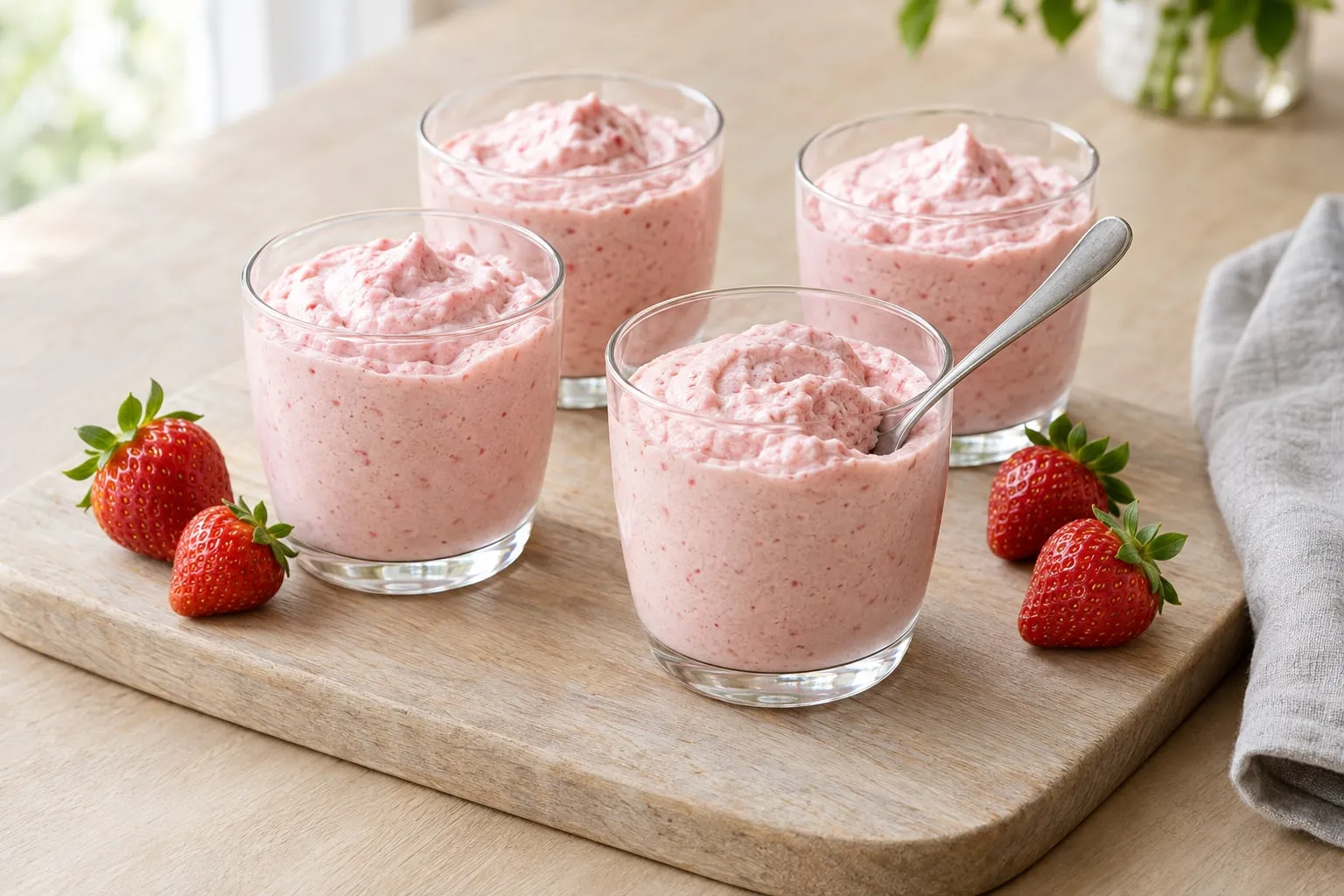
Protein Mousse
13 g protein80 kcal2 hr 15 minVegetarianGluten-free
Whisked egg white folded into strained Greek yogurt and strawberry – 13 g protein for 80 kcal a glass.
Ideas & collections · 8 recipes
Low calorie high protein desserts from 80 to 193 kcal a portion, 12 recipes with 13–21 g protein each, from milk jelly to mousse and ice cream.
13–19 g proteinper serving, calculated from CoFID
In short
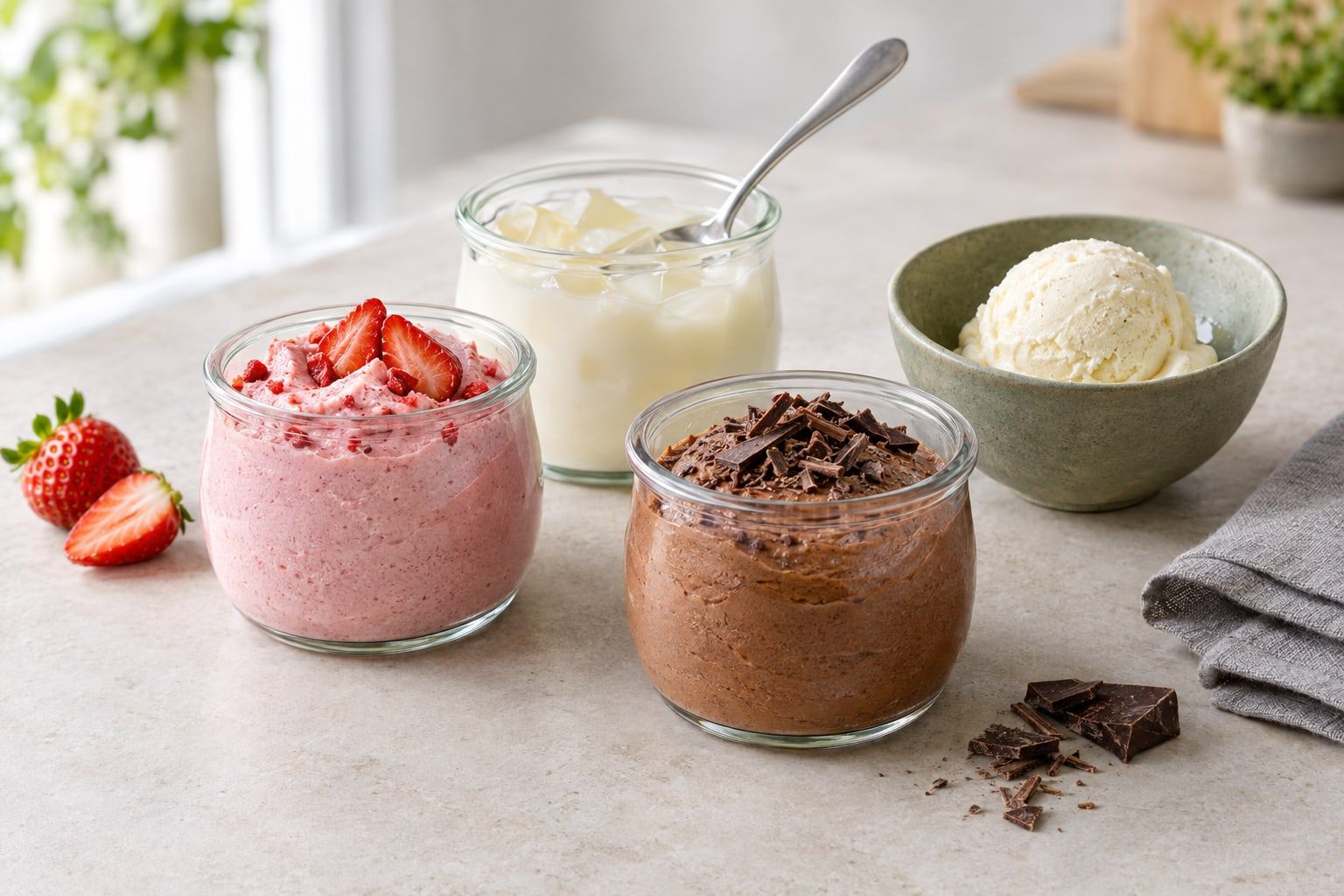
Each of these 12 desserts has under 200 kcal and at least 12 g protein a portion. The lightest is the protein mousse at 80 kcal, and the most protein comes from the low calorie ice cream at 21 g.
Low calorie high protein desserts sound like a compromise, but a portion of the protein mousse has 13 g protein for 80 kcal, and the milk jelly 17 g for 102 kcal. The twelve recipes below stay under 200 kcal a portion and keep at least 12 g protein.
The lightness comes from the base. Strained Greek yogurt, skimmed milk, whisked egg white and blended cottage cheese carry the protein with very little fat, and a scoop of whey adds more in the jelly, the ice cream and the mousses. Sugar is kept small and in places replaced by a teaspoon of sweetener. The richer desserts on the list, such as the custard pots and the cheesecake, still come in under 200 kcal because the portion is sized to match.
Make the glass and pot desserts the day before and keep them covered in the fridge, then spin or scoop the frozen ones when you need them. The numbers hold only for the portion each recipe describes, so the glass is the serving, not a starting point.
13 g protein80 kcal2 hr 15 minVegetarianGluten-free
Whisked egg white folded into strained Greek yogurt and strawberry – 13 g protein for 80 kcal a glass.
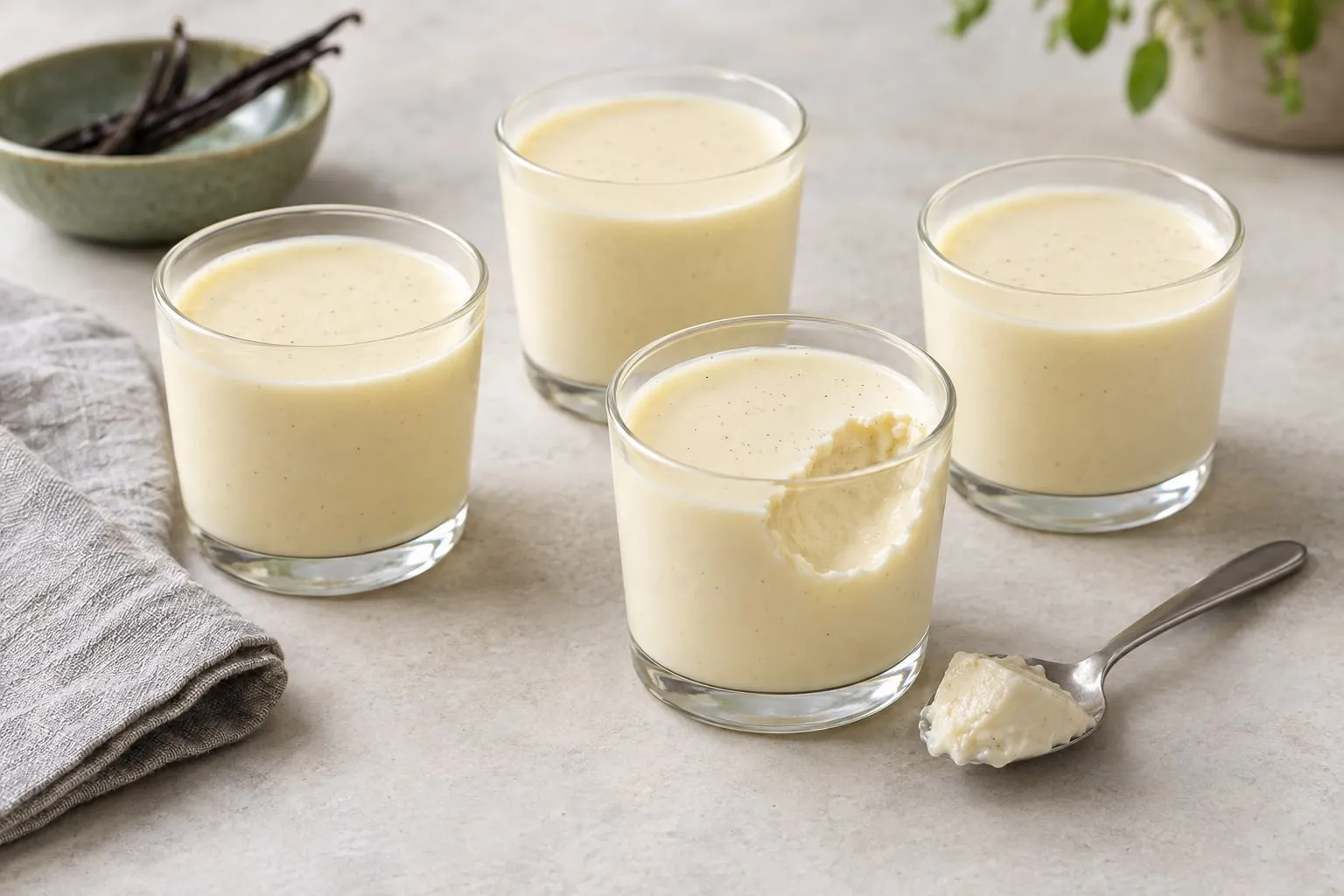
17 g protein102 kcal4 hr 13 minGluten-free
A creamy milk jelly closer to panna cotta than fruit jelly – 17 g protein and 102 kcal a pot. Set with gelatine, so not vegetarian.
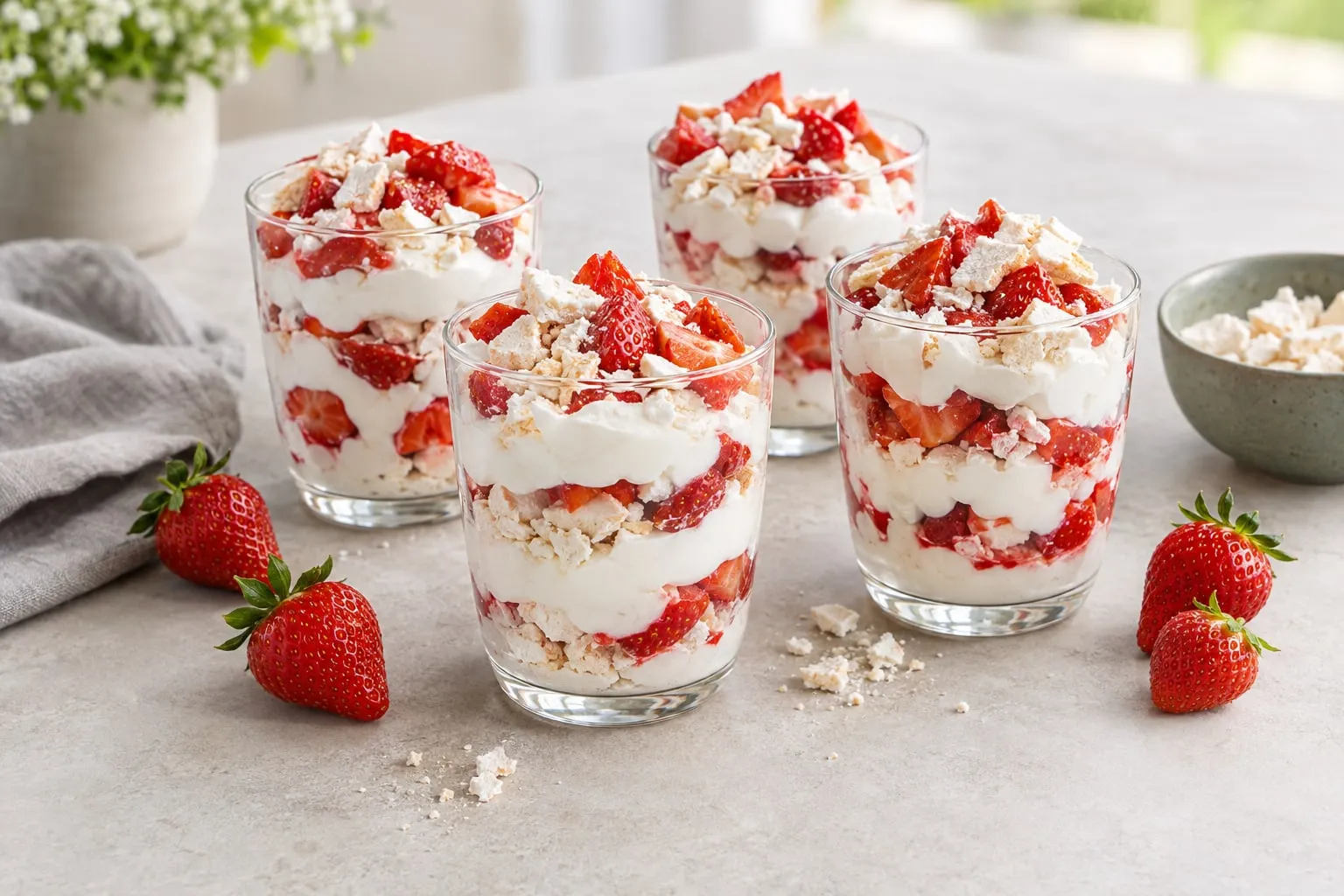
13 g protein116 kcal10 minVegetarianGluten-free
Strained Greek yogurt, meringue and strawberries – 12 g protein for 116 kcal a glass, no cooking.
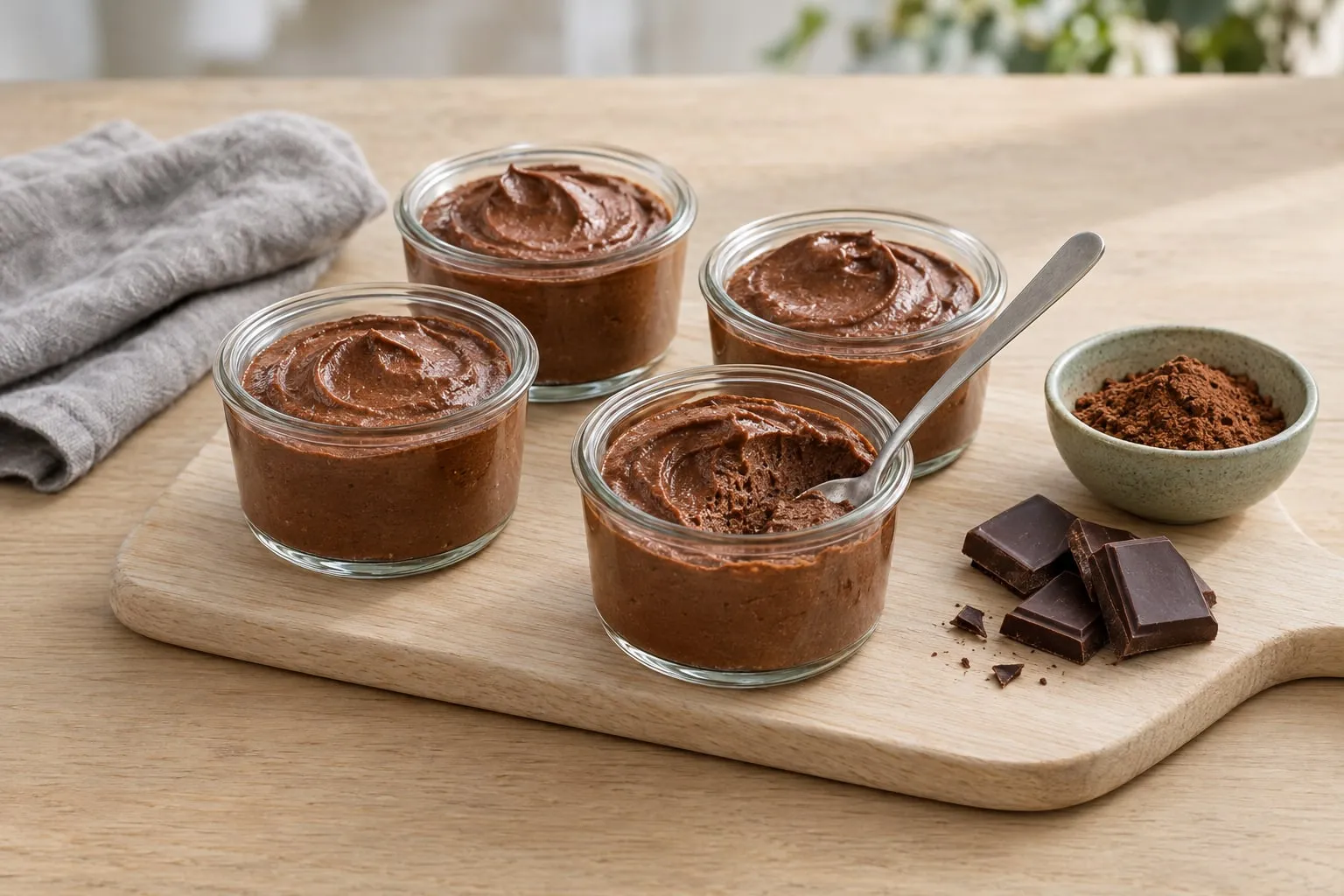
15 g protein131 kcal2 hr 10 minVegetarian
Blended reduced-fat cottage cheese, whey and cocoa – 15 g protein for 131 kcal a pot.
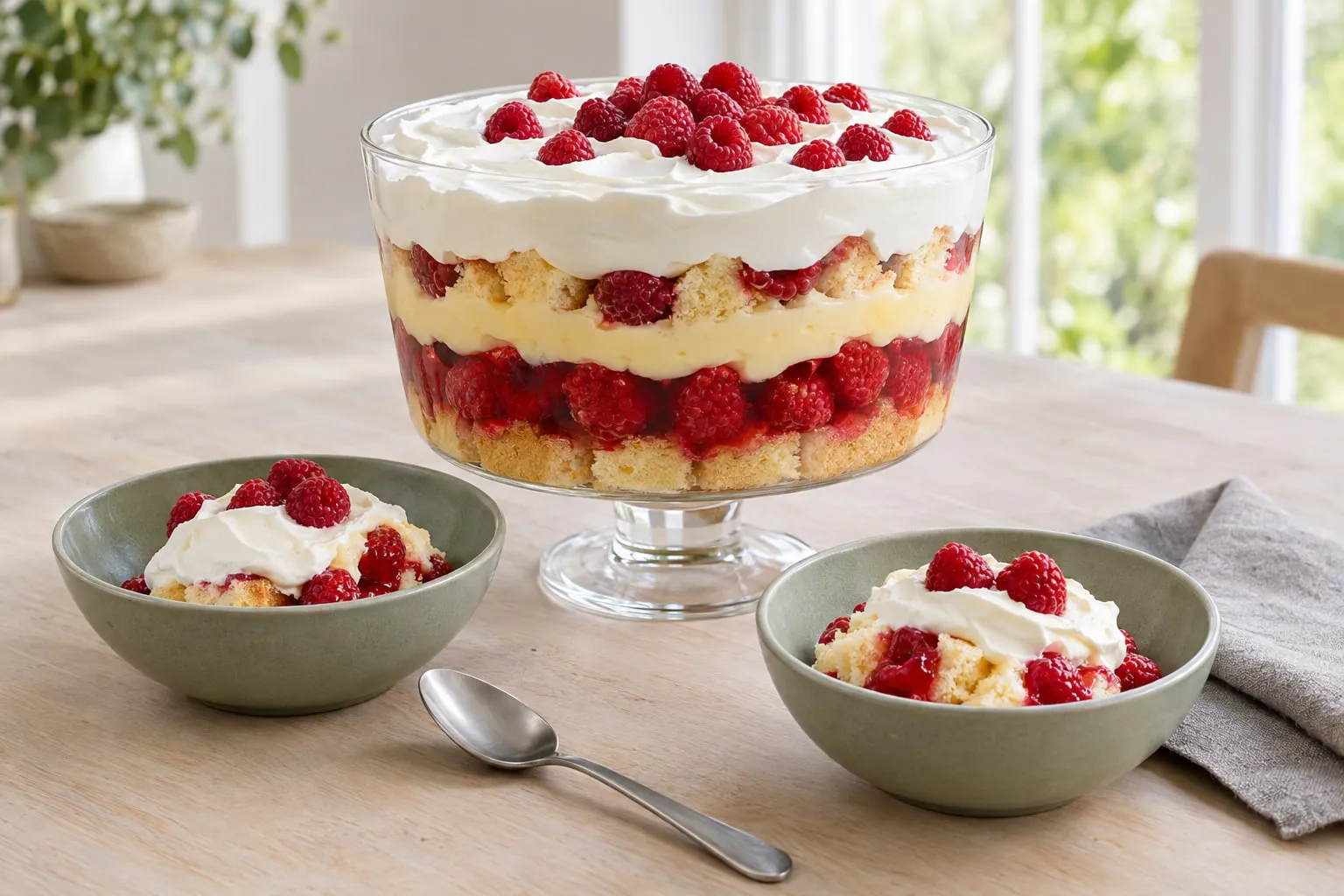
13 g protein153 kcal5 hr 25 min
Sponge, sugar-free jelly, custard and yogurt in layers – 13 g protein for 153 kcal a serving. It contains gelatine, so is not vegetarian.
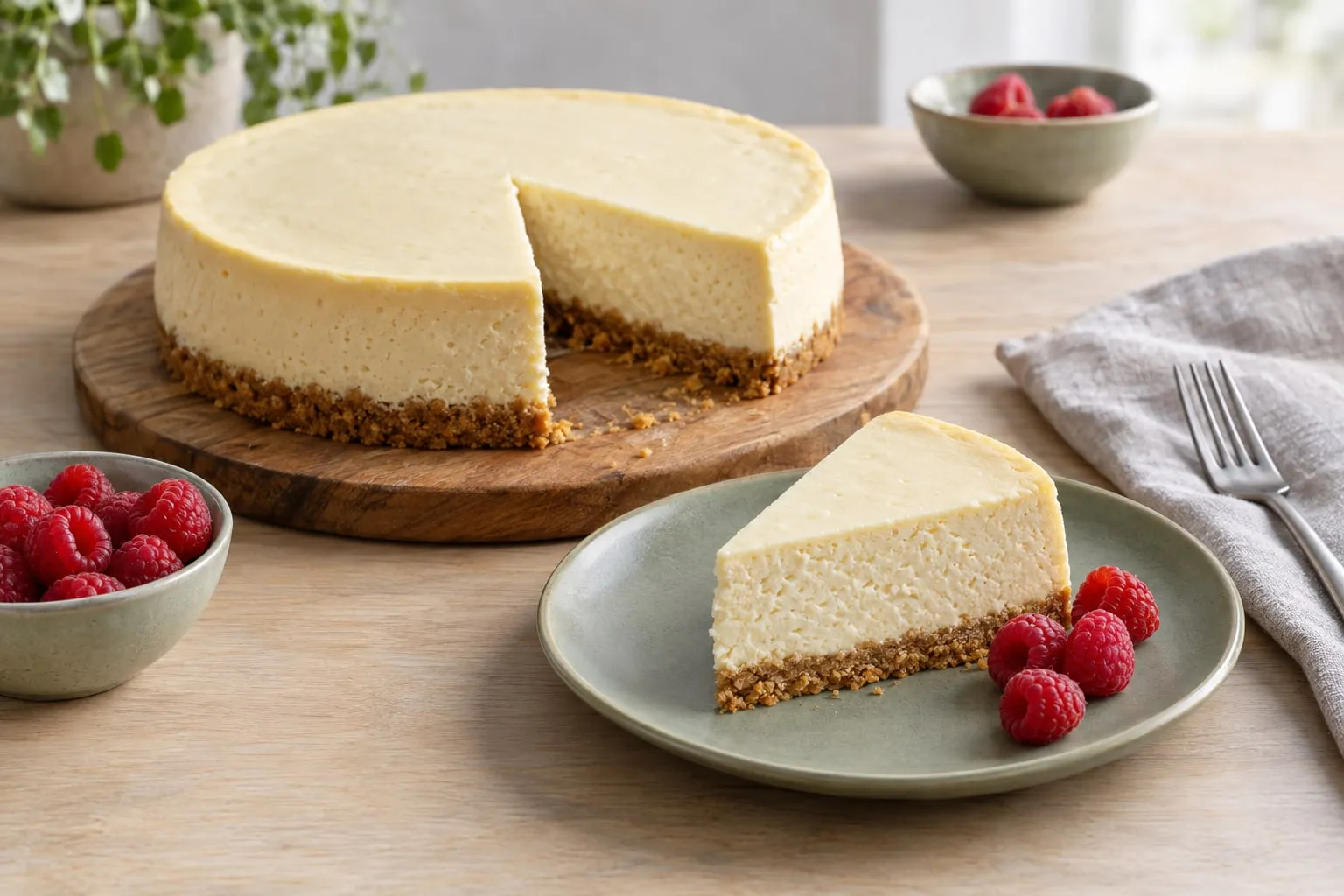
14 g protein145 kcal8 hr 15 minVegetarian
A baked 23 cm cheesecake cut into ten slices – 14 g protein for 145 kcal a slice.
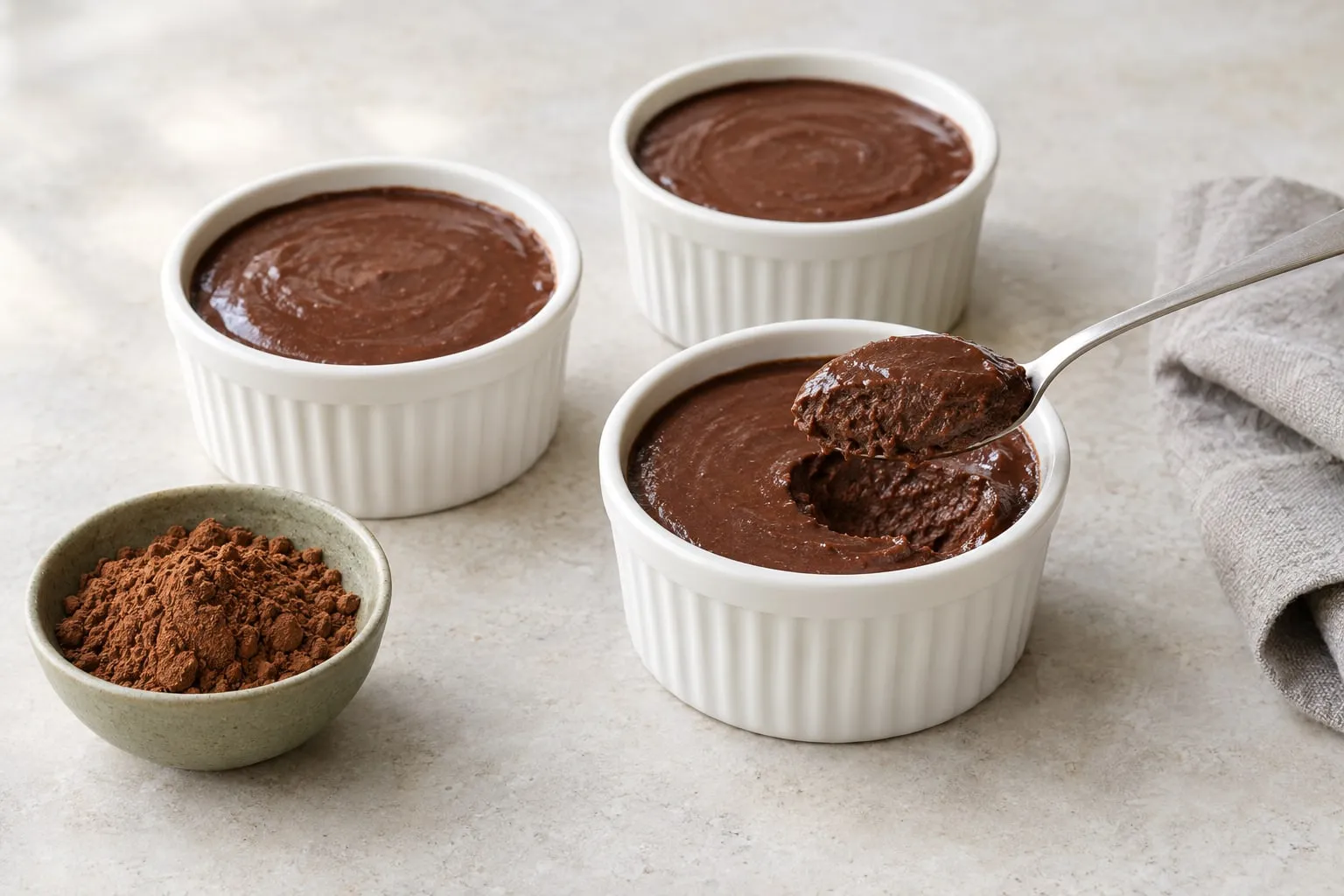
15 g protein180 kcal2 hr 15 minVegetarian
Cooked chocolate custard with whey whisked in off the heat – 15 g protein for 180 kcal a pot.
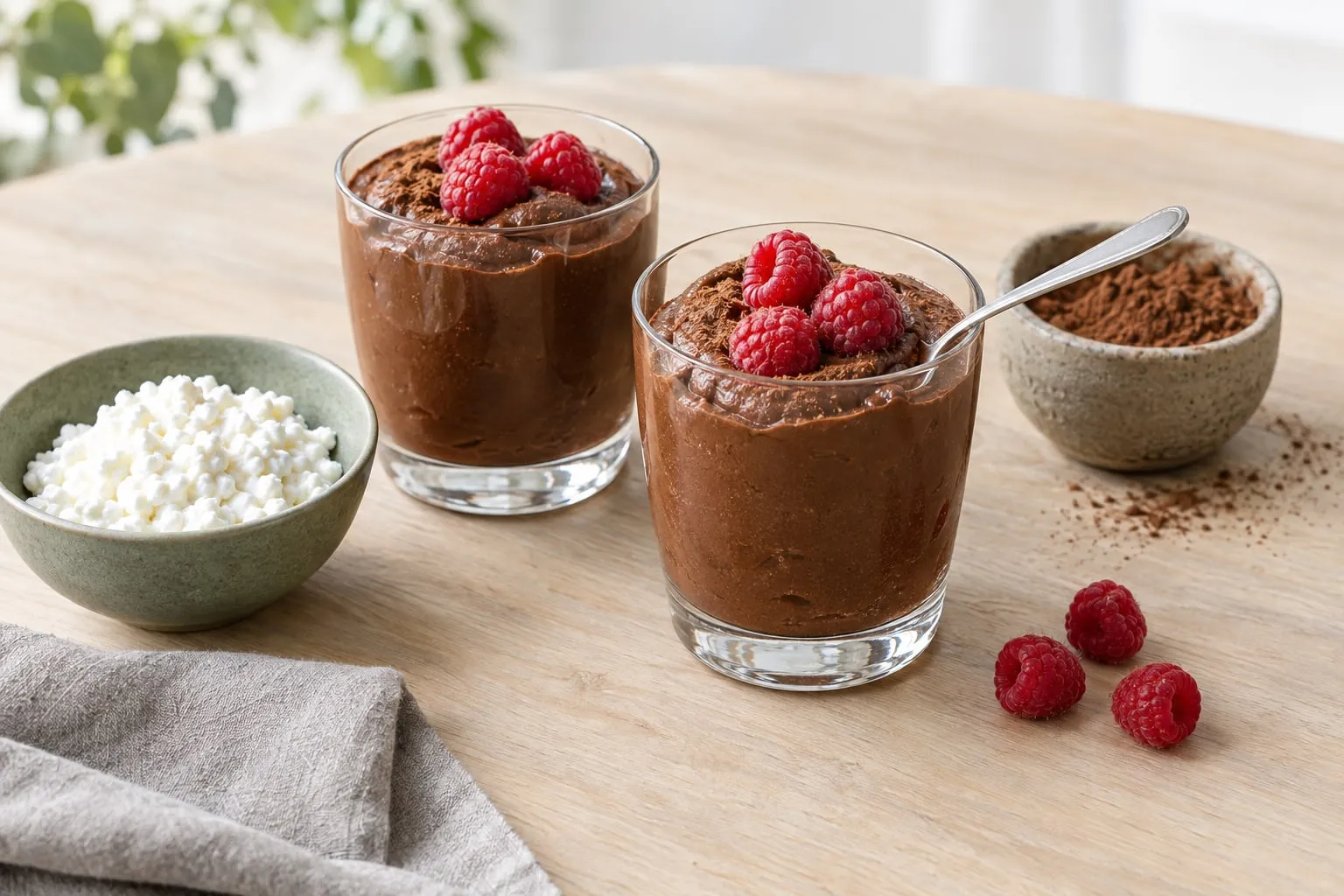
19 g protein193 kcal38 minVegetarianGluten-free
Cottage cheese blended with milk, cocoa and honey, ready in under 10 minutes of work – 19 g protein for 193 kcal.
4 more recipes in this collection are being published over the coming weeks. Follow the RSS feed or browse all desserts recipes in the meantime.
For this page the ceiling is 200 kcal a portion, and every dessert also has at least 12 g protein. Most sit well below it. The protein mousse is 80 kcal, the milk jelly 102 kcal, the Eton mess 116 kcal and the low calorie ice cream 126 kcal. The richer end is the cottage cheese chocolate mousse at 193 kcal and the chocolate protein pudding at 180 kcal. A dessert is only worth counting if it tastes like one, so these still use real ingredients: strained Greek yogurt, milk, cottage cheese and a little sugar or honey, rather than diet mixes.
Protein per 100 kcal is the simplest comparison. The protein mousse gives about 16.5 g protein per 100 kcal, the milk jelly 16.4 g and the low calorie ice cream 16.3 g, because all three are close to fat-free and built on whey and strained Greek yogurt. The Eton mess, the frozen yogurt and the cottage cheese chocolate mousse come next, at roughly 10 g per 100 kcal. At the other end, the cheesecake slice and the custard pots have more fat from eggs and milk, so the protein per 100 kcal is lower (about 8–10 g), but they feel more like a conventional dessert.
Only a teaspoon of granulated sweetener appears in the low calorie ice cream, the protein mousse and the chocolate protein mousse. The rest use small amounts of caster sugar, icing sugar or honey, and the milk jelly and Eton mess rely on the sweetness of milk, whey and fruit. Whichever sweetener you use, the calorie figures on this page come from the recipes as written, so swapping in a different one will move them a little.
The ice cream and the frozen yogurt are made to be frozen. The frozen yogurt keeps for about 2 weeks in the freezer, and the ice cream goes through an ice cream machine after a night in the freezer. Fat-free bases freeze harder than cream ones, so leave them at room temperature for 5–10 minutes before serving. The mousses, jelly, tiramisu and trifle should be kept in the fridge, because they turn watery after thawing.
Every recipe on this page per serving, highest protein first. Figures are calculated from the ingredient list using CoFID.
| Recipe | Protein | Energy | From protein | Time |
|---|---|---|---|---|
| Cottage Cheese Chocolate Mousseper serving | 19 g | 193 kcal | 39% | 38 min |
| Protein Jellyper pot | 17 g | 102 kcal | 66% | 4 hr 13 min |
| Chocolate Protein Puddingper pot | 15 g | 180 kcal | 34% | 2 hr 15 min |
| Chocolate Protein Mousseper pot | 15 g | 131 kcal | 46% | 2 hr 10 min |
| Protein Cheesecakeper slice | 14 g | 145 kcal | 38% | 8 hr 15 min |
| Protein Mousseper glass | 13 g | 80 kcal | 66% | 2 hr 15 min |
| Protein Trifleper serving | 13 g | 153 kcal | 34% | 5 hr 25 min |
| Protein Eton Messper glass | 13 g | 116 kcal | 43% | 10 min |
The protein mousse and the milk jelly have the lowest calories for their protein. Pick them when the calories matter most.
Fat-free ice cream and frozen yogurt are hard straight from the freezer. Leave them out for 5–10 minutes so they scoop.
Each calorie figure is for the portion the recipe describes. A larger glass or a second pot doubles the calories as well as the protein.
On this page, a dessert with under 200 kcal and at least 12 g protein a portion. The 12 recipes run from 80 kcal for the protein mousse to 193 kcal for the cottage cheese chocolate mousse.
The low calorie protein ice cream has 21 g protein for 126 kcal a portion, the most on the page, followed by the cottage cheese chocolate mousse at 19 g protein for 193 kcal.
Most are. The milk jelly and the trifle are set with gelatine, which is not vegetarian, and the rest use milk, eggs, yogurt, quark or cottage cheese.
Protein frozen yogurt and low calorie protein ice cream are made for the freezer. The mousses, jelly, tiramisu and trifle are better kept in the fridge, as they turn watery after freezing.
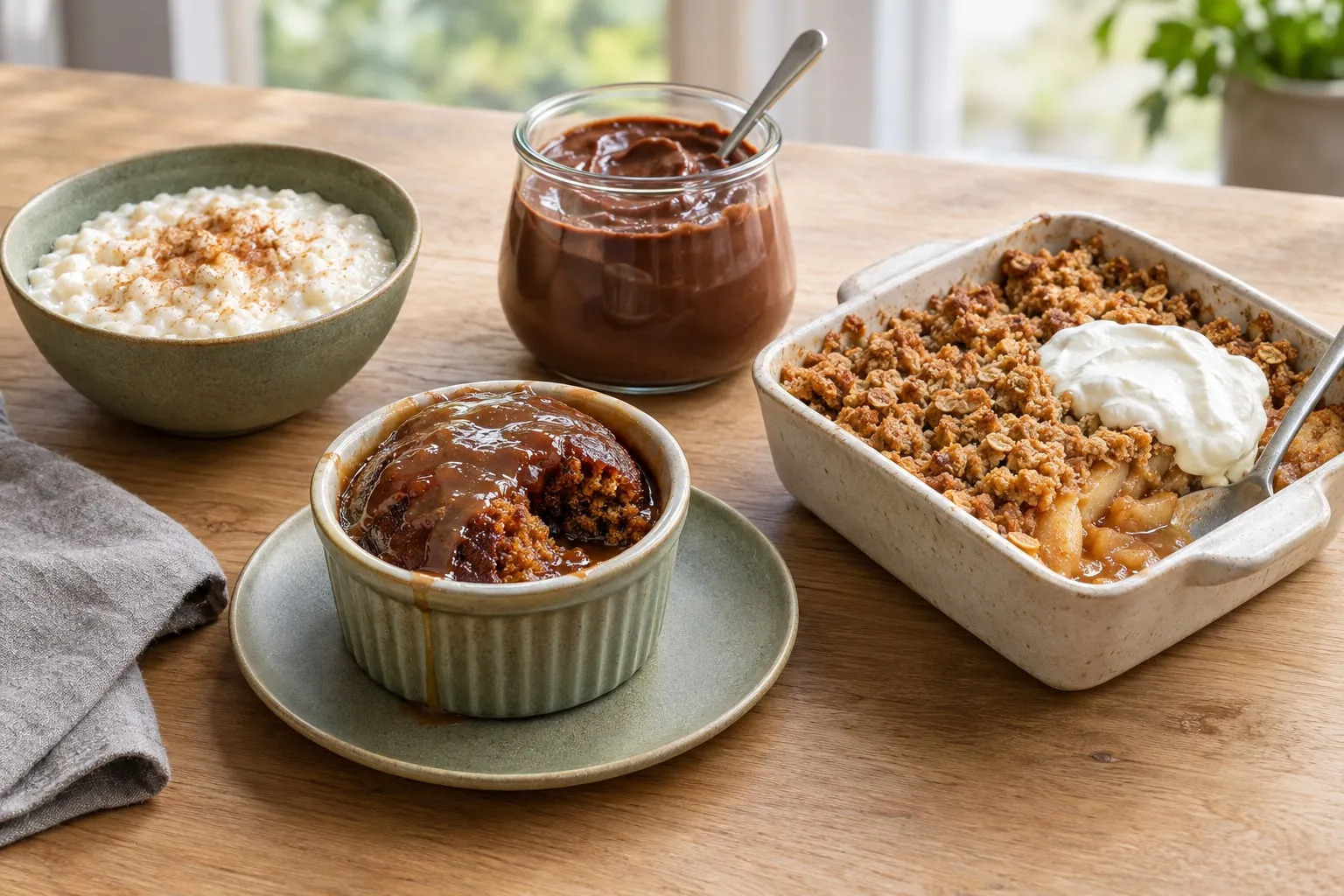
Ideas & collections
Pudding with protein, British style: custard pots, rice pudding, sticky toffee and apple crumble, 11 recipes with 13–29 g protein per portion.
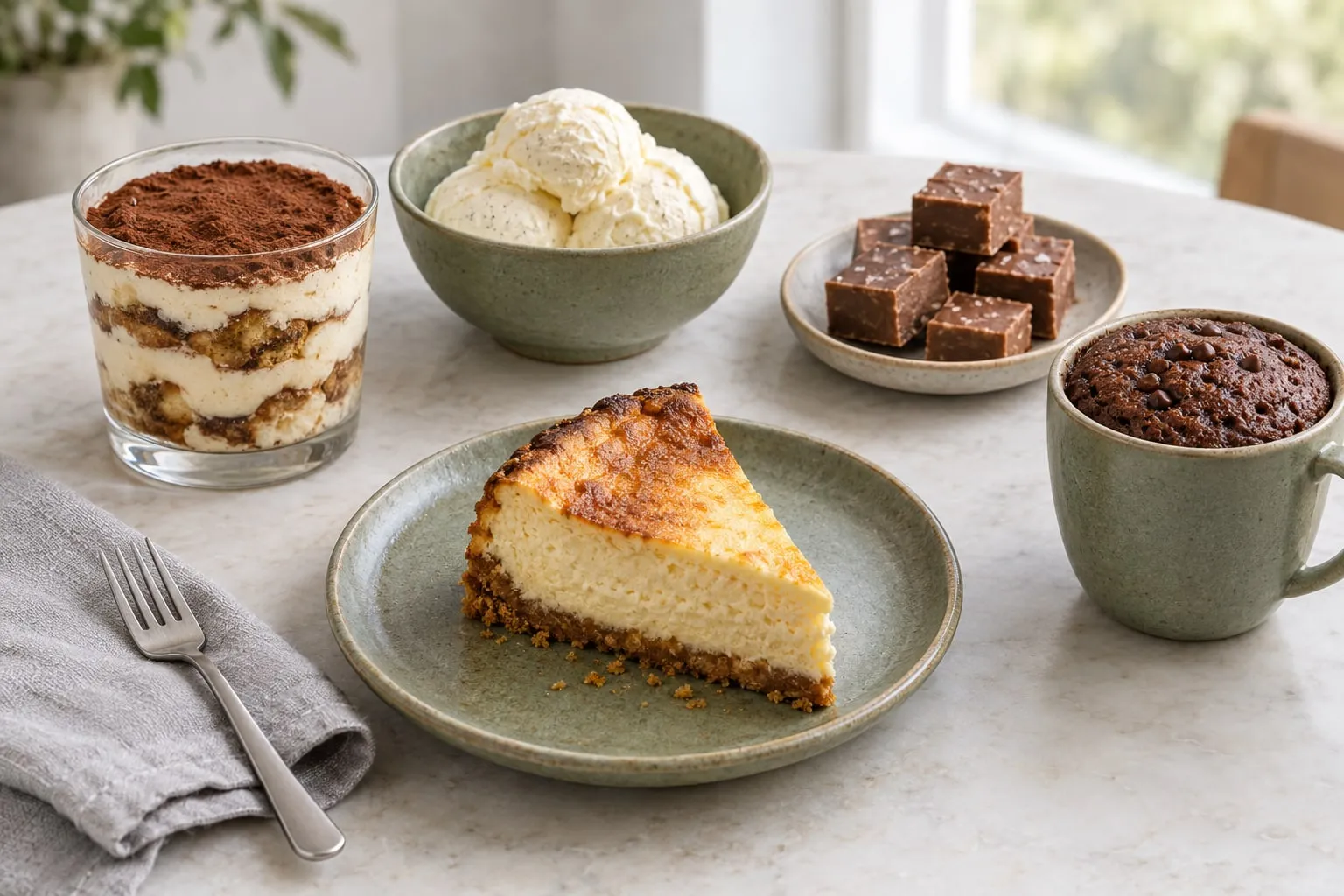
Ideas & collections
High protein desserts for every format: cheesecake, tiramisu, ice cream, fudge, crumble and a mug cake, 13 recipes with 12–34 g protein each.

Guide
High protein foods ranked by protein per 100 g and per 100 kcal: Parmesan has 36.2 g, grilled chicken 32.0 g, dried red lentils 25.6 g and egg white 10.8 g.
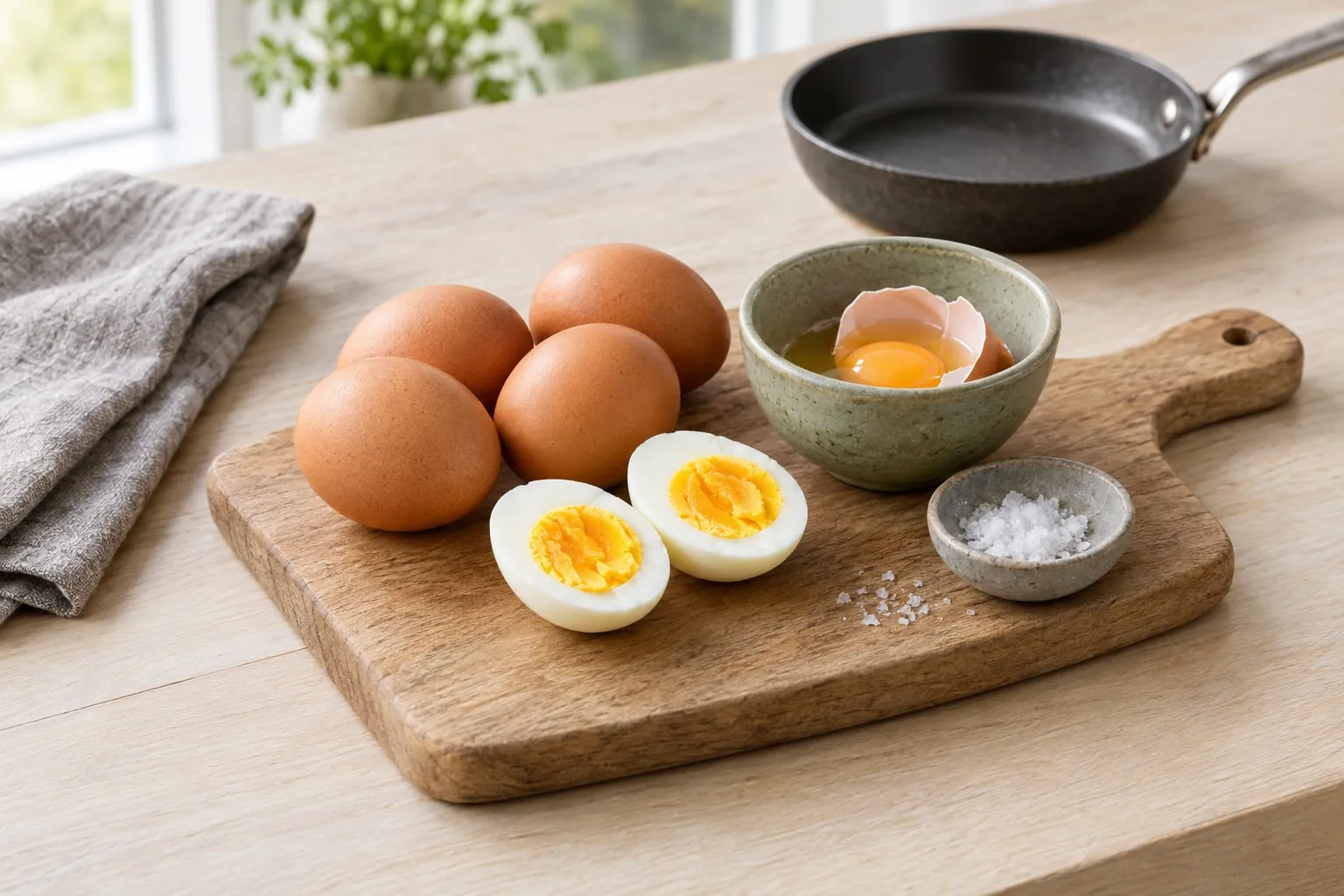
Guide
How much protein in an egg: one medium raw egg has 6.3 g protein and 66 kcal. Values per egg, per 100 g, boiled, fried and scrambled.
Updated 22 November 2026 by The Protein Recipes editorial team.