Method
Tap a time to start a timer.
Sprinkle the gelatine over the cold water in the heatproof bowl and leave it to soak.
Whisk the skimmed milk, whey protein powder, Greek yogurt and vanilla extract together in the measuring jug until completely smooth.
Sit the heatproof bowl of gelatine over a pan of just-simmering water and stir until the gelatine is clear and has no granules. Take it off the heat and let it cool for 1 minute.
Stir 3 tablespoons of the milk mixture into the gelatine, then pour it back into the jug in a thin stream, whisking all the time.
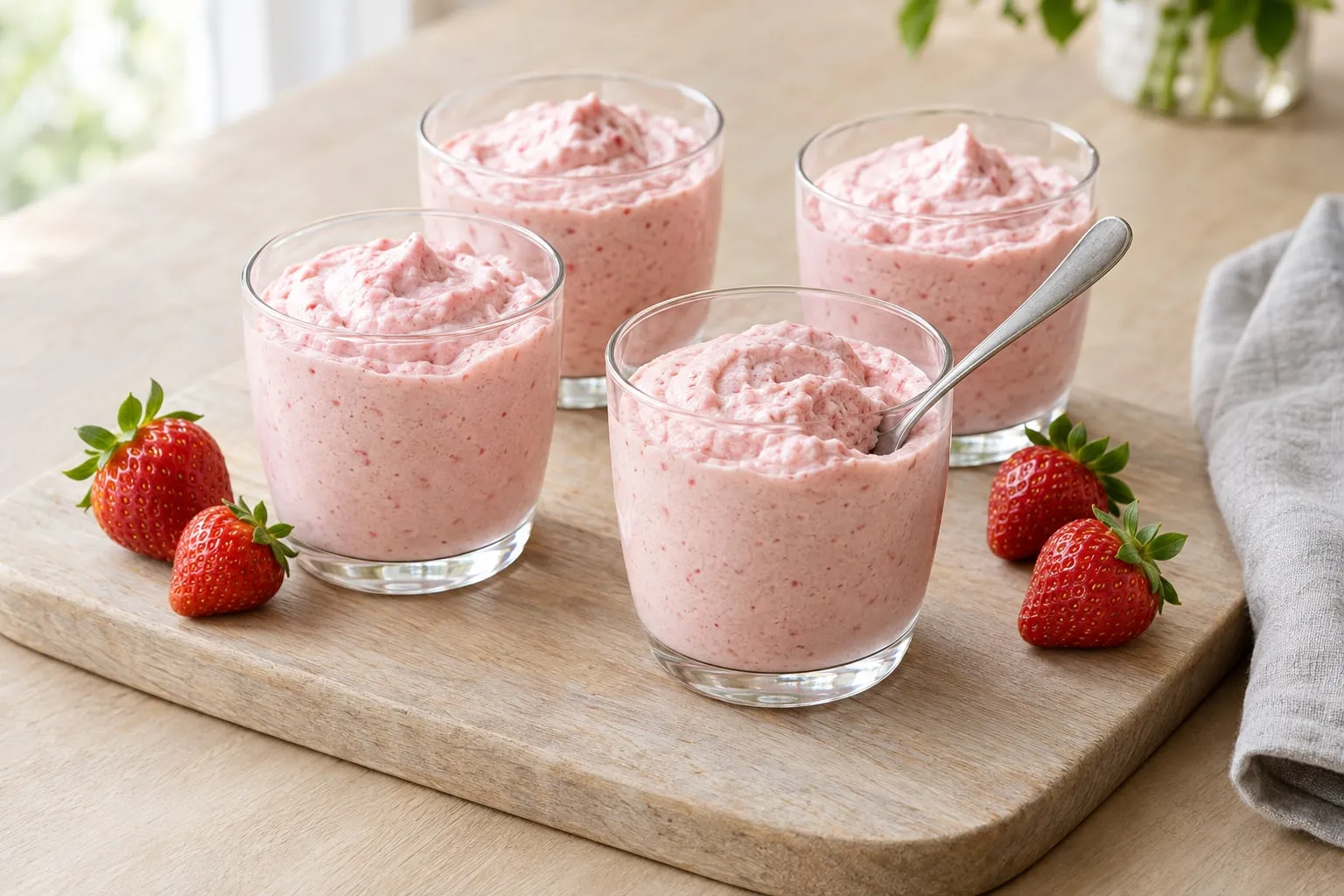
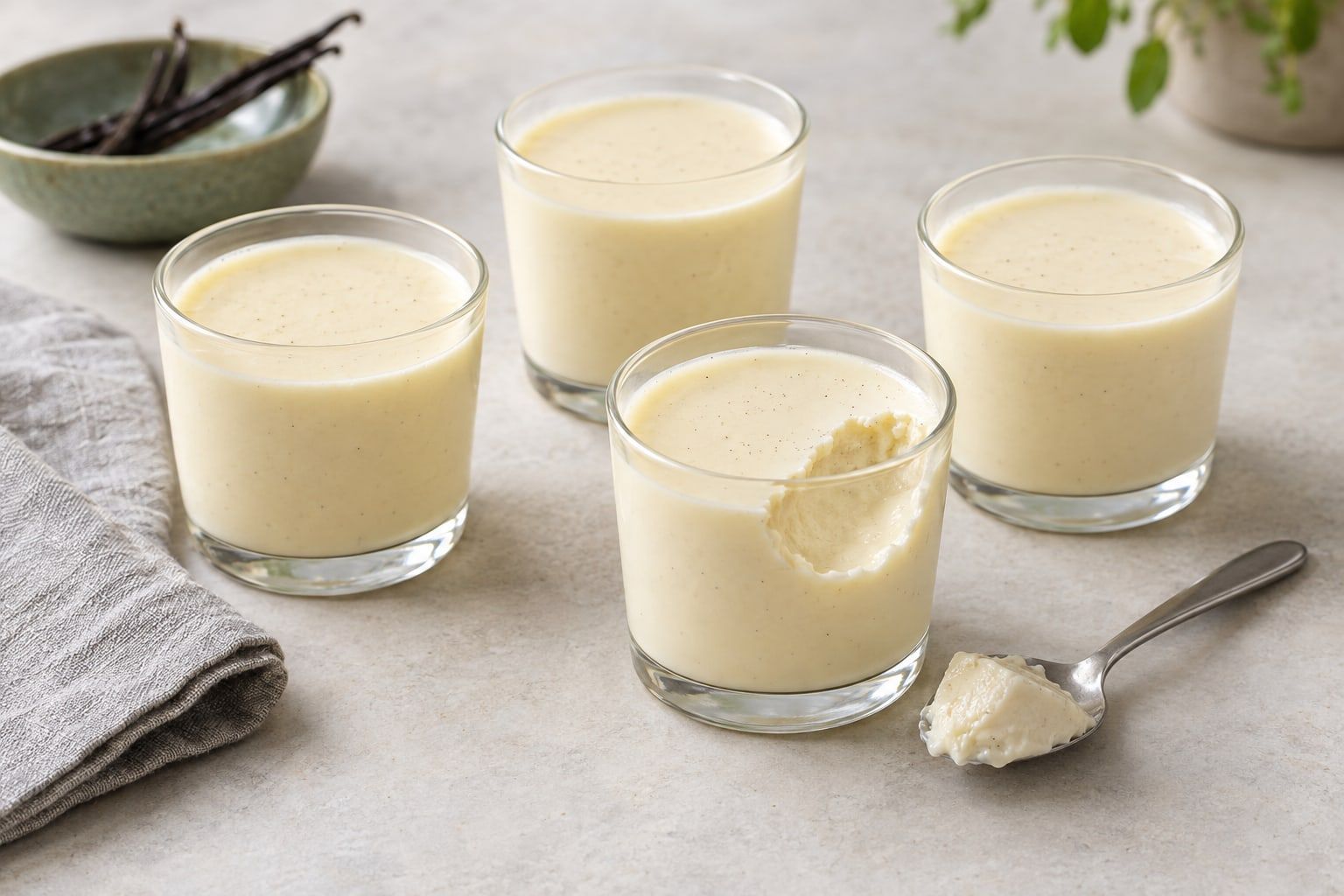
Pour the mixture into the four glasses and chill until set with a gentle wobble.
How to tell it's done
- The gelatine is completely clear with no granules before it goes into the milk.
- After chilling the jelly has a gentle wobble and holds its surface when you tilt the glass.
Tips for success
- Soak the gelatine first
Sprinkle the powder over 60 ml cold water and leave it for 5 minutes. Gelatine that goes straight into hot liquid clumps instead of dissolving.
- Keep the milk cold
Whisk the whey and yogurt into cold milk. Whey added to warm milk forms lumps, and these do not whisk out later.
- Temper the gelatine
Melted gelatine sets in strings when it hits cold milk. Stir 3 tablespoons of the milk mixture into the gelatine first, then pour that back into the bowl while whisking.
- Let it cool before pouring in
Gelatine just above body temperature, around 40°C, blends in without warming the milk or cooking the whey. If it feels hot to your finger, wait a minute.
Boost the protein
- Replace 100 ml of the skimmed milk with 100 g strained Greek yogurt: about +2 g protein per pot.
- Add 20 g more whey with the first 40 g in step 2: about +4 g protein per pot. The jelly will be slightly firmer.
Choosing ingredients
Use powdered gelatine, not leaf gelatine, so the 15 g is easy to weigh. Check the pack for how much it sets, as brands differ, and keep to 15 g for this volume.
Whey blends smoothest in cold milk. Casein thickens more and gives a mousse-like texture, while vegan protein powder is grainier and may need 25–50 ml more milk.
Variations
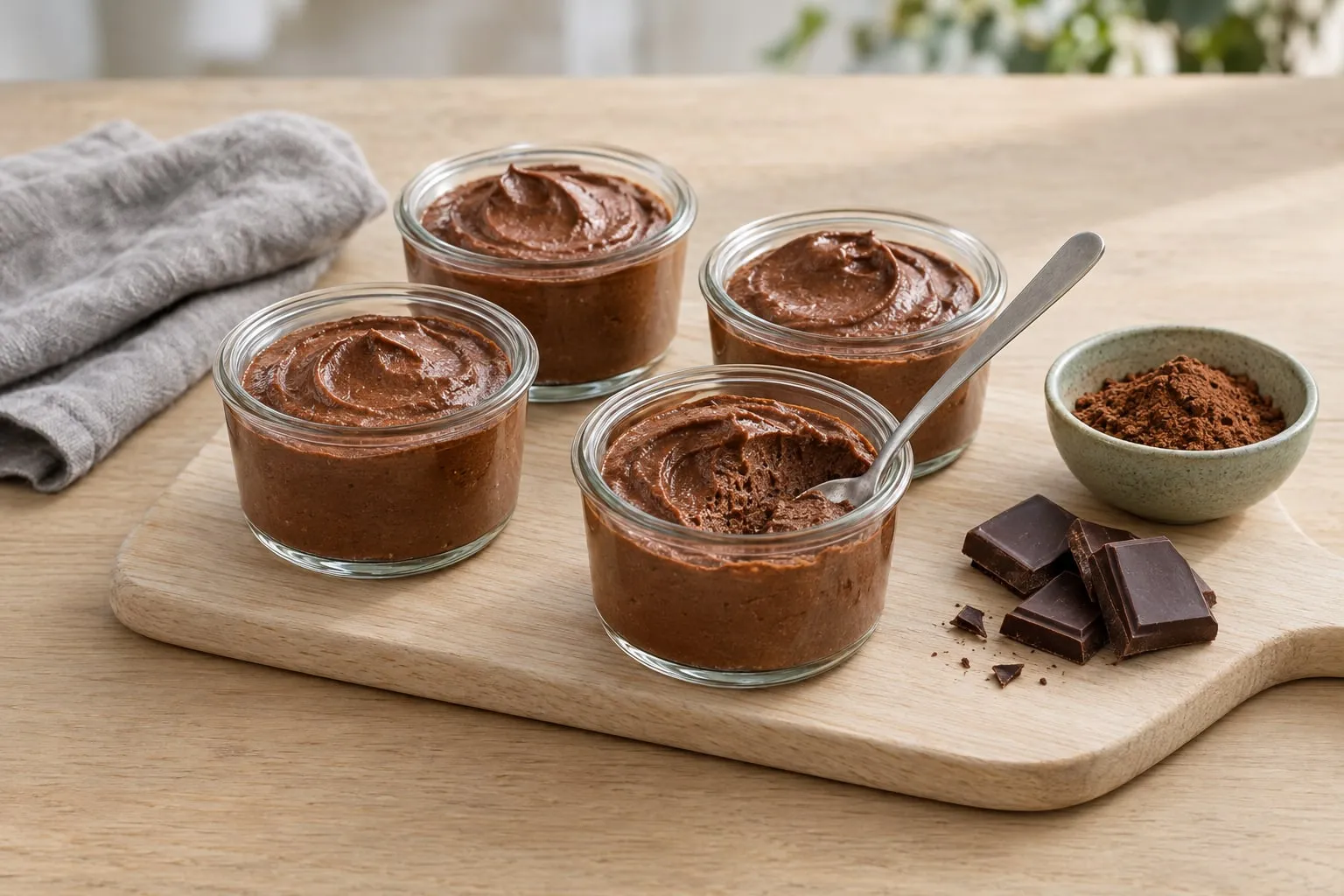
- Chocolate protein jelly
Use chocolate whey and whisk 1 tsp cocoa powder into the milk mixture in step 2. The weights and set stay the same, so protein stays at 17 g per pot.
- Vegetarian version with agar
Skip the gelatine and follow the pack to dissolve agar powder in the milk, then cool to 60°C before whisking in the whey and yogurt. Without the gelatine, protein falls to about 14 g per pot.
Serve it with
- Fresh raspberries
- Sliced strawberries
- A few toasted flaked almonds
Storage
Keep the protein jelly covered in the fridge for up to 3 days.
Do not freeze it, as the gel breaks and weeps water on thawing.
Troubleshooting
Why is the protein jelly lumpy?
The whey met warm liquid or the gelatine set in strings. Keep the milk cold, whisk the whey in first, and temper the gelatine with 3 tablespoons of the milk mixture before pouring it in.
Why has the protein jelly not set?
The gelatine did not fully dissolve or the pots need longer. Chill for a further 2 hours and, if it is still liquid, warm the mixture gently, stir in another 5 g gelatine that has been soaked and melted, and chill again.
Frequently asked questions
How much protein is in this protein jelly?
Each of the four pots has 17 g protein and 102 kcal, so 66% of the energy comes from protein. Gelatine itself supplies about 13 g of the 67 g across the batch.
Is protein jelly vegetarian?
Not as written, because gelatine comes from animal collagen. The agar variant is vegetarian, with about 14 g protein per pot.
Does ready-made fruit jelly have the same protein?
Ready-made fruit jelly has only the protein in its gelatine, about 1.6 g per 100 g for sugar-free jelly made up with water. This protein jelly gets most of its protein from the milk, whey and yogurt.
Made it? Rate the recipe
Read next
- How Much Protein Do You Need Per Day?How much protein do I need? The UK reference is 0.75 g per kg of body weight a day, or 52.5 g at 70 kg. See food values and a worked example day.
- High Protein Foods: A Ranked ListHigh protein foods ranked by protein per 100 g and per 100 kcal: Parmesan has 36.2 g, grilled chicken 32.0 g, dried red lentils 25.6 g and egg white 10.8 g.
Written by The Protein Recipes editorial team. Nutrition is calculated from the ingredient list using CoFID. Read how our recipes are made and how we correct mistakes.