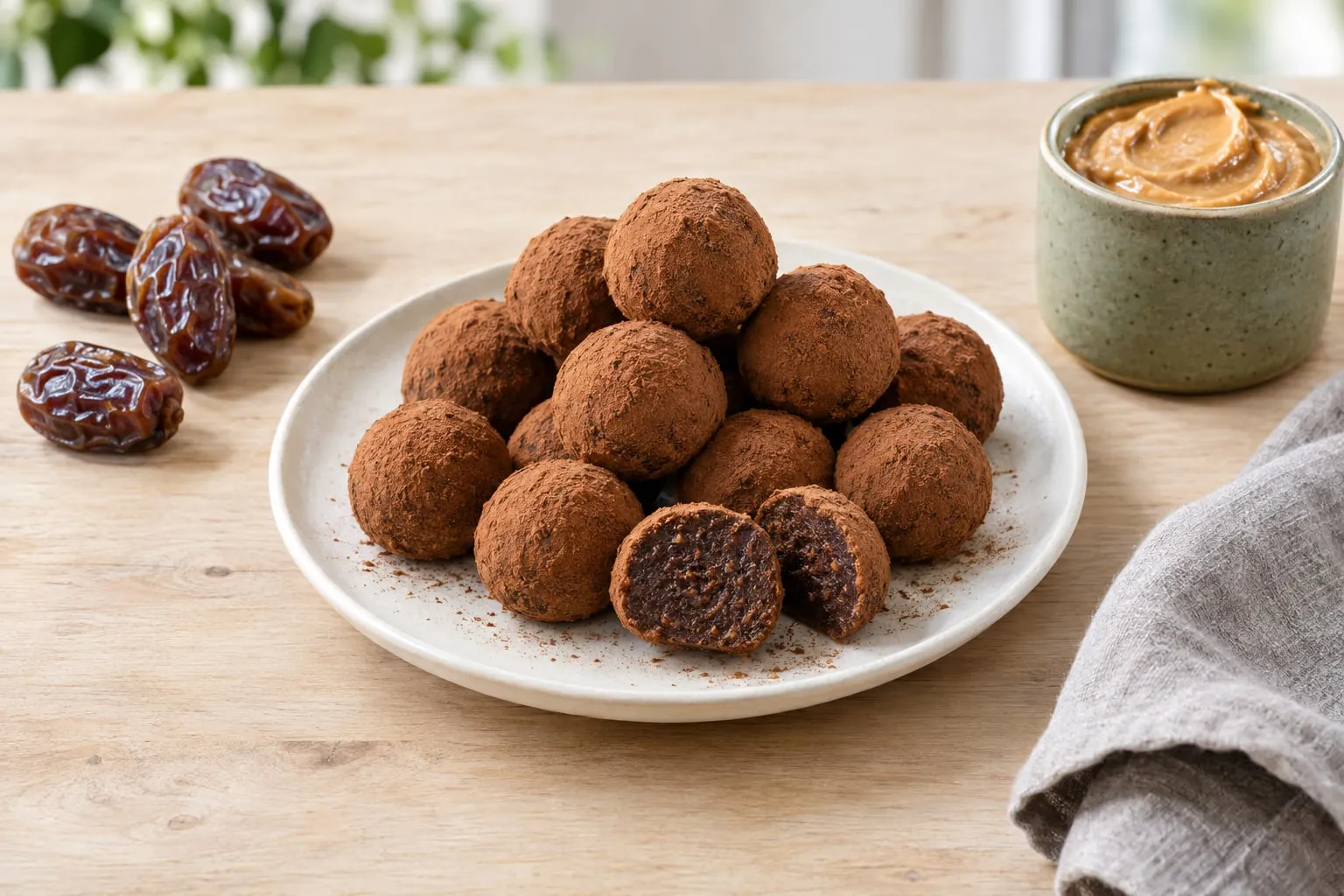
Chocolate Protein Balls
14 g protein179 kcal50 minVegetarian
Oats, dates, cocoa and chocolate whey rolled into 12 balls – 14 g protein and 179 kcal for two.
Ideas & collections · 5 recipes
High protein sweet snack recipes for a chocolate, caramel or cookie dough craving: 12 snacks with 11–19 g protein each, mostly no-bake and made in advance.
12–19 g proteinper serving, calculated from CoFID
In short
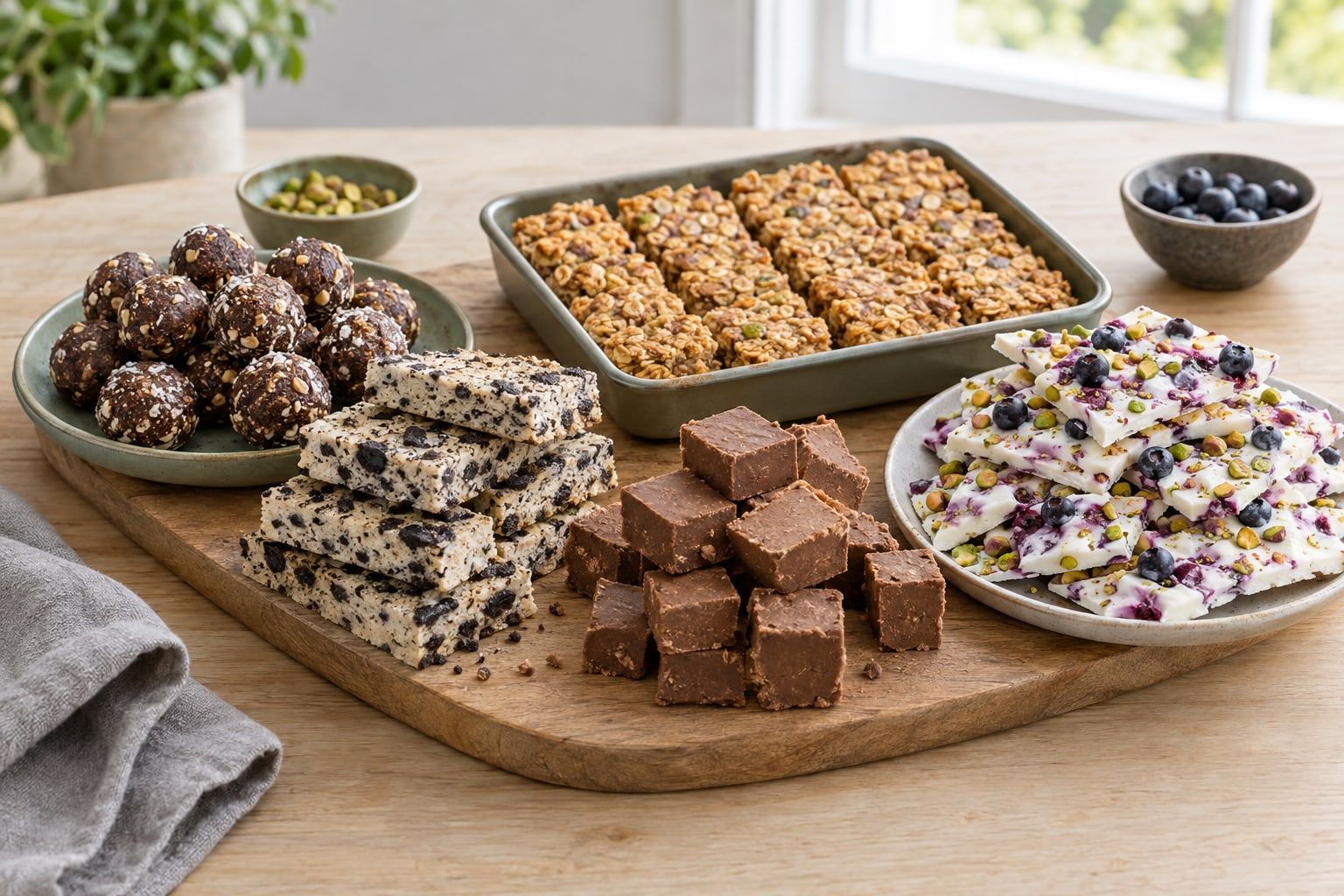
Chocolate balls, cookie dough, flapjacks, bars, fudge and frozen yogurt bark all give 11 g protein or more per portion. Most are no-bake and keep for days in the fridge or freezer.
Chocolate, caramel and cookie dough all work as high protein sweet snack recipes, and the twelve below give between 11 g and 19 g protein per portion. Most are no-bake: the balls, bars and fudge are mixed, shaped and chilled, with no oven involved.
The protein comes from whey in the balls, bars and flapjacks, from quark and cottage cheese in the cookie dough and mousse, and from strained Greek yogurt in the frozen bark. Oats and dates carry the sweetness, with a modest amount of chocolate, honey or maple syrup on top. A few snacks are noticeably more protein-dense than the rest, because mousse and cookies and cream bars get most of their energy from protein.
For a week of snacks, make one batch of balls or bars on Sunday and keep them in the fridge, then freeze half in individual portions. Frozen Greek yogurt bark and the mousse suit a hot evening, while protein flapjacks are the one to bake when the oven is already on.
14 g protein179 kcal50 minVegetarian
Oats, dates, cocoa and chocolate whey rolled into 12 balls – 14 g protein and 179 kcal for two.
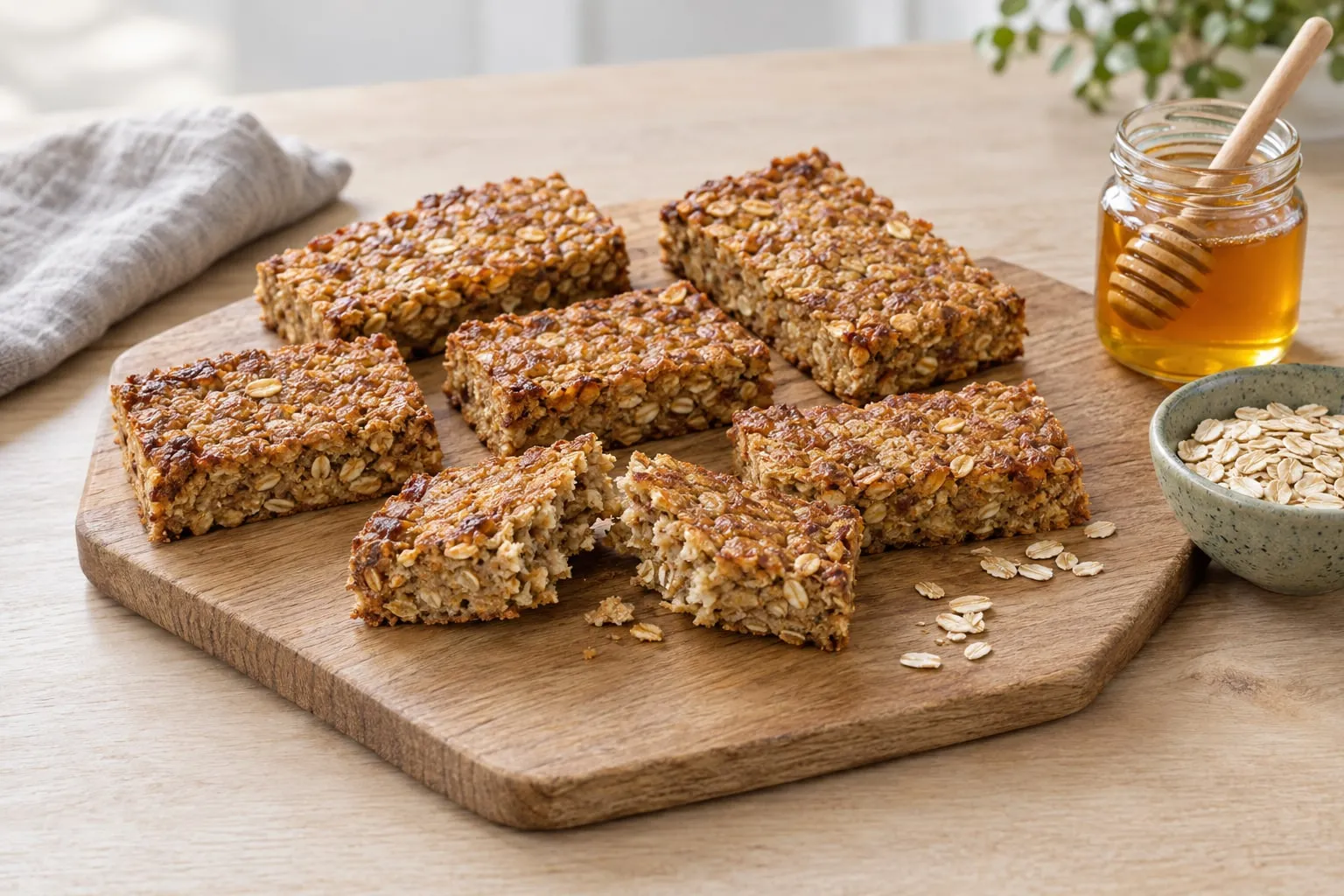
12 g protein201 kcal2 hr 32 minVegetarian
Baked oat flapjacks with honey and Greek yogurt, cut into eight – 12 g protein each.
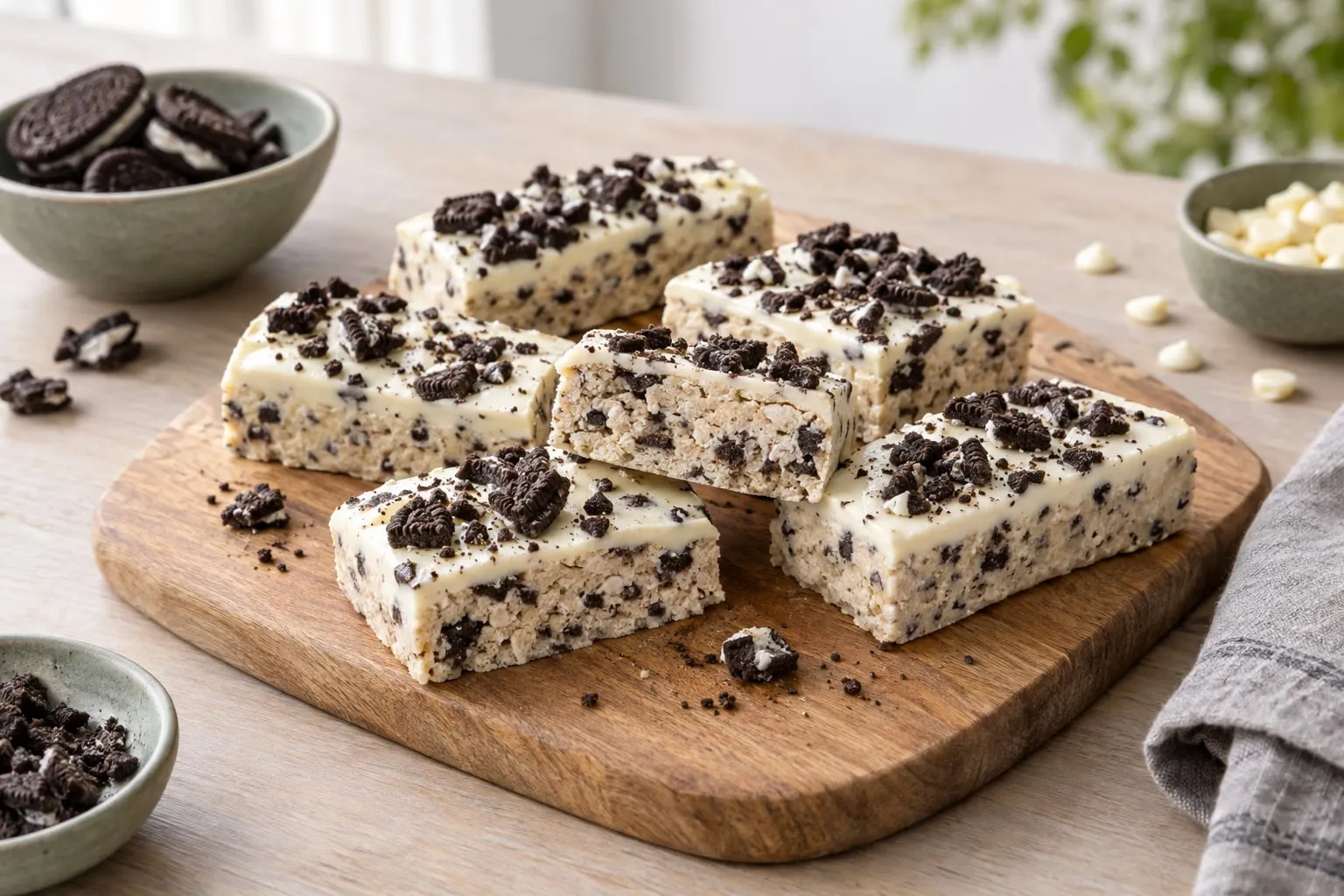
14 g protein144 kcal2 hr 20 minVegetarian
Chilled bars with a cream cheese layer and crushed sandwich biscuits – 14 g protein for 144 kcal.
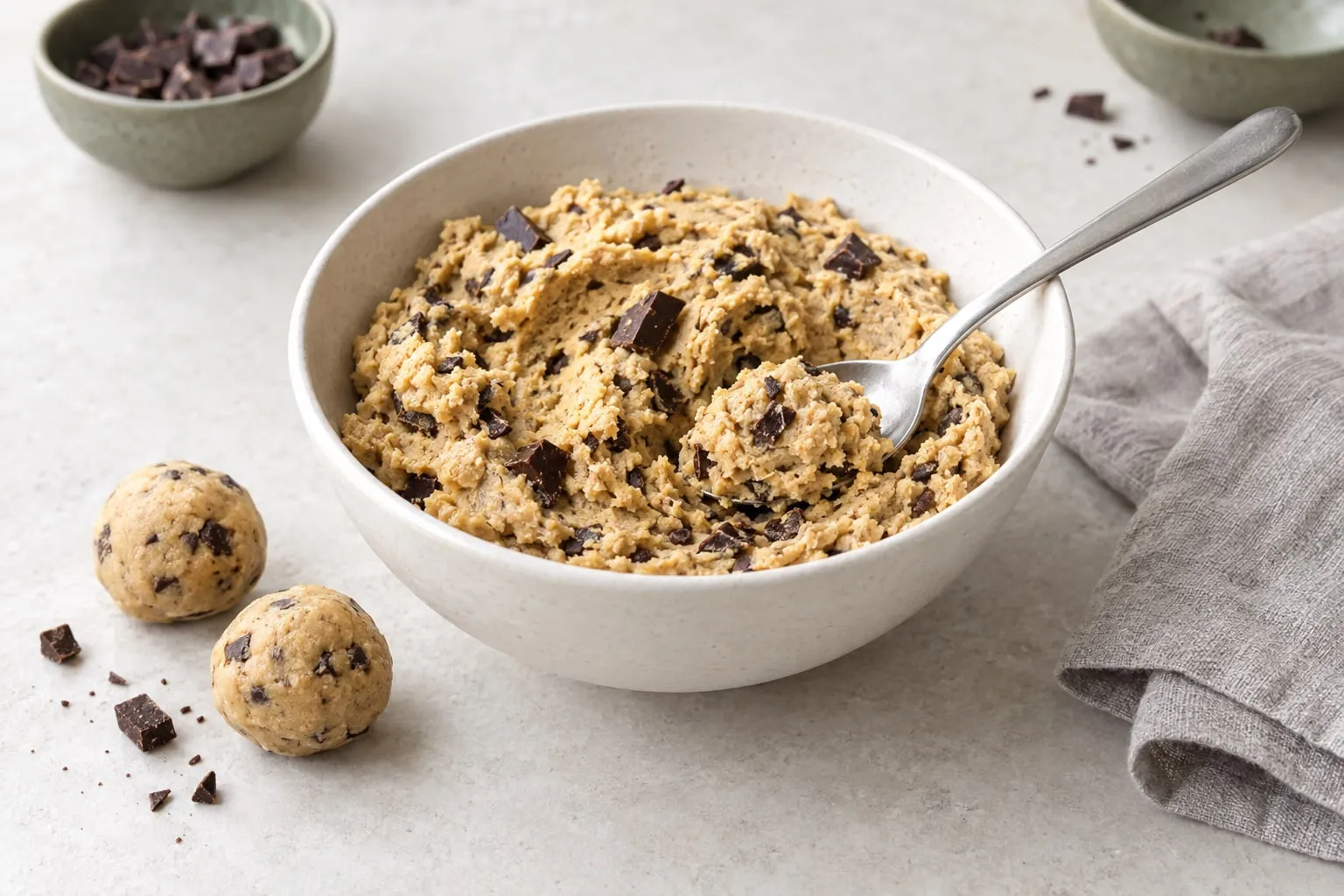
13 g protein172 kcal40 minVegetarian
A spoonable oat and quark dough, no raw flour or egg – 13 g protein per serving.
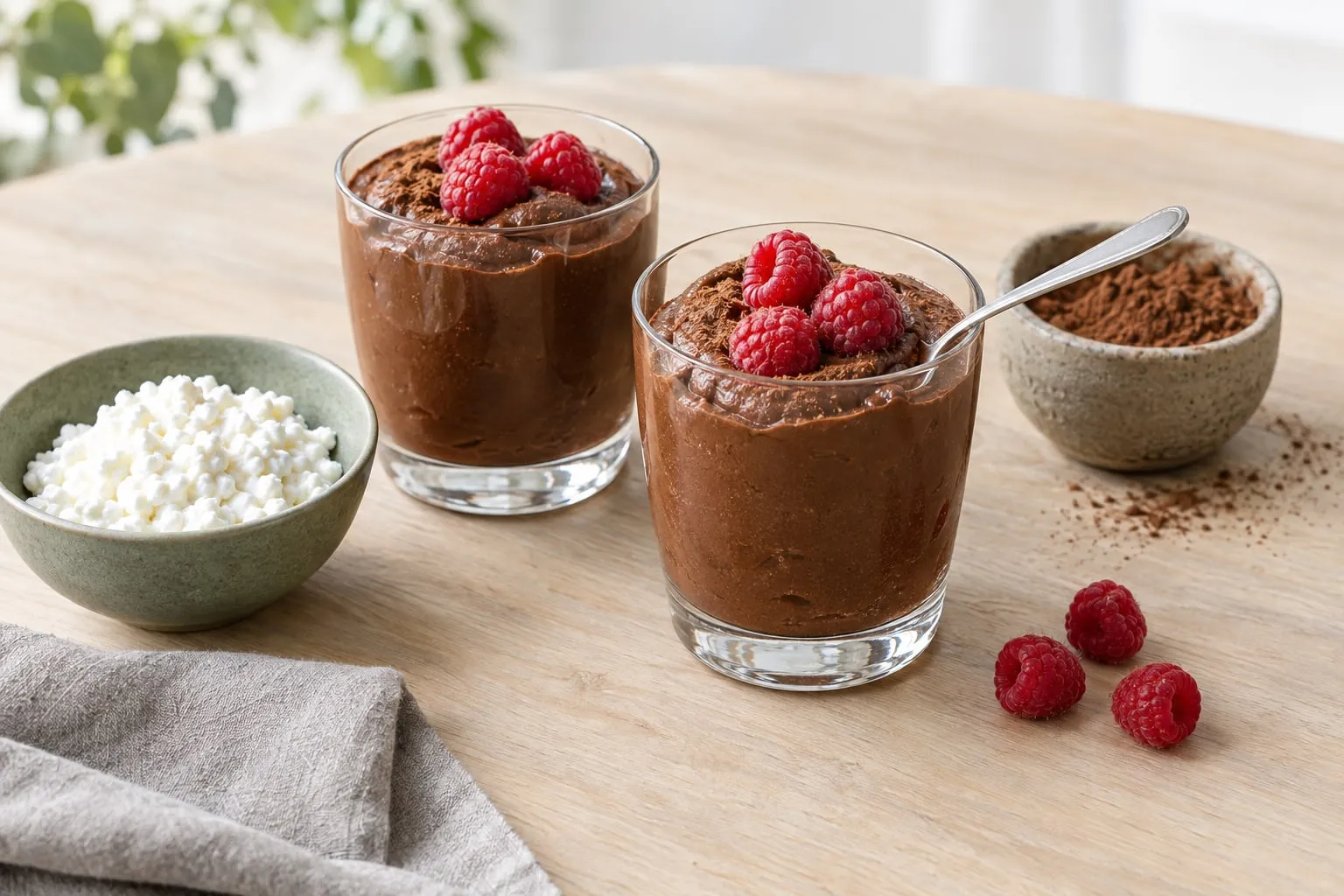
19 g protein193 kcal38 minVegetarianGluten-free
Blended reduced fat cottage cheese, cocoa and honey – 19 g protein per bowl.
7 more recipes in this collection are being published over the coming weeks. Follow the RSS feed or browse all snacks recipes in the meantime.
Protein powder, quark, cottage cheese and Greek yogurt do the work, and oats, dates and a little chocolate supply the sweetness. In this list the protein ranges from 11 g in a chocolate flapjack to 19 g in a bowl of cottage cheese chocolate mousse, with most snacks landing between 12 g and 14 g. Portions are worth reading carefully: a portion of protein balls is two balls, a portion of bars or flapjacks is one, and the mousse makes two generous bowls. Energy runs from 143 kcal for a piece of frozen yogurt bark to 208 kcal for two millionaire balls, so none of them is a big snack.
Ten of the twelve need no oven. Chocolate protein balls, cookie dough protein balls, millionaire protein balls, Caramelised biscuit protein balls, cookies and cream protein bars, birthday cake protein bars and protein fudge are mixed in a bowl and chilled, which suits a warm kitchen or a quick Sunday batch. Protein flapjacks and chocolate protein flapjacks are the baked pair. They take 20–25 minutes at 180°C (160°C fan), gas 4, in a 20 cm square tin, and they cut into eight flapjacks that keep better at room temperature than the chilled bars.
Chocolate has the most choice: the balls, the mousse, the flapjacks and the fudge all lean on cocoa or plain chocolate. For caramel, millionaire protein balls wrap an oat core in date and peanut butter caramel, then roll it in biscuit crumbs and dip it in chocolate, and the caramel protein balls use caramelised biscuit spread and crushed spiced biscuits. Frozen Greek yogurt bark is the fruity one, with blueberries and pistachios, and birthday cake bars add sprinkles to a vanilla base. Edible protein cookie dough sits in between and is made with oats, so it has no raw flour and no raw egg.
The balls, bars and fudge keep in the fridge for around a week at most, and the milk and quark in many of them is the reason to keep them cold. Edible protein cookie dough is the shortest at 3 days. Protein flapjacks keep for 2 days at room temperature or 5 days in the fridge. Freezing works for nearly all of them, up to 3 months for balls, bars and flapjacks and 1 month for the frozen yogurt bark, so it makes sense to portion a batch and take out one at a time.
Every recipe on this page per serving, highest protein first. Figures are calculated from the ingredient list using CoFID.
| Recipe | Protein | Energy | From protein | Time |
|---|---|---|---|---|
| Cottage Cheese Chocolate Mousseper serving | 19 g | 193 kcal | 39% | 38 min |
| Chocolate Protein Ballsper serving | 14 g | 179 kcal | 31% | 50 min |
| Cookies and Cream Protein Barsper bar | 14 g | 144 kcal | 38% | 2 hr 20 min |
| Edible Protein Cookie Doughper serving | 13 g | 172 kcal | 30% | 40 min |
| Protein Flapjacksper flapjack | 12 g | 201 kcal | 23% | 2 hr 32 min |
No-bake mixes taste a little powdery when freshly rolled and firm up in the fridge as the oats absorb the liquid. Give balls and bars the full chilling time in the recipe.
Two balls count as one portion of protein balls, so roll them to the weight in the recipe. Oversized balls quietly double the calories per portion.
Mousse and yogurt bark are cold and light, while flapjacks and fudge are denser and travel better in a bag.
The 12 snacks here give between 11 g and 19 g protein per portion, so each clears 10 g. The two highest are cottage cheese chocolate mousse at 19 g and protein fudge, cookies and cream bars and chocolate protein balls at 14 g.
Yes. Cottage cheese chocolate mousse and frozen Greek yogurt bark use no powder at all, relying on cottage cheese and Greek yogurt. The cookie dough does include a little whey.
Frozen Greek yogurt bark has 143 kcal per portion and cookies and cream protein bars have 144 kcal. Both give at least 11 g protein.
Balls, bars, flapjacks and fudge freeze for 2–3 months, wrapped or in a lidded box. Frozen yogurt bark keeps for 1 month in the freezer and should not be refrozen once melted.
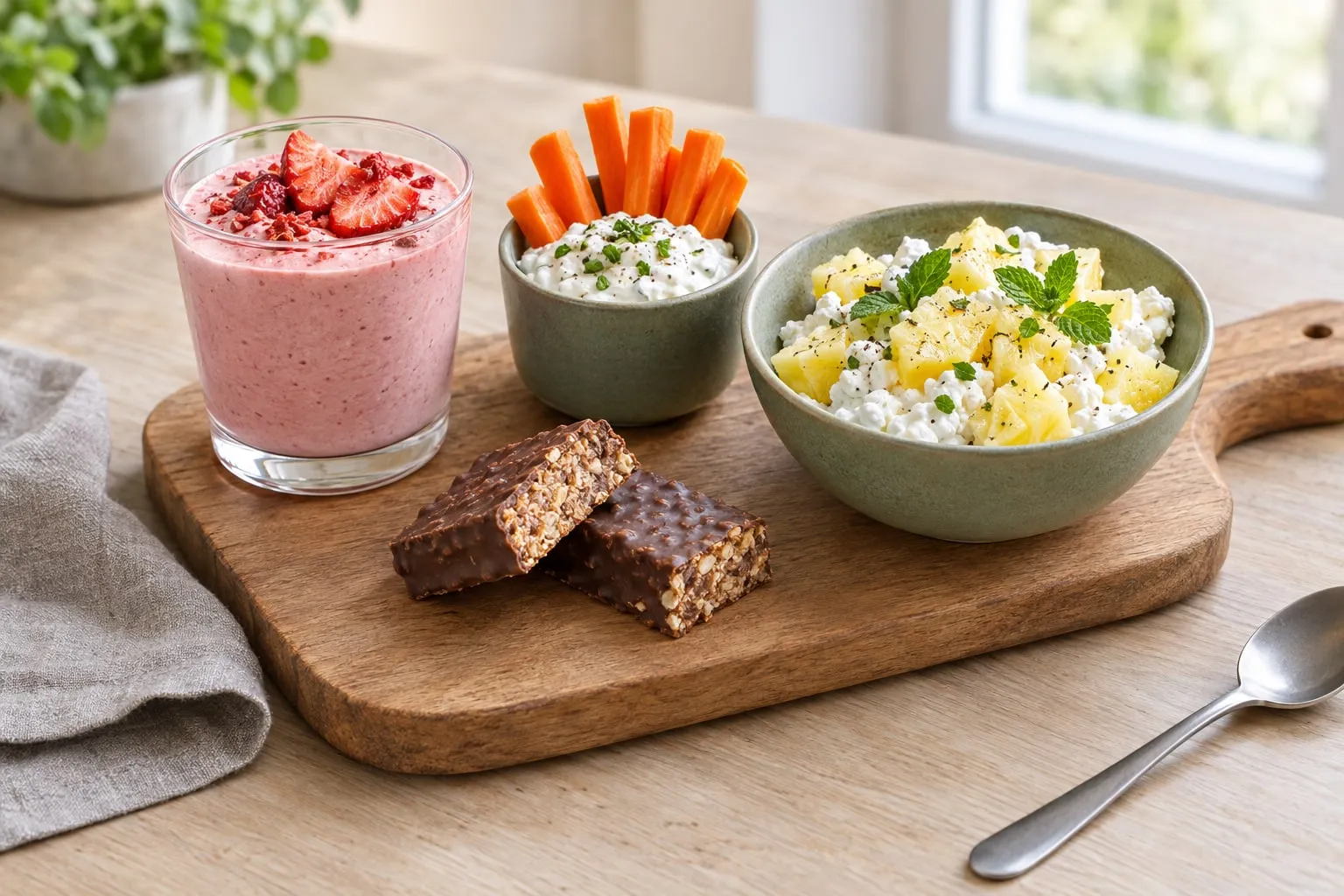
Ideas & collections
Low-calorie snacks high-protein enough to matter: 12 recipes under 150 kcal with 11–17 g protein per portion, sweet and savoury, with exact portion sizes.
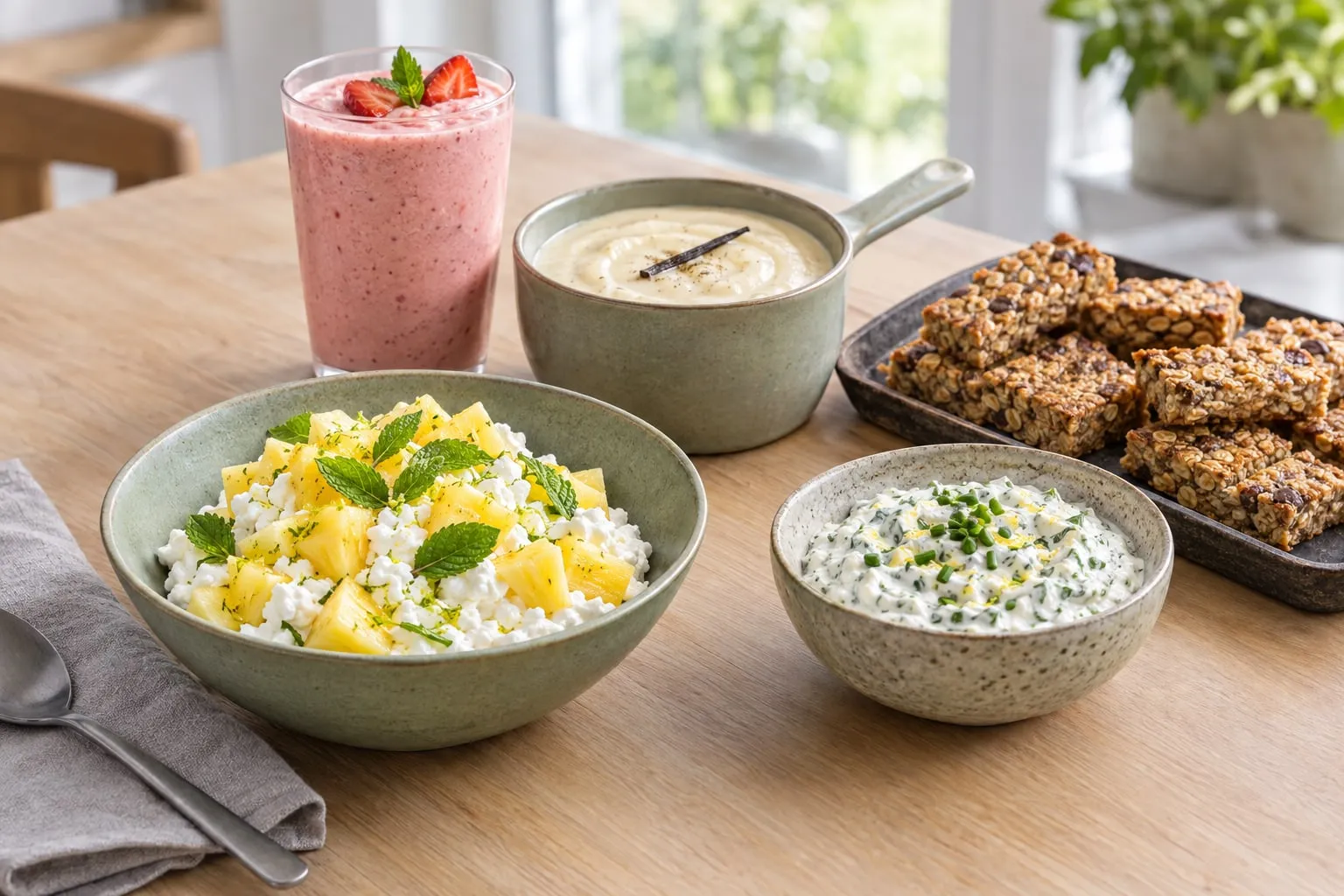
Ideas & collections
Low fat snacks high-protein: 11 recipes with 11–19 g protein and 5 g fat or less per portion, made with 0% Greek yogurt, quark, egg white and cottage cheese.
Ideas & collections
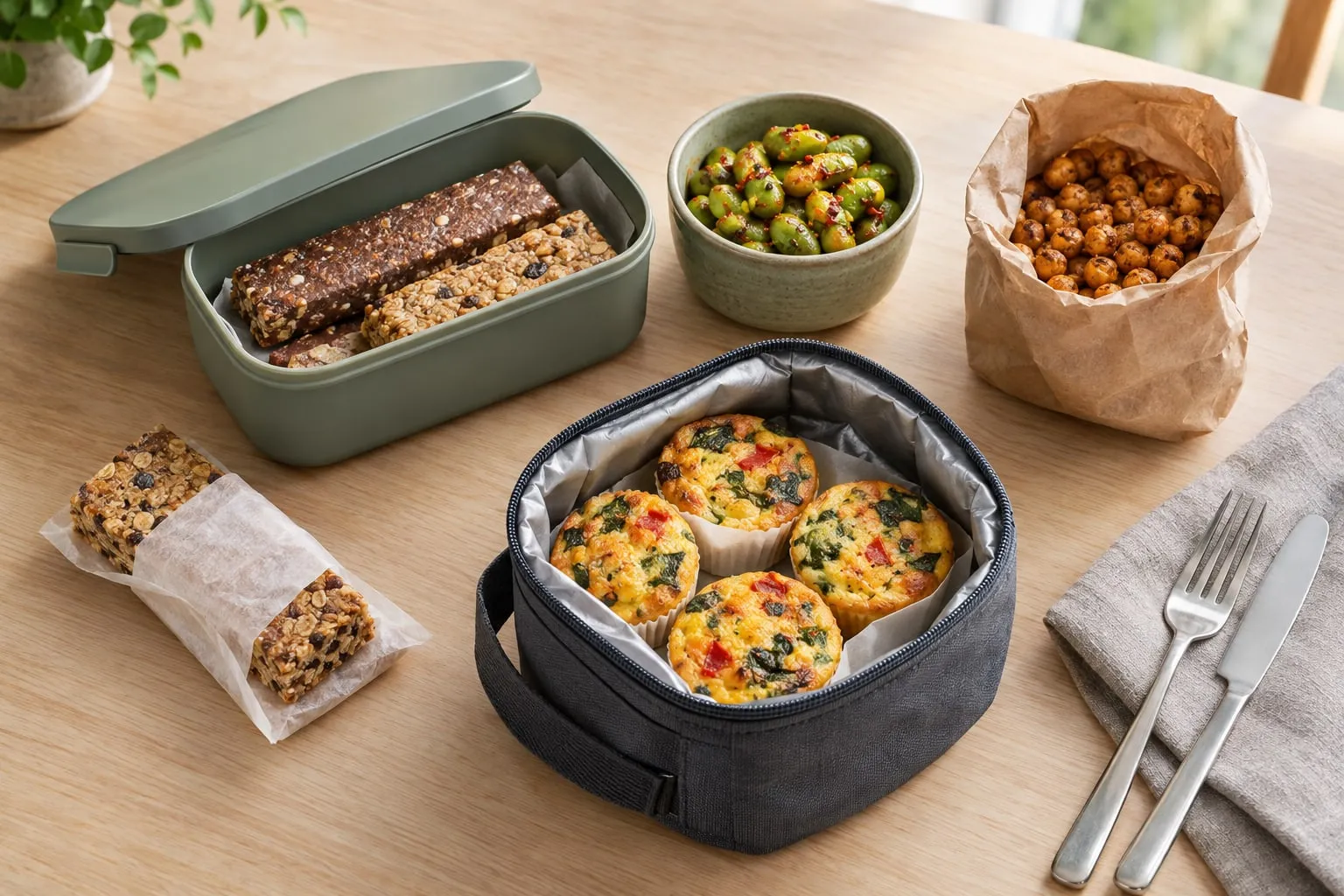
Protein snack on the go: 12 portable ideas with 10–31 g protein, sorted by what needs a fridge and how long each lasts in a bag, from bars to egg muffins.
Ideas & collections
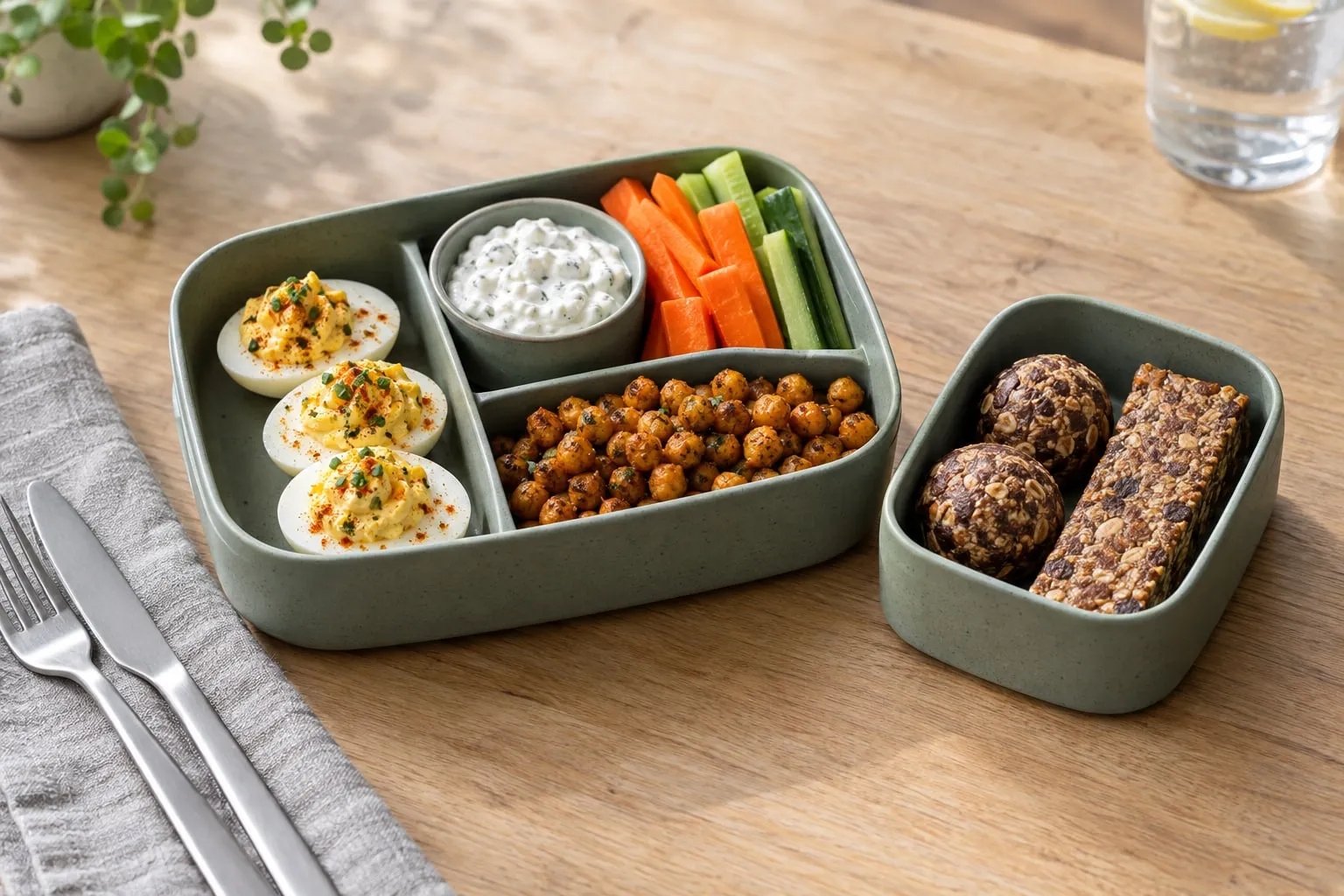
Protein snack boxes you can pack at home: 11 snacks to mix and match and three ready-made combinations with 24–35 g protein per box.
Updated 22 November 2026 by The Protein Recipes editorial team.