Protein guide
How Much Protein Is in Chicken Breast?
Quick answer
A raw, skinless 150 g chicken breast fillet has 36.0 g protein, 159 kcal and 1.7 g fat. Per 100 g, raw chicken breast has 24.0 g protein and grilled chicken breast without skin has 32.0 g.
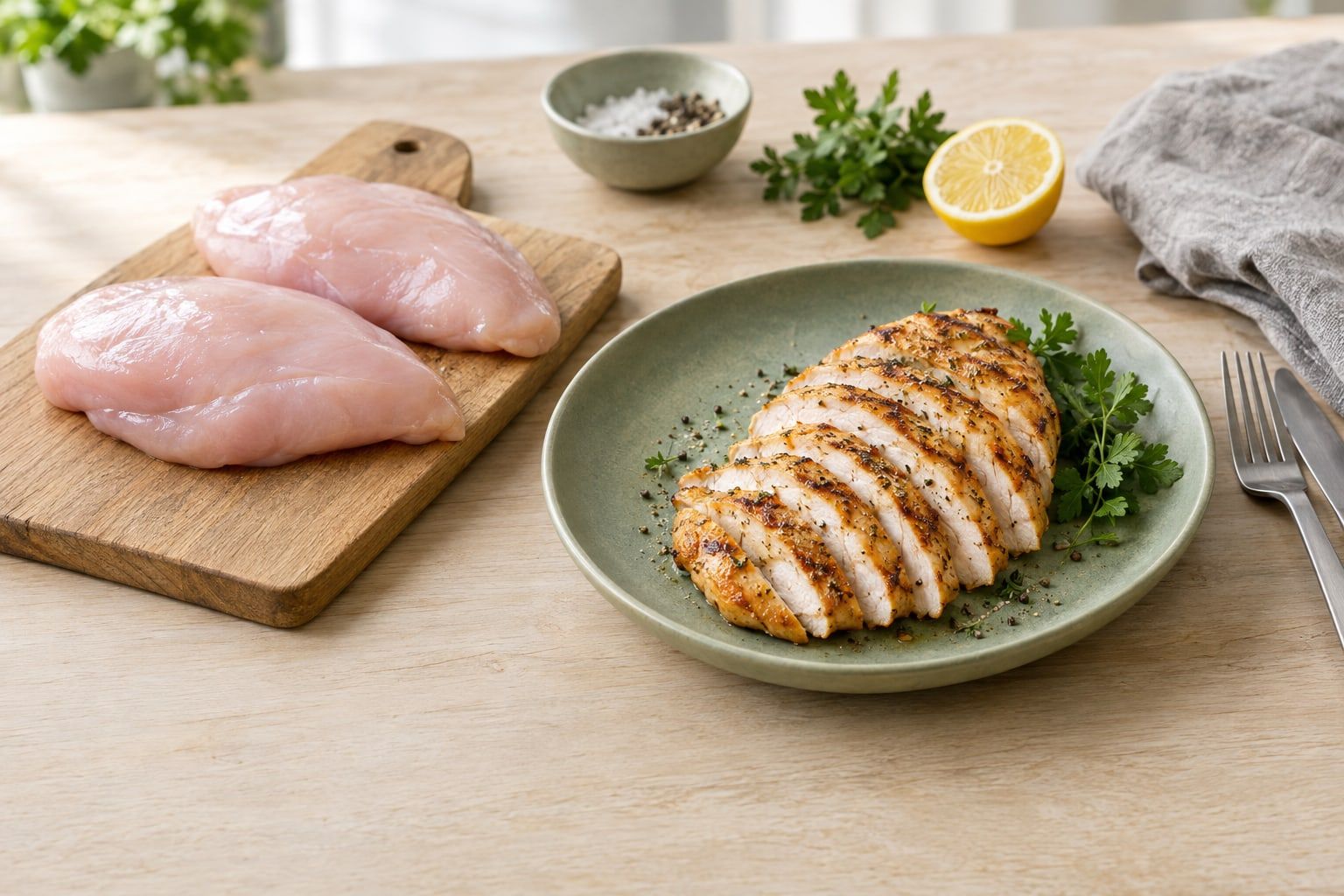
How much protein in a chicken breast comes down to the size of the fillet: a raw, skinless 150 g fillet has 36.0 g protein, 159 kcal and 1.7 g fat. Per 100 g, raw chicken breast has 24.0 g protein and grilled breast without skin has 32.0 g.
The gap between those two figures is water, not protein. Grilling drives moisture out, so cooked chicken weighs less and each 100 g contains more protein, while a whole fillet ends up with about the same total. Fillet size matters more than anything else: a 120 g fillet has 28.8 g, a 200 g one has 48.0 g and a 600 g pack of four fillets holds 144 g. Leaving the skin on lowers protein per 100 g and raises fat, with grilled meat and skin at 28.9 g protein and 6.4 g fat.
The simplest habit is to weigh chicken raw and use the raw figure, which matches the pack. About 83 g of raw chicken gives 20 g protein, so a normal fillet covers one meal with room to spare. Cook it to 75°C in the centre, or 70°C held for 2 minutes, before serving.
| Chicken breast | Protein | Energy | Fat |
|---|---|---|---|
| Raw, skinless fillet (typical value) | 24.0 g | 106 kcal | 1.1 g |
| Light meat, raw (CoFID) | 24.0 g | 106 kcal | 1.1 g |
| Grilled, without skin | 32.0 g | 148 kcal | 2.2 g |
| Grilled, with skin, meat only | 29.8 g | 147 kcal | 3.1 g |
| Grilled, meat and skin | 28.9 g | 173 kcal | 6.4 g |
| Casseroled, meat only | 28.4 g | 160 kcal | 5.2 g |
| Strips, stir-fried in corn oil | 29.7 g | 161 kcal | 4.6 g |
Source: CoFID – McCance and Widdowson's Composition of Foods Integrated Dataset 2021 (codes 18-290, 18-323, 18-324, 18-325, 18-307, 18-326); the raw fillet is a typical value (x10) that matches CoFID light meat, raw
| Portion | Weight | Protein | Energy |
|---|---|---|---|
| 1 small fillet, raw | 120 g | 28.8 g | 127 kcal |
| 1 medium fillet, raw | 150 g | 36.0 g | 159 kcal |
| 1 large fillet, raw | 200 g | 48.0 g | 212 kcal |
| 1 medium fillet, grilled without skin | about 105 g cooked | 33.6 g | 155 kcal |
| 2 fillets, raw | 300 g | 72.0 g | 318 kcal |
| Pack of 4 fillets, raw | 600 g | 144.0 g | 636 kcal |
Source: Calculated from CoFID and typical values; a 150 g raw fillet is assumed to weigh about 105 g after grilling, though weight loss varies with the method
How much protein is in one chicken breast?
A raw, skinless fillet of 150 g, which is a common size in a UK pack, has 36.0 g protein, 159 kcal and 1.7 g fat. A small 120 g fillet gives 28.8 g and a large 200 g one gives 48.0 g. A 600 g pack of four fillets holds 144 g protein. For comparison, the UK Reference Nutrient Intake is 45 g a day for a 60 kg adult, so one medium fillet is 80% of that figure.
How much protein is in 100 g of chicken breast?
Raw chicken breast has 24.0 g protein and 106 kcal per 100 g. Grilled without skin it has 32.0 g and 148 kcal, and casseroled meat has 28.4 g. The higher cooked numbers do not mean that cooking adds protein. Water is lost during cooking, so 100 g of cooked chicken is made from more raw chicken than 100 g of raw. If you weigh the chicken raw, use the raw figure, and if you weigh it cooked, use the cooked one.
What happens to the protein when chicken is cooked?
Very little changes for the fillet as a whole. A 150 g raw fillet that weighs about 105 g after grilling has 33.6 g protein by the grilled figure, against 36.0 g by the raw figure, and the small gap comes from the different samples behind each table entry and from how much water a given cook drives off. The practical rule is to pick one basis and use it every time. Cook chicken until the centre reaches 75°C, or 70°C held for 2 minutes, and the juices run clear.
Does the skin change the protein?
Skin adds fat and energy and lowers protein per 100 g. Grilled breast meat without skin has 32.0 g protein and 148 kcal per 100 g, the meat only from a skin-on breast has 29.8 g and 147 kcal, and meat and skin together have 28.9 g and 173 kcal. A skinless fillet is therefore the leanest choice, with 2.2 g fat per 100 g cooked against 6.4 g with the skin. The thighs page covers dark meat and bone-in weights.
How much chicken breast do you need for 20 g protein?
About 83 g of raw chicken breast gives 20 g protein, or roughly 63 g grilled without skin. That is a little over half of a 150 g fillet, so a 150 g fillet gives 36.0 g, a little under two portions of 20 g. A 300 g pack of two fillets holds 72.0 g, which comfortably serves two people at around 36 g each. Slicing a fillet into strips for stir-fries or fajitas makes it easy to split by weight.
Practical tips
- Weigh raw chicken before cooking
The raw weight matches the pack and the raw figure of 24.0 g per 100 g. Weigh once, log it and do not recalculate after cooking.
- Check the core temperature
Use a probe thermometer and cook to 75°C in the thickest part, or 70°C for 2 minutes, as the Food Standards Agency advises.
- Slice thick fillets to cook evenly
Cut a thick fillet in half horizontally or bat it out so it cooks through without drying at the edges.
Myth or fact
- Myth
Is it true that cooked chicken breast has more protein than raw?
No. Per 100 g it appears higher, 32.0 g grilled against 24.0 g raw, because water is lost in cooking. A whole fillet has about the same protein before and after cooking.
- The facts
Is it true that chicken breast has far more protein than thigh?
Per 100 g raw the gap is modest, 24.0 g for breast against 20.9 g for dark meat. The larger difference is in fat and energy, which is covered on the page about chicken thighs.
Frequently asked questions
How much protein is in a chicken breast?
A raw 150 g skinless fillet has 36.0 g protein and 159 kcal. A grilled breast of about 105 g cooked has roughly 33.6 g.
How many grams of protein are in 100 g of chicken breast?
Raw chicken breast has 24.0 g per 100 g and grilled chicken breast without skin has 32.0 g.
How much protein is in one chicken breast of 200 g?
A raw 200 g fillet has 48.0 g protein and 212 kcal.
Is chicken breast high in protein?
Yes. 150 g raw gives 36.0 g for 159 kcal, and nearly all of the energy comes from protein, with just 1.7 g fat.
How many chicken breasts do I need for 100 g protein?
About 417 g raw, or just under three 150 g fillets, since each gives 36.0 g.
Recipes to try
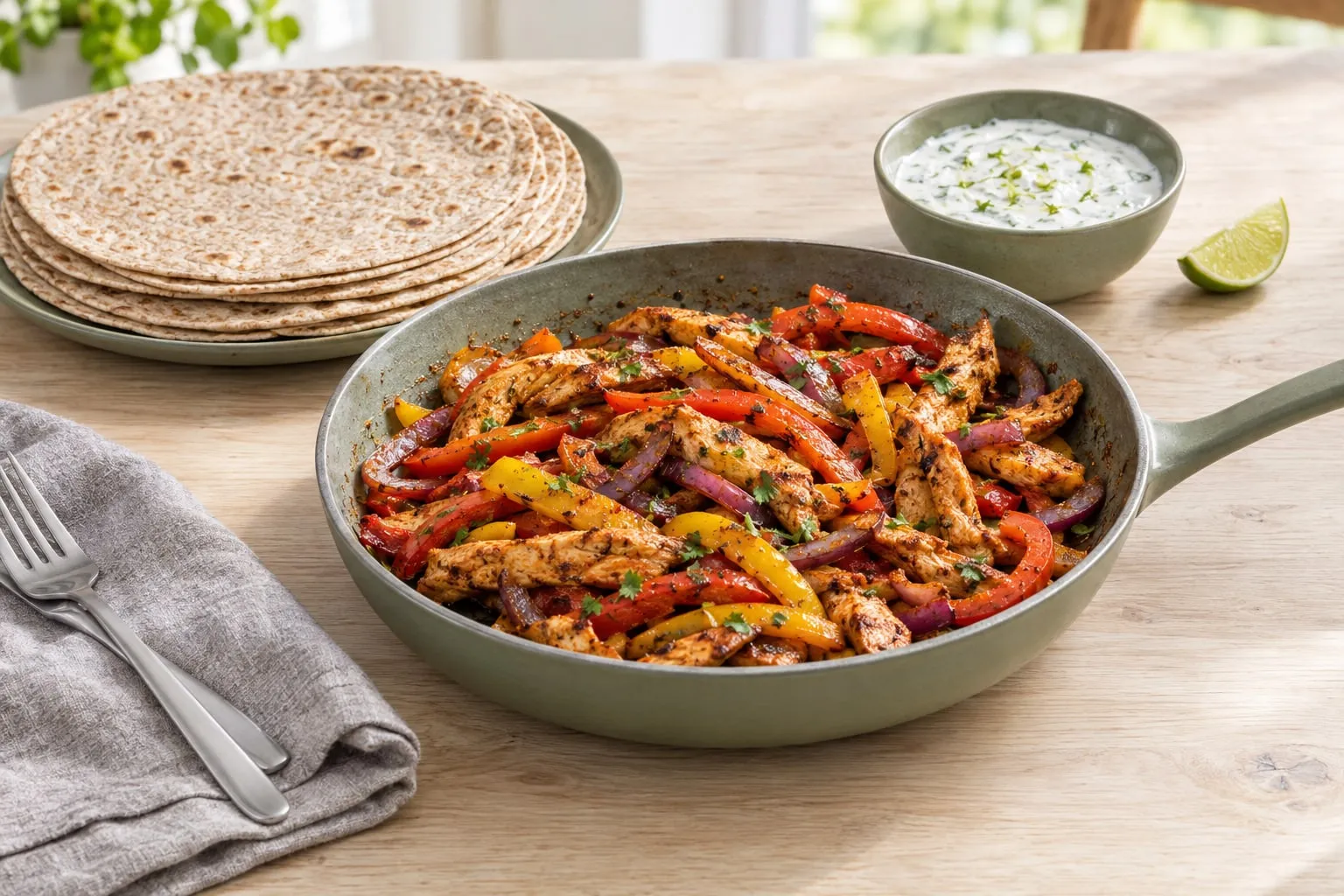
Chicken Fajitas
51 g protein583 kcal20 min
Strips of chicken breast cooked fast with peppers, with the protein per serving.
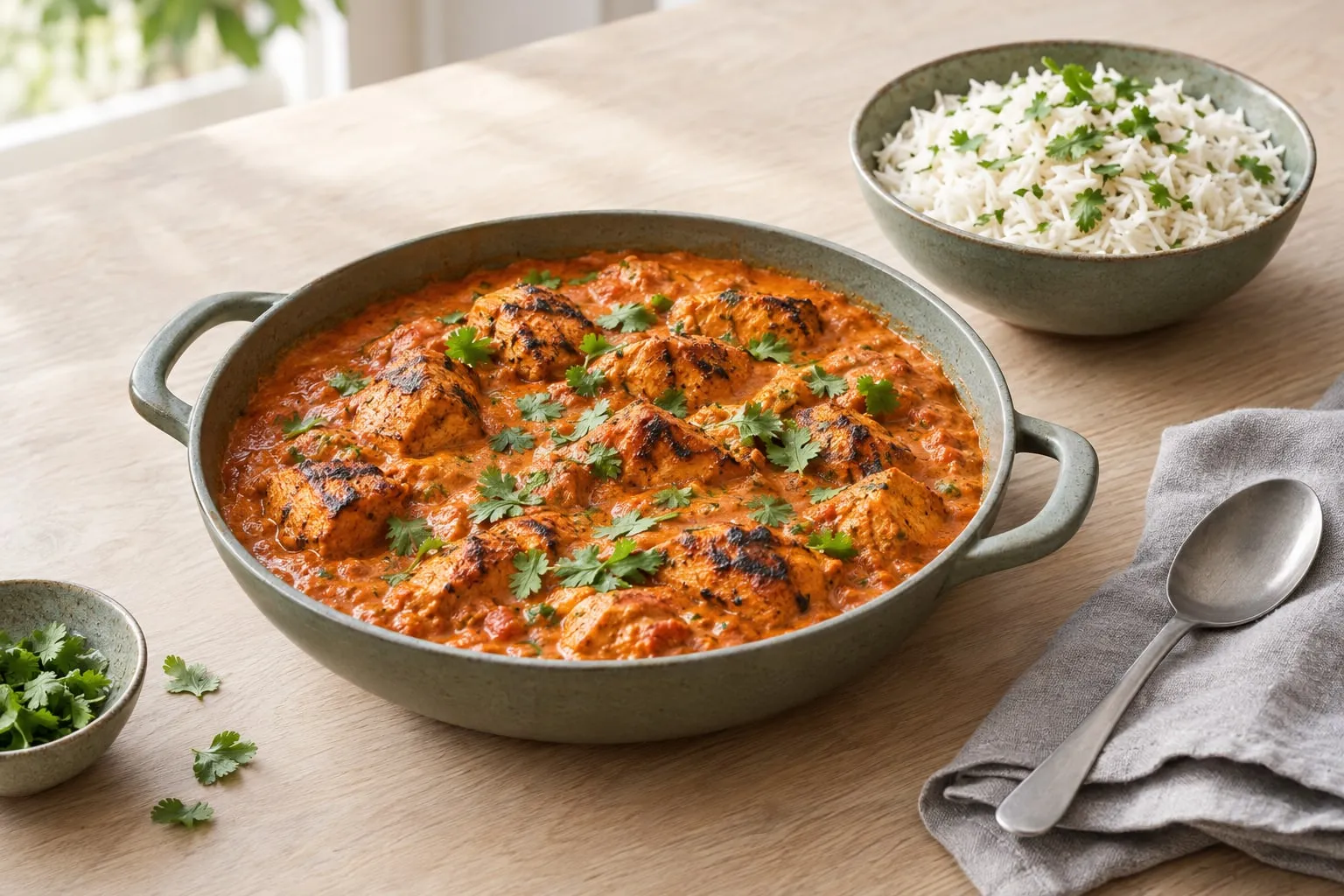
High Protein Chicken Tikka Masala
50 g protein565 kcal2 hr 50 minGluten-free
A curry built on chicken breast pieces and a lighter sauce.
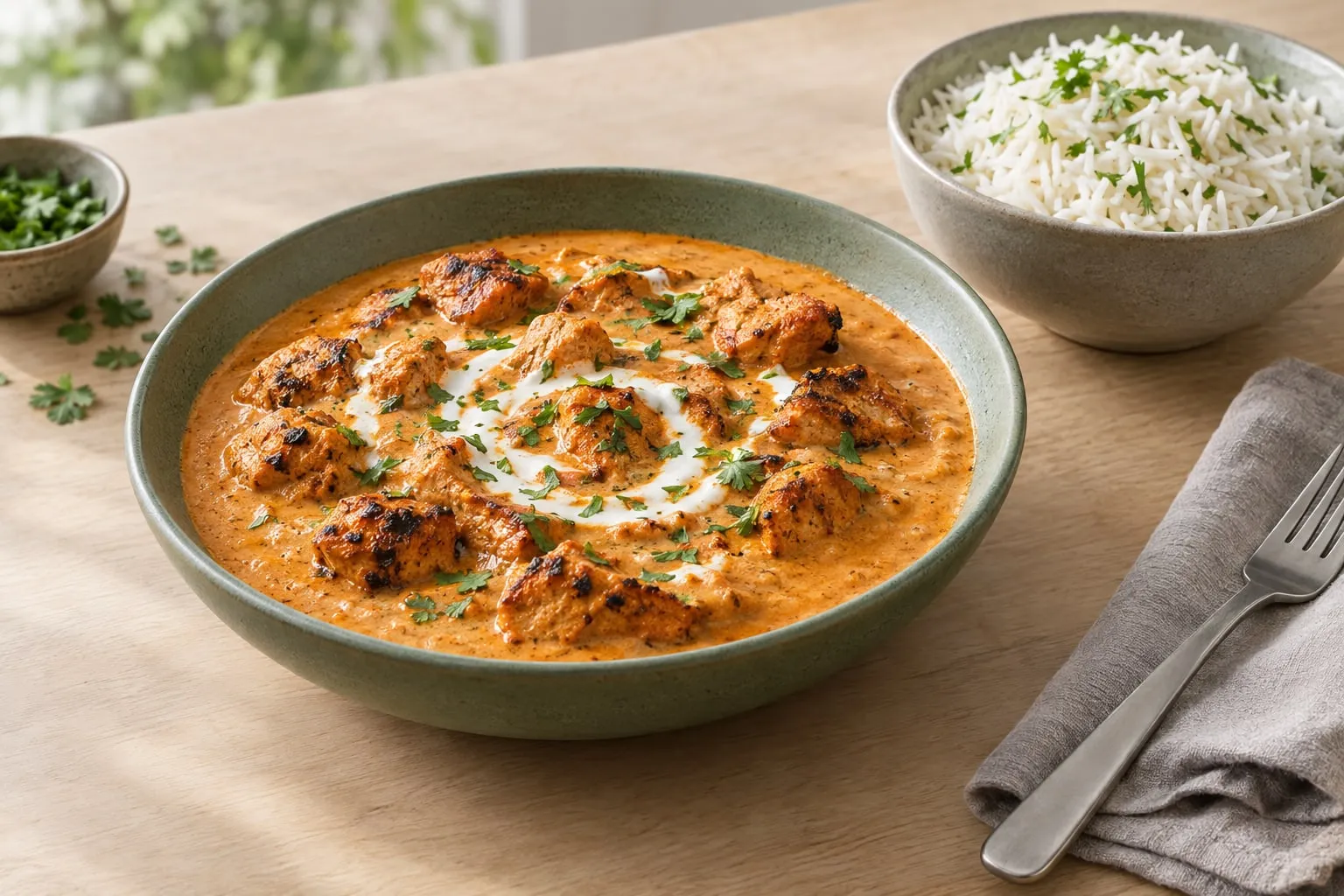
Lighter Butter Chicken
44 g protein302 kcal1 hr 48 minGluten-free
A butter chicken with chicken breast and less cream.
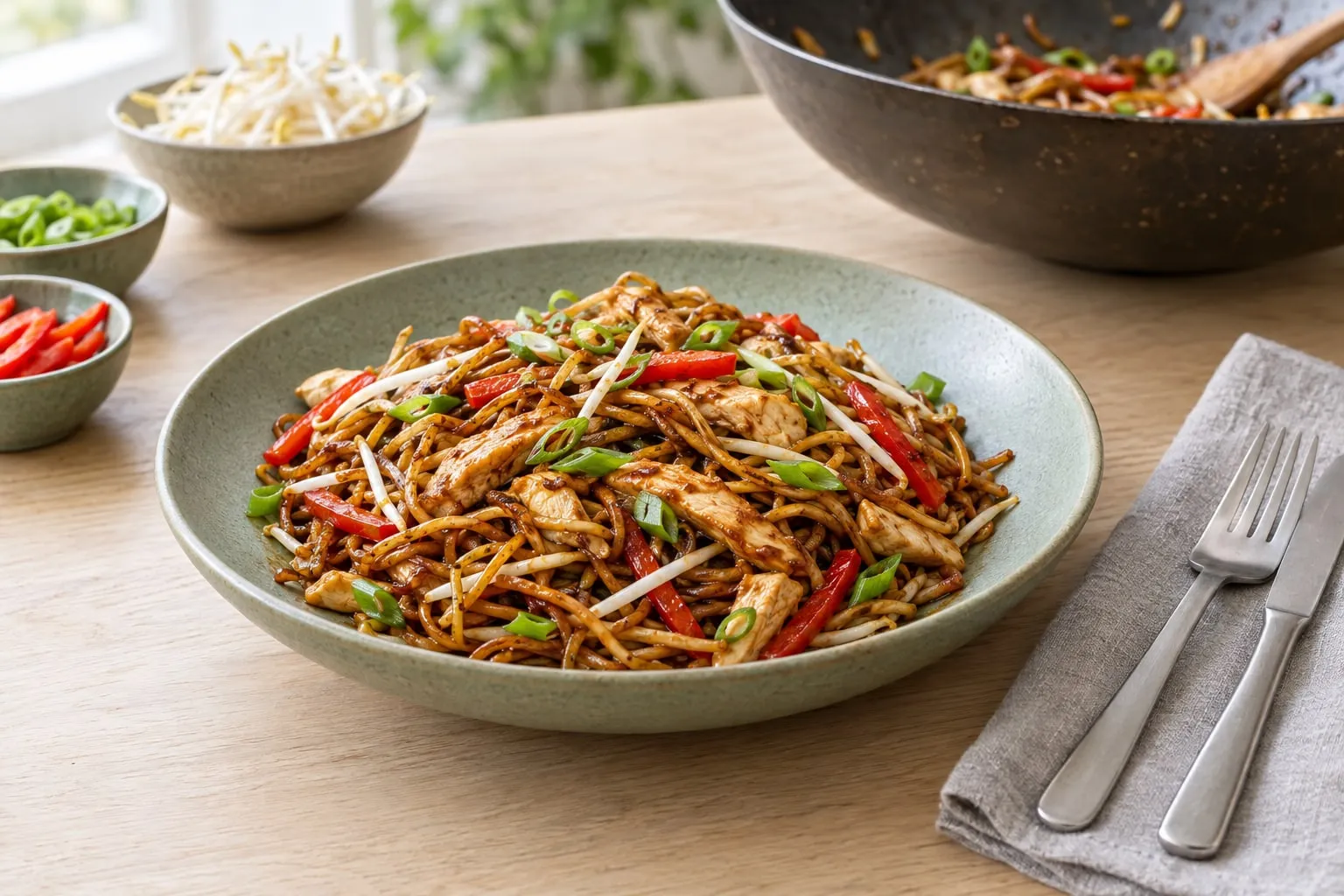
High Protein Chicken Chow Mein
38 g protein381 kcal25 minDairy-free
A noodle stir-fry with sliced chicken breast.
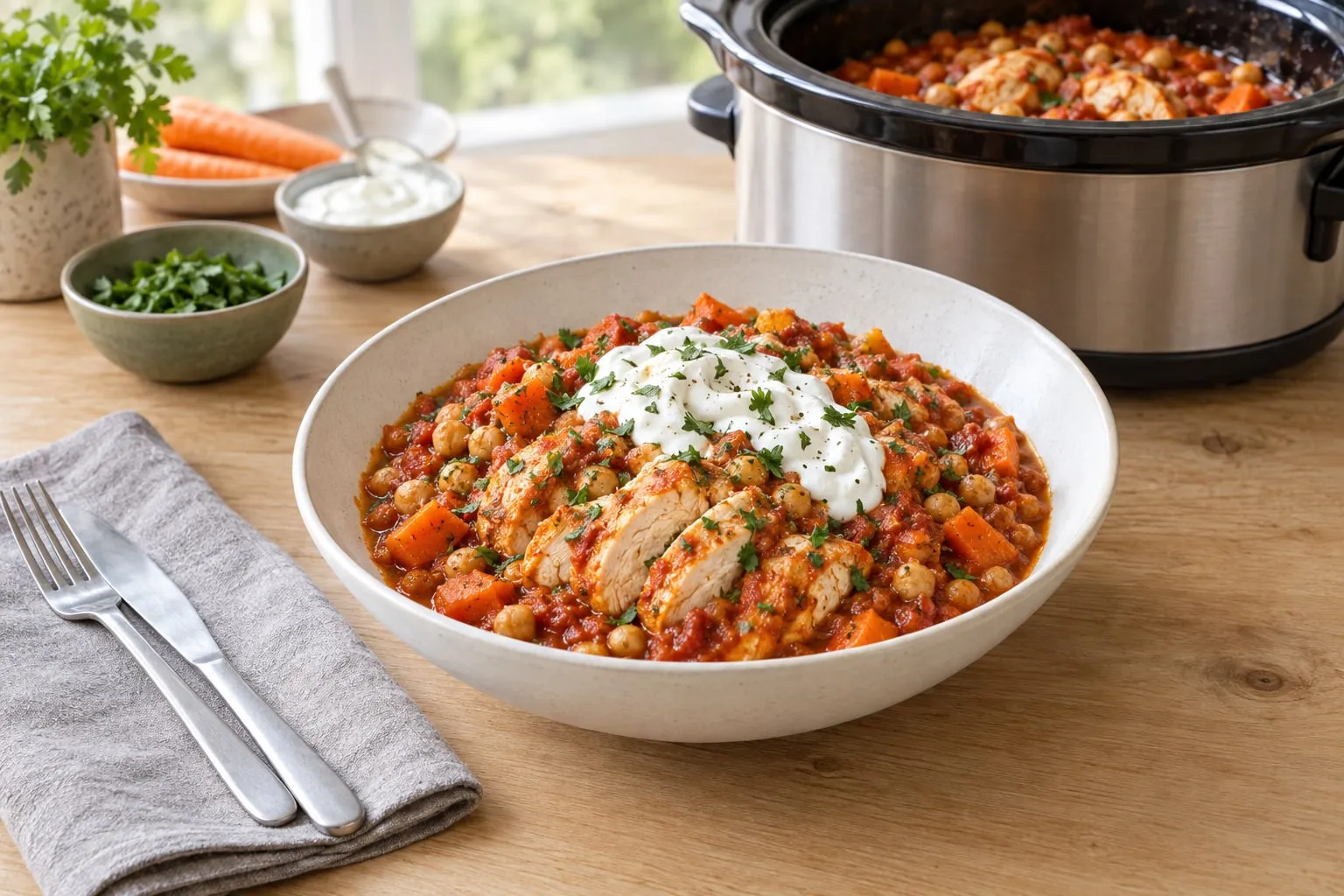
High Protein Slow Cooker Chicken
49 g protein301 kcal5 hr 20 minGluten-free
A slow-cooked method that keeps chicken breast tender.
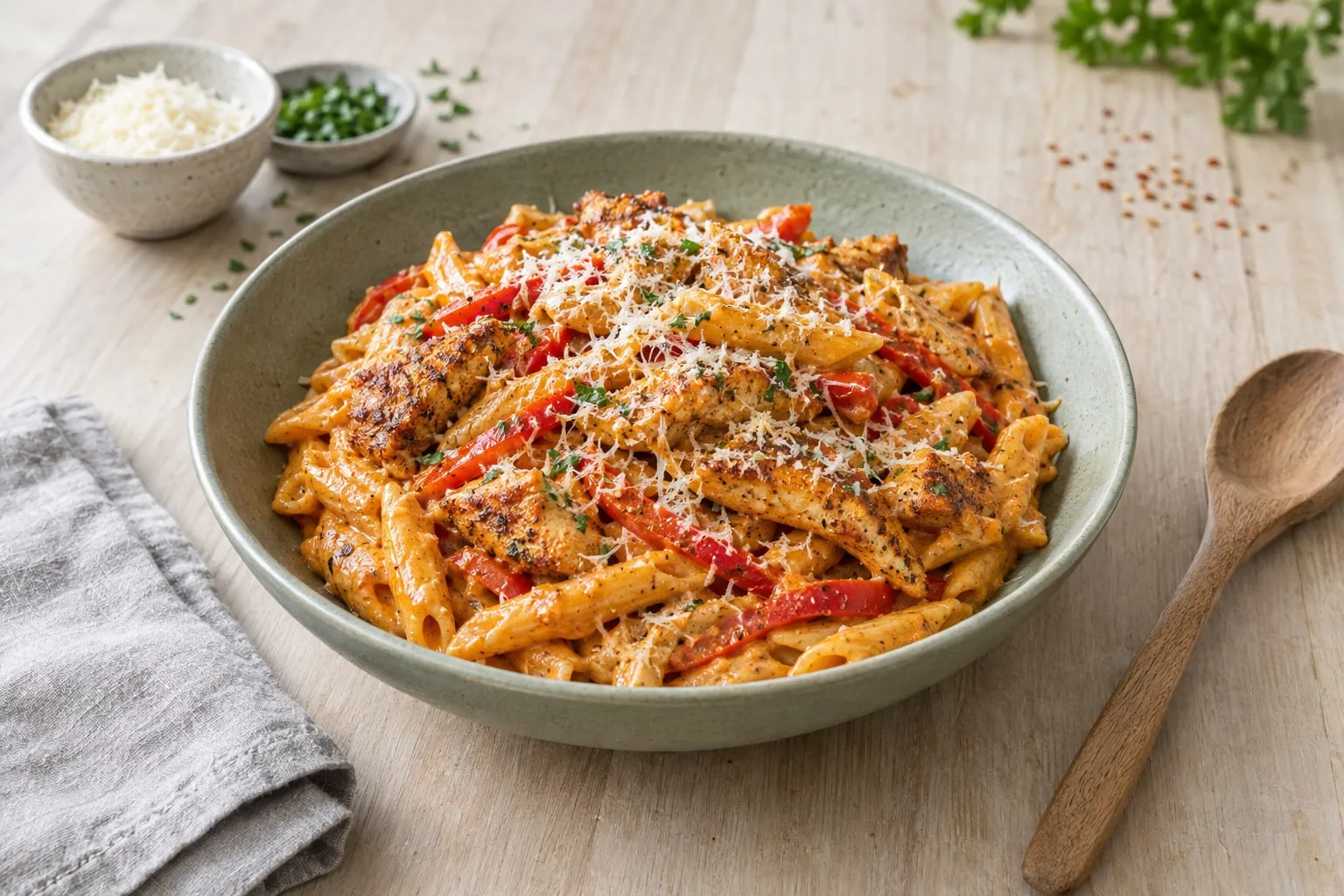
Creamy Cajun Chicken Pasta
46 g protein517 kcal35 min
A pasta where chicken breast does most of the work for protein.
Sources
- McCance and Widdowson's Composition of Foods Integrated Dataset 2021 (CoFID) – Protein, energy and fat for raw and cooked chicken breast
- Food Standards Agency – Cooking chicken until steaming hot throughout, at 75°C or 70°C for 2 minutes
- COMA 1991 and EFSA – Daily protein reference intakes of 0.75 g and 0.83 g per kg body weight
Read our editorial policy for how figures are checked and how to report a mistake.
More protein guides
All guides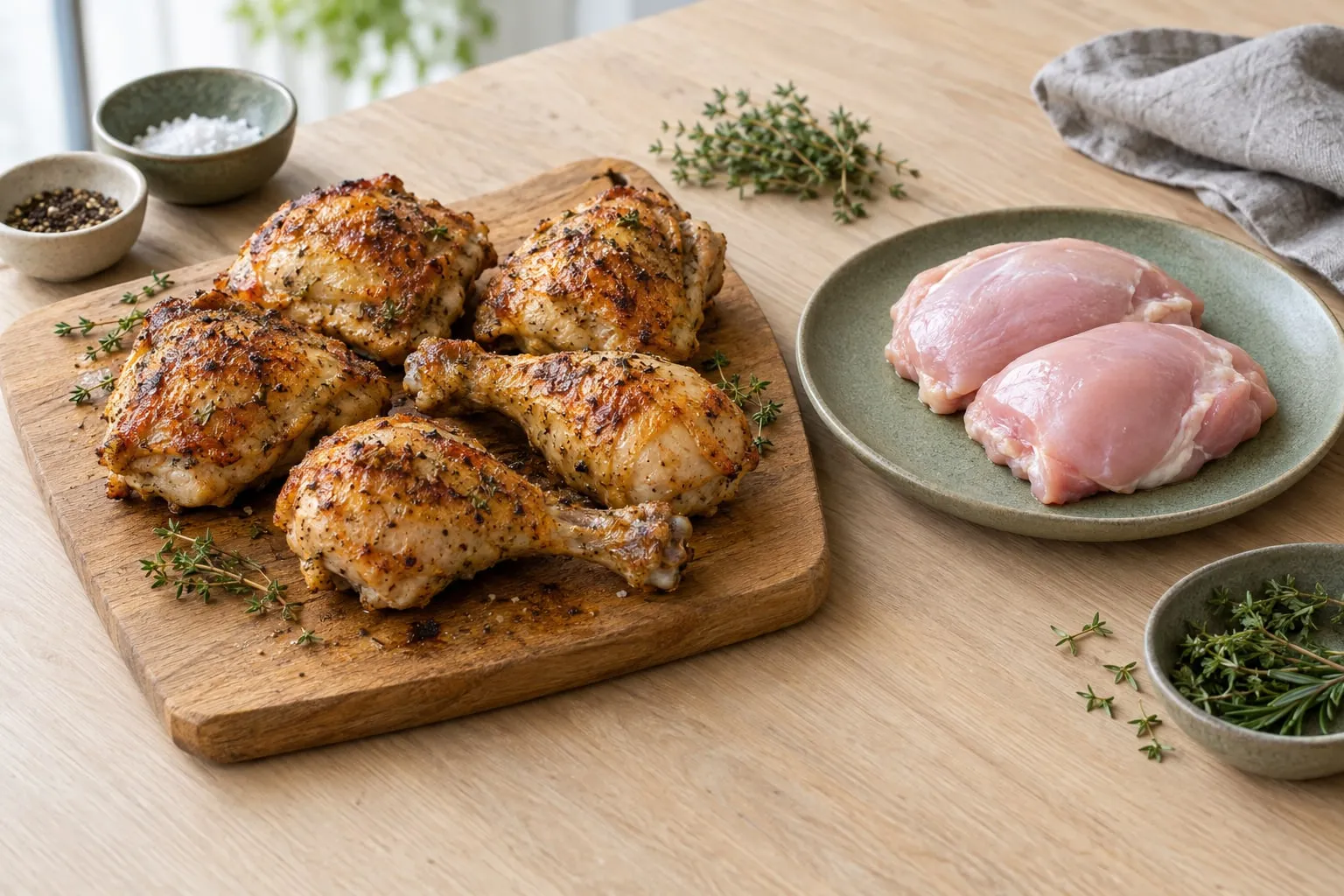
Guide
Protein in Chicken Thighs and Drumsticks
Protein in chicken thighs: a cooked bone-in thigh of 120 g has 21.4 g protein, and two boneless raw thighs have 41.8 g. Drumsticks, skin and bone compared.

Guide
High Protein Foods: A Ranked List
High protein foods ranked by protein per 100 g and per 100 kcal: Parmesan has 36.2 g, grilled chicken 32.0 g, dried red lentils 25.6 g and egg white 10.8 g.

Guide
How Much Protein Do You Need Per Day?
How much protein do I need? The UK reference is 0.75 g per kg of body weight a day, or 52.5 g at 70 kg. See food values and a worked example day.
Guide
What Is Protein and Why Do We Need It?
What is protein good for? It is made of amino acids, nine of them essential. See what it does, the UK 0.75 g per kg a day reference and food values.