Method
Tap a time to start a timer.
Mix the yogurt, lemon juice, garlic, ginger, paprika, cumin, ground coriander, chilli powder, garam masala and salt in a large bowl. Stir in the chicken until every piece is coated. Cover and chill for at least 2 hours, or overnight.
Heat the oven to 220°C (200°C fan), gas 7, with a shelf at the top. Line the baking tray with baking paper.
Lift the chicken onto the tray in a single layer, leaving the thickest marinade behind in the bowl. Roast on the top shelf, turning the pieces once halfway, until the edges are charred and the chicken is cooked through.
While the chicken roasts, heat the rapeseed oil in the frying pan over a medium heat. Fry the onion until soft and golden, then add the garlic, ginger, cumin, paprika and garam masala and cook for 1 minute.
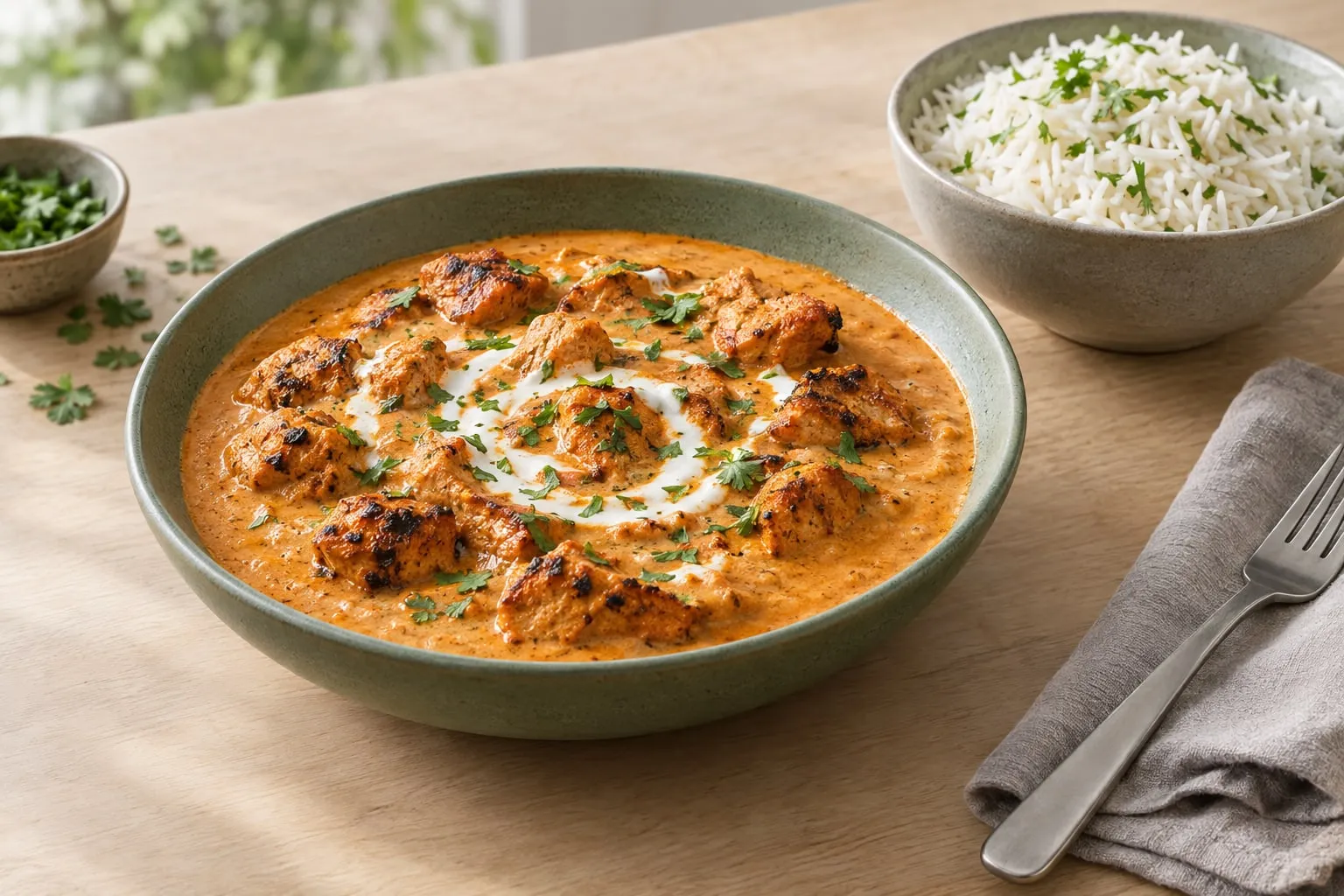
Stir in the tomato purée, chopped tomatoes, coconut milk and water. Bring to a simmer and cook over a low heat, stirring now and then, until the sauce is thick and glossy. Meanwhile, cook the rice in a lidded pan of boiling water for 12 minutes, then drain.
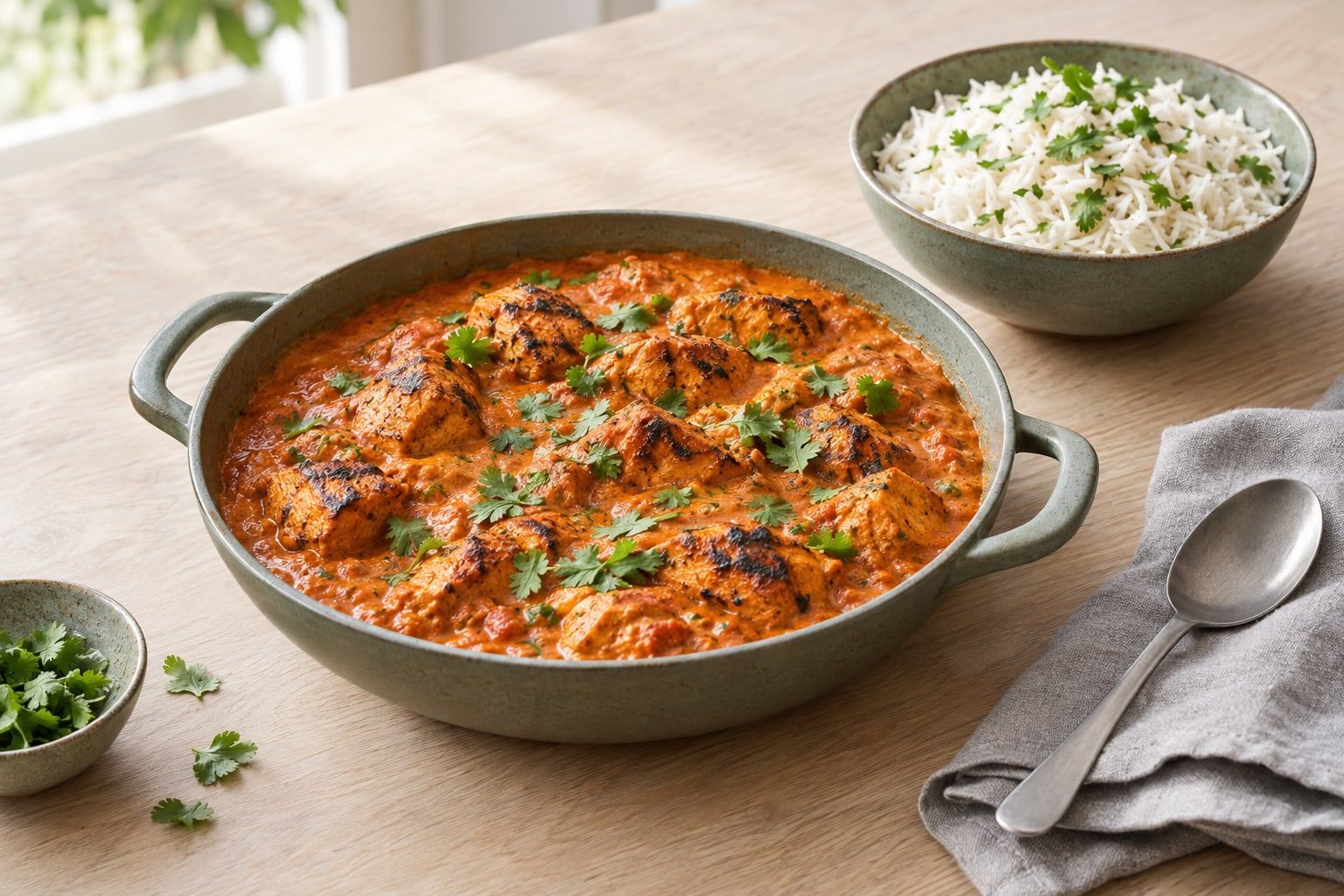
Tip the roasted chicken and any juices from the tray into the sauce. Simmer gently until the largest piece reads 75°C in the centre, then scatter over the coriander.
How to tell it's done
- Core temperature: 75°C in the thickest part, checked with a probe thermometer.
- The largest piece of chicken reads 75°C in the centre and is white all the way through.
- The sauce is thick enough to coat the back of a spoon and the chicken has charred edges.
Tips for success
- Marinate for 2 hours or overnight
The lemon juice and yogurt tenderise the surface of the chicken and carry the spices into it. Two hours is the minimum, and a night in the fridge gives the deepest flavour.
- Shake off the excess marinade
Wipe the thickest coating off with your fingers before the chicken goes on the tray. A thin layer chars at 220°C, while a thick one steams and slides into the pan.
- Keep the sauce at a gentle simmer
The yogurt that clings to the chicken can split in a rapidly boiling sauce. Hold the pan at a low simmer once the chicken is back in and stir now and then.
Boost the protein
- Stir 150 g frozen edamame beans into the sauce with the chicken: about +4 g protein per serving.
- Serve each portion with 50 g extra strained Greek yogurt as a raita: about +5 g protein per serving.
Choosing ingredients
Chicken breast gives the leanest curry. Boneless thigh fillets stay juicier and have slightly less protein per 100 g.
Strained Greek yogurt labelled 0% fat holds its structure in a marinade. Thin or Greek-style yogurt that is not strained runs off the chicken and has much less protein.
Use light coconut milk in the sauce. It gives a creamy finish for a fraction of the fat of double cream or full-fat coconut milk.
Variations
- With king prawns
Marinate 600 g raw king prawns for 30 minutes only, skip the oven and add them to the sauce for 3–4 minutes until pink. Protein falls to about 41 g per serving.
- Hotter
Add 1 chopped green chilli to the onion in step 4 and double the chilli powder in the marinade. Protein is unchanged.
Serve it with
- Warm high protein naan
- Cucumber and mint raita
- Kachumber salad of tomato, onion and cucumber
Storage
Chicken tikka masala keeps for 3 days in the fridge in airtight containers. Cool the rice within an hour and keep it separately, and eat it within 24 hours.
Freeze the sauce and chicken for up to 3 months, thaw overnight in the fridge and reheat until piping hot throughout.
Troubleshooting
Why is my chicken tikka masala pale instead of red?
The colour comes from paprika and chilli powder, not dye. Use fresh paprika, add an extra ½ teaspoon of chilli powder to the marinade for a deeper red, and roast the chicken until the edges char.
Why did the yogurt split in my chicken tikka masala sauce?
The sauce boiled hard once the marinated chicken went in. Keep it at a low simmer, and shake off the thickest marinade before roasting so less yogurt goes into the pan.
Frequently asked questions
How much protein is in this chicken tikka masala?
Each of the four servings has 50 g protein and 565 kcal with 80 g (raw weight) rice, so 36% of the energy comes from protein. Without the rice it has about 44 g protein.
Can I make chicken tikka masala without an oven?
Yes. Cook the marinated chicken under a hot grill for 8–10 minutes a side, or fry it in batches in a hot pan, until charred and 75°C in the centre.
How is chicken tikka masala different from butter chicken?
Chicken tikka masala has a tomato, onion and spice sauce with grilled, marinated chicken, while butter chicken is milder, smoother and sweeter. This chicken tikka masala recipe keeps the oven-charred flavour with far less oil than a takeaway.
Made it? Rate the recipe
Read next
- How Much Protein Is in Chicken Breast?How much protein in a chicken breast: a raw 150 g fillet has 36.0 g protein and 159 kcal. Per 100 g raw and cooked, with fillet sizes and pack totals.
- Protein in Chicken Thighs and DrumsticksProtein in chicken thighs: a cooked bone-in thigh of 120 g has 21.4 g protein, and two boneless raw thighs have 41.8 g. Drumsticks, skin and bone compared.
Written by The Protein Recipes editorial team. Nutrition is calculated from the ingredient list using CoFID. Read how our recipes are made and how we correct mistakes.