Protein guide
Protein in Oats
Quick answer
Porridge oats contain 10.9 g protein and 381 kcal per 100 g dry weight, about 11% of the energy. A 40 g portion gives 4.4 g protein and 152 kcal, and porridge made with semi-skimmed milk has 4.6 g protein per 100 g.
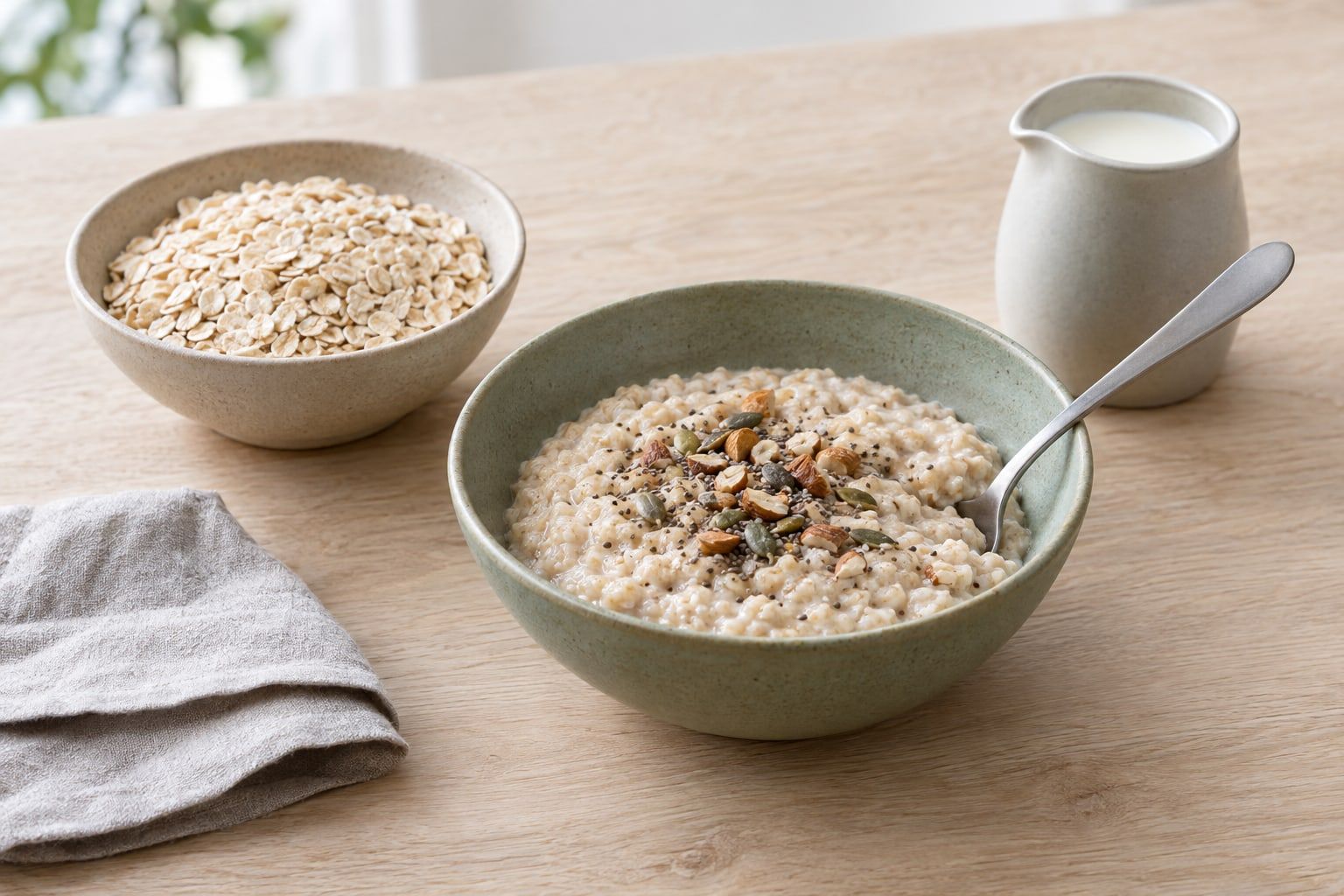
Protein in oats is 10.9 g per 100 g of dry porridge oats, with 381 kcal and 8.1 g fat, which means only about 11% of the energy is protein. A typical 40 g portion gives 4.4 g protein and 152 kcal, and a 60 g bowl 6.5 g and 229 kcal.
The figures change once oats are cooked. Porridge made with semi-skimmed milk has 4.6 g protein and 84 kcal per 100 g, made with milk and water 3.1 g and 72 kcal, and made with water alone 1.4 g and 47 kcal. Those are cooked weights, so they cannot be compared directly with the dry number. A 300 g bowl made with semi-skimmed milk gives 13.8 g protein, against 4.2 g for the same weight made with water.
Oats alone give a modest amount, and the milk and toppings change the total more. Take 40 g of oats with 150 g of skyr: 4.4 g plus 16.5 g makes 20.9 g protein for about 248 kcal. A 30 g scoop of whey powder would add another 22.5 g. Overnight oats work the same way, with the soaking liquid and toppings doing most of the work, and whichever way you cook them, weigh the oats dry.
| Food | Protein | Energy | Fat |
|---|---|---|---|
| Porridge oats, dry | 10.9 g | 381 kcal | 8.1 g |
| Instant hot oat cereal, dry, fortified | 11.0 g | 352 kcal | 7.3 g |
| Porridge made with semi-skimmed milk | 4.6 g | 84 kcal | 2.3 g |
| Porridge made with milk and water | 3.1 g | 72 kcal | 1.9 g |
| Porridge made with water | 1.4 g | 47 kcal | 1.0 g |
Source: CoFID – McCance and Widdowson's Composition of Foods Integrated Dataset 2021 (codes 11-788, 11-792, 11-789, 11-1106, 11-1107)
| Portion | Weight | Protein | Energy |
|---|---|---|---|
| Porridge oats, dry | 40 g | 4.4 g | 152 kcal |
| Porridge oats, dry | 60 g | 6.5 g | 229 kcal |
| Porridge made with semi-skimmed milk | 300 g | 13.8 g | 252 kcal |
| Porridge made with water | 300 g | 4.2 g | 141 kcal |
Source: Calculated from CoFID codes 11-788, 11-789 and 11-1107; 40 g of dry oats is assumed to be one British portion
How much protein is in 40 g of oats?
Porridge oats have 10.9 g protein and 381 kcal per 100 g dry, so a 40 g portion gives 4.4 g protein and 152 kcal. A larger 60 g bowl gives 6.5 g and 229 kcal. Instant hot oat cereal is very similar at 11.0 g protein per 100 g, with 352 kcal. Protein provides only about 11% of the energy in oats, because most of the calories come from carbohydrate. That does not make oats a poor choice, but it does mean they are a base for a high protein breakfast rather than a source of one on their own.
How much protein is in a bowl of porridge?
It depends on what the porridge is made with. Porridge cooked in semi-skimmed milk has 4.6 g protein per 100 g, made with half milk and half water 3.1 g, and made with water alone 1.4 g. These are cooked weights, so they cannot be compared with the dry figure. A 300 g bowl made with semi-skimmed milk gives 13.8 g protein and 252 kcal, while the same weight made with water gives 4.2 g and 141 kcal. So the answer to does porridge have protein is yes, but the liquid makes a real difference.
Why do dry and cooked oat figures differ?
Oats soak up liquid as they cook, so a spoonful of dry oats becomes several spoonfuls of porridge. Dry oats at 10.9 g protein per 100 g and porridge at 4.6 g per 100 g are not in conflict; they describe different weights of food. For counting, it is simplest to add up the parts. A 40 g portion of dry oats cooked in 200 ml of semi-skimmed milk gives 4.4 g from the oats plus 7.0 g from the milk, or 11.4 g protein, and about 244 kcal. Use the dry figure for the packet and the cooked figure only if you weigh the finished bowl.
How can you add protein to porridge or overnight oats?
The most effective changes are the liquid and the toppings. Stirring in 150 g of plain fat free skyr, a typical value of 11 g protein per 100 g, brings 40 g of oats to 4.4 g plus 16.5 g, which is 20.9 g protein and about 248 kcal. Adding a 30 g scoop of whey powder, a typical 75 g protein per 100 g, adds 22.5 g and 114 kcal. For overnight oats, 40 g oats with 150 g skyr and 100 ml semi-skimmed milk gives 24.4 g protein. For hot porridge, stir the whey in off the heat to avoid clumping, and add a splash more liquid.
Are oats gluten-free?
Oats do not contain gluten in the way wheat, barley and rye do, but regular oats are often grown and milled alongside those grains and can pick up traces. For that reason, anyone avoiding gluten should choose oats labelled gluten-free. The protein figures in this guide are for ordinary porridge oats, so the pack label has the exact numbers for gluten-free oats.
Practical tips
- Weigh oats dry
Count the dry weight when you scoop from the packet. 40 g is a typical portion and gives 4.4 g protein.
- Stir whey in off the heat
Take hot porridge off the hob before adding protein powder, then stir in with a splash of milk. It mixes more smoothly and is less likely to turn grainy.
- Use skyr or yogurt for overnight oats
Replacing some of the milk with strained yogurt or skyr gives a thicker mix and a much higher protein count than milk alone.
Myth or fact
- The facts
Is it true that porridge is a high protein breakfast?
Not on its own. About 11% of the energy in dry oats comes from protein, so 40 g gives 4.4 g. Milk, skyr, yogurt or powder bring the total up.
- Myth
Is it true that porridge made with water has no protein?
No. Porridge made with water has 1.4 g protein per 100 g, because the oats themselves contain protein, though far less than porridge made with milk.
Frequently asked questions
How much protein is in 40 g of oats?
A 40 g portion of dry porridge oats has 4.4 g protein and 152 kcal.
Does porridge have protein?
Yes. Porridge made with semi-skimmed milk has 4.6 g protein per 100 g, and porridge made with water has 1.4 g per 100 g.
How much protein is in 100 g of oats?
Dry porridge oats have 10.9 g protein and 381 kcal per 100 g.
How can you make protein oats overnight?
Soak 40 g oats with 150 g skyr and 100 ml semi-skimmed milk in the fridge. That gives about 24.4 g protein before toppings.
How much protein is in 60 g of oats?
A 60 g bowl of dry porridge oats has 6.5 g protein and 229 kcal.
Recipes to try
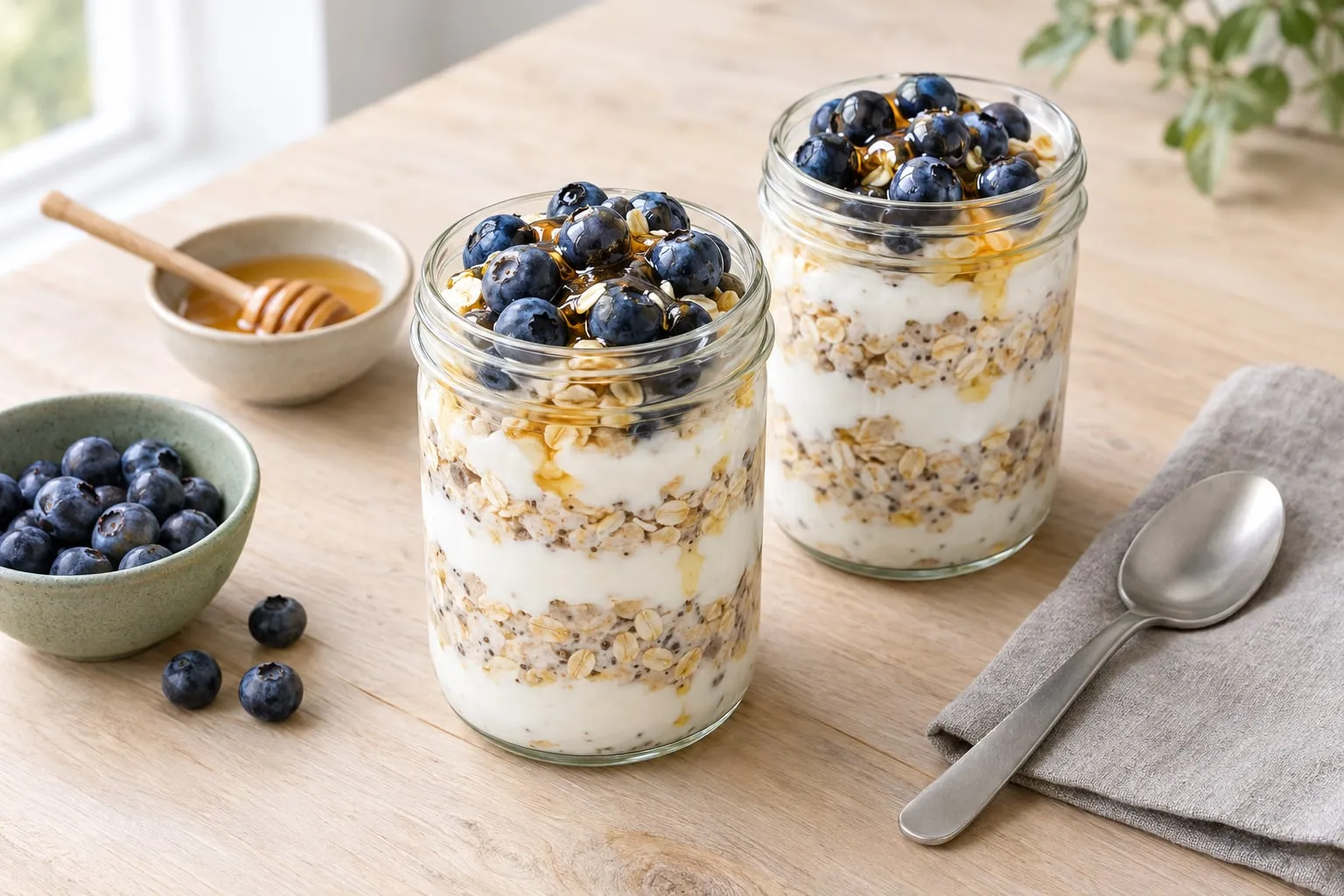
Protein Overnight Oats
26 g protein334 kcal8 hr 5 minVegetarian
Oats soaked in the fridge with ingredients that raise the protein.
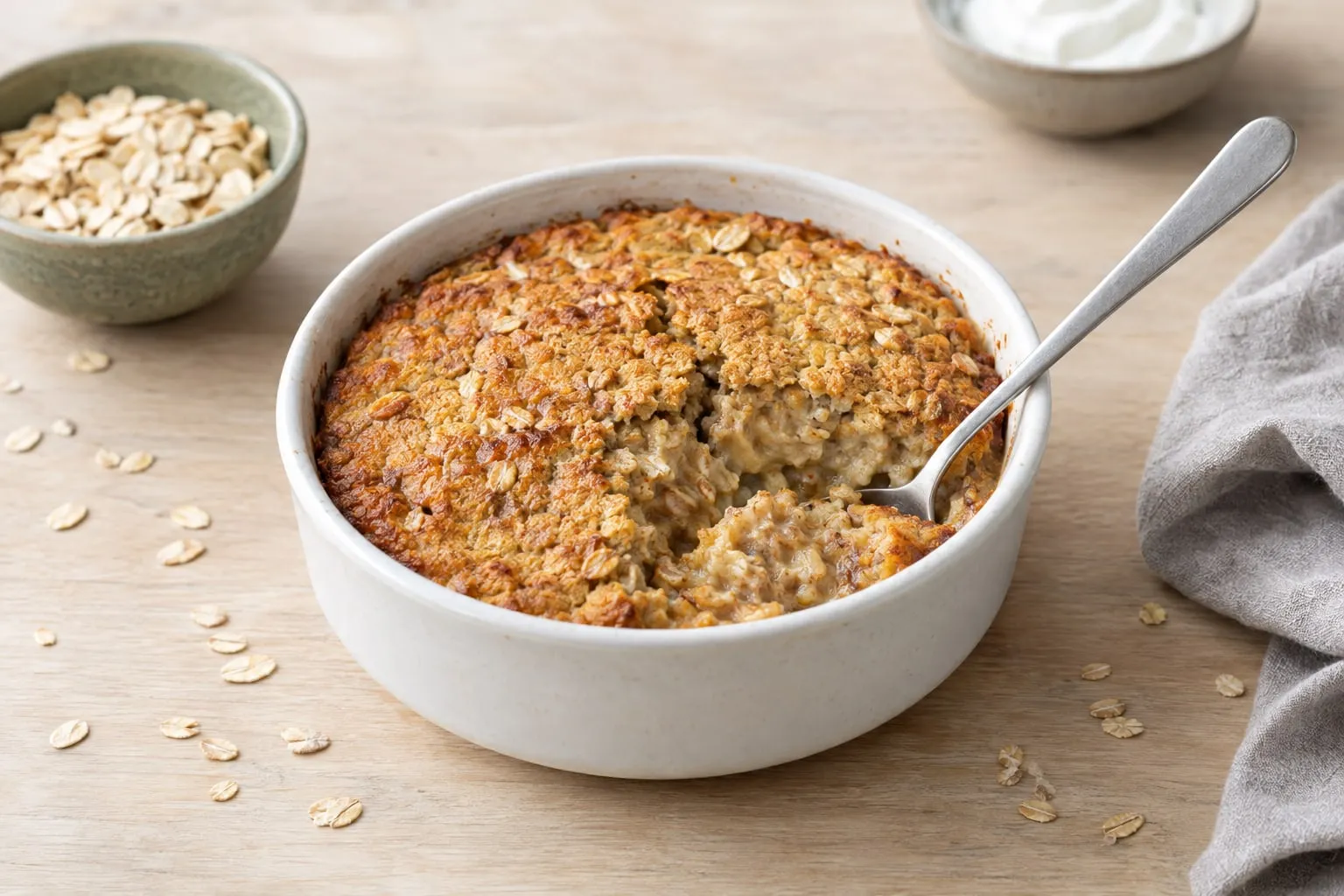
Protein Flapjacks
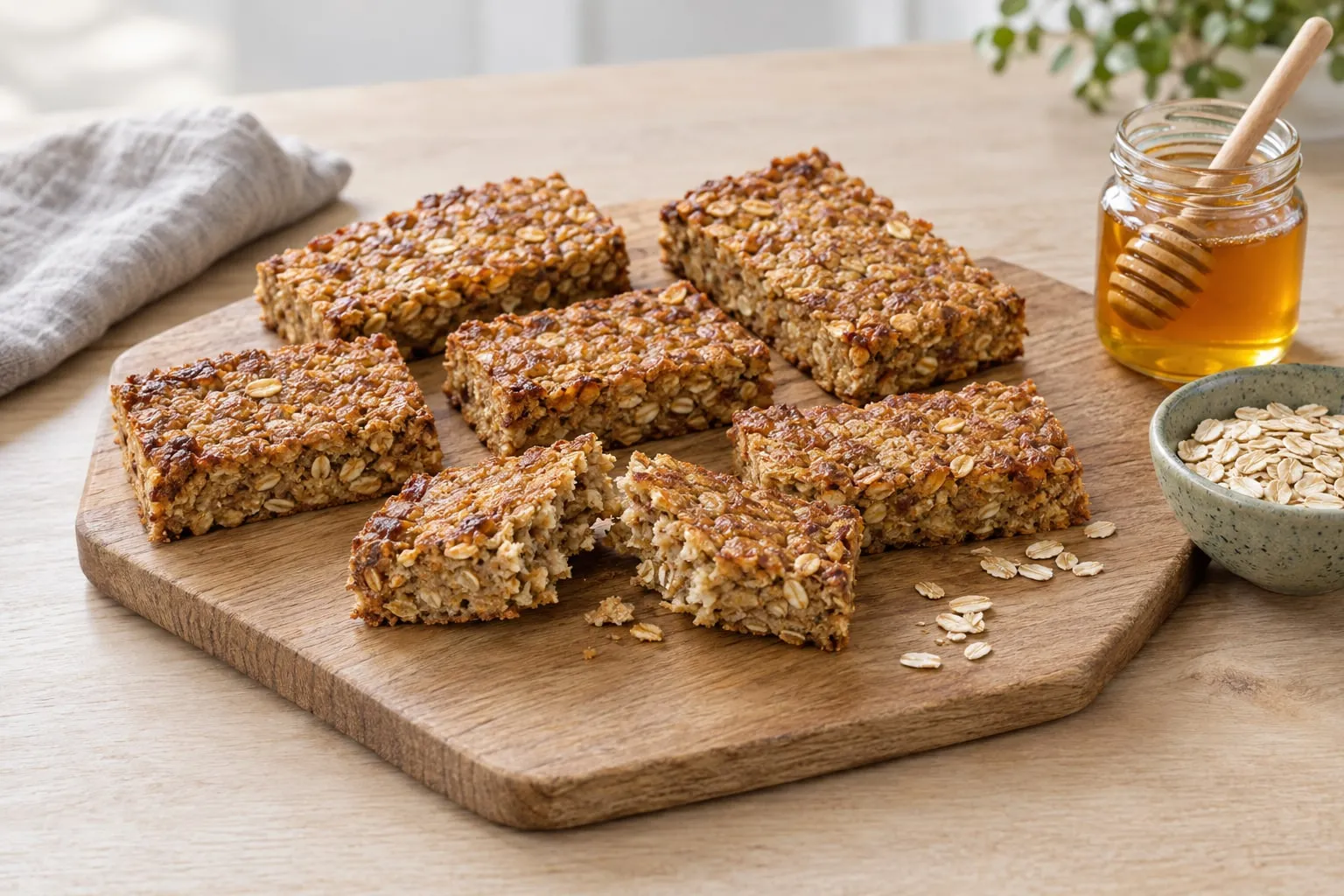
12 g protein201 kcal2 hr 32 minVegetarian
Oat flapjacks cut into squares for a snack.
High Protein Granola
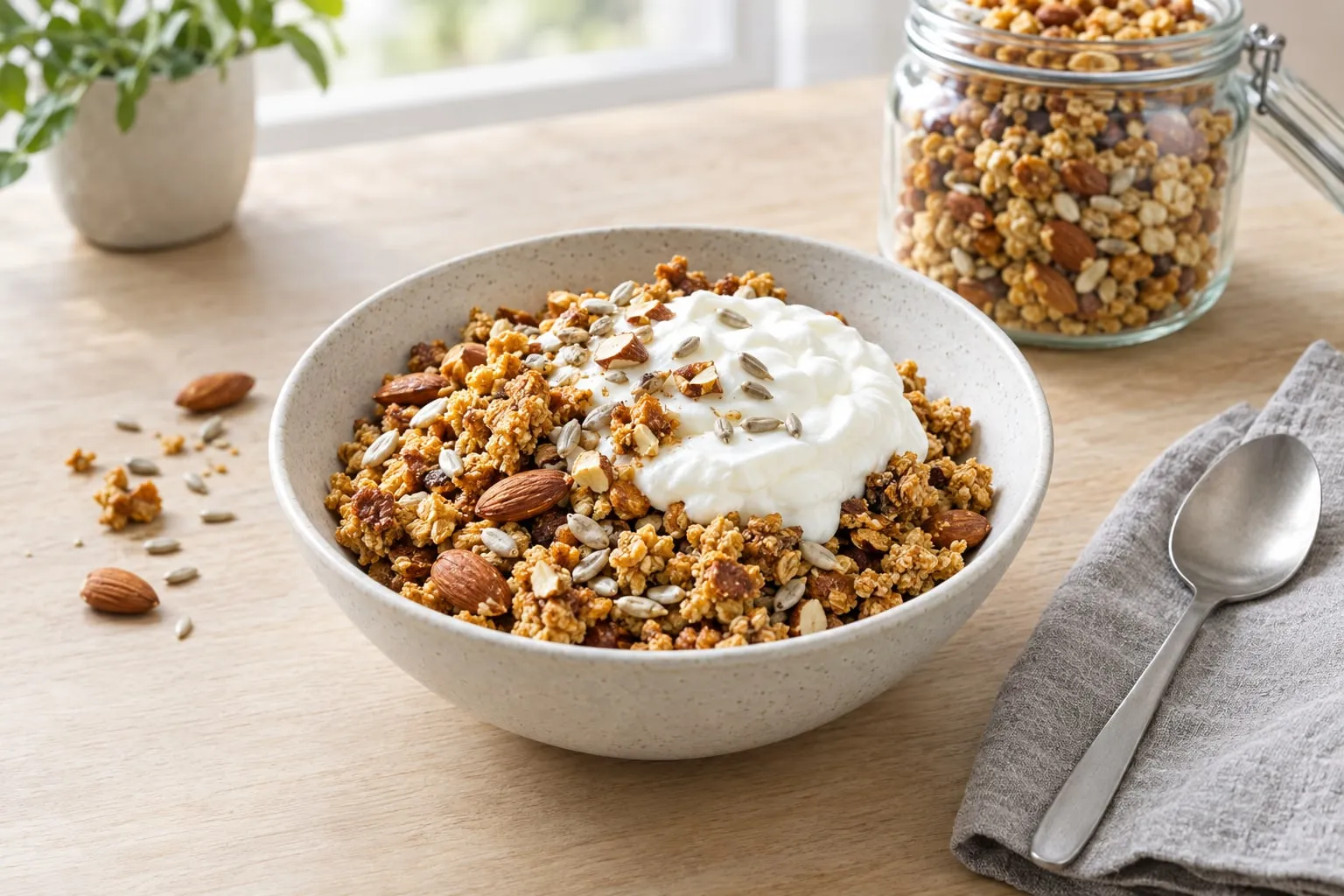
28 g protein277 kcal1 hr 15 minVegetarian
A crunchy oat mix for sprinkling over yogurt.
Sources
- McCance and Widdowson's Composition of Foods Integrated Dataset 2021 (CoFID) – Values for dry porridge oats, instant oat cereal and porridge made with milk, milk and water, or water
- NHS Eatwell Guide – Lists beans, pulses, fish, eggs, meat and other proteins as good sources of protein
Read our editorial policy for how figures are checked and how to report a mistake.
More protein guides
All guides
Guide
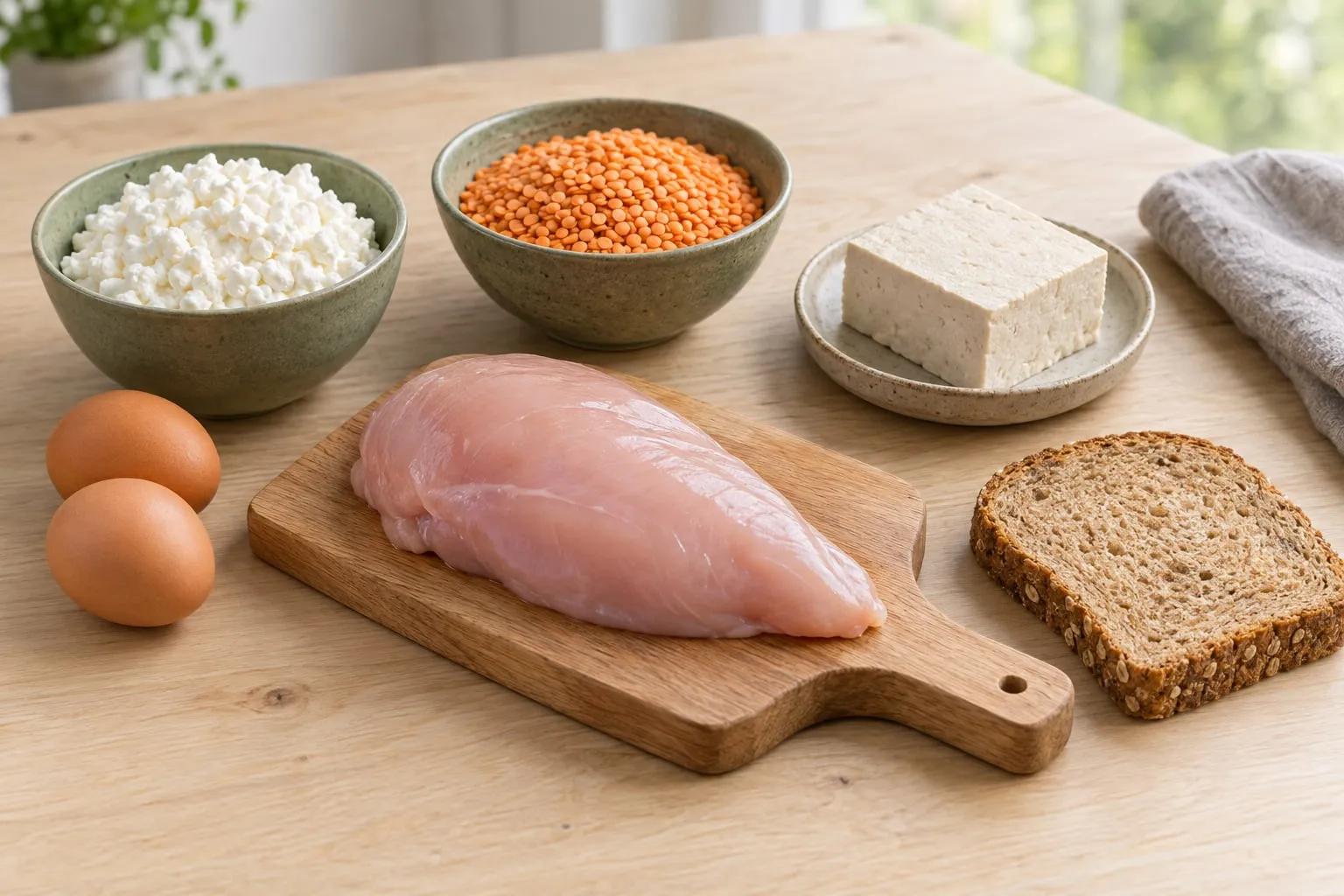
High Protein Foods: A Ranked List
High protein foods ranked by protein per 100 g and per 100 kcal: Parmesan has 36.2 g, grilled chicken 32.0 g, dried red lentils 25.6 g and egg white 10.8 g.
Guide
What Is Protein and Why Do We Need It?
What is protein good for? It is made of amino acids, nine of them essential. See what it does, the UK 0.75 g per kg a day reference and food values.

Guide
How Much Protein Do You Need Per Day?
How much protein do I need? The UK reference is 0.75 g per kg of body weight a day, or 52.5 g at 70 kg. See food values and a worked example day.
Guide
How Much Protein to Build Muscle
How much protein to build muscle: research on regular training suggests 1.2–1.6 g per kg a day, 84–112 g at 70 kg, against 53 g for the UK reference intake.