Method
Tap a time to start a timer.
Tip the porridge oats into the blender and blend for 30 seconds until they form a fine flour.
Add the cottage cheese, eggs, skimmed milk and baking powder. Blend for about 1 minute until the batter is completely smooth with no cottage cheese curds.
Leave the batter in the blender jug for 5 minutes so the oats absorb the liquid.
Heat a 24–28 cm non-stick frying pan over a medium heat. Add the rapeseed oil and wipe it around the pan with kitchen paper.
Spoon in 4 pancakes of about 3 tablespoons of batter each. Cook for 2 minutes until bubbles appear and the edges are set, then flip and cook for 2 minutes more.
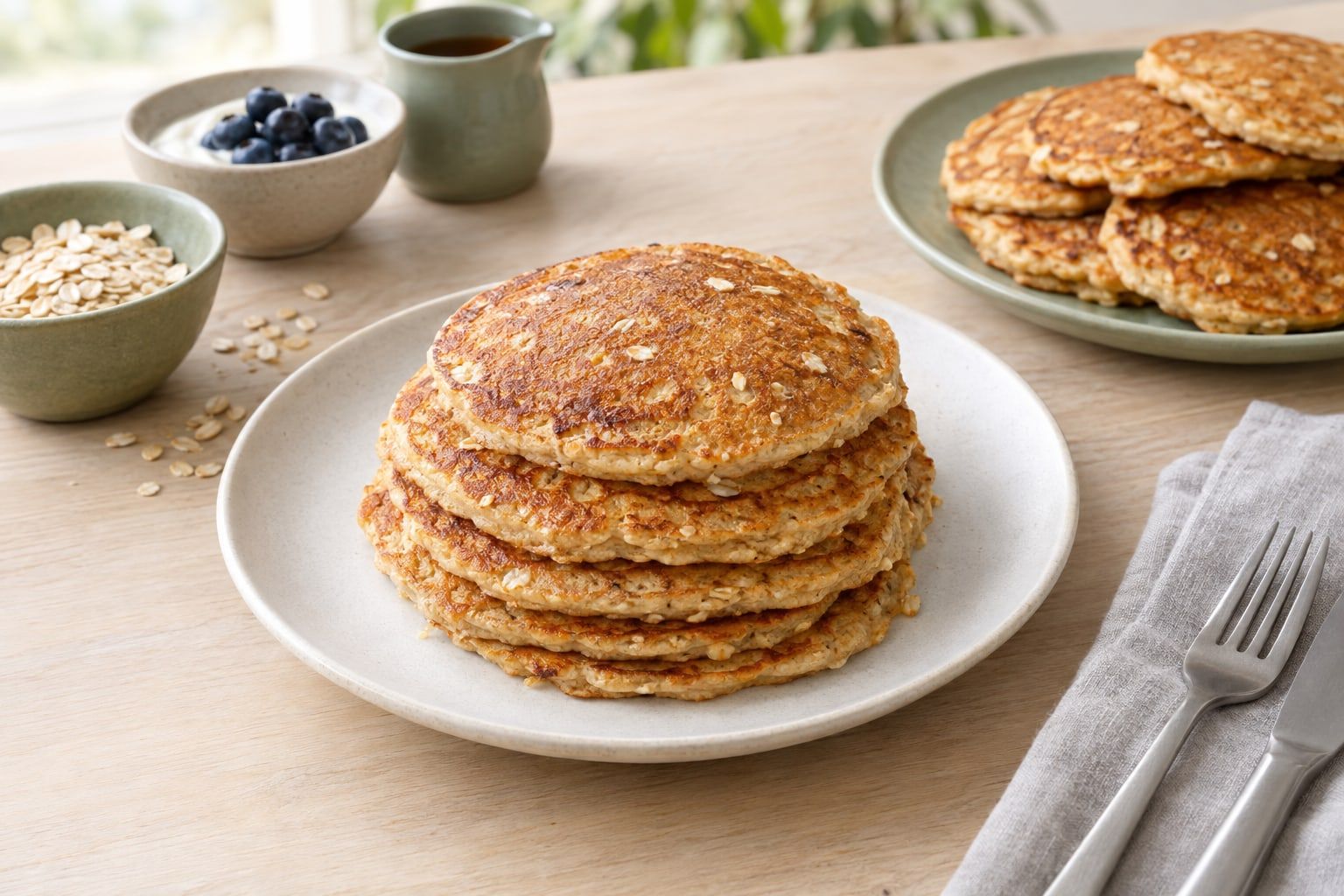
Lift the pancakes onto a plate. Cook the remaining batter in a second batch of 4 pancakes in the same way, then serve 4 pancakes per person.
How to tell it's done
- The surface is covered in small bubbles and the edges look dry before you flip.
- Both sides are golden brown and the middle springs back when pressed.
Tips for success
- Blend the oats first
Run the porridge oats on their own for 30 seconds until they look like flour, then add the wet ingredients. Whole flakes blended in one go leave a gritty pancake.
- Rest the batter for 5 minutes
The oat flour soaks up liquid while the batter stands, so the pancakes hold together in the pan and the texture is not sandy.
- Keep the heat at medium
Oat batter with cottage cheese in it browns quickly. If the first pancake is dark outside and wet in the middle, lower the heat and cook it for 2 minutes per side.
- Make them small
Pancakes of about 60 g batter, roughly 3 tablespoons, flip cleanly. Larger ones tear.
Boost the protein
- Stir 1 scoop (30 g) of whey protein powder into the blender and add 2 tablespoons of milk: about +11 g protein per serving.
- Swap the 50 ml skimmed milk for 50 g strained 0% Greek yogurt: about +2 g protein per serving.
Choosing ingredients
Reduced-fat cottage cheese gives a smooth batter and keeps the protein high. Full-fat cottage cheese works too, but the pancakes are a little richer and slightly lower in protein per 100 g.
Use plain porridge oats, not instant sachets or flavoured oats. Plain oats blend to an even flour, and there is no added sugar to catch on the pan.
Variations
- With blueberries
Drop 8–10 blueberries onto each pancake just after spooning the batter into the pan. Cook for the same time and flip gently.
- Thinner pancakes
Add 2–3 tablespoons of extra skimmed milk to the blended batter for a thinner, crêpe-style pancake. Cook for 1–2 minutes per side.
Serve it with
- Fresh berries
- Strained Greek yogurt
- Sliced banana and a drizzle of honey
Storage
Let the oat protein pancakes cool completely, then keep them in an airtight container in the fridge for up to 3 days.
Freeze them with baking paper between the pancakes for up to 2 months, and reheat in the toaster or a dry frying pan.
Troubleshooting
Why are my oat protein pancakes dry and sandy?
The batter was too thick or went into the pan without resting. Add 1–2 tablespoons of skimmed milk, blend again and leave the batter for the full 5 minutes.
Why do my oat protein pancakes fall apart when I flip them?
The pancakes were flipped before the edges set. Wait for bubbles to break on the surface, keep each pancake to about 3 tablespoons of batter and slide the fish slice right under before turning.
Frequently asked questions
How much protein is in these protein pancakes with oats?
Each of the 2 servings, 4 pancakes, has 25 g protein and 333 kcal, so 30% of the energy comes from protein.
Can I make protein pancakes with oats without protein powder?
Yes. Cottage cheese and eggs supply the protein here, so the recipe needs no powder at all.
Are protein pancakes with oats gluten-free?
Oats are often processed alongside wheat. For a gluten-free version, buy oats labelled gluten-free.
Made it? Rate the recipe
Read next
- Protein in OatsProtein in oats: porridge oats have 10.9 g protein per 100 g dry, so a 40 g portion gives 4.4 g. Porridge made with milk or water, and ways to add more.
- How Much Protein Do You Need Per Day?How much protein do I need? The UK reference is 0.75 g per kg of body weight a day, or 52.5 g at 70 kg. See food values and a worked example day.
Written by The Protein Recipes editorial team. Nutrition is calculated from the ingredient list using CoFID. Read how our recipes are made and how we correct mistakes.