Protein guide
High Protein Foods: A Ranked List
Quick answer
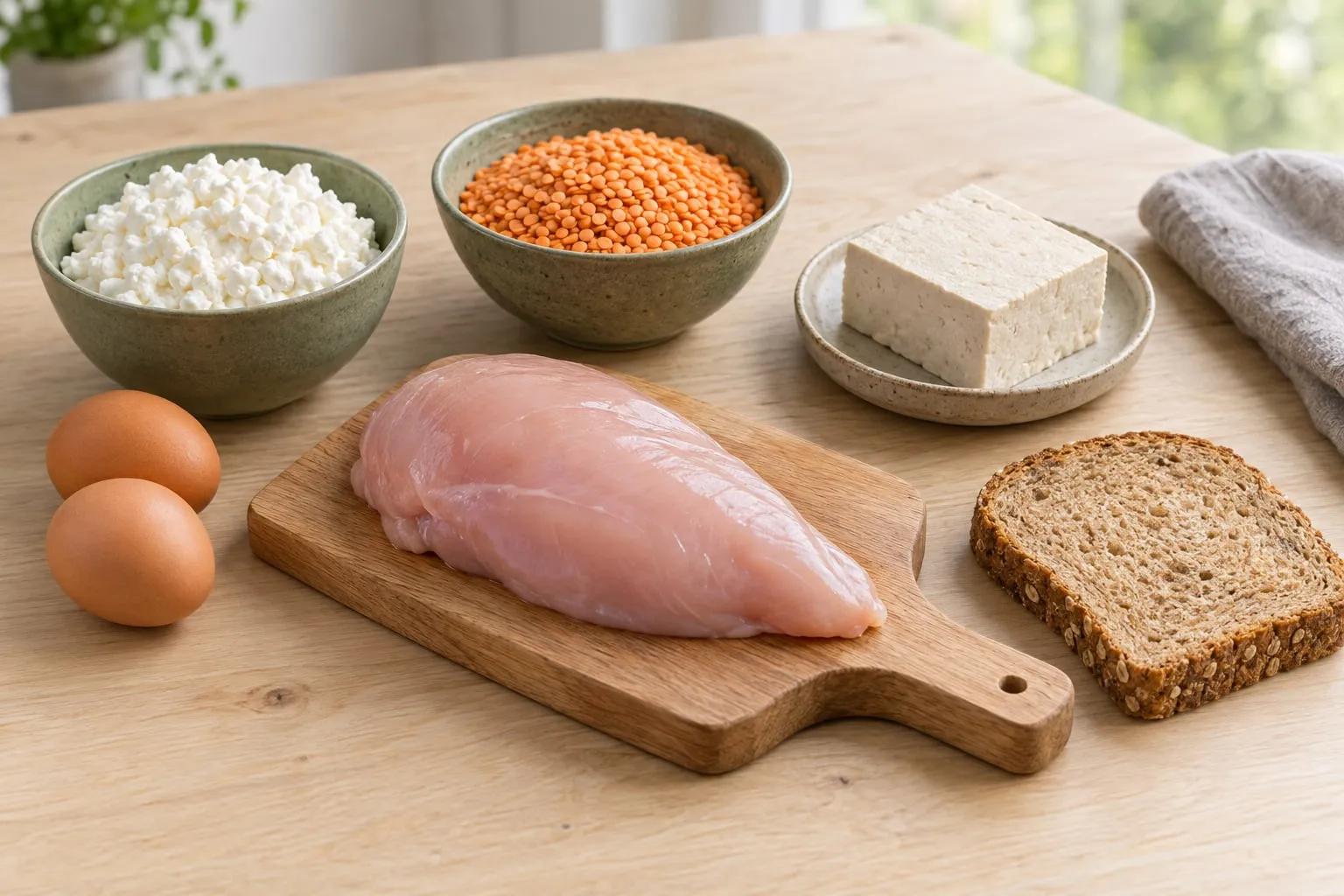
The most protein-dense everyday foods have 24–36 g protein per 100 g: hard cheese, cooked meat and fish, and dried lentils. Eggs, quark, skyr and tofu sit at 10–15 g per 100 g.
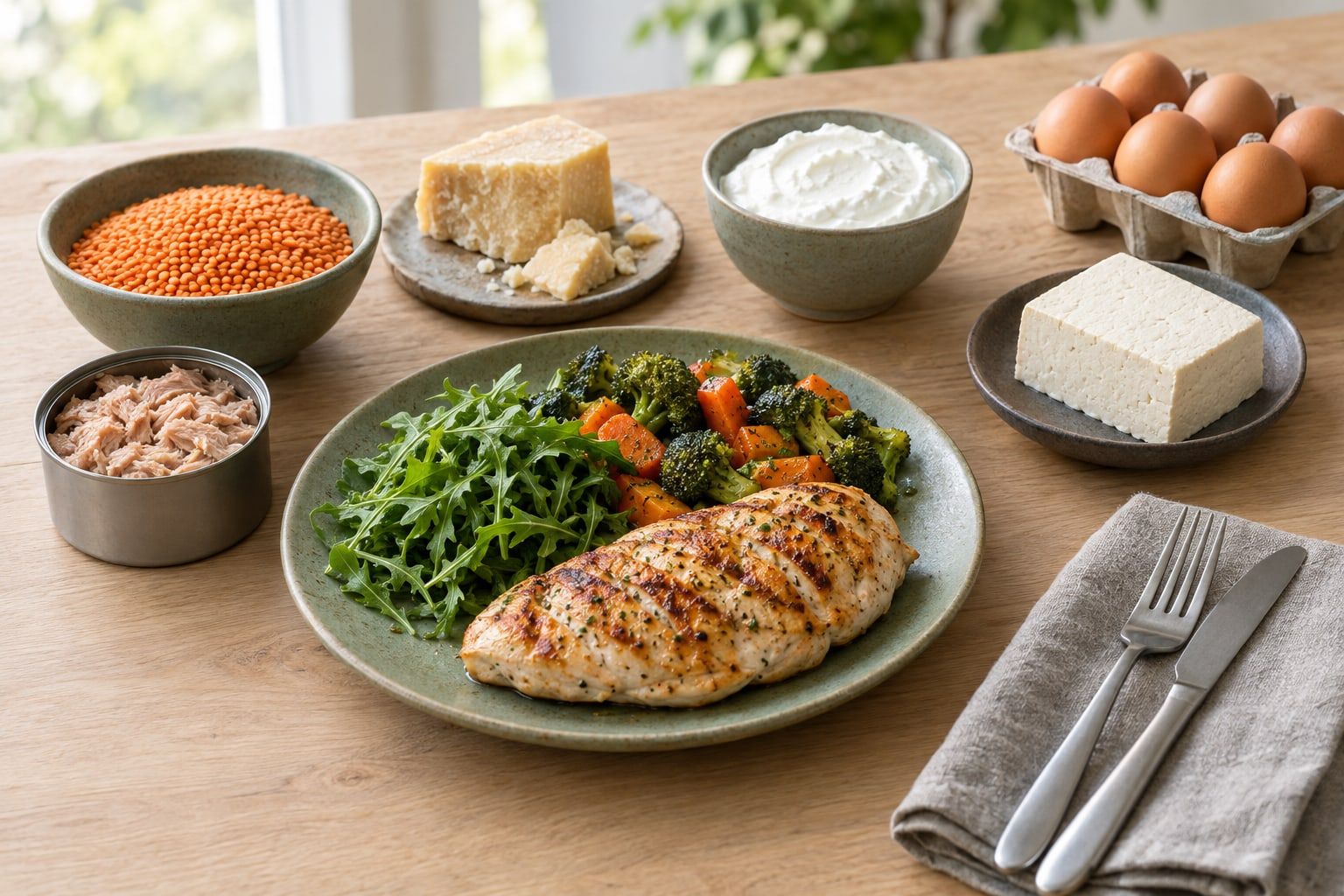
High protein foods range from 24–36 g protein per 100 g for hard cheese, cooked meat, fish and dried lentils down to 10–15 g for eggs, quark, skyr and tofu. Parmesan tops the list at 36.2 g per 100 g, with grilled chicken breast at 32.0 g and tinned tuna at 24.9 g.
Several things change the numbers you read. Raw and cooked weights differ, because water leaves chicken when it cooks and enters lentils when they boil. A food that is high per 100 g may be eaten in small amounts, as with Parmesan, while a food that is lower per 100 g, such as quark, is eaten by the tubful. Energy matters too: egg white gives 25.1 g protein per 100 kcal, whereas dried red lentils give 8.2 g.
For everyday use, pick the ranking that fits the question. Use the per 100 g column to compare ingredients on a label, the portion table to plan a meal, and the per 100 kcal column when energy is the limit. Eggs, dairy and a tin of fish sort out most breakfasts and lunches without any cooking.
| Food | Protein | Energy | Protein per 100 kcal |
|---|---|---|---|
| Parmesan | 36.2 g | 415 kcal | 8.7 g |
| Chicken breast, grilled, no skin | 32.0 g | 148 kcal | 21.6 g |
| Red lentils, dried, raw | 25.6 g | 311 kcal | 8.2 g |
| Tuna in brine, drained | 24.9 g | 109 kcal | 22.8 g |
| Cod, baked | 23.9 g | 100 kcal | 23.9 g |
| Quark | 14.6 g | 74 kcal | 19.7 g |
| Whole egg, raw | 12.6 g | 131 kcal | 9.6 g |
| Firm tofu (typical value) | 12.5 g | 125 kcal | 10.0 g |
| Skyr, fat free (typical value) | 11.0 g | 64 kcal | 17.2 g |
| Egg white, raw | 10.8 g | 43 kcal | 25.1 g |
| Strained 0% Greek yogurt (typical value) | 10.3 g | 54 kcal | 19.1 g |
| Red lentils, boiled | 8.1 g | 102 kcal | 7.9 g |
Source: CoFID – McCance and Widdowson's Composition of Foods Integrated Dataset 2021 (codes 12-526, 18-323, 13-657, 16-416, 16-373, 12-174, 12-937, 12-938, 13-658); tofu, skyr and Greek yogurt are typical values, not CoFID
| Portion | Weight | Protein | Energy |
|---|---|---|---|
| 1 medium egg | about 50 g | 6.3 g | 66 kcal |
| 1 tin of tuna in brine, drained | about 102 g | 25.4 g | 111 kcal |
| 1 raw chicken breast fillet | about 150 g | 36.0 g | 159 kcal |
| 1 tub of quark | 250 g | 36.5 g | 185 kcal |
| Dried red lentils, one serving | 30 g | 7.7 g | 93 kcal |
| Firm tofu | 100 g | 12.5 g | 125 kcal |
| Skyr, one pot | 150 g | 16.5 g | 96 kcal |
Source: Calculated from the per 100 g values above; chicken, tofu and skyr are typical values, and portion weights are assumptions stated in the table
Which foods have the most protein per 100 g?
Hard cheese, cooked meat, fish and dried pulses lead the list. Parmesan has 36.2 g protein per 100 g, grilled chicken breast 32.0 g, dried red lentils 25.6 g, tinned tuna 24.9 g and baked cod 23.9 g. Eggs, quark, skyr and tofu come in lower, at roughly 10–15 g per 100 g, because they contain more water. A low figure per 100 g does not make a food a poor choice, since a portion of quark or two eggs is often bigger than a portion of cheese.
Which foods give the most protein for the calories?
Ranked per 100 kcal, the order changes. Raw egg white gives 25.1 g protein per 100 kcal, baked cod 23.9 g, tuna 22.8 g and grilled chicken 21.6 g. Quark (19.7 g) and strained 0% Greek yogurt (19.1 g) follow. Parmesan drops to 8.7 g per 100 kcal and dried red lentils to 8.2 g, because both carry a lot of fat or carbohydrate alongside the protein. Neither ranking is better: one tells you how much protein is in a spoonful, the other how much energy comes with it.
Why do raw and cooked weights give different numbers?
Chicken breast is the clearest example. Raw fillet has about 24 g protein per 100 g, while grilled breast is listed at 32.0 g, because cooking drives out water and the same protein sits in less weight. Lentils work the other way: dried red lentils have 25.6 g per 100 g, but boiled lentils have only 8.1 g because they soak up water. When you count protein, use the figure for the state in which the food is weighed. Raw weight with a raw value, or cooked weight with a cooked value, always matches.
What are good high protein breakfast foods?
Eggs, quark, skyr, Greek yogurt and cottage cheese do most of the work at breakfast. Two medium eggs give 12.6 g protein, a 150 g pot of skyr gives 16.5 g and 150 g of strained 0% Greek yogurt gives 15.5 g. Together, two eggs with a pot of skyr come to 29.1 g. Plain cottage cheese has 9.4 g per 100 g and the reduced-fat one 10.6 g, and quark has 14.6 g. Porridge, pancakes and overnight oats can be built on the same dairy and egg bases.
Which plant foods are high in protein?
Dried red lentils have 25.6 g protein per 100 g, firm tofu about 12.5 g and boiled edamame beans 12.2 g. Lentils and other pulses also bring a lot of carbohydrate (51.2 g per 100 g dried), so the protein arrives alongside starch and fibre. Tofu and edamame are lower in carbohydrate. A mix of pulses, tofu, dairy and eggs covers most vegetarian meals, and a tin of drained chickpeas or beans is the quickest way to add a few grams to a salad or soup.
How much protein does a day need?
The UK Reference Nutrient Intake for adults is 0.75 g protein per kg of body weight per day, which is about 53 g for a 70 kg adult. The figures above show how quickly that adds up: one 150 g chicken fillet gives 36.0 g, and one tin of tuna gives 25.4 g. Individual needs vary with age, activity and health, so the guide on how much protein you need per day covers the targets in more detail.
Practical tips
- Check whether the weight is raw or cooked
Packet values for meat and pulses can be given raw or cooked. Compare like with like, or the numbers will be out by a third or more.
- Build each meal around one anchor
Pick one food from the top of the table, such as eggs, a fillet of fish or a tub of quark, and add vegetables, grains and fruit around it. It is simpler than counting every gram.
- Keep a few tinned and frozen staples
Tinned tuna, tinned beans, frozen fish fillets and dried lentils keep for months and give 8–25 g protein per portion with no preparation.
Myth or fact
- Myth
Is it true that eggs are the highest protein food?
No. A whole raw egg has 12.6 g protein per 100 g, which is well below cooked chicken (32.0 g), tinned tuna (24.9 g) or Parmesan (36.2 g). Eggs rank high per portion and per calorie, not per 100 g.
- The facts
Is it true that lentils have more protein than chicken?
Only by dry weight. Dried red lentils have 25.6 g per 100 g, but once boiled they have 8.1 g, while cooked chicken breast has 32.0 g. The comparison depends on whether the lentils are weighed dry or cooked.
Frequently asked questions
What is the highest protein food?
Among everyday foods, Parmesan has the most protein per 100 g at 36.2 g, followed by grilled chicken breast at 32.0 g. Egg white has the most protein per calorie at 25.1 g per 100 kcal.
What are good sources of protein in food?
Meat, fish, eggs, dairy, pulses and tofu are all good sources. A 150 g chicken fillet gives 36.0 g, a tin of tuna 25.4 g and a 250 g tub of quark 36.5 g.
Which high protein breakfast foods are quickest?
Skyr, Greek yogurt and quark need no cooking, and boiled eggs can be made ahead. A 150 g pot of skyr gives 16.5 g protein and two medium eggs give 12.6 g.
Are foods rich in protein also high in calories?
Not always. Egg white, cod and tuna give more than 22 g protein per 100 kcal, while Parmesan gives 8.7 g and dried red lentils 8.2 g. Fish, lean meat and low-fat dairy give the most protein for the energy.
Is tofu high in protein?
Firm tofu has about 12.5 g protein per 100 g, similar to a whole egg at 12.6 g. It has fewer grams per 100 g than meat or hard cheese but suits vegetarian and vegan meals.
Recipes to try
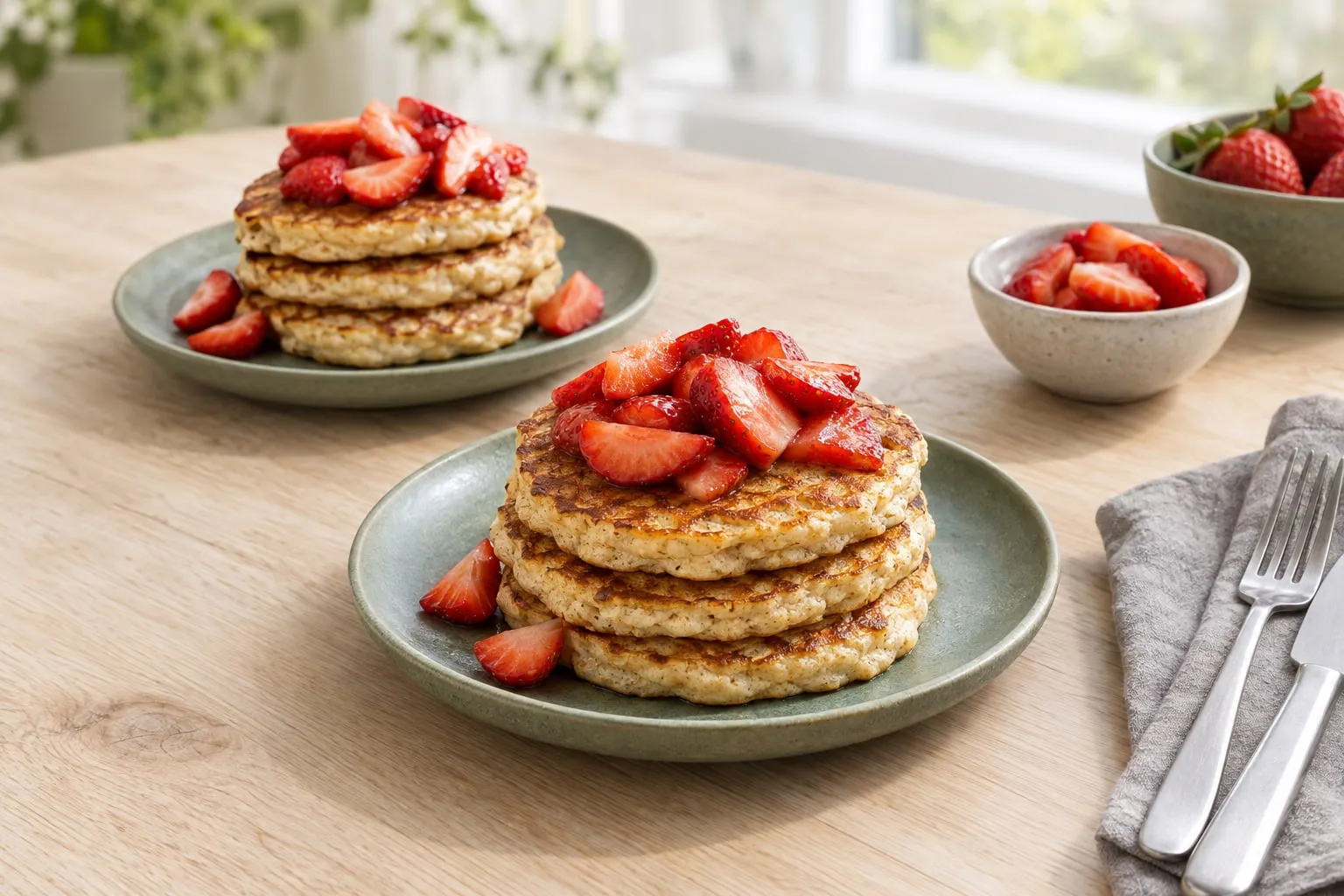
Protein Pancakes
31 g protein342 kcal25 minVegetarian
A breakfast built on egg and dairy that lifts a stack of pancakes well above the usual protein count.
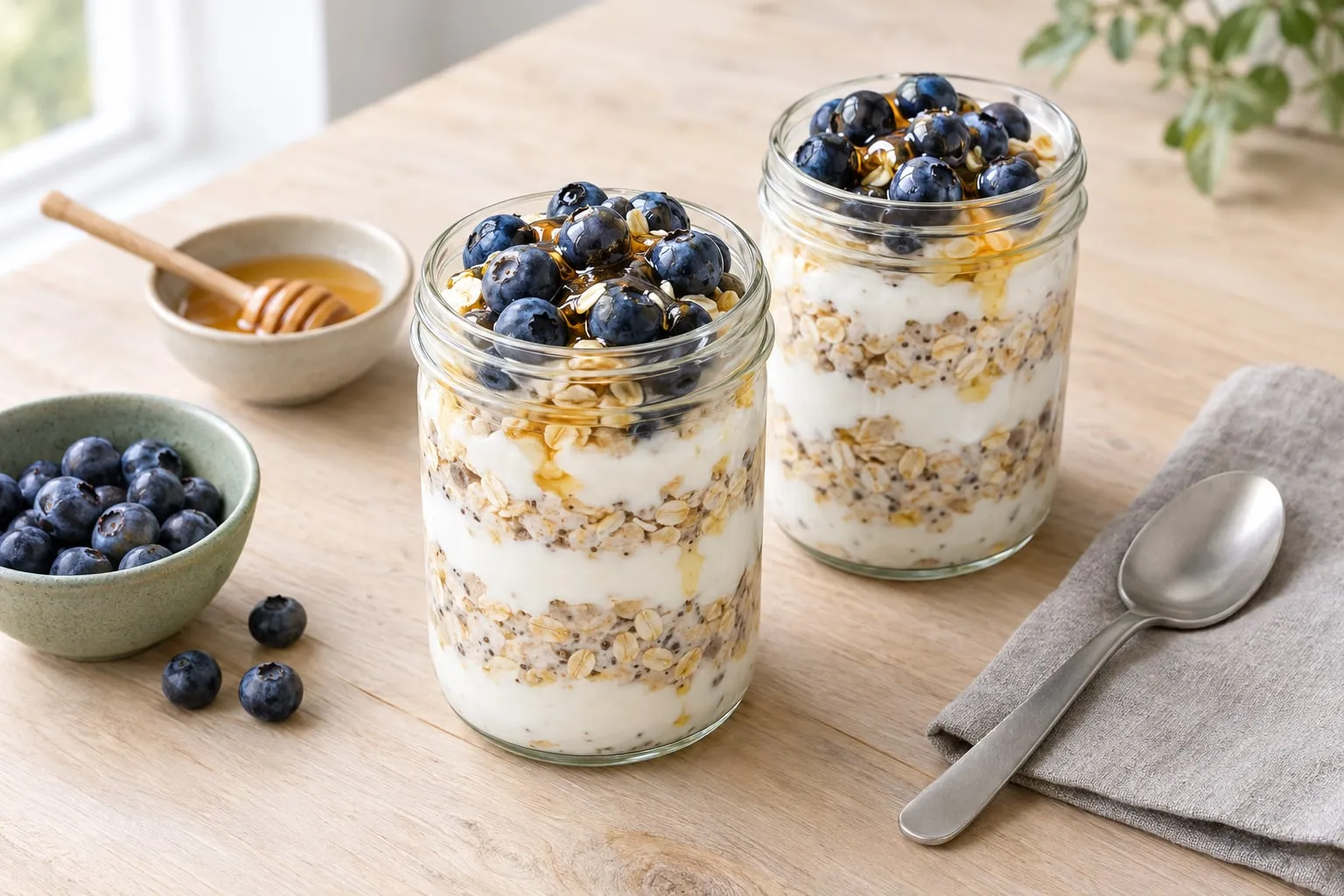
Protein Overnight Oats
26 g protein334 kcal8 hr 5 minVegetarian
Oats made with a high protein dairy base for a no-cook breakfast.
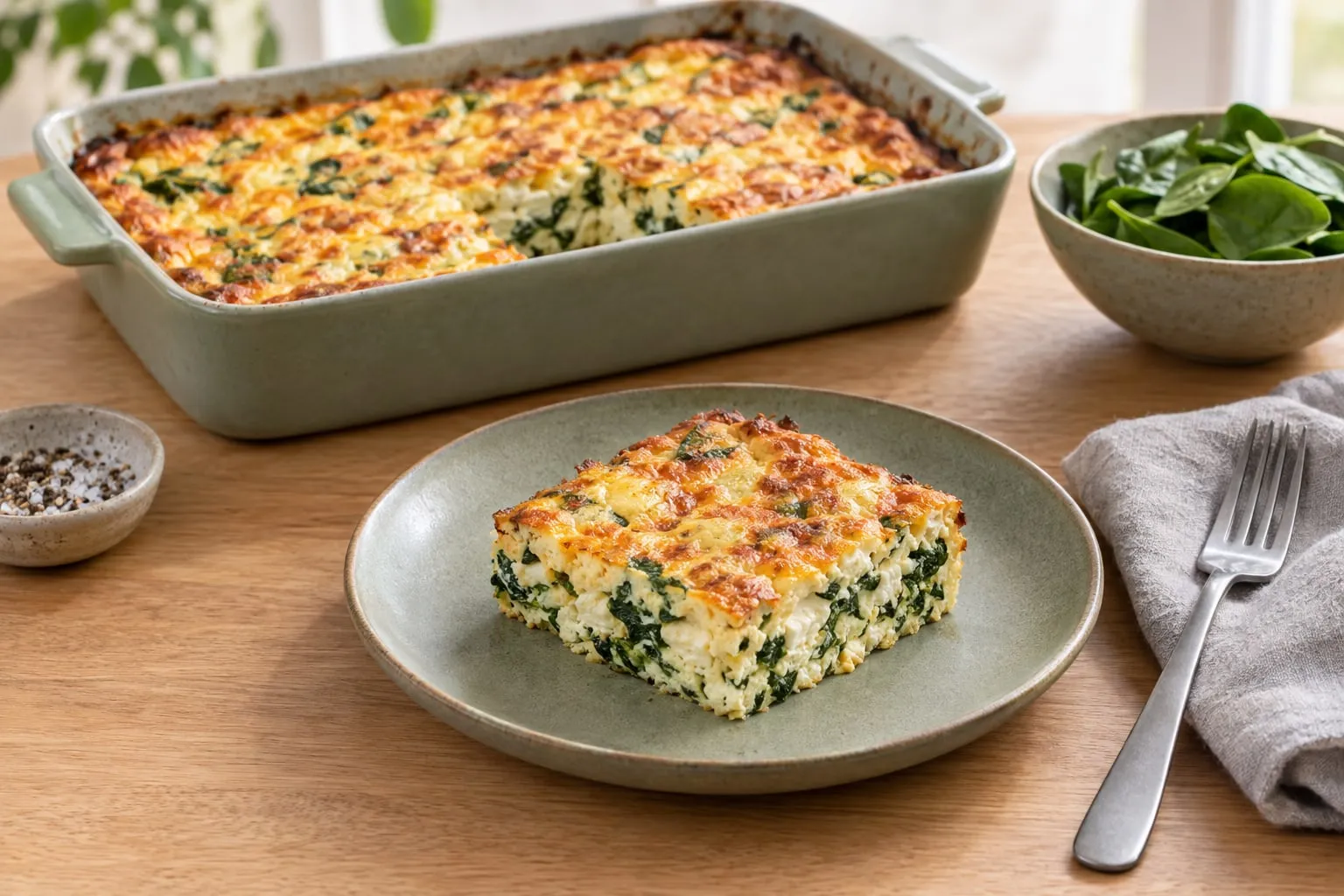
Cottage Cheese and Egg Bake
22 g protein190 kcal55 minVegetarianGluten-free
Eggs and cottage cheese baked together for a make-ahead breakfast or lunch.
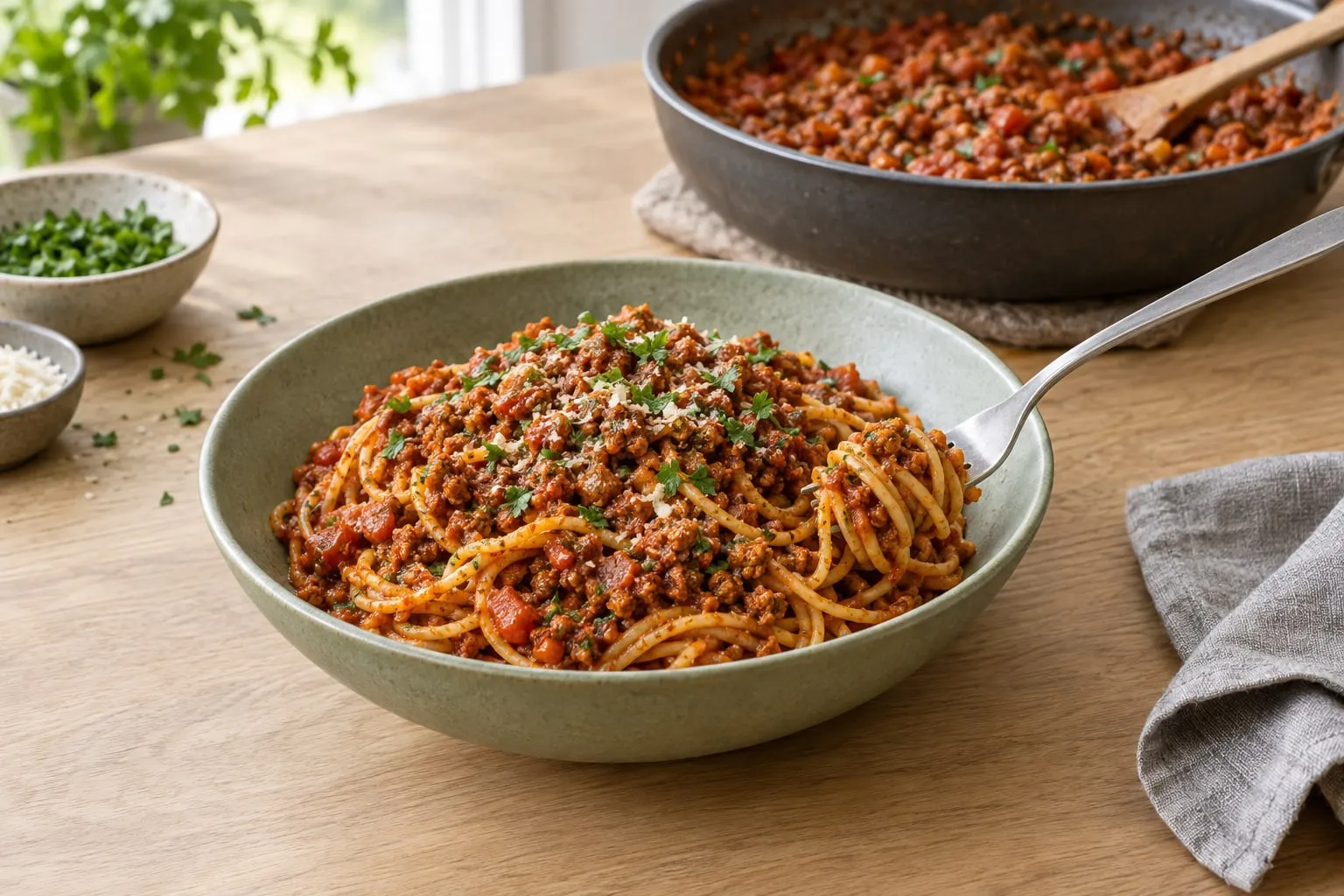
TVP Mince Bolognese
30 g protein476 kcal55 minVegetarianVegan
A plant-based mince sauce using textured vegetable protein.
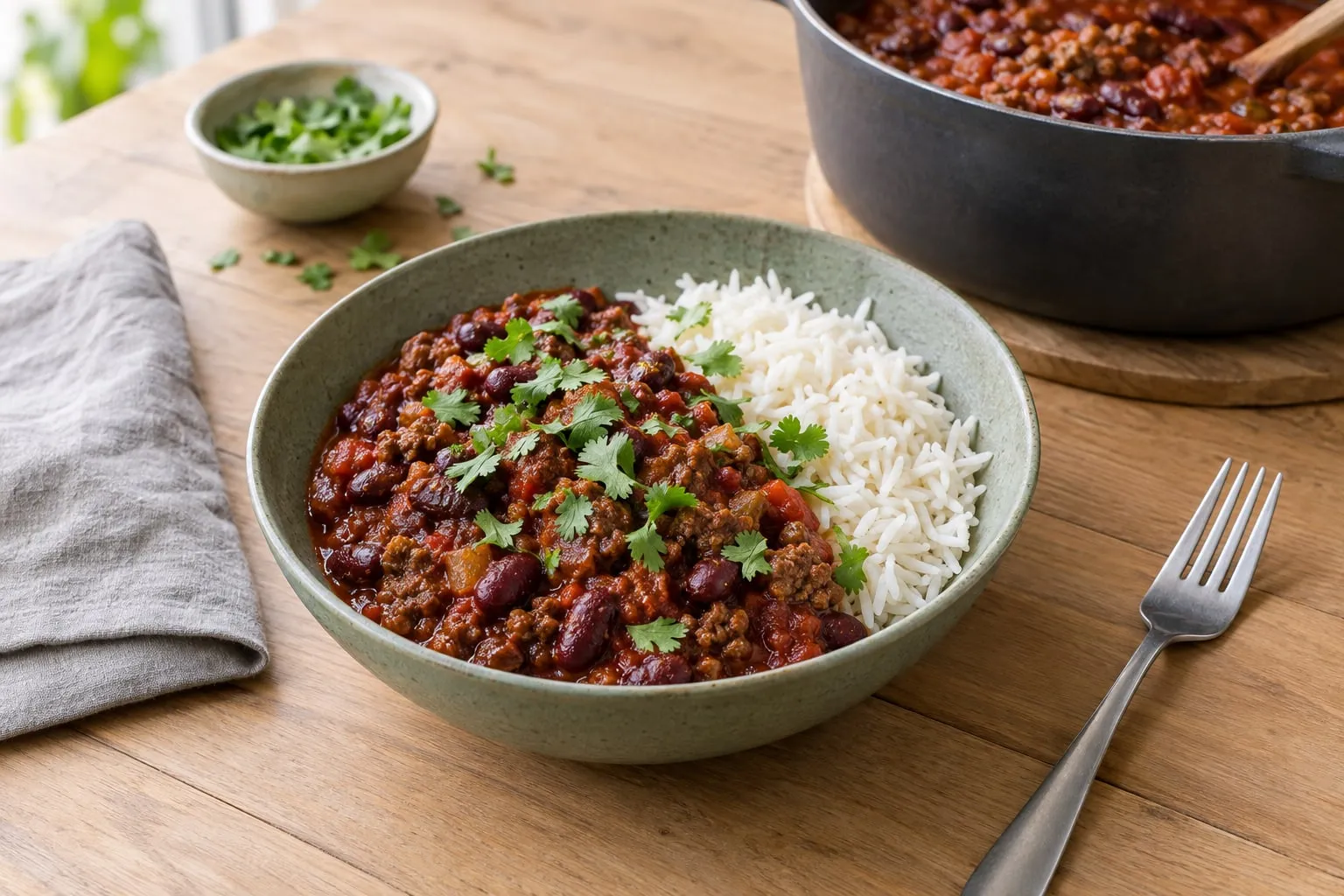
High Protein Chilli con Carne
33 g protein287 kcal1 hr 25 minGluten-freeDairy-free
A mince and bean chilli that puts meat and pulses in one pot.
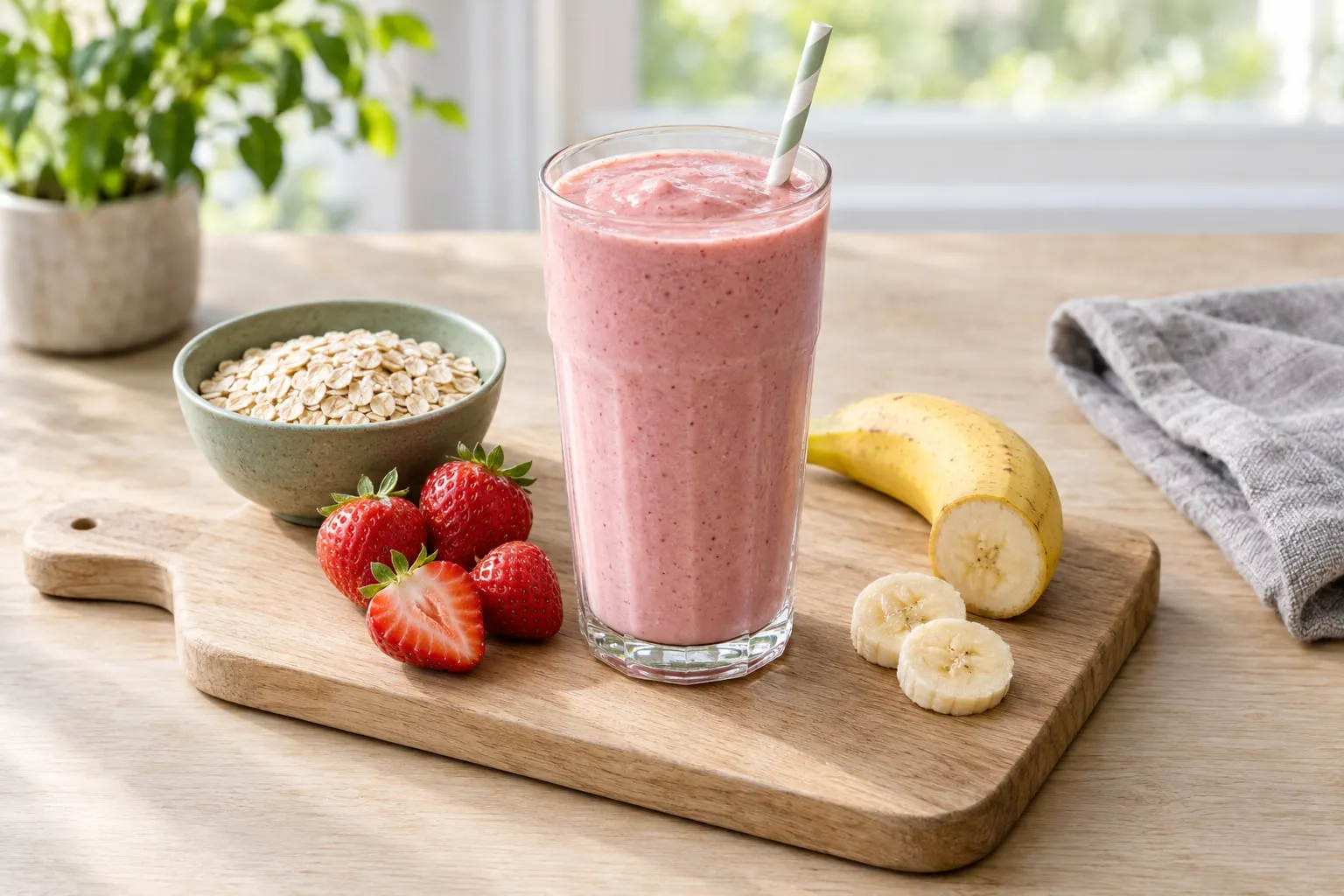
Protein Smoothie
32 g protein387 kcal5 minVegetarian
A quick drink that uses dairy or powder as the protein base.
Sources
- McCance and Widdowson's Composition of Foods Integrated Dataset 2021 (CoFID) – Protein and energy values per 100 g for the foods in the tables
- Dietary Reference Values for Food Energy and Nutrients for the UK (COMA, 1991) – Reference Nutrient Intake of 0.75 g protein per kg body weight per day
Read our editorial policy for how figures are checked and how to report a mistake.
More protein guides
All guides
Guide
How Much Protein Do You Need Per Day?
How much protein do I need? The UK reference is 0.75 g per kg of body weight a day, or 52.5 g at 70 kg. See food values and a worked example day.
Guide
What Is Protein and Why Do We Need It?
What is protein good for? It is made of amino acids, nine of them essential. See what it does, the UK 0.75 g per kg a day reference and food values.
Guide
Protein Calculator
Protein calculator: multiply your weight in kg by 0.75 for the UK reference amount, so 70 kg gives 53 g a day. Tables for kg and stone, plus foods per 20 g.
Guide
Lean Protein: Best Sources
Lean protein sources ranked by fat: raw chicken breast has 24.0 g protein and 1.1 g fat per 100 g, tuna 24.9 g and 1.0 g. Meat, fish and dairy compared.