Method
Tap a time to start a timer.
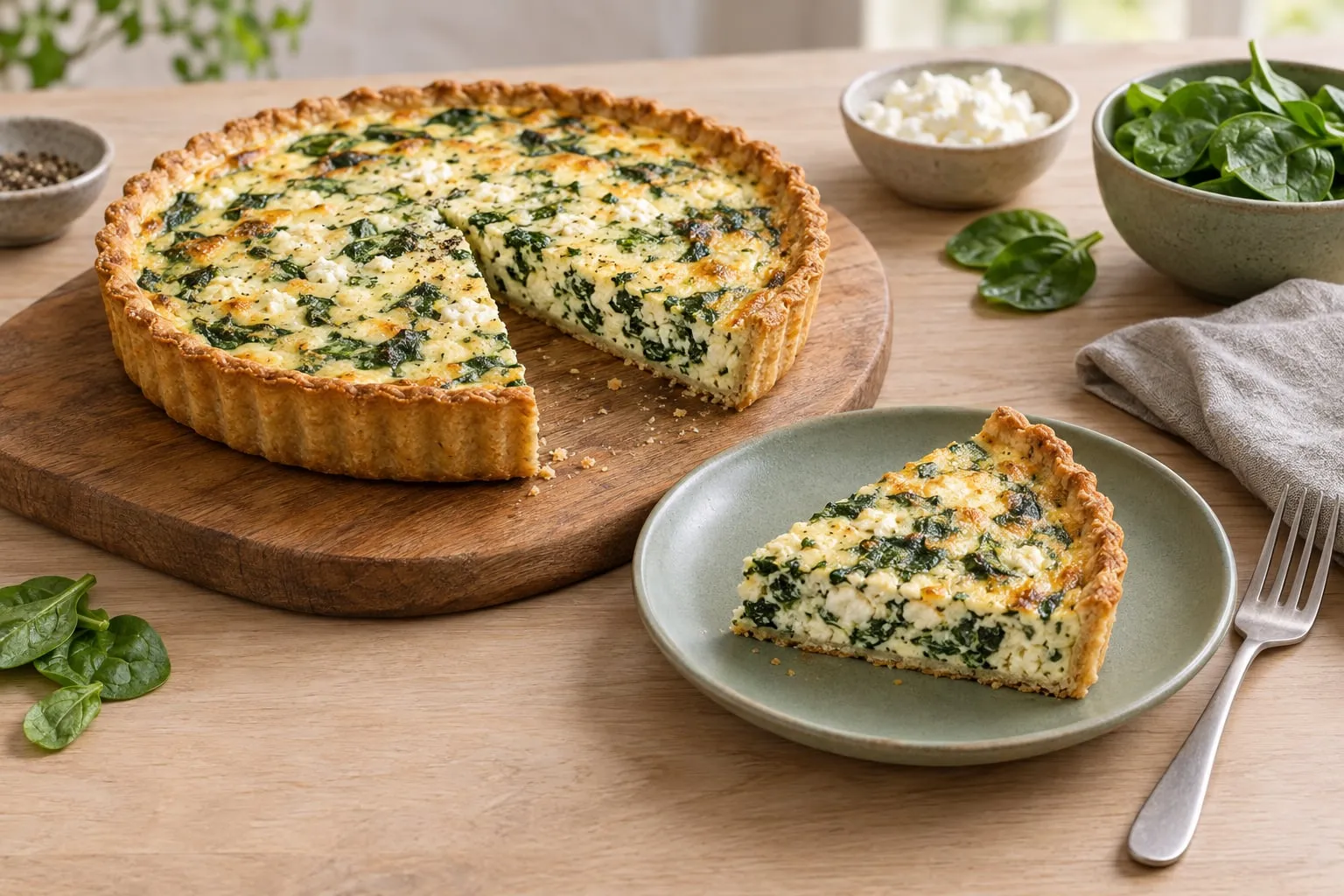
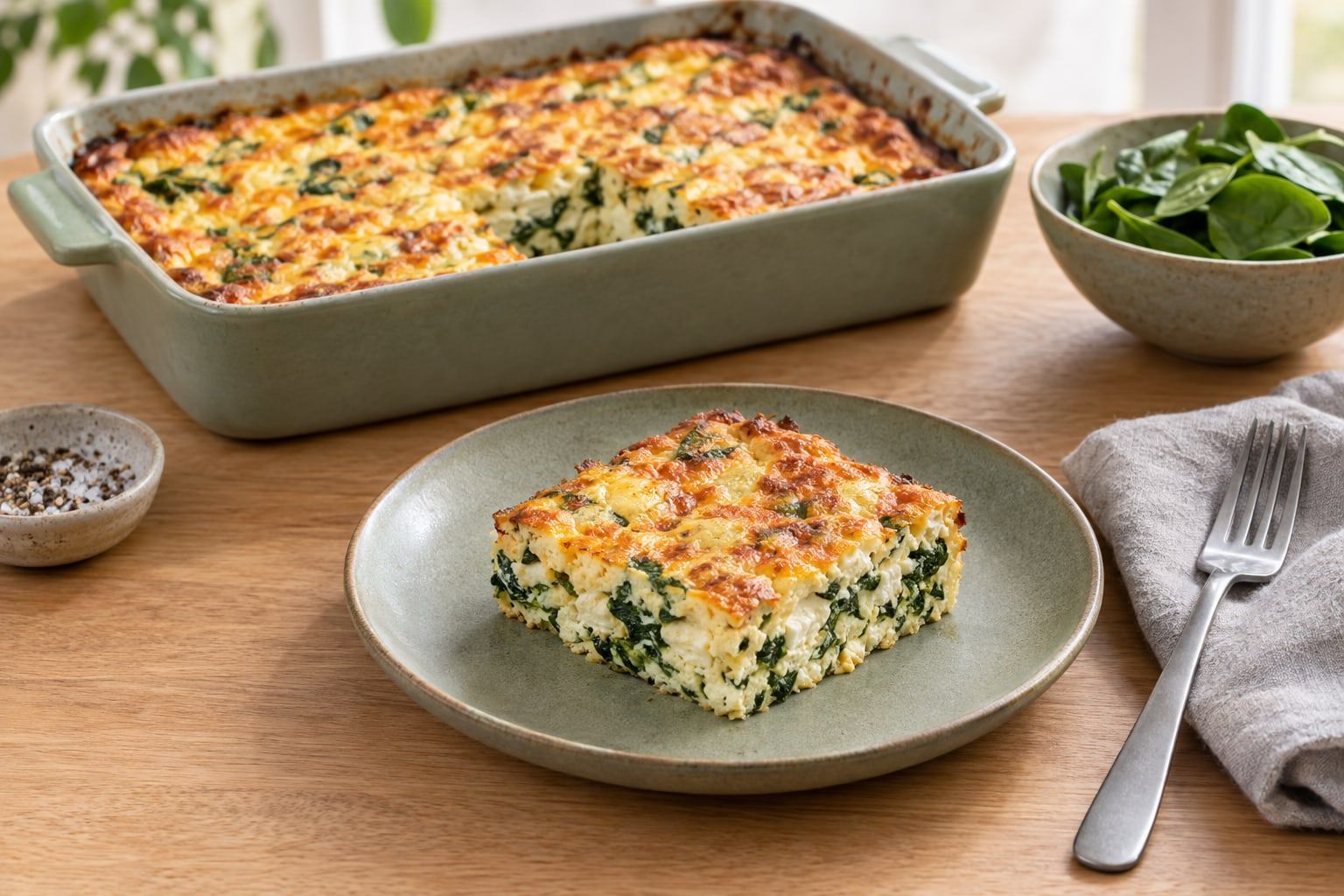
Heat the oven to 180°C (160°C fan), gas 4. Brush a 20 × 30 cm baking dish with the rapeseed oil.
Put the baby spinach in a large dry frying pan over a medium heat and stir until wilted. Tip it into a sieve and press out the liquid, then chop roughly.
Blend the eggs and cottage cheese until smooth, or whisk them together vigorously in a large bowl.
Stir the grated half fat Cheddar, chopped spinach and black pepper into the mixture and pour it into the dish, levelling the top.
Bake on the middle shelf until golden and set in the centre.
Leave to stand for 5 minutes, then cut into six portions.
How to tell it's done
- The top is golden and the centre is set, with no wobble when you shake the dish.
- A knife inserted in the middle comes out clean, without liquid egg.
Tips for success
- Squeeze the spinach dry
Wilted spinach holds a lot of water. Press it in a sieve or clean tea towel before it goes in, or the bake turns wet and weeps in the dish.
- Keep the layer thin
In a 20 × 30 cm dish the mixture is about 1.5–2 cm deep, which cooks through in 30–35 minutes. A smaller dish makes a thicker bake that needs longer and risks a runny centre.
- Check the seasoning
Cottage cheese and cheddar already carry salt. Add pepper only, taste a little of the cooked bake and add salt at the table.
Boost the protein
- Add 100 g extra cottage cheese to the mixture in step 3: about +2 g protein per portion.
- Add 100 g diced cooked ham or turkey slices to the mixture in step 4: about +3 g protein per portion.
Choosing ingredients
Use reduced fat plain cottage cheese from a 300 g tub (so you need 400 g, about 1⅓ tubs) for the best protein per 100 g. Full fat works but is lower in protein per 100 g.
Half fat Cheddar gives more protein per 100 g than full fat and melts well. Mature half fat Cheddar has a stronger taste, so you can use less.
Variations
- Egg and cottage cheese muffins
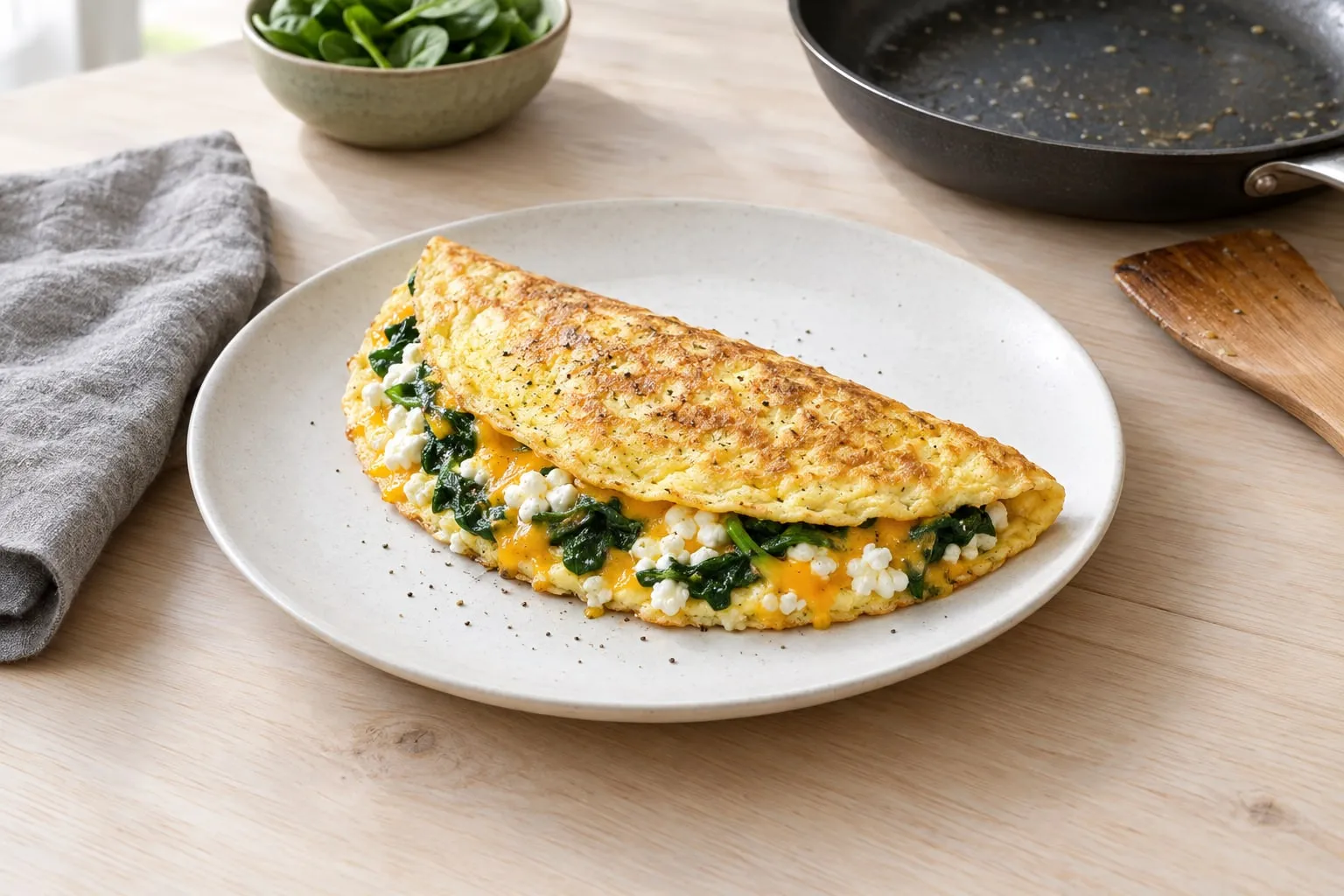
Spoon the mixture into a greased 12-hole muffin tin and bake for 20–25 minutes at the same temperature. Each of the 12 muffins has about 11 g protein.
- Scrambled eggs with cottage cheese
Whisk 3 eggs with 100 g cottage cheese and cook in a frying pan over a low heat for 3–4 minutes, stirring. One portion has about 30 g protein.
Serve it with
- Sliced tomatoes
- Wholemeal toast
- Green salad
Storage
Keep the bake in the fridge in an airtight container for 3 days.
Reheat a portion in the microwave for 1 minute until hot all the way through.
Troubleshooting
Why is my cottage cheese and egg bake watery?
Moisture from the spinach or from the cottage cheese. Squeeze the spinach well and drain any liquid from the tub, and bake for another 5 minutes if the middle is not set.
Why did the egg bake turn rubbery?
It was overbaked. Take it out as soon as the centre is set and the edges are golden, and let it stand for 5 minutes.
Frequently asked questions
How much protein is in this cottage cheese and egg bake?
Each of the 6 portions has 22 g protein and 190 kcal, so 45% of the energy comes from protein.
Can I make egg muffins with cottage cheese without flour?
Yes. This mixture has no flour, so it works in a 12-hole muffin tin as well. Bake the muffins for 20–25 minutes.
Can I make scrambled eggs with cottage cheese?
Yes. Whisk 100 g cottage cheese into 3 eggs and cook over a low heat, stirring, for 3–4 minutes.
Is an egg and cottage cheese bake good for meal prep?
Yes. It keeps for 3 days in the fridge and reheats in 1 minute, so one bake covers six breakfasts or lunches.
Made it? Rate the recipe
Read next
- Protein in Cottage CheeseProtein in cottage cheese: 150 g plain has 14.1 g protein and 155 kcal, reduced fat has 15.9 g and 102 kcal. Values per 100 g, per portion and per tub.
- How Much Protein Is in an Egg?How much protein in an egg: one medium raw egg has 6.3 g protein and 66 kcal. Values per egg, per 100 g, boiled, fried and scrambled.
- How Much Protein Is in Egg Whites?Protein in egg whites: raw egg white has 10.8 g protein per 100 g and 43 kcal. Values per white, per 100 g and compared with whole eggs and yolks.
Written by The Protein Recipes editorial team. Nutrition is calculated from the ingredient list using CoFID. Read how our recipes are made and how we correct mistakes.