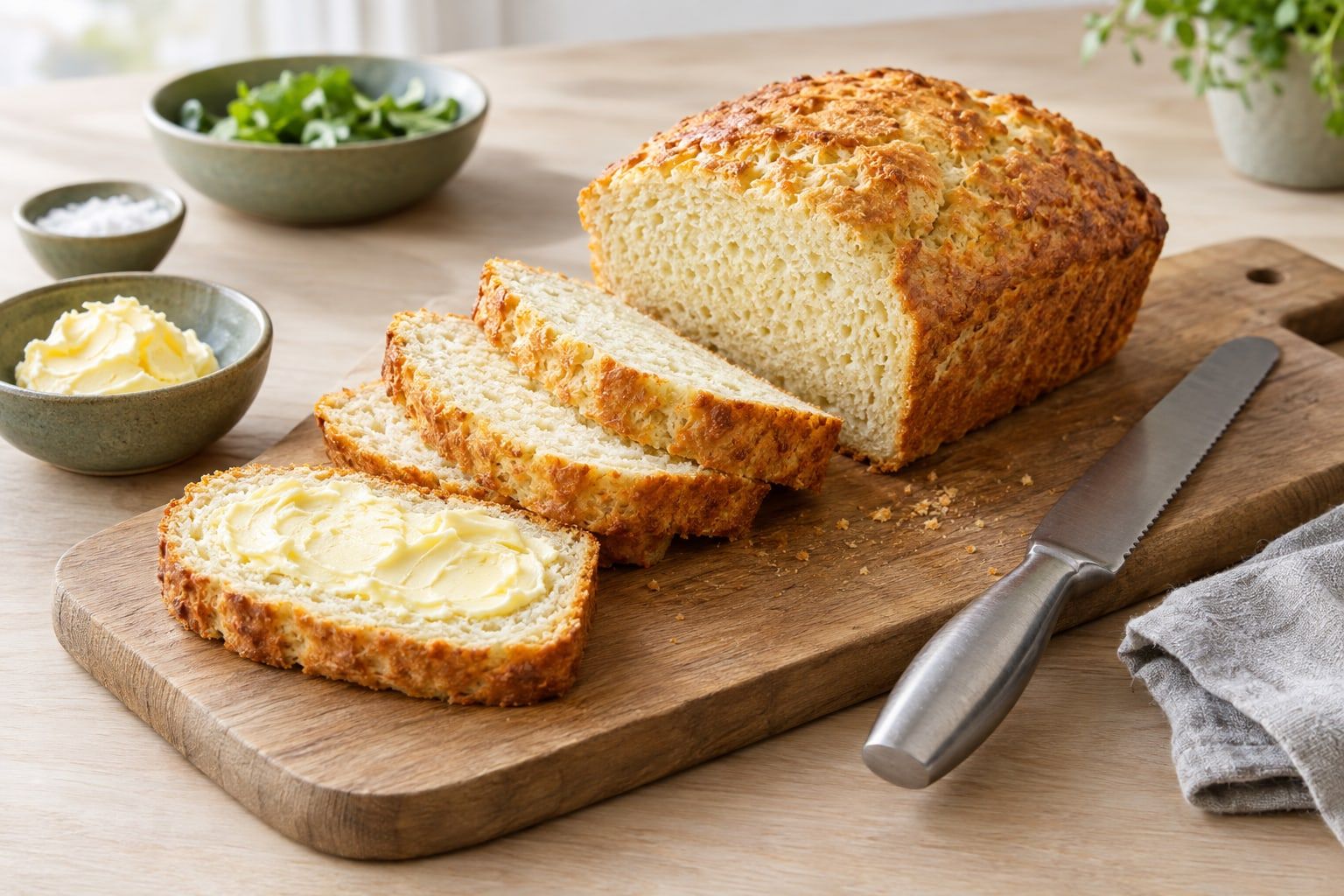
Method
Tap a time to start a timer.
Heat the oven to 180°C (160°C fan), gas 4. Line a 900 g (2 lb) loaf tin with baking parchment.
Blend the cottage cheese and eggs until completely smooth, then pour into a large bowl.
Mix the plain flour, vital wheat gluten, baking powder and salt together, add to the bowl and stir until just combined into a thick, pourable batter.
Pour the batter into the lined tin and smooth the top with the back of a spoon.
Bake on the middle shelf until golden brown and the centre reads 96–98°C on a thermometer.
Lift the loaf out of the tin using the parchment and cool completely on a wire rack before slicing.
How to tell it's done
- The loaf is deep golden on top and a skewer pushed into the centre comes out clean.
- The centre reads 96–98°C, and the loaf feels firm and springy when pressed.
Tips for success
- Blend the cottage cheese smooth
Blend the cottage cheese and eggs for a full minute. Whole curds leave holes and wet patches in the slices.
- Measure the gluten exactly
40 g vital wheat gluten gives the loaf structure. More than that and the crumb turns rubbery, so weigh it rather than spooning it in.
- Cool the loaf fully before slicing
The crumb is still setting as it cools. Leave it for 1 hour on a wire rack, then slice it with a serrated knife.
Boost the protein
- Stir 40 g grated half fat Cheddar into the batter in step 3: about +1.3 g protein per slice.
- Spread each slice with 1 tbsp (about 15 g) strained 0% Greek yogurt instead of butter: about +1.5 g protein per slice.
Choosing ingredients
Use plain reduced fat cottage cheese from a 300 g tub, and weigh out 400 g, which is about 1⅓ tubs. Choose a tub without added herbs or sugar.
Vital wheat gluten is sold as a powder in baking aisles and health food shops. It contains wheat, so this loaf is not suitable for coeliacs.
Variations
- Cheese and chive cottage cheese loaf
Stir in 40 g grated half fat Cheddar and 2 tbsp chopped chives in step 3. The bake time stays the same.
- Seeded cottage cheese bread
Scatter 2 tbsp mixed seeds over the top before baking. Tin, temperature and time stay the same; cover loosely with foil for the last 10 minutes if the seeds darken.
Serve it with
- Scrambled eggs
- Sliced tomato and cucumber
- Smoked salmon
Storage
Keep the cottage cheese bread at room temperature in a sealed box for 1–2 days.
Slice and freeze for up to 1 month, then toast the slices from frozen.
Troubleshooting
Why is my cottage cheese bread rubbery?
Too much gluten, or the batter was mixed for too long. Keep to 40 g vital wheat gluten and stir only until the flour is combined.
Why is the middle of my cottage cheese bread wet?
It was cut while still warm or underbaked. Check the centre reaches 96–98°C and leave the loaf to cool for a full hour before slicing.
Frequently asked questions
How much protein is in cottage cheese bread?
Each of the 10 slices has 10 g protein and 102 kcal, so 40% of the energy comes from protein.
Can I put cottage cheese on bread?
Yes. Cottage cheese on toasted bread is a quick snack. Spread 50 g over a slice of toast and add tomato or cucumber. This cottage cheese bread has the cheese baked in.
Can I make cottage cheese flatbread instead?
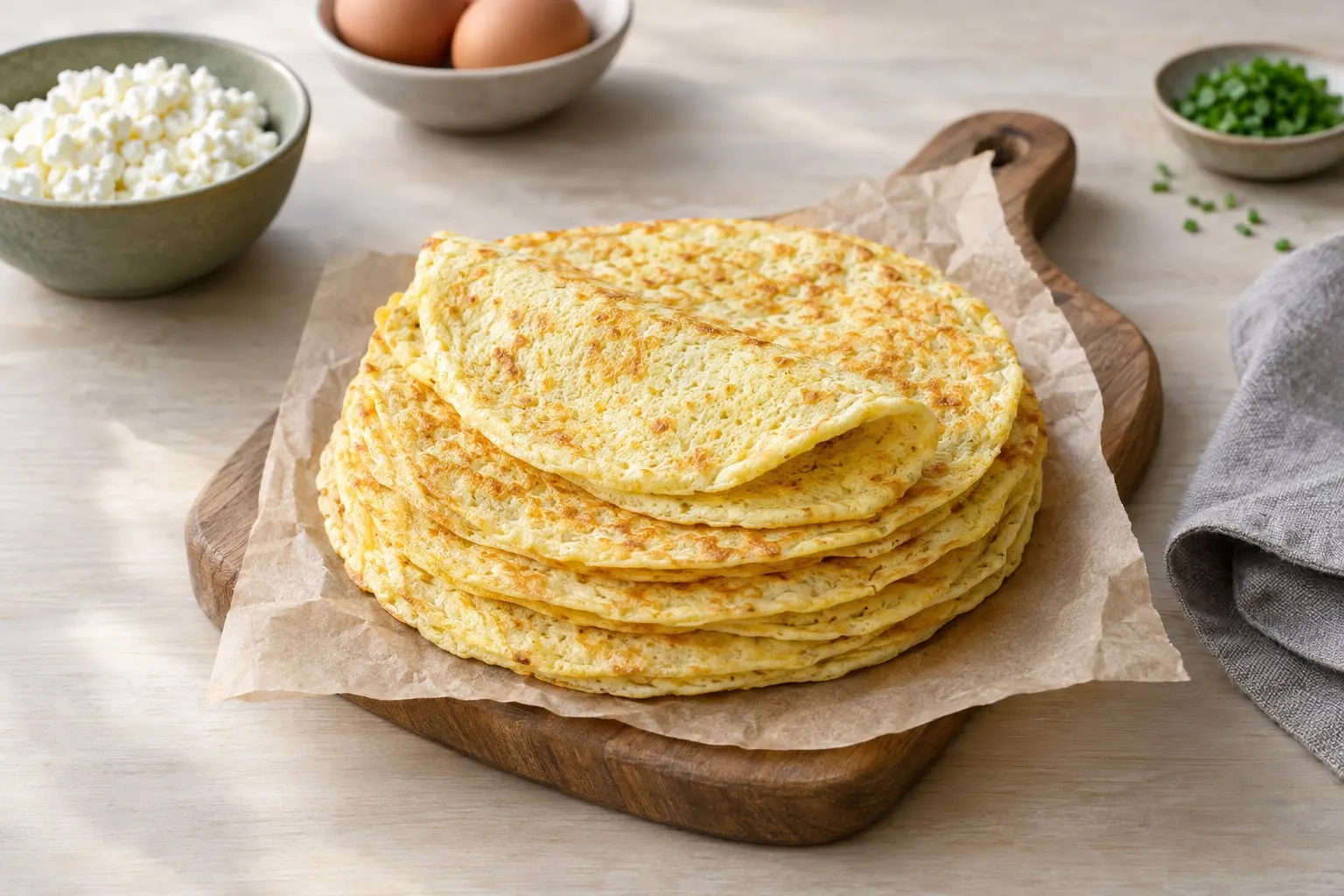
Not with this batter, which is too wet to shape and would run on a tray. Cottage cheese flatbread uses a much drier mix spread thin and baked hot, so it has its own recipe on the site.
Is cottage cheese bread gluten-free?
No. It contains plain flour and vital wheat gluten, both made from wheat.
Made it? Rate the recipe
Read next
- Protein in Cottage CheeseProtein in cottage cheese: 150 g plain has 14.1 g protein and 155 kcal, reduced fat has 15.9 g and 102 kcal. Values per 100 g, per portion and per tub.
- Protein in BreadProtein in bread: a slice has 2.8–4.0 g protein depending on type and weight. Wholemeal, white, seeded, bagels, pitta and tortillas compared.
Written by The Protein Recipes editorial team. Nutrition is calculated from the ingredient list using CoFID. Read how our recipes are made and how we correct mistakes.