Protein guide
What Is Protein and Why Do We Need It?
Quick answer
Protein is made of amino acids, and nine of them are essential for adults, so they have to come from food. The UK Reference Nutrient Intake is 0.75 g per kg of body weight a day, which is 45 g at 60 kg and 56 g at 75 kg.
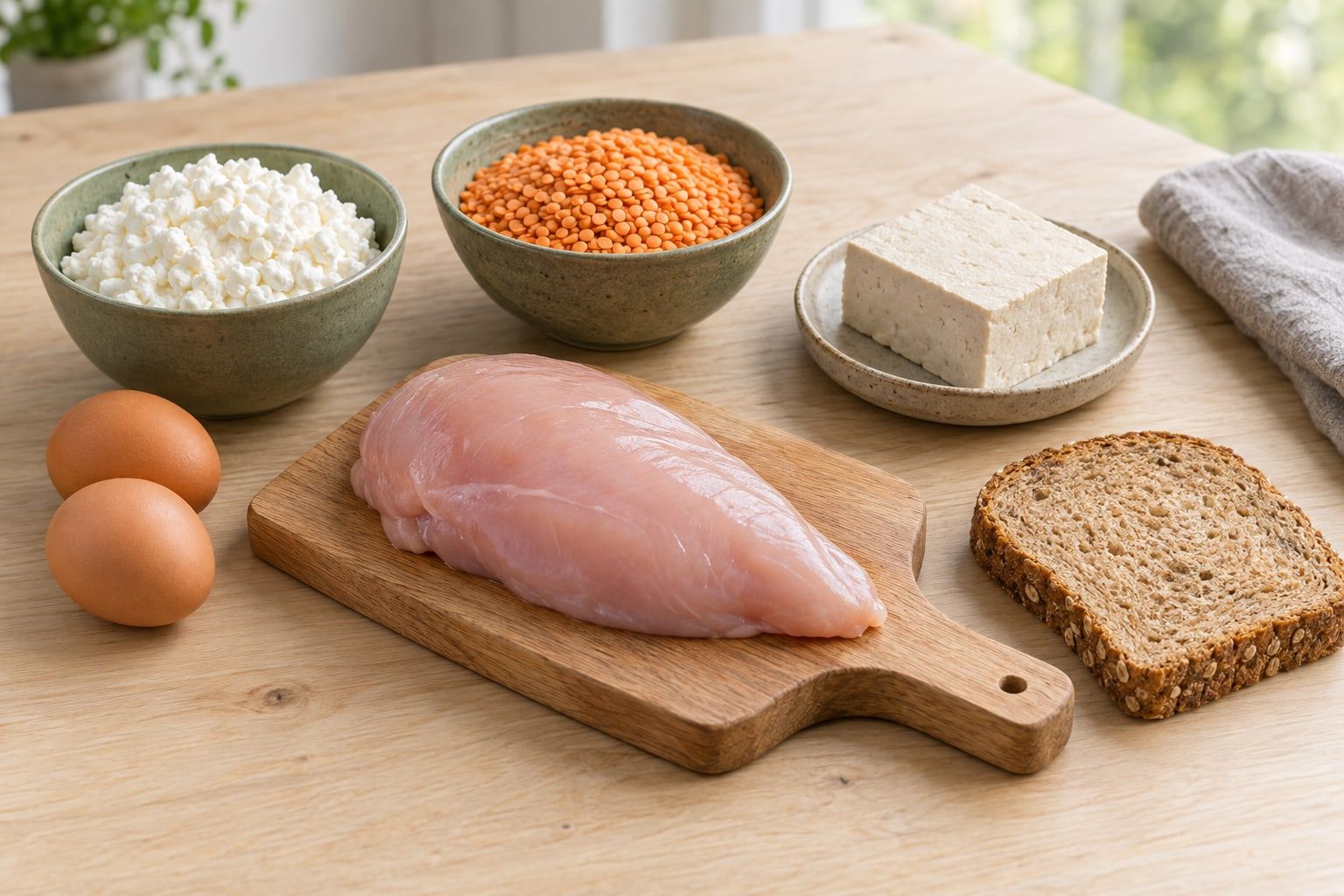
What is protein good for? It is made of amino acids, and nine of them are essential for adults, so they have to come from food. The UK Reference Nutrient Intake is 0.75 g per kg of body weight a day, which is 45 g at 60 kg and 56 g at 75 kg.
The numbers vary a great deal between foods. Dried red lentils have 25.6 g protein per 100 g, raw chicken breast 24.0 g and eggs 12.6 g, while white bread still has 8.7 g. Weight matters as much as the food: a raw or dried weight carries more protein per 100 g than the same food after boiling. Retail pizza has 10.8–13.4 g per 100 g, so half a pizza of about 200 g gives between 21.6 g and 26.8 g with 432–544 kcal.
For everyday use, the simplest approach is to include a protein food at each meal and check the label per 100 g. The recipes below show how ordinary breakfasts, lunches and dinners reach 20 g or more per portion.
| Food | Protein | Energy |
|---|---|---|
| Red lentils, dried, raw | 25.6 g | 311 kcal |
| Tuna in brine, drained | 24.9 g | 109 kcal |
| Chicken breast fillet, raw | 24.0 g | 106 kcal |
| Egg, raw | 12.6 g | 131 kcal |
| Firm tofu, pressed | 12.5 g | 125 kcal |
| Cottage cheese | 9.4 g | 103 kcal |
| White bread | 8.7 g | 236 kcal |
Source: CoFID – McCance and Widdowson's Composition of Foods Integrated Dataset 2021 (codes 13-657, 16-416, 12-937, 12-539, 11-1145); chicken breast fillet and firm tofu are typical values, not CoFID entries
| Pizza | Weight | Protein | Energy |
|---|---|---|---|
| Cheese and tomato | 100 g | 12.2 g | 272 kcal |
| Cheese and tomato, half a pizza | about 200 g | 24.4 g | 544 kcal |
| Chicken topped, half a pizza | about 200 g | 26.8 g | 492 kcal |
| Vegetarian, half a pizza | about 200 g | 21.6 g | 432 kcal |
Source: CoFID – McCance and Widdowson's Composition of Foods Integrated Dataset 2021 (codes 11-936, 11-1012, 11-1014); half a pizza is assumed to weigh about 200 g, so the portion figures are calculated
What is protein made of?
Protein is made of long chains of smaller units called amino acids, joined together in different orders to give different proteins. There are twenty amino acids in all. Nine of them are essential for adults, which means the body cannot make them and they have to come from food, according to the British Nutrition Foundation. The others the body can make for itself. Foods such as eggs, dairy, meat and fish contain all nine essential amino acids, and a varied day of pulses, grains, nuts and seeds does too.
What does protein do in the body?
Protein is part of the structure of almost every tissue, including muscle, skin, hair and bone. It also makes up enzymes that drive chemical reactions, some hormones, and the antibodies of the immune system. Because the body is always breaking proteins down and replacing them, it needs a regular supply of amino acids from food. These are descriptions of what proteins are and how they work, not promises about any particular food or amount. How much each person needs depends on age, size and health.
Why is protein important in what we eat?
The UK Reference Nutrient Intake for adults is 0.75 g protein per kg of body weight per day, set by the COMA panel in 1991. At 60 kg that is 45 g a day, and at 75 kg it is 56 g. The British Nutrition Foundation notes that average intakes in the UK are above this level. Protein also provides about 4 kcal per gram, the same as carbohydrate. A 30 g scoop of whey protein powder has 22.5 g protein and 114 kcal in total, and about 90 kcal of that is the protein. The guide on how much protein you need per day has the worked examples.
Which foods give the most protein?
Per 100 g, dried red lentils have 25.6 g protein, tuna in brine 24.9 g and raw chicken breast 24.0 g. Eggs have 12.6 g, firm tofu 12.5 g and cottage cheese 9.4 g, and even white bread has 8.7 g. Those figures are for the foods as bought, so dried and cooked weights are not comparable: boiled red lentils have only 8.1 g per 100 g because they have taken up water. The broad overview of everyday sources, with more foods and portions, is in the high protein foods guide.
How much protein does pizza have?
Retail cheese and tomato pizza has 12.2 g protein and 272 kcal per 100 g. Half a 400 g pizza, about 200 g, gives 24.4 g protein and 544 kcal. A chicken topped pizza has 13.4 g per 100 g, or 26.8 g in half a pizza, and a vegetarian pizza has 10.8 g per 100 g, or 21.6 g. Most of the protein comes from the cheese and the dough, and the calories rise with it, so pizza has about 4.5 g protein per 100 kcal for cheese and tomato against 22.8 g for tuna in brine.
Practical tips
- Check the label per 100 g
The per 100 g column on a label lets you compare foods fairly. Then look at the serving size, because the portion on the pack may be much smaller or larger than what you actually eat.
- Weigh raw and cooked consistently
Use the raw value for raw weights and the cooked value for cooked weights. Boiled lentils have 8.1 g protein per 100 g against 25.6 g for dried ones, because water makes up much of the cooked weight.
- Spread protein across the day
Breakfast, lunch and dinner each with a protein food is a simple habit, and there is no need to measure each meal to the gram.
Myth or fact
- Myth
Is it true that you can only absorb 30 g of protein per meal?
No. There is no fixed ceiling at 30 g. A larger meal is digested more slowly, and the protein in it is still used.
- Myth
Is it true that only meat gives you complete protein?
No. Eggs, dairy, fish and soya contain all nine essential amino acids, and a varied mix of pulses, grains, nuts and seeds also covers them over a day.
Frequently asked questions
What is protein good for?
Protein is part of the structure of tissues such as muscle and skin and of enzymes and hormones. The body needs amino acids from food to maintain these, and the UK Reference Nutrient Intake for adults is 0.75 g per kg a day.
What is protein made of?
Amino acids. There are twenty, and nine are essential for adults, which means they have to come from food.
How much protein does pizza have?
Retail cheese and tomato pizza has 12.2 g protein per 100 g, so half a pizza of about 200 g has 24.4 g protein and 544 kcal.
How many calories are in protein?
Protein provides about 4 kcal per gram. A food's calories include its fat and carbohydrate too, so check the energy per 100 g on the label.
Should I speak to a doctor about how much protein to eat?
If you have kidney disease, a liver condition, or are pregnant, speak to your GP or a registered dietitian before changing how much protein you eat.
Recipes to try
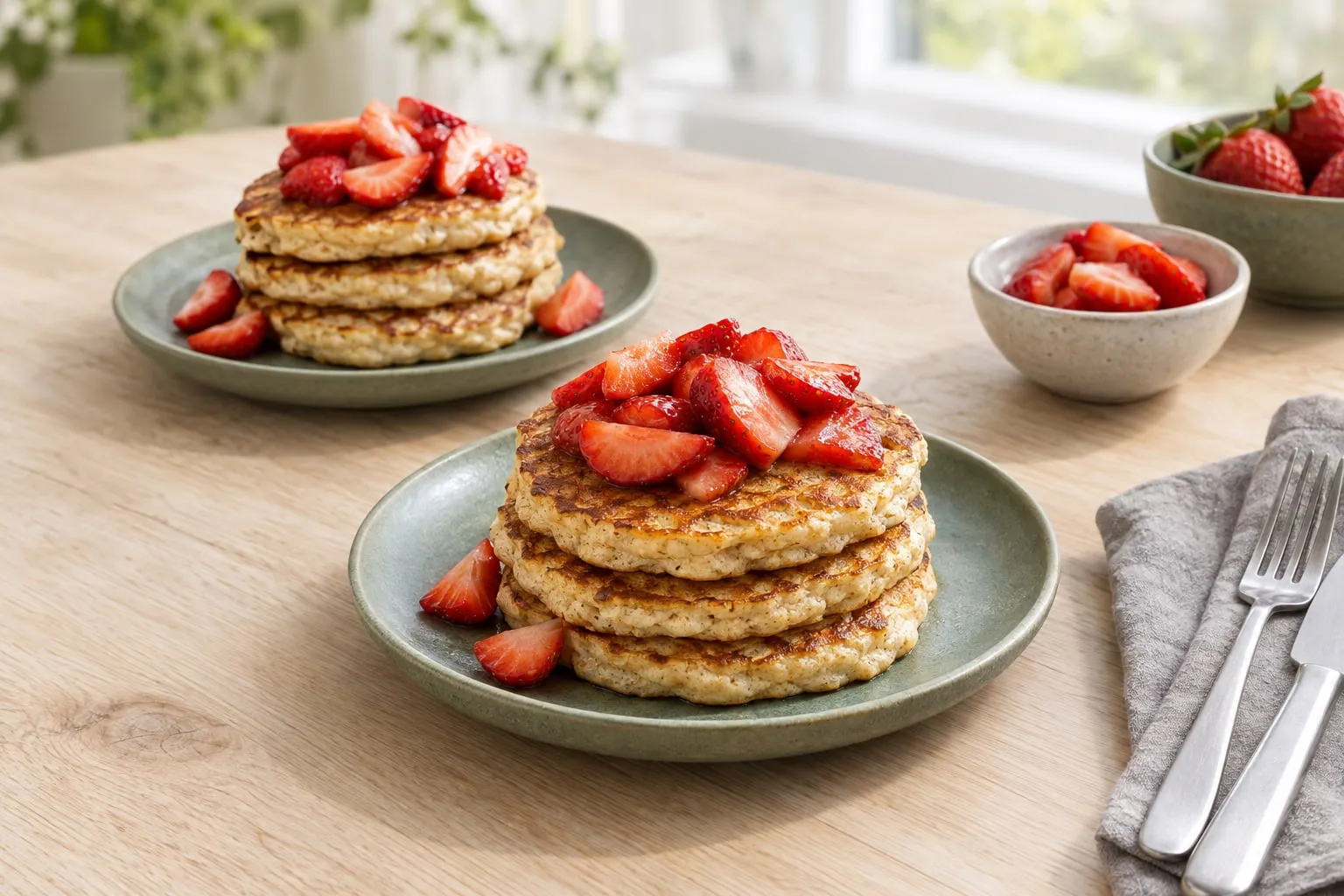
Protein Pancakes
31 g protein342 kcal25 minVegetarian
A simple breakfast that shows how much protein a few everyday ingredients add.
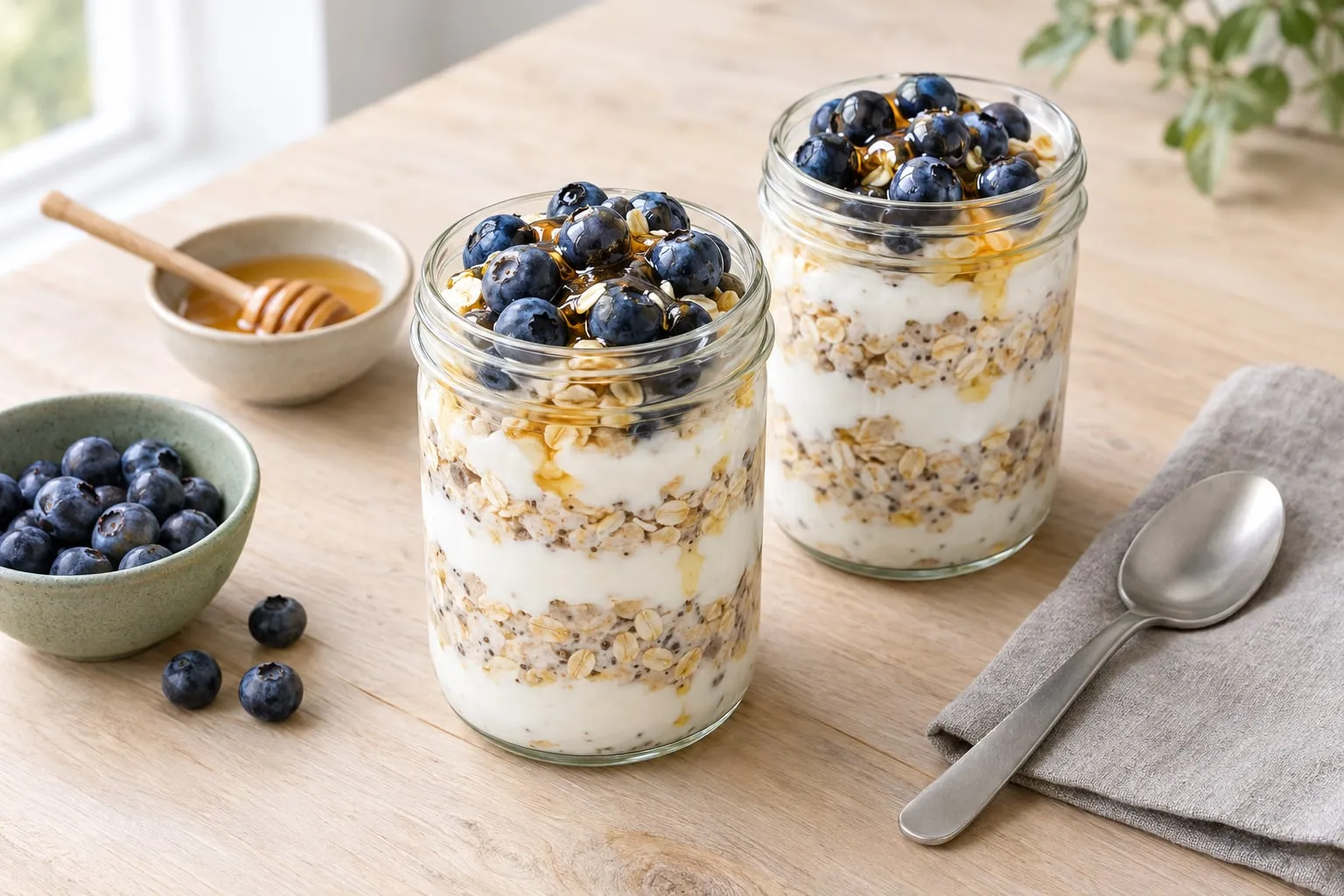
Protein Overnight Oats
26 g protein334 kcal8 hr 5 minVegetarian
Oats, yogurt and milk in a jar, with the protein counted per serving.
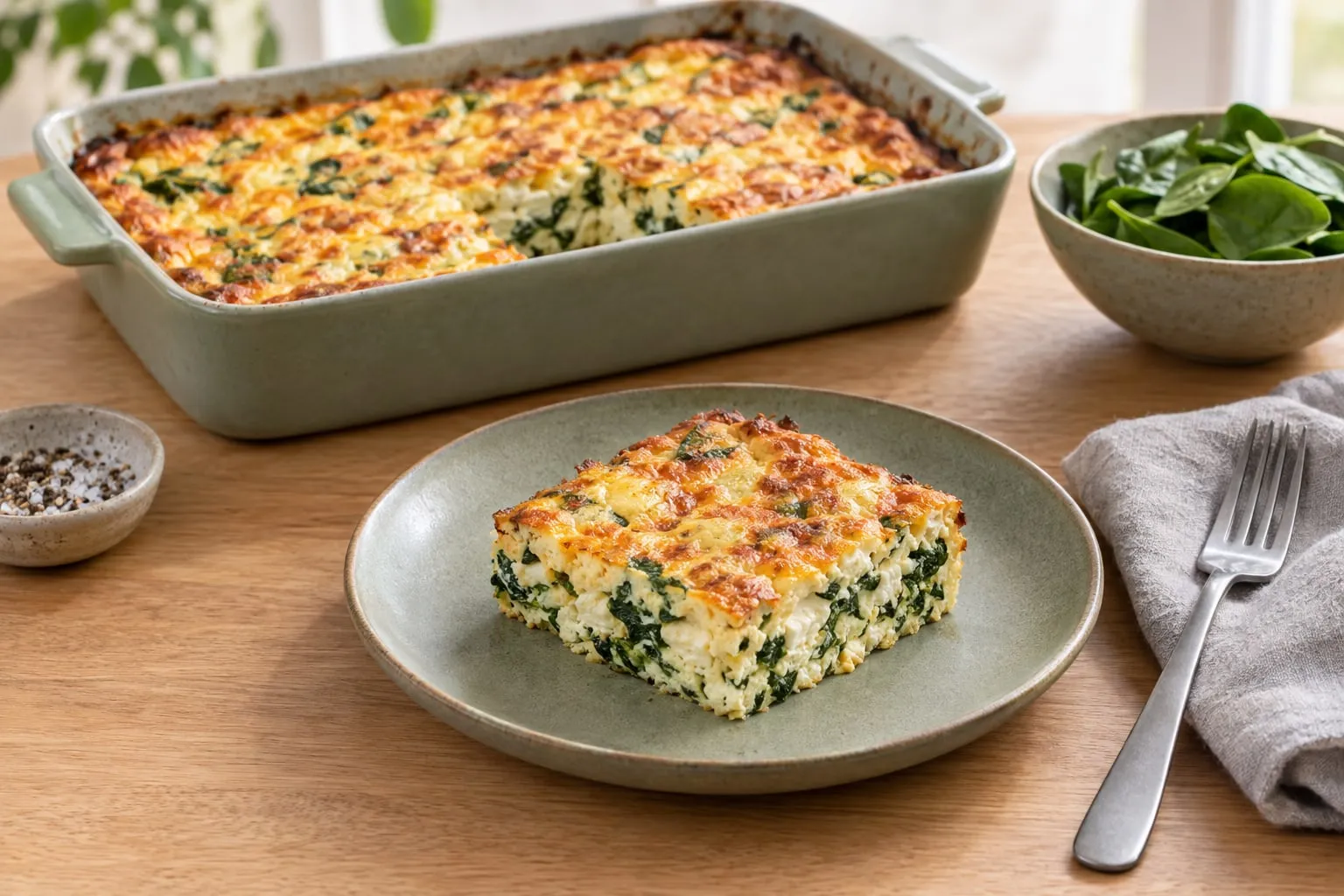
Cottage Cheese and Egg Bake
22 g protein190 kcal55 minVegetarianGluten-free
Eggs and cottage cheese baked into a high protein breakfast.
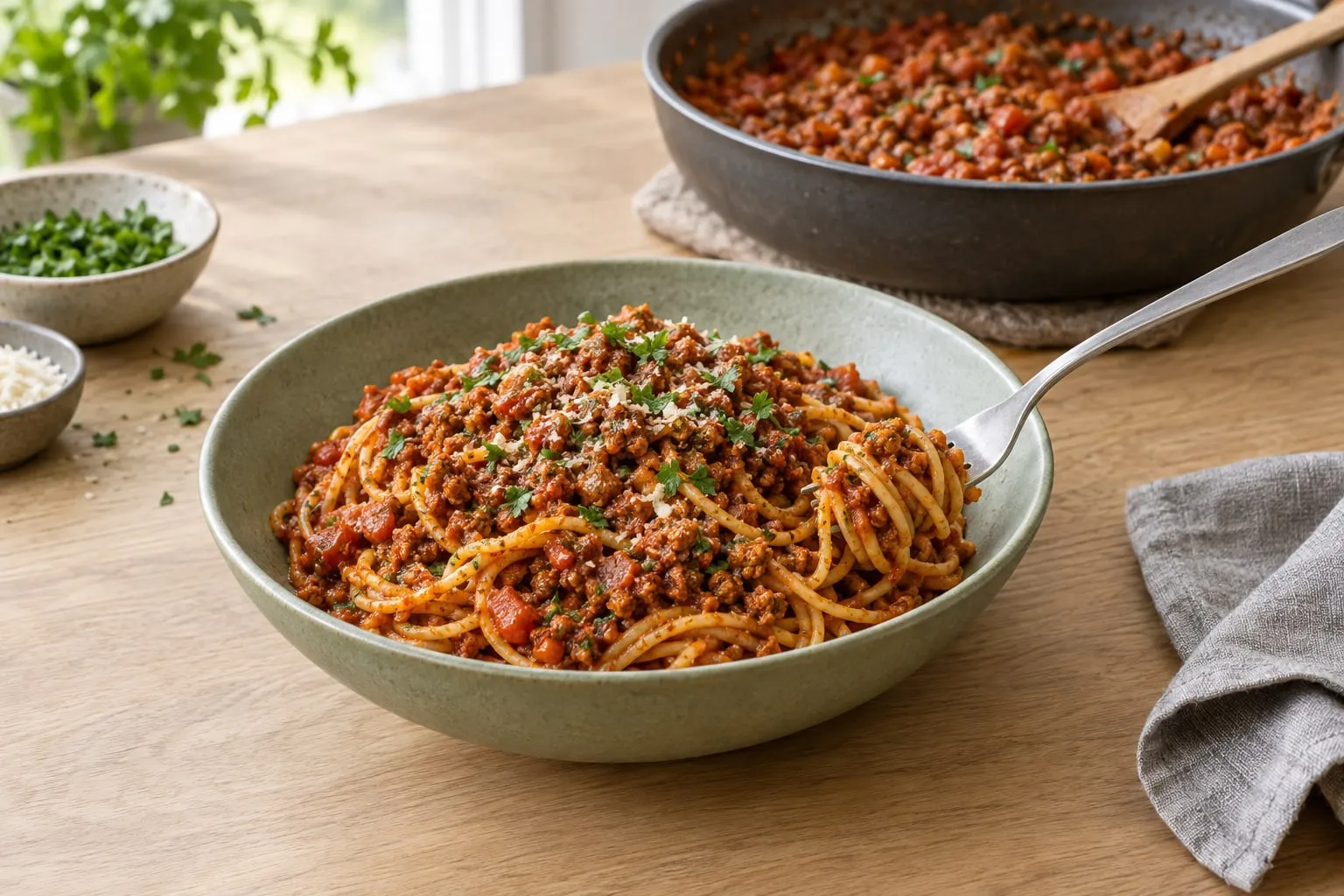
TVP Mince Bolognese
30 g protein476 kcal55 minVegetarianVegan
A meat-free sauce built on textured vegetable protein.
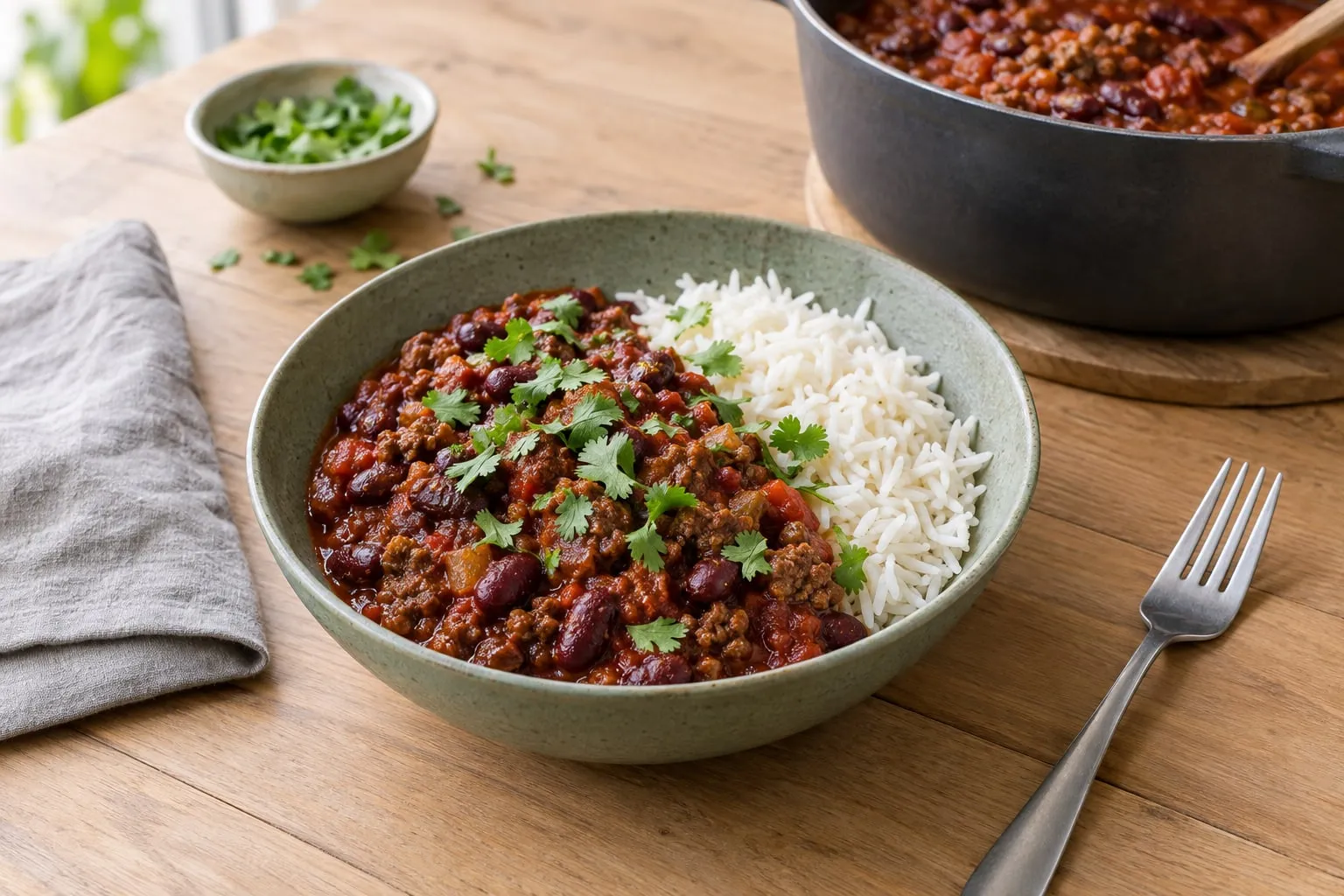
High Protein Chilli con Carne
33 g protein287 kcal1 hr 25 minGluten-freeDairy-free
A chilli with beef mince and beans for a high protein dinner.
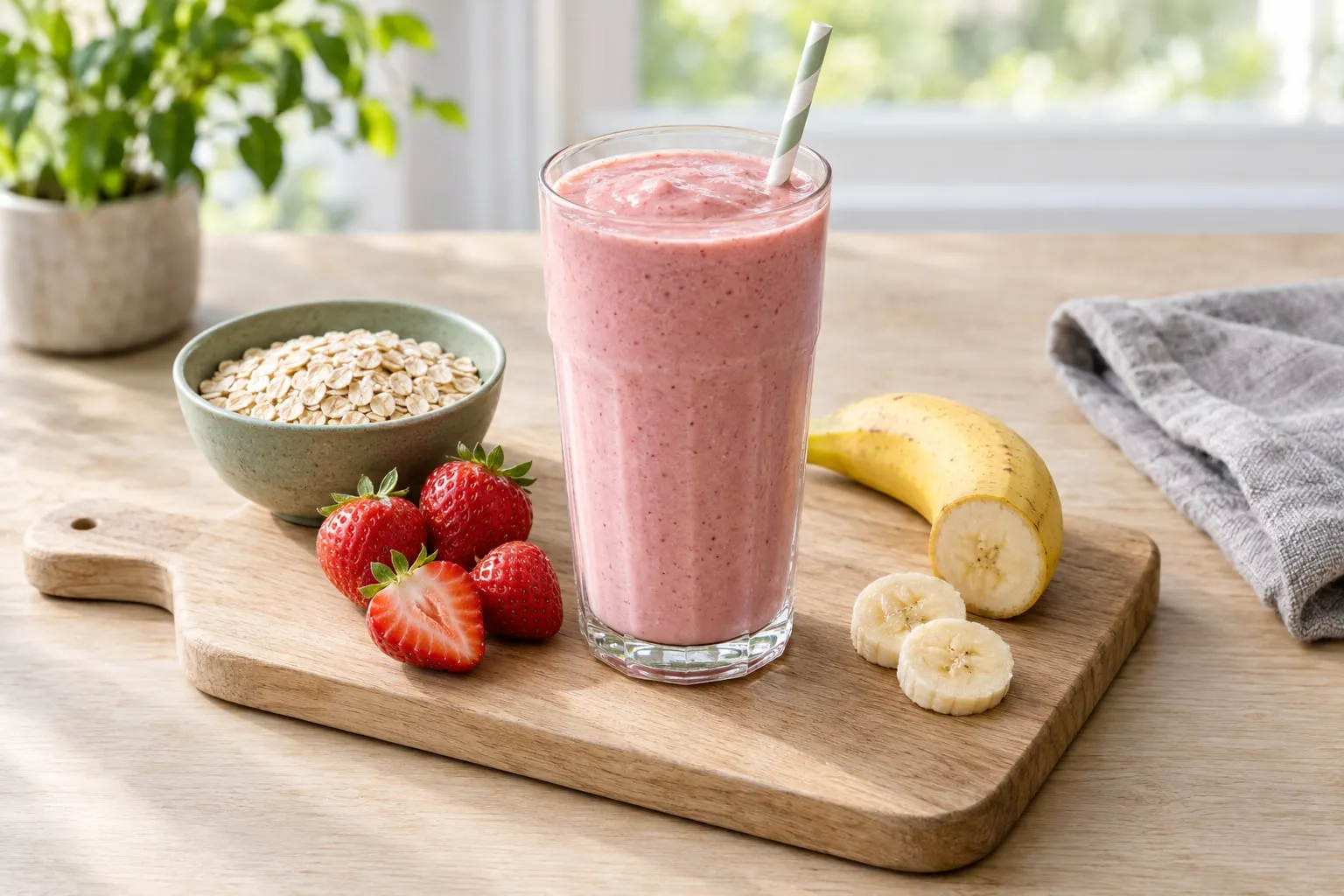
Protein Smoothie
32 g protein387 kcal5 minVegetarian
A quick drink with milk, fruit and protein powder.
Sources
- British Nutrition Foundation – Protein overview, essential amino acids and average UK intakes
- McCance and Widdowson's Composition of Foods Integrated Dataset 2021 (CoFID) – Values for lentils, tuna, eggs, cottage cheese, bread and pizza
Read our editorial policy for how figures are checked and how to report a mistake.
More protein guides
All guides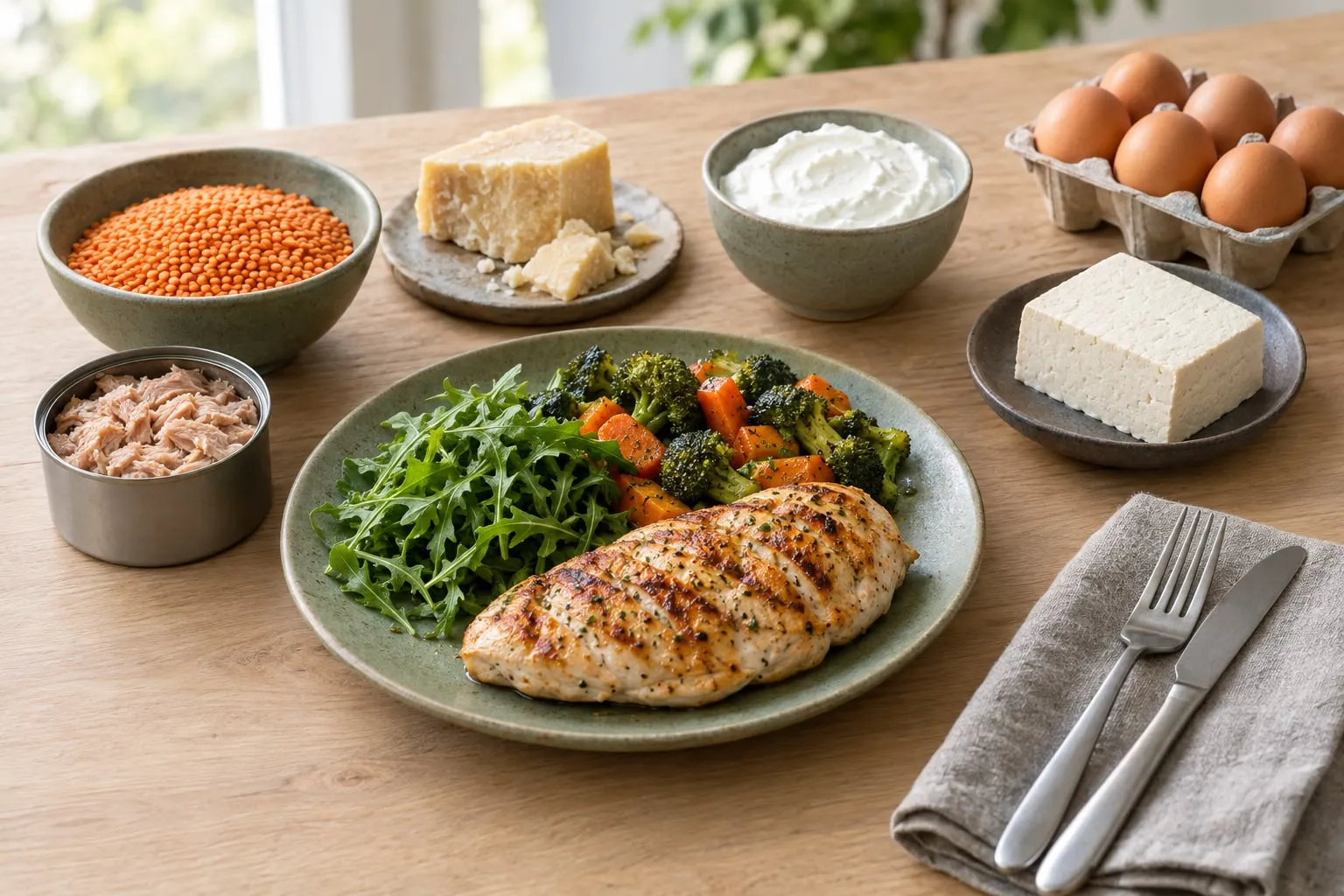
Guide
High Protein Foods: A Ranked List
High protein foods ranked by protein per 100 g and per 100 kcal: Parmesan has 36.2 g, grilled chicken 32.0 g, dried red lentils 25.6 g and egg white 10.8 g.
Guide
How Much Protein Do You Need Per Day?
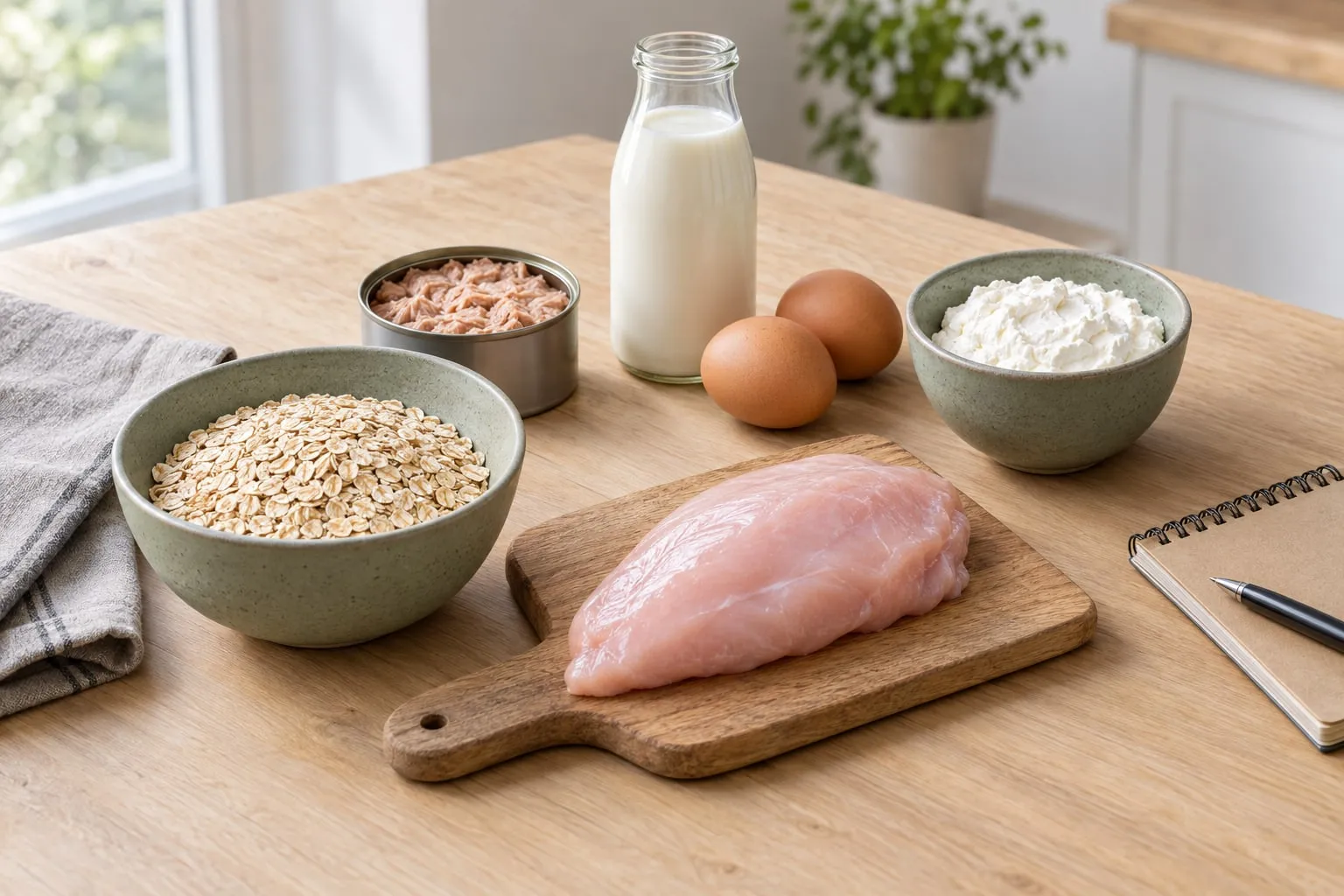
How much protein do I need? The UK reference is 0.75 g per kg of body weight a day, or 52.5 g at 70 kg. See food values and a worked example day.
Guide
Lean Protein: Best Sources
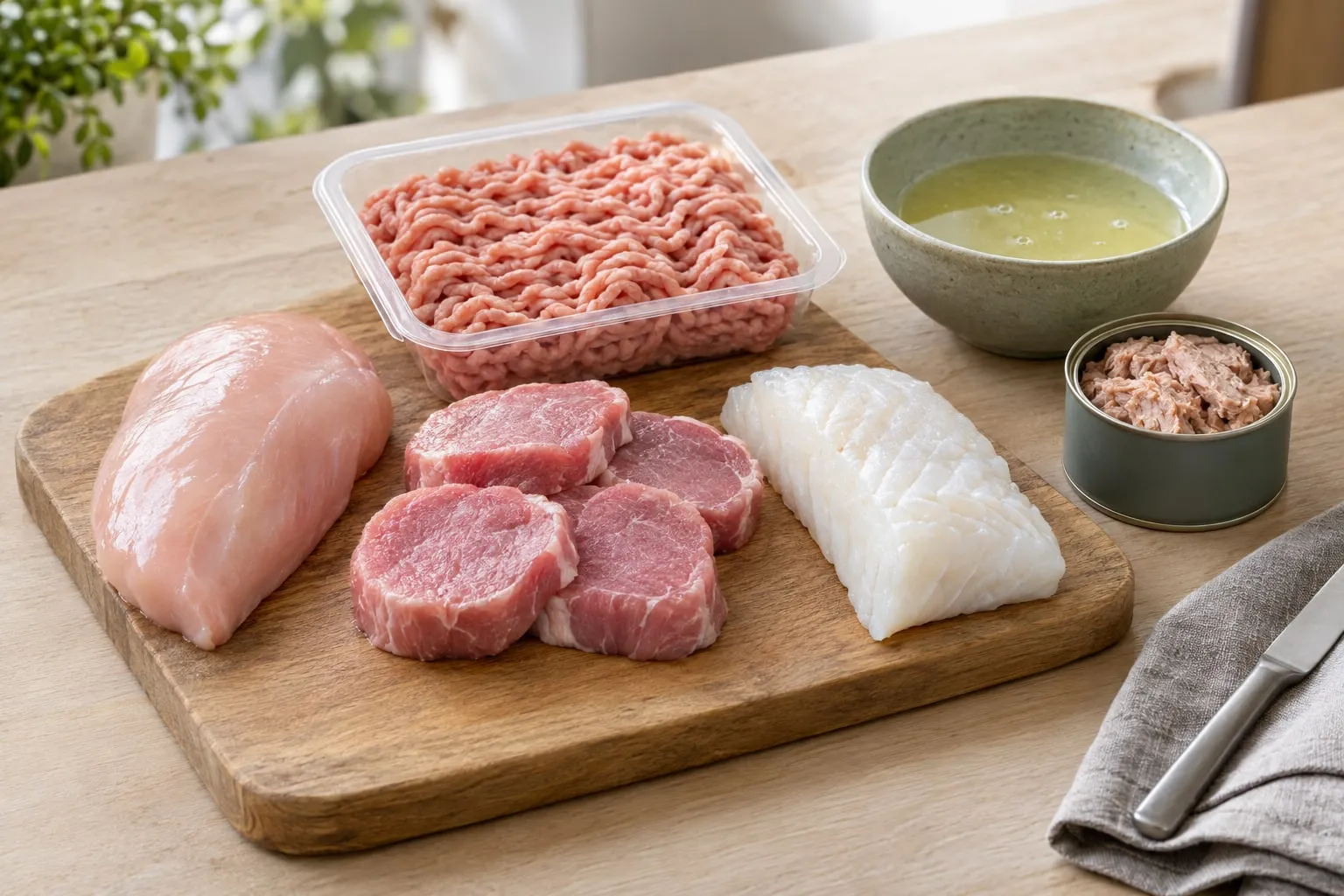
Lean protein sources ranked by fat: raw chicken breast has 24.0 g protein and 1.1 g fat per 100 g, tuna 24.9 g and 1.0 g. Meat, fish and dairy compared.
Guide
Can You Eat Too Much Protein?
Too much protein: there is no fixed upper limit, but UK advice is not to exceed twice the 0.75 g per kg reference intake, about 112 g a day for a 75 kg adult.