Protein guide
Lean Protein: Best Sources
Quick answer
Lean protein means a high-protein food with little fat. Here the limit is 5 g fat per 100 g raw: chicken breast (24.0 g protein, 1.1 g fat), pork loin, turkey mince, white fish, tuna and egg white all qualify.
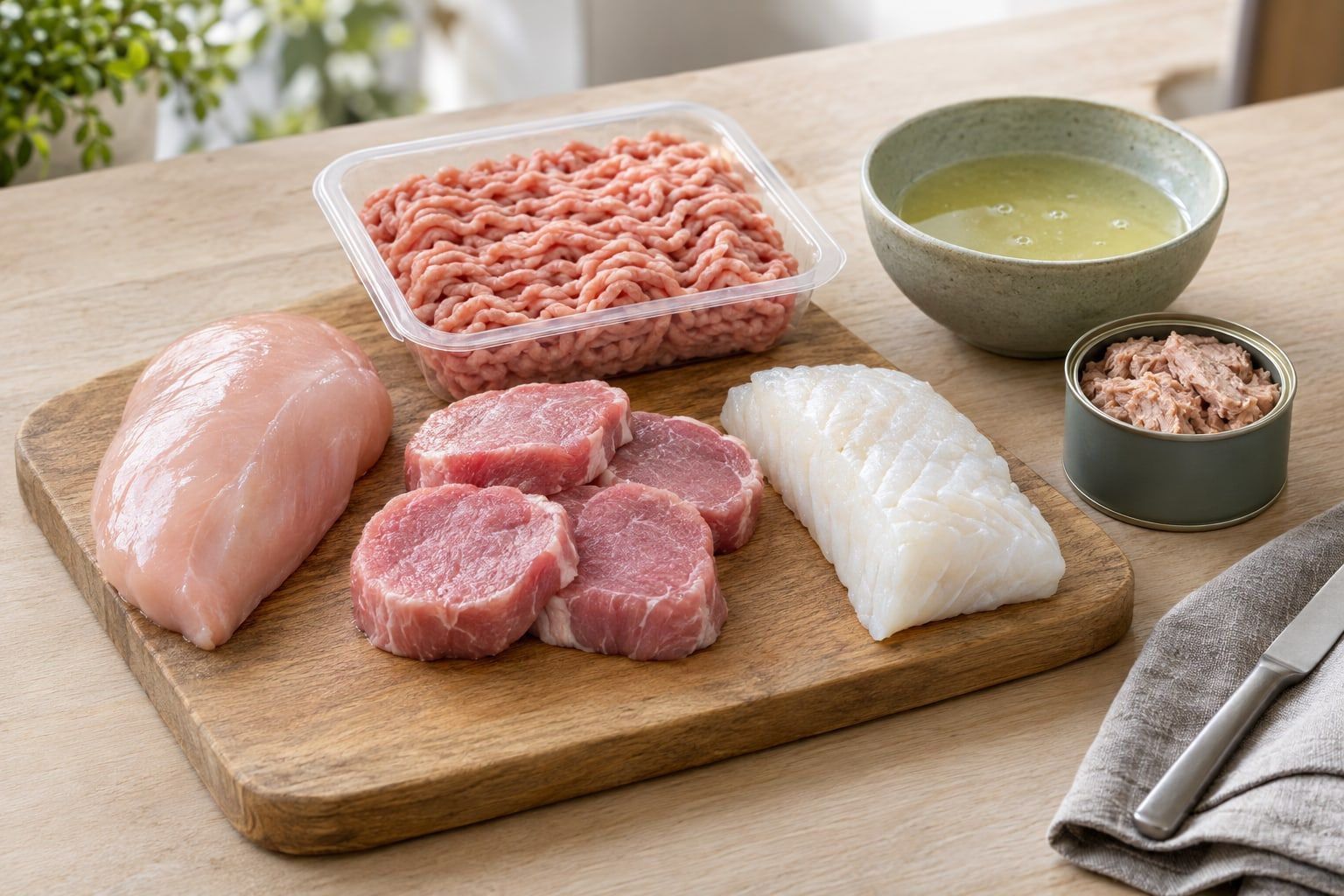
Lean protein means a food with plenty of protein and very little fat, and raw chicken breast is the standard example at 24.0 g protein and 1.1 g fat per 100 g. There is no official UK definition, so this page uses 5 g fat per 100 g raw as a working limit.
Cut and fat percentage are the variables that matter most. Pork loin medallions (24.8 g protein, 1.9 g fat) and turkey breast mince (22.0 g, 2.0 g) are as lean as chicken, while extra lean beef mince has 4.2 g fat per 100 g against 16.2 g in regular mince. Fish splits into two groups: white fish and prawns have under 1 g fat, whereas farmed salmon has 15.0 g and is valued for being oily fish. Weigh raw and compare raw, because cooking changes the weight.
For practical cooking, buy the leanest version of the cut and keep added fat modest, since oil in the pan can outweigh the fat in the meat. A 150 g chicken fillet gives 36.0 g protein, and a 150 g portion of pork loin medallions 37.2 g.
| Food | Protein | Fat | Energy |
|---|---|---|---|
| Tuna in brine, drained | 24.9 g | 1.0 g | 109 kcal |
| Pork loin medallions, lean | 24.8 g | 1.9 g | 116 kcal |
| Chicken breast fillet (typical value) | 24.0 g | 1.1 g | 106 kcal |
| Sirloin steak, lean | 23.5 g | 4.5 g | 135 kcal |
| Turkey breast mince (typical value) | 22.0 g | 2.0 g | 105 kcal |
| Beef mince, extra lean | 21.9 g | 4.2 g | 130 kcal |
| King prawns | 17.6 g | 0.7 g | 77 kcal |
| Cod | 17.5 g | 0.6 g | 75 kcal |
| Quark | 14.6 g | 0.0 g | 74 kcal |
| Egg white | 10.8 g | 0.0 g | 43 kcal |
| Beef mince, regular (for contrast) | 19.7 g | 16.2 g | 225 kcal |
| Salmon, farmed (for contrast) | 20.4 g | 15.0 g | 217 kcal |
Source: CoFID – McCance and Widdowson's Composition of Foods Integrated Dataset 2021 (codes 16-416, 18-518, 18-064, 18-508, 16-387, 16-372, 12-174, 12-938, 18-469, 16-356); chicken and turkey mince are typical values, not CoFID; tuna is drained from the tin
| Portion | Weight | Protein | Fat |
|---|---|---|---|
| Chicken breast fillet, raw | 150 g | 36.0 g | 1.7 g |
| Pork loin medallions, raw | 150 g | 37.2 g | 2.9 g |
| Tuna in brine, drained (1 tin) | about 102 g | 25.4 g | 1.0 g |
| Extra lean beef mince, raw (1 pack) | 500 g | 109.5 g | 21.0 g |
| Regular beef mince, raw (1 pack) | 500 g | 98.5 g | 81.0 g |
Source: Calculated from the per 100 g values above; 150 g is a typical single fillet or serving, and 500 g a common pack of mince
What counts as lean protein?
There is no official UK definition, so this page uses a plain working rule: a high-protein food with no more than 5 g fat per 100 g, measured raw. By that rule chicken breast (1.1 g fat), pork loin medallions (1.9 g), turkey breast mince (2.0 g), lean sirloin steak (4.5 g), extra lean beef mince (4.2 g), white fish, prawns, tuna, quark and egg white all qualify. Regular beef mince does not, at 16.2 g fat per 100 g.
Which are the leanest protein sources?
Egg white, quark, cod and king prawns have almost no fat at all, with 0.0–0.7 g per 100 g. Among meats, chicken breast is the leanest at 1.1 g fat, then pork loin medallions at 1.9 g and turkey mince at 2.0 g. Tinned tuna in brine has 24.9 g protein and 1.0 g fat per 100 g. Dairy and egg white are leaner than any meat, but they have less protein per 100 g, at 14.6 g for quark and 10.8 g for egg white.
Which meats have the most protein?
Pork loin medallions (24.8 g per 100 g), chicken breast (24.0 g) and lean sirloin steak (23.5 g) lead the meats, all measured raw. Tinned tuna, weighed drained from the tin, is just ahead at 24.9 g but is fish. Extra lean beef mince has 21.9 g protein and 4.2 g fat per 100 g, while regular mince has 19.7 g protein and 16.2 g fat. In a 500 g pack, that means 109.5 g protein and 21.0 g fat for extra lean, against 98.5 g and 81.0 g for regular, which is 60 g more fat.
Where does oily fish fit in?
Salmon is not lean by the 5 g rule, with 15.0 g fat per 100 g raw, but it is a protein food that NHS advice includes. The Eatwell Guide recommends at least 2 portions of fish a week, one of them oily, and the typical portion is about 140 g. White fish such as cod and shellfish such as prawns are low in fat, so they cover the other portion. Raw farmed salmon has 20.4 g protein per 100 g.
Is there a lean plant protein?
Plant-based options include dried lentils, with only 1.8 g fat per 100 g, and vegan pea and rice protein powder, which has about 7 g fat per 100 g as a typical value. A 30 g scoop therefore gives about 22.5 g protein and 114 kcal with around 2.1 g fat. Lentils bring plenty of carbohydrate too, and the powder is a convenience rather than a necessity. Firm tofu has 12.5 g protein and 7.5 g fat per 100 g, which puts it above the 5 g limit.
How do you keep a lean protein lean when cooking?
The fat in the pan counts as well. Grilling, poaching, baking in foil or cooking in a non-stick pan with a spray of oil leaves a chicken breast close to its 1.1 g fat per 100 g. A tablespoon of oil adds about 14 g fat and 126 kcal, which is far more than the chicken holds. Season, marinate in yogurt or lemon juice, and cook to the right core temperature, 75°C for chicken, so that lean meat does not dry out.
Practical tips
- Choose by the fat figure on the pack
On a pack of mince, compare the fat per 100 g. A pack labelled 5% fat is close to the extra lean mince in the table (4.2 g), while one labelled 20% fat has more fat than the regular mince (16.2 g).
- Do not overcook lean cuts
Lean chicken, turkey and pork dry out quickly. Check with a thermometer and take chicken off the heat at 75°C, then rest it for a few minutes.
- Weigh raw and compare raw
All the fat figures in the table are for raw weight. Cooked meat is lighter because it loses water, so the figures per 100 g cooked look higher.
Myth or fact
- Myth
Is it true that lean protein means chicken only?
No. Pork loin medallions (24.8 g protein, 1.9 g fat), tinned tuna, white fish, turkey mince, extra lean beef mince, quark and egg white all meet the 5 g fat limit.
- Myth
Is it true that red meat cannot be lean?
No. Lean sirloin steak has 23.5 g protein and 4.5 g fat per 100 g raw, and extra lean beef mince has 21.9 g protein and 4.2 g fat. The NHS advice is to choose lean cuts of meat and mince and to eat less red and processed meat.
Frequently asked questions
What is the leanest protein?
Egg white and quark have no fat (0.0 g per 100 g), and cod has 0.6 g. Of the meats, raw chicken breast is leanest at 1.1 g fat per 100 g, with 24.0 g protein.
Which meats have the most protein?
Pork loin medallions (24.8 g per 100 g raw), chicken breast (24.0 g) and lean sirloin steak (23.5 g) lead. Tinned tuna has 24.9 g, but it is fish.
Is salmon a lean protein?
Not by the 5 g fat rule used here, because raw farmed salmon has 15.0 g fat per 100 g. It has 20.4 g protein per 100 g and counts as the oily fish portion in the Eatwell Guide.
Is there a vegan lean protein?
Dried lentils have 25.6 g protein and 1.8 g fat per 100 g, but 51.2 g carbohydrate. A vegan pea and rice powder gives about 22.5 g protein per 30 g scoop, using a typical value.
What is the leanest protein per calorie?
Egg white gives 25.1 g protein per 100 kcal, with cod at 23.3 g and king prawns at 22.9 g. Chicken breast gives about 22.6 g.
Recipes to try
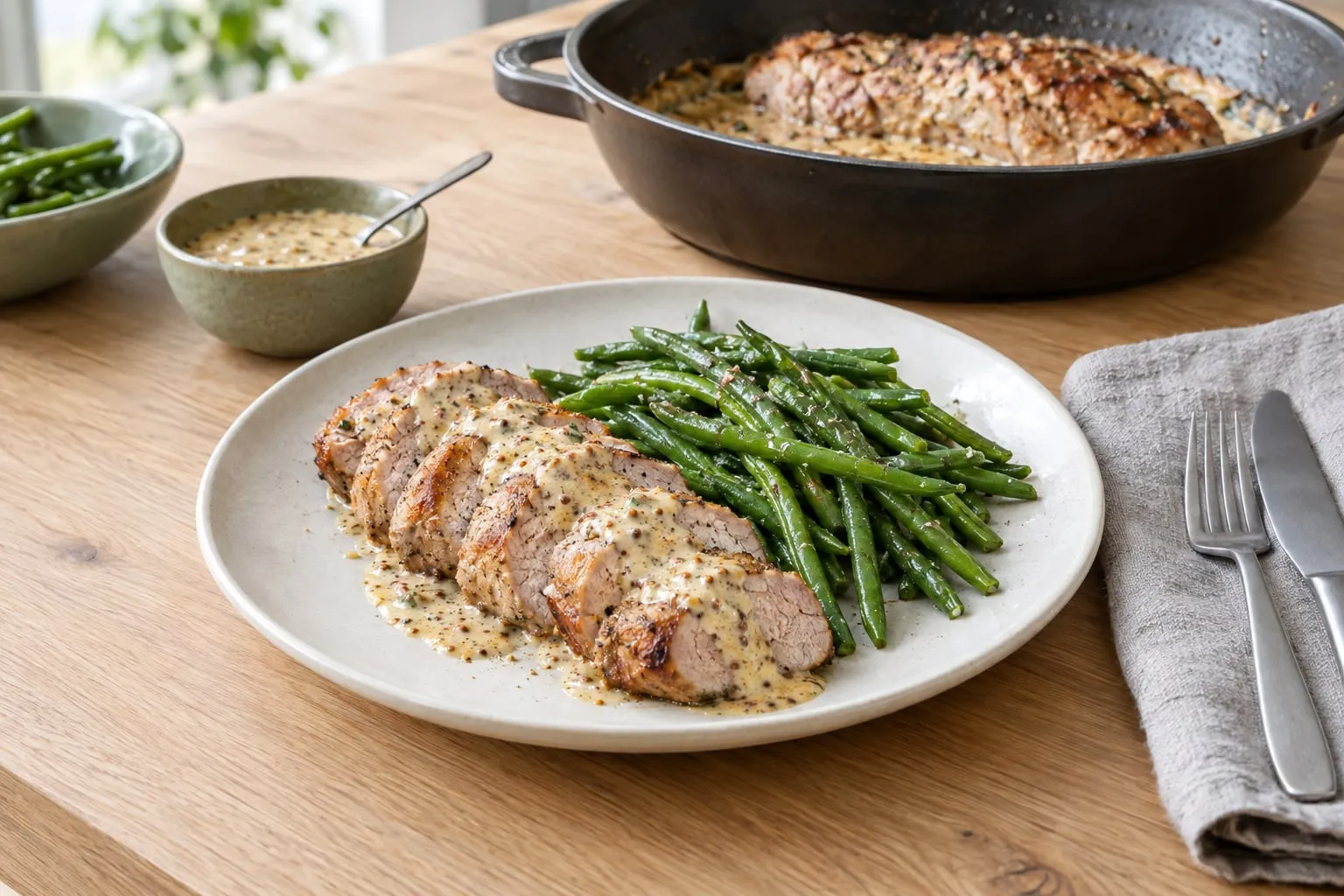
Pork Tenderloin with Mustard Sauce
44 g protein279 kcal55 minGluten-free
A lean cut of pork roasted and sliced.
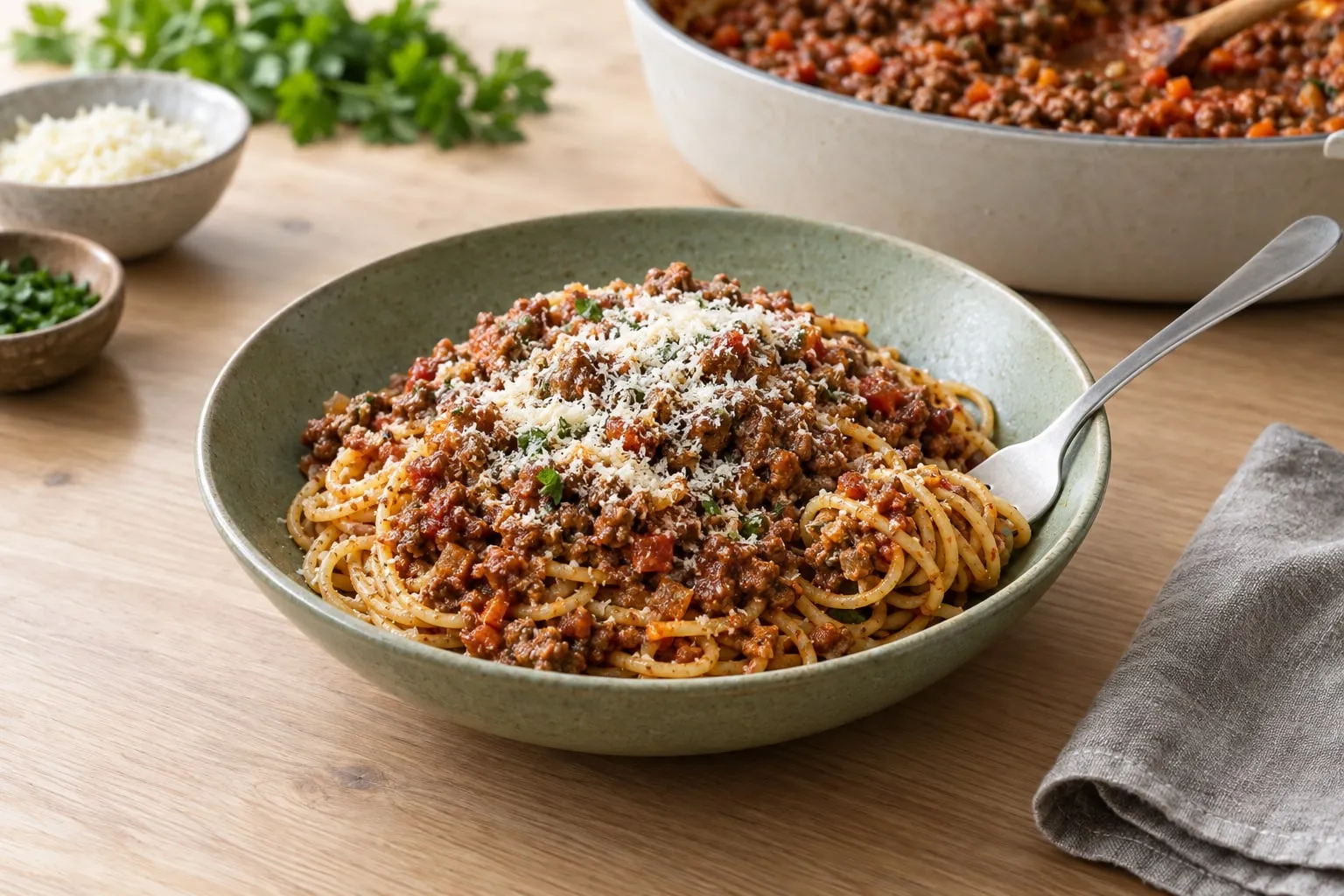
High Protein Spaghetti Bolognese
42 g protein577 kcal1 hr 6 min
Spaghetti bolognese made with lean mince.
Sources
- McCance and Widdowson's Composition of Foods Integrated Dataset 2021 (CoFID) – Protein, fat and energy values for raw meat, fish, dairy and egg white
- NHS Eatwell Guide – Advice to choose lean cuts of meat and mince, to eat less red and processed meat, and to eat at least 2 portions of fish a week, one of them oily
Read our editorial policy for how figures are checked and how to report a mistake.
More protein guides
All guides
Guide
High Protein Foods: A Ranked List
High protein foods ranked by protein per 100 g and per 100 kcal: Parmesan has 36.2 g, grilled chicken 32.0 g, dried red lentils 25.6 g and egg white 10.8 g.
Guide
How Much Protein Do You Need Per Day?
How much protein do I need? The UK reference is 0.75 g per kg of body weight a day, or 52.5 g at 70 kg. See food values and a worked example day.
Guide
What Is Protein and Why Do We Need It?
What is protein good for? It is made of amino acids, nine of them essential. See what it does, the UK 0.75 g per kg a day reference and food values.
Guide
Protein for Women: How Much Do You Need?
Protein for women: the UK reference is 0.75 g per kg a day, or 45 g at 60 kg. Daily amounts, food portions and what to check on a protein shake.