Method
Tap a time to start a timer.
Heat the oven to 200°C (180°C fan), gas 6. Trim any silverskin from the pork, pat dry with kitchen paper and season with the pepper.
Heat the rapeseed oil in the frying pan over a medium-high heat. Sear the pork for 6–8 minutes, turning every 2 minutes, until browned on all sides.
Put the pan in the oven on the middle shelf and roast until the thickest part reads 75°C in the centre. Check from 18 minutes.
Lift the pork onto a board and rest it for 10 minutes. Meanwhile, boil the green beans in a pan of water for 4–5 minutes and drain.
Put the frying pan over a medium heat (use a cloth, the handle will be hot). Fry the garlic for 30 seconds, pour in the stock and scrape up the browned bits. Simmer for 3 minutes until reduced by about a third.
Take the pan off the heat, wait 1 minute, then stir in the half-fat crème fraîche and mustard. Add any juices from the board.
2 min
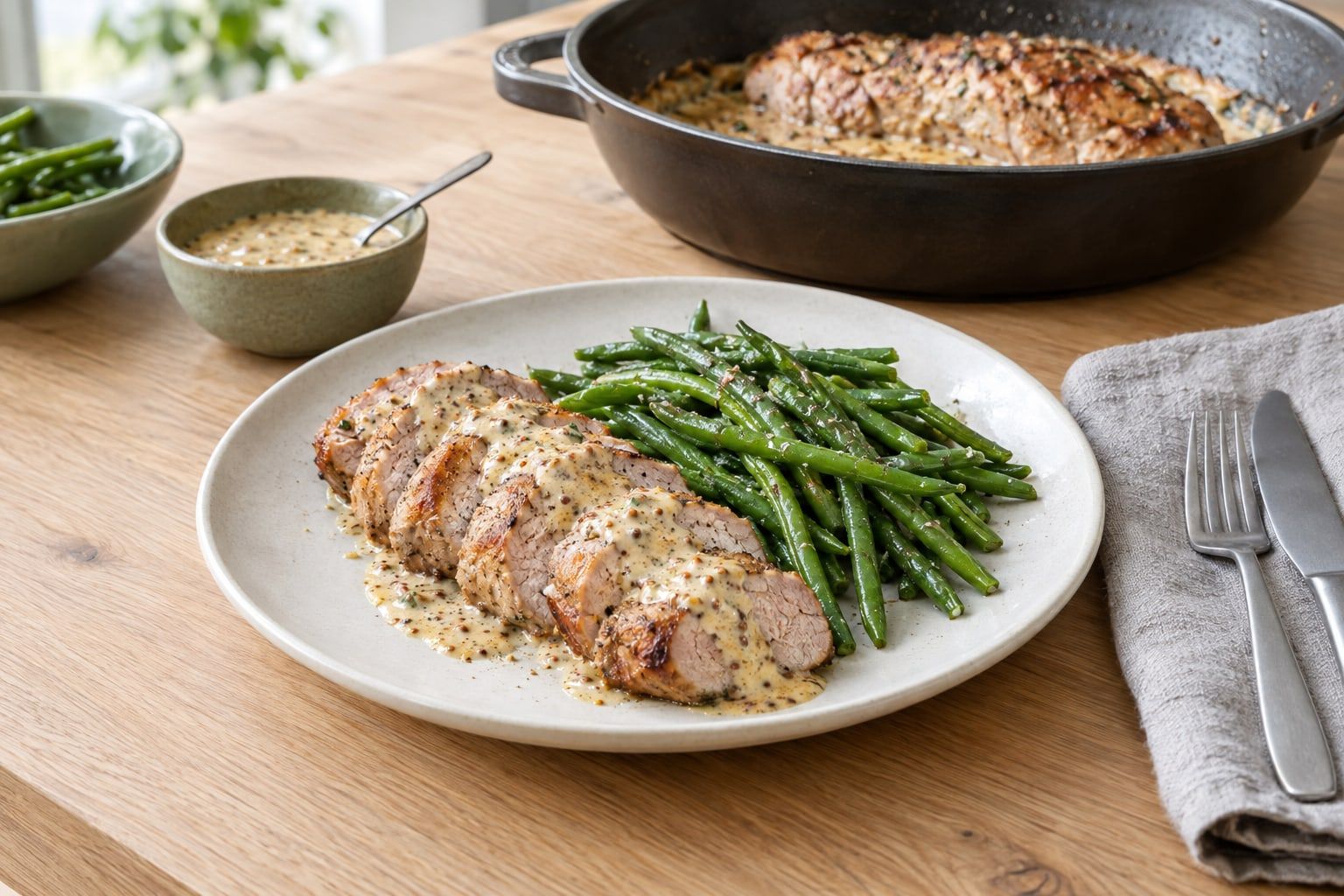
Slice the pork into 2 cm slices and serve with the sauce spooned over and the green beans alongside.
2 min
How to tell it's done
- Core temperature: 75°C in the thickest part, checked with a probe thermometer.
- The thickest part of the pork reads 75°C on a probe thermometer, and the juices run clear.
- The slices are pale pink to white all the way through with no raw, translucent areas.
Tips for success
- Remove the silverskin
The thin, shiny membrane on the tenderloin does not soften when cooked and makes the meat curl. Slide a thin knife under it and cut it away, keeping the blade angled up.
- Pull it out at 75°C, not later
Pork tenderloin has almost no fat, so it dries out quickly once it passes about 75°C. Start checking with a probe at 18 minutes and rest the meat as soon as it reads 75°C.
- Keep the sauce below a boil
Half-fat crème fraîche can split if it boils hard. Take the pan off the heat before stirring it in, and warm it gently.
Boost the protein
- Serve each portion with 100 g (dry weight) lentil or chickpea pasta instead of 100 g of plain white pasta: about +11 g protein.
- Serve with 60 g extra edamame beans per person in place of 60 g green beans: about +5 g protein per serving.
Choosing ingredients
Buy pork tenderloin, sold as pork fillet, not pork loin. It is a long, narrow muscle of about 350 g, and two of them make up the 700 g.
Use wholegrain mustard for texture, or smooth Dijon-style mustard for a smoother, sharper sauce.
Variations
- With a honey and mustard glaze
Brush the seared pork with 1 tbsp wholegrain mustard and 2 tsp honey before roasting. Check at 18 minutes, as the glaze browns quickly.
- Without the sauce
Skip the stock, crème fraîche and mustard and serve the sliced pork with a squeeze of lemon. Protein per serving falls by about 1 g and the calories drop slightly.
Serve it with
- Mashed potato or new potatoes
- Steamed tenderstem broccoli
- Apple and cabbage slaw
Storage
Keep leftover sliced pork tenderloin and sauce in separate airtight containers in the fridge for up to 2 days.
Reheat the pork gently in the sauce until piping hot, or slice it cold into sandwiches.
Troubleshooting
Why is my pork tenderloin dry?
It cooked past 75°C. Tenderloin is very lean, so check the temperature from 18 minutes and rest the meat as soon as it reads 75°C.
Why did the mustard sauce split?
The crème fraîche was added to a boiling pan. Take the pan off the heat for a minute and stir it in gently, then add a splash of stock if it looks thick.
Frequently asked questions
How much protein is in this pork tenderloin?
Each of the four servings has 44 g protein and 279 kcal, so 63% of the energy comes from protein. That includes the sauce and green beans but not any potatoes.
What temperature should pork tenderloin be cooked to?
Cook it to 75°C in the centre. Pork is also safe at 70°C if it is held at that temperature for 2 minutes, but 75°C is the simple target for this recipe.
Can I cook pork tenderloin ahead?
Yes. Roast it, cool it quickly and chill it, then slice it cold or reheat it in the sauce until piping hot. Make the sauce fresh if you can.
Made it? Rate the recipe
Read next
- How Much Protein Do You Need Per Day?How much protein do I need? The UK reference is 0.75 g per kg of body weight a day, or 52.5 g at 70 kg. See food values and a worked example day.
- High Protein Foods: A Ranked ListHigh protein foods ranked by protein per 100 g and per 100 kcal: Parmesan has 36.2 g, grilled chicken 32.0 g, dried red lentils 25.6 g and egg white 10.8 g.
Written by The Protein Recipes editorial team. Nutrition is calculated from the ingredient list using CoFID. Read how our recipes are made and how we correct mistakes.