Method
Tap a time to start a timer.
Put the cottage cheese, eggs, porridge oats, baking powder and vanilla extract in a blender and blend until completely smooth.
Pour the batter into a bowl and leave it to thicken.
Brush the frying pan with the rapeseed oil and heat it over a medium heat.
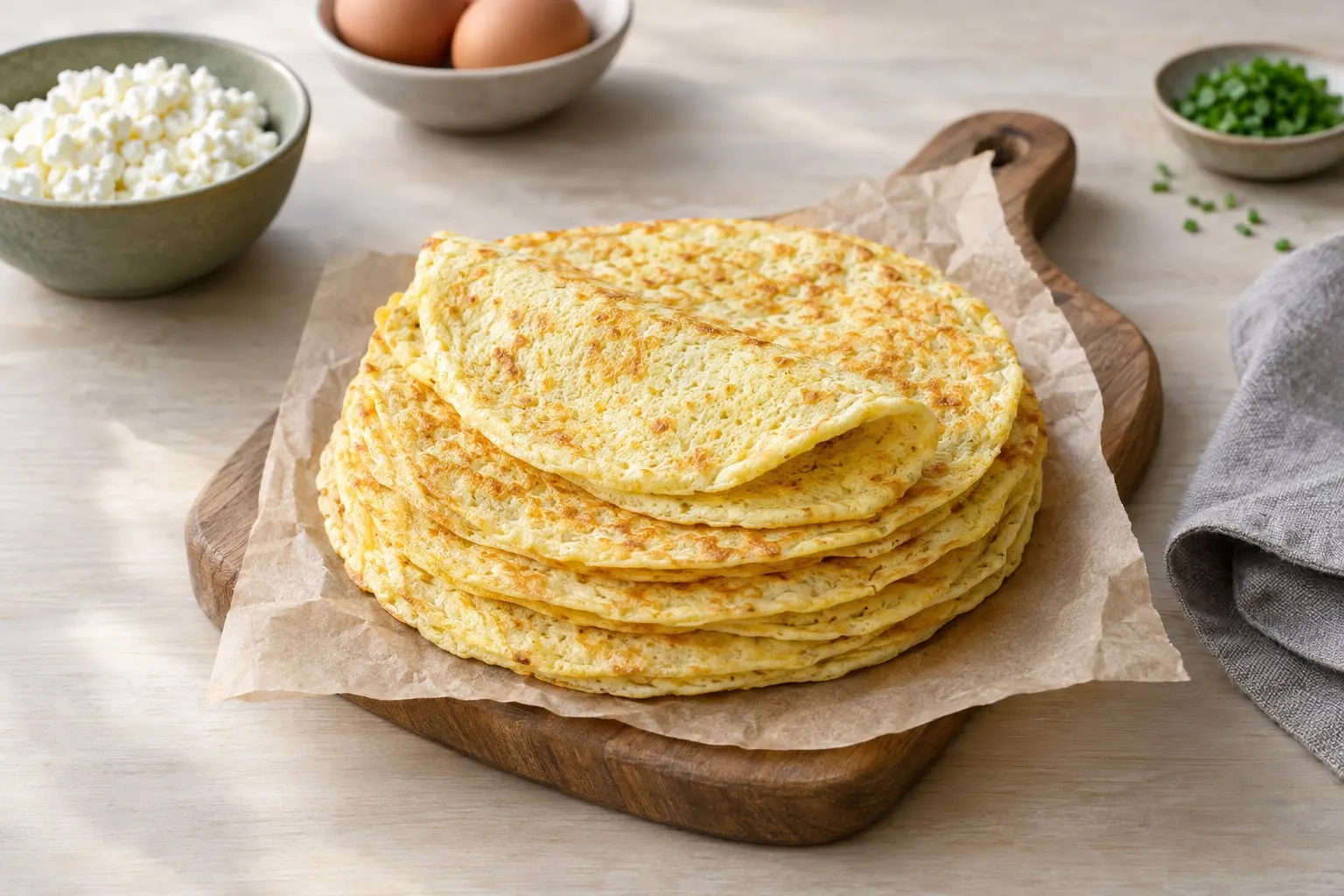
Spoon the batter into the pan in rounds of about 8 cm, leaving space between them. Cook until bubbles appear on the surface and the edges look set.
Flip and cook until golden brown on the second side. Repeat with the remaining batter to make 8 pancakes in all.
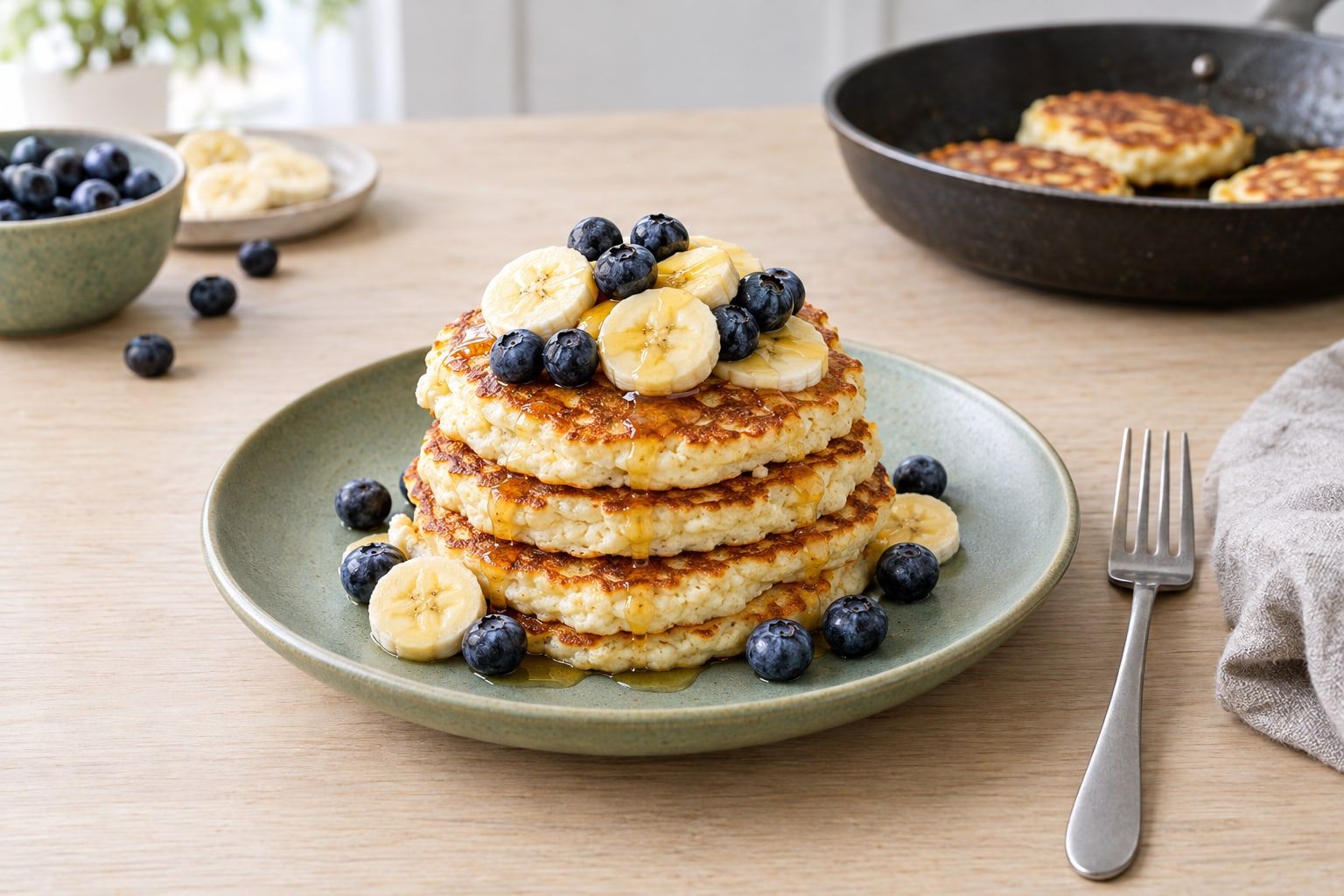
Stack four pancakes on each plate and serve warm.
How to tell it's done
- The pancakes are golden brown on both sides, with bubbles on the surface before you flip them.
- The centre of a pancake feels set and springy when you press it lightly, with no wet batter.
Tips for success
- Blend until completely smooth
Whizz the batter for a full minute. Any whole curds that survive blending leave wet spots inside the pancakes and stop them setting evenly.
- Let the batter rest for 5 minutes
The oats absorb liquid as the batter stands, which thickens it so that it holds its shape in the pan and gives fluffy pancakes rather than flat ones.
- Keep the heat at medium
Too hot and the outsides brown before the middle sets. Look for bubbles on the surface and set edges before flipping.
Boost the protein
- Add 60 ml liquid egg white and 10 g extra oats to the blender: about +4 g protein per serving.
- Top each serving with 100 g strained 0% Greek yogurt instead of honey: +10 g protein per serving.
Choosing ingredients
Use plain reduced fat cottage cheese from a 300 g tub, which gives the most protein per 100 g without the extra fat. Avoid flavoured pots with added sugar.
Rolled porridge oats blend into a fine flour in seconds. Use gluten-free oats if you need the pancakes to be gluten-free.
Variations
- Banana cottage cheese pancakes
Blend in 1 small ripe banana (about 80 g). The batter is slightly looser, so cook for 3 minutes on the first side. Protein is about 21 g per serving.
- Cinnamon cottage cheese pancakes
Add 1 tsp ground cinnamon to the blender and serve with sliced apple. Cooking time is the same.
Serve it with
- Sliced banana and blueberries
- A drizzle of honey
- Strained Greek yogurt
Storage
Keep leftover cottage cheese pancakes in an airtight container in the fridge for 2 days.
Reheat them in a toaster or a dry frying pan for 1–2 minutes a side.
Troubleshooting
Why are my cottage cheese pancakes runny in the middle?
The heat was too high or the batter too thin. Turn the heat down to medium, let the batter rest for 5 minutes and flip only once bubbles have appeared.
Why do my cottage cheese pancakes fall apart when I flip them?
They were flipped too early or the curds were not blended smooth. Blend for a full minute and wait until the edges look set before turning.
Frequently asked questions
How much protein is in these cottage cheese pancakes?
Each serving of four pancakes has 20 g protein and 274 kcal, so 30% of the energy comes from protein.
Are these the same as British pancakes?
No. Traditional British pancakes for Pancake Day are thin and similar to crêpes. These cottage cheese pancakes are thick, fluffy American-style pancakes.
Can I make protein pancakes with cottage cheese without a blender?
Not easily. A stick blender in a jug works, but mashing with a fork leaves curds in the batter, which makes the pancakes wetter and harder to turn.
Can I make the batter the night before?
Yes, keep it in a covered bowl in the fridge overnight, then stir it and cook as normal. It thickens, so add 1 tablespoon of milk if needed.
Made it? Rate the recipe
Read next
- Protein in Cottage CheeseProtein in cottage cheese: 150 g plain has 14.1 g protein and 155 kcal, reduced fat has 15.9 g and 102 kcal. Values per 100 g, per portion and per tub.
- Highest Protein CheeseProtein in cheese per 100 g and per portion: Parmesan has 36.2 g, half-fat Cheddar 32.7 g and feta 15.6 g. Ranked by protein and per 100 kcal.
Written by The Protein Recipes editorial team. Nutrition is calculated from the ingredient list using CoFID. Read how our recipes are made and how we correct mistakes.