Protein guide
Protein Calculator
Quick answer
Multiply your body weight in kg by 0.75 to get the UK reference intake in grams of protein per day: 70 kg × 0.75 = 53 g. People who train regularly are often given 1.2–1.6 g per kg in research.
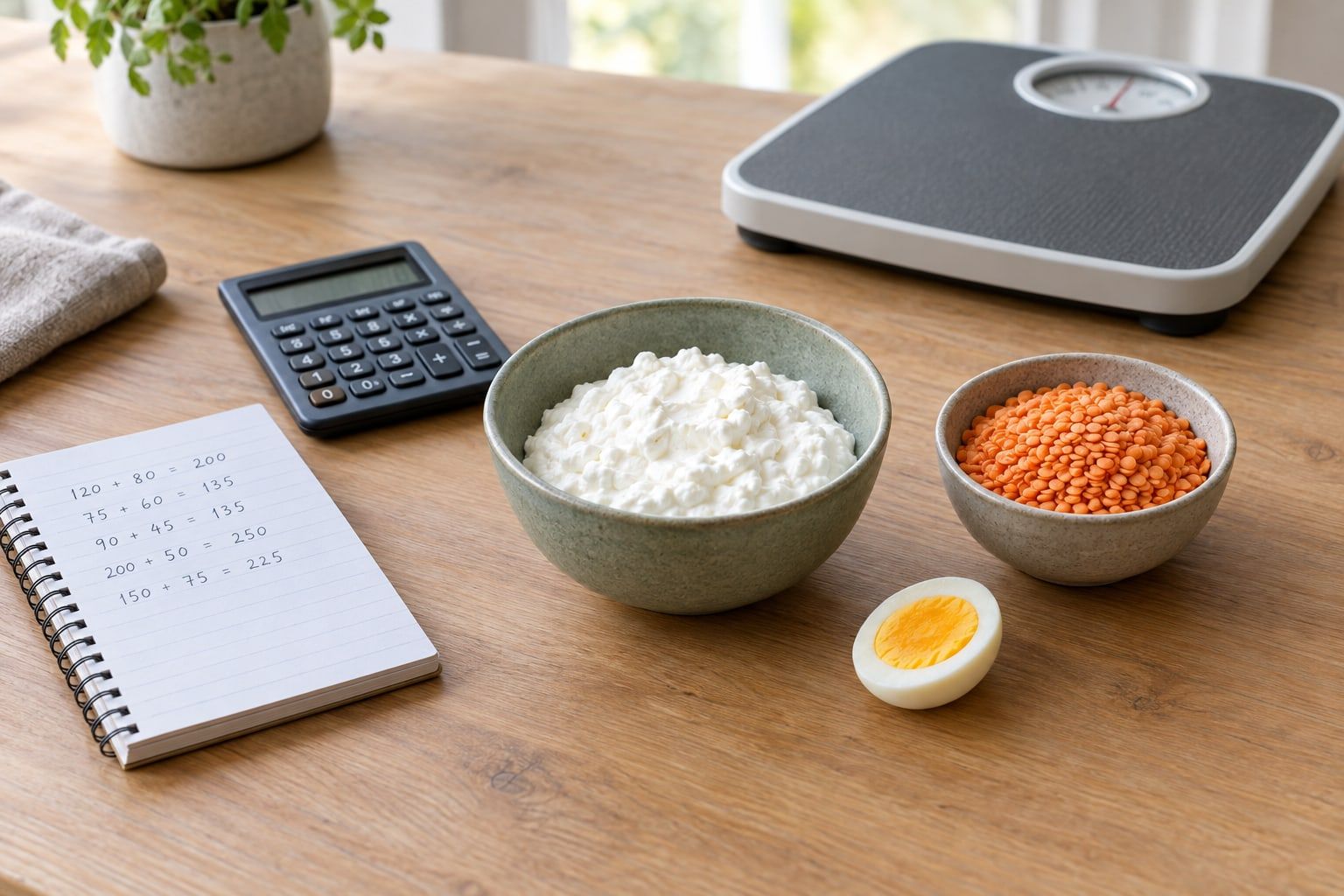
A protein calculator comes down to one multiplication: body weight in kilograms times 0.75 gives grams of protein per day, so a 70 kg adult works out at 53 g. The 0.75 figure is the UK Reference Nutrient Intake, and the EFSA value of 0.83 g per kg gives 58 g for the same person.
The factor is the main variable. Reference values of 0.75 and 0.83 g per kg are for healthy adults, whereas research on regular training uses 1.2–1.6 g per kg, which means 84–112 g at 70 kg. Both tables on this page show every factor side by side, in kilograms and in stone, so you can read your number across rather than choosing one rule for everyone. The numbers are estimates and ignore age, health and appetite.
To make the figure practical, turn it into food. Twenty grams of protein is about 83 g of raw chicken breast, 137 g of quark or three medium eggs, so a day at 53 g is roughly two and a half of those portions, and one at 84 g about four. Spread across breakfast, lunch, dinner and a snack, the total is much easier to hit than it looks.
| Body weight | 0.75 g/kg (UK RNI) | 0.83 g/kg (EFSA) | 1.2 g/kg | 1.6 g/kg |
|---|---|---|---|---|
| 50 kg | 38 g | 42 g | 60 g | 80 g |
| 60 kg | 45 g | 50 g | 72 g | 96 g |
| 70 kg | 53 g | 58 g | 84 g | 112 g |
| 80 kg | 60 g | 66 g | 96 g | 128 g |
| 90 kg | 68 g | 75 g | 108 g | 144 g |
| 100 kg | 75 g | 83 g | 120 g | 160 g |
Source: Calculated from body weight multiplied by each factor and rounded to the nearest gram; 0.75 g/kg is the UK Reference Nutrient Intake (COMA, 1991), 0.83 g/kg the EFSA Population Reference Intake, 1.2 and 1.6 g/kg are ranges from research on regular training
| Body weight | In kg | 0.75 g/kg | 0.83 g/kg | 1.2 g/kg | 1.6 g/kg |
|---|---|---|---|---|---|
| 9 st | 57.2 kg | 43 g | 47 g | 69 g | 91 g |
| 10 st | 63.5 kg | 48 g | 53 g | 76 g | 102 g |
| 12 st | 76.2 kg | 57 g | 63 g | 91 g | 122 g |
| 14 st | 88.9 kg | 67 g | 74 g | 107 g | 142 g |
Source: Calculated using 1 stone = 6.35 kg and rounded to the nearest gram
| Food | Protein per 100 g | Amount for 20 g protein |
|---|---|---|
| Chicken breast fillet, raw (typical value) | 24.0 g | 83 g |
| Tuna in brine, drained | 24.9 g | 80 g |
| Whole egg, raw | 12.6 g | 159 g, about 3 medium eggs |
| Quark | 14.6 g | 137 g |
| Strained 0% Greek yogurt (typical value) | 10.3 g | 194 g |
| Red lentils, dried, raw | 25.6 g | 78 g |
| Firm tofu (typical value) | 12.5 g | 160 g |
Source: Calculated as 20 divided by the protein per 100 g, from CoFID (codes 16-416, 12-937, 12-174, 13-657); chicken, Greek yogurt and tofu are typical values, and a medium egg is taken as about 50 g without shell
How do you calculate how much protein you need?
Weigh yourself in kilograms and multiply by a factor in grams of protein per kg of body weight. The UK Reference Nutrient Intake for adults is 0.75 g per kg per day, set by the COMA panel in 1991, so a 70 kg adult works out at 70 × 0.75 = 52.5, or 53 g a day. The reference intake used on UK food labels is 50 g a day. In pounds, divide your weight by 2.2 first to get kilograms, for example 154 lb ÷ 2.2 = 70 kg.
Which factor should you use?
The EFSA Population Reference Intake is slightly higher than the UK figure, at 0.83 g per kg per day, or 58 g for a 70 kg adult. Both are reference values for healthy adults. Research on people who train regularly often looks at 1.2–1.6 g per kg, and sometimes up to 2.0 g, which for 70 kg is 84–112 g, up to 140 g. Those ranges come from studies and are not official UK recommendations, so treat them as a guide to what the research has tested.
How do you use the calculator in stone?
Convert stones to kilograms first, with 1 stone as 6.35 kg. Ten stone is 63.5 kg, twelve stone is 76.2 kg and fourteen stone is 88.9 kg. A 12 st adult then comes to 57 g a day at 0.75 g per kg, or 91 g at 1.2 g per kg. The second table gives these figures for several common stone weights, so you do not need a calculator for the sums.
What does your number look like in food?
Twenty grams of protein is about 83 g of raw chicken breast, 80 g of drained tinned tuna, 137 g of quark, 194 g of strained 0% Greek yogurt, 78 g of dried red lentils or 160 g of firm tofu. Eggs need around 159 g, which is three medium eggs. A day at 53 g is therefore not much food, while a day at 112 g means roughly five or six portions of this size spread over the day.
When is a protein calculator not enough?
A calculator gives an estimate for a healthy adult, nothing more. If you are under 18, pregnant or breastfeeding, have kidney disease or another medical condition, or have a history of disordered eating, speak to your GP or a registered dietitian before changing your protein intake. The same goes for anyone on a very low calorie plan. Activity, age and appetite all change what is right for one person.
Practical tips
- Round the answer, not the working
Do the sum with your exact weight, then round the final grams. The difference between 52.5 g and 53 g is not worth worrying about.
- Use goal weight only if advised to
The factors are calculated from the weight you have today. If your GP or dietitian has given you a different target, use that figure instead.
- Spread the grams over the day
A day of 84 g divides into roughly 20–30 g at each of three or four eating times, which is easier to plan than one large number.
Myth or fact
- Myth
Is it true that everyone needs 2 g of protein per kg?
No. The UK Reference Nutrient Intake is 0.75 g per kg a day, and the EFSA value is 0.83 g per kg. Research on regular training looks at 1.2–1.6 g per kg and occasionally up to 2.0 g, but that range is not a general rule.
- Myth
Is it true that a calculator can tell you exactly how much protein you need?
No. It multiplies your weight by a reference factor, so the result is an estimate. Age, health, activity and the type of training all affect individual needs.
Frequently asked questions
How do you calculate protein needs?
Multiply your weight in kg by 0.75 for the UK reference intake, so 70 kg × 0.75 = 53 g protein a day. Use 0.83 for the EFSA value, which gives 58 g at 70 kg.
How much protein do I need if I weigh 12 stone?
Twelve stone is about 76.2 kg, which gives 57 g protein a day at 0.75 g per kg and 63 g at 0.83 g per kg. At 1.2 g per kg, the figure is 91 g.
What is the protein calculator for muscle gain?
Research on regular resistance training often uses 1.2–1.6 g per kg, which is 84–112 g for a 70 kg adult. Use the table above and read the 1.2 and 1.6 columns.
How much protein is 20 g in food?
About 83 g of raw chicken breast, 80 g of drained tuna, 137 g of quark or three medium eggs. A 150 g chicken fillet has 36.0 g protein.
Is there a protein calculator for women?
The factors are the same for women and men because they are based on body weight. A 60 kg woman works out at 45 g at 0.75 g per kg, or 72 g at 1.2 g per kg.
Recipes to try
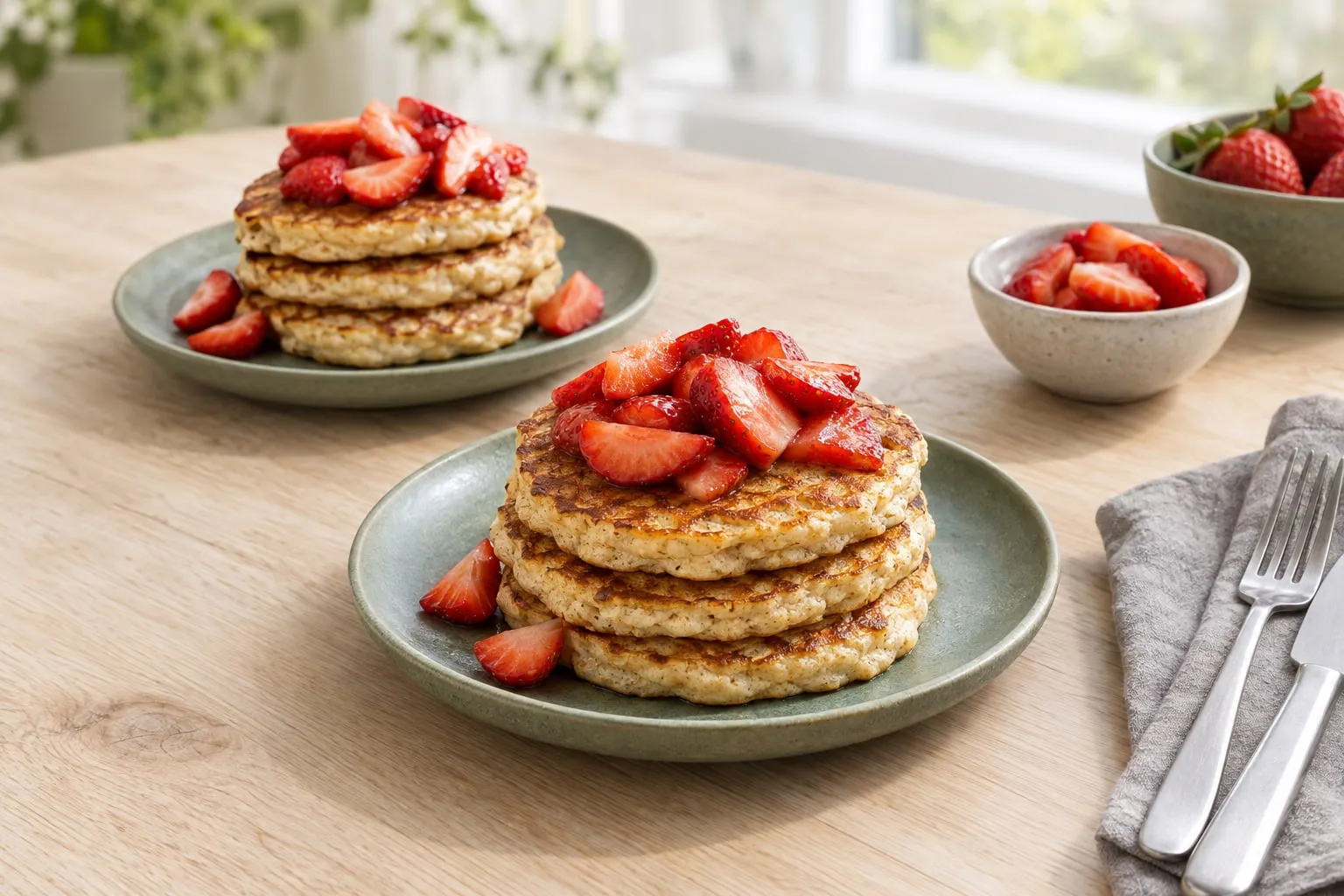
Protein Pancakes
31 g protein342 kcal25 minVegetarian
A breakfast that puts a large share of the day's protein in one plate.
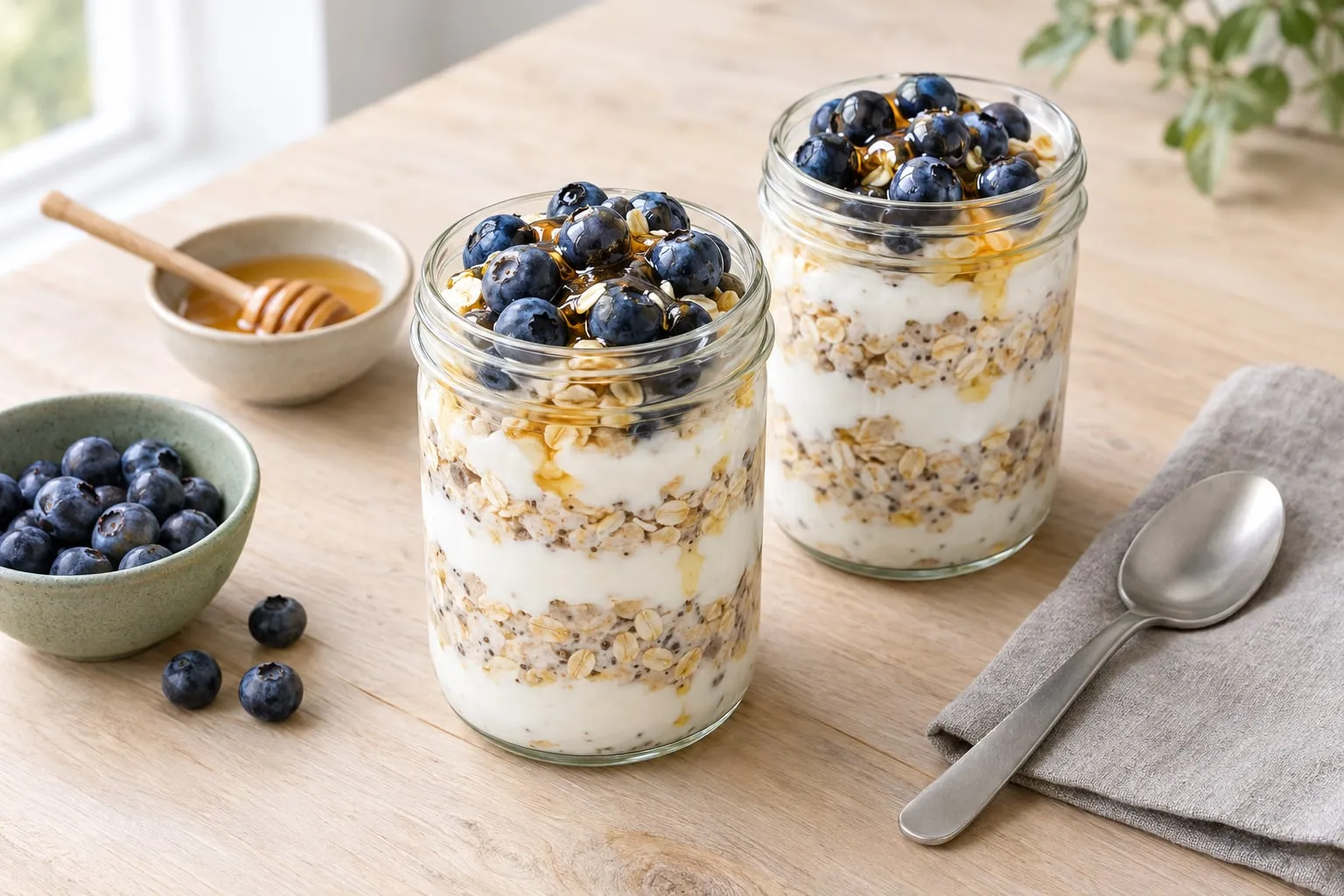
Protein Overnight Oats
26 g protein334 kcal8 hr 5 minVegetarian
A no-cook breakfast with a dairy base for protein.
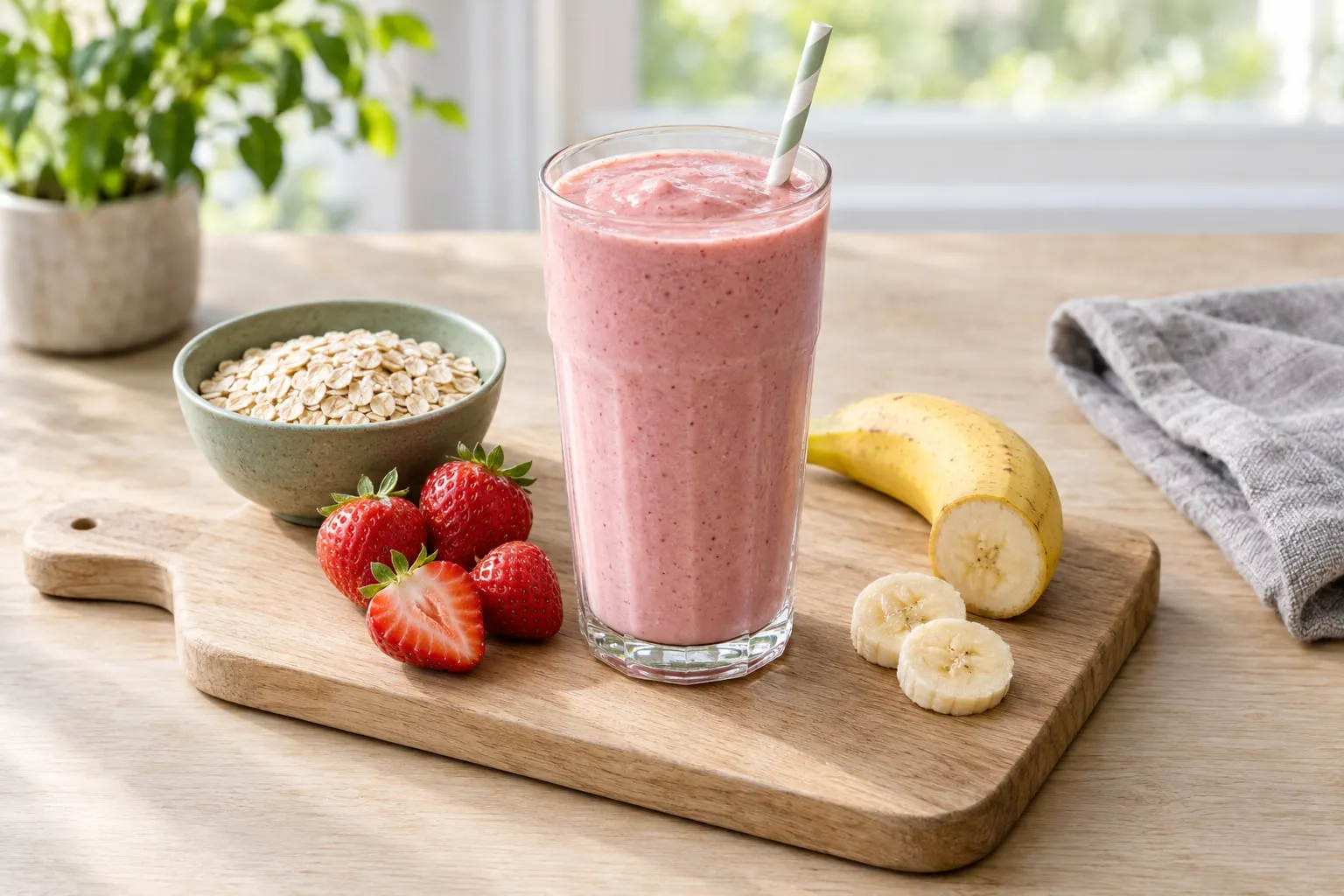
Protein Smoothie
32 g protein387 kcal5 minVegetarian
A drink that gives a measured amount of protein from powder or dairy.

Cottage Cheese and Egg Bake
22 g protein190 kcal55 minVegetarianGluten-free
A bake that gives several portions of protein from eggs and cottage cheese.
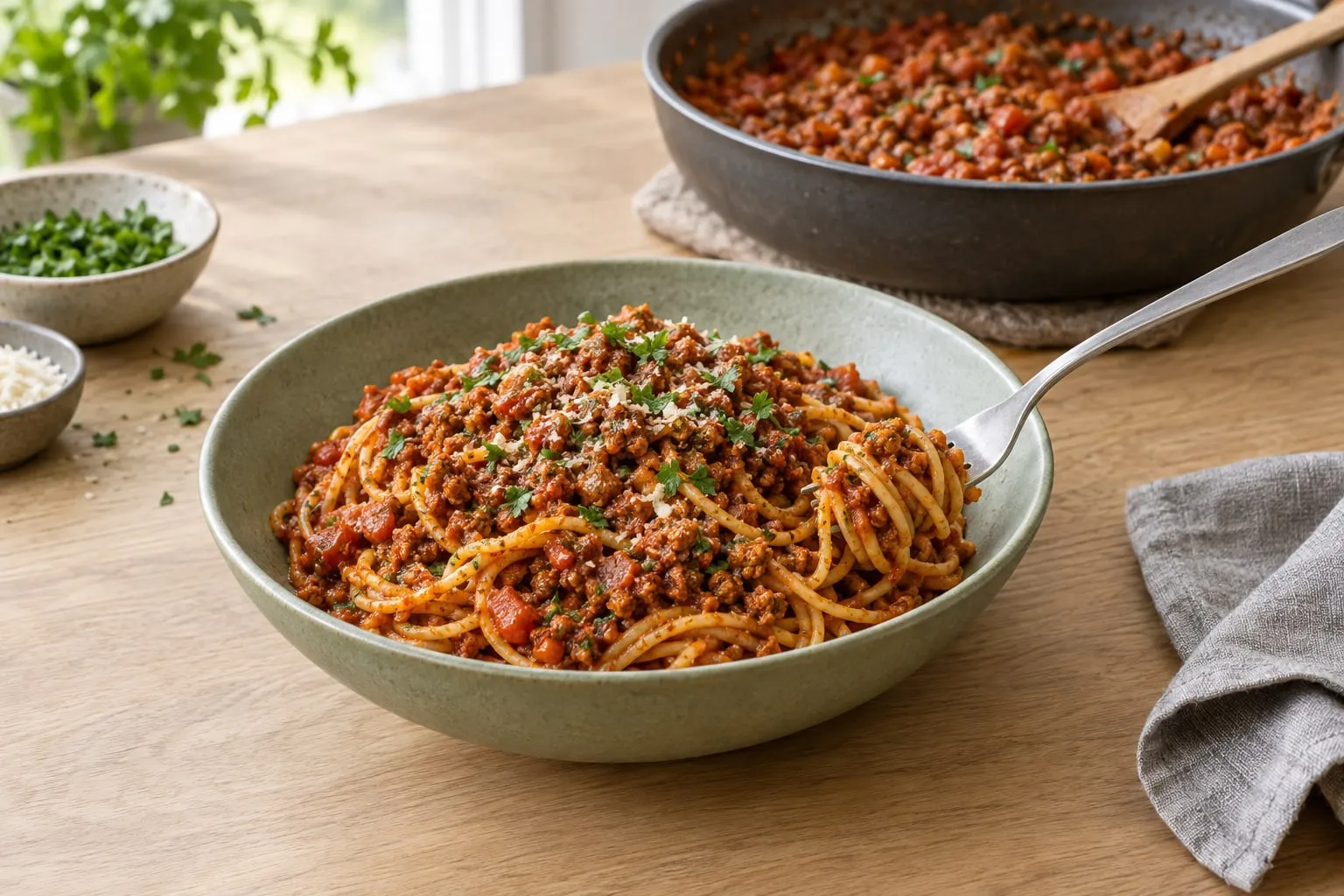
TVP Mince Bolognese
30 g protein476 kcal55 minVegetarianVegan
A meat-free sauce built on textured vegetable protein.
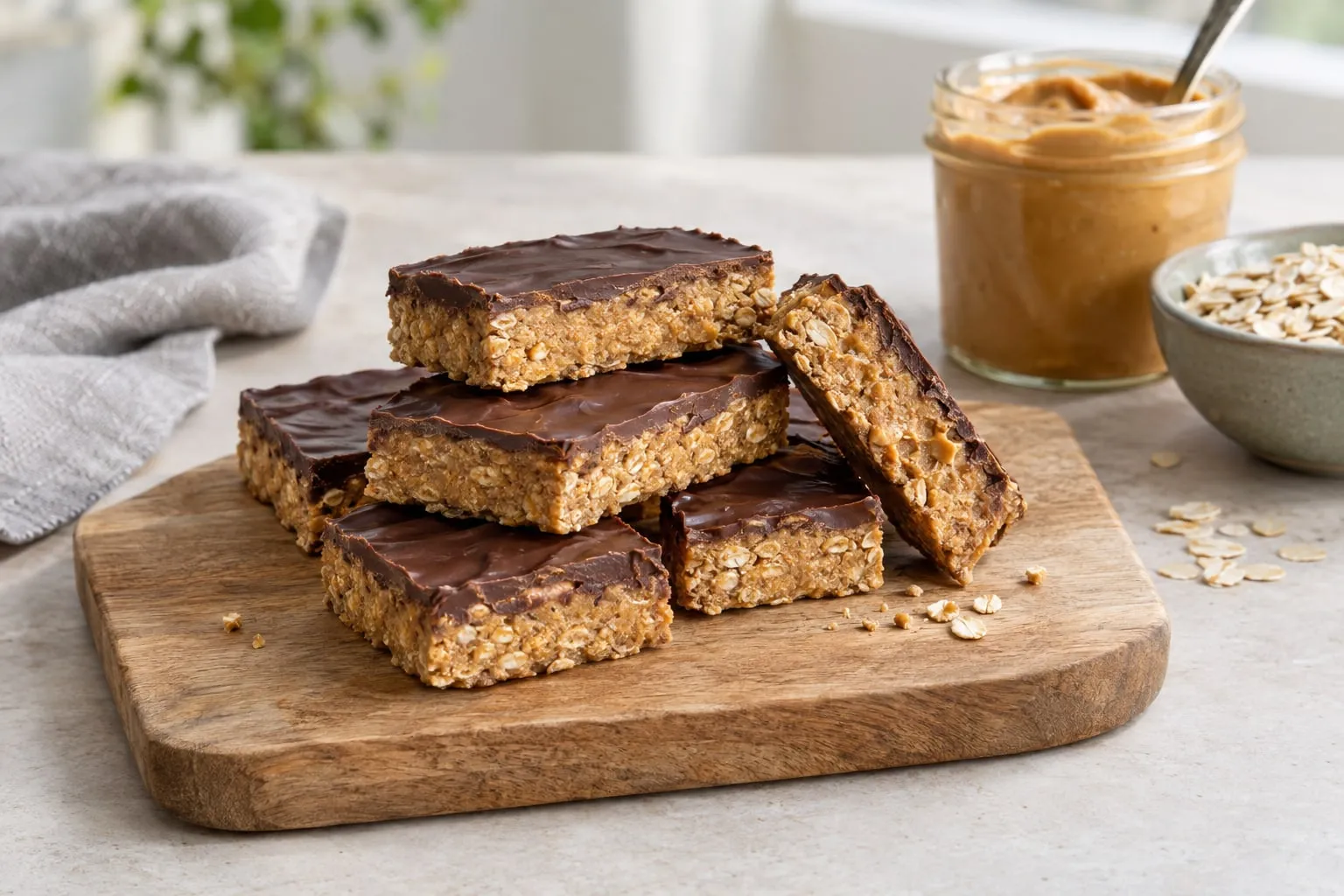
Homemade Protein Bars
12 g protein208 kcal2 hr 15 minVegetarian
Bars with protein counted per bar, so they fit into a daily total.
Sources
- Dietary Reference Values for Food Energy and Nutrients for the UK (COMA, 1991) – Reference Nutrient Intake for protein of 0.75 g per kg body weight per day for adults
- EFSA Scientific Opinion on Dietary Reference Values for protein (2012) – Population Reference Intake of 0.83 g per kg body weight per day for adults
- McCance and Widdowson's Composition of Foods Integrated Dataset 2021 (CoFID) – Protein per 100 g for the foods in the portion table
Read our editorial policy for how figures are checked and how to report a mistake.
More protein guides
All guides
Guide
How Much Protein Do You Need Per Day?
How much protein do I need? The UK reference is 0.75 g per kg of body weight a day, or 52.5 g at 70 kg. See food values and a worked example day.
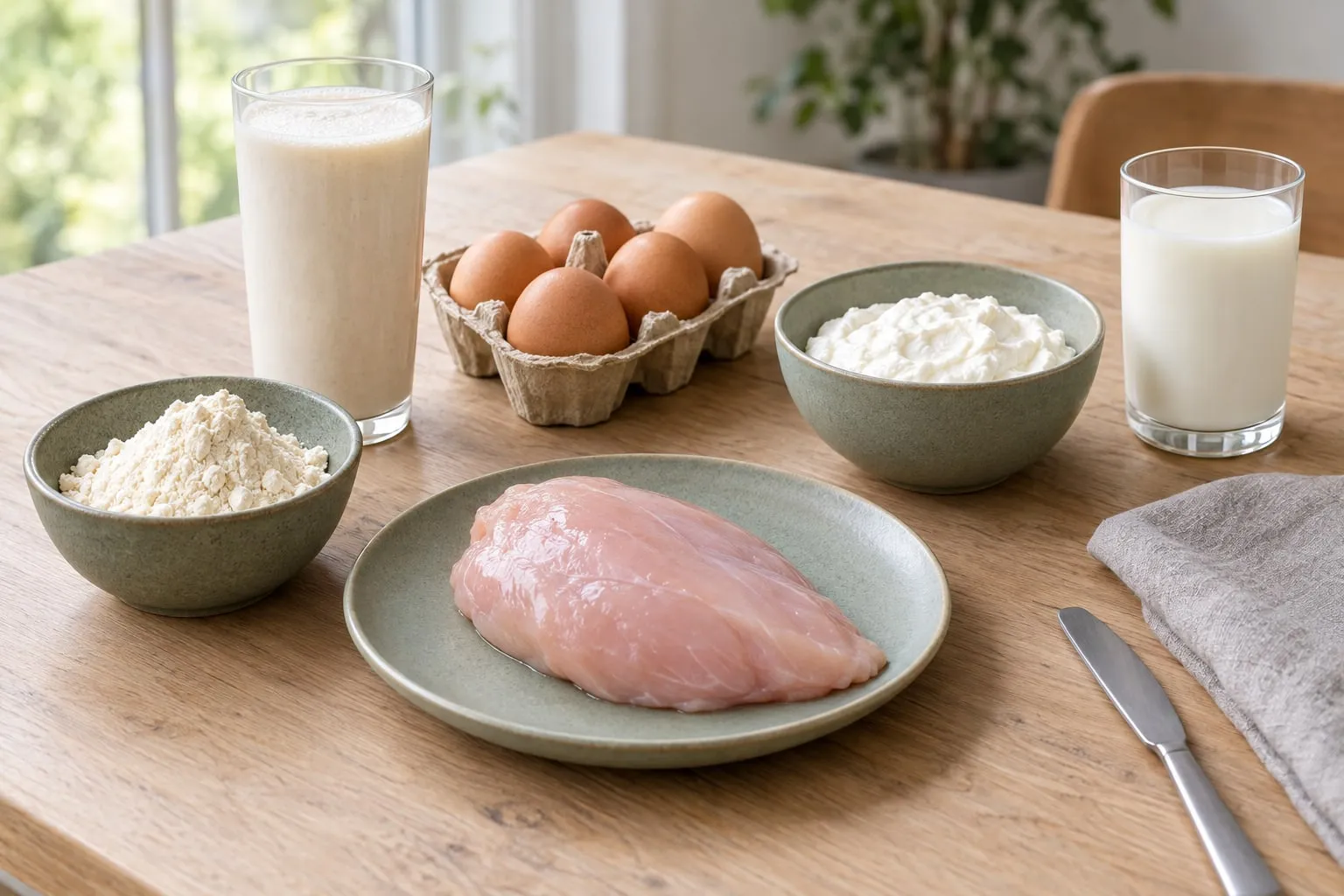
Guide
How Much Protein to Build Muscle
How much protein to build muscle: research on regular training suggests 1.2–1.6 g per kg a day, 84–112 g at 70 kg, against 53 g for the UK reference intake.
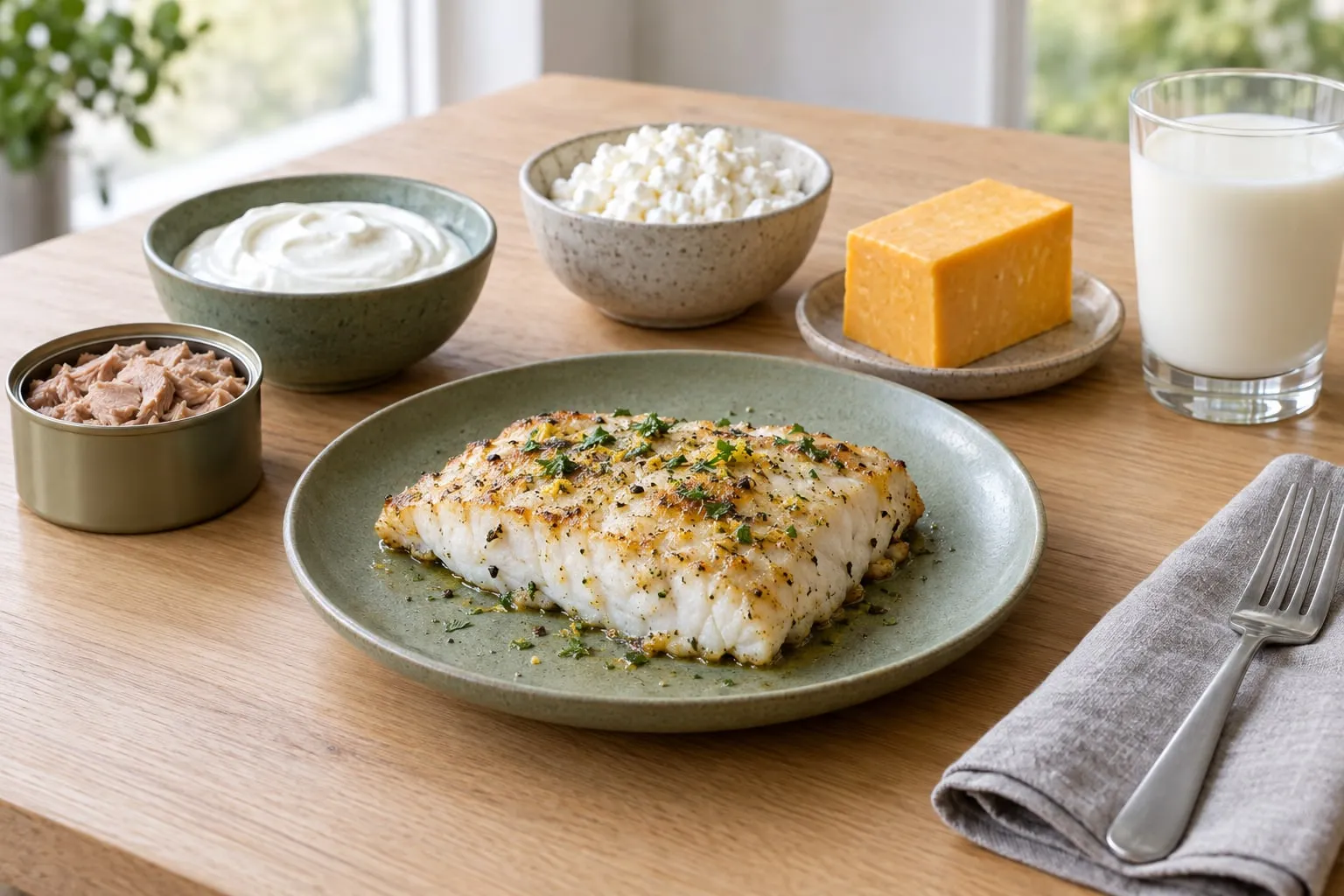
Guide
Protein for Weight Loss
Protein for weight loss in numbers: 20 g of protein costs 84 kcal from baked cod, 105 kcal from Greek yogurt and 328 kcal from Cheddar. Ranked table inside.

Guide
High Protein Foods: A Ranked List
High protein foods ranked by protein per 100 g and per 100 kcal: Parmesan has 36.2 g, grilled chicken 32.0 g, dried red lentils 25.6 g and egg white 10.8 g.