Method
Tap a time to start a timer.
Heat the oven to 180°C (160°C fan), gas 4. Line a 20 cm square tin with baking paper, leaving an overhang on two sides.
Melt the butter and honey together in a small saucepan over a low heat, then take it off the heat and leave it to cool for 2 minutes.
Mix the oats, whey protein powder and salt in a large bowl. Stir in the Greek yogurt, milk and the butter and honey mixture until the oats are evenly coated.
Tip the mixture into the tin and press it down firmly and evenly with the back of a spoon.
Bake on the middle shelf until the edges are golden and the centre is still soft.
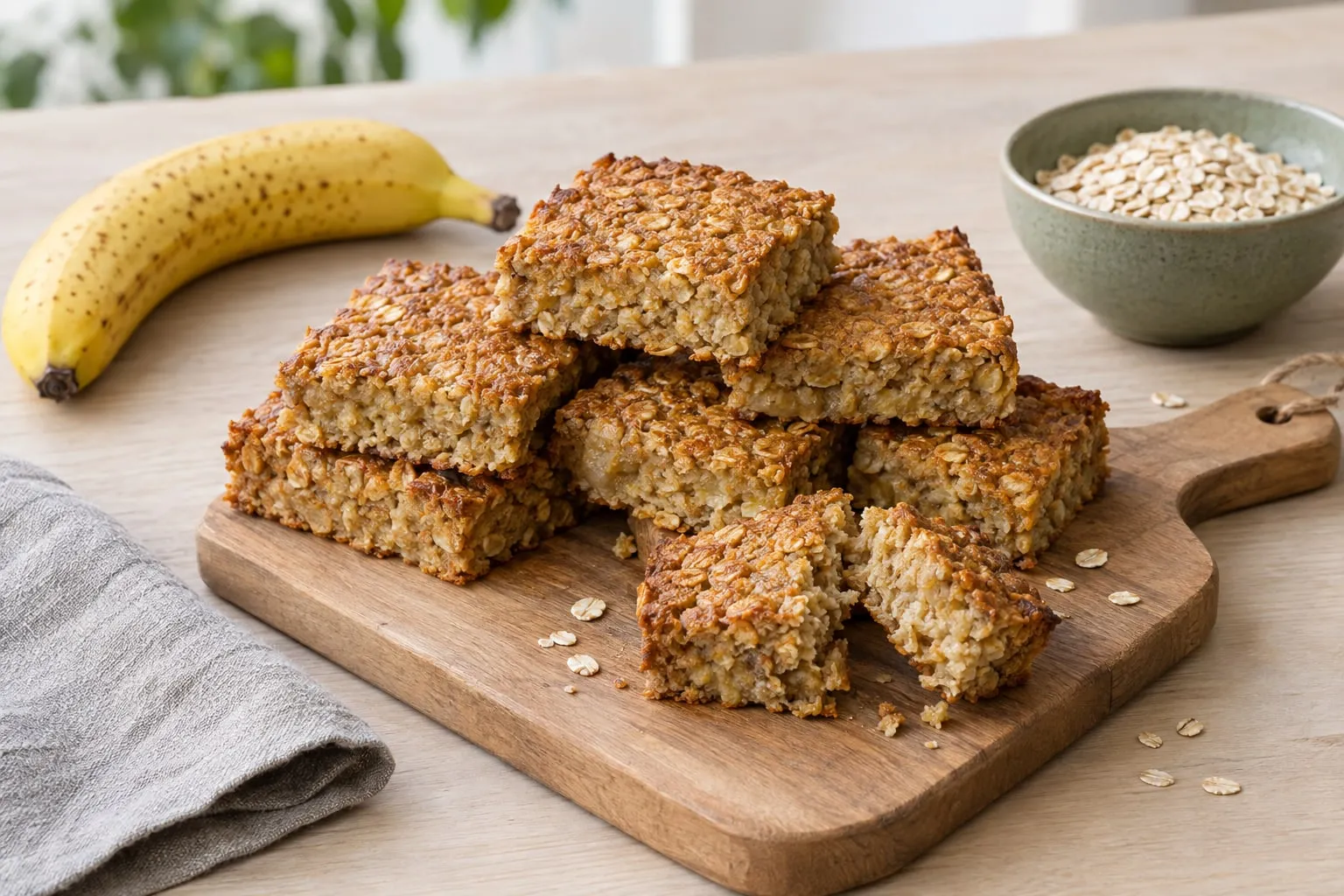
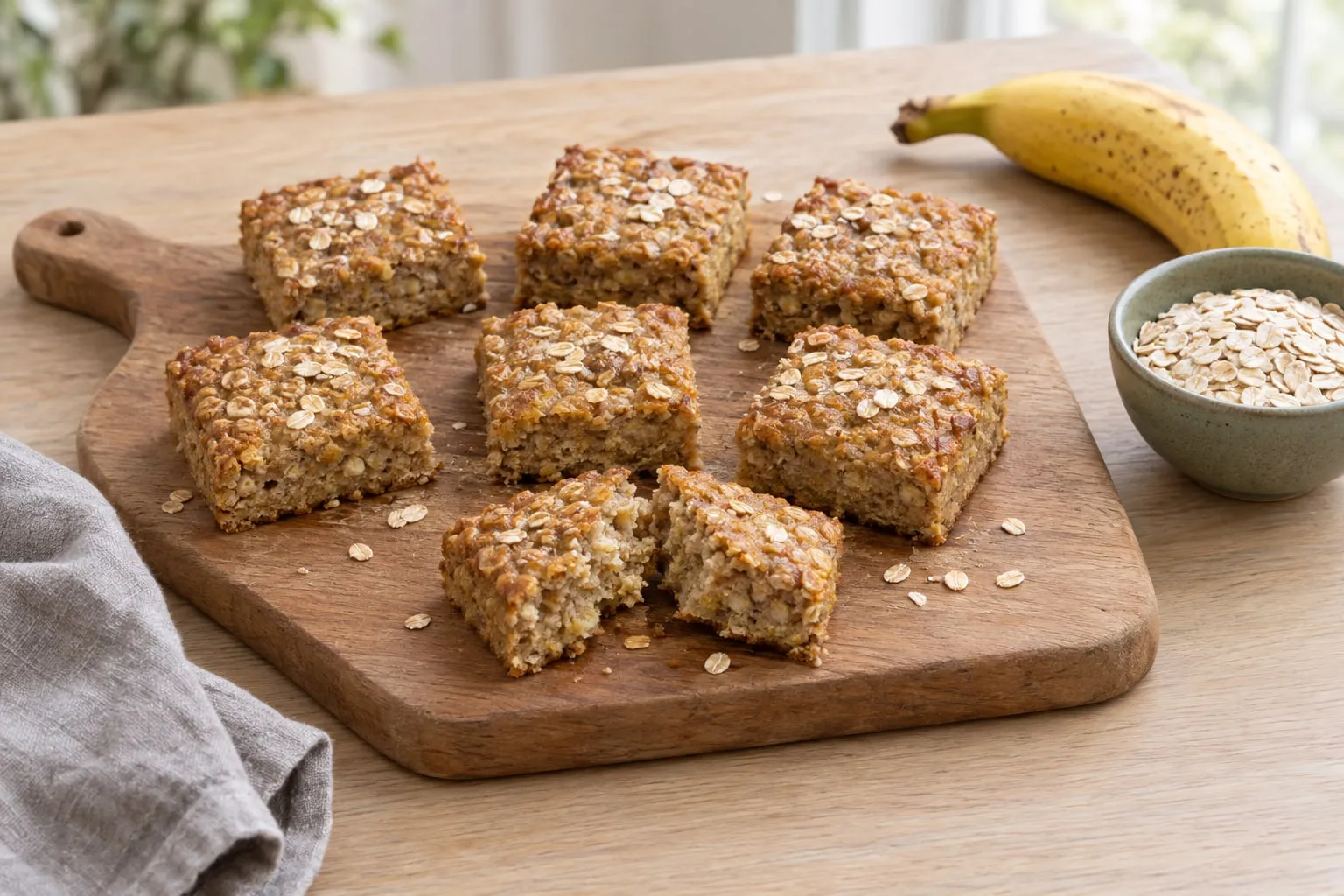
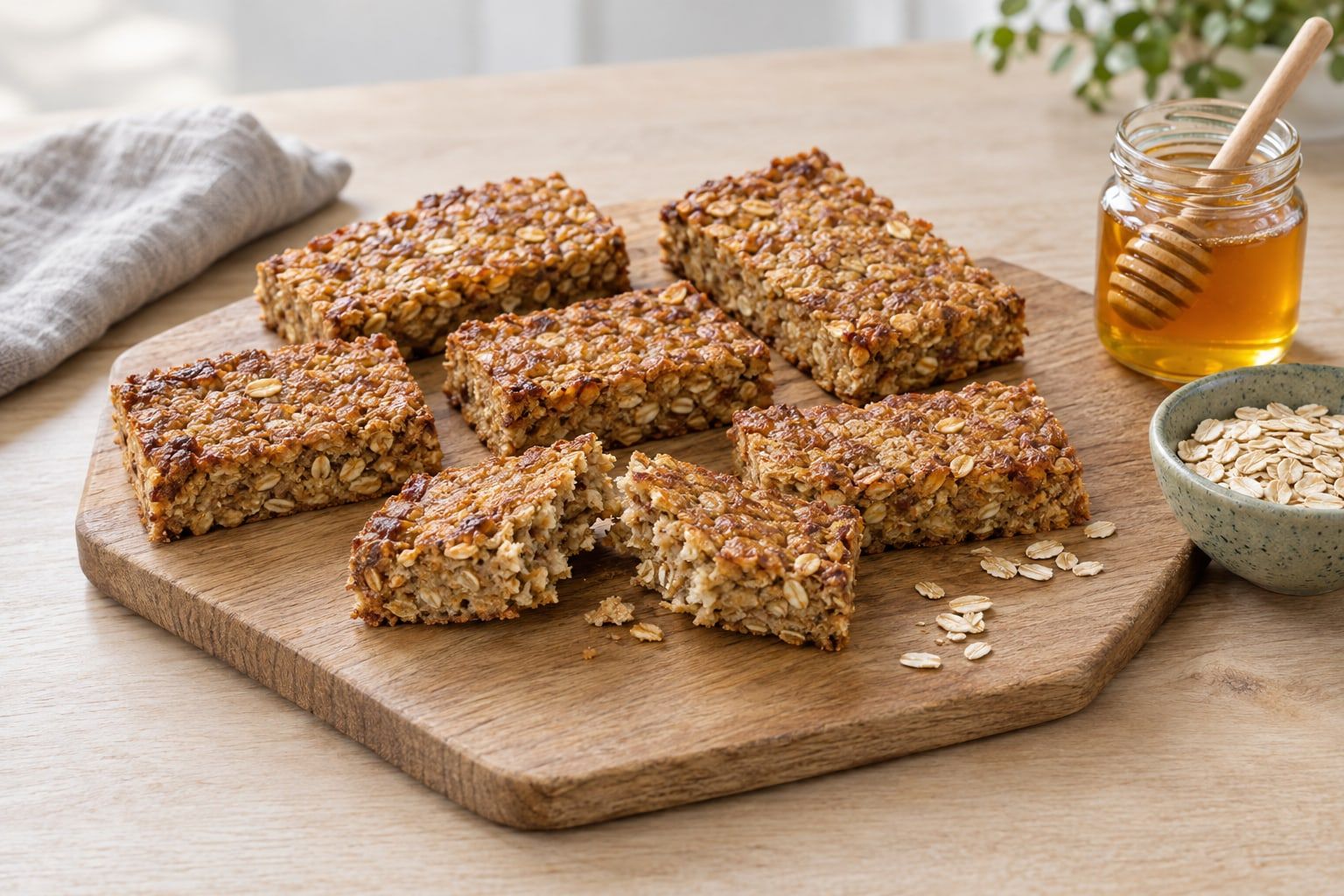
Leave the flapjacks to cool completely in the tin, then lift out and cut into 8.
How to tell it's done
- The edges are golden brown and the centre is still slightly soft when pressed.
- After cooling the slab is firm enough to lift out of the tin and cut without crumbling.
Tips for success
- Stop baking while the middle is soft
Whey dries out in the oven, so take the tin out when the edges are golden and the centre is still slightly soft. The flapjacks firm up as they cool.
- Press the mixture down hard
Compact it into the corners with the back of a spoon so the flapjacks hold together once cut. A loose surface crumbles.
- Cool completely before cutting
Leave the flapjacks in the tin for the full 2 hours. Cut while warm and the slab breaks into pieces.
- Use a lined tin
Leave a baking paper overhang on two sides so the cooled slab lifts out in one piece.
Boost the protein
- Replace the 40 ml milk with 40 g extra Greek yogurt: only about +0.3 g protein per flapjack, but the mixture stays moist.
- Replace 20 g of the oats with 20 g extra whey and add 1 tablespoon of milk: about +2 g protein per flapjack, but the bars are drier, so bake for 2 minutes less.
Choosing ingredients
Whey powder blends into the mixture most smoothly. Casein soaks up more liquid and needs 2 tablespoons extra milk, and vegan pea and rice powder is grainier and needs a little more liquid.
Use porridge oats, not jumbo oats or instant. Porridge oats give the classic chewy texture and bind well.
Variations
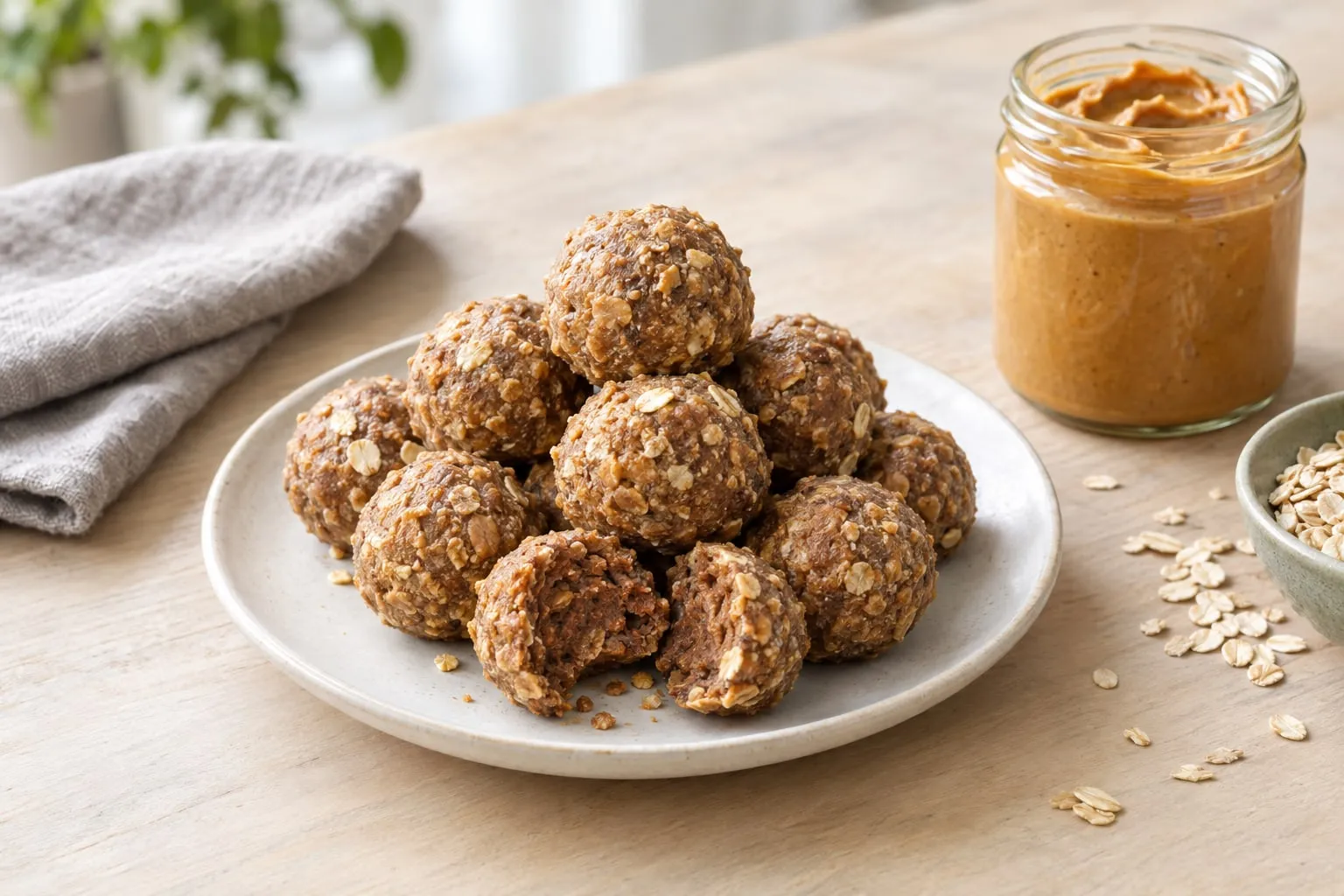
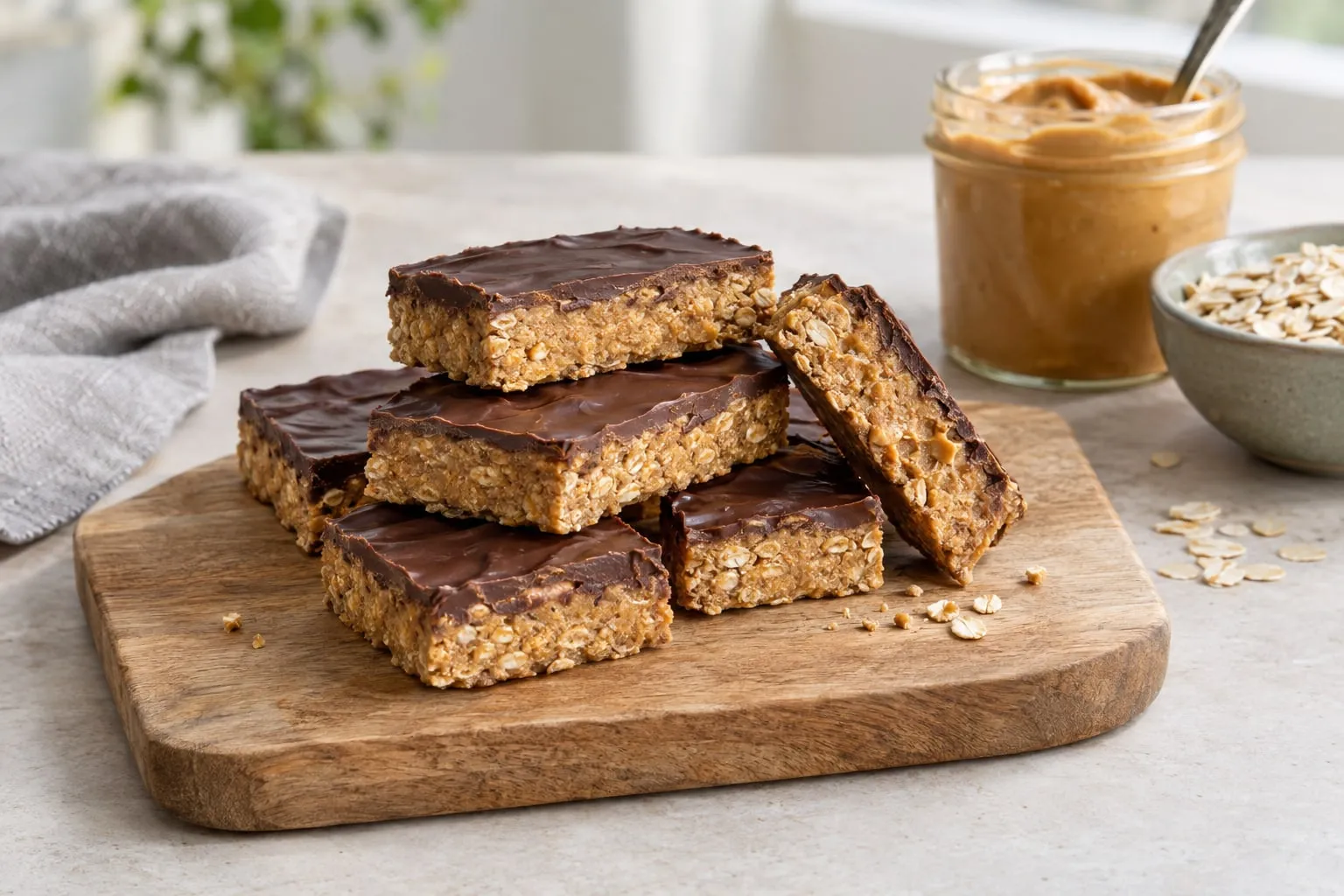
- Peanut butter flapjacks
Replace the butter with 50 g smooth peanut butter and bake for the same 20–22 minutes. The flapjacks have a little more protein per piece.
- Chocolate chip flapjacks
Stir 40 g plain chocolate chips into the mixture before pressing it into the tin. Bake for the same time, adding about 25 kcal per flapjack.
Serve it with
- A mug of tea
- A glass of cold milk
- A banana
Storage
Keep the protein flapjacks in an airtight tin at room temperature for 2 days, or in the fridge for up to 5 days.
Freeze the cut flapjacks individually for up to 3 months and thaw at room temperature for 30 minutes.
Troubleshooting
Why are protein flapjacks dry?
They were baked too long. Take the tin out while the centre is still soft, and let the flapjacks firm up as they cool.
Why do the protein flapjacks crumble?
They were cut before cooling or pressed too lightly. Press firmly into the corners and leave them in the tin for the full 2 hours.
Frequently asked questions
How much protein is in protein flapjacks?
Each of the 8 flapjacks has 12 g protein and 201 kcal, so 23% of the energy comes from protein.
How much protein is in regular flapjacks?
A standard flapjack made from oats, butter, sugar and golden syrup has only a few grams of protein, which is why this version adds whey and Greek yogurt to reach 12 g.
Can I make protein flapjacks without whey?
Yes, but the protein falls to about 6 g per flapjack. Use 80 g more oats and 100 g more Greek yogurt to keep the texture.
Made it? Rate the recipe
Read next
- Protein in OatsProtein in oats: porridge oats have 10.9 g protein per 100 g dry, so a 40 g portion gives 4.4 g. Porridge made with milk or water, and ways to add more.
- How Much Protein Do You Need Per Day?How much protein do I need? The UK reference is 0.75 g per kg of body weight a day, or 52.5 g at 70 kg. See food values and a worked example day.
Written by The Protein Recipes editorial team. Nutrition is calculated from the ingredient list using CoFID. Read how our recipes are made and how we correct mistakes.