Method
Tap a time to start a timer.
Pulse the oats in the blender for a few seconds, until roughly half are broken up, and tip them into a large mixing bowl.
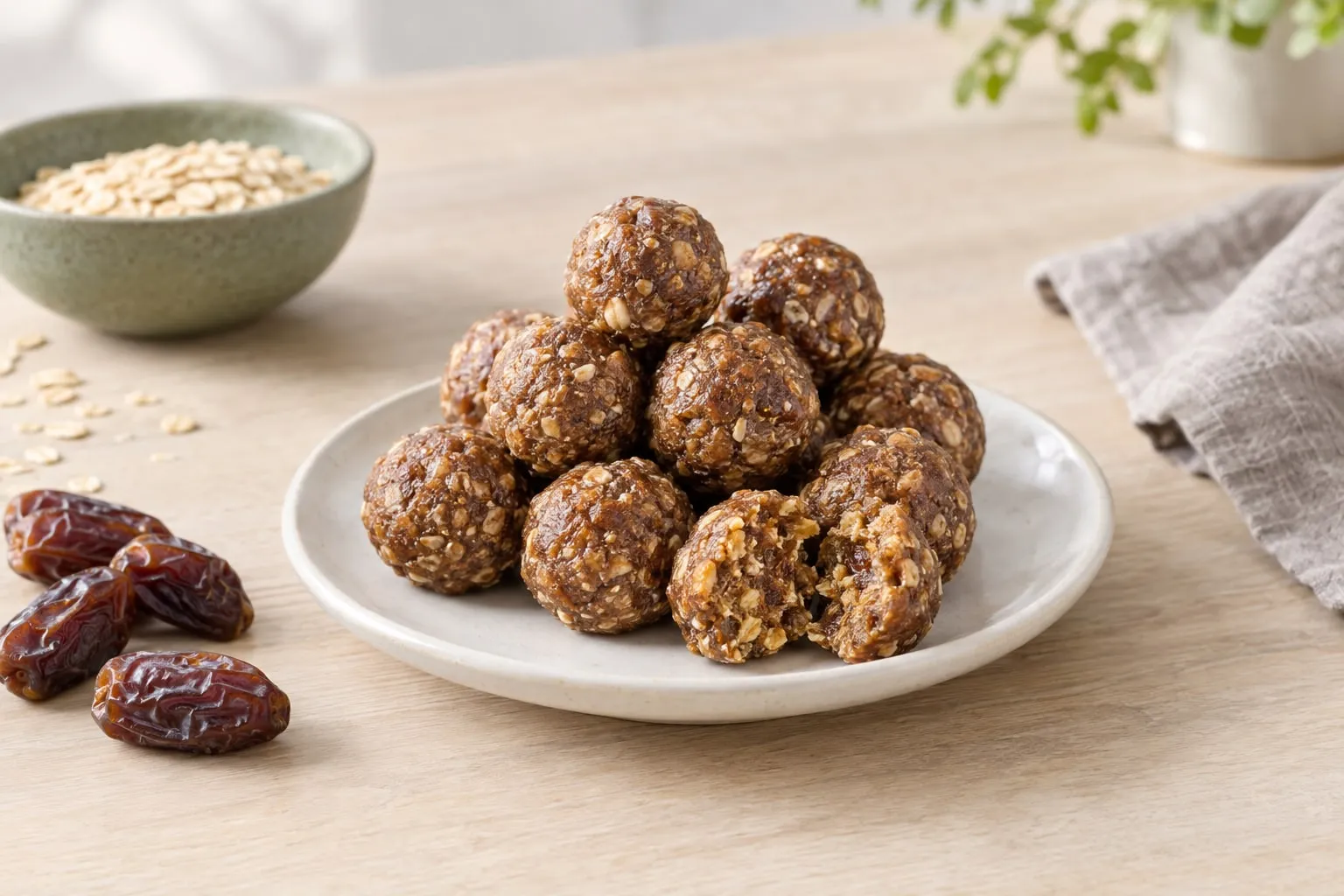
Put the dates and milk in the blender and blend until a smooth paste forms, scraping down the sides once or twice.
Add the whey protein powder, peanut butter, salt and date paste. Mix with a spatula, then with your hands, until the dough comes together. If it crumbles, add 1 tablespoon of milk at a time.
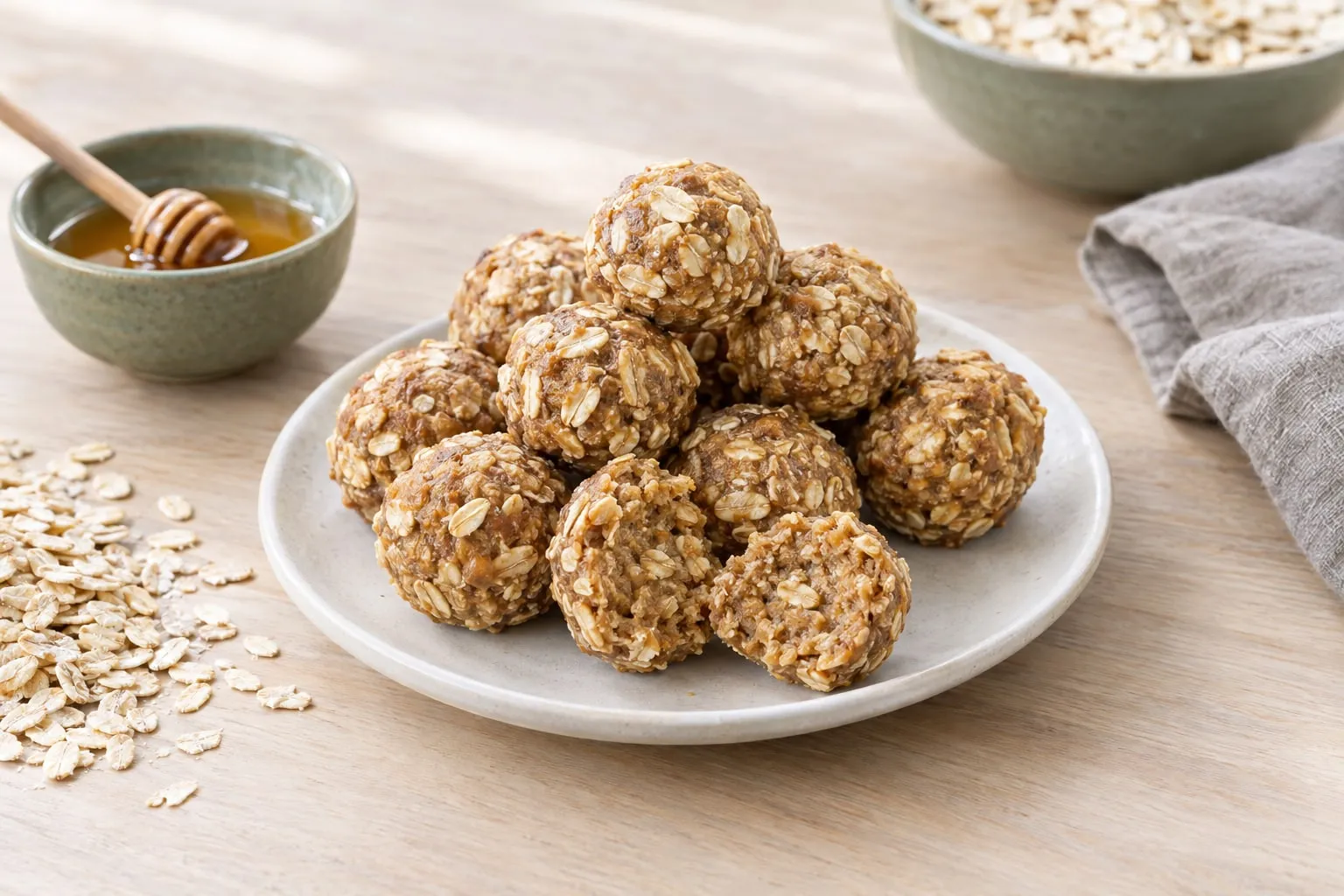
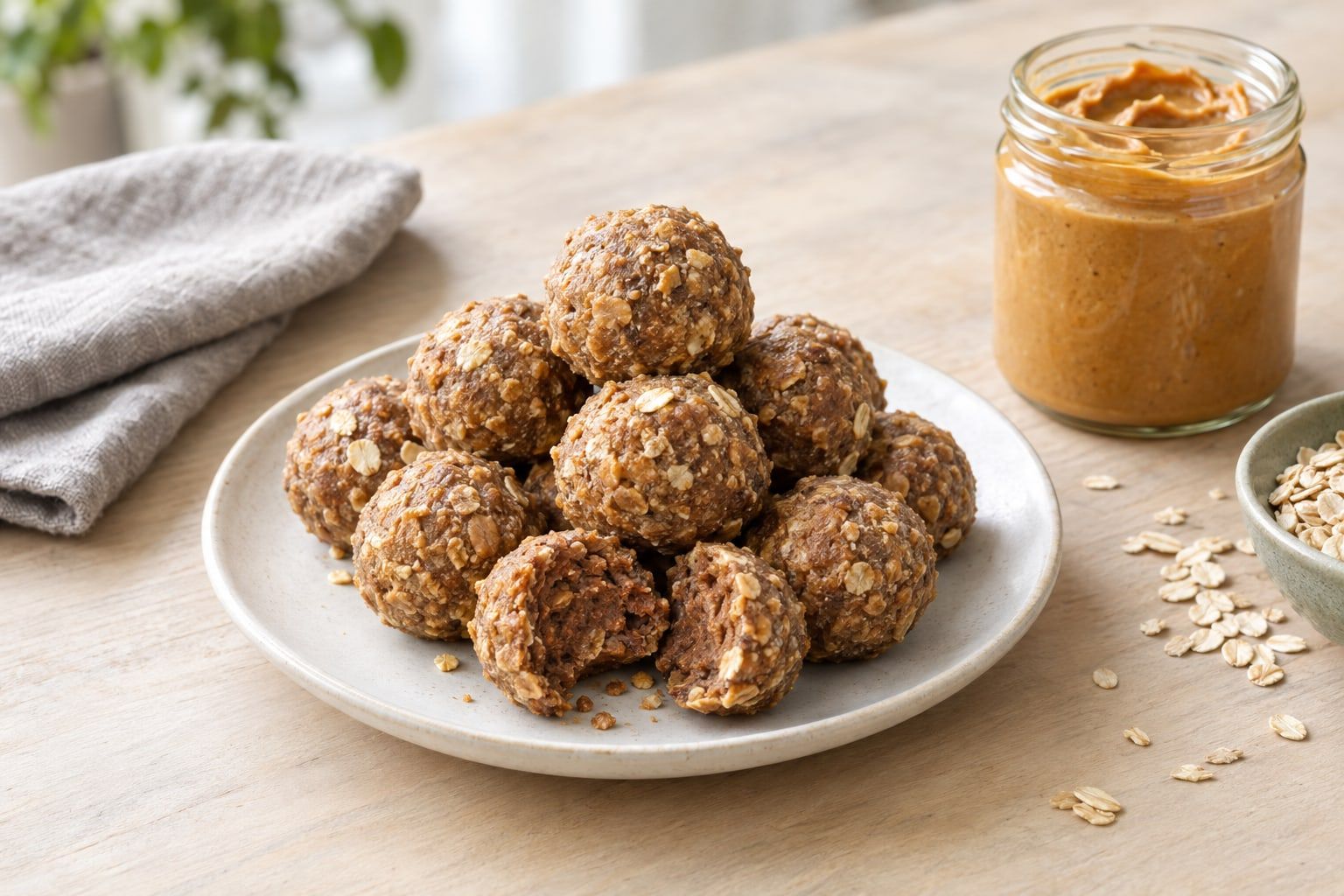
Roll the dough into 12 balls of about 30 g each and set them on a baking tray lined with baking paper.
Chill until firm.
How to tell it's done
- The balls hold their shape when rolled and do not crumble when pressed.
- After chilling they feel firm and slightly springy, not sticky on the outside.
Tips for success
- Make the paste first
Blend the dates and milk until completely smooth before adding anything else. Lumps of date do not break down once the whey and oats are in, and they leave sticky patches.
- Add extra milk a tablespoon at a time
Whey drinks up liquid, so a dough that crumbles needs more. Add 1 tablespoon of milk at a time until it holds together when squeezed in your hand.
- Wet your hands to roll
A little water on your palms stops the dough sticking. Weigh the first ball at about 30 g and use it as a guide for the other 11.
- Chill before eating
The balls firm up in the fridge as the oats take on the moisture. Eaten straight after rolling they are soft and sticky.
Boost the protein
- Roll the finished balls in 2 tablespoons of whey protein powder: about +1.5 g protein per serving.
- Swap 30 g of the peanut butter for 30 g peanut butter powder and add 2 tablespoons of milk: about +1.5 g protein per serving, and the whey stays at 40% of the dry mix.
Choosing ingredients
Whey powder with a vanilla or chocolate flavour works well, but avoid very sweet blends because the dates already sweeten the dough. Casein thickens the dough and needs 2 tablespoons more milk, and vegan pea and rice powder is grainier and wants a little more liquid.
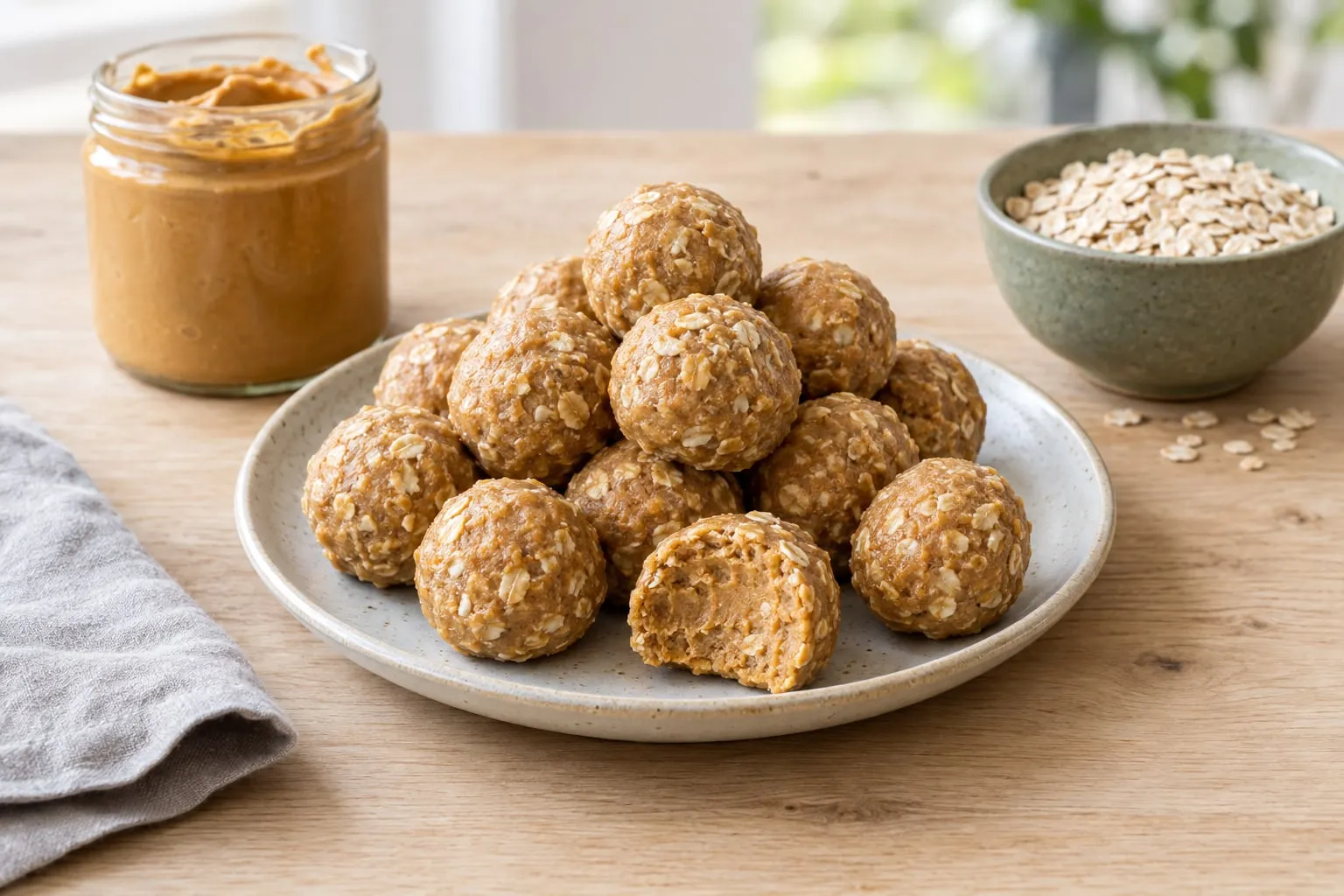
Smooth peanut butter made from 100% nuts binds best. If oil has risen to the top of a natural jar, stir it back in before weighing.
Variations
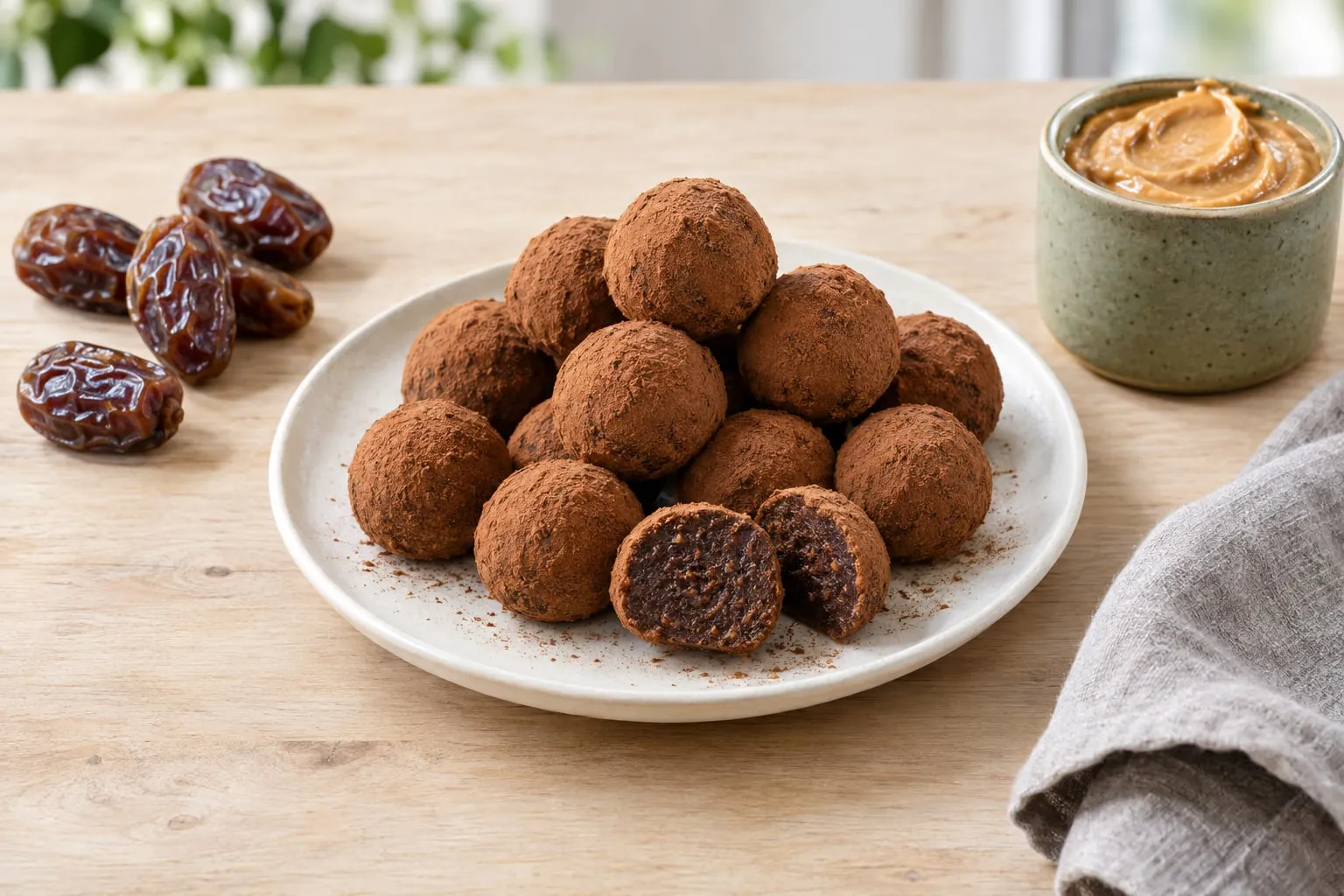
- Chocolate protein balls
Use chocolate whey and add 1 tablespoon of cocoa powder with the whey. Add 1 extra tablespoon of milk to loosen the dough.
- Coconut-coated
Roll the finished balls in 3 tablespoons of desiccated coconut before chilling. The coating adds about 20 kcal per serving.
Serve it with
- A glass of cold milk
- A banana or an apple
- Black coffee or tea
Storage
Keep the protein balls in an airtight container in the fridge for up to 5 days, as the milk needs to be kept cold.
Freeze them on a tray, then in a bag, for up to 3 months. Thaw in the fridge for 1 hour.
Troubleshooting
Why are protein balls dry and crumbly?
Whey absorbs more liquid than flour. Add 1 tablespoon of milk at a time and knead until the dough holds together when squeezed.
Why do the protein balls taste chalky?
Too much whey for the dry ingredients. Keep to 70 g whey with 100 g oats and the dates, or replace 15 g of the whey with oats.
Frequently asked questions
How much protein is in protein balls?
Two balls, one serving, give 14 g protein and 204 kcal, so 26% of the energy comes from protein. Each ball is about 30 g.
Are homemade protein balls cheaper than shop-bought ones?
Usually yes, because the batch uses staple ingredients and one tub of whey makes several batches. The cost per ball is a fraction of a ready-made one.
Do protein balls need to be kept in the fridge?
Yes. The milk in the date paste makes them a chilled product, so they keep for 5 days in the fridge and longer in the freezer.
Made it? Rate the recipe
Read next
- How Much Protein Do You Need Per Day?How much protein do I need? The UK reference is 0.75 g per kg of body weight a day, or 52.5 g at 70 kg. See food values and a worked example day.
- High Protein Foods: A Ranked ListHigh protein foods ranked by protein per 100 g and per 100 kcal: Parmesan has 36.2 g, grilled chicken 32.0 g, dried red lentils 25.6 g and egg white 10.8 g.
Written by The Protein Recipes editorial team. Nutrition is calculated from the ingredient list using CoFID. Read how our recipes are made and how we correct mistakes.