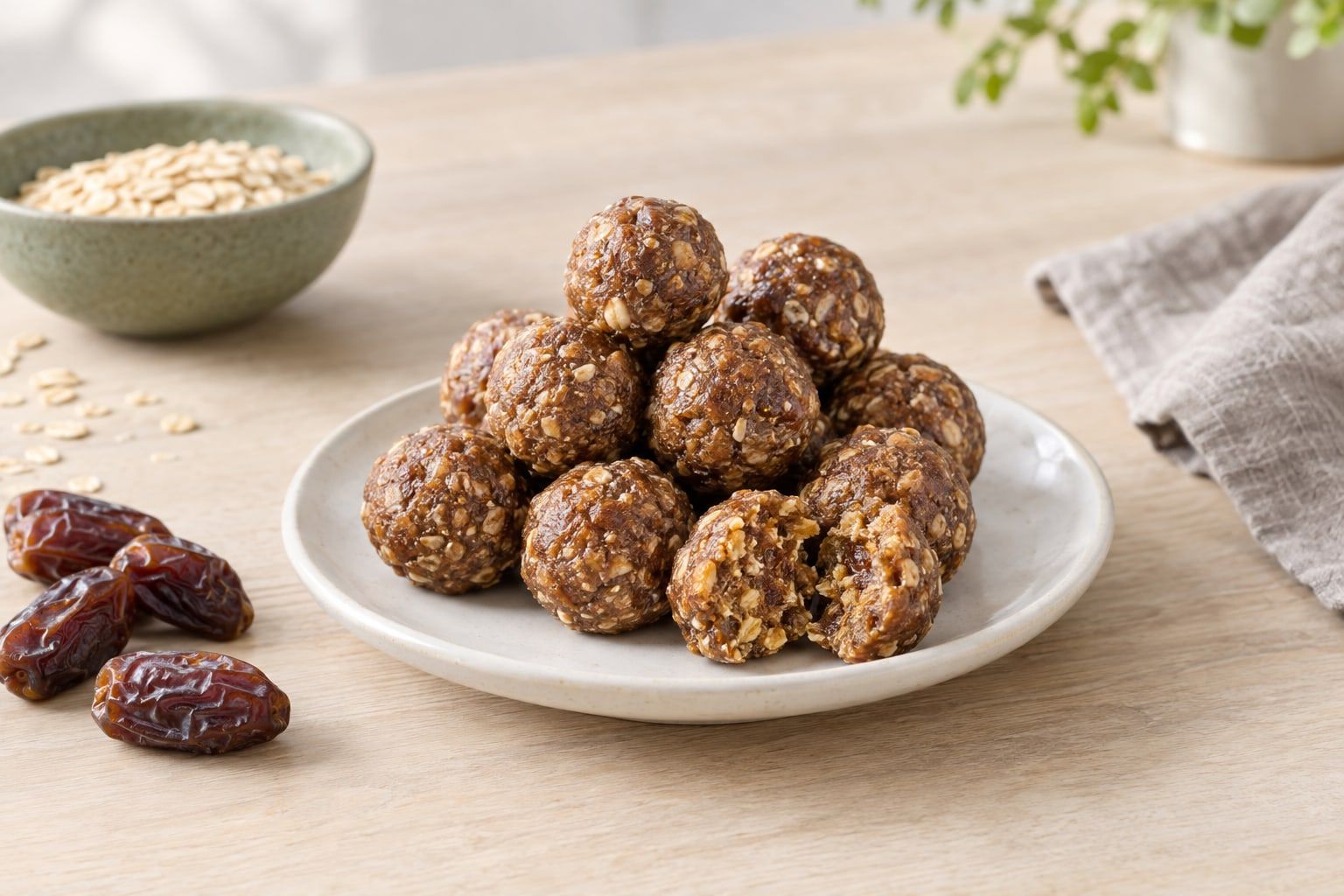
Method
Tap a time to start a timer.
Put the dates in the food processor with the 60 ml hot water and leave to soften.
Blend the dates and water to a smooth, sticky paste, scraping down the sides once.
Add the peanut butter powder, oats and salt and pulse until the dough comes together. Squeeze a little in your hand: if it crumbles, add water 1 tablespoon at a time, up to 30 ml.
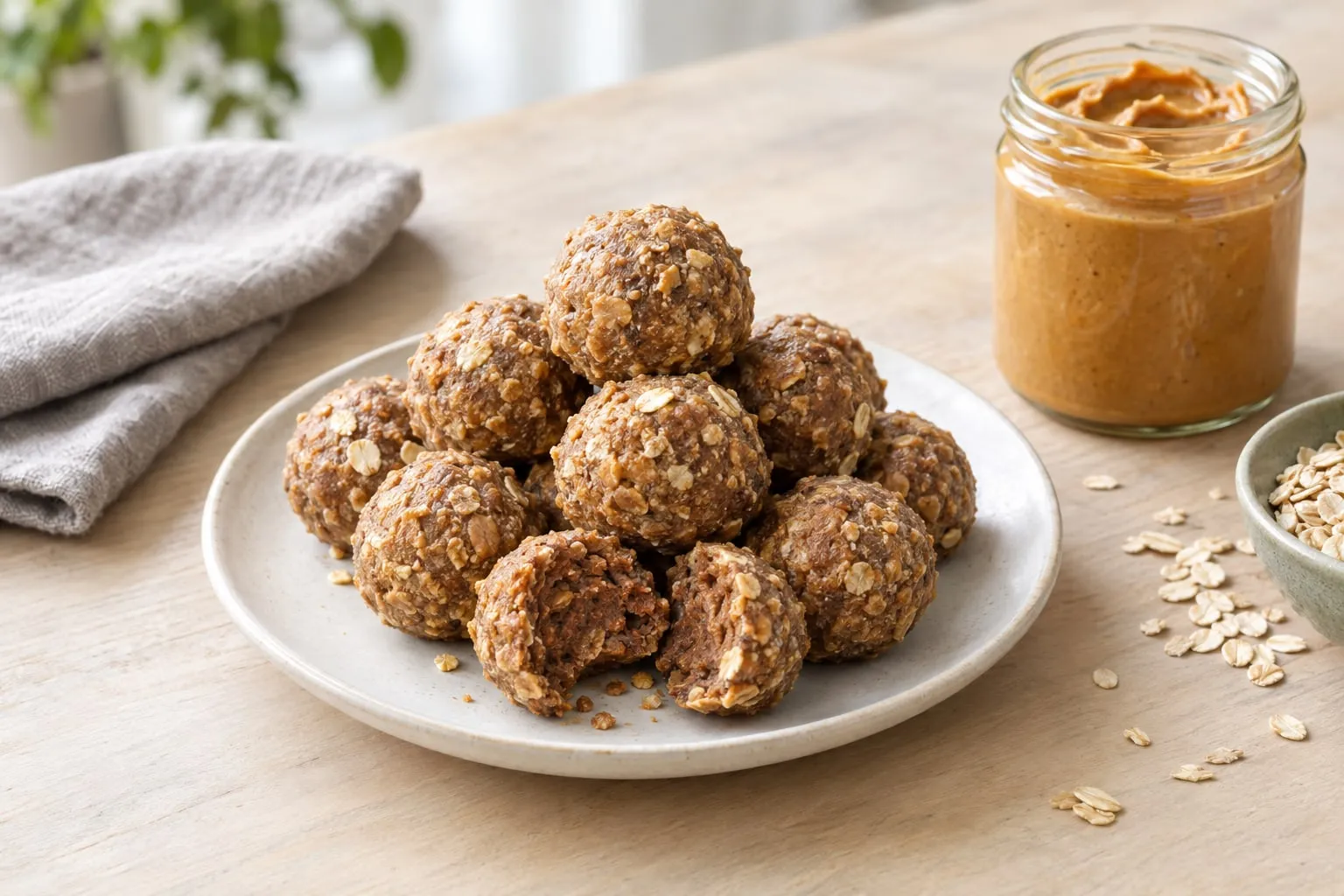
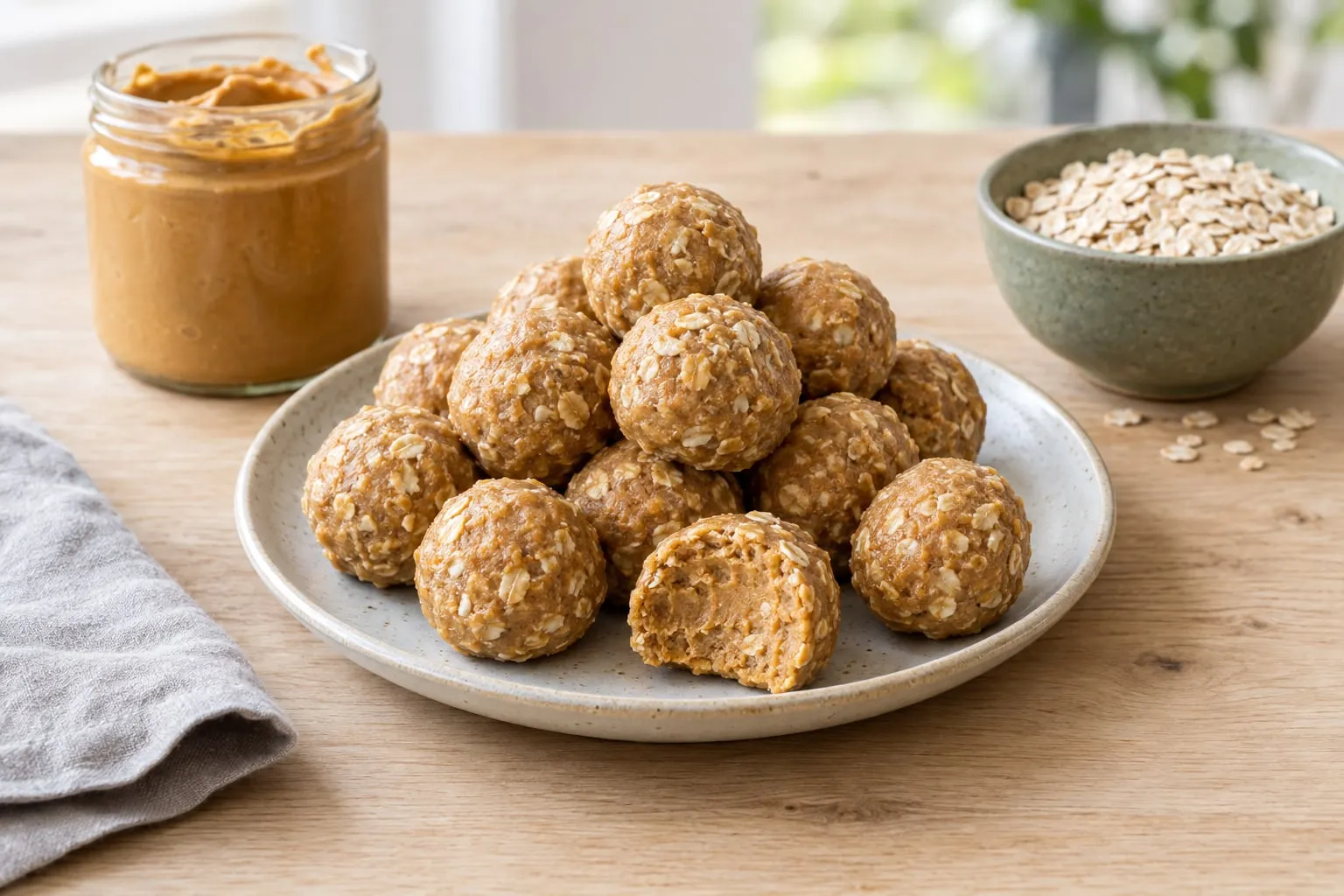
Roll the dough into 10 balls of about 30 g, using damp hands, and set them on the lined tray.
Chill until firm.
How to tell it's done
- The dough holds together when squeezed and does not crumble in your palm.
- The chilled balls are firm and keep their shape when picked up.
Tips for success
- Soften dry dates first
Hard dates do not blend into a paste, and the balls come out crumbly. Cover them with hot water from the kettle for 10 minutes first, then blend them with the same water.
- Add extra water by the spoonful
Peanut butter powder soaks up liquid, so the dough can seem dry at first. Add water 1 tablespoon at a time until it holds when squeezed, up to the 30 ml in the list.
- Use damp hands to roll
The dough is sticky. Wet your hands lightly and roll about 30 g per ball, roughly a heaped tablespoon.
- Keep to two balls
Dates are dense in energy, at about 235 kcal per 100 g. Two balls make a snack of about 157 kcal.
Boost the protein
- Swap the 40 g oats for 40 g more peanut butter powder: +3 g protein per serving. Add 20 ml more water, since the powder is thirstier.
- Serve two balls with 150 g strained Greek yogurt: +15 g protein per serving.
Choosing ingredients
Peanut butter powder is not protein powder. It is roasted peanuts pressed to remove most of the oil, then ground, with about 48 g protein per 100 g. Buy a type with no added sugar.
Use soft, sticky dried dates, such as Medjool without stones, or soak harder dried dates. Fresh dates are wetter and need less water.
Variations
- Cocoa date balls
Add 2 tablespoons (about 10 g) cocoa powder with the peanut butter powder, plus 1 extra tablespoon of water. Protein per serving rises by about 0.4 g.
- Coconut-rolled date balls
Roll the finished balls in 20 g desiccated coconut. Protein rises by about 0.2 g per serving, and the energy by about 24 kcal.
Serve it with
- Strained Greek yogurt
- A mug of tea
- An apple
Storage
Keep the date protein balls in an airtight container in the fridge for up to 5 days.
Freeze them on a tray, then bag them for up to 1 month and thaw in the fridge for an hour.
Troubleshooting
Why are my date protein balls crumbly?
The dates were too dry or the dough needed more liquid. Soak the dates for the full 10 minutes and add water 1 tablespoon at a time until a squeezed handful holds together.
Why are my date protein balls too sticky to roll?
There was too much water. Mix in 1 tablespoon (about 10 g) more oats and chill the dough for 10 minutes before rolling with damp hands.
Frequently asked questions
How much protein is in date protein balls?
Two balls, one serving, have 11 g protein and 157 kcal, so 28% of the energy comes from protein. Almost all of it comes from the peanut butter powder, because dates add only about 2 g across the whole batch.
Can I make protein balls with dates and oats without peanut butter powder?
Yes. Use 100 g smooth peanut butter instead of the powder and leave out the extra water. The balls are stickier and richer, with about 5 g less protein per serving and about 41 kcal more.
Do I need protein powder for protein balls with dates?
No. These date protein balls use peanut butter powder and oats, with no whey or other protein powder, so they suit anyone who prefers to avoid it.
Made it? Rate the recipe
Read next
- How Much Protein Do You Need Per Day?How much protein do I need? The UK reference is 0.75 g per kg of body weight a day, or 52.5 g at 70 kg. See food values and a worked example day.
- High Protein Foods: A Ranked ListHigh protein foods ranked by protein per 100 g and per 100 kcal: Parmesan has 36.2 g, grilled chicken 32.0 g, dried red lentils 25.6 g and egg white 10.8 g.
Written by The Protein Recipes editorial team. Nutrition is calculated from the ingredient list using CoFID. Read how our recipes are made and how we correct mistakes.