Method
Tap a time to start a timer.
Beat the peanut butter and honey together in the bowl until smooth.
Add the whey and oats in two batches and stir until the mixture clumps together.
Add the milk a teaspoon at a time only if the mixture is crumbly, until it holds when squeezed in your hand.
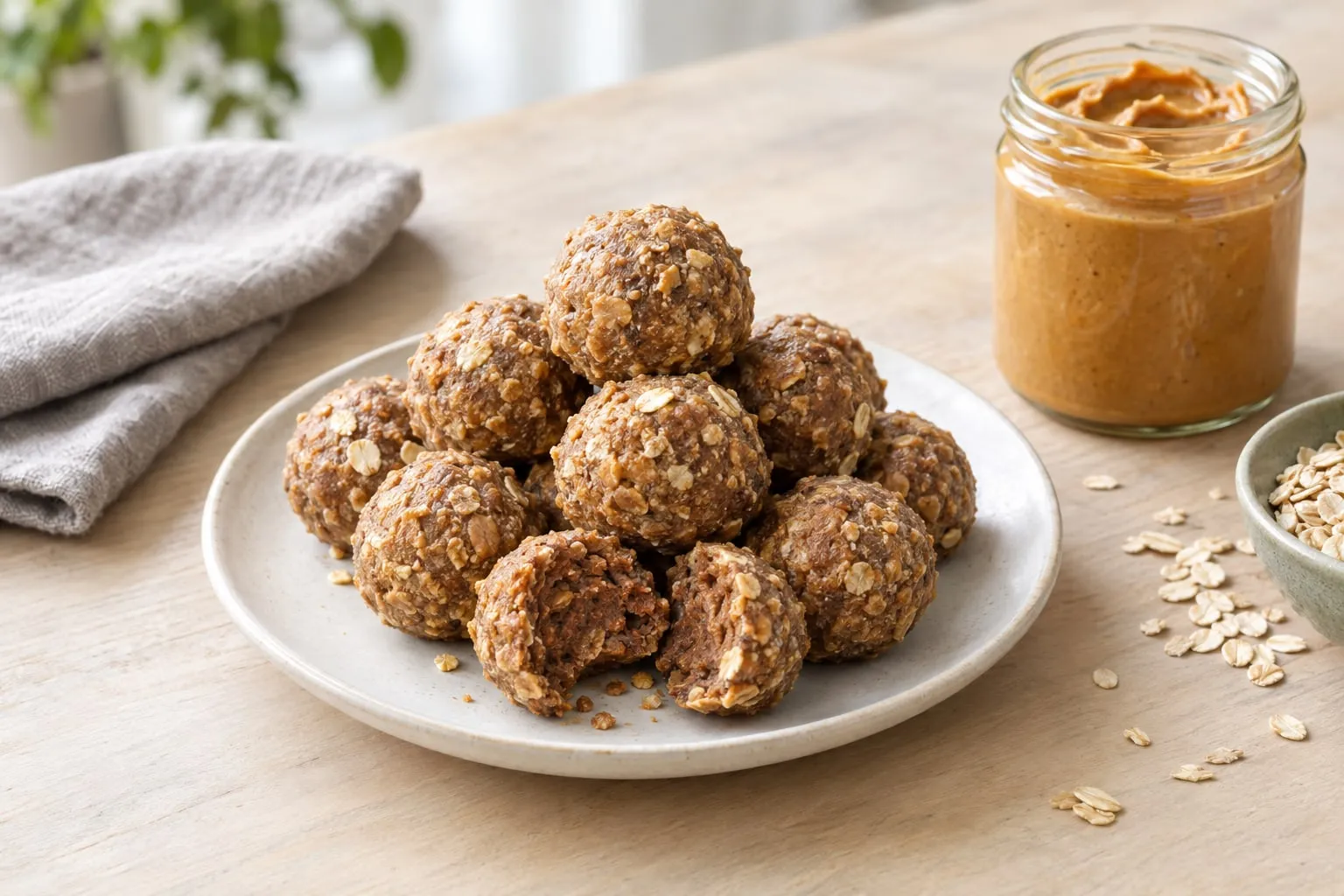
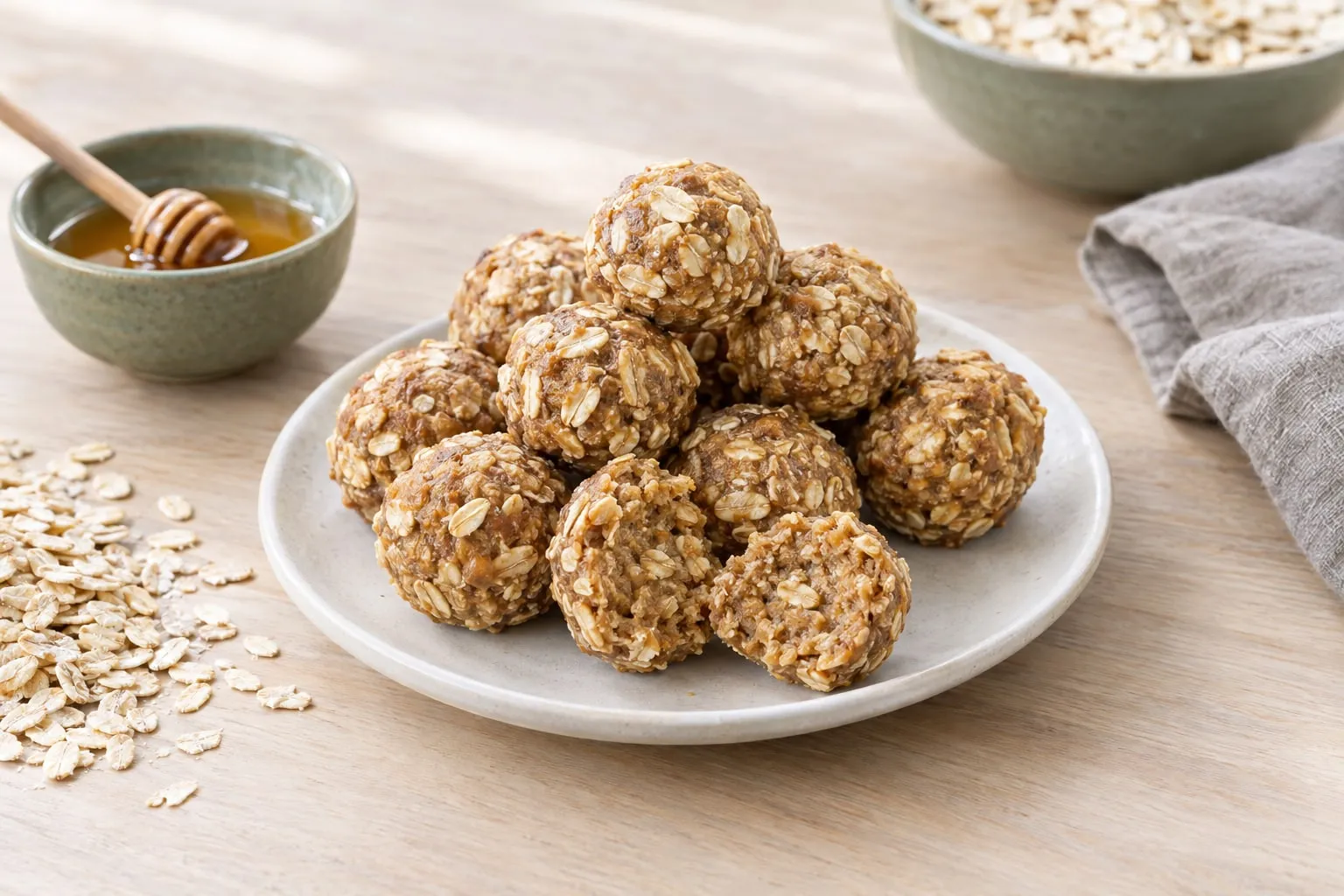
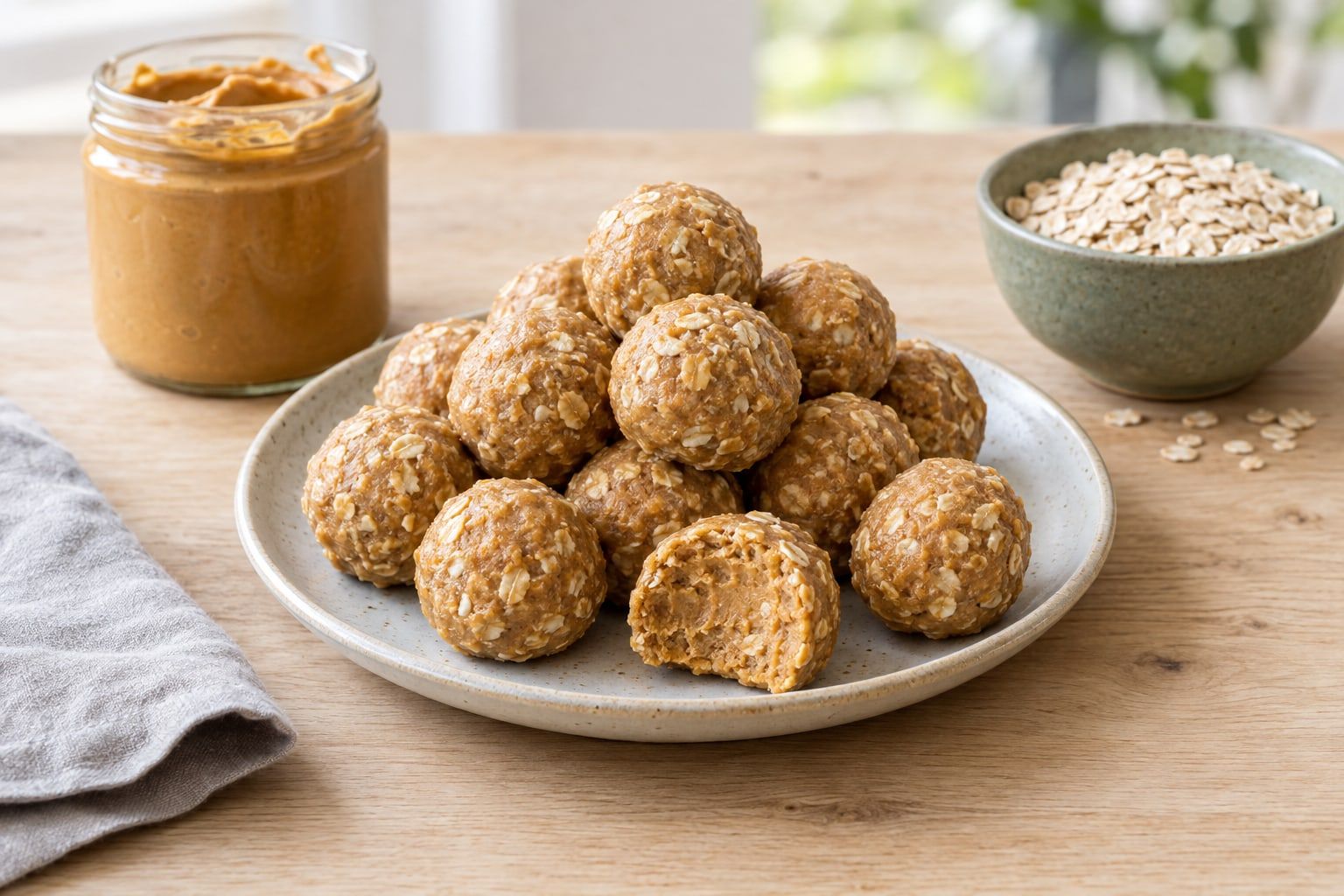
Weigh out about 22 g of dough at a time, roll into 12 balls and set them on the lined tray.
Chill until firm.
How to tell it's done
- The balls hold their shape and feel firm when pressed.
- The surface is smooth with oats showing, and no oil is pooling on the tray.
Tips for success
- Stir the jar before you weigh
If oil has settled on top of a natural peanut butter, stir it back in until the jar is even. Oily peanut butter gives greasy balls that will not hold a shape.
- Start with the peanut butter and honey
Beat them together first so the honey is spread through the peanut butter. Then add the whey and oats in two goes, mixing between each.
- Use milk sparingly
The 100 g peanut butter does most of the binding. Add milk a teaspoon at a time only if the mixture will not press together, because too much makes the balls soft and sticky.
- Roll with damp palms
Wet your hands lightly and roll about 22 g of dough at a time. The mixture stays off your skin and the balls come out smooth.
Boost the protein
- Swap 20 g of the oats for 20 g peanut butter powder and add 1 tablespoon of milk: +1.3 g protein per serving.
- Roll the finished balls in 20 g finely chopped unsalted peanuts: +0.9 g protein per serving.
Choosing ingredients
Pick smooth peanut butter made from 100% peanuts, with no added sugar or palm oil. Crunchy gives more texture, but the protein is the same.
Whey with a vanilla flavour suits the nutty taste best. Casein makes a stiffer dough that takes 2 tablespoons more milk, and a vegan blend is grainier and thirstier.
Peanuts are a major allergen. Label the container if the balls are going to school, work or a party.
Variations
- With dates
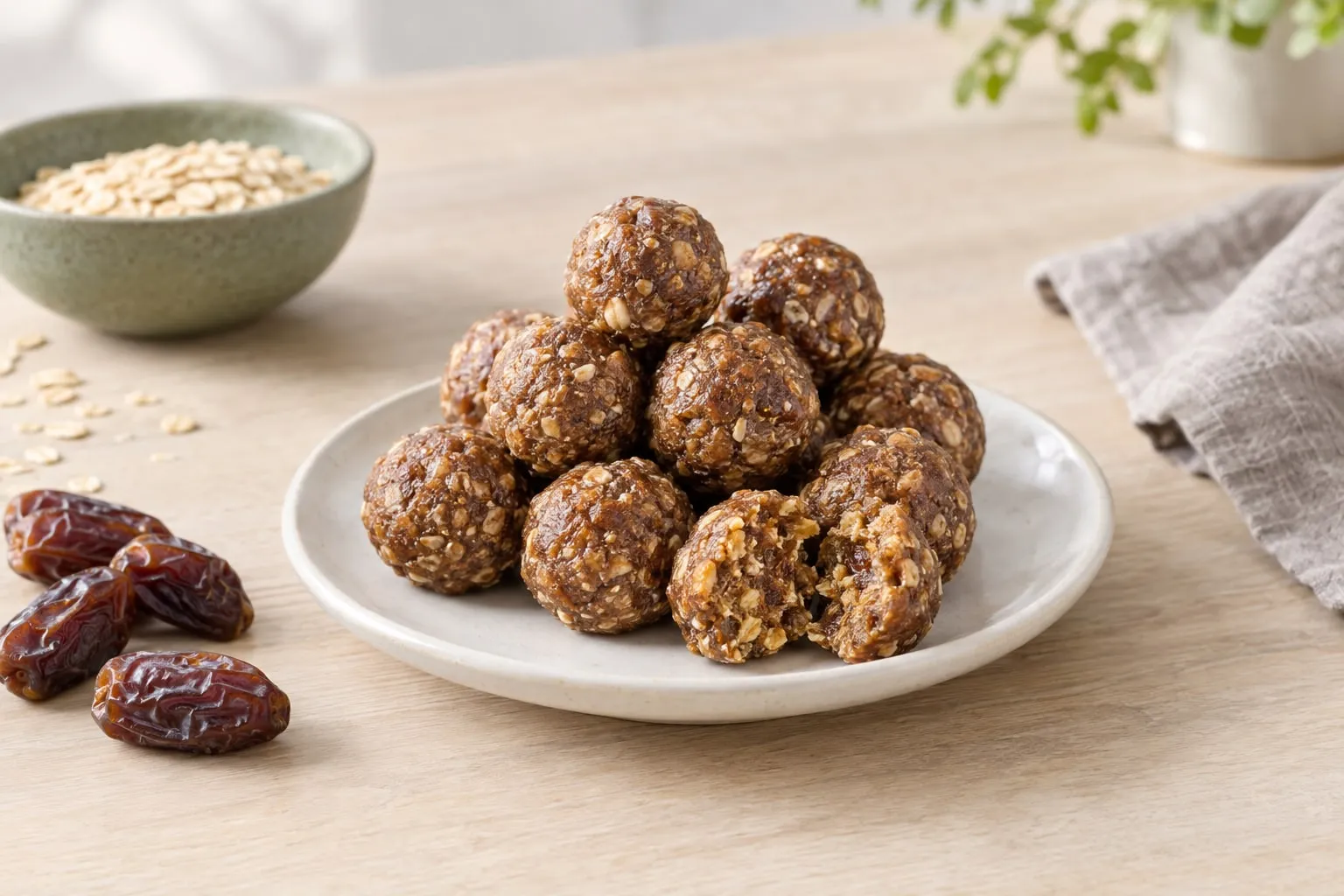
Blitz 60 g dried dates with the milk to a paste and beat it in with the peanut butter, leaving out the honey. Protein rises by about 0.2 g per serving and the balls taste softer and sweeter.
- Oatmeal balls
Blitz half of the oats to a coarse flour in step 2 for a smoother ball. Protein is unchanged.
Serve it with
- A glass of semi-skimmed milk
- A banana
- Black coffee
Storage
Store the peanut butter protein balls in an airtight container in the fridge for up to 5 days.
Freeze them in a bag for up to 3 months and leave them in the fridge for an hour to thaw.
Troubleshooting
Why are my peanut butter protein balls too sticky to roll?
The mixture has too much milk or the peanut butter was runny. Stir in 1 tablespoon of oats and chill the bowl for 10 minutes before rolling.
Why are my peanut butter protein balls dry and crumbly?
There was not enough moisture for the whey. Add 1 teaspoon of milk at a time until a pinch holds together when squeezed.
Why do my peanut butter protein balls leave an oily mark?
The peanut butter had separated. Stir the jar before weighing next time, or switch to one without palm oil.
Frequently asked questions
How much protein is in these protein peanut butter balls?
Two balls give 13 g protein and 189 kcal, so 27% of the energy comes from protein. Each single ball has about 6 g.
How do you make protein balls with dates and peanut butter?
Blend 60 g dried dates with the milk, beat the paste into the peanut butter and leave out the honey. The other steps stay the same, and the balls come out a little softer.
Can I make protein peanut butter oatmeal balls?
Yes. The 60 g porridge oats already supply the oatmeal element, and blitzing half of them to a flour gives a smoother finish.
Are peanut butter protein balls gluten-free?
Only if you use oats labelled gluten-free and check the whey label. Peanut butter itself contains no gluten.
Made it? Rate the recipe
Read next
- Protein in Peanut ButterPeanut butter for protein: smooth peanut butter has 22.8 g protein per 100 g, so 2 tbsp (30 g) give 6.8 g and 182 kcal. Per tablespoon and compared.
- Highest Protein NutsNuts with highest protein: peanuts lead with 25.8 g per 100 g, then almonds at 21.2 g. A ranked table per 100 g and per 30 g handful.
Written by The Protein Recipes editorial team. Nutrition is calculated from the ingredient list using CoFID. Read how our recipes are made and how we correct mistakes.