Protein guide
Highest Protein Nuts
Quick answer
Peanuts have the most protein per 100 g at 25.8 g, followed by almonds at 21.2 g, roasted salted pistachios at 17.9 g and cashews at 17.7 g. A 30 g handful of peanuts gives 7.7 g protein and 169 kcal.
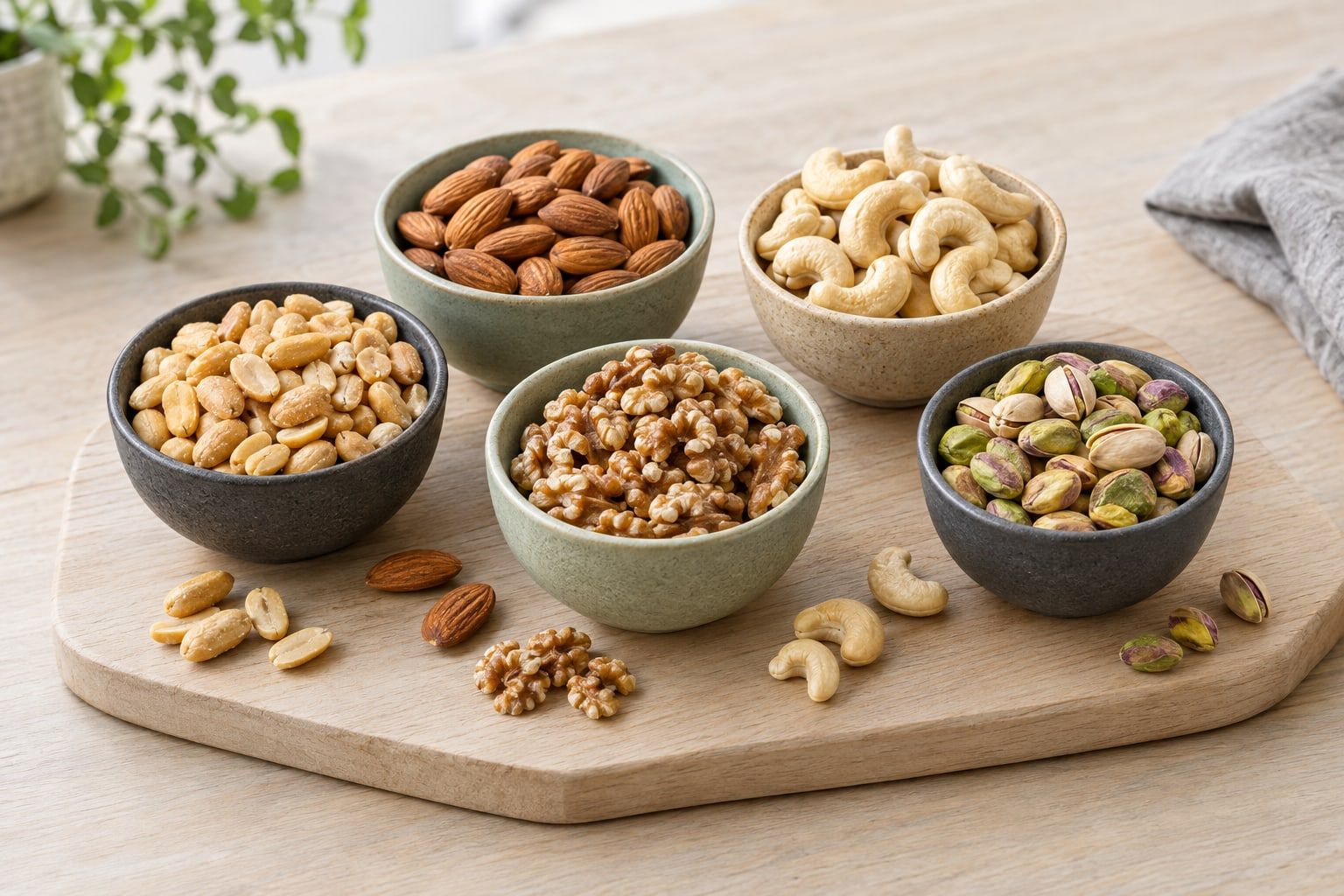
Among nuts with highest protein, peanuts come first with 25.8 g per 100 g, although botanically they are legumes. Almonds follow at 21.2 g, then roasted and salted pistachios at 17.9 g and cashews at 17.7 g, with walnuts, Brazil nuts and hazelnuts between 14 and 15 g. At the bottom are pecans at 9.2 g and salted macadamias at 7.9 g.
Every nut is also rich in fat and energy, so protein supplies a small share of the calories: about 18% in peanuts, 15% in almonds and 12% in cashews, falling to around 4% in macadamias. A 30 g handful of peanuts gives 7.7 g protein and 169 kcal, almonds 6.4 g and 166 kcal, cashews 5.3 g and 172 kcal, and walnuts 4.4 g and 206 kcal. Salted varieties carry salt as well, so plain nuts give the cleanest numbers.
In daily use, nuts add protein as a topping or a snack rather than carrying a meal. For a bigger amount, peanut butter and nut-based balls concentrate them further, and peanut butter is covered in its own guide. Peanuts and tree nuts are both allergens, so anyone avoiding them should read labels carefully, and the nut-free balls linked below give an alternative.
| Nut | Protein | Energy | Fat |
|---|---|---|---|
| Peanuts, plain, unsalted | 25.8 g | 564 kcal | 46.0 g |
| Almonds, whole | 21.2 g | 554 kcal | 49.9 g |
| Pistachios, roasted and salted | 17.9 g | 601 kcal | 55.4 g |
| Cashews, plain | 17.7 g | 573 kcal | 48.2 g |
| Walnuts | 14.7 g | 688 kcal | 68.5 g |
| Brazil nuts | 14.3 g | 683 kcal | 68.2 g |
| Hazelnuts | 14.1 g | 650 kcal | 63.5 g |
| Pecans | 9.2 g | 689 kcal | 70.1 g |
| Macadamia nuts, salted | 7.9 g | 748 kcal | 77.6 g |
Source: CoFID – McCance and Widdowson's Composition of Foods Integrated Dataset 2021 (codes 14-877, 14-896, 14-840, 14-811, 14-879, 14-871, 14-874, 14-837, 14-891)
| Nut | Weight | Protein | Energy |
|---|---|---|---|
| Peanuts | 30 g | 7.7 g | 169 kcal |
| Almonds | 30 g | 6.4 g | 166 kcal |
| Pistachios, roasted and salted | 30 g | 5.4 g | 180 kcal |
| Cashews | 30 g | 5.3 g | 172 kcal |
| Walnuts | 30 g | 4.4 g | 206 kcal |
| Hazelnuts | 30 g | 4.2 g | 195 kcal |
Source: Calculated from CoFID values per 100 g; a handful is assumed to weigh 30 g
Which nuts have the most protein?
Peanuts come first with 25.8 g protein per 100 g, although botanically they are legumes rather than tree nuts. Almonds follow at 21.2 g, then roasted and salted pistachios at 17.9 g and cashews at 17.7 g. Walnuts, Brazil nuts and hazelnuts are close together between 14 and 15 g, and pecans and salted macadamias are lowest at 9.2 g and 7.9 g. The gap between the top and bottom is more than threefold, so which nut you pick changes the protein in a handful considerably. The raw pistachio figure is not in the tables, so the roasted and salted value is used.
How much protein is in a handful of nuts?
A 30 g handful of peanuts has 7.7 g protein and 169 kcal. The same weight of almonds gives 6.4 g and 166 kcal, cashews 5.3 g and 172 kcal, and walnuts 4.4 g and 206 kcal. Roasted and salted pistachios give 5.4 g and 180 kcal, and hazelnuts 4.2 g and 195 kcal. None of these is large next to a portion of meat, fish or dairy, but nuts are easy to carry and add to meals. Nuts are energy dense, so a handful is a modest amount, and weighing it once on the scales shows what 30 g looks like.
Why do nuts give so little protein for their calories?
Nuts are mostly fat. Peanuts have 46.0 g fat per 100 g and almonds 49.9 g, while walnuts and pecans are close to 70 g. Protein therefore supplies only a small share of the energy: about 18% in peanuts, 15% in almonds, 12% in cashews and pistachios, 8–9% in walnuts, Brazil nuts and hazelnuts, and 4–5% in pecans and macadamias. NHS guidance describes nuts as high in fibre but also high in fat, and suggests eating them in moderation. For a larger amount of protein, nuts work best alongside foods that are denser in protein.
Is a peanut a nut, and what about allergies?
Peanuts are legumes, closer to lentils and peas than to almonds, but they are grouped with nuts for most cooking and for allergy labelling. Peanut allergy and tree nut allergy are separate conditions, though people often have both, and anyone with a nut allergy should check every label. Peanuts and the tree nuts listed here are among the 14 allergens declared on UK food labels. For a snack that avoids both, the nut-free protein balls linked below use other ingredients. If you are unsure what is safe, speak to your GP or a registered dietitian.
Does salting or roasting change the protein?
Roasting itself does little to the protein, but salted nuts bring salt. Roasted and salted pistachios have 1.32 g salt per 100 g, which is 0.4 g in a 30 g handful, and salted macadamias have 1.0 g per 100 g, or 0.3 g. Plain peanuts, almonds and cashews in the tables have almost none. If you are choosing a nut for protein and want to keep salt down, pick plain nuts. Nut butters and flavoured nuts have different figures again, so the pack label is the best guide to them.
Practical tips
- Weigh a handful once
A scale shows how little 30 g really is. After one check you can portion nuts by eye for weeks.
- Pick plain over salted
Plain peanuts and almonds give the most protein per gram and no added salt, so they are the simplest choice.
- Scatter nuts over foods that are already high in protein
A tablespoon of chopped almonds over yogurt or cottage cheese adds crunch and a little protein, but the main protein still comes from the dairy.
Myth or fact
- Myth
Is it true that almonds have the most protein of any nut?
No. Peanuts have more, at 25.8 g per 100 g against 21.2 g for almonds, though peanuts are botanically legumes.
- The facts
Is it true that nuts are a high protein food?
Not by share of energy. Between about 4% and 18% of the energy in the nuts listed here comes from protein, and most of the rest is fat. They contribute protein but are better thought of as a fat-rich snack.
Frequently asked questions
Which nut has the most protein?
Peanuts, at 25.8 g per 100 g, then almonds at 21.2 g.
How much protein is in almonds?
Whole almonds have 21.2 g protein and 554 kcal per 100 g, so a 30 g handful has 6.4 g and 166 kcal.
What are the best protein nuts for a snack?
Peanuts and almonds give the most per handful, at 7.7 g and 6.4 g for 30 g. Choose unsalted ones if you are counting salt.
How much protein is in hazelnuts, and what about hazelnut protein pudding?
Hazelnuts have 14.1 g protein per 100 g, or 4.2 g in 30 g. A hazelnut pudding gets most of its protein from the other ingredients, so the peanut butter protein shake linked below shows how a nut-based drink is built.
Are there nut-free alternatives?
Seeds and pulses can fill the gap, and the nut-free protein balls linked below avoid both nuts and peanuts.
Recipes to try
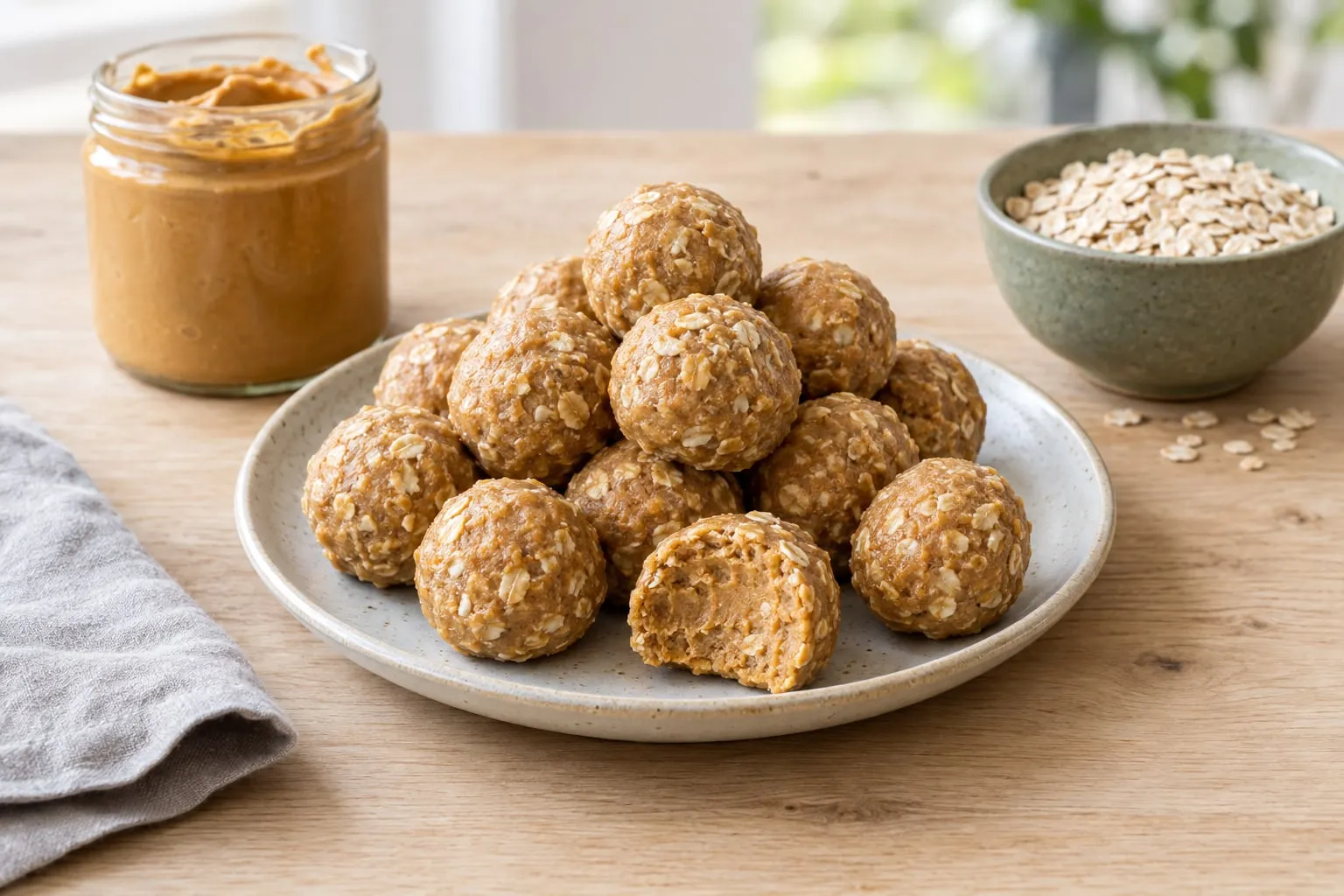
Peanut Butter Protein Balls
13 g protein189 kcal45 minVegetarian
A no-bake snack built around peanut butter.
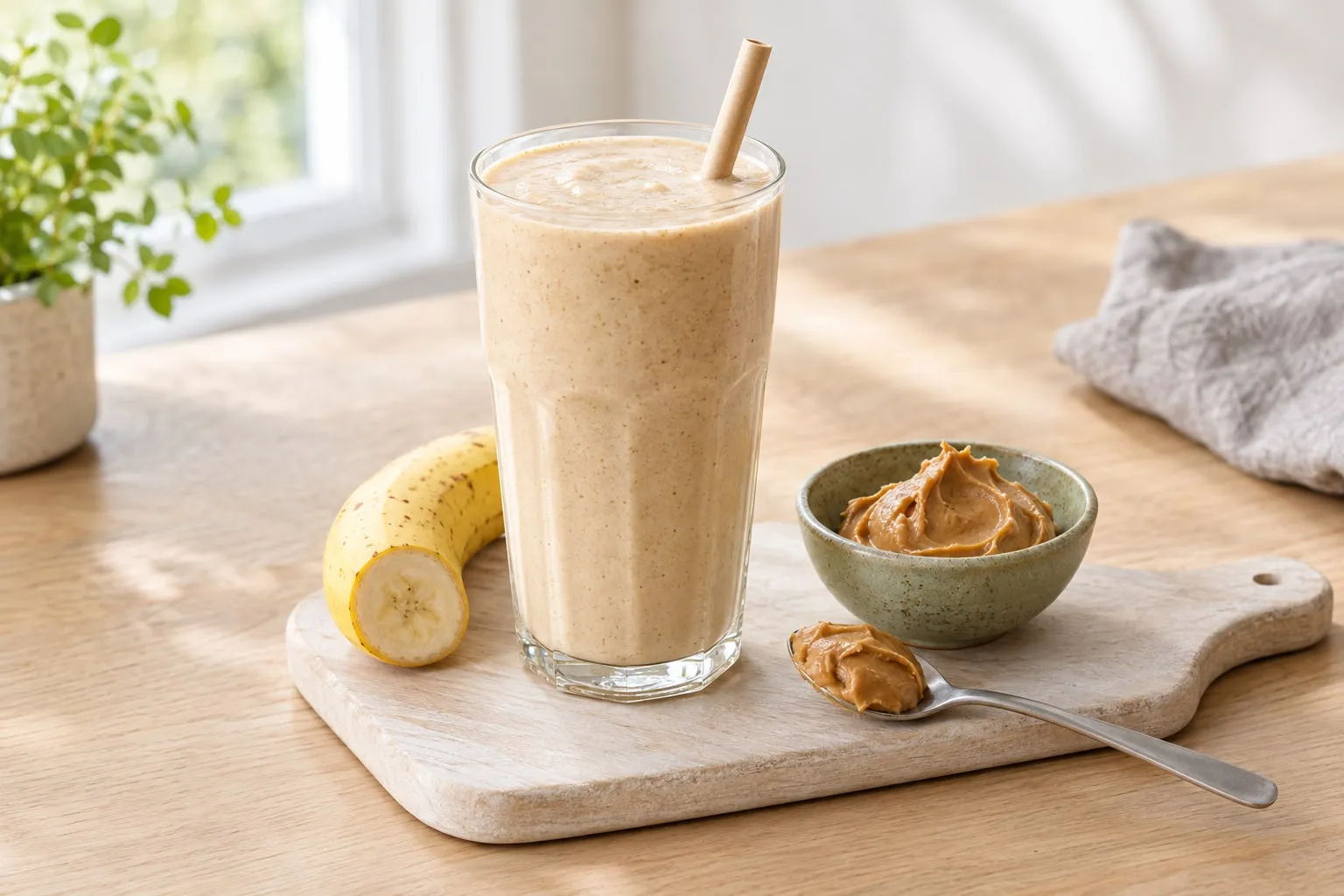
Peanut Butter Banana Protein Smoothie
28 g protein375 kcal5 minVegetarianGluten-free
A smoothie that uses peanut butter and banana.
Sources
- McCance and Widdowson's Composition of Foods Integrated Dataset 2021 (CoFID) – Values for peanuts, almonds, pistachios, cashews, walnuts, Brazil nuts, hazelnuts, pecans and macadamia nuts
- NHS Eatwell Guide – Describes nuts as high in fibre and fat and suggests eating them in moderation
Read our editorial policy for how figures are checked and how to report a mistake.
More protein guides
All guides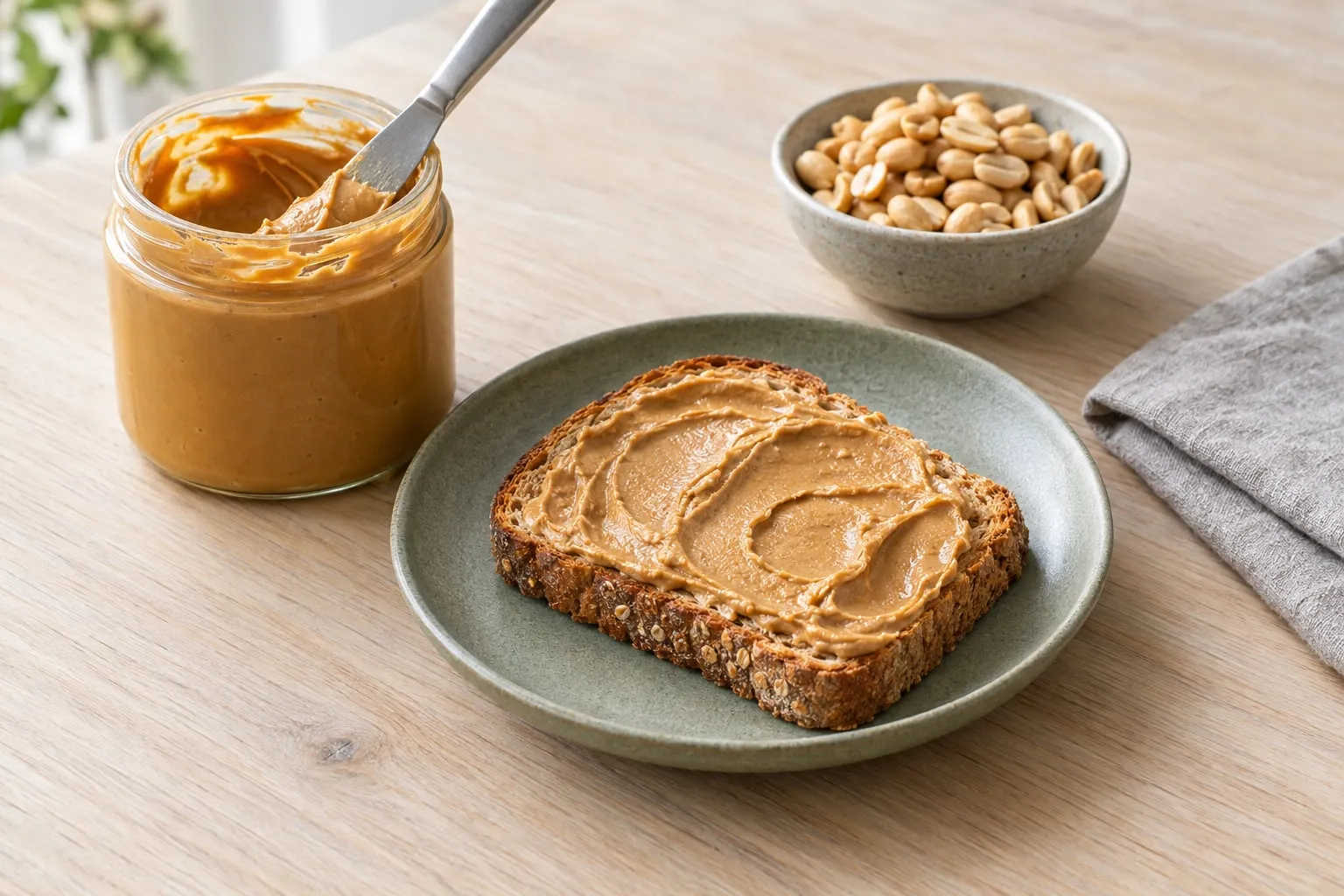
Guide
Protein in Peanut Butter
Peanut butter for protein: smooth peanut butter has 22.8 g protein per 100 g, so 2 tbsp (30 g) give 6.8 g and 182 kcal. Per tablespoon and compared.
Guide
High Protein Foods: A Ranked List
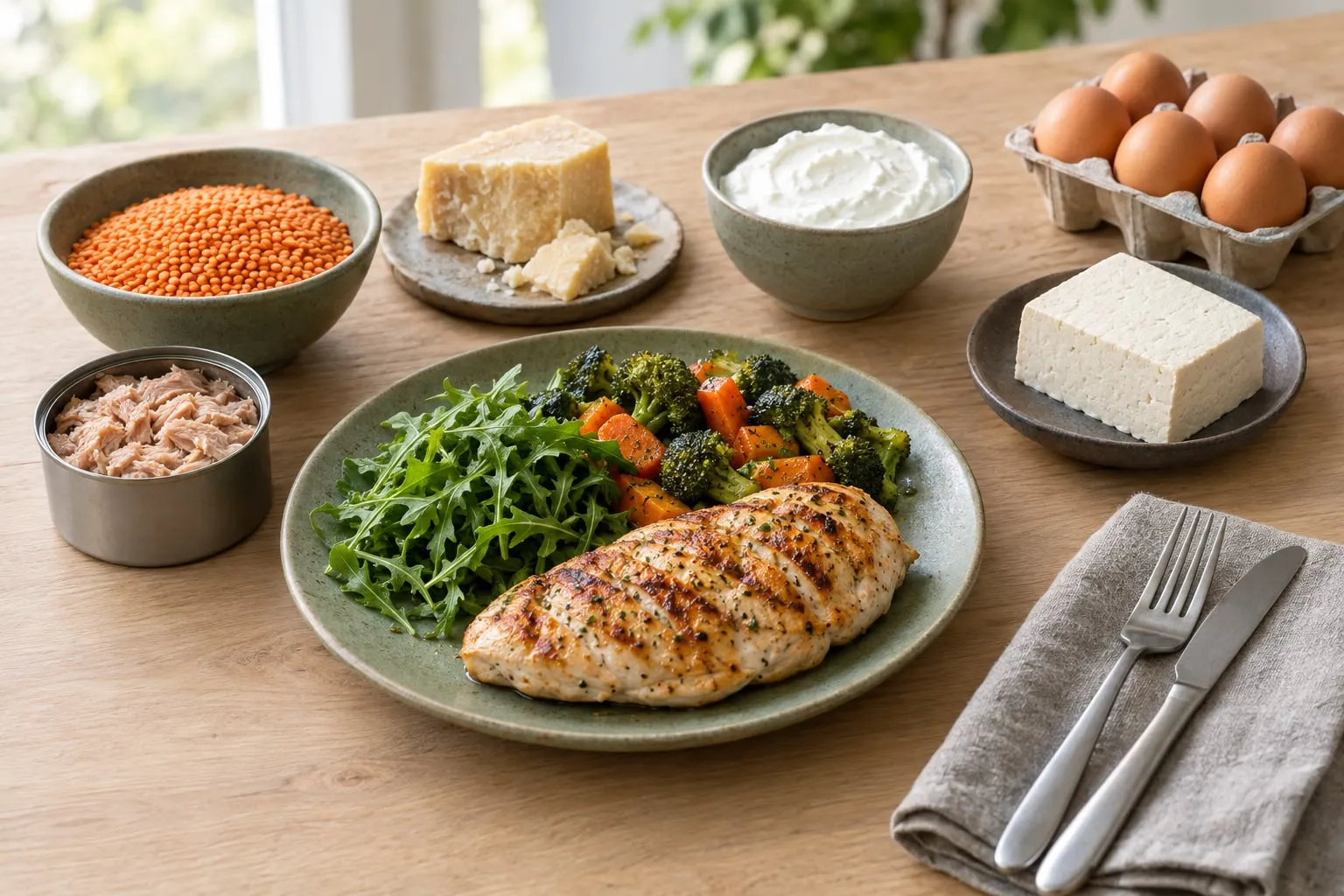
High protein foods ranked by protein per 100 g and per 100 kcal: Parmesan has 36.2 g, grilled chicken 32.0 g, dried red lentils 25.6 g and egg white 10.8 g.
Guide
How Much Protein Do You Need Per Day?
How much protein do I need? The UK reference is 0.75 g per kg of body weight a day, or 52.5 g at 70 kg. See food values and a worked example day.
Guide
Lean Protein: Best Sources
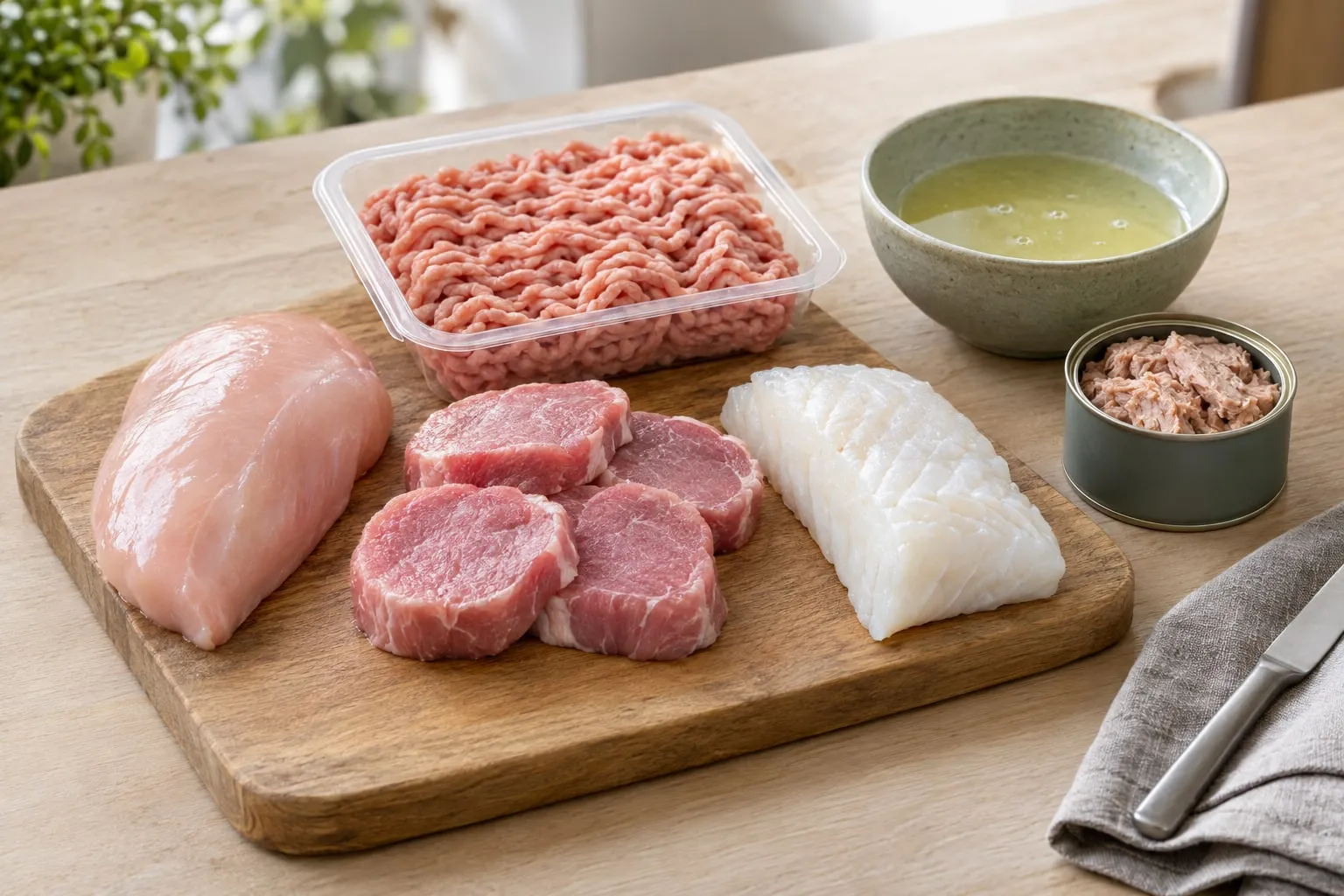
Lean protein sources ranked by fat: raw chicken breast has 24.0 g protein and 1.1 g fat per 100 g, tuna 24.9 g and 1.0 g. Meat, fish and dairy compared.