Method
Tap a time to start a timer.
Mix the porridge oats and whey in the large bowl.
Put the peanut butter and honey in the microwave-safe bowl and heat for 20 seconds until runny, then stir.
Pour the warm mixture over the oats and whey and stir well. If the dough is crumbly, add the milk a spoonful at a time until it holds together when squeezed.
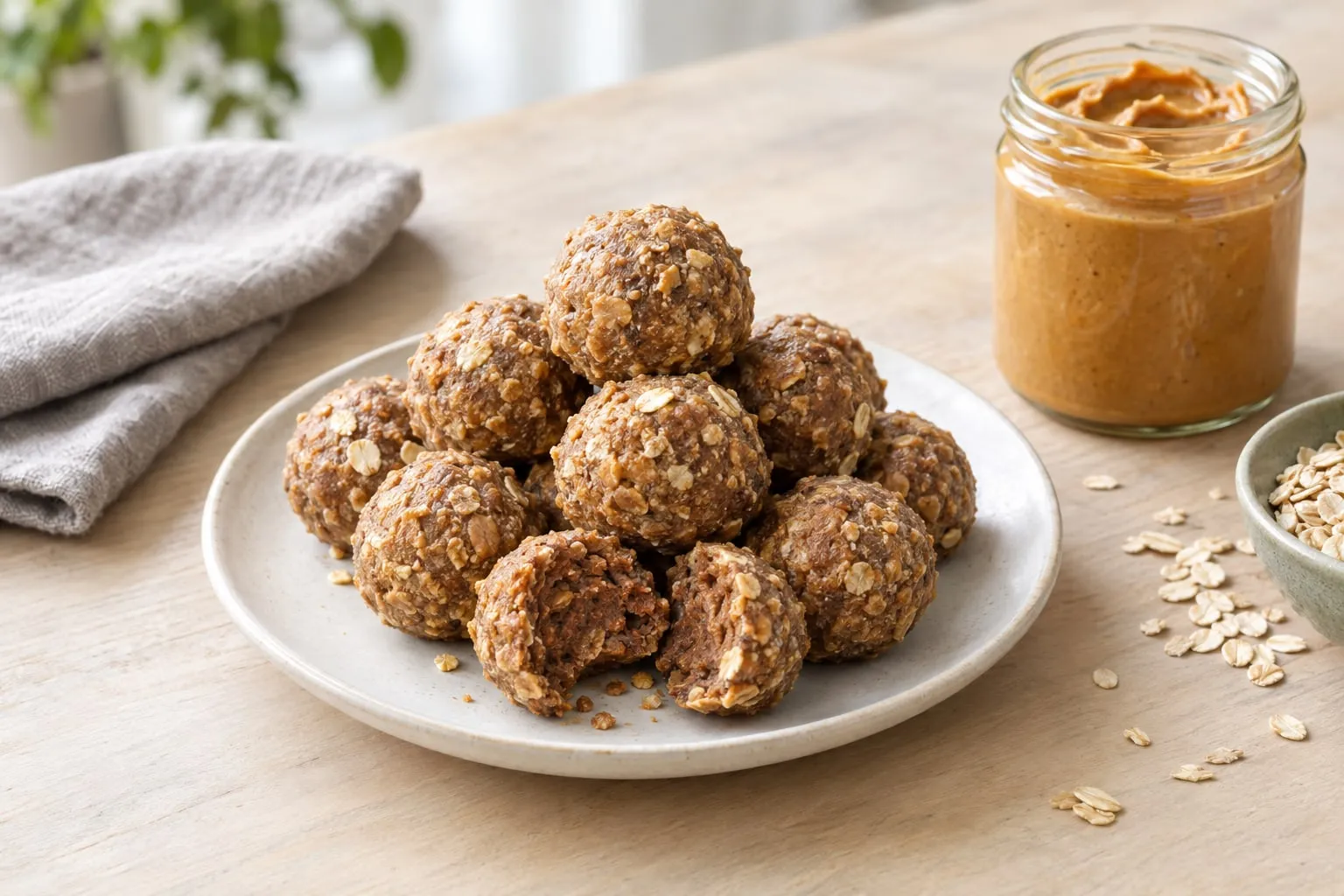
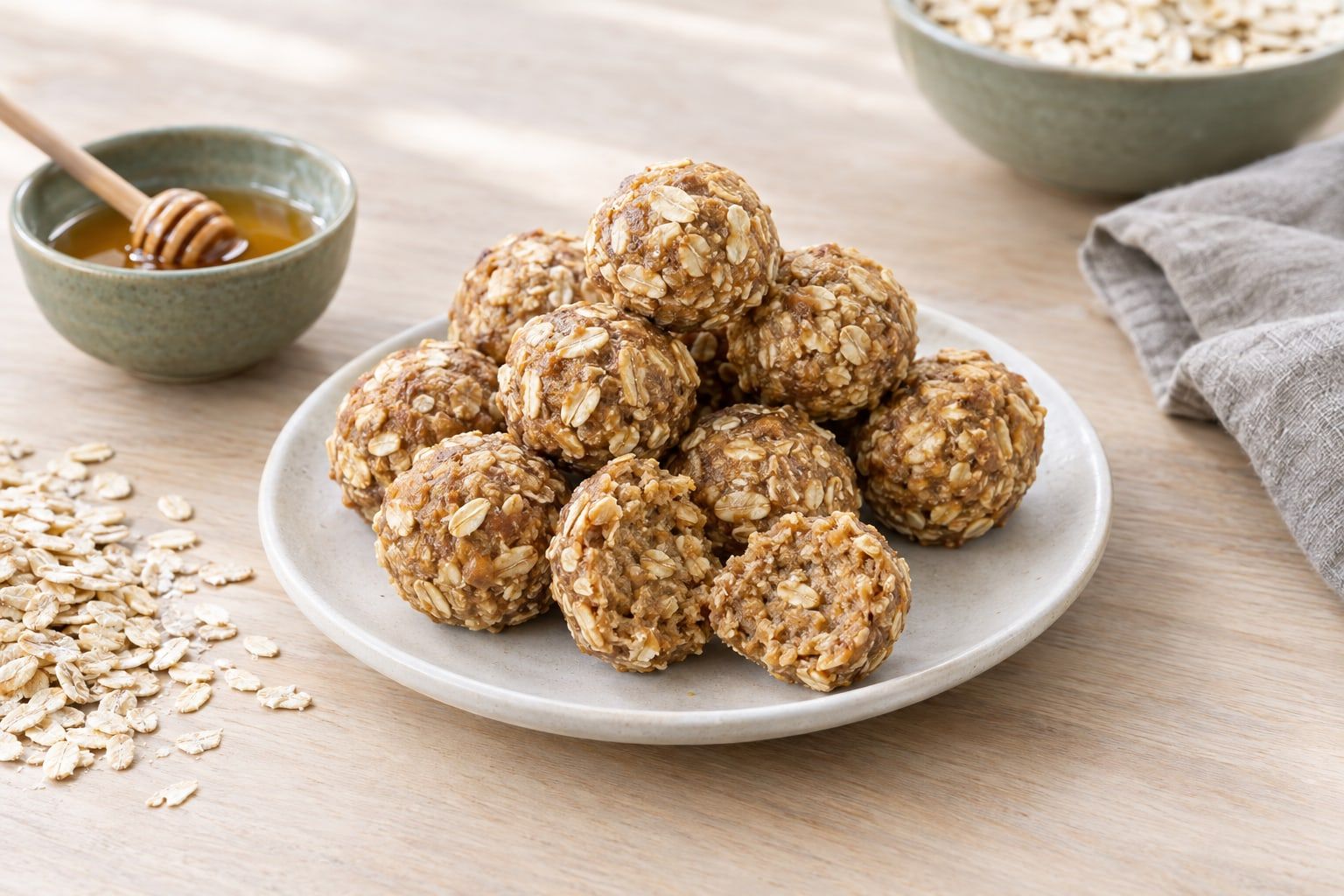
Leave the dough in the fridge for 10 minutes so the oats soften, then roll it into 12 balls of about 25 g and set them on the lined tray.
Chill until firm.
How to tell it's done
- The balls hold their shape when picked up and do not crumble.
- The oats have softened and the centre feels dense and slightly sticky when you break a ball open.
Tips for success
- Warm the peanut butter and honey first
Twenty seconds in the microwave loosens both, so they coat every oat. Stir well before pouring them over the dry mix.
- Give the dough a rest before rolling
Raw oats need a little time to soften. Leave the bowl in the fridge for 10 minutes and the dough becomes easier to shape.
- Add milk a spoonful at a time
The 30 ml milk may not be needed, depending on how runny the peanut butter is. Add a teaspoon at a time and stop as soon as the dough holds together in your fist.
- Roll 25 g balls
Weigh one ball at about 25 g and shape the other 11 to match, so they chill and keep evenly. Half an hour in the fridge firms them as the oats take up moisture.
Boost the protein
- Swap 30 g of the peanut butter for 30 g peanut butter powder and add 2 tablespoons more milk: +1.3 g protein per serving.
- Replace the 30 ml milk with 30 g quark: +0.5 g protein per serving.
Choosing ingredients
Use plain porridge oats, not instant. They hold their shape and give the balls a visible chew. Gluten-free oats are needed for a gluten-free batch.
A vanilla whey keeps the balls mild. Casein gives a stiffer dough that takes 2 tablespoons more milk, while vegan pea and rice powder is grainier and thirstier.
Pick smooth peanut butter made from 100% nuts. A natural jar with oil on top should be stirred well before you weigh it.
Variations
- Chocolate oat balls
Stir 15 g cocoa powder into the dry mix in step 1 and add 1 tablespoon more milk. Protein rises by about 0.5 g per serving.
- With raisins
Fold 40 g raisins into the dough in step 3. Protein rises by about 0.2 g per serving and the balls taste sweeter.
Serve it with
- A mug of tea or coffee
- A banana
- A glass of semi-skimmed milk
Storage
Keep the oat protein balls in an airtight container in the fridge for up to 5 days.
Freeze the balls on a tray, then bag them, for up to 3 months and thaw them in the fridge for an hour.
Troubleshooting
Why are my oat protein balls hard?
The dough was too dry or went in the fridge without resting first. Add 1 tablespoon of milk to the dough, let it sit for 10 minutes and roll again.
Why are my oat protein balls falling apart?
The peanut butter and honey were not warmed, or the dough was too dry. Warm them for 20 seconds, then stir in milk a teaspoon at a time until the dough holds in your fist.
Why are my oat protein balls greasy?
The peanut butter had oil on top. Stir the jar well before weighing, or use a peanut butter with no added palm oil.
Frequently asked questions
How much protein is in these oat protein balls?
Two balls give 12 g protein and 186 kcal, so 25% of the energy comes from protein. One ball has about 6 g.
How much do oat protein balls cost to make?
At own-brand prices they work out at roughly 20 p per ball, or about 40 p for a two-ball serving. The oats are the cheapest part and make up about two-fifths of the mix by weight.
Is oatmeal the same as porridge oats in oatmeal protein balls?
In the UK, oatmeal is usually ground oats. This recipe uses whole porridge oats, which give the balls their chew, but you can blitz half of them for a smoother ball.
Are oat protein balls gluten-free?
Only if you use oats labelled gluten-free and check the label on the whey. Ordinary oats can be contaminated with wheat during growing or milling.
Made it? Rate the recipe
Read next
- Protein in OatsProtein in oats: porridge oats have 10.9 g protein per 100 g dry, so a 40 g portion gives 4.4 g. Porridge made with milk or water, and ways to add more.
- How Much Protein Do You Need Per Day?How much protein do I need? The UK reference is 0.75 g per kg of body weight a day, or 52.5 g at 70 kg. See food values and a worked example day.
Written by The Protein Recipes editorial team. Nutrition is calculated from the ingredient list using CoFID. Read how our recipes are made and how we correct mistakes.