Method
Tap a time to start a timer.
Blend the porridge oats for 30 seconds until they form a fine flour. Tip them into a large mixing bowl.
Put the dates and semi-skimmed milk in the blender and blend to a thick, sticky paste, scraping down the sides once.
Add the date paste, chocolate whey, 20 g cocoa powder and peanut butter to the oats. Stir, then work it with your hands into a firm dough that holds together when squeezed.
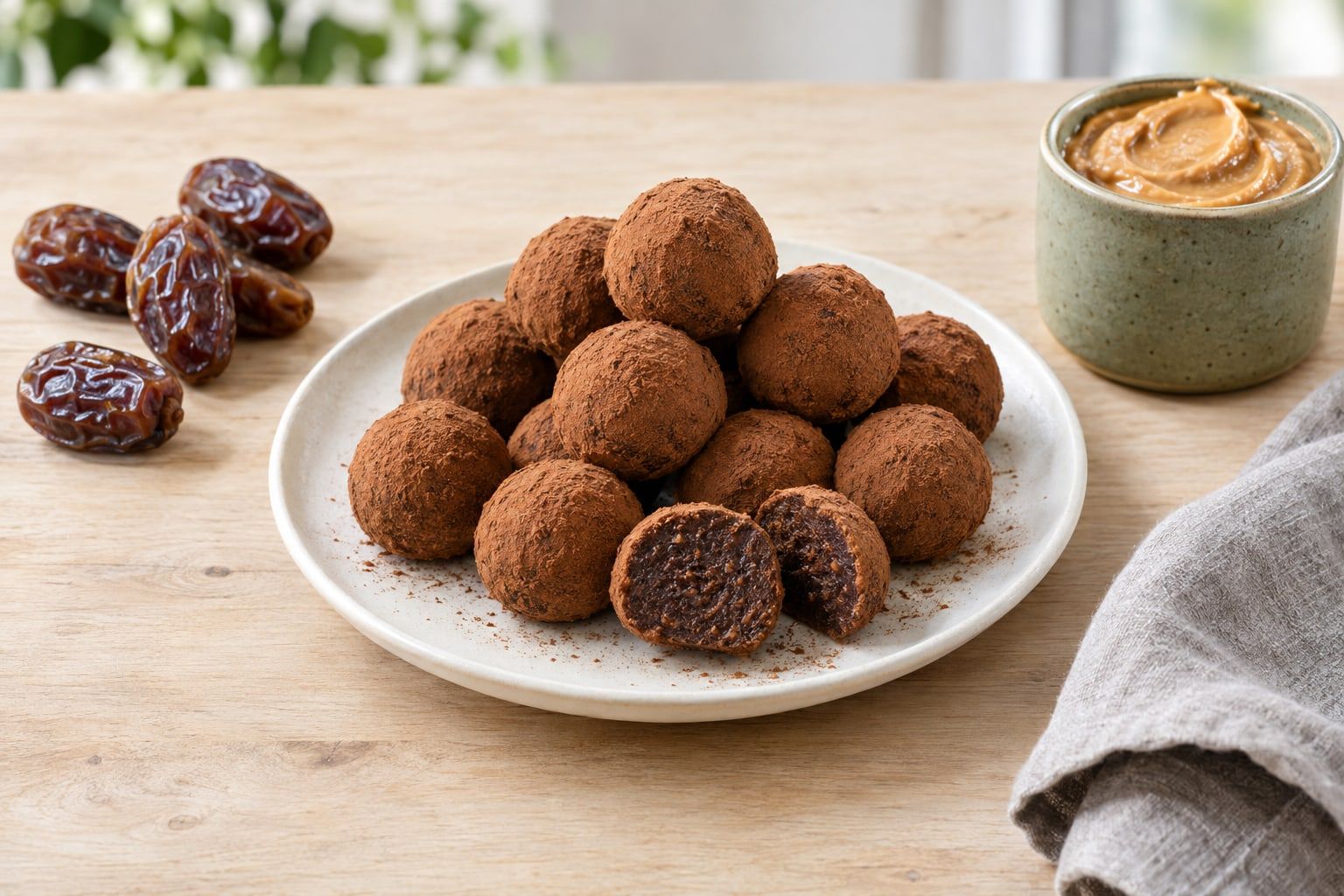
Weigh or divide the dough into 12 pieces of about 27 g and roll each one into a ball.
Spread the 10 g cocoa powder on a plate and roll each ball in it to coat.
Chill the balls on a plate in the fridge until firm.
How to tell it's done
- The dough holds its shape when squeezed and does not stick to your hands.
- The chilled balls feel firm all the way through and are slightly springy when pressed.
Tips for success
- Use real cocoa powder
Cocoa powder is unsweetened and bitter, so the dates supply the sweetness. Drinking chocolate is mostly sugar and would turn the balls sweet and lower the protein.
- Blend the oats before the dates
Grind the oats dry first, then blend the dates with the milk. Done the other way round, the sticky date paste coats the blender and the oats never grind evenly.
- Add milk a spoonful at a time
Cocoa and whey both absorb moisture, so the dough can turn crumbly. If it will not hold together when squeezed, work in 1 tablespoon of extra milk and test again.
- Weigh the dough for even balls
About 27 g of dough per ball gives 12 even balls, so each serving of 2 balls is the same size.
Boost the protein
- Eat 3 balls instead of 2: about +7 g protein.
- Swap the 40 g peanut butter for 40 g defatted peanut butter powder, adding a splash more milk: about +2 g protein per serving.
Choosing ingredients
Chocolate-flavoured whey already carries cocoa, so the balls taste rich with 20 g cocoa powder added. A plain or vanilla whey makes them less intense, so add 10 g more cocoa.
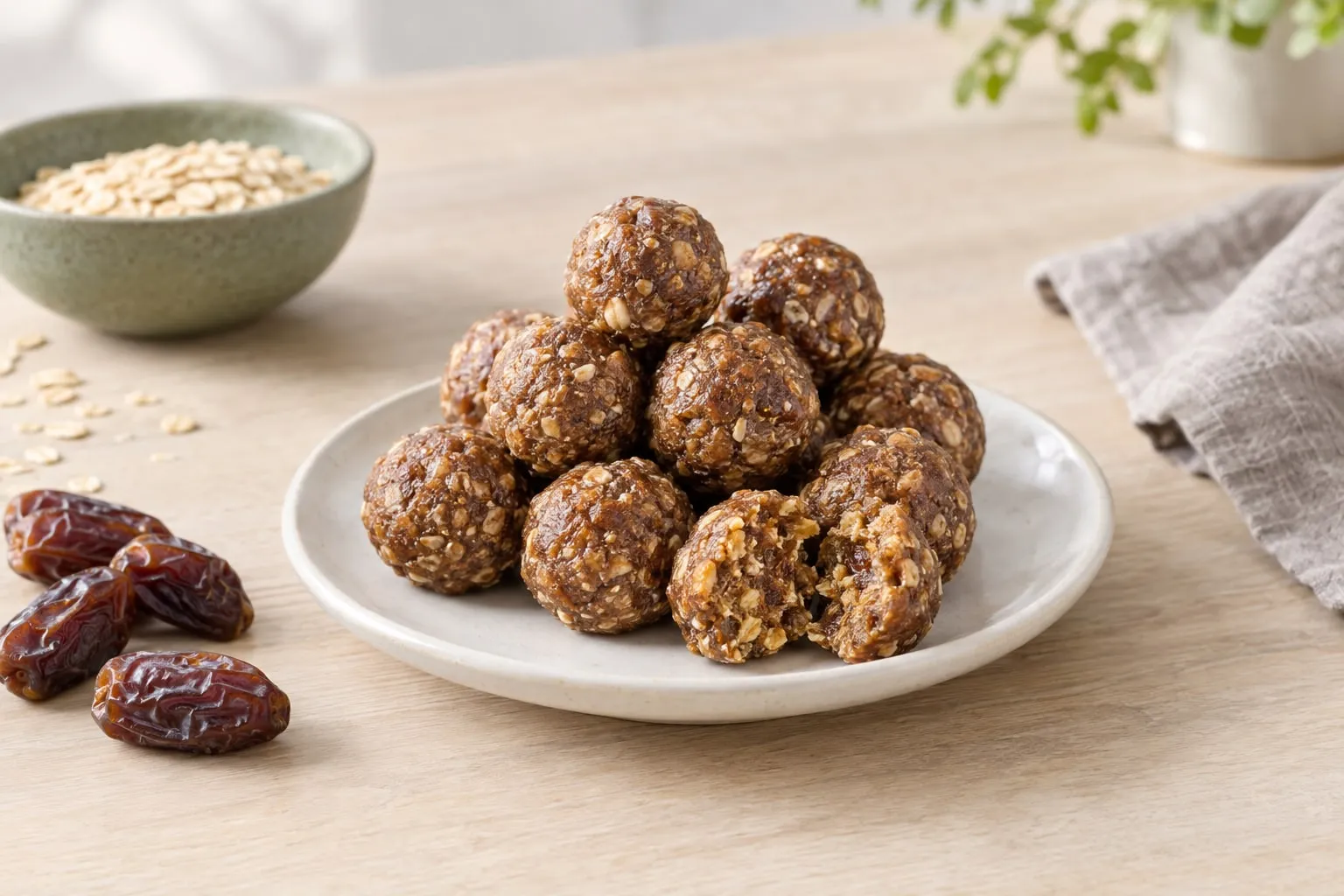
Soft dried dates blend into a smooth paste. If they feel hard, soak them in hot water for 10 minutes and drain well before weighing.
Variations
- Chocolate coconut protein balls
Roll the balls in desiccated coconut instead of cocoa powder. The coconut adds a little fat, and the protein stays about the same.
- Chocolate orange
Add the finely grated zest of 1 orange to the dough in step 3 and use the orange juice in place of the milk.
Serve it with
- Tea or coffee
- Fresh fruit
Storage
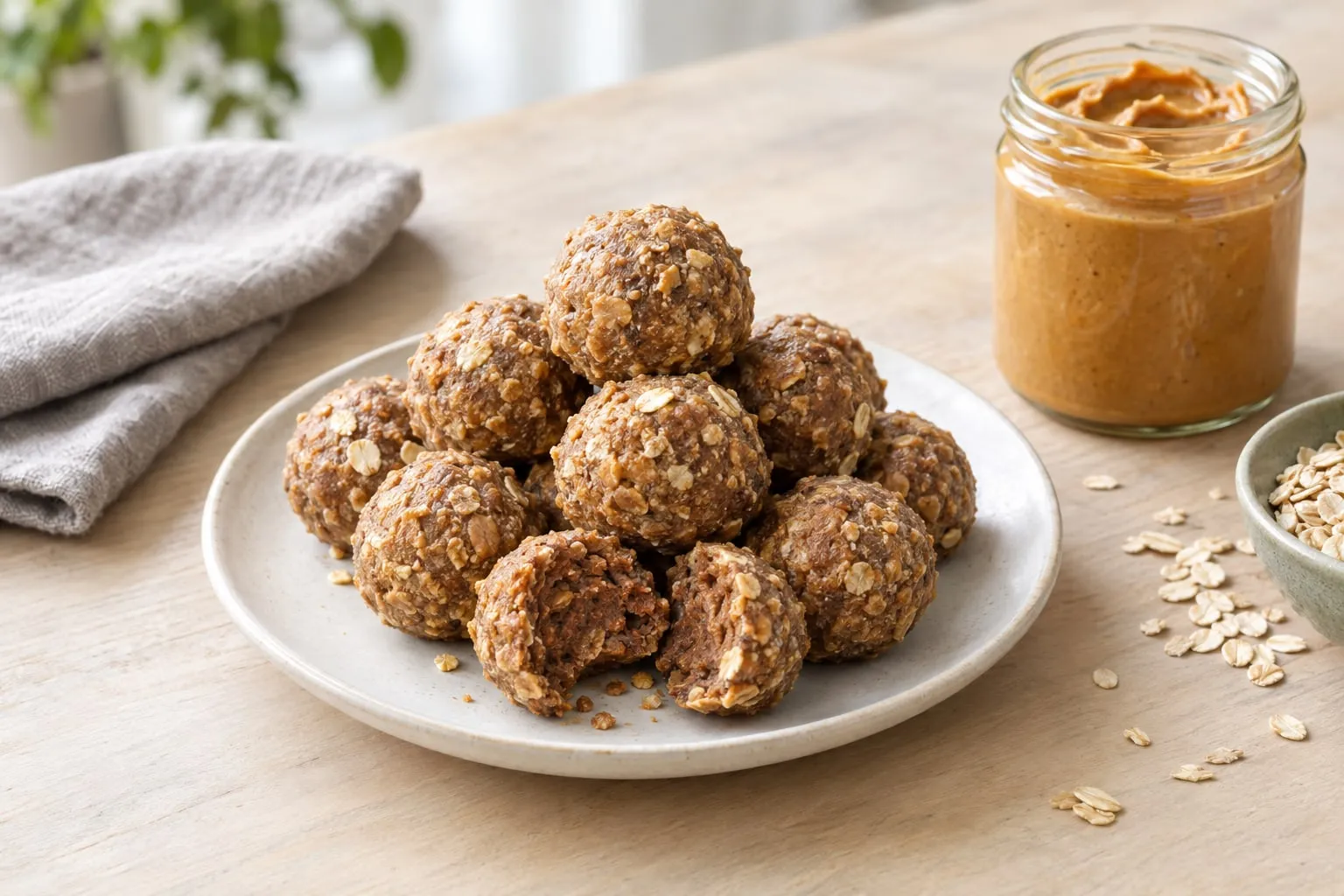
Keep the chocolate protein balls in an airtight container in the fridge for up to 5 days.
Freeze them for up to 2 months and defrost in the fridge for 2 hours.
Troubleshooting
Why are my chocolate protein balls crumbly?
Cocoa and whey soak up moisture, so the dough is too dry. Work in 1 tablespoon of semi-skimmed milk at a time until the dough holds together when pressed.
Why do the chocolate protein balls taste bitter?
Chocolate whey and cocoa powder together can be strong. Add another 20 g of dates to the blender next time, or use plain whey with the same 20 g of cocoa powder.
Frequently asked questions
How much protein is in chocolate protein balls?
Two balls, one serving, give 14 g protein and 179 kcal, so 31% of the energy comes from protein. One ball has about 7 g.
Can I make protein peanut butter chocolate balls?
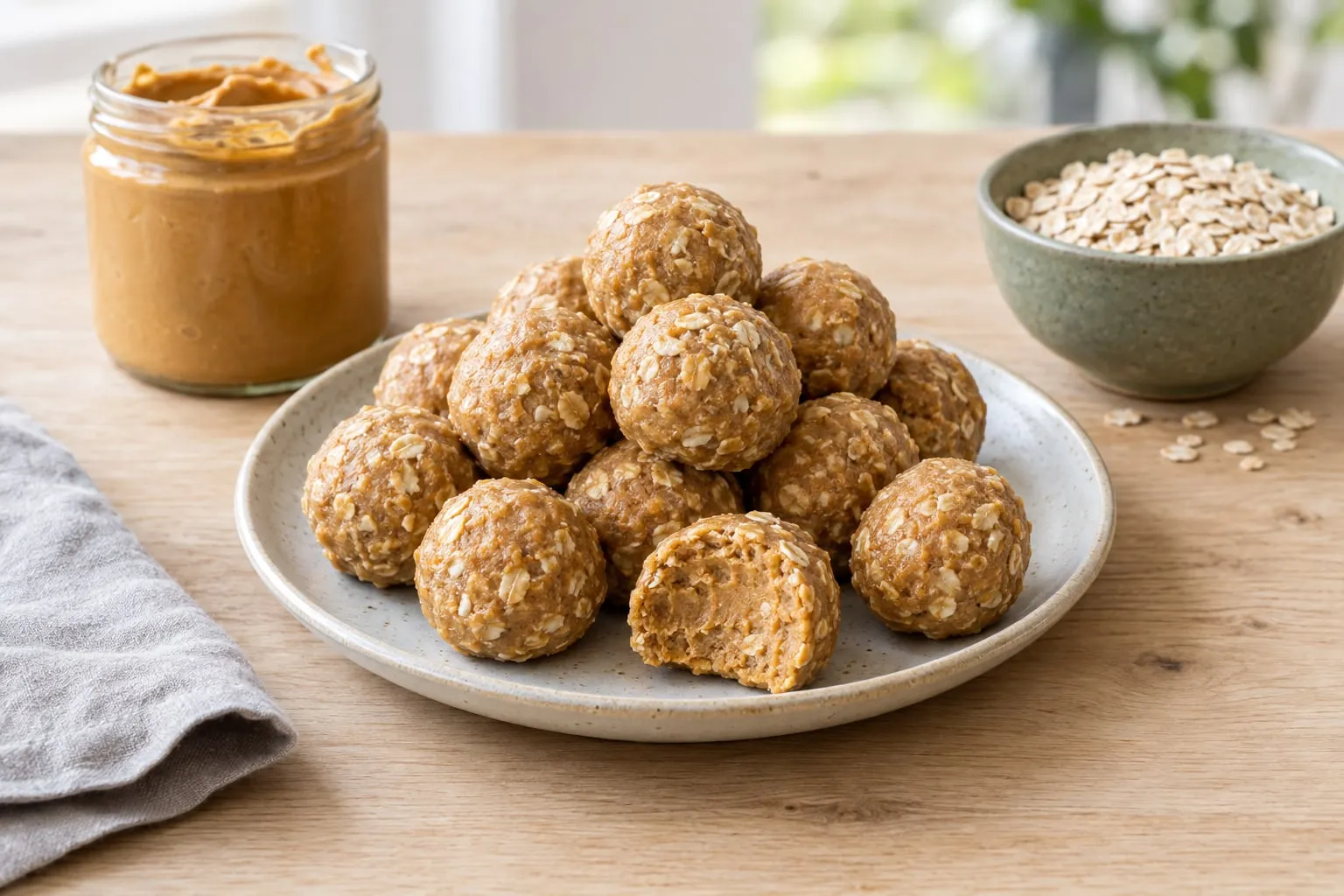
Yes. The recipe already uses 40 g smooth peanut butter. For a stronger peanut flavour, replace 20 g of the dates with 20 g more peanut butter and add a splash of milk.
Do chocolate coconut protein balls need different ingredients?
No. Make the dough as above and roll the balls in desiccated coconut in place of the cocoa.
Made it? Rate the recipe
Read next
- How Much Protein Do You Need Per Day?How much protein do I need? The UK reference is 0.75 g per kg of body weight a day, or 52.5 g at 70 kg. See food values and a worked example day.
- High Protein Foods: A Ranked ListHigh protein foods ranked by protein per 100 g and per 100 kcal: Parmesan has 36.2 g, grilled chicken 32.0 g, dried red lentils 25.6 g and egg white 10.8 g.
Written by The Protein Recipes editorial team. Nutrition is calculated from the ingredient list using CoFID. Read how our recipes are made and how we correct mistakes.