Method
Tap a time to start a timer.
Heat the oven to 160°C (140°C fan), gas 3.
Line the base of the springform tin with baking parchment. Crush the digestive biscuits to fine crumbs, mix with the melted butter and press firmly into the base of the tin.
Bake the base on the middle shelf until lightly set, then take it out and leave the oven on.
Whisk the quark, Greek yogurt, eggs, whey protein powder, caster sugar, lemon juice and vanilla extract in a large bowl until completely smooth, with no streaks of powder.
Pour the filling over the warm base and tap the tin on the worktop to release large bubbles. Bake on the middle shelf until the edge is set and the centre still wobbles slightly.
Switch the oven off and leave the cheesecake inside with the door ajar to cool slowly.
Run a knife around the edge, cover the tin and chill until firm, at least 6 hours or overnight, before releasing the springform and slicing.
How to tell it's done
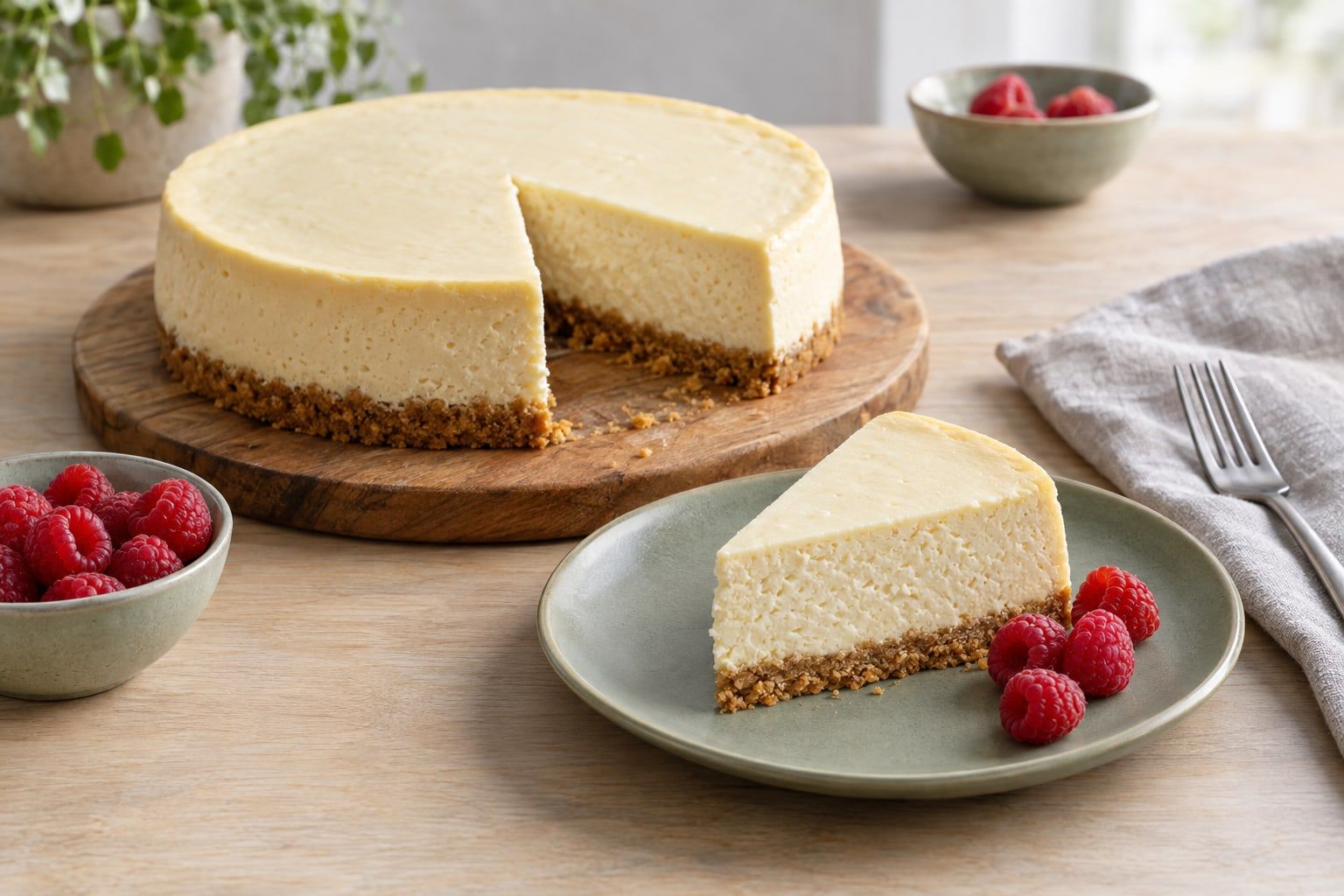
- The edge is set and the centre moves with a slight wobble, like a set jelly, when you nudge the tin.
- The surface is pale cream with no brown patches and no cracks.
Tips for success
- Keep the oven low
At 160°C (140°C fan) the filling sets gently. A hotter oven puffs the cheesecake up and cracks the top as it cools.
- Drain the quark if it looks wet
If liquid has collected on top of the quark in the tub, pour it off before weighing. Extra water makes the filling slack and slow to set.
- Cool it in the oven
Switch the oven off after the bake and leave the door ajar for 1 hour. The slow drop in temperature is what keeps the surface smooth.
Boost the protein
- Replace the 60 g digestive biscuits with 60 g crushed wholewheat biscuit cereal: about +1 g protein per slice.
- Swap 50 g of the quark for 50 g extra strained Greek yogurt and add one more 30 g scoop of whey: about +2 g protein per slice.
Choosing ingredients
Quark is sold in 250 g tubs, so two tubs make the filling. Its protein is higher than that of cream cheese, and it has almost no fat.
Use strained Greek yogurt labelled 0% fat. Looser Greek-style yogurt adds more water and a softer set.
Variations
- Blueberry protein cheesecake
Simmer 150 g blueberries with 1 tbsp caster sugar for 5 minutes and spoon the compote over the chilled cheesecake. Bake time stays the same.
- Lemon protein cheesecake
Add the finely grated zest of 1 lemon and 2 tbsp lemon juice in step 4 in place of 1 tbsp. The filling is slightly looser, so bake it 5 minutes longer.
Serve it with
- Fresh raspberries or strawberries
- A spoon of strained Greek yogurt
- Black coffee or tea
Storage
Keep the protein cheesecake covered in the fridge for 3–4 days.
Freeze slices wrapped individually for up to 1 month and thaw them in the fridge overnight.
Troubleshooting
Why did the protein cheesecake crack on top?
The oven was too hot or the cheesecake cooled too quickly. Keep to 160°C (140°C fan) and leave it in the switched-off oven for the full hour with the door ajar.
Why is the protein cheesecake watery in the middle?
The quark released liquid or the cheesecake came out too early. Pour off any liquid from the tubs before weighing and bake until only the very centre wobbles.
Frequently asked questions
How much protein is in this protein cheesecake?
Each of the 10 slices has 14 g protein and 145 kcal, so 38% of the energy comes from protein.
Can I make protein cheesecake without whey?
Yes. Leave out the whey and the cheesecake still has about 11 g protein per slice, but add 1 tbsp plain flour to keep the texture firm.
Do I need a water bath for protein cheesecake?
No. The low oven temperature and the slow cool-down in the switched-off oven are enough to prevent cracks.
Is there a no-bake version of high protein cheesecake?
Yes. Gelatine or agar sets the filling without an oven, and the no-bake protein cheesecake page covers that method.
Made it? Rate the recipe
Read next
- How Much Protein Do You Need Per Day?How much protein do I need? The UK reference is 0.75 g per kg of body weight a day, or 52.5 g at 70 kg. See food values and a worked example day.
- High Protein Foods: A Ranked ListHigh protein foods ranked by protein per 100 g and per 100 kcal: Parmesan has 36.2 g, grilled chicken 32.0 g, dried red lentils 25.6 g and egg white 10.8 g.
Written by The Protein Recipes editorial team. Nutrition is calculated from the ingredient list using CoFID. Read how our recipes are made and how we correct mistakes.