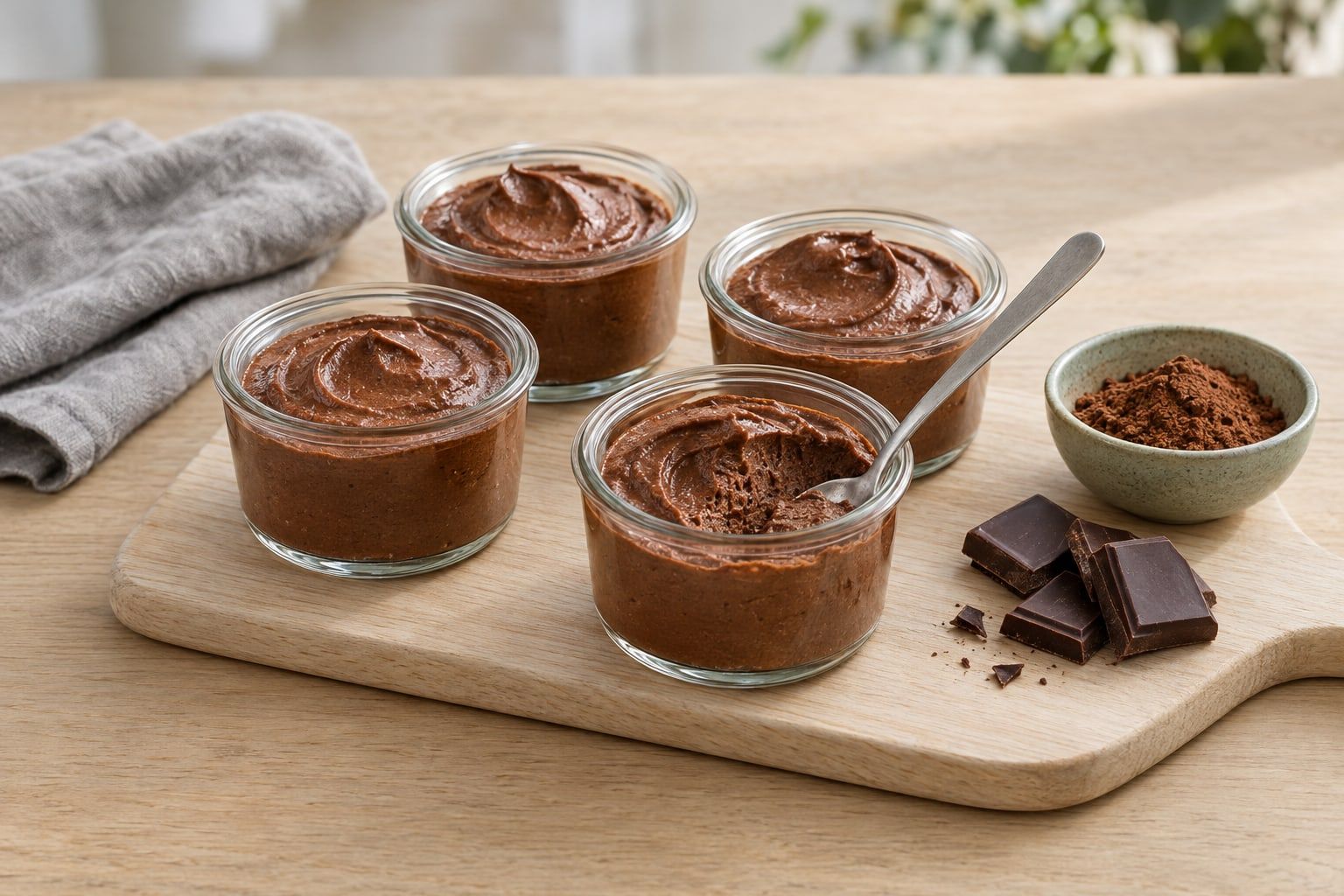
Method
Tap a time to start a timer.
Put the plain chocolate in a small microwave-safe bowl and melt it in 20-second bursts, stirring between each, until smooth. Leave it to cool while you make the base.
Tip the cottage cheese and skimmed milk into the blender and blend on high until completely smooth. Stop once to scrape down the sides.
Add the chocolate whey, cocoa, maple syrup and sweetener. Blend until combined and glossy.
Stir 2 tablespoons of the mousse into the cooled melted chocolate, then scrape this back into the blender and blend for 10 seconds.
10 sec
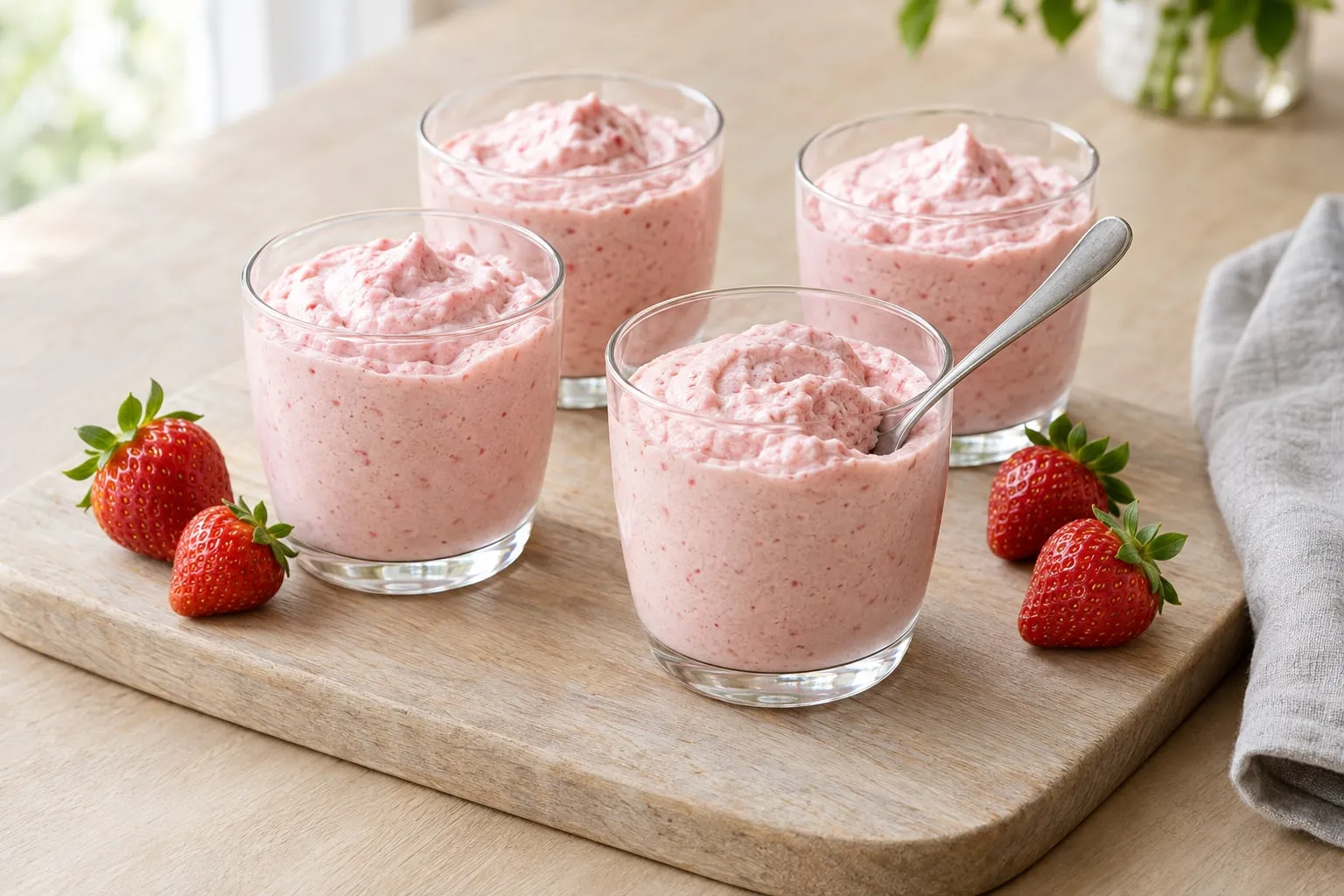
Taste and add a pinch more sweetener if you want it sweeter. Spoon or pour the mousse into 4 small glasses and level the tops.
Chill in the fridge until the mousse is cold and holds its shape on a spoon.
How to tell it's done
- The mousse is completely smooth, with no grains of cottage cheese on the back of a spoon.
- After chilling it holds a soft, spoonable shape and a spoon leaves a clear trail.
Tips for success
- Blend the cottage cheese for the full time
The curds need 2–3 minutes on high to break down completely. Stop and scrape the sides once. If you can still feel grains on the back of a spoon, blend for another 30 seconds.
- Add the whey after the cottage cheese is smooth
Whey powder goes in with the milk-thinned base already liquid, so it disperses instead of forming dry lumps. Blend it for 30 seconds, not longer, or the mousse loses its lift.
- Cool the chocolate before it goes in
Hot melted chocolate warms the base and makes the mousse looser. Stirring 2 tablespoons of the mousse into the chocolate first brings the temperatures closer together and avoids flecks.
Boost the protein
- Swap the 300 g reduced-fat cottage cheese for 300 g quark: +3 g protein per pot (12 g across all four pots).
- Add 10 g extra chocolate whey with a splash more skimmed milk: about +2 g protein per pot.
Choosing ingredients
Reduced-fat cottage cheese has about 10.6 g protein per 100 g. Full-fat versions have a little less protein and more fat, and cottage cheese with added pineapple or chives does not suit this recipe.
Use whey labelled chocolate, with no flecks of added oats or bits. A whey with a strong artificial sweetener taste will come through, so taste the base before adding extra sweetener.
Variations
- Orange chocolate mousse
Add the finely grated zest of 1 orange with the cocoa in step 3. Protein stays at 15 g per pot.
- Mocha mousse
Dissolve 1 tsp instant coffee in 1 tbsp hot water, let it cool and add it with the milk in step 2. Protein stays at 15 g per pot.
Serve it with
- A handful of raspberries
- A spoonful of strained Greek yogurt
- Black coffee
Storage
The chocolate protein mousse keeps for 2–3 days in the fridge, covered with cling film or lids.
Do not freeze the pots, as the texture turns grainy when thawed.
Troubleshooting
Why is my chocolate protein mousse grainy?
The cottage cheese was not blended for long enough. Return the mousse to the blender and blend on high for another 1–2 minutes, scraping the sides, then chill again.
Why is my chocolate protein mousse runny?
The mousse was not chilled for the full 2 hours, or the melted chocolate went in too warm. Chill it for another hour, or stir in 10 g extra whey and blend briefly to thicken it.
Frequently asked questions
How much protein is in this chocolate protein mousse?
Each of the four pots has 15 g protein and 131 kcal, so 46% of the energy comes from protein.
Can you make chocolate mousse with cottage cheese?
Yes. Cottage cheese chocolate mousse works because blending turns the curds into a thick, creamy base. Blend it for 2–3 minutes until no grains remain, and the cocoa and chocolate hide the flavour.
Can I make high protein chocolate mousse without protein powder?
Yes, but the protein drops. Without the 30 g whey the mousse has about 9 g protein per pot, so use quark instead of cottage cheese to bring it back up.
Does this chocolate protein mousse contain raw egg?
No. The chocolate protein mousse is made from cottage cheese, milk and whey, so no raw egg is used.
Made it? Rate the recipe
Read next
- How Much Protein Do You Need Per Day?How much protein do I need? The UK reference is 0.75 g per kg of body weight a day, or 52.5 g at 70 kg. See food values and a worked example day.
- High Protein Foods: A Ranked ListHigh protein foods ranked by protein per 100 g and per 100 kcal: Parmesan has 36.2 g, grilled chicken 32.0 g, dried red lentils 25.6 g and egg white 10.8 g.
Written by The Protein Recipes editorial team. Nutrition is calculated from the ingredient list using CoFID. Read how our recipes are made and how we correct mistakes.