Method
Tap a time to start a timer.
Bring a large pan of water to the boil with a pinch of salt. Cook the pasta for 10–11 minutes, or according to the packet, until tender.
While the pasta cooks, put the cottage cheese, grated hard cheese, garlic, lemon juice and pepper in a blender and blend until completely smooth.
Scoop out 100 ml of the pasta cooking water into a jug, then drain the pasta in a colander.
Return the empty pan to a low heat. Pour in the blended sauce and the pasta water and stir until hot and creamy, but not boiling.
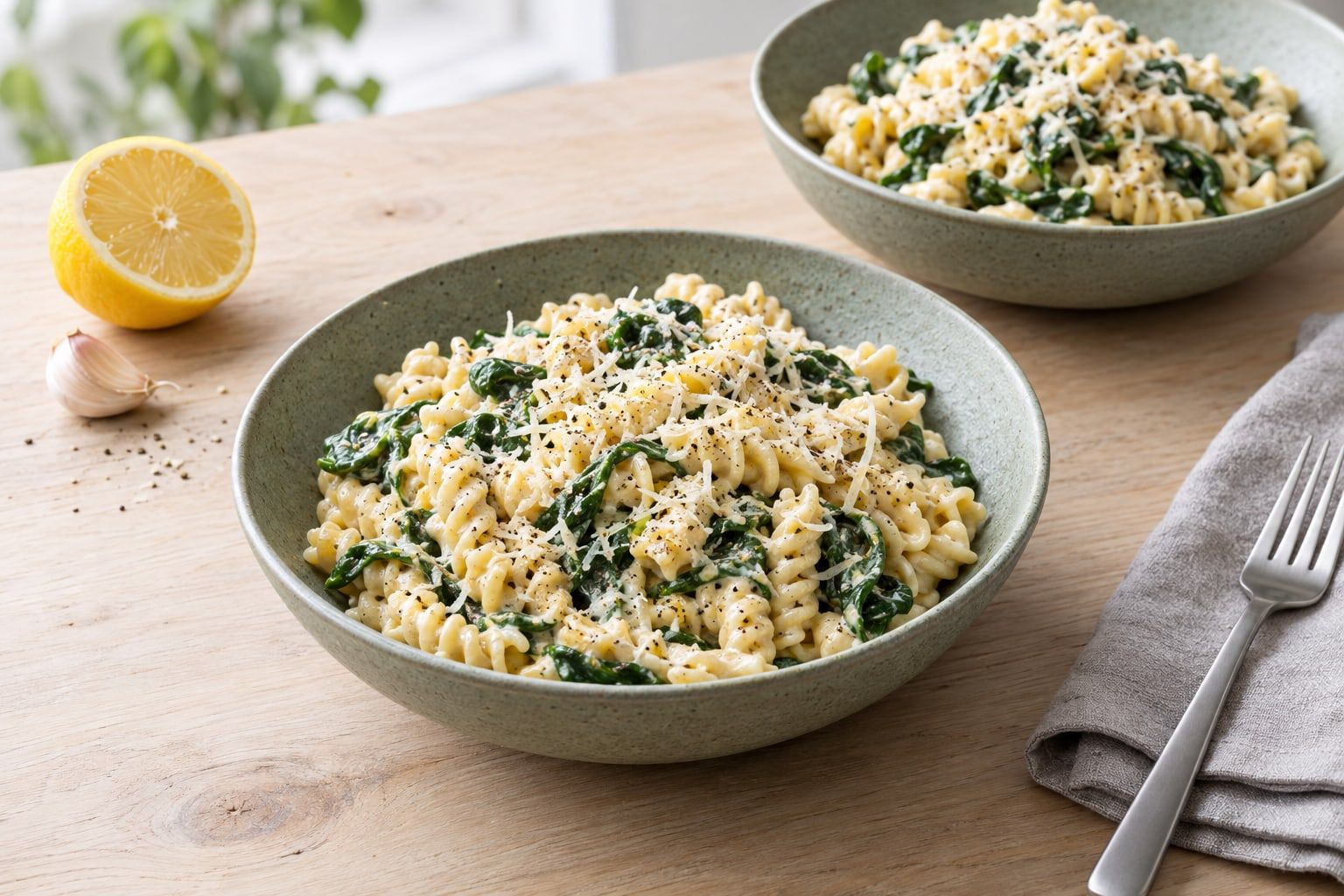
Add the pasta and the spinach and toss over the heat until the spinach has wilted and every piece of pasta is coated. Serve straight away.
How to tell it's done
- The sauce is smooth, steaming and coats the back of a spoon without any visible curds.
- The pasta is tender with a little bite and the spinach has wilted completely.
Tips for success
- Blend the sauce until completely smooth
Cottage cheese curds stay visible unless the blender runs for a full minute. Scrape down the jug once halfway, because the sauce should pour like double cream.
- Warm the sauce, never boil it
Over a low heat the sauce is hot after 2–3 minutes. A rolling boil makes the milk proteins clump and the sauce turns grainy and separates.
- Use the pasta water to loosen the sauce
Save 100 ml of the starchy cooking water before draining. It loosens the sauce and helps it cling to the pasta, and you can add a splash more if it thickens as it stands.
Boost the protein
- Swap the 150 g white pasta for 150 g dried lentil or chickpea pasta: +8 g protein per serving.
- Stir in 150 g sliced cooked chicken breast at the end of step 5: +24 g protein per serving.
Choosing ingredients
Use reduced fat plain cottage cheese from a 300 g tub, so you need 250 g, or just over four-fifths of it. It has more protein per 100 g than the full fat kind and blends just as smoothly.
Look for a vegetarian Italian-style hard cheese made with non-animal rennet if you want the dish vegetarian. A strong, mature hard cheese gives the most flavour from 30 g.
Variations
- With cooked chicken
Stir 150 g sliced cooked chicken breast into the sauce in step 5 and warm it through. Protein rises to about 53 g per serving.
- With frozen peas
Add 100 g frozen peas to the pasta pan for the final 2 minutes of cooking in step 1, then drain them with the pasta.
- With lentil or chickpea pasta
Use 150 g dried lentil or chickpea pasta and follow the packet time, which is often shorter. Protein rises by about 8 g per serving.
Serve it with
- Rocket and cherry tomato salad
- Roasted broccoli
- Garlic bread
Storage
Keep the pasta in an airtight container in the fridge for up to 2 days.
Reheat in a pan over a low heat with 2–3 tablespoons of water, stirring, until piping hot. The sauce thickens in the fridge and needs the extra water to loosen again.
Troubleshooting
Why is my cottage cheese pasta sauce grainy?
The sauce either needed longer in the blender or was heated too hard. Blend for a full minute until no curds show, and keep the pan on a low heat so it never reaches a boil.
Why is my cottage cheese pasta sauce thin and watery?
The cottage cheese carried a lot of whey, or too much pasta water went in. Drain the cottage cheese for 5 minutes before blending and add the pasta water a splash at a time until it coats the pasta.
Why does the cottage cheese pasta taste bland?
The sauce needs lemon and pepper to lift it. Add a little more lemon juice in step 4, a squeeze at a time, and taste before adding any salt, because the cottage cheese and hard cheese already carry some.
Frequently asked questions
How much protein is in pasta with cottage cheese?
Each of the 2 portions has 29 g protein and 415 kcal, so 28% of the energy comes from protein. The cottage cheese gives about 13 g per portion and the pasta about 8 g.
Can you make pasta sauce with cottage cheese?
Yes. Blend cottage cheese until smooth and warm it gently with the pasta water. It makes a creamy white sauce without cream, much like a light Alfredo-style sauce.
Does cottage cheese melt in pasta?
Not like mozzarella. The curds soften and blend into a thick sauce, but they do not go stringy. Blending first is what gives a smooth sauce, and low heat stops it separating.
Can you make this cottage cheese pasta sauce ahead?
Blend the sauce up to 2 days ahead and keep it in a covered jar in the fridge. Warm it gently in the pan with the pasta water when the pasta is ready.
Made it? Rate the recipe
Read next
- Protein in Cottage CheeseProtein in cottage cheese: 150 g plain has 14.1 g protein and 155 kcal, reduced fat has 15.9 g and 102 kcal. Values per 100 g, per portion and per tub.
- Highest Protein CheeseProtein in cheese per 100 g and per portion: Parmesan has 36.2 g, half-fat Cheddar 32.7 g and feta 15.6 g. Ranked by protein and per 100 kcal.
- Protein in Rice and PastaRice with protein: 75 g dry basmati has 6.1 g protein and 75 g dried pasta 8.5 g. Raw and cooked values, plus how high protein pasta compares.
Written by The Protein Recipes editorial team. Nutrition is calculated from the ingredient list using CoFID. Read how our recipes are made and how we correct mistakes.