Protein guide
Protein in Rice and Pasta
Quick answer
A 75 g dry portion of basmati rice has 6.1 g protein and 263 kcal, and the same weight of dried white pasta has 8.5 g and 257 kcal. A bowl of cooked basmati (180 g) has 5.0 g.
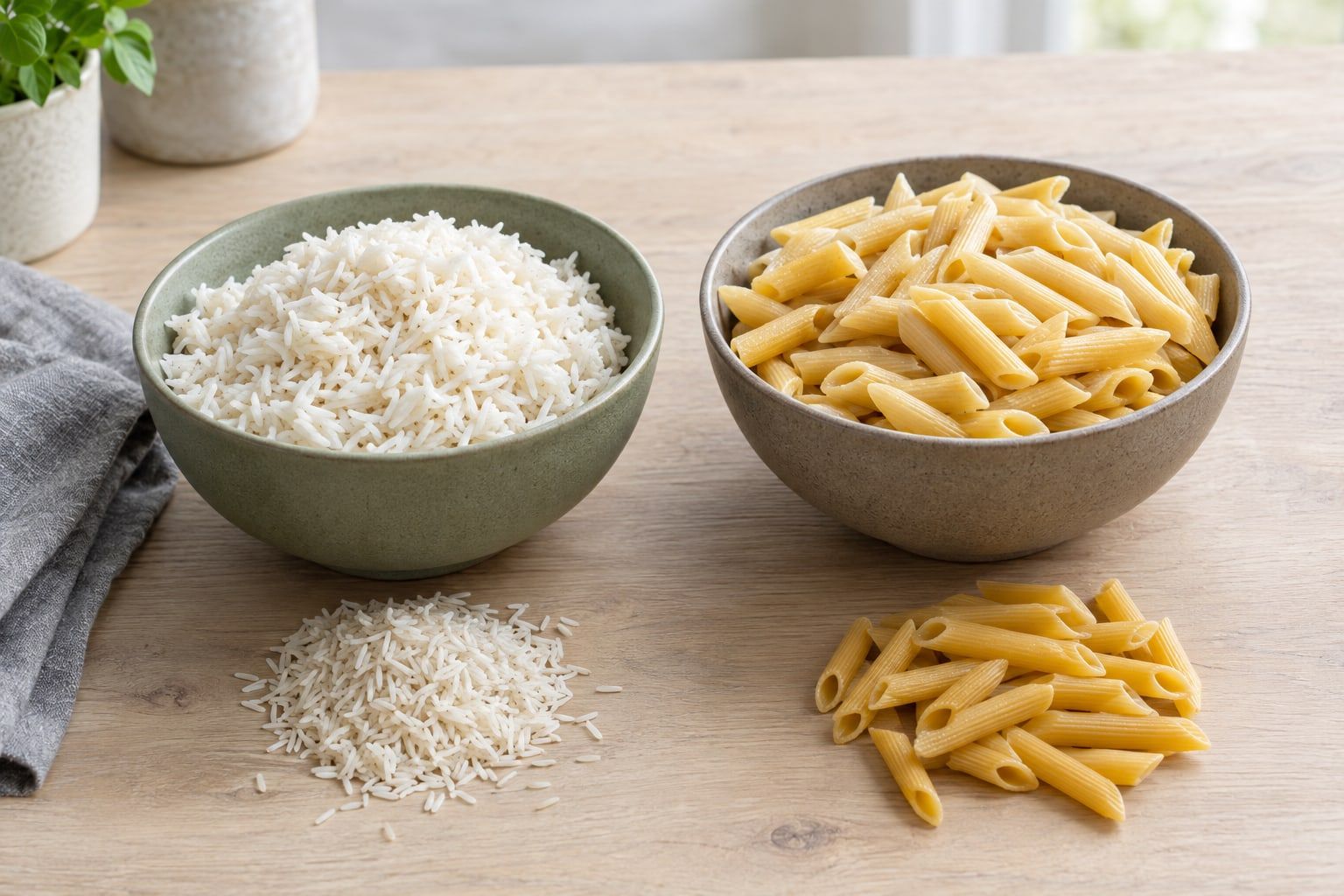
Rice with protein is a small amount: a 75 g dry portion of basmati has 6.1 g protein, and a bowl of 180 g cooked basmati gives 5.0 g. Pasta does a little better, with 8.5 g in the same dry weight, and both foods are mainly starch.
Raw and cooked weights are the main trap. Rice nearly triples in weight as it cooks and pasta roughly doubles, so a table that says 2.8 g per 100 g for boiled rice and 8.1 g for raw basmati is describing the same food at two different water levels. Pick one way to weigh and stay with it. Wholewheat and egg pasta have slightly more protein than plain white, and high protein pasta, a typical value, more than doubles it at about 17 g per 75 g dry.
For protein at dinner, the topping matters more than the grain. A 75 g portion of dry rice with 150 g raw chicken breast comes to 42.1 g, and the same logic applies to pasta with tuna, cottage cheese or eggs. Swapping in a high protein pasta lifts the base itself when you want the sauce to stay simple.
| Food | Protein | Energy |
|---|---|---|
| Basmati rice, white, raw | 8.1 g | 351 kcal |
| Basmati rice, white, boiled | 2.8 g | 117 kcal |
| Long grain rice, white, raw | 6.7 g | 355 kcal |
| Long grain rice, white, boiled | 2.8 g | 131 kcal |
| Basmati rice, brown, raw | 8.9 g | 355 kcal |
| Pasta, white, dried, raw | 11.3 g | 343 kcal |
| Pasta, white, dried, boiled | 5.5 g | 169 kcal |
| Pasta, wholewheat spaghetti, dried, raw | 12.6 g | 329 kcal |
| Pasta, egg, dried, raw | 12.9 g | 365 kcal |
| High protein pasta, dried (typical value) | 23 g | 350 kcal |
| Lentil or chickpea pasta, dried (typical value) | 22 g | 340 kcal |
Source: CoFID – McCance and Widdowson's Composition of Foods Integrated Dataset 2021 (codes 11-857, 11-858, 11-861, 11-862, 11-866, 11-716, 11-1129, 11-718, 11-715); high protein pasta and lentil or chickpea pasta are typical values (x22, x11), not CoFID entries
| Portion | Weight | Protein | Energy |
|---|---|---|---|
| Basmati rice, dry weight | 75 g | 6.1 g | 263 kcal |
| Bowl of cooked basmati rice | 180 g | 5.0 g | 211 kcal |
| White pasta, dry weight | 75 g | 8.5 g | 257 kcal |
| Wholewheat spaghetti, dry weight | 75 g | 9.5 g | 247 kcal |
| Lentil or chickpea pasta, dry weight | 75 g | 16.5 g | 255 kcal |
| High protein pasta, dry weight | 75 g | 17.3 g | 263 kcal |
Source: Calculated from CoFID values and typical values for the two types of high protein pasta; 75 g dry weight is a typical portion and 180 g a typical bowl of cooked rice
How much protein is in a bowl of rice?
A bowl of 180 g cooked basmati has 5.0 g protein and 211 kcal. In dry weight terms, a 75 g portion gives 6.1 g protein and 263 kcal. Rice protein makes up only about 9% of the energy, because rice is mostly starch. Long grain rice is slightly lower, with 6.7 g protein per 100 g raw against 8.1 g for basmati, and brown basmati is slightly higher at 8.9 g. Rice is a carbohydrate food with a small amount of protein.
How much protein is in pasta?
Dried white pasta has 11.3 g protein per 100 g, so a 75 g portion gives 8.5 g and 257 kcal, about 13% of the energy. Wholewheat spaghetti is a little higher at 12.6 g per 100 g, or 9.5 g in 75 g, and egg pasta at 12.9 g per 100 g. Pasta gives about 2.4 g more than the same dry weight of basmati rice, which is a small difference per meal. It still takes a protein topping to turn a bowl of pasta into a high protein dinner.
Why do raw and cooked figures differ so much?
Both foods take on water as they cook. Rice nearly triples in weight, and pasta roughly doubles, so boiled basmati lists 2.8 g protein per 100 g against 8.1 g raw, and boiled pasta 5.5 g against 11.3 g. The protein itself has not changed. Always match the figure to the weight you measured. If you weigh the rice dry, use the dry values. If you weigh a cooked bowl, use the boiled values, and expect lower numbers per 100 g.
How does high protein pasta compare?
Pasta made with added wheat protein, or from lentils or chickpeas, is sold as a high protein option. These are typical values, not CoFID entries, and labels vary by pack. At about 22 g to 23 g protein per 100 g, a 75 g dry portion gives 16.5 g to 17.3 g, which is 8.0 g to 8.8 g more than white pasta. The calories stay close at 255 kcal to 263 kcal. Lentil and chickpea pasta usually has a firmer, slightly grainier bite and can overcook quickly, so test it a minute early.
What is the easiest way to add protein to rice and pasta?
Put a protein food on the plate with it. 75 g dry basmati with 150 g raw chicken breast gives 42.1 g protein, from 6.1 g plus 36.0 g. Cottage cheese stirred through hot pasta, tuna in a pasta bake or eggs in fried rice all add far more than the grain does. Mixing half high protein pasta and half ordinary pasta is another route if the texture of the all-lentil kind is not to your taste.
Practical tips
- Choose one way to measure and keep to it
Weigh the rice or pasta dry every time, or cooked every time. Switching between the two is the most common reason protein counts do not add up.
- Read the label on high protein pasta
Values vary between packs. Check the protein per 100 g on the pack and multiply by your portion weight rather than relying on a typical value.
- Add the protein on the plate
Chicken, fish, eggs, beans or cottage cheese each give 12 g to 36 g in a normal portion, far more than any grain.
Myth or fact
- The facts
Is it true that pasta has far more protein than rice?
Not far more. A 75 g dry portion of white pasta has 8.5 g protein and the same weight of basmati has 6.1 g, a gap of 2.4 g. Both are mainly carbohydrate foods.
- Myth
Is it true that cooked rice has less protein than raw rice?
No. The protein is the same, but cooked rice has absorbed water and weighs almost three times as much, so each 100 g lists a lower figure of 2.8 g against 8.1 g raw.
Frequently asked questions
How much protein is in a bowl of rice?
A bowl of 180 g cooked basmati rice has 5.0 g protein and 211 kcal. Measured dry, a 75 g portion has 6.1 g protein and 263 kcal.
How much protein is in rice per 100 g?
Raw white basmati has 8.1 g protein per 100 g and boiled basmati 2.8 g. Raw long grain rice has 6.7 g and boiled long grain 2.8 g.
How much protein is in pasta?
A 75 g dry portion of white pasta has 8.5 g protein and 257 kcal. Wholewheat spaghetti gives 9.5 g for the same weight.
Is high in protein pasta worth buying?
It can be, if you want more protein from the base. A 75 g dry portion of high protein pasta gives about 17.3 g, against 8.5 g for white pasta. Check the pack, as values differ.
Does rice or pasta have more protein?
Pasta has more. White pasta has 11.3 g protein per 100 g dry and basmati rice 8.1 g, so a 75 g portion gives 8.5 g against 6.1 g.
Recipes to try
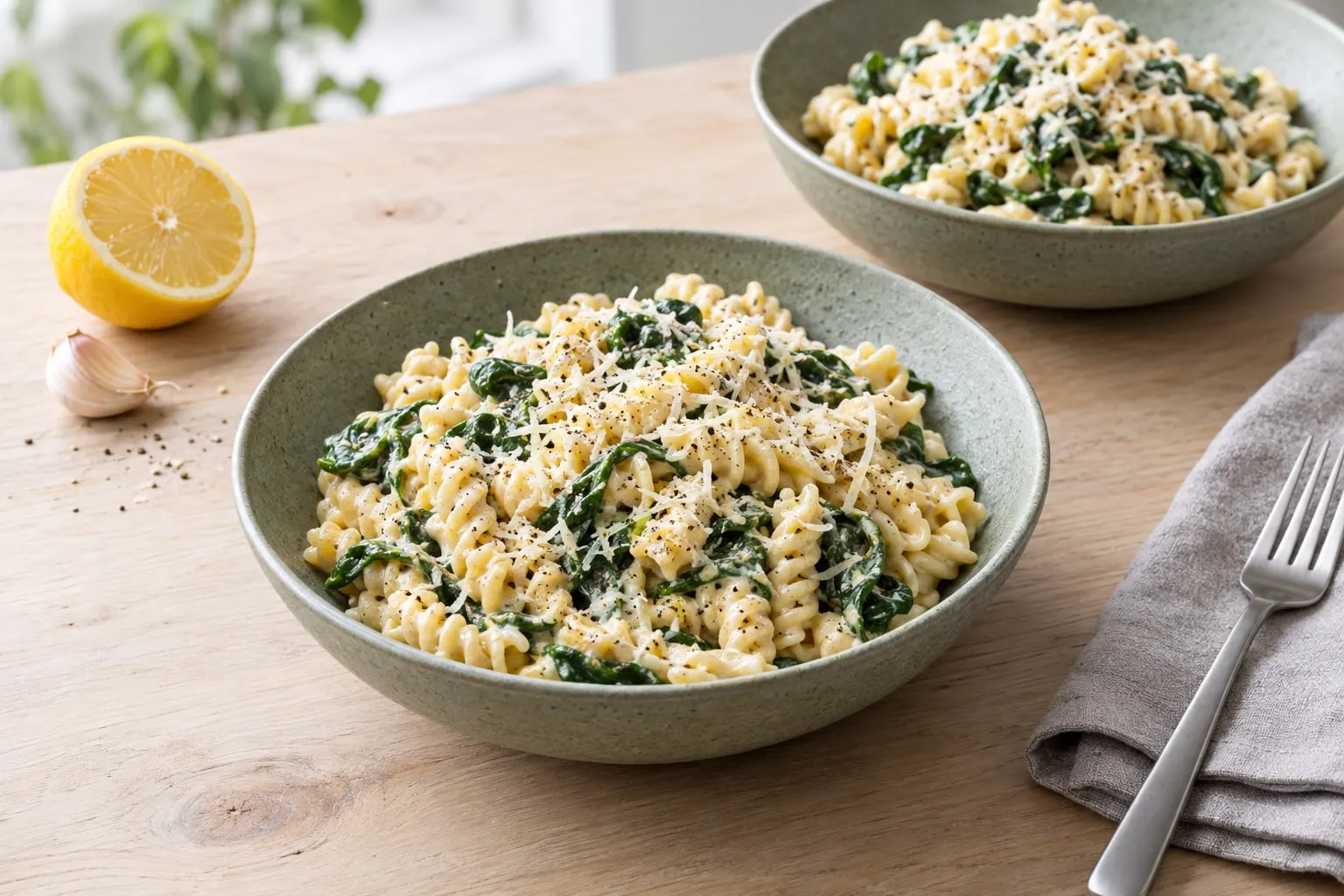
Creamy Cottage Cheese Pasta Sauce
29 g protein415 kcal20 minVegetarian
Cottage cheese stirred through hot pasta as a creamy sauce that adds protein.
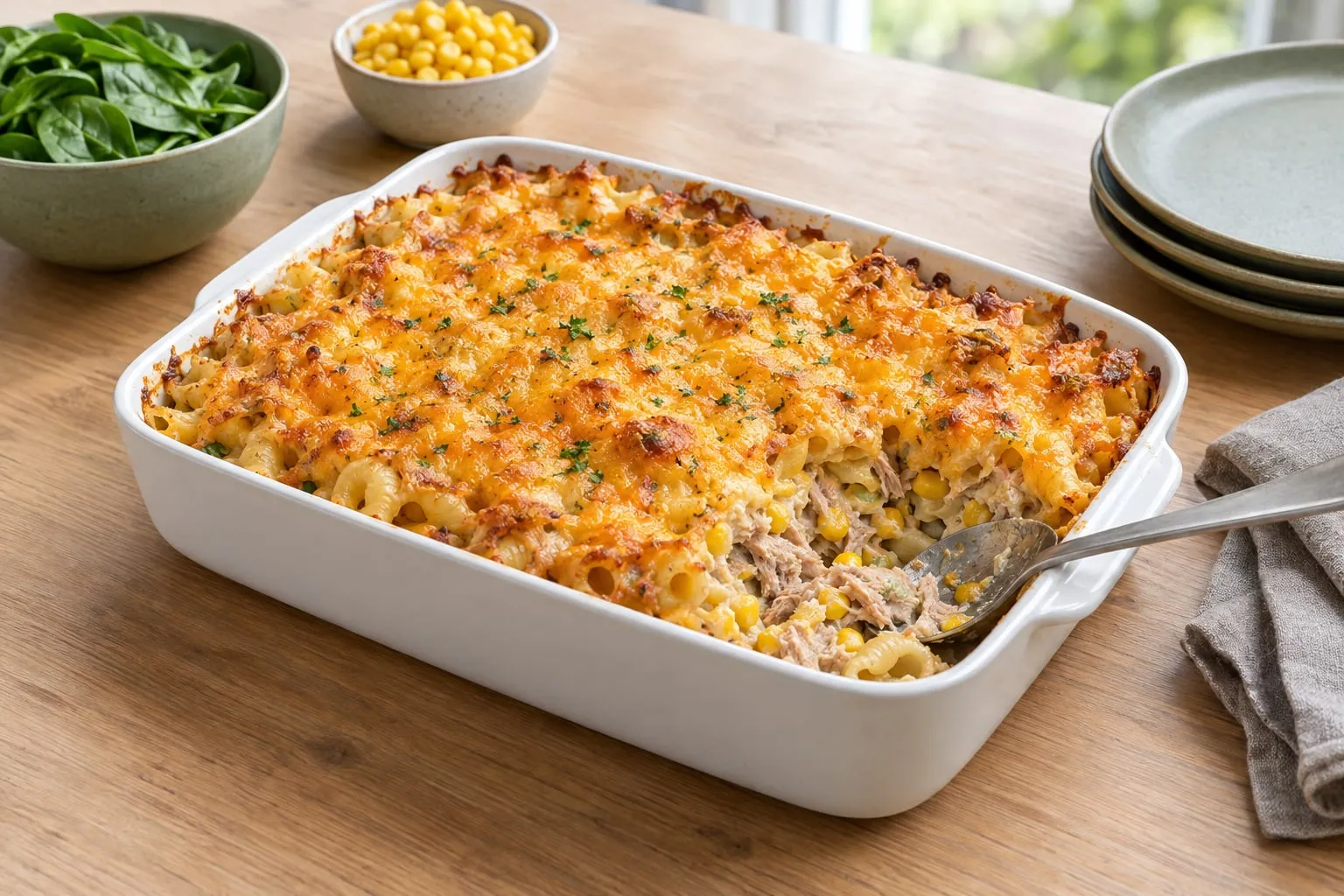
High Protein Tuna Pasta Bake
42 g protein465 kcal53 min
A baked pasta where tinned tuna and cheese lift the protein.
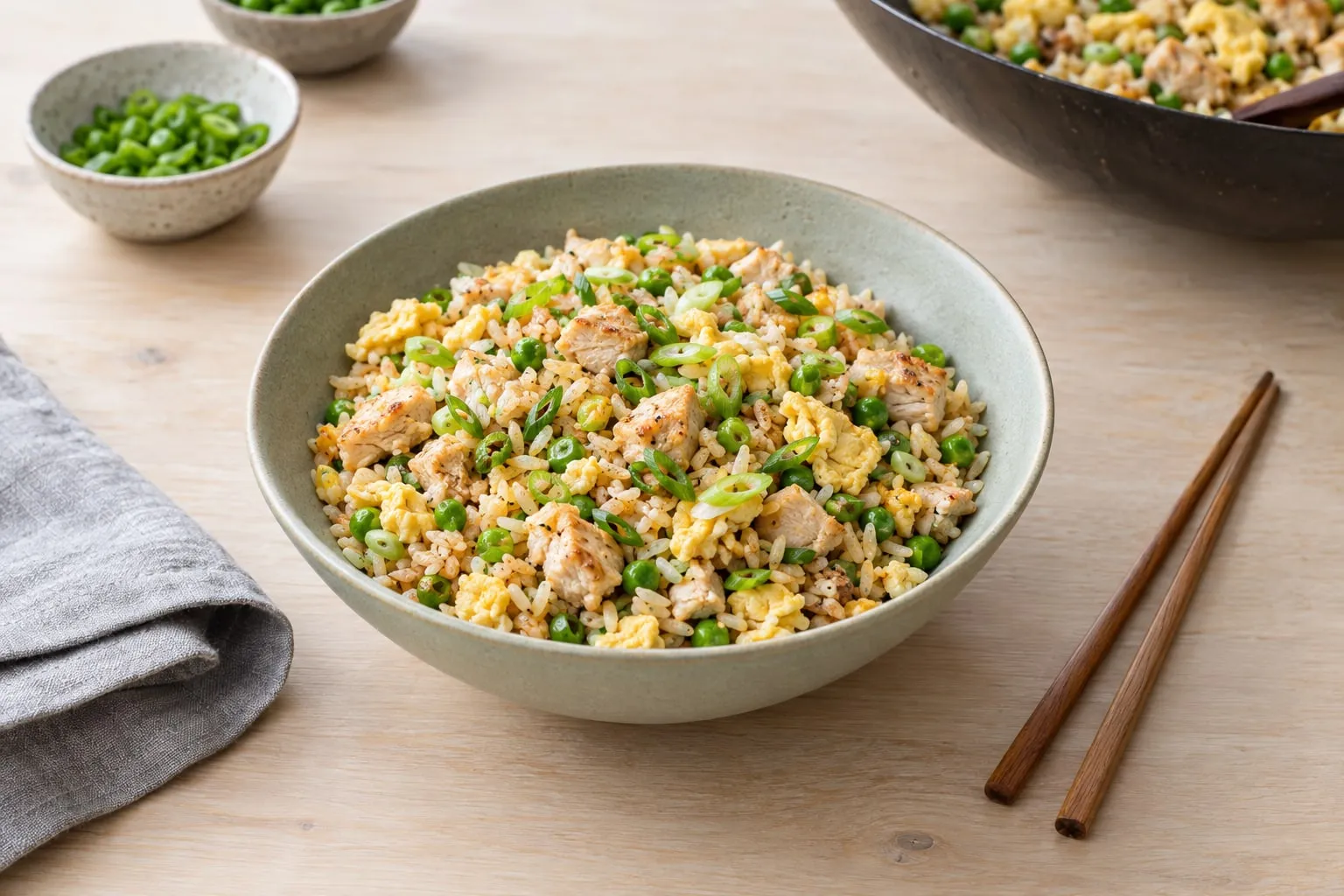
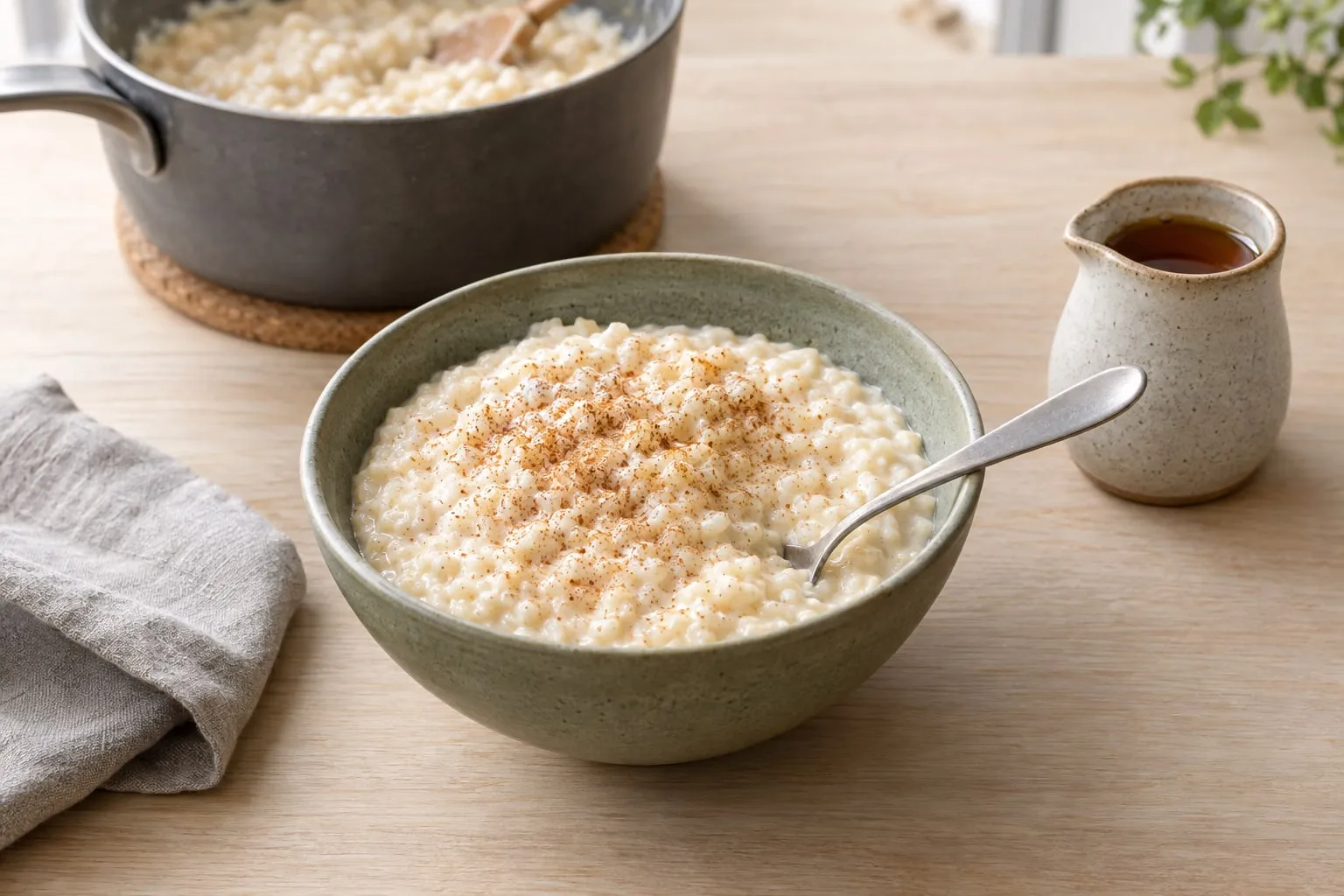
Protein Rice Pudding
17 g protein186 kcal50 minVegetarianGluten-free
A dessert that raises the protein of rice pudding with extra dairy.
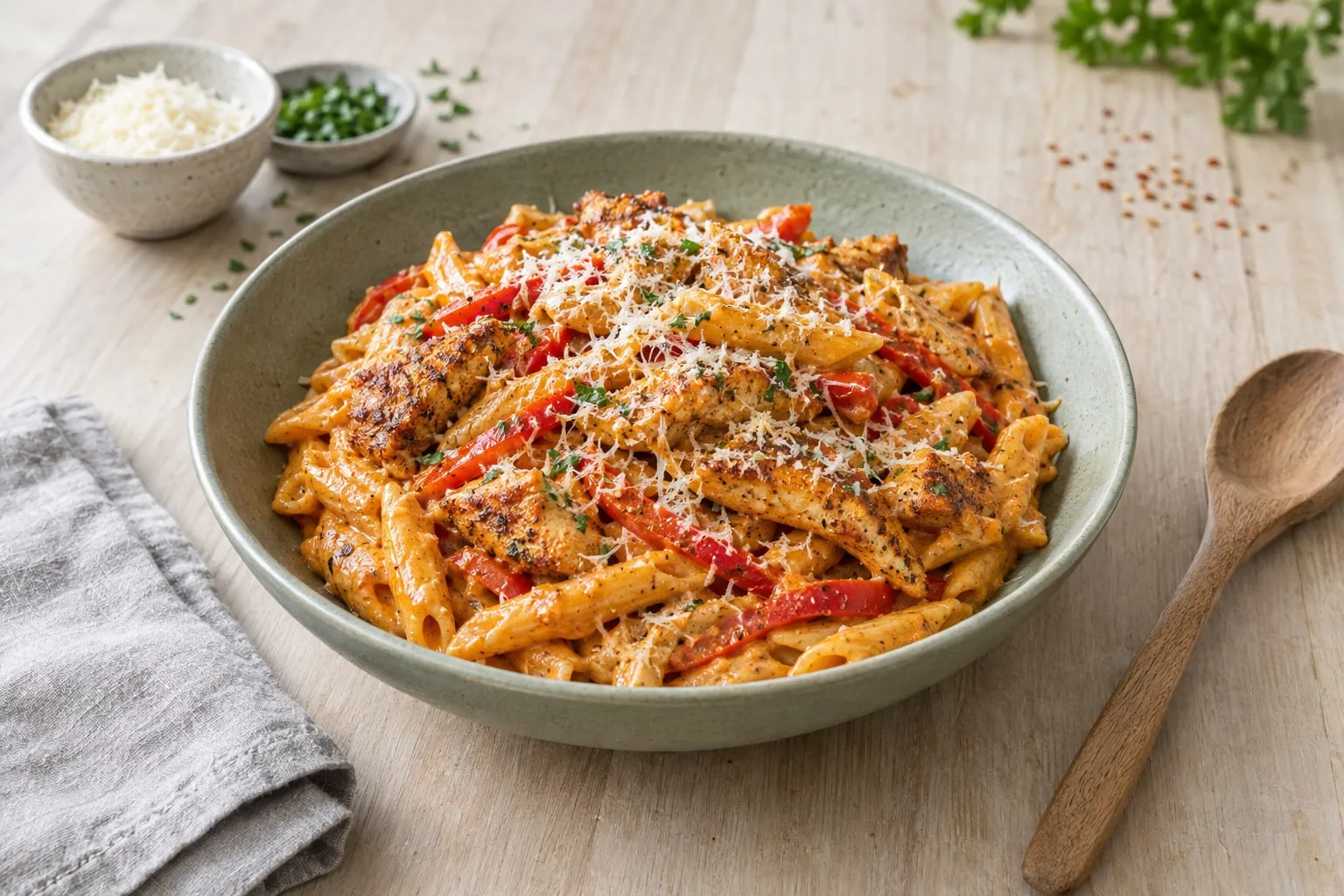
Creamy Cajun Chicken Pasta
46 g protein517 kcal35 min
Chicken and pasta in one pan for a higher protein dinner.
Sources
- McCance and Widdowson's Composition of Foods Integrated Dataset 2021 (CoFID) – Values for raw and boiled basmati and long grain rice and for dried and boiled pasta
- NHS Eatwell Guide – Lists beans, pulses, fish, eggs and meat as good sources of protein
Read our editorial policy for how figures are checked and how to report a mistake.
More protein guides
All guides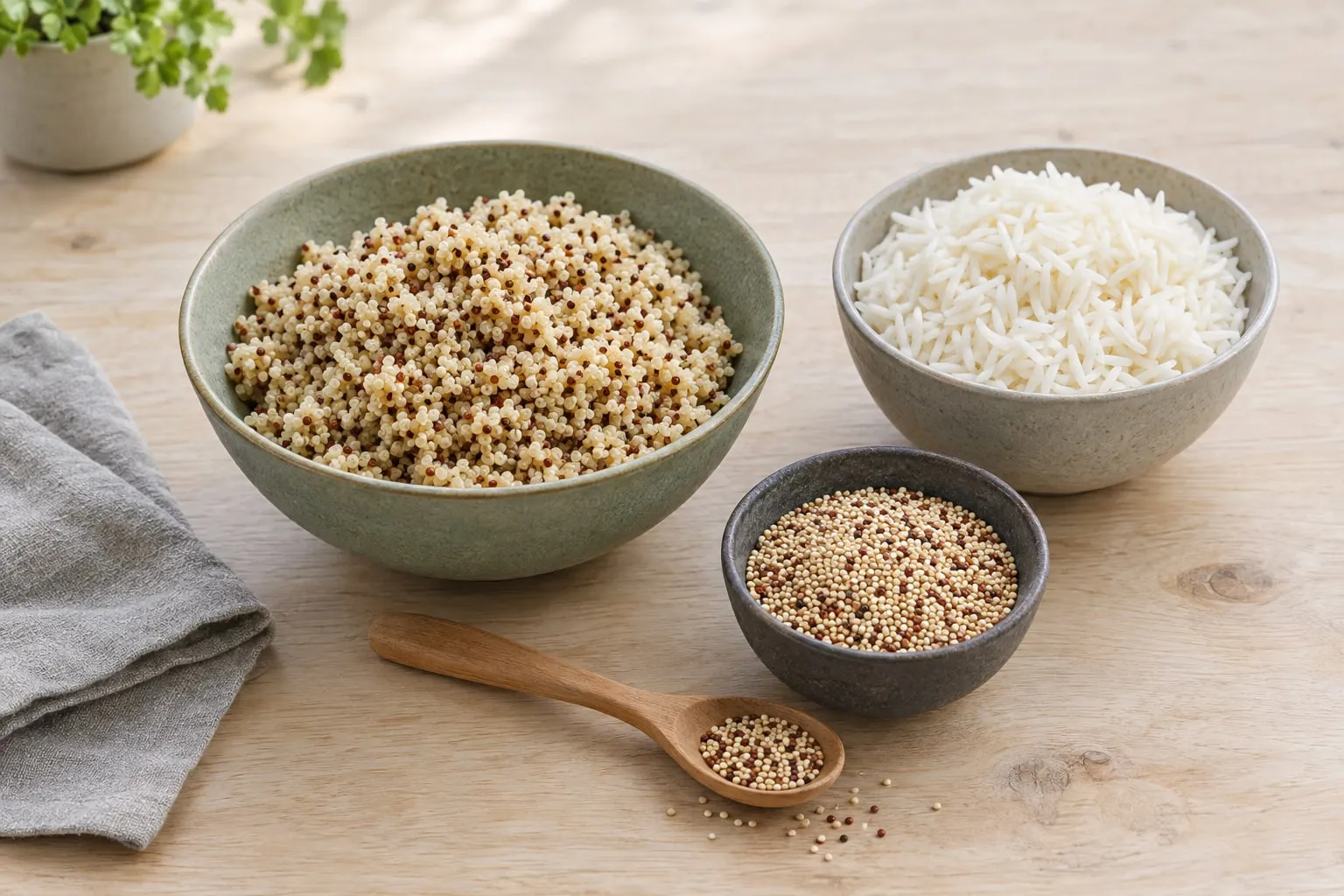
Guide
Protein in Quinoa
Quinoa protein: raw quinoa has 13.8 g protein and 309 kcal per 100 g, so a 75 g portion gives 10.4 g. Compared with rice, couscous, bulgur and pasta.
Guide
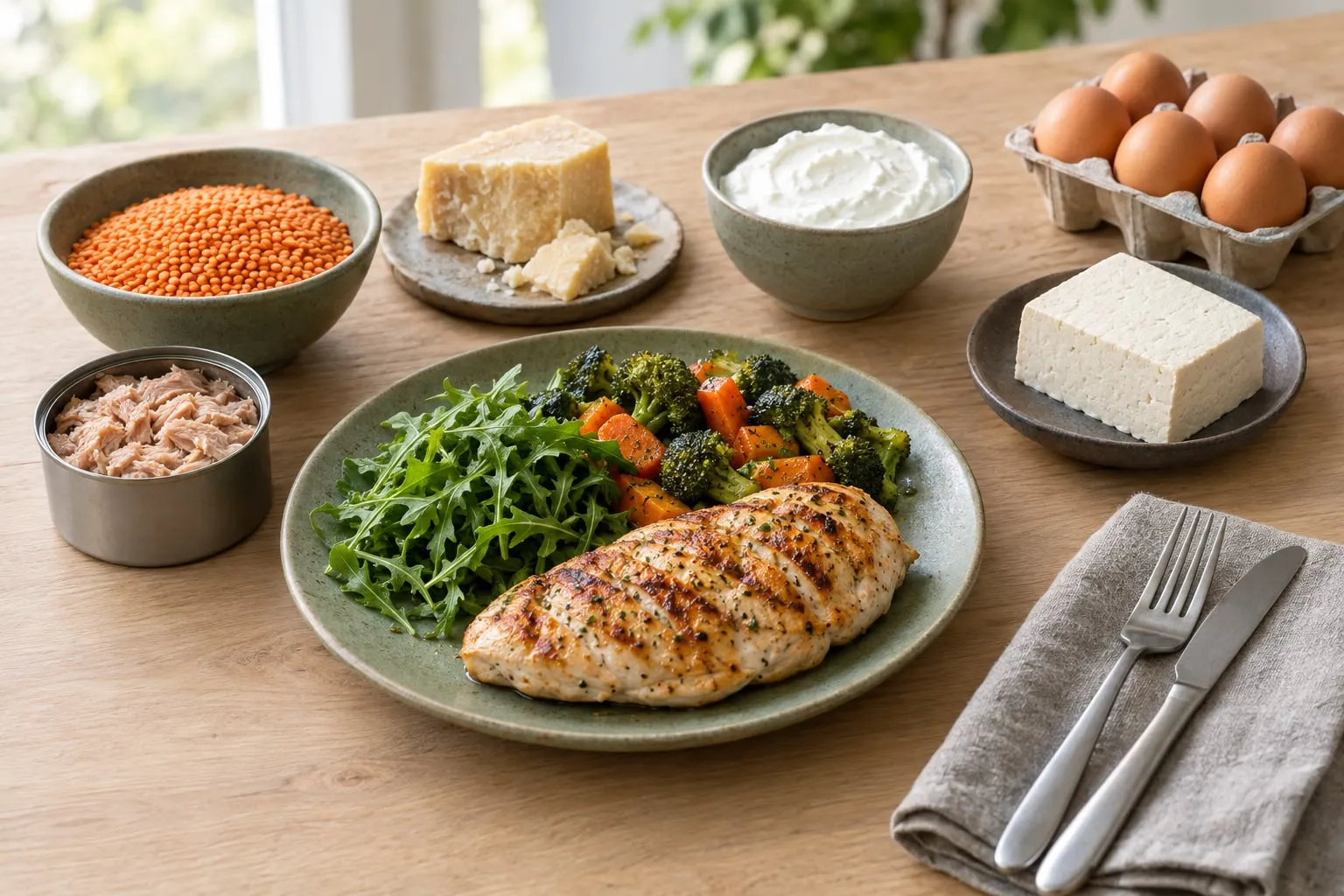
High Protein Foods: A Ranked List
High protein foods ranked by protein per 100 g and per 100 kcal: Parmesan has 36.2 g, grilled chicken 32.0 g, dried red lentils 25.6 g and egg white 10.8 g.
Guide
How Much Protein Do You Need Per Day?
How much protein do I need? The UK reference is 0.75 g per kg of body weight a day, or 52.5 g at 70 kg. See food values and a worked example day.
Guide
What Is Protein and Why Do We Need It?
What is protein good for? It is made of amino acids, nine of them essential. See what it does, the UK 0.75 g per kg a day reference and food values.