Method
Tap a time to start a timer.
Put the cottage cheese, milk, honey and vanilla extract in the blender. Blend for 60–90 seconds, scraping down the sides halfway, until completely smooth.
Pour the base into a Ninja Creami pint tub, keeping it below the max fill line. Smooth the top, fit the lid and freeze the tub flat.
Take the tub out of the freezer, remove the lid and place the tub in the outer bowl. Fit the blade lid, lock it into the machine and run the Lite Ice Cream programme (use Ice Cream if your machine has no Lite setting).
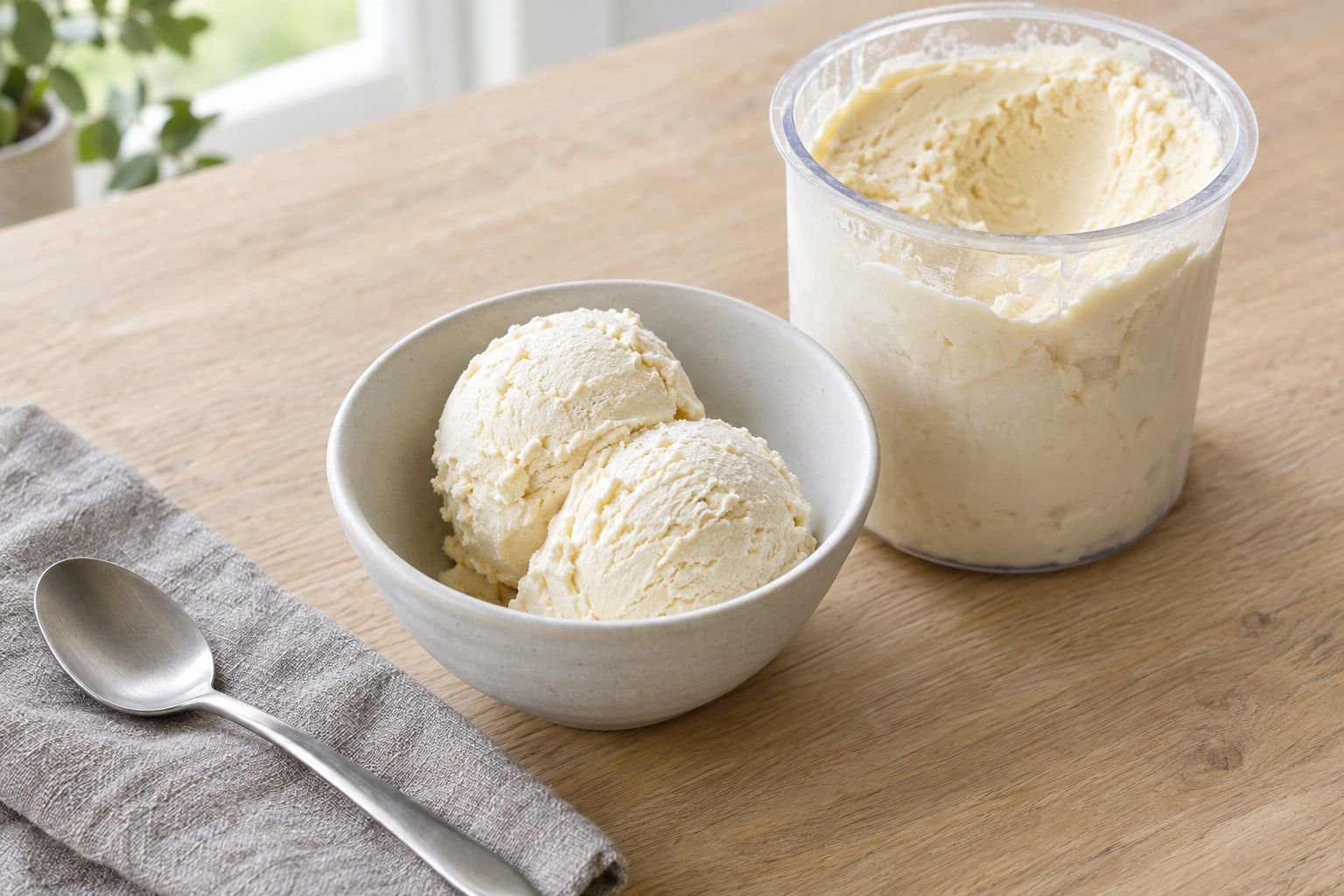
Check the texture. If it looks powdery or crumbly, add 1 tbsp milk, refit the lid and run the Re-spin programme once or twice until creamy.
Scoop into two bowls and serve straight away.
How to tell it's done
- The ice cream is smooth and creamy like soft-scoop, with no powdery or crumbly patches.
- It holds a scoop shape for a minute or two without turning to liquid.
Tips for success
- Blend until there are no curds
Any curds left in the base turn into grainy lumps after freezing. Blend for a full 60–90 seconds, then rub a little between your fingers: it should feel smooth.
- Freeze the pint flat
A level base spins evenly. Stand the tub on a flat shelf rather than leaning it against the freezer wall, and keep the lid on for the whole 24 hours.
- Respect the max fill line
The base fills about 420 ml of the 473 ml tub, which leaves room under the max fill line. Overfilling the pint can strain the machine and leaves the ice cream unevenly spun.
Boost the protein
- Replace the 100 ml milk with 100 g strained 0% fat Greek yogurt: about +3 g protein per serving.
- Replace the 100 ml milk with 100 g quark: about +5.5 g protein per serving.
Choosing ingredients
Use plain reduced fat cottage cheese with small curds, which blends smoothest. Avoid tubs with added fruit or chives.
Honey gives a rounder sweetness than sugar and dissolves easily, but maple syrup works as an equal swap. Use real vanilla extract rather than vanilla flavouring if you can.
Variations
- Chocolate
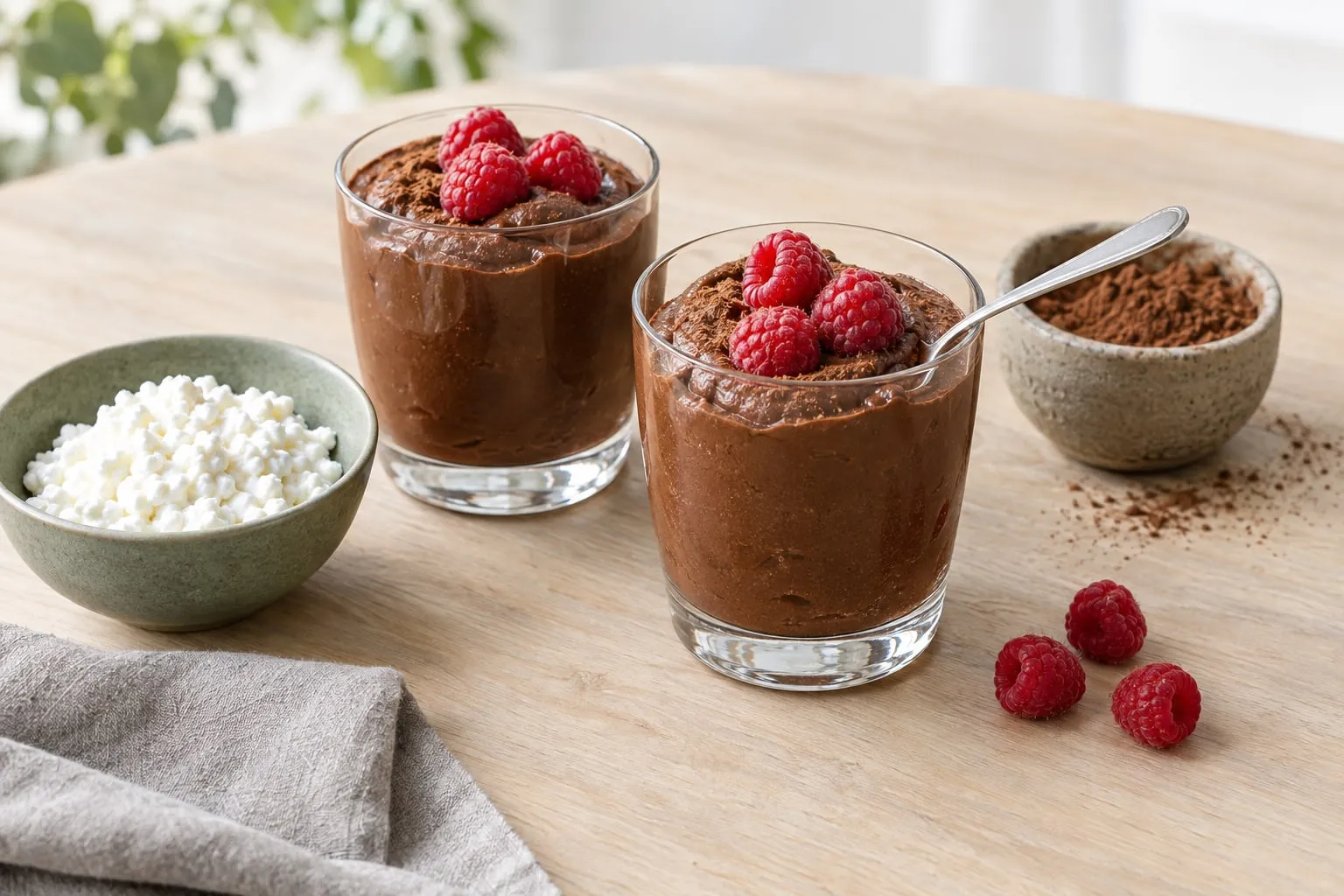
Blend 12 g cocoa powder and 10 g extra honey into the base in step 1. Protein rises by about 1 g per serving, and the pint is still under the max fill line.
- Banana
Replace the honey with 60 g banana (half a medium banana) in step 1. The ice cream is less sweet, and protein rises by under 1 g per serving.
Serve it with
- Fresh berries
- A drizzle of melted dark chocolate
Storage
Leftover cottage cheese ice cream can go back in the freezer in the pint tub with the lid on, for up to 1 month. It sets hard, so re-spin it before serving.
A hard tub can sit at room temperature for 5–10 minutes before you re-spin it.
Troubleshooting
Why is my cottage cheese ice cream powdery after spinning?
Very cold, firm bases often spin to crumbs the first time. Add 1 tablespoon milk, refit the lid and run Re-spin. One or two re-spins usually turn the cottage cheese ice cream creamy.
Why is my cottage cheese ice cream grainy?
The cottage cheese was not blended smooth before freezing. Next time, blend for a full 90 seconds until no curds remain, then freeze as before.
Frequently asked questions
How much protein is in this cottage cheese ice cream?
Each of the two servings, half a pint, has 18 g protein and 168 kcal, so 42% of the energy comes from protein. Almost all of it comes from the cottage cheese.
Which Ninja Creami programme suits cottage cheese ice cream?
Use Lite Ice Cream, which suits lower-fat, higher-protein bases. If your machine has no Lite setting, use Ice Cream, and re-spin with a spoonful of milk if the result is crumbly.
Can I make cottage cheese ice cream without a Ninja Creami?
Not with the same texture. Freeze the base in a shallow tub, break it into pieces after 3–4 hours and blend it again in a food processor, then refreeze. It will be softer and less smooth than the Creami version.
Does cottage cheese ice cream taste of cottage cheese?
Blended and frozen, the cottage cheese flavour is mild and tangy, similar to frozen yogurt. The honey and vanilla round it out.
Made it? Rate the recipe
Read next
- Protein in Cottage CheeseProtein in cottage cheese: 150 g plain has 14.1 g protein and 155 kcal, reduced fat has 15.9 g and 102 kcal. Values per 100 g, per portion and per tub.
- Highest Protein CheeseProtein in cheese per 100 g and per portion: Parmesan has 36.2 g, half-fat Cheddar 32.7 g and feta 15.6 g. Ranked by protein and per 100 kcal.
Written by The Protein Recipes editorial team. Nutrition is calculated from the ingredient list using CoFID. Read how our recipes are made and how we correct mistakes.