Method
Tap a time to start a timer.
Heat the oven to 190°C (170°C fan), gas 5.
Finely dice the onion, grate the carrot and crush the garlic.
Heat the rapeseed oil in the frying pan over a medium heat. Fry the onion and carrot until soft.
Turn the heat to medium-high, add the beef mince and fry, breaking it up with the wooden spoon, until browned all over. Stir in the garlic, tomato purée and oregano and cook for 1 minute.
Add the chopped tomatoes, water, salt and black pepper. Simmer gently, uncovered, stirring now and then, until the ragù is thick but still saucy.
While the ragù simmers, blend the cottage cheese, egg and nutmeg in the blender for 60 seconds, until completely smooth.
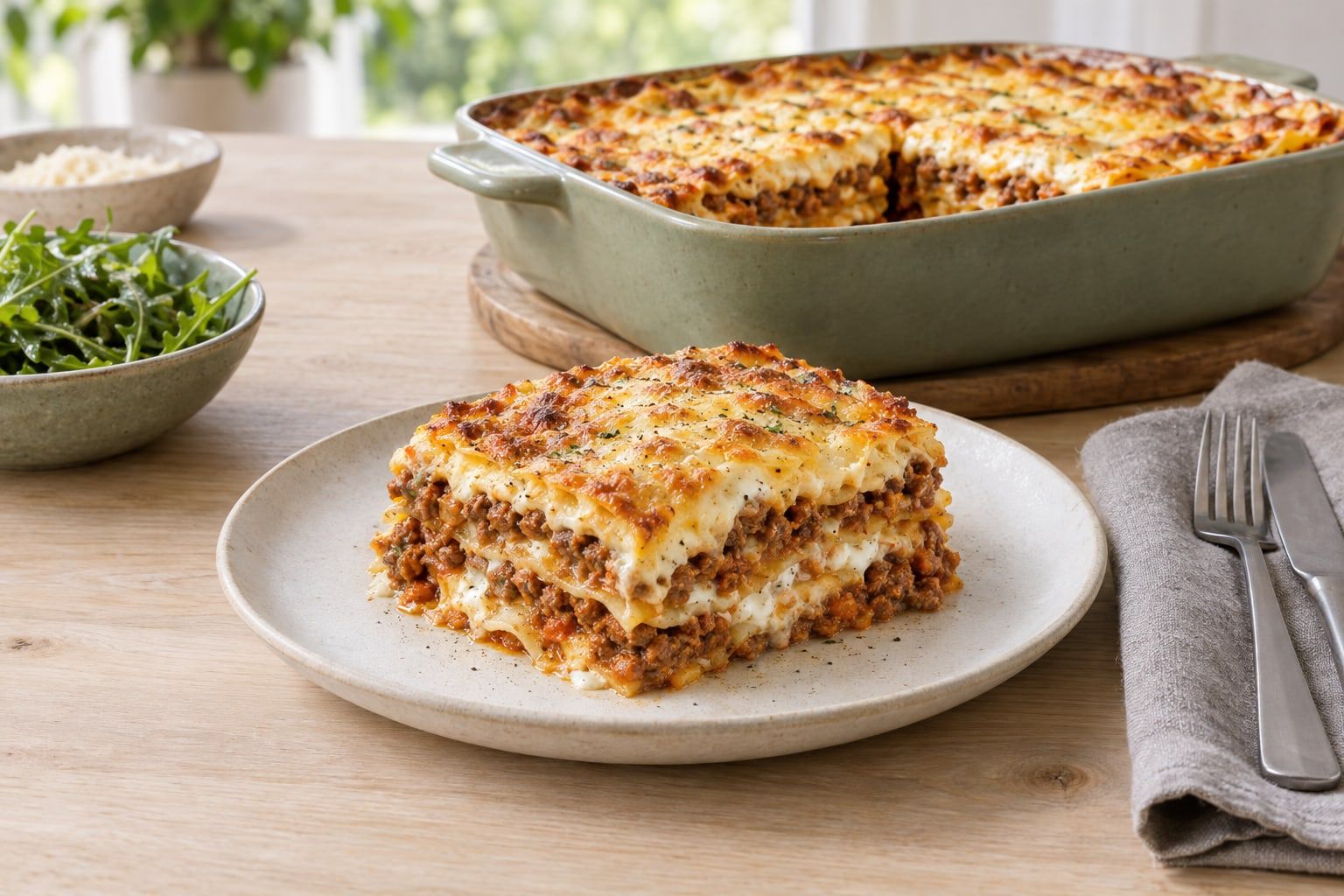
Spread a third of the ragù over the base of the baking dish. Cover with a layer of lasagne sheets, breaking them to fit, then spread over a third of the cottage cheese sauce. Repeat twice more, finishing with the sauce right to the edges so no pasta is exposed. Scatter the mozzarella and Cheddar over the top.
Cover the dish with foil and bake in the middle of the oven for 25 minutes. Remove the foil and bake until golden and bubbling, and the centre reads at least 75°C.
Rest the lasagne in the dish before cutting it into six portions.
How to tell it's done
- Core temperature: 75°C in the thickest part, checked with a probe thermometer.
- The top is golden and bubbling at the edges, and the centre reads at least 75°C on a thermometer.
- A knife slides through the pasta without resistance, and the layers hold when cut.
Tips for success
- Blend the cottage cheese sauce until smooth
Curds that survive the blender bake into lumpy, rubbery patches. Blend the cottage cheese with the egg for a full minute until it pours like thick cream, and it will bake into a smooth white layer.
- Keep the ragù wet
Dried lasagne sheets soften by absorbing liquid from the ragù and the sauce. The extra 100 ml water in the ragù is there for the pasta, so do not reduce it until it is dry.
- Cover the pasta with sauce
Any sheet left uncovered dries out and turns brittle in the oven. Finish each layer with cottage cheese sauce right to the edges of the dish.
Boost the protein
- Swap the 250 g dried lasagne sheets for 250 g lentil or chickpea lasagne sheets: about +4.5 g protein per portion.
- Use 600 g extra lean beef mince instead of 500 g: about +4 g protein per portion.
Choosing ingredients
Buy extra lean beef mince, which has about 21.9 g protein per 100 g raw and little fat, so the ragù does not need draining.
Light mozzarella melts less than full-fat, so a small amount of half-fat Cheddar goes on top as well to help the lasagne brown.
Variations
- With turkey mince
Use 500 g turkey breast mince instead of beef and simmer the ragù for 20 minutes in step 5. Protein is almost the same, and the fat is lower.
- With spinach
Stir 100 g baby spinach into the ragù for the last 2 minutes of step 5. Protein rises by less than 1 g per portion.
Serve it with
- Rocket and tomato salad
- Steamed green beans
- Garlic bread
Storage
The cottage cheese lasagne keeps for 3 days in the fridge in a lidded container once it has cooled.
Freeze portions for up to 3 months, defrost overnight in the fridge and reheat until piping hot all the way through.
Troubleshooting
Why is my cottage cheese lasagne watery?
The ragù was too thin or the lasagne was cut straight from the oven. Simmer the ragù until it just coats the spoon, and let the lasagne stand for 10 minutes before cutting.
Why are the pasta sheets in my cottage cheese lasagne still hard?
Dry pasta needs plenty of moisture and a tight foil lid. Make sure every sheet is covered with ragù or sauce, and bake covered for the full 25 minutes before removing the foil.
Frequently asked questions
How much protein is in this cottage cheese lasagne?
Each of the six portions has 36 g protein and 390 kcal, so 36% of the energy comes from protein. The beef mince gives about 18 g per portion and the cottage cheese about 7 g.
Can you make lasagne without bechamel?
Yes. Blended cottage cheese with an egg gives a smooth white layer in place of bechamel, and it bakes in the same way. It adds protein where a flour and butter sauce adds mostly starch and fat.
Do I need to pre-cook the lasagne sheets for cottage cheese lasagne?
No. The ragù has 100 ml of added water and the cottage cheese sauce is loose, so dried sheets soften as they bake under the foil.
Does cottage cheese lasagne taste different from classic lasagne?
Blended and baked, cottage cheese gives a mild, creamy sauce with a slight tang, much like ricotta. Most of the flavour comes from the ragù.
Made it? Rate the recipe
Read next
- Protein in Cottage CheeseProtein in cottage cheese: 150 g plain has 14.1 g protein and 155 kcal, reduced fat has 15.9 g and 102 kcal. Values per 100 g, per portion and per tub.
- Highest Protein CheeseProtein in cheese per 100 g and per portion: Parmesan has 36.2 g, half-fat Cheddar 32.7 g and feta 15.6 g. Ranked by protein and per 100 kcal.
- Protein in Steak and Beef MinceHow much protein in steak: 225 g of raw lean sirloin has 52.9 g protein and 304 kcal. Steak cuts, regular and extra lean mince, raw and cooked.
Written by The Protein Recipes editorial team. Nutrition is calculated from the ingredient list using CoFID. Read how our recipes are made and how we correct mistakes.