Method
Tap a time to start a timer.
Heat the oven to 220°C (200°C fan), gas 7. Put 2 large baking trays on the middle and upper shelves to heat.
Mix the 160 g self-raising flour and salt with the quark in a large bowl until a rough dough forms.
Tip the dough onto a work surface dusted with the 20 g flour and knead until smooth and elastic.
Cut the dough in half. Roll each half into a 25 cm round about 4 mm thick on a sheet of baking paper.
4 min
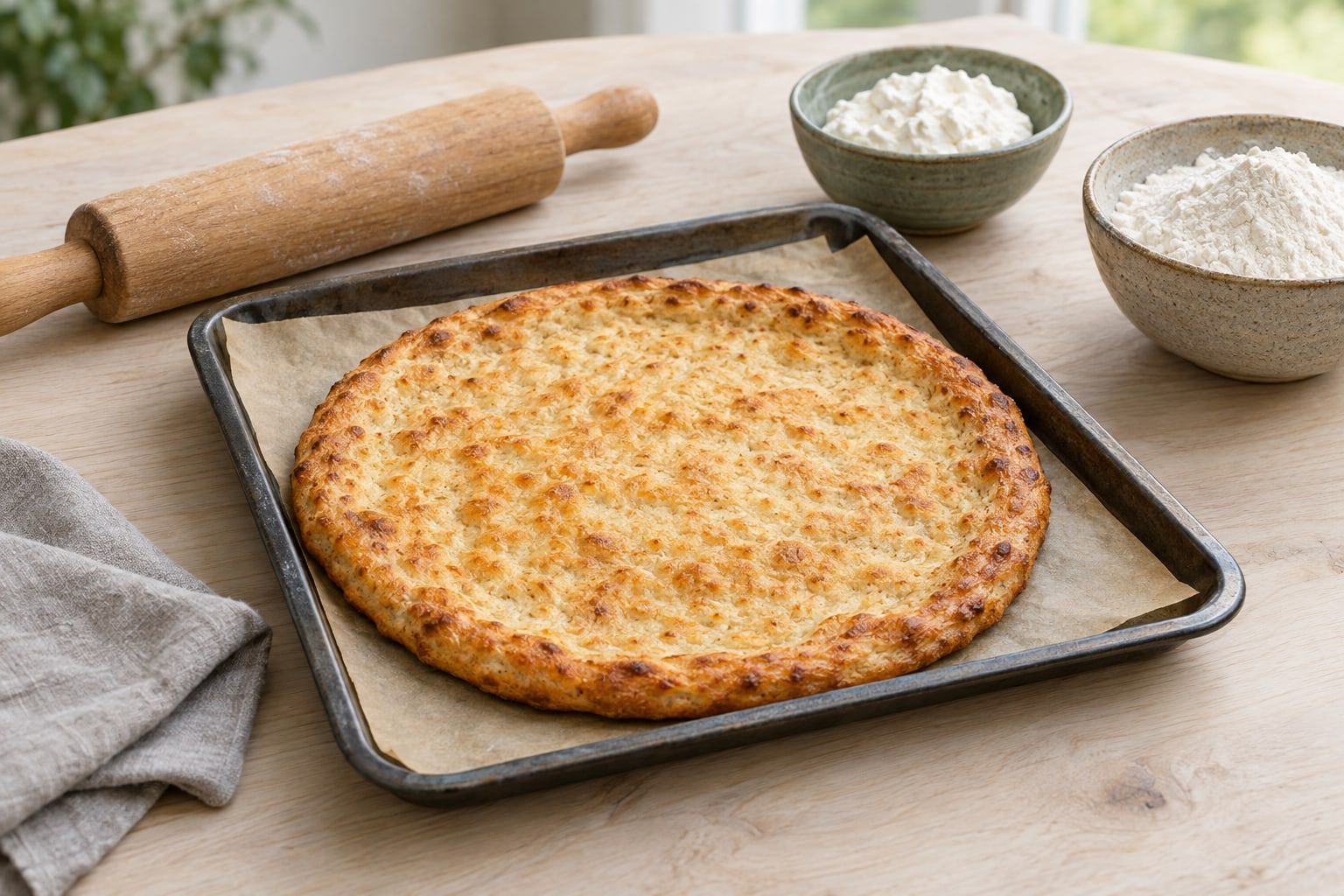
Slide the 2 bases, on their paper, onto the hot trays and bake until set and lightly golden.
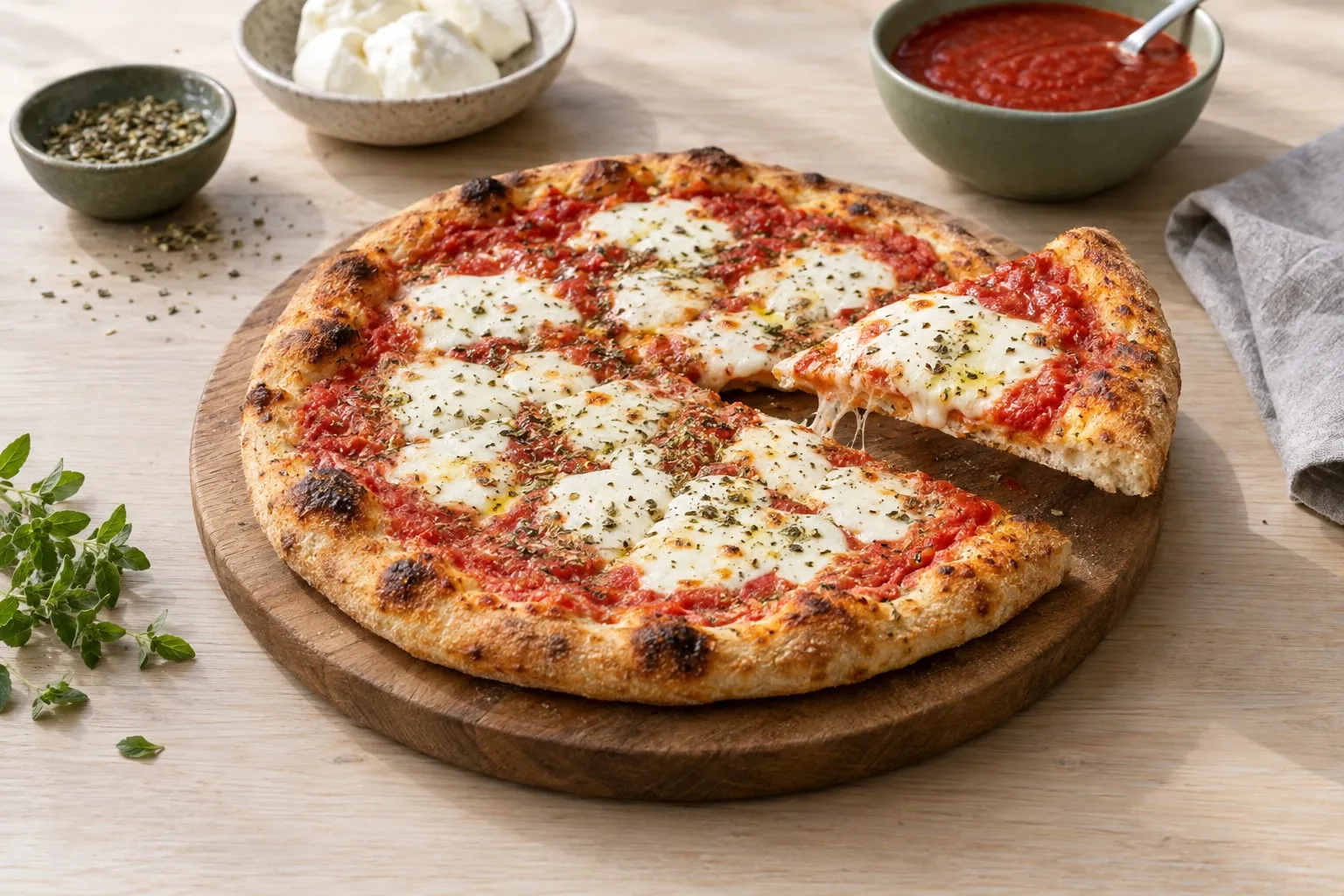
Add your toppings to the pre-baked bases and return the trays to the oven, swapping them halfway, until the edges are golden and the toppings are hot.
Leave the pizzas to stand for 2 minutes, then cut each into 2 portions.
How to tell it's done
- The edges of the base are golden brown and the underside is firm when tapped.
- The toppings are hot and any cheese has melted and started to colour.
Tips for success
- Preheat the trays
A hot tray starts to set the underside of the base the moment it goes in, so the middle bakes crisp rather than soft. Put both baking trays in the oven while it heats and slide the rolled bases onto them on their paper.
- Pre-bake the base before the toppings
Quark dough holds more moisture than a yeast dough and goes soft under passata. Bake the plain base for 8 minutes first, then add the toppings and bake for 8–10 minutes more.
- Dust the surface sparingly
The dough is sticky at first, but kneading for 2–3 minutes firms it up. Use only the 20 g of flour in the list, as a heavier dusting makes the base dry and tough.
Boost the protein
- Swap 40 g of the self-raising flour for 40 g plain whey protein powder: +7 g protein per serving. Whey is then 40 g of the 160 g flour and whey, which is 25%, and the dough is a little drier.
- Scatter 125 g light mozzarella over the two pizzas: +6 g protein per serving.
Choosing ingredients
Use plain quark from the chilled aisle. It is thicker than Greek yogurt and has about 14.6 g protein per 100 g, which is 4 g more than strained 0% fat Greek yogurt.
Self-raising flour has the raising agent mixed in, so it needs no yeast or baking powder. If you only have plain flour, add 1½ tsp baking powder to 160 g plain flour.
Variations
- Garlic and herb base
Add 1 tsp garlic granules and 1 tsp dried oregano to the flour in step 2. Bake the base for the same time.
- Breadsticks
Roll one half of the dough into a 20 × 30 cm rectangle, cut it into 10 strips and bake at the same temperature for 10–12 minutes until golden.
Serve it with
- Rocket and tomato salad
- Cucumber and mint yogurt
- Garlic yogurt dip
Storage
Bake the dough straight after mixing, as the raising agent starts to work once the flour is wet. Cool leftover pre-baked bases and keep them in the fridge for 2 days.
Freeze the cooled pre-baked bases between sheets of baking paper for up to 1 month and top them straight from the freezer.
Troubleshooting
Why is the protein pizza dough sticky and hard to roll?
The dough needs more kneading, not more flour. Knead for the full 2–3 minutes, and roll between 2 sheets of baking paper if the dough still clings to the rolling pin.
Why is the protein pizza base soggy in the middle?
The base was not pre-baked or the toppings were too wet. Bake the plain base for 8 minutes on a hot tray, and drain wet toppings such as mozzarella or tomatoes on kitchen paper.
Frequently asked questions
How much protein is in this protein pizza dough?
Each serving, which is half a base without toppings, has 13 g protein and 201 kcal, so 25% of the energy comes from protein.
Can I make a high protein pizza base with cottage cheese and egg?
Yes. Blend 200 g plain cottage cheese with 2 medium eggs until smooth, spread it into a 25 cm round on baking paper and bake at 200°C (180°C fan), gas 6, for 15–18 minutes until set and golden. The whole base has about 31 g protein but is softer than the quark dough, so top it after baking.
What is the difference between this protein pizza dough and a Greek yogurt dough?
Quark is thicker than strained Greek yogurt and has about 4 g more protein per 100 g, so the dough is firmer and holds a crisper base. It needs a short knead and a little more flour on the work surface.
Made it? Rate the recipe
Read next
- Protein in BreadProtein in bread: a slice has 2.8–4.0 g protein depending on type and weight. Wholemeal, white, seeded, bagels, pitta and tortillas compared.
- How Much Protein Do You Need Per Day?How much protein do I need? The UK reference is 0.75 g per kg of body weight a day, or 52.5 g at 70 kg. See food values and a worked example day.
Written by The Protein Recipes editorial team. Nutrition is calculated from the ingredient list using CoFID. Read how our recipes are made and how we correct mistakes.