Method
Tap a time to start a timer.
Heat the oven to 220°C (200°C fan), gas 7. Put the baking tray on the bottom shelf to heat.
Tip the 220 g flour and salt into the bowl, add the Greek yogurt and stir with a fork until it forms a shaggy dough.
Turn the dough onto a surface dusted with some of the 20 g flour and knead until smooth and just tacky. Divide in two and roll each half into a round of about 25 cm, 5 mm thick, on baking paper.
Slide the first base, on its paper, onto the hot tray. Bake until the edges start to colour and the base is set.
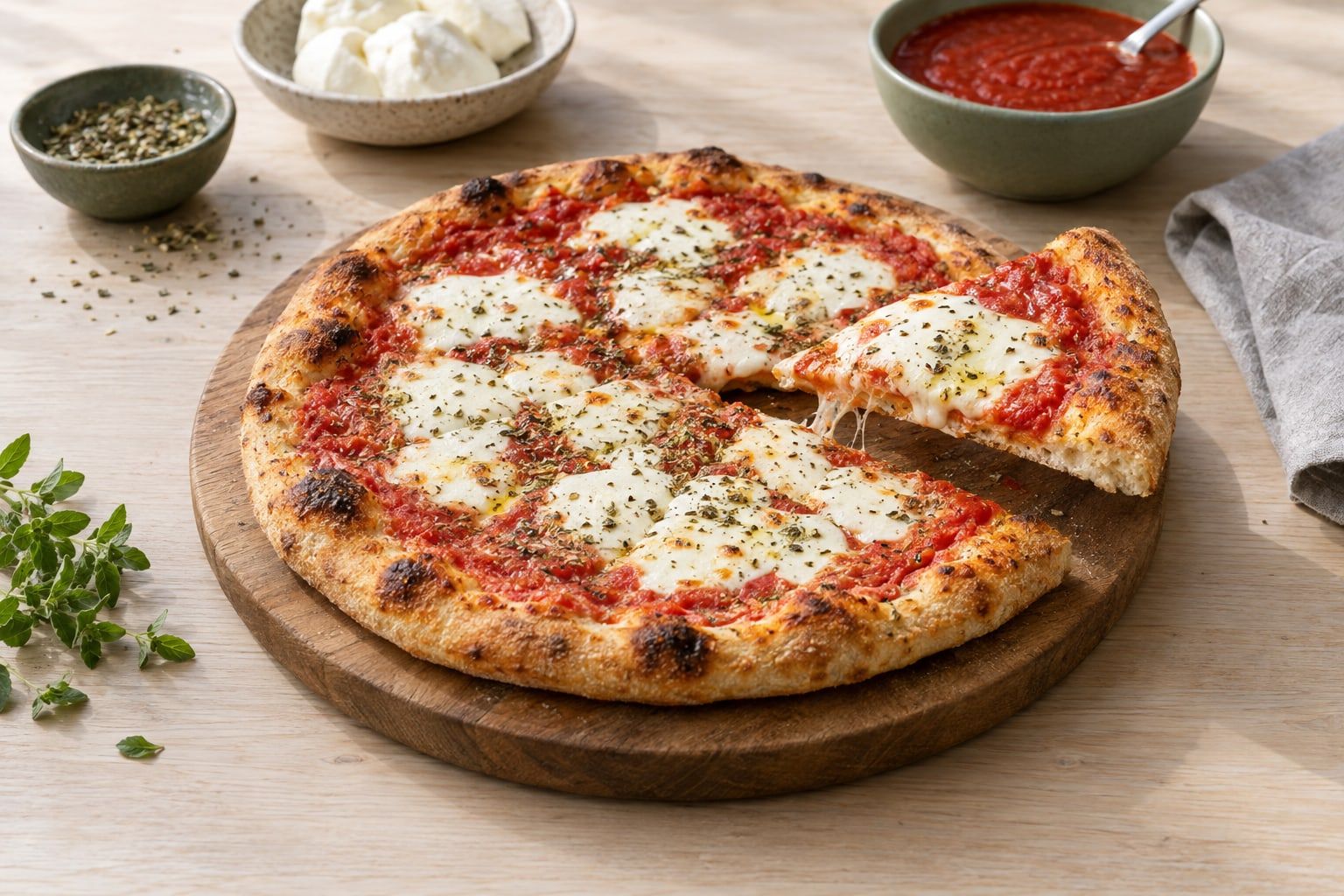
Spread 4 tablespoons of the passata over the base, leaving a 1.5 cm border. Scatter over half the mozzarella and ½ teaspoon of oregano. Bake until the cheese has melted and the crust is golden.
Roll and bake the second pizza the same way, then cut each into four slices and serve two slices per person.
10–12 min
How to tell it's done
- The crust is golden brown at the edges, and the underside is firm and browned when you lift a corner.
- The mozzarella has melted and is bubbling in places, with no wet dough showing beneath it.
Tips for success
- Preheat the tray
A hot baking tray on the bottom shelf crisps the underside of the base within minutes. Slide the dough on its baking paper straight onto the tray.
- Use only strained 0% fat yogurt
Strained yogurt is thick enough to make a workable dough. Regular Greek-style yogurt is much wetter, and the dough turns to a sticky paste.
- Dust sparingly
The dough is slightly tacky. Use the 20 g of flour for the work surface and rolling pin and no more, or the protein share drops and the base turns dry.
- Go light on wet toppings
Spread the passata thinly and tear the mozzarella. Wet toppings make a thin yeast-free base soggy in the middle.
Boost the protein
- Add 30 g unflavoured whey protein powder to the flour: +5.6 g protein per serving. The dough is stiffer, so add 1 tablespoon more yogurt.
- Add 20 g vital wheat gluten to the flour: +3.8 g protein per serving. The base is chewier, and this version is not gluten-free.
Choosing ingredients
Self-raising flour has the raising agent mixed in, which is what makes this dough work without yeast. With plain flour, add 3 level teaspoons of baking powder to the 240 g flour.
Light mozzarella, in a 125 g ball, melts well with less fat than a standard ball. Drain it and pat it dry before tearing, to keep the topping from watering the base.
Variations
- Plain flatbreads
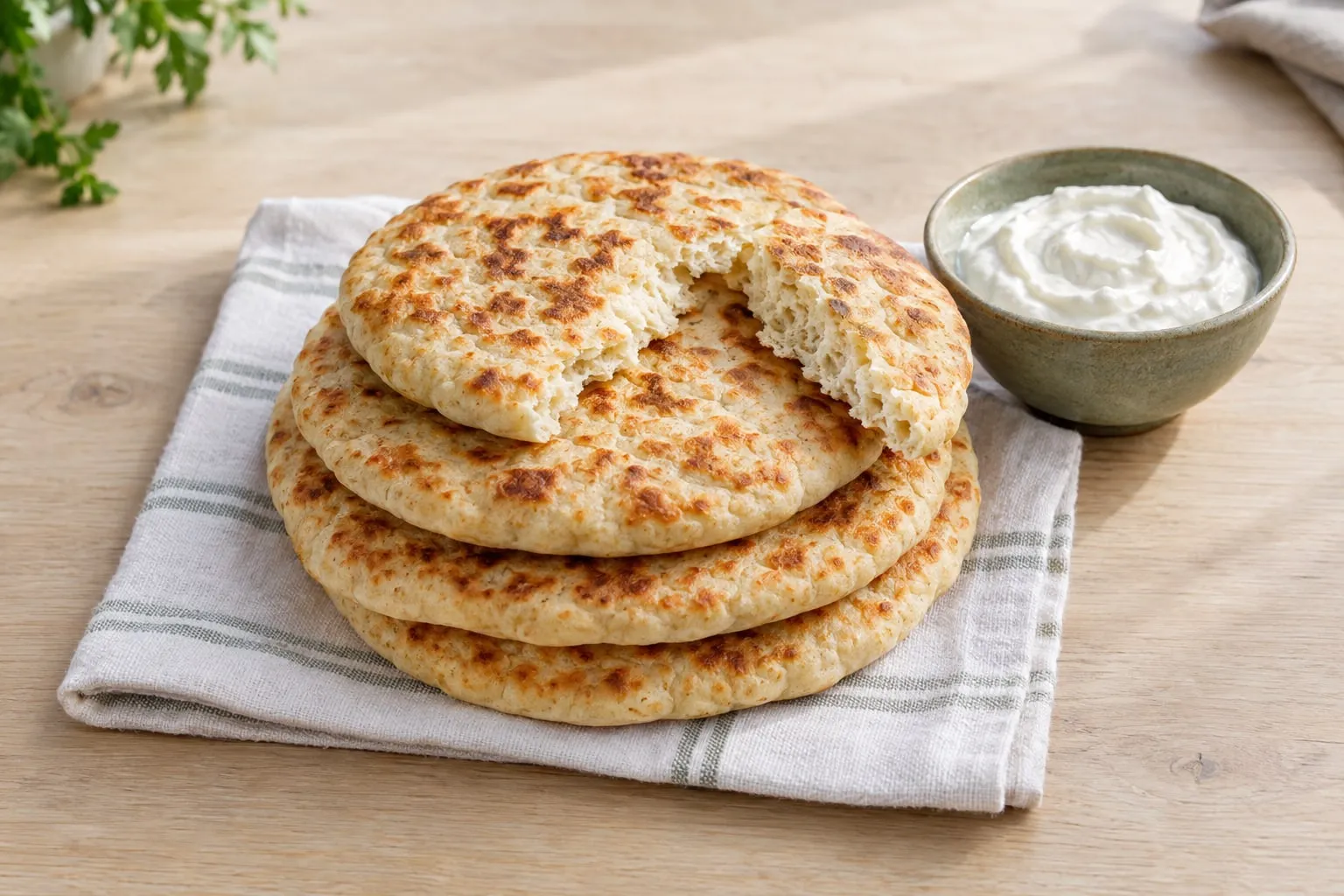
Skip the passata and mozzarella and bake each base for 8–10 minutes. Protein is about 13 g per serving.
- Mini pizzas
Divide the dough into four 15 cm bases, one per serving. Bake each for 6 minutes, add the toppings and bake for another 3–4 minutes. Two bases fit on the hot tray at once, so bake them in two batches.
Serve it with
- Rocket and tomato salad
- Cucumber and mint yogurt
- Sparkling water with lemon
Storage
Cool leftover pizza and keep it in the fridge for up to 2 days, then reheat at 200°C (180°C fan), gas 6, for 5–8 minutes.
Freeze baked, topped slices for up to 1 month. The raw dough does not keep, so bake it straight after mixing.
Troubleshooting
Why is my Greek yogurt pizza dough too sticky?
The yogurt was not strained or the dough has not been kneaded long enough. Knead for the full 3–4 minutes, and use the 20 g of flour on the work surface and no more than that.
Why is my Greek yogurt pizza base soggy in the middle?
The topping was too wet or the tray was cold. Bake the base for 6 minutes before topping it, and spread the passata thinly.
Frequently asked questions
How much protein is in Greek yogurt pizza dough?
Each of the four servings, half a pizza with passata and mozzarella, has 19 g protein and 310 kcal, so 25% of the energy comes from protein. The dough alone, without topping, has about 13 g per serving.
Can I make Greek yogurt pizza dough with plain flour?
Yes, if you add a raising agent. Use 240 g plain flour with 3 level teaspoons of baking powder, mix it in well and bake as before.
Is Greek yogurt pizza dough the same as 2 ingredient dough?
It follows the same idea, with just flour and yogurt, plus a pinch of salt. This version uses less flour than the usual one-to-one mix, so it has more protein.
Made it? Rate the recipe
Read next
- Protein in Greek Yogurt (and Skyr)Protein in Greek yogurt: 150 g of strained 0% fat Greek yogurt has 15.5 g protein and 81 kcal, skyr 16.5 g. Compared per 100 g and per portion.
- Protein in BreadProtein in bread: a slice has 2.8–4.0 g protein depending on type and weight. Wholemeal, white, seeded, bagels, pitta and tortillas compared.
Written by The Protein Recipes editorial team. Nutrition is calculated from the ingredient list using CoFID. Read how our recipes are made and how we correct mistakes.