Method
Tap a time to start a timer.
Heat the oven to 190°C (170°C fan), gas 5. Line the muffin tin with the 12 paper cases.
Whisk the eggs, quark, sugar, rapeseed oil, milk and vanilla in the large bowl until smooth.
Whisk the flour, whey and baking powder in the medium bowl. Tip into the wet mixture and fold together just until no dry flour remains. The batter will be thick.
Divide the batter between the 12 cases, about 55 g each, so each is two-thirds full.
Bake on the middle shelf until risen, golden and a skewer pushed into the centre comes out clean. Check from 18 minutes.
Leave the muffins in the tin for 5 minutes, then move to a wire rack to cool.
How to tell it's done
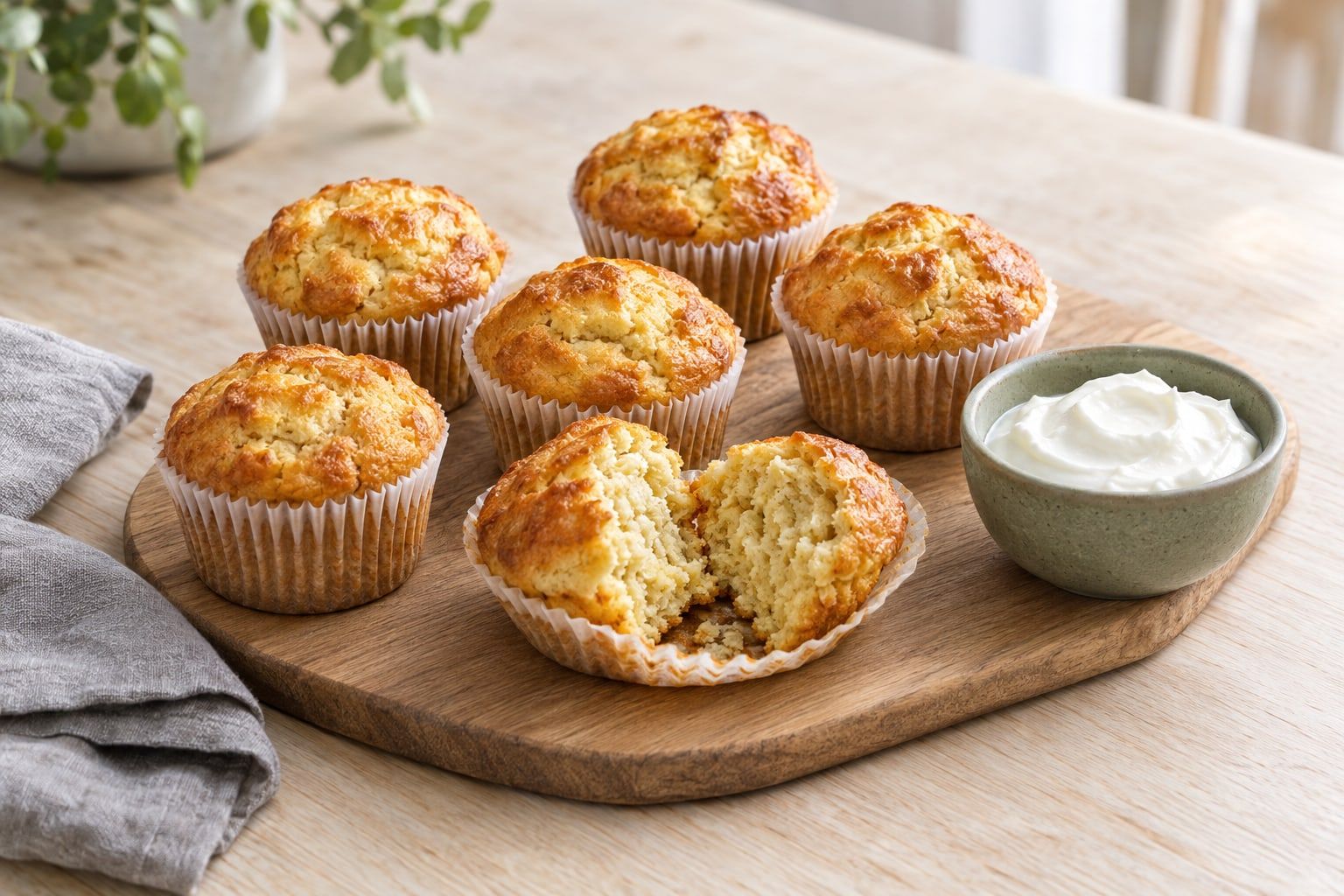
- The tops are golden brown and domed, and spring back when pressed lightly.
- A skewer pushed into the centre of a muffin comes out clean.
Tips for success
- Mix briefly
Fold the dry ingredients in until no streaks of flour remain and stop there. Beating the batter develops the gluten and gives tough, flat muffins.
- Whisk the quark with the eggs first
Quark is lumpy straight from the tub. Whisking it smooth with the eggs, sugar and oil before the dry ingredients go in gives an even crumb.
- Check at 18 minutes
Whey dries out a muffin if it bakes too long. At 190°C (170°C fan) they are done in 18–22 minutes, so test with a skewer at 18.
- Fill the cases two-thirds full
About 55 g of batter, roughly 3 tablespoons, fills each case two-thirds and gives a domed top. A fuller case overflows and loses its shape.
Boost the protein
- Add 30 g more whey and 30 ml more milk: +2 g protein per muffin. Whey is then 75 g of 205 g whey and flour, or 37%.
- Swap 30 g of the plain flour for 30 g vital wheat gluten: +1.7 g protein per muffin. The muffins are slightly chewier, and not gluten-free.
Choosing ingredients
Use quark from a 250 g tub, labelled fat free. It is high in protein, smooth, and gives the moist crumb that replaces most of the butter.
Whey gives the lightest muffin. Casein dries the batter more, so add 3–4 tablespoons of milk, and vegan pea and rice powder gives a gritty, dense muffin.
Variations
- Savoury protein muffins
Leave out the sugar and vanilla, and fold 60 g grated half-fat Cheddar and 4 chopped spring onions into the batter in step 3. Bake for the same time. Protein rises by about 1.6 g per muffin.
- Chocolate protein muffins
Replace 15 g of the flour with 15 g cocoa powder and stir 1 extra tablespoon of milk into the batter. Protein rises by about 0.1 g per muffin.
Serve it with
- A spoonful of strained Greek yogurt
- Fresh berries
- A mug of tea or coffee
Storage
Cool the muffins fully, then keep them in an airtight box at room temperature for 1–2 days.
Freeze for up to 3 months and thaw at room temperature, or microwave a frozen muffin for 20–30 seconds.
Troubleshooting
Why are protein muffins dry?
They baked for too long or the batter was overmixed. Check with a skewer from 18 minutes, take the tin out as soon as it comes out clean, and fold the dry ingredients in only until no streaks remain.
Why are protein muffins flat?
The batter was beaten too much or the baking powder was old. Fold briefly, use fresh baking powder and fill the cases two-thirds full.
Frequently asked questions
How much protein is in a protein muffin?
Each of the 12 protein muffins has 8 g protein and 128 kcal, so 25% of the energy comes from protein.
How do I make savoury protein muffins?
Leave out the sugar and vanilla and fold 60 g grated half-fat Cheddar and 4 chopped spring onions into the batter, then bake as in the main recipe. The Cheddar adds about 1.6 g protein per muffin.
Can I make protein muffins without protein powder?
Yes. Leave out the whey and use 175 g plain flour in all. A muffin then has about 5.6 g protein, and the crumb is a little denser.
Made it? Rate the recipe
Read next
- Protein in BreadProtein in bread: a slice has 2.8–4.0 g protein depending on type and weight. Wholemeal, white, seeded, bagels, pitta and tortillas compared.
- How Much Protein Do You Need Per Day?How much protein do I need? The UK reference is 0.75 g per kg of body weight a day, or 52.5 g at 70 kg. See food values and a worked example day.
Written by The Protein Recipes editorial team. Nutrition is calculated from the ingredient list using CoFID. Read how our recipes are made and how we correct mistakes.