Protein guide
Protein in Greek Yogurt (and Skyr)
Quick answer
A 150 g serving of strained 0% fat Greek yogurt has 15.5 g protein and 81 kcal, and skyr has 16.5 g and 96 kcal. Greek-style yogurts that are not strained often have only about 6 g protein per 100 g.
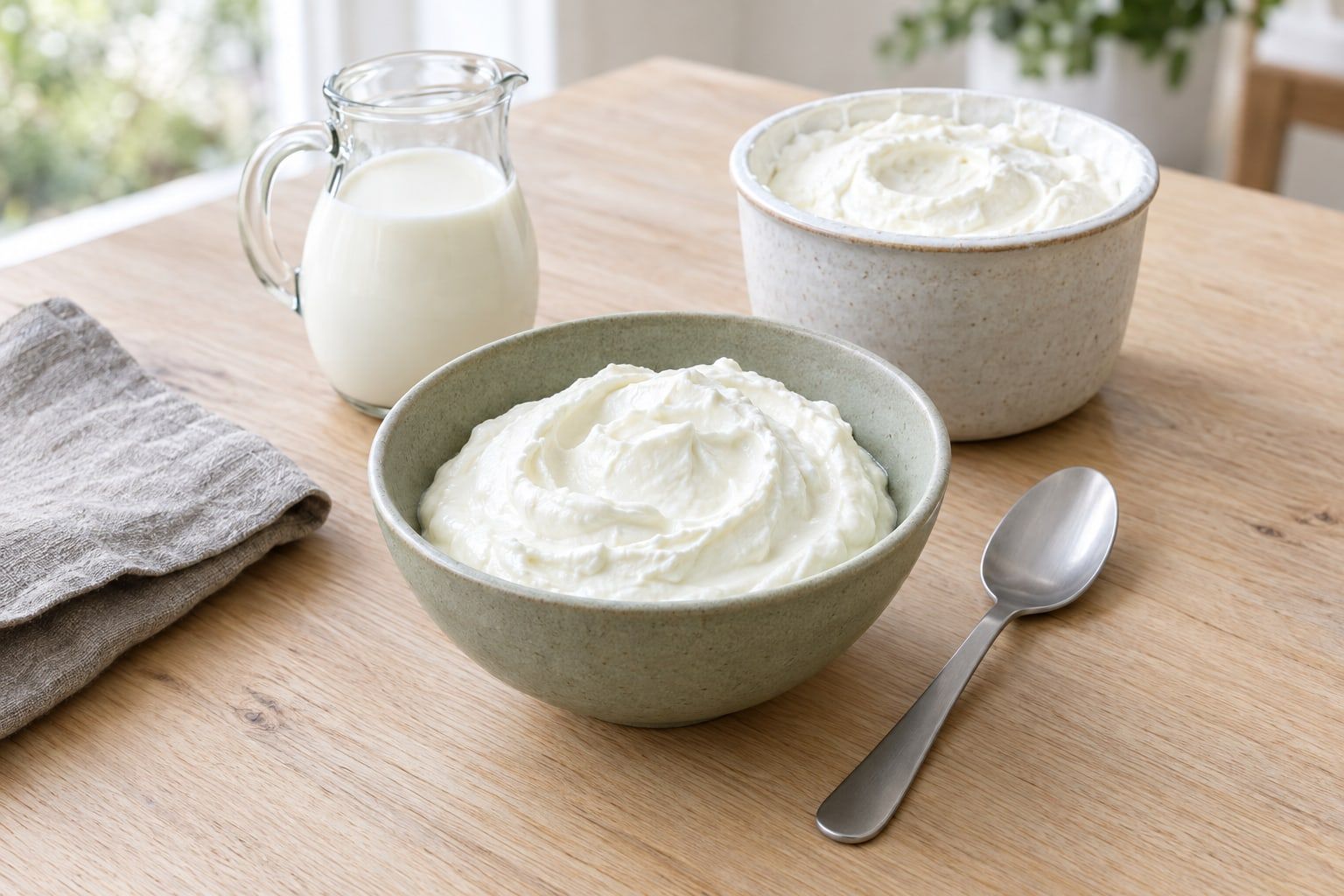
Protein in Greek yogurt ranges from 5.7 g to 10.3 g per 100 g, and the spread comes from how the yogurt is made. Strained 0% fat Greek yogurt gives 10.3 g protein and 54 kcal per 100 g, so a 150 g bowl has 15.5 g protein and 81 kcal. Plain Greek style yogurt in the UK composition tables is lower, at 5.7 g per 100 g, and fat-free tubs that have not been strained are typically around 6.5 g.
Straining takes out whey, leaving a thicker and more concentrated yogurt, and that is what lifts the protein. Skyr, which is also strained, has a typical 11 g protein and 64 kcal per 100 g, so 150 g gives 16.5 g. Strained full fat yogurt, with 5% fat, has 9.0 g and 93 kcal per 100 g, so 150 g gives 13.5 g and 140 kcal. The word Greek on a tub does not guarantee any of this, which is why the label’s figure for protein per 100 g matters more than the name.
A 500 g tub of strained 0% fat yogurt holds 51.5 g protein and 270 kcal, enough for three generous bowls. Spoon it over fruit or oats, stir it into sauces in place of cream, or bake it into banana bread and muffins. For a high protein yogurt cake, the recipes linked below show the exact numbers.
| Yogurt | Protein | Energy | Fat |
|---|---|---|---|
| Greek yogurt, strained, 0% fat (typical value) | 10.3 g | 54 kcal | 0.0 g |
| Skyr, plain, fat free (typical value) | 11.0 g | 64 kcal | 0.2 g |
| High protein yogurt, plain, fat free (typical value) | 10.0 g | 60 kcal | 0.2 g |
| Greek yogurt, strained, full fat 5% (typical value) | 9.0 g | 93 kcal | 5.0 g |
| Greek-style yogurt, fat free, not strained (typical value) | 6.5 g | 57 kcal | 0.3 g |
| Greek style yogurt, plain | 5.7 g | 133 kcal | 10.2 g |
| Yogurt, whole milk, plain | 5.7 g | 79 kcal | 3.0 g |
| Yogurt, low fat, plain | 4.8 g | 57 kcal | 1.0 g |
Source: CoFID – McCance and Widdowson's Composition of Foods Integrated Dataset 2021 (codes 12-555, 12-184, 12-379) for the last three rows; the first five rows are typical values for those products (x5, x4, x7, x6, x27), not CoFID figures
| Portion | Weight | Protein | Energy |
|---|---|---|---|
| Skyr, plain, fat free | 150 g | 16.5 g | 96 kcal |
| Greek yogurt, strained, 0% fat | 150 g | 15.5 g | 81 kcal |
| Greek yogurt, strained, full fat 5% | 150 g | 13.5 g | 140 kcal |
| Greek style yogurt, plain | 150 g | 8.6 g | 200 kcal |
| Yogurt, low fat, plain | 150 g | 7.2 g | 86 kcal |
| Tub of strained 0% fat Greek yogurt | 500 g | 51.5 g | 270 kcal |
Source: Calculated from the per 100 g values above; a 150 g pot and a 500 g tub are assumed
How much protein is in 150 g of Greek yogurt?
It depends on the type. Strained 0% fat Greek yogurt gives 15.5 g protein and 81 kcal in 150 g, strained full fat (5%) gives 13.5 g and 140 kcal, and skyr gives 16.5 g and 96 kcal. Greek style plain yogurt in the UK composition tables has only 8.6 g protein and 200 kcal for the same weight, and ordinary low fat plain yogurt 7.2 g and 86 kcal. A 500 g tub of strained 0% fat yogurt holds 51.5 g protein and 270 kcal, which is useful to know if you portion it out for the week.
Why do some Greek yogurts have less protein than others?
Straining removes watery whey and leaves a thicker, more concentrated yogurt, and that is what lifts protein from about 5 g to 10 g per 100 g. The word Greek on the tub does not guarantee it. A fat-free Greek-style yogurt that has not been strained is typically about 6.5 g per 100 g, and the CoFID entry for Greek style plain yogurt is 5.7 g. The gap between strained 0% yogurt at 10.3 g and Greek style plain at 5.7 g is 4.6 g per 100 g, or 6.9 g in a 150 g pot, so reading the label for protein per 100 g is worth the few seconds it takes.
Is skyr higher in protein than Greek yogurt?
Slightly. Plain fat free skyr has a typical value of 11 g protein and 64 kcal per 100 g, against 10.3 g and 54 kcal for strained 0% fat Greek yogurt. In a 150 g pot that is 16.5 g against 15.5 g, so the difference is about a gram. Both are strained, which is why both sit far above ordinary yogurt. Products sold as high protein yogurt, with a typical value of 10 g per 100 g, land in the same range. Choose on taste, texture and price, then check that the label shows around 10 g protein per 100 g or more.
Which Greek yogurt has the highest protein?
Among the types in the table, plain fat free skyr is highest at 11 g protein per 100 g, followed by strained 0% fat Greek yogurt at 10.3 g and high protein yogurt at 10 g. Strained full fat yogurt is lower at 9.0 g, because the fat takes up space that protein would otherwise occupy. The label is the only reliable guide to a particular tub, so compare the protein per 100 g and, if you are counting calories, the energy. Flavoured yogurts add sugar, so plain gives the clearest number.
Can you make a protein cake with Greek yogurt?
Yes, though the protein of a cake depends on everything in it, not just the yogurt. Strained Greek yogurt brings moisture and a little extra protein to banana bread and muffins, and it can replace some of the butter or oil. Because 150 g of strained 0% fat yogurt supplies 15.5 g protein, a cake that uses it alongside eggs and a flour mix will give more than one made with butter and milk alone. The banana bread and muffin recipes linked below give per-slice and per-muffin figures worked out from their ingredient lists.
Practical tips
- Read protein per 100 g, not the front of the tub
Greek, Greek-style and high protein are marketing words. The nutrition panel shows the real figure, and 10 g per 100 g or more is typical for strained products.
- Swap for a higher protein yogurt
Replacing 150 g of whole milk plain yogurt with 150 g of strained 0% fat Greek yogurt adds 6.9 g protein and removes about 38 kcal.
- Buy a large tub and portion it
A 500 g tub gives three 150 g portions with a little left over. Spoon portions into small pots with lids and they are ready for breakfast or a snack.
Myth or fact
- Myth
Is it true that all Greek yogurt is high in protein?
No. Strained 0% fat Greek yogurt has a typical 10.3 g protein per 100 g, but Greek style plain yogurt has 5.7 g in the UK composition tables. The label tells you which one you have.
- Myth
Is it true that full fat Greek yogurt has more protein than the 0% fat kind?
No. Strained full fat yogurt has a typical 9.0 g protein per 100 g against 10.3 g for strained 0% fat. The fat adds calories, 93 kcal against 54 kcal, but not protein.
Frequently asked questions
How much protein is in a 150 g pot of Greek yogurt?
Strained 0% fat Greek yogurt gives 15.5 g protein and 81 kcal. Greek style plain yogurt gives 8.6 g and 200 kcal.
How much protein is in 100 g of Greek yogurt?
Strained 0% fat Greek yogurt has a typical 10.3 g protein per 100 g, and plain Greek style yogurt 5.7 g.
Which is higher in protein, skyr or Greek yogurt?
Plain fat free skyr, with a typical 11 g per 100 g, is slightly higher than strained 0% fat Greek yogurt at 10.3 g.
Is Greek yogurt higher in protein than normal yogurt?
Strained Greek yogurt is. At 10.3 g protein per 100 g it has more than twice as much as low fat plain yogurt, which has 4.8 g.
How much protein is in a 500 g tub of Greek yogurt?
A 500 g tub of strained 0% fat Greek yogurt holds about 51.5 g protein and 270 kcal.
Recipes to try
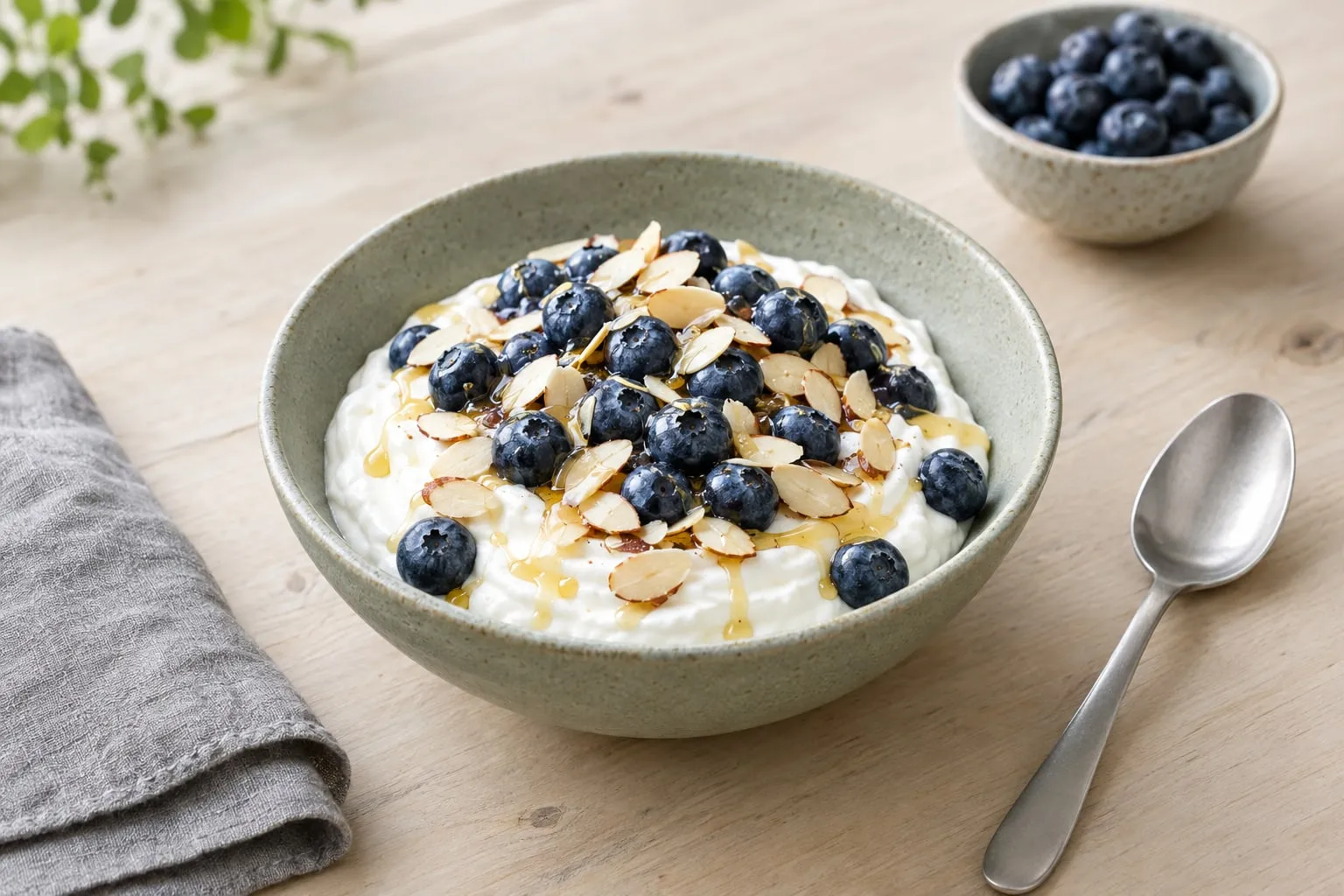
High Protein Yogurt Bowl
30 g protein279 kcal3 minVegetarianGluten-free
A yogurt bowl with toppings that keep the protein high.

Sources
- McCance and Widdowson's Composition of Foods Integrated Dataset 2021 (CoFID) – Values for Greek style, whole milk and low fat plain yogurt; strained Greek yogurt and skyr are typical values
Read our editorial policy for how figures are checked and how to report a mistake.
More protein guides
All guides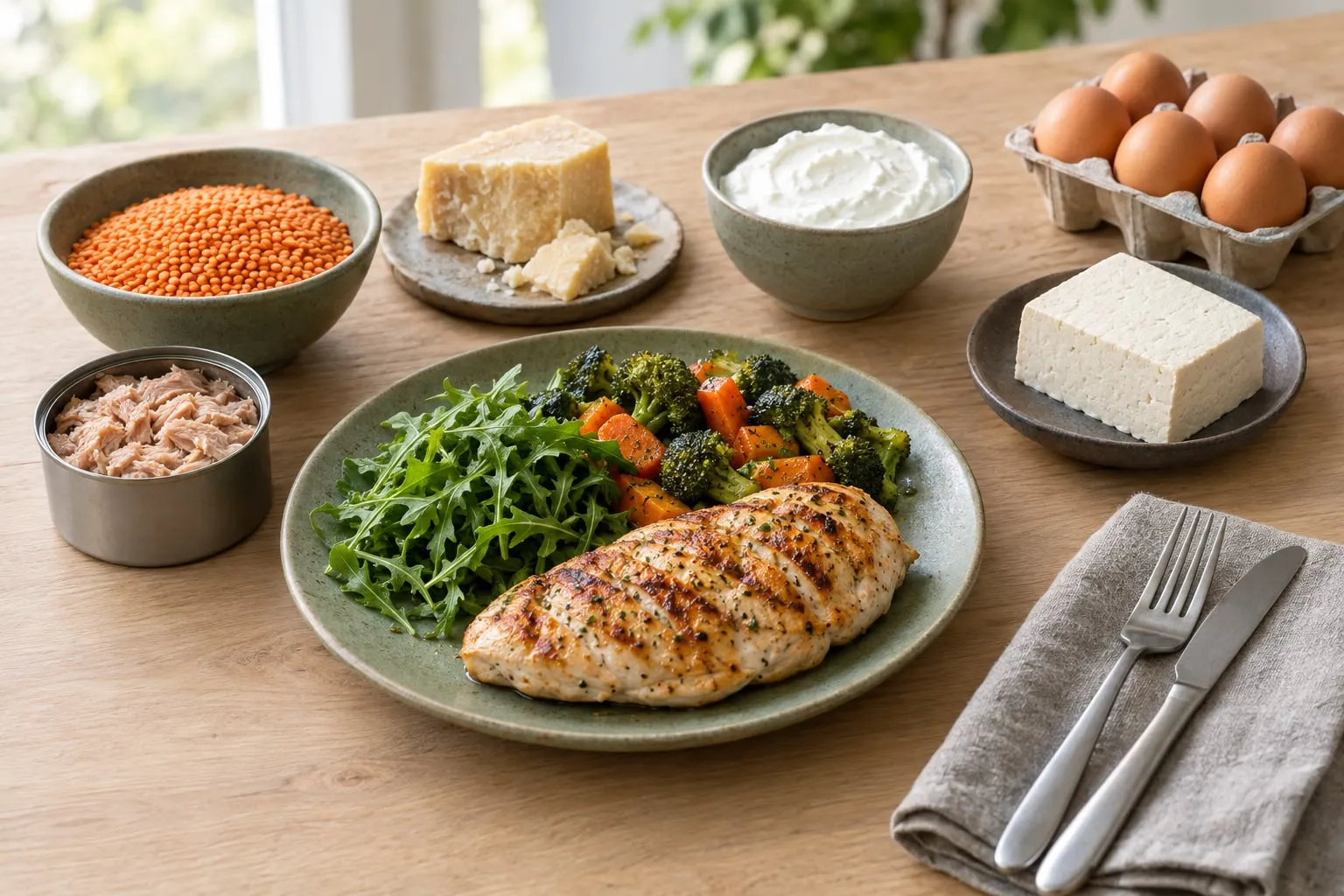
Guide
High Protein Foods: A Ranked List
High protein foods ranked by protein per 100 g and per 100 kcal: Parmesan has 36.2 g, grilled chicken 32.0 g, dried red lentils 25.6 g and egg white 10.8 g.
Guide
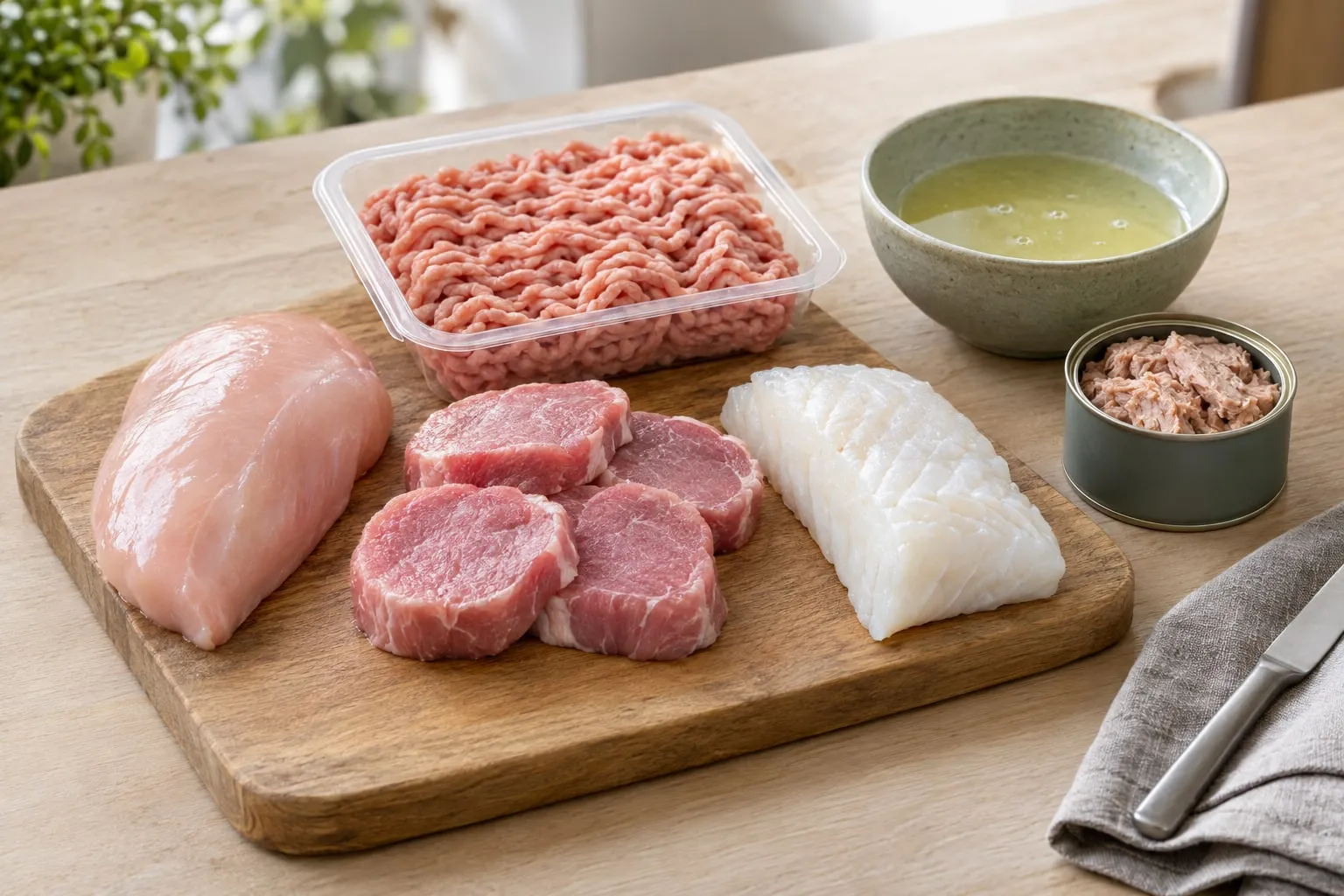
Lean Protein: Best Sources
Lean protein sources ranked by fat: raw chicken breast has 24.0 g protein and 1.1 g fat per 100 g, tuna 24.9 g and 1.0 g. Meat, fish and dairy compared.
Guide
How Much Protein Do You Need Per Day?
How much protein do I need? The UK reference is 0.75 g per kg of body weight a day, or 52.5 g at 70 kg. See food values and a worked example day.
Guide
Protein Calculator
Protein calculator: multiply your weight in kg by 0.75 for the UK reference amount, so 70 kg gives 53 g a day. Tables for kg and stone, plus foods per 20 g.