Method
Tap a time to start a timer.
Mix the 130 g self-raising flour, vital wheat gluten and salt in a large bowl. Add the Greek yogurt and stir until the dough comes together.
Tip the dough onto a work surface dusted with the 10 g flour and knead until smooth and no longer sticky.
Divide the dough into 4 equal pieces of about 85 g. Roll each into a thin 20 cm round and lay them on a floured board or sheet of baking paper.
4 min
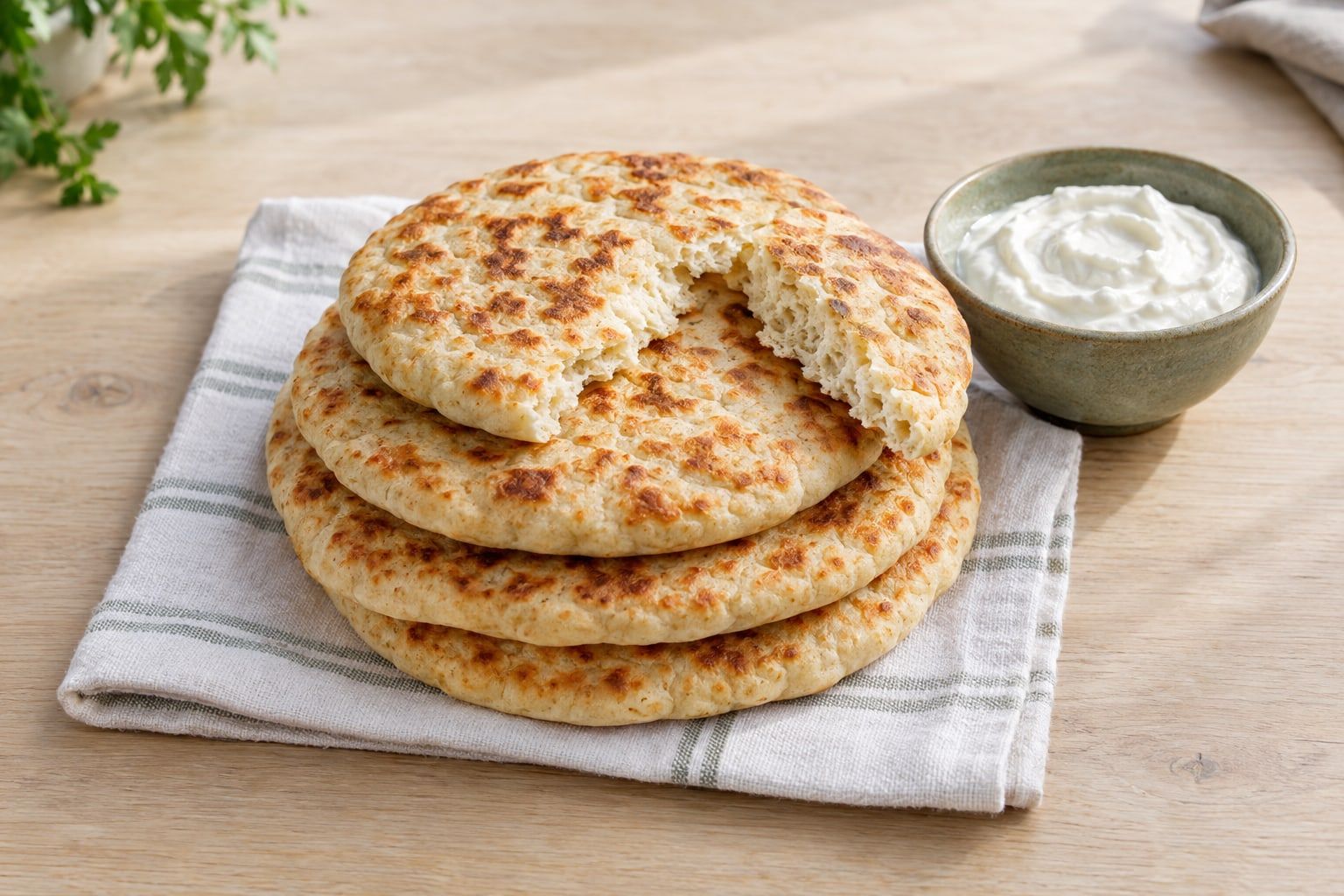
Heat a dry 24–28 cm frying pan over medium-high heat. Cook one flatbread for 1½ minutes, until puffed and golden in spots, then turn and cook for 1½ minutes more.
Move the flatbread to a plate and cover it with a tea towel. Cook the other 3 in the same way, keeping the pan hot and stacking them under the tea towel as you go.
How to tell it's done
- The flatbread is puffed up in places and golden brown in spots on both sides.
- It folds in half without cracking and the inside looks cooked, not doughy.
Tips for success
- Heat the pan before the first flatbread goes in
A hot, dry pan gives the golden spots in 1½ minutes per side. A pan that is not hot enough dries the dough out before it browns and the flatbread turns stiff.
- Roll thin and use as little flour as possible
Roll each piece to about 20 cm and 2–3 mm thick, dusting with only the 10 g of flour in the list. Extra flour makes the flatbread dry and cracker-like.
- Stack and cover them as they cook
Pile the cooked flatbreads onto a plate and cover them with a clean tea towel. The trapped steam softens them, so they fold without cracking.
Boost the protein
- Swap 20 g of the self-raising flour for 20 g plain whey protein powder: +3 g protein per flatbread. The dough is a little stickier, so dust the board with the 10 g flour.
- Fill each flatbread with 50 g plain cottage cheese: +5 g protein per serving.
Choosing ingredients
Use strained Greek yogurt labelled 0% fat, which has about 10 g protein per 100 g. Greek-style yogurt that is not strained is thinner and makes a sticky dough.
Vital wheat gluten is sold in the baking aisle or online. It makes the dough elastic and lifts the protein, but it also means the flatbread is not gluten-free.
Variations
- Garlic and herb flatbread
Add 1 tsp garlic granules and 1 tsp dried oregano to the flour in step 1. Cooking time stays the same.
- Cumin flatbread
Mix 1 tsp ground cumin into the flour in step 1 for a flatbread that suits curries, wraps and falafel.
Serve it with
- Hummus and cucumber
- Cottage cheese with sliced tomato
- Grilled chicken with salad
Storage
Keep the protein flatbread in the fridge in an airtight container for up to 2 days, as the dough is made with yogurt.
Freeze the cooled flatbreads in a stack with baking paper between each for up to 3 months and warm them in a toaster or dry pan.
Troubleshooting
Why is the protein flatbread stiff and dry?
The dough had too much flour or the pan was not hot enough. Dust the board with only the 10 g of flour listed, and cook the flatbread for 1½ minutes per side in a hot pan before wrapping it in a tea towel.
Why is the protein flatbread doughy in the middle?
It was rolled too thick or cooked on too low a heat. Roll each piece to 2–3 mm and keep the pan on medium-high heat until both sides are golden.
Frequently asked questions
How much protein is in this protein flatbread?
Each flatbread has 12 g protein and 166 kcal, so 28% of the energy comes from protein. Two flatbreads give about 24 g.
Why does this protein flatbread use vital wheat gluten?
A two-ingredient dough of 150 g self-raising flour and 150 g Greek yogurt gives only about a fifth of its calories as protein. The 20 g of gluten raises the protein share and makes the dough stretchy, so the flatbread rolls thin without tearing.
Can I make the protein flatbread without Greek yogurt?
Strained skyr or quark works in the same 190 g, but the dough will be stiffer, so add 1 tbsp water. Plant-based yogurts behave differently and give a softer, stickier dough.
Made it? Rate the recipe
Read next
- Protein in BreadProtein in bread: a slice has 2.8–4.0 g protein depending on type and weight. Wholemeal, white, seeded, bagels, pitta and tortillas compared.
- How Much Protein Do You Need Per Day?How much protein do I need? The UK reference is 0.75 g per kg of body weight a day, or 52.5 g at 70 kg. See food values and a worked example day.
Written by The Protein Recipes editorial team. Nutrition is calculated from the ingredient list using CoFID. Read how our recipes are made and how we correct mistakes.