Method
Tap a time to start a timer.
Heat the oven to 170°C (150°C fan), gas 3. Line a 900 g (2 lb) loaf tin with a strip of baking paper that hangs over both long sides.
Put the vital wheat gluten, ground almonds, whey protein powder, baking powder and salt in a large bowl and whisk to combine.
1 min
Beat the eggs, quark and water together in a jug. Tip them over the dry mix and stir with a spatula for about 30 seconds, only until no dry flour is visible.
2 min
Transfer the batter to the tin and smooth the top with a wet spatula. Bake on the middle shelf until deep golden brown and the centre reads 96–98°C.
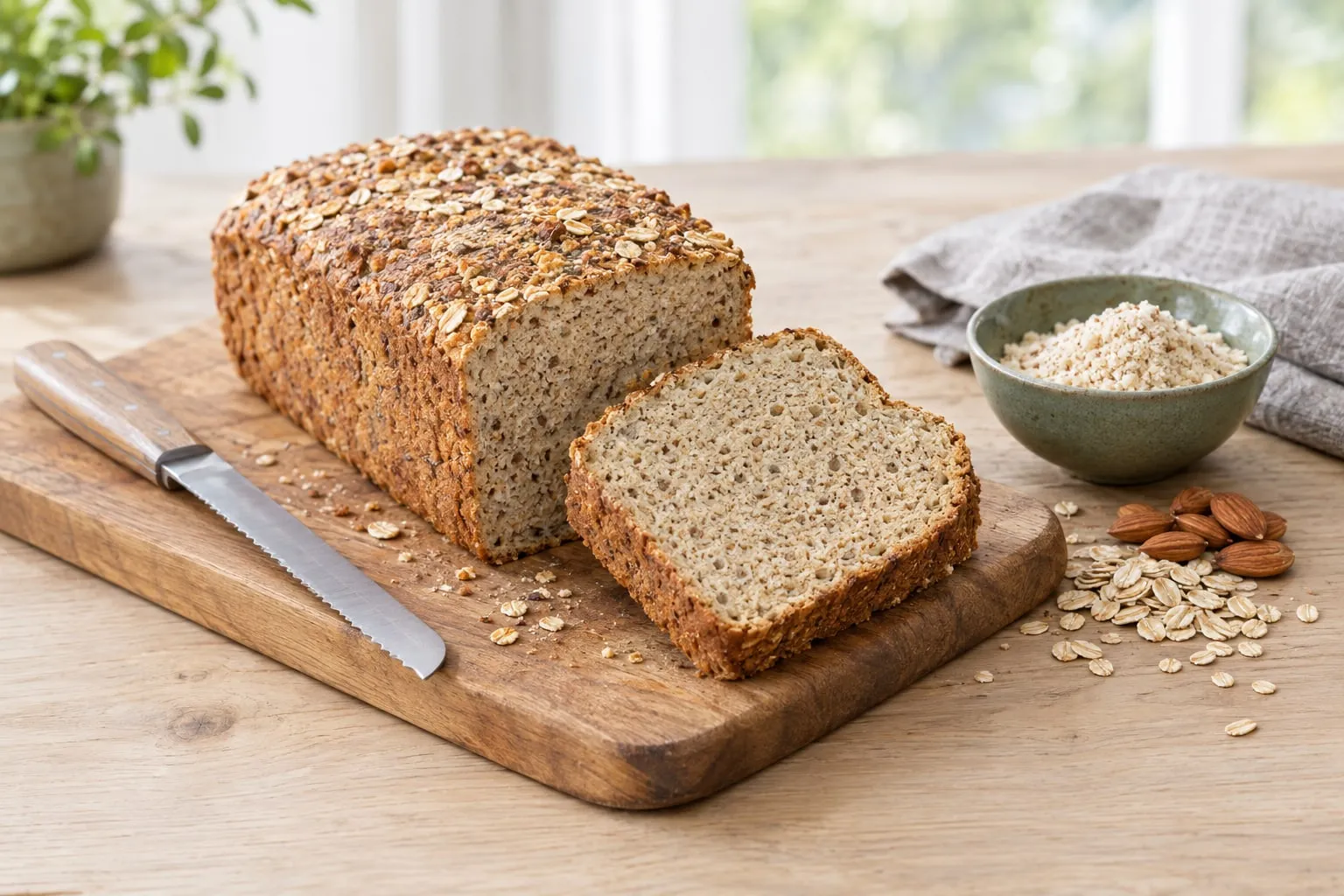
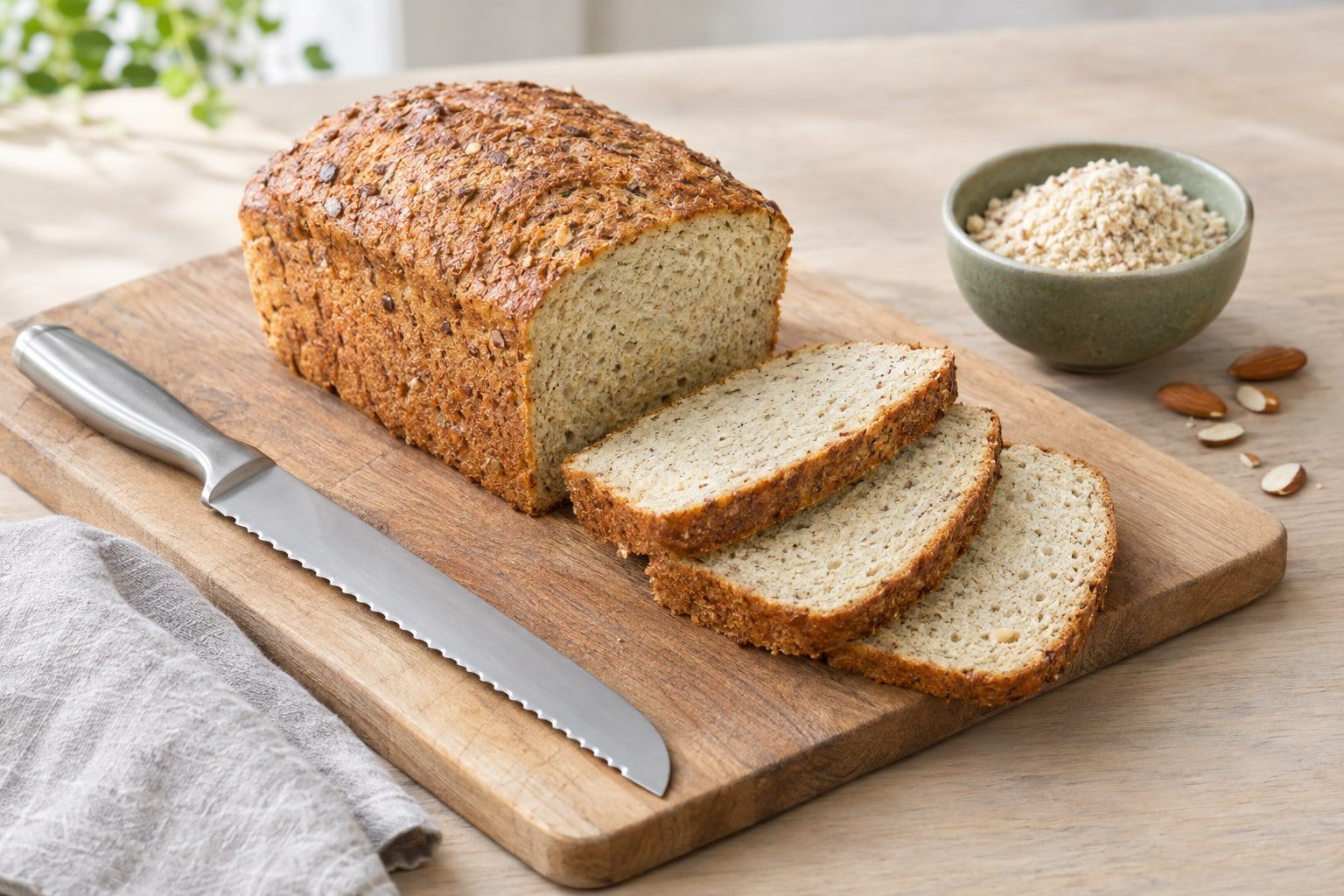
Rest the loaf in the tin for 10 minutes, lift it out on the paper and leave it on a wire rack until cold, about 1 hour in total. Cut into 12 slices with a serrated knife.
How to tell it's done
- Core temperature: 96°C in the thickest part, checked with a probe thermometer.
- A digital thermometer in the thickest part reads 96–98°C.
- A skewer comes out clean, and tapping the underside gives a hollow sound.
Tips for success
- Stir the batter briefly
Vital wheat gluten turns elastic the moment it meets liquid. Stir for about 30 seconds until no dry patches are left and stop there, as longer mixing makes the loaf tough and rubbery.
- Bake until the centre reaches 96°C
A loaf this dense looks done long before the middle sets. Check the centre with a thermometer from 40 minutes: it should read 96–98°C, and a skewer should come out clean.
- Resist cutting it early
While hot the crumb is gummy and tears under the knife. Give it 10 minutes in the tin, then cool it on a wire rack and cut with a serrated knife.
Boost the protein
- Serve each slice with 50 g plain cottage cheese: +5 g protein per serving.
- Top each slice with 1 boiled medium egg, sliced: +6 g protein per serving.
Choosing ingredients
Vital wheat gluten is sold as a pale powder in the baking aisle or online, and the label should state about 75 g protein per 100 g. It is pure wheat protein, so this loaf is not suitable for coeliac disease.
Quark gives the loaf moisture without fat. Fat-free Greek yogurt works in the same quantity, but the crumb is a little less tender.
Variations
- Seeded loaf
Add 30 g sunflower seeds to the wet mix in step 3. Nothing else changes, and the loaf still bakes in 40–45 minutes.
- Herb and cheese loaf
Stir 40 g grated mature cheddar and 1 tbsp chopped chives in at the end of step 3, and cut the salt to a pinch.
Serve it with
- Smoked salmon and cucumber
- Hummus and sliced radishes
- Black coffee or tea
Storage
The low carb high protein bread stays fresh in a lidded box at room temperature for 1–2 days.
For longer storage, wrap slices in pairs and freeze for up to 2 months; a toaster takes them from frozen to crisp in a couple of minutes.
Troubleshooting
Why is my low carb high protein bread rubbery in the middle?
Either the batter was overmixed or the middle was underbaked. Stop stirring at 30 seconds, bake until the thermometer reads 96–98°C and let the loaf cool for an hour.
Why did the low carb high protein bread sink in the middle?
The door was opened too soon or the loaf left the oven before the centre set. Keep the door closed for the first 30 minutes and take the temperature before lifting it out.
Frequently asked questions
How many calories and carbs are in this low carb high protein bread?
Each slice has 98 kcal, 13 g protein and 2 g carbs, so 52% of the energy comes from protein. These are the calculated values for a 12-slice loaf.
Is this a low calorie high protein banana bread?
No, this loaf has no banana. For a high protein banana loaf, see the protein banana bread recipe, which is sweeter and a different texture from this savoury loaf.
Can I make this low carb protein bread gluten-free?
No. The structure comes from vital wheat gluten, which is wheat protein, so the loaf is not gluten-free. The gluten-free protein bread on this site uses ground oats and almonds instead.
Made it? Rate the recipe
Read next
- Protein in BreadProtein in bread: a slice has 2.8–4.0 g protein depending on type and weight. Wholemeal, white, seeded, bagels, pitta and tortillas compared.
- How Much Protein Do You Need Per Day?How much protein do I need? The UK reference is 0.75 g per kg of body weight a day, or 52.5 g at 70 kg. See food values and a worked example day.
Written by The Protein Recipes editorial team. Nutrition is calculated from the ingredient list using CoFID. Read how our recipes are made and how we correct mistakes.