Protein guide
Protein Before or After a Workout?
Quick answer
Either works: total protein across the day matters more than the exact timing. A 30 g scoop of whey gives 22.5 g protein in water or 31.3 g with 250 ml semi-skimmed milk.
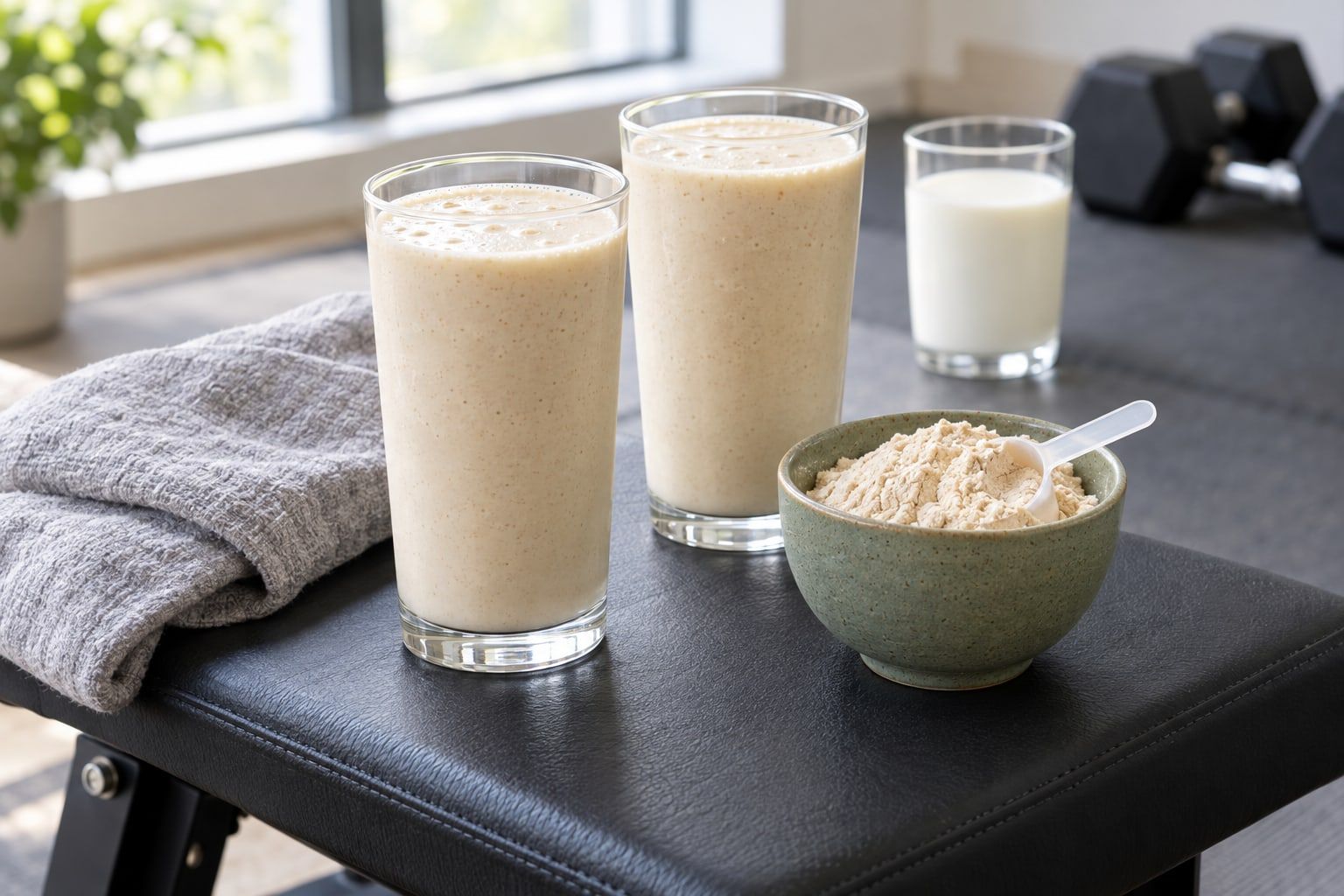
Protein shake before or after workout is mostly a question of convenience: the total protein you eat across the day matters more than the exact timing. A 30 g scoop of whey gives 22.5 g protein in water, which fits inside the 20 g to 25 g per portion that sports guidance mentions, and 31.3 g when made with 250 ml of semi-skimmed milk.
The variable that changes the numbers is the liquid. Water leaves a shake at 114 kcal, skimmed milk takes it to 199 kcal and semi-skimmed to 229 kcal. A soya drink gives 28.5 g protein, and the 30 g scoop is a typical weight, so check your tub. Research suggests active adults eat between 1.2 g and 2.0 g protein per kg of body weight a day, against the UK reference of 0.75 g per kg.
For practical purposes, take the version that sits well. A lighter water or skimmed milk shake before training, or a milk-based one afterwards, are both fine, and a meal works as well as a shake. Count what the shake adds, and then see what the rest of the day gives.
| Shake | Protein | Energy | Liquid |
|---|---|---|---|
| 30 g whey with water | 22.5 g | 114 kcal | 250 ml water |
| 30 g whey with semi-skimmed milk | 31.3 g | 229 kcal | 250 ml semi-skimmed milk |
| 30 g whey with skimmed milk | 31.3 g | 199 kcal | 250 ml skimmed milk |
| 30 g whey with soya drink | 28.5 g | 179 kcal | 250 ml unsweetened soya drink |
Source: Calculated from CoFID values for milk and soya drink (codes 12-313, 12-307, 12-524) plus a typical value for whey powder (x1, 75 g protein and 380 kcal per 100 g); the liquid is 250 ml, taken as 250 g
| Food | Weight | Protein | Energy |
|---|---|---|---|
| Chicken breast fillet, raw (typical value) | 150 g | 36.0 g | 159 kcal |
| Quark | 250 g | 36.5 g | 185 kcal |
| Skyr, plain, fat free (typical value) | 150 g | 16.5 g | 96 kcal |
| Strained 0% fat Greek yogurt (typical value) | 150 g | 15.5 g | 81 kcal |
| Whole eggs, raw, 2 medium | about 100 g | 12.6 g | 131 kcal |
Source: Calculated from CoFID values for quark and whole egg (codes 12-174, 12-937) and typical values for chicken, skyr and Greek yogurt (x10, x4, x5); medium eggs are about 50 g each without the shell
Does the timing of protein around training matter?
Not much. The total protein you eat across the day matters more than the exact minute you have it, and a shake before or after a session counts the same towards that total. Sports nutrition guidance, as summarised by the British Nutrition Foundation, which cites the American College of Sports Medicine, points to roughly 20 g to 25 g of protein in a portion around training. A shake or a meal both fit. Pick the time that suits your stomach and your schedule.
How much protein is enough in one shake?
A 30 g scoop of whey powder gives 22.5 g protein and 114 kcal when mixed with water, which sits inside that 20 g to 25 g range. Made with 250 ml semi-skimmed milk it gives 31.3 g and 229 kcal, as the milk adds 8.8 g and 115 kcal. Research suggests active adults eat somewhere between 1.2 g and 2.0 g of protein per kg of body weight per day, which for a 70 kg person is 84 g to 140 g. That is a research range rather than a recommendation, and the UK Reference Nutrient Intake for adults is lower, at 0.75 g per kg, or 52.5 g for 70 kg.
Is a shake better before or after the session?
There is no single best answer. Before training, many people prefer a lighter base such as water or skimmed milk, because a thick shake can sit heavily on the stomach during a hard session. After training, a shake is convenient when you are not near a kitchen, and the milk-based versions give more protein. The tables above show the difference: 22.5 g in water against 31.3 g in semi-skimmed milk. If you feel fine either way, do whichever is easier to fit in.
Which liquid should you use?
Water gives the lowest energy, at 114 kcal for the whole shake. Skimmed milk adds 8.8 g protein for 85 kcal and semi-skimmed adds the same protein for 115 kcal. A soya drink adds 6.0 g protein for 65 kcal, so a soya shake gives 28.5 g and works for people who avoid dairy. Whey itself is a dairy product. Plant-based powders can be slightly grainier and may need a little more liquid. Choose based on taste, calories and what you tolerate.
Do you need a shake at all?
No. A shake is a convenient way to reach a target, and food does the same job. A 150 g raw chicken fillet gives 36.0 g protein, 250 g of quark gives 36.5 g, 150 g of skyr gives 16.5 g and two medium eggs give 12.6 g. A shake can stand in when you are travelling or short of time. A meal after training, such as chicken pasta, covers protein and carbohydrate together.
Practical tips
- Match the base to your stomach
If a milk shake feels heavy before training, make it with water or skimmed milk and save the creamier version for afterwards.
- Count the whole day
Add up protein from meals, dairy and snacks as well as the shake. Taking one scoop at a set time matters less than reaching your daily figure.
- Check the scoop weight
Scoop sizes differ between tubs. Weigh a level scoop once and use that weight, since 30 g is the typical value used here and the label tells you the protein per serving.
Myth or fact
- Myth
Is it true that you must drink a protein shake within 30 minutes of training?
No. There is no need to rush, as total protein across the day counts for more than the exact timing. A shake an hour later, or a normal meal, gives the same protein.
- Myth
Is it true that the body can only use 20 g to 25 g of protein at once?
No. The 20 g to 25 g figure is a practical amount for a serving around training, not a limit on what the body can digest. A larger portion, such as a shake made with milk, is also digested.
Frequently asked questions
Is it better to have a protein shake before or after a workout?
Either works. What you eat across the whole day matters more than the timing, so choose whichever fits your routine and stomach.
How much protein should be in a post-workout shake?
About 20 g to 25 g is the amount commonly suggested for a portion around training. A 30 g scoop of whey with water gives 22.5 g.
Should I mix protein powder with milk or water?
Either. Water gives 22.5 g protein and 114 kcal in a shake with 30 g whey, and 250 ml semi-skimmed milk gives 31.3 g and 229 kcal.
Can I have food instead of a protein shake after training?
Yes. A 150 g raw chicken fillet gives 36.0 g protein, and 250 g of quark gives 36.5 g.
How much protein do I need in a day if I train?
Research suggests 1.2 g to 2.0 g per kg of body weight per day for active adults, which is 84 g to 140 g for a 70 kg person. The UK Reference Nutrient Intake of 0.75 g per kg is lower.
Recipes to try
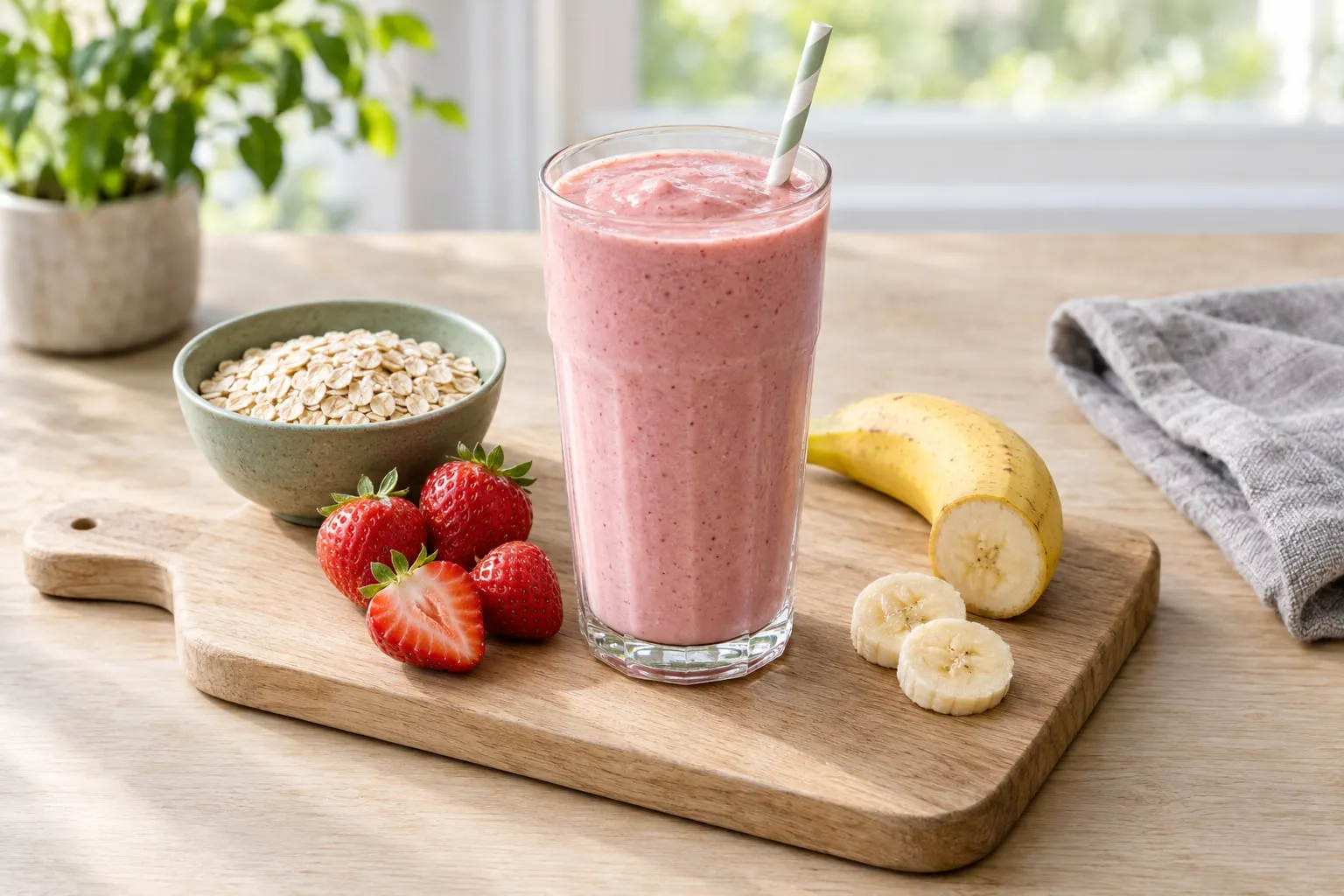
Protein Smoothie
32 g protein387 kcal5 minVegetarian
A blended alternative to a powder shake, ready in minutes.
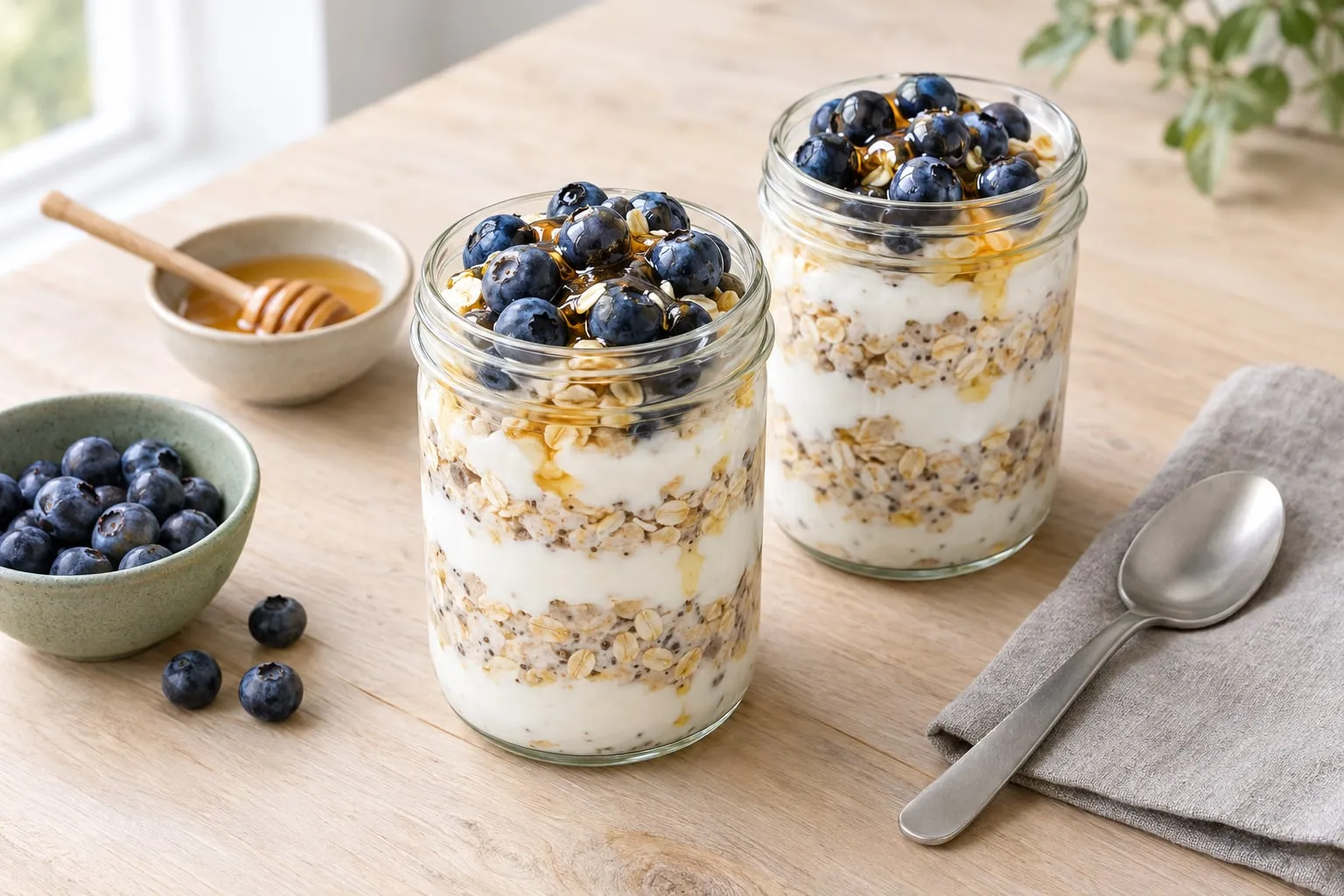
Protein Overnight Oats
26 g protein334 kcal8 hr 5 minVegetarian
A make-ahead breakfast to have before an early session.
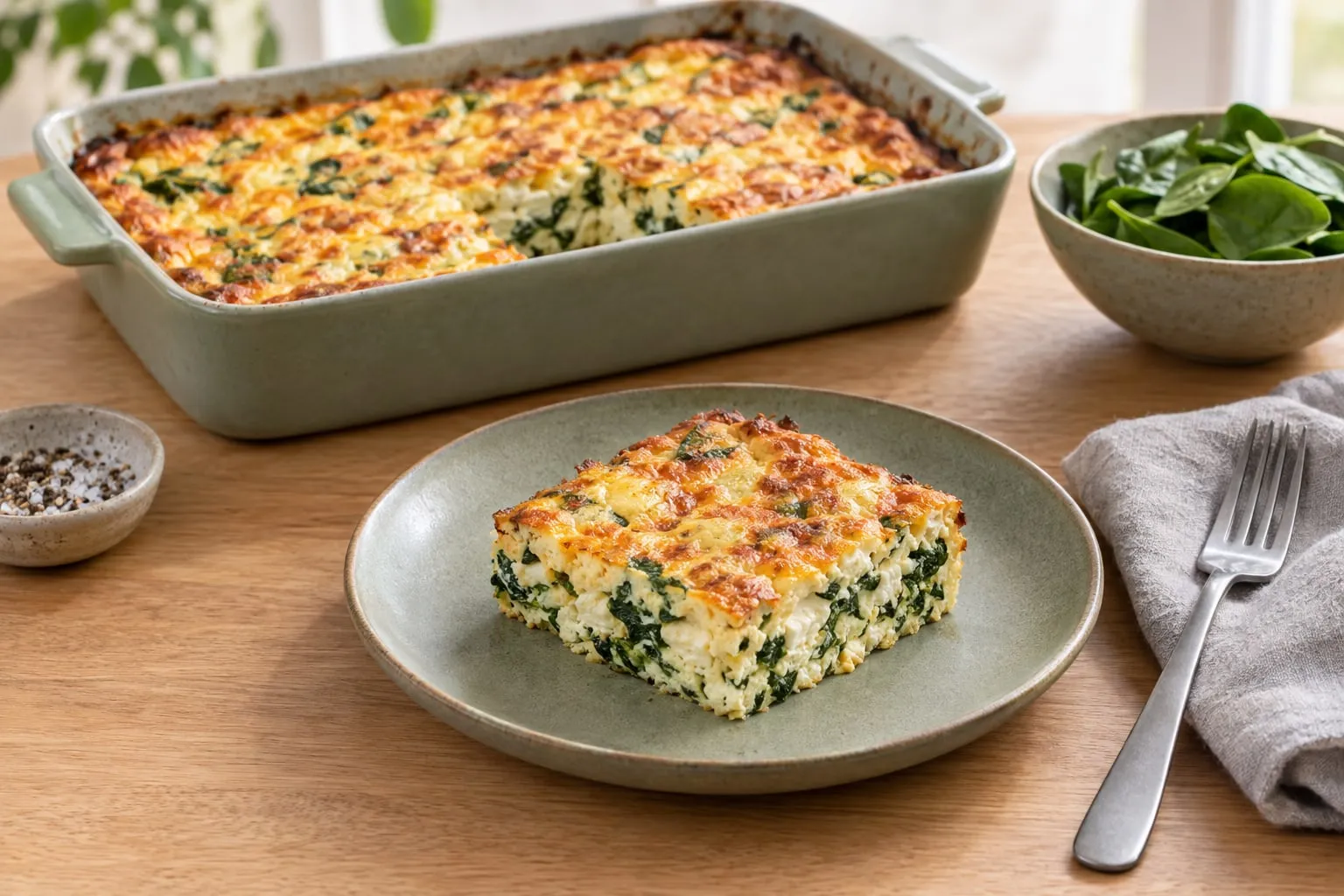
Cottage Cheese and Egg Bake
22 g protein190 kcal55 minVegetarianGluten-free
A bake that cuts into portions for meals after training.
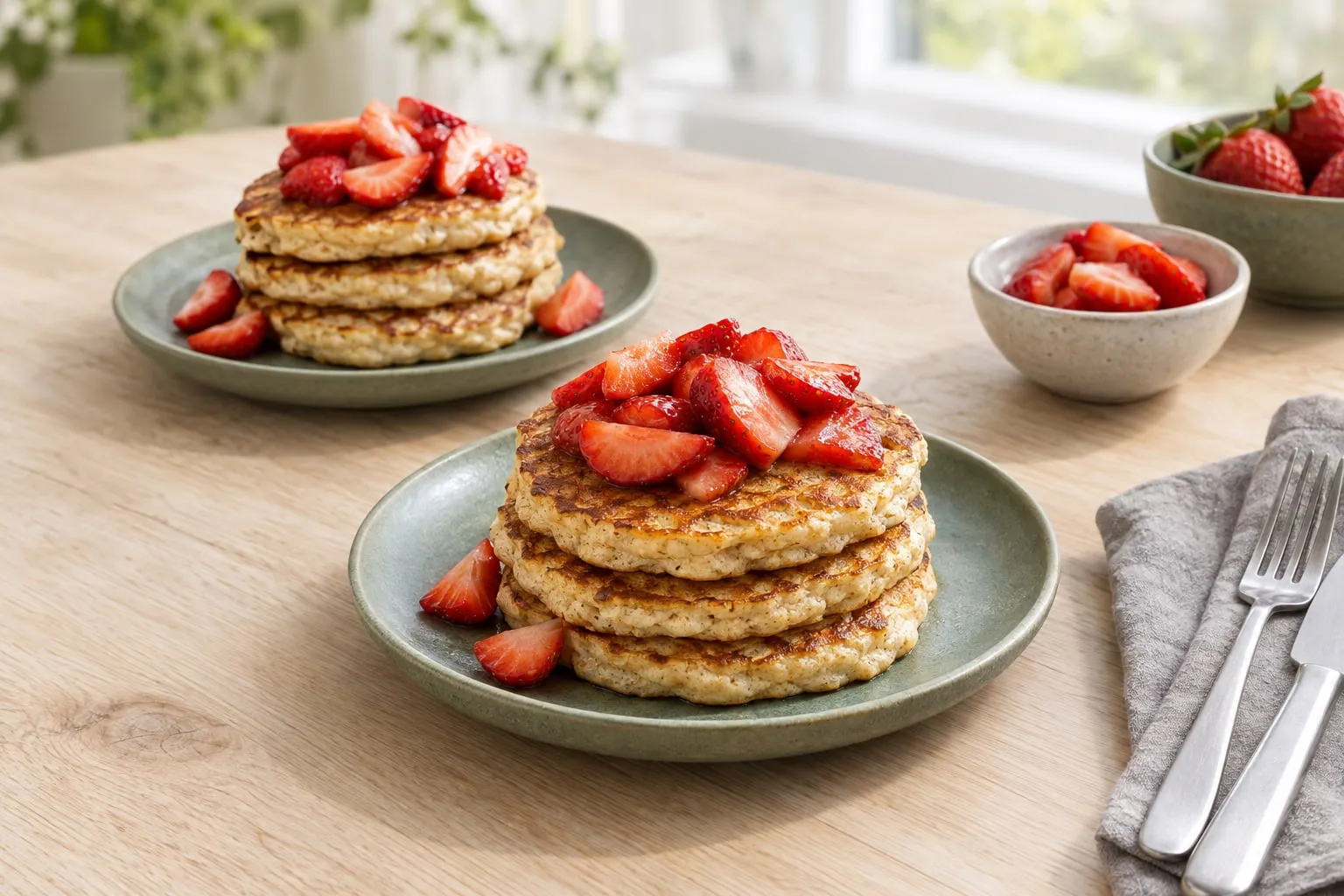
Protein Pancakes
31 g protein342 kcal25 minVegetarian
A weekend breakfast with protein built into the batter.
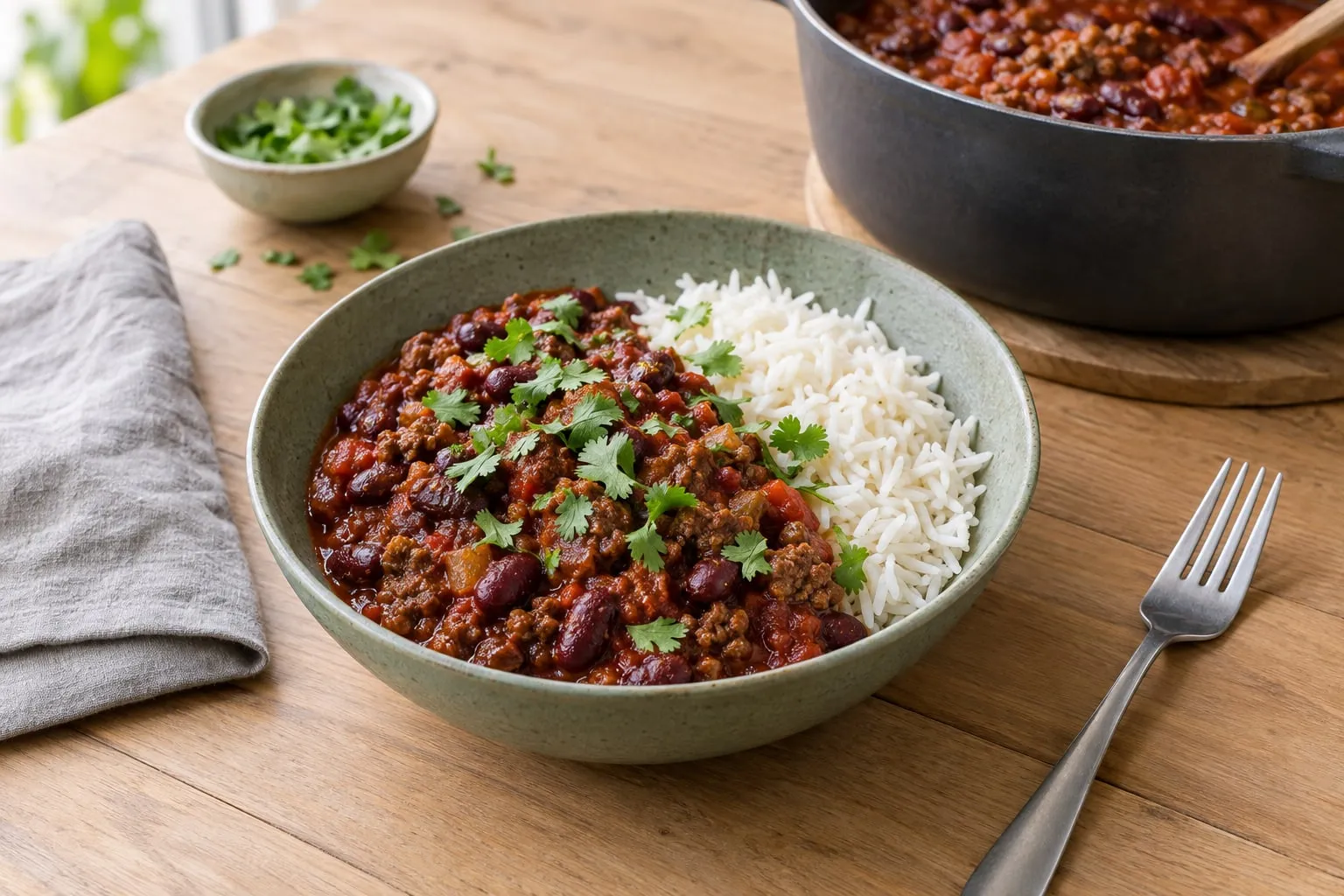
High Protein Chilli con Carne
33 g protein287 kcal1 hr 25 minGluten-freeDairy-free
A batch-cooked dinner that reheats well after an evening session.
Sources
- British Nutrition Foundation – Protein information page: Reference Nutrient Intake and sports guidance on protein around training, citing the American College of Sports Medicine
- McCance and Widdowson's Composition of Foods Integrated Dataset 2021 (CoFID) – Values for milk, soya drink, quark and whole egg
Read our editorial policy for how figures are checked and how to report a mistake.
More protein guides
All guides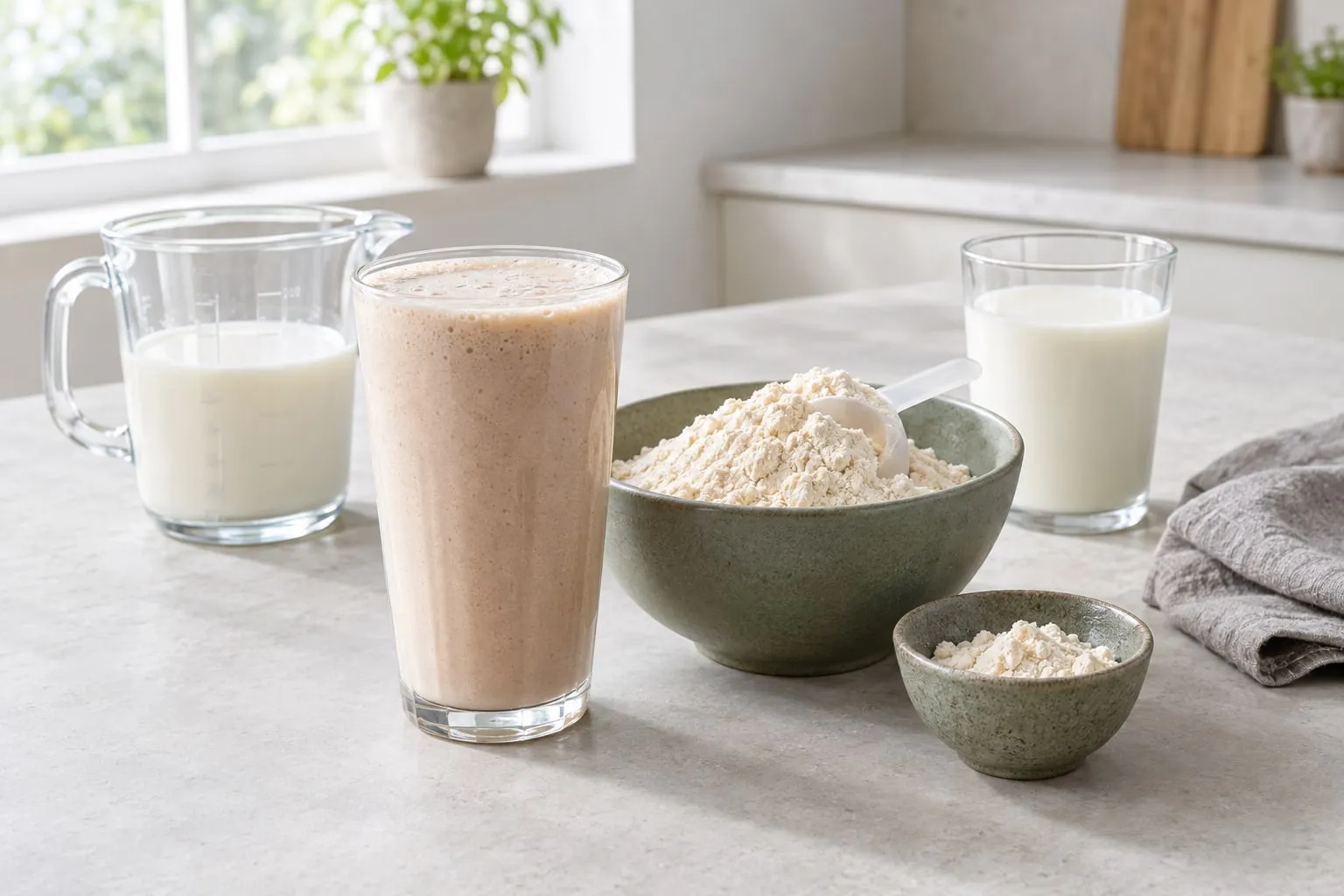
Guide
Do Protein Shakes Help You Lose Weight?
Protein shake for weight loss: a shake adds calories like any food. 30 g whey with water has 22.5 g protein and 114 kcal, with semi-skimmed milk 229 kcal.
Guide
How Much Protein Is in Milk?
Protein in milk: semi-skimmed has 3.5 g per 100 g, so a 200 ml glass gives 7.0 g and a pint 19.9 g. Whole, skimmed, goat's and plant drinks compared.
Guide
How Much Protein Do You Need Per Day?
How much protein do I need? The UK reference is 0.75 g per kg of body weight a day, or 52.5 g at 70 kg. See food values and a worked example day.
Guide
How Much Protein to Build Muscle
How much protein to build muscle: research on regular training suggests 1.2–1.6 g per kg a day, 84–112 g at 70 kg, against 53 g for the UK reference intake.