Protein guide
How Much Protein Is in Milk?
Quick answer
Semi-skimmed milk has 3.5 g protein per 100 g, so a 200 ml glass gives about 7.0 g and a 568 ml pint about 19.9 g. Whole, semi-skimmed and skimmed milk all sit at 3.4–3.5 g per 100 g; only the calories change.
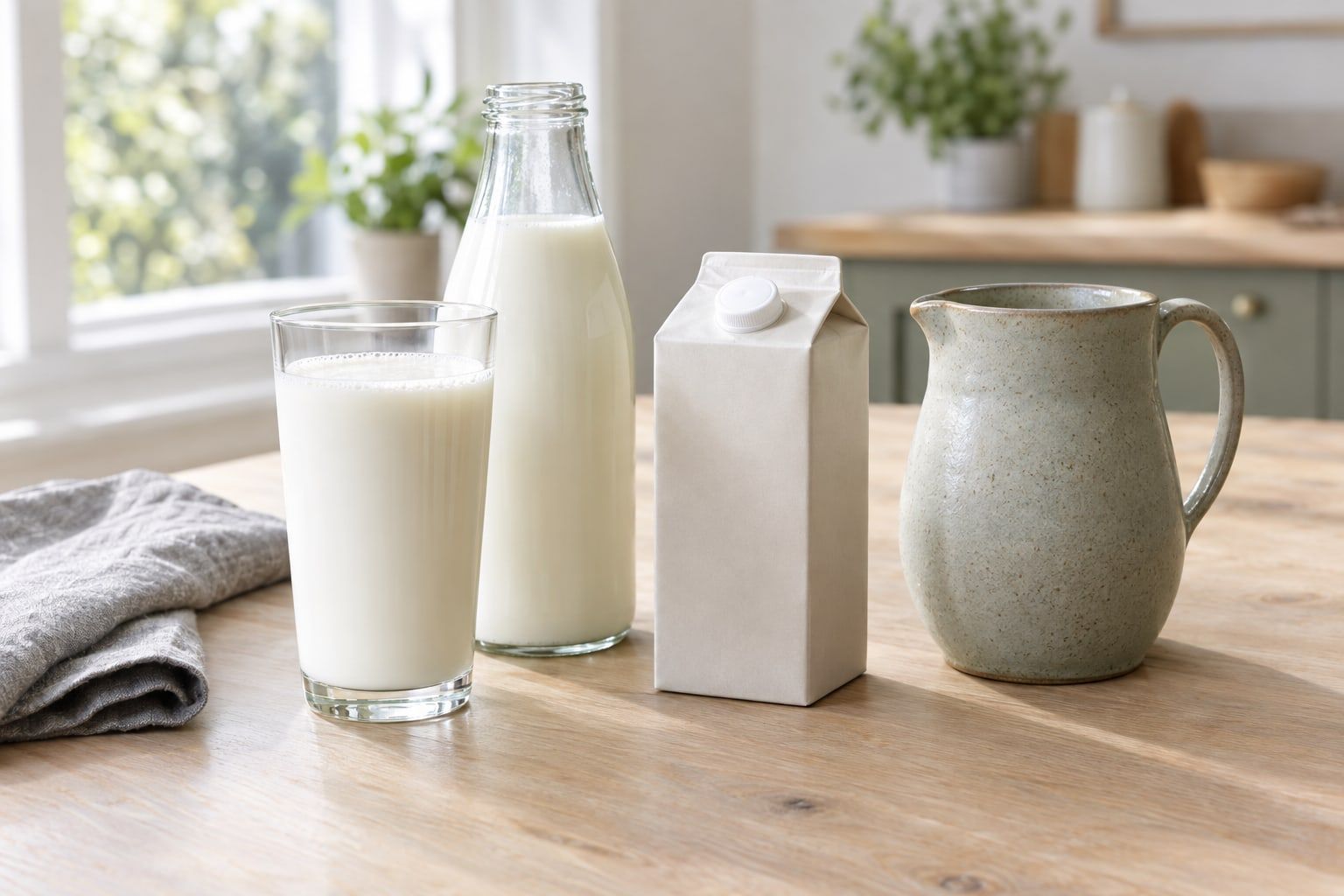
Protein in milk is almost the same whatever the fat level: whole milk has 3.4 g per 100 g, and semi-skimmed and skimmed both have 3.5 g. What changes is the energy, at 63, 46 and 34 kcal per 100 g. A 200 ml glass of semi-skimmed milk gives about 7.0 g protein and 92 kcal, and a 568 ml pint gives 19.9 g and 261 kcal. Those glass and pint figures treat 1 ml as 1 g, which slightly understates milk, since it is a little denser than water.
As fat comes out, protein takes a bigger share of the energy: about 22% in whole milk, 30% in semi-skimmed and 41% in skimmed. Milk protein is roughly 80% casein and 20% whey. Plant drinks sit lower, with 2.4 g per 100 g for unsweetened fortified soya and a typical 1.0 g for oat drink, and goat’s milk has 3.1 g. Products sold as protein milk or made with milk protein concentrate are not in the UK tables used here, so their label is the only source for the figure.
If you want more protein from milk, the straightforward routes are a larger glass or a spoonful of dried skimmed milk. Stirring 15 g into a 200 ml glass adds 5.4 g protein and 52 kcal. A pint of semi-skimmed or skimmed milk covers about 40% of the 50 g reference intake used on UK food labels, so it is worth counting alongside the rest of the day.
| Milk | Protein | Energy | Fat |
|---|---|---|---|
| Whole milk | 3.4 g | 63 kcal | 3.6 g |
| Semi-skimmed milk | 3.5 g | 46 kcal | 1.7 g |
| Skimmed milk | 3.5 g | 34 kcal | 0.3 g |
| 1% fat milk | 3.5 g | 41 kcal | 1.0 g |
| Channel Islands whole milk | 3.5 g | 72 kcal | 4.7 g |
| Goat's milk | 3.1 g | 62 kcal | 3.7 g |
| Soya drink, unsweetened, fortified | 2.4 g | 26 kcal | 1.6 g |
| Oat drink, unsweetened (typical value) | 1.0 g | 45 kcal | 1.5 g |
| Dried skimmed milk powder | 36.1 g | 348 kcal | 0.6 g |
| Evaporated whole milk | 8.4 g | 166 kcal | 9.4 g |
Source: CoFID – McCance and Widdowson's Composition of Foods Integrated Dataset 2021 (codes 12-596, 12-313, 12-307, 12-512, 12-321, 12-328, 12-524, 12-521, 12-522); the oat drink row is a typical value (x19), not a CoFID figure
| Milk | 200 ml glass | 568 ml pint |
|---|---|---|
| Whole milk | 6.8 g, 126 kcal | 19.3 g, 358 kcal |
| Semi-skimmed milk | 7.0 g, 92 kcal | 19.9 g, 261 kcal |
| Skimmed milk | 7.0 g, 68 kcal | 19.9 g, 193 kcal |
| Soya drink, unsweetened | 4.8 g, 52 kcal | 13.6 g, 148 kcal |
| Oat drink, unsweetened | 2.0 g, 90 kcal | 5.7 g, 256 kcal |
Source: Calculated from the per 100 g values above, treating 1 ml as 1 g; milk is slightly denser than water, so real figures are about 3% higher
How much protein is in a glass or pint of milk?
A 200 ml glass of semi-skimmed or skimmed milk gives about 7.0 g protein, and whole milk 6.8 g. The calories differ: 92 kcal for semi-skimmed, 68 kcal for skimmed and 126 kcal for whole milk. A pint, 568 ml, gives 19.9 g protein for semi-skimmed or skimmed and 19.3 g for whole, so a pint is close to 40% of the 50 g reference intake used on UK food labels. These figures treat 1 ml of milk as 1 g, which is slightly low, because milk is a little denser than water. The real amounts are about 3% higher.
Does the fat content change the protein in milk?
Almost not at all. Whole milk has 3.4 g protein per 100 g, and semi-skimmed, skimmed and 1% fat milk all have 3.5 g. Channel Islands whole milk also has 3.5 g, despite 4.7 g fat. What changes is the energy, from 34 kcal per 100 g in skimmed milk to 72 kcal in Channel Islands milk. Because the protein stays level as the fat falls, the share of energy from protein rises, from about 22% in whole milk to 30% in semi-skimmed and 41% in skimmed. For most people the choice between them is about calories and taste, not protein.
How much protein is in goat's milk and plant drinks?
Goat's milk has 3.1 g protein per 100 g, so a 200 ml glass gives about 6.2 g. Unsweetened fortified soya drink has 2.4 g per 100 g, or 4.8 g in a glass and 52 kcal, which is 2.2 g less than the same amount of semi-skimmed milk. Unsweetened oat drink has a typical value of 1.0 g per 100 g, or 2.0 g in a glass. Plant drinks vary widely by product and base ingredient, so compare the protein per 100 ml on the label rather than assuming. The figure for oat drink in this guide is a typical value, not a CoFID figure.
What is high protein milk or milk protein concentrate?
Milk protein concentrate is an ingredient made by concentrating the protein in milk, and it is added to some products sold as protein milk or high protein milk. It is not listed in the UK composition tables used here, so no figure is given. Read the label and look for protein per 100 ml, which will be higher than the 3.5 g of ordinary milk. Dried skimmed milk is a simple way to raise it at home, with 36.1 g protein per 100 g, and evaporated whole milk has 8.4 g per 100 g. Milk protein is made up of roughly 80% casein and 20% whey.
How can you get more protein from a glass of milk?
The simplest route is a bigger glass, since a pint gives nearly three times the protein of a 200 ml serving. Another is dried skimmed milk: stirring 15 g into a 200 ml glass of semi-skimmed milk adds 5.4 g protein and 52 kcal, taking the glass from 7.0 g to 12.4 g and from 92 kcal to 144 kcal. Dried skimmed milk is salty, with 1.38 g salt per 100 g, so use it with a light hand in sauces. The timing of milk-based shakes around exercise is covered in the related guides linked below.
Practical tips
- Check the unit on the label
Labels give protein per 100 ml. A 200 ml glass has twice that, and a pint is about 5.7 times the 100 ml figure.
- Compare plant drinks on the label
Unsweetened soya drink in the tables has 2.4 g protein per 100 g and oat drink about 1.0 g. Other plant drinks vary, so read the pack.
- Stir dried skimmed milk into a little milk first
Whisk the powder into a splash of cold milk to make a paste, then add the rest. It mixes smoothly and avoids lumps.
Myth or fact
- Myth
Is it true that skimmed milk has less protein than whole milk?
No. Skimmed milk has 3.5 g protein per 100 g and whole milk 3.4 g. The difference is fat and calories, 34 kcal against 63 kcal per 100 g.
- The facts
Is it true that plant milks have as much protein as dairy milk?
Some have a similar amount and many have less. Unsweetened fortified soya drink has 2.4 g per 100 g and oat drink a typical 1.0 g, against 3.5 g in semi-skimmed milk.
Frequently asked questions
How much protein is in a glass of milk?
A 200 ml glass of semi-skimmed or skimmed milk has about 7.0 g protein, and whole milk about 6.8 g.
How much protein is in a pint of milk?
A pint, 568 ml, of semi-skimmed or skimmed milk gives about 19.9 g protein, and whole milk about 19.3 g.
How much protein is in 100 ml of milk?
About 3.4–3.5 g for cow's milk, with 3.4 g in whole milk and 3.5 g in semi-skimmed and skimmed.
Which milk has the highest protein?
Among ordinary drinking milks, semi-skimmed, skimmed, 1% fat and Channel Islands all have 3.5 g per 100 g. Products sold as high protein milk may have more, so check the label.
What is milk protein concentrate?
It is a concentrated dairy ingredient added to some high protein milks and drinks. It is not in the UK composition tables, so use the protein figure printed on the pack.
Recipes to try
Sources
- McCance and Widdowson's Composition of Foods Integrated Dataset 2021 (CoFID) – Values for whole, semi-skimmed, skimmed, 1% fat, Channel Islands, goat's, soya, dried skimmed and evaporated milk
Read our editorial policy for how figures are checked and how to report a mistake.
More protein guides
All guides
Guide
Protein Before or After a Workout?
Protein shake before or after workout: timing matters less than the day's total. A 30 g scoop of whey gives 22.5 g protein, 31.3 g with semi-skimmed milk.
Guide
Do Protein Shakes Help You Lose Weight?
Protein shake for weight loss: a shake adds calories like any food. 30 g whey with water has 22.5 g protein and 114 kcal, with semi-skimmed milk 229 kcal.

Guide
High Protein Foods: A Ranked List
High protein foods ranked by protein per 100 g and per 100 kcal: Parmesan has 36.2 g, grilled chicken 32.0 g, dried red lentils 25.6 g and egg white 10.8 g.

Guide
How Much Protein Do You Need Per Day?
How much protein do I need? The UK reference is 0.75 g per kg of body weight a day, or 52.5 g at 70 kg. See food values and a worked example day.