Protein guide
Do Protein Shakes Help You Lose Weight?
Quick answer
A protein shake is a source of calories like any other food. 30 g whey with water has 22.5 g protein and 114 kcal, and with 250 ml semi-skimmed milk 31.3 g protein and 229 kcal.
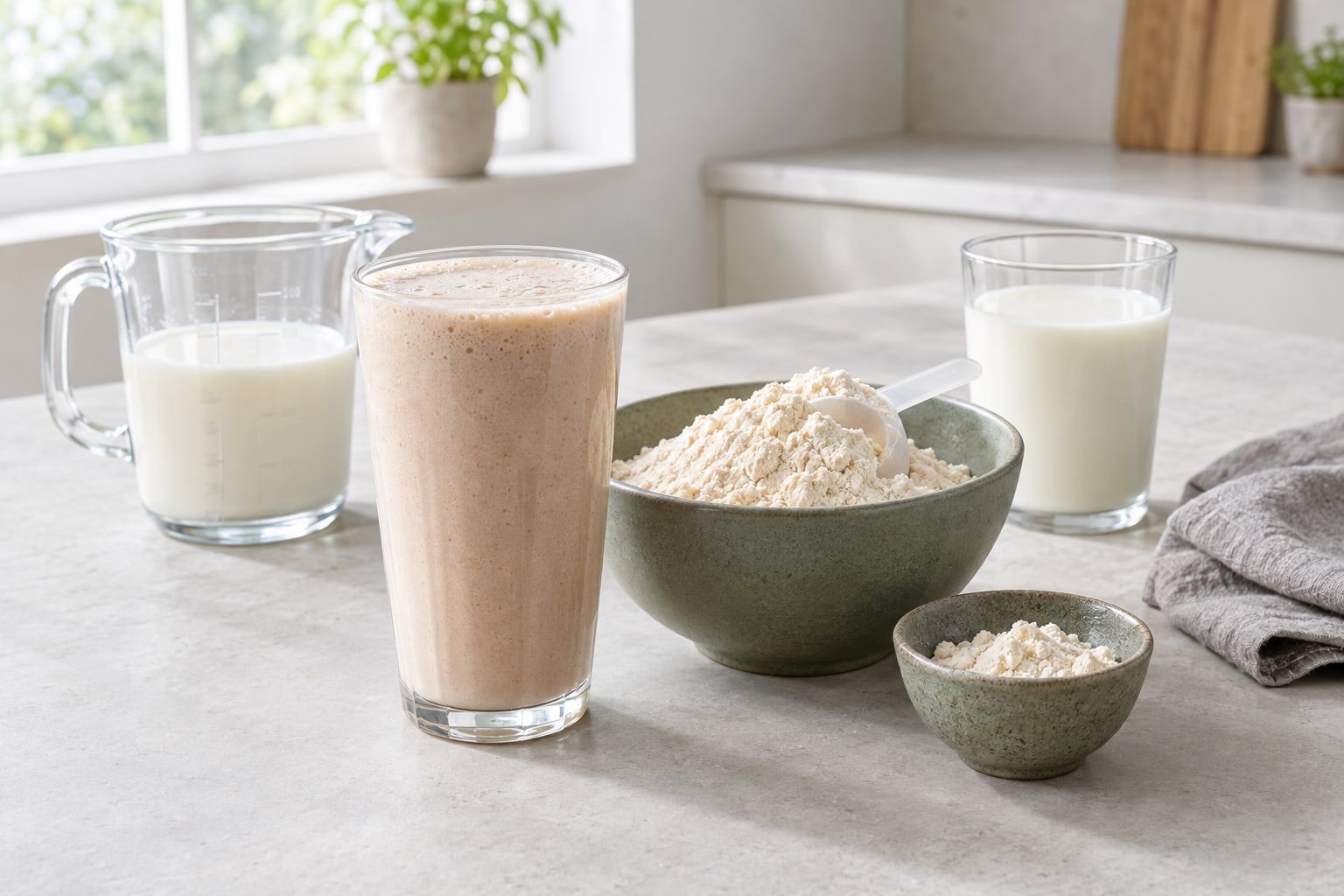
A protein shake for weight loss is a calorie question first: one 30 g scoop of whey in water gives 22.5 g protein and 114 kcal, and the same scoop in semi-skimmed milk gives 31.3 g protein and 229 kcal. Nothing about a shake changes the way energy adds up over a day.
The base decides the numbers. Skimmed milk gives 31.3 g and 199 kcal, soya drink 28.5 g and 179 kcal, and water the lowest at 114 kcal. Anything blended in, such as banana or peanut butter, moves the total up quickly. The British Nutrition Foundation describes higher protein diets as not necessarily better for weight loss than other approaches, so treat a shake as a convenient protein source, not a shortcut.
Decide whether it sits on top of the day or replaces something. Food competes well: 250 g of quark has 36.5 g protein for 185 kcal, fewer calories than the milk shake. Products sold as meal replacements follow their own rules, so read the label on those and speak to your GP or a registered dietitian if you are unsure.
| Shake | Protein | Energy | Liquid |
|---|---|---|---|
| 30 g whey with water | 22.5 g | 114 kcal | 250 ml water |
| 30 g whey with skimmed milk | 31.3 g | 199 kcal | 250 ml skimmed milk |
| 30 g whey with semi-skimmed milk | 31.3 g | 229 kcal | 250 ml semi-skimmed milk |
| 30 g whey with soya drink | 28.5 g | 179 kcal | 250 ml unsweetened soya drink |
Source: Worked out from CoFID figures for skimmed milk, semi-skimmed milk and soya drink (codes 12-307, 12-313, 12-524) with a typical value for whey (x1: 75 g protein, 380 kcal per 100 g); 250 ml of liquid is counted as 250 g
| Food or drink | Weight | Protein | Energy |
|---|---|---|---|
| Whey shake with water | 30 g powder | 22.5 g | 114 kcal |
| Whey shake with semi-skimmed milk | 30 g powder, 250 ml milk | 31.3 g | 229 kcal |
| Quark | 250 g | 36.5 g | 185 kcal |
| Skyr, plain, fat free (typical value) | 150 g | 16.5 g | 96 kcal |
| Strained 0% fat Greek yogurt (typical value) | 150 g | 15.5 g | 81 kcal |
Source: Worked out from CoFID figures for semi-skimmed milk and quark (codes 12-313, 12-174), with typical values for whey, skyr and Greek yogurt (x1, x4, x5)
Do protein shakes help you lose weight?
A shake does not make weight come off by itself. It is a source of calories like any other food, and weight over time depends on total energy eaten and used. The British Nutrition Foundation says higher protein diets are 'not necessarily better' for weight loss than other approaches, though they may work well for some people. A shake can be a convenient way to reach a protein target. Whether it fits a weight goal depends on what else you eat that day.
How many calories are in a protein shake?
The liquid decides most of it. One scoop (30 g) of whey stirred into water gives 22.5 g protein and 114 kcal. Swap the water for skimmed milk and you get 31.3 g protein and 199 kcal, semi-skimmed milk gives 31.3 g and 229 kcal, and unsweetened soya drink gives 28.5 g and 179 kcal. Milk adds 8.8 g of protein, but also 85 kcal for skimmed or 115 kcal for semi-skimmed. Banana, peanut butter or oats raise the total much further, so a blended shake can easily pass 400 kcal.
Should a shake go on top of meals or replace one?
The arithmetic is simple. A shake added on top of your normal food adds its calories to the day, 229 kcal for a milk shake. A shake that takes the place of a snack or meal changes the total only by the difference between the two. A high calorie shake with 50 g protein is the opposite of a slimming shake and is built to add energy. Decide first whether the shake is an extra or a swap, then choose the base to match.
Are meal replacement and slimming shakes different?
Yes. Products sold as slimming shakes or complete meal replacements are formulated with added vitamins, minerals and a set calorie level, and they are covered by their own rules. They are not the same as a scoop of whey in milk. Read the label for the energy, protein and instructions, and follow the directions. This page covers shakes made from protein powder, and the figures here do not apply to those products. If you are pregnant or have a health condition, speak to your GP or a registered dietitian before changing how you eat.
Is food a better source of protein than a shake?
Food can do the same job, sometimes for fewer calories. 250 g of quark has 36.5 g protein and 185 kcal, which beats a semi-skimmed milk shake on both counts, at 31.3 g and 229 kcal. 150 g of skyr gives 16.5 g for 96 kcal and 150 g of strained Greek yogurt 15.5 g for 81 kcal. A shake wins on convenience and the time it takes. Food wins on variety, and it is often cheaper per gram of protein.
Practical tips
- Choose the liquid on purpose
Water keeps a shake lowest at 114 kcal, and skimmed milk adds 85 kcal for 8.8 g more protein. Pick whichever suits the rest of your day.
- Count the extras
Peanut butter, banana, honey or oats can double the calories. Add them to your count if you are tracking.
- Read the label
Powders differ between tubs. Read the protein and energy per serving on the label and use the scoop weight printed there.
Myth or fact
- Myth
Is it true that protein shakes make you lose weight?
No. A shake is a source of calories like any food. The British Nutrition Foundation says higher protein diets are 'not necessarily better' for weight loss than others.
- Partly
Is it true that a protein shake has fewer calories than a meal?
Not always. A shake with water has 114 kcal, but one made with semi-skimmed milk, banana and peanut butter can pass 400 kcal. It depends entirely on what goes in.
Frequently asked questions
Is a protein shake good for weight loss?
A shake is one way to get protein, but it is not special for weight loss. It adds calories like any other food, 114 kcal in water or 229 kcal with semi-skimmed milk.
How many calories are in a protein shake?
Stirred into 250 ml water, a 30 g scoop of whey comes to 114 kcal and 22.5 g protein. In 250 ml semi-skimmed milk it comes to 229 kcal and 31.3 g protein.
Can a protein shake replace a meal?
A scoop of whey in water or milk is not a complete meal. Products sold as meal replacements follow their own rules, so read the label and the instructions.
What is a lower calorie way to make a protein shake?
Use water or skimmed milk. Skimmed milk gives 199 kcal in total, and water 114 kcal.
Is food better than a protein shake?
Food can match or beat a shake. 250 g of quark has 36.5 g protein and 185 kcal, against 31.3 g and 229 kcal for a semi-skimmed milk shake.
Recipes to try
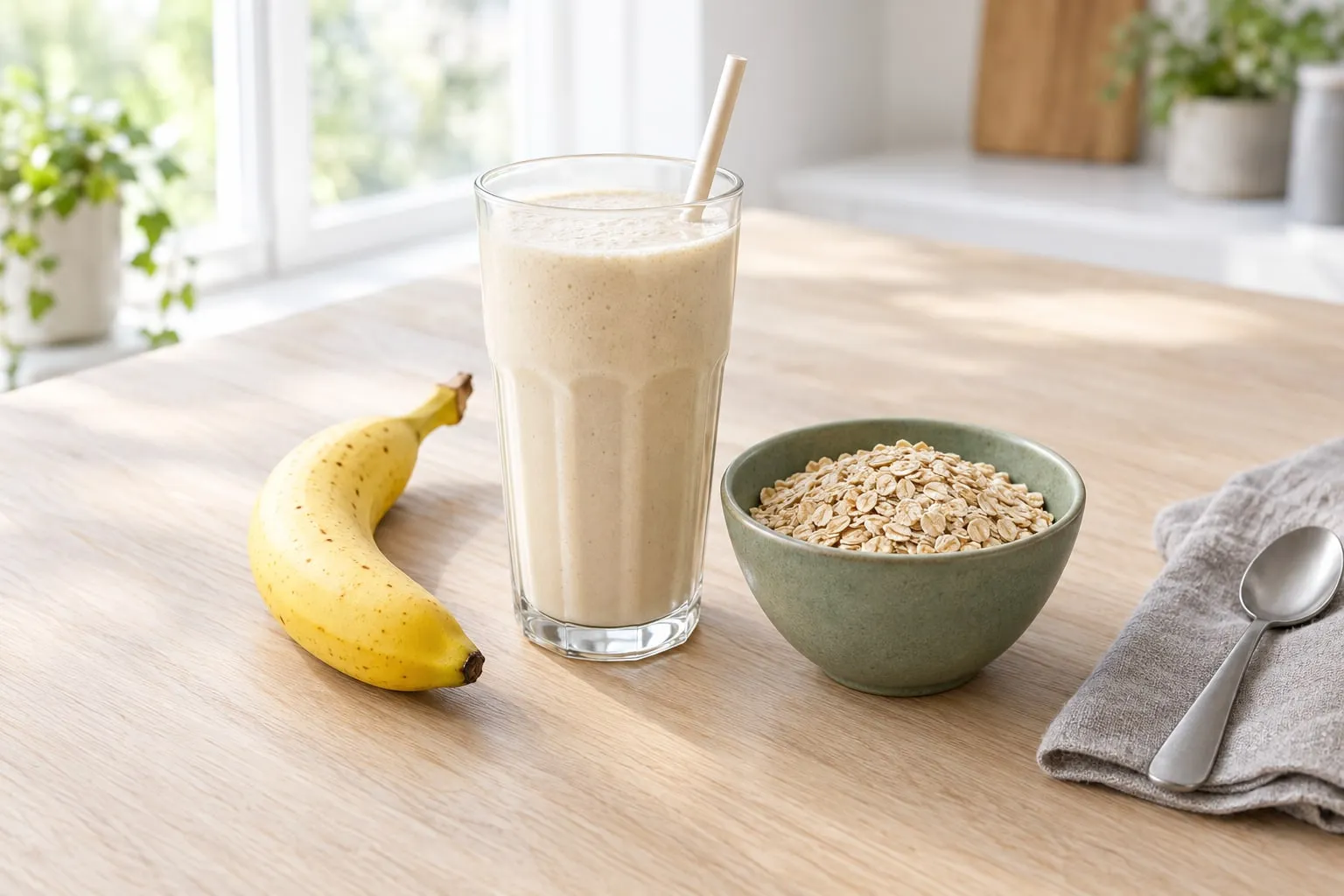
Homemade Protein Shake
38 g protein447 kcal3 minVegetarian
A basic shake with the numbers worked out per glass.
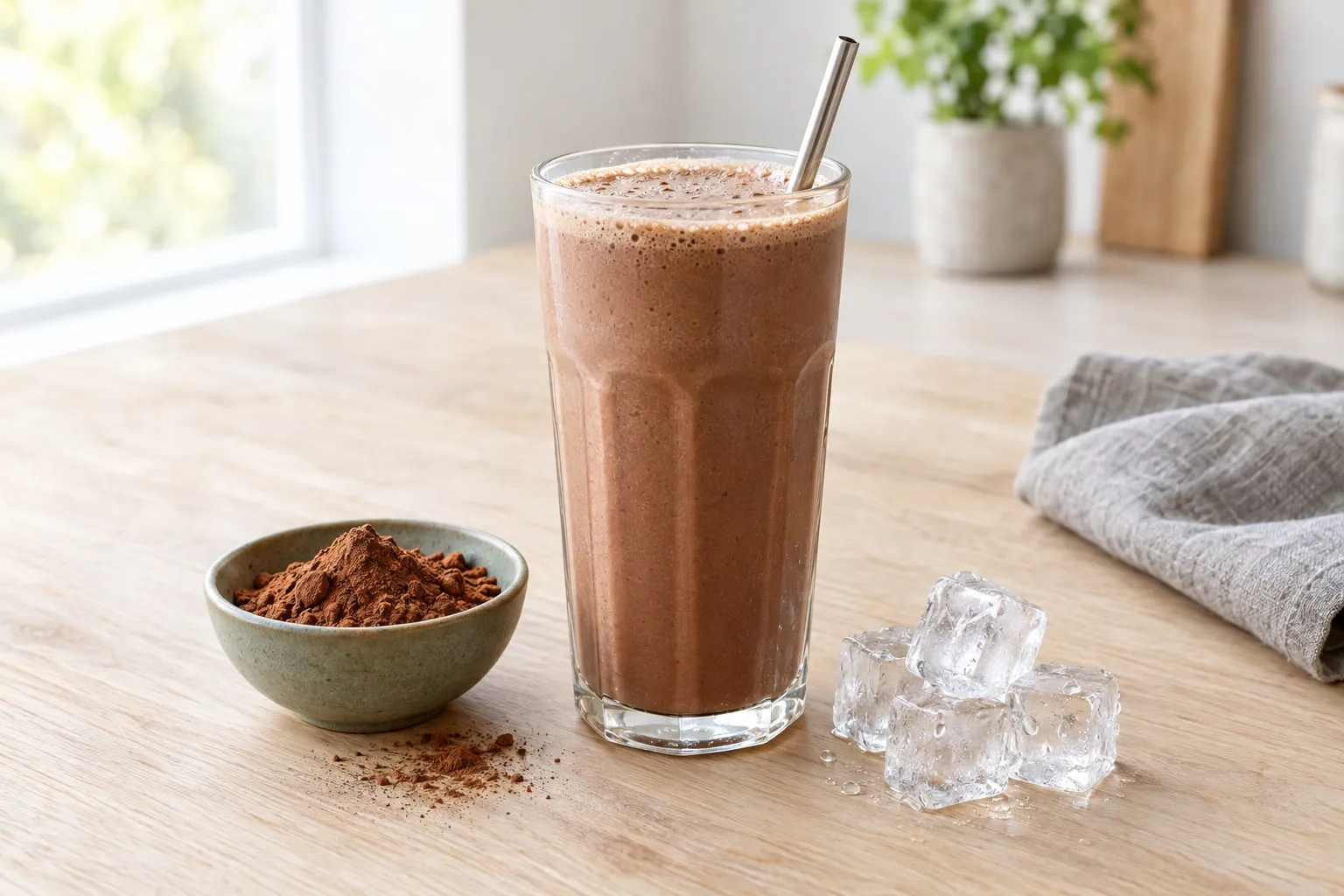
Chocolate Protein Shake
34 g protein268 kcal3 minVegetarianGluten-free
A chocolate version made with simple ingredients.
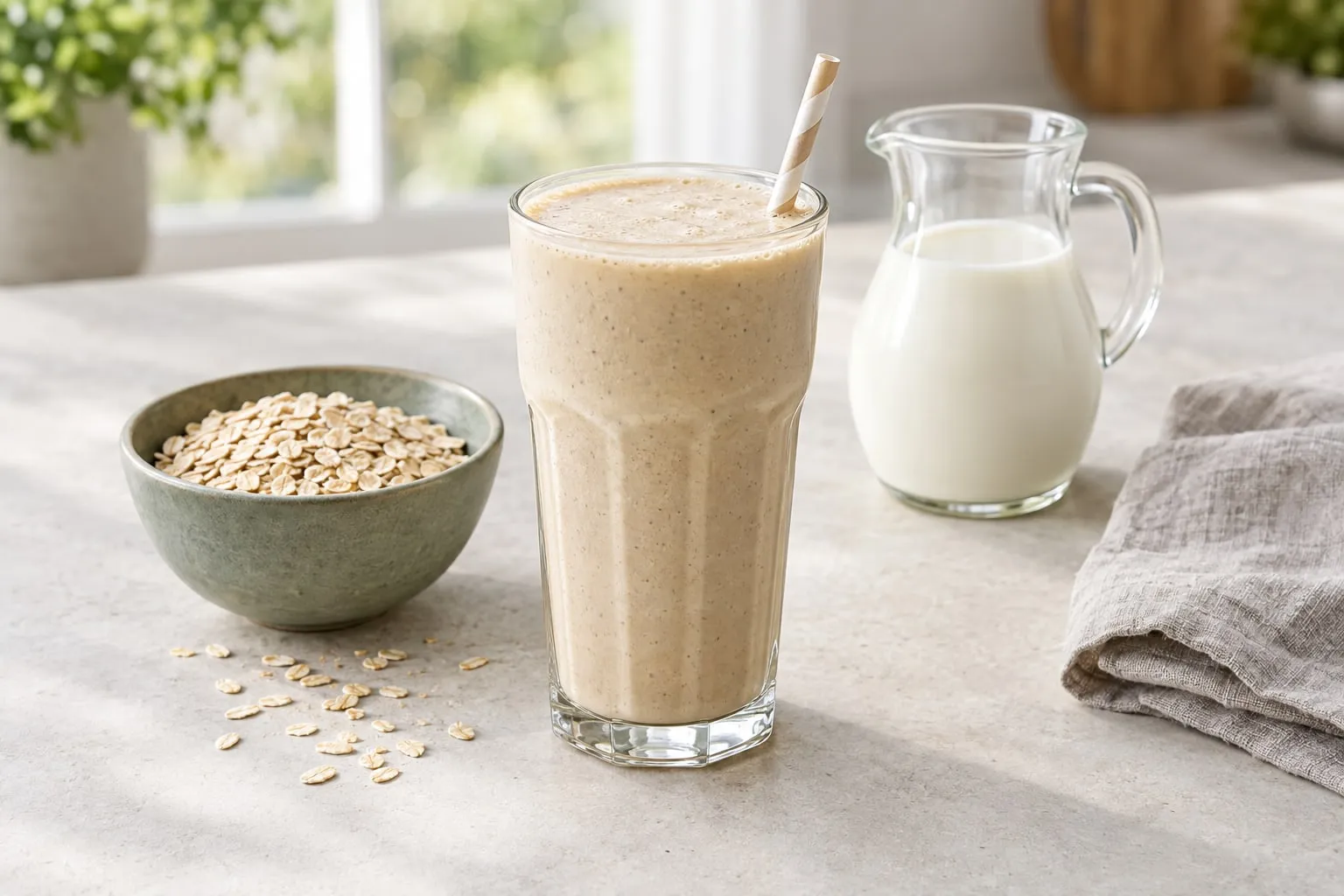
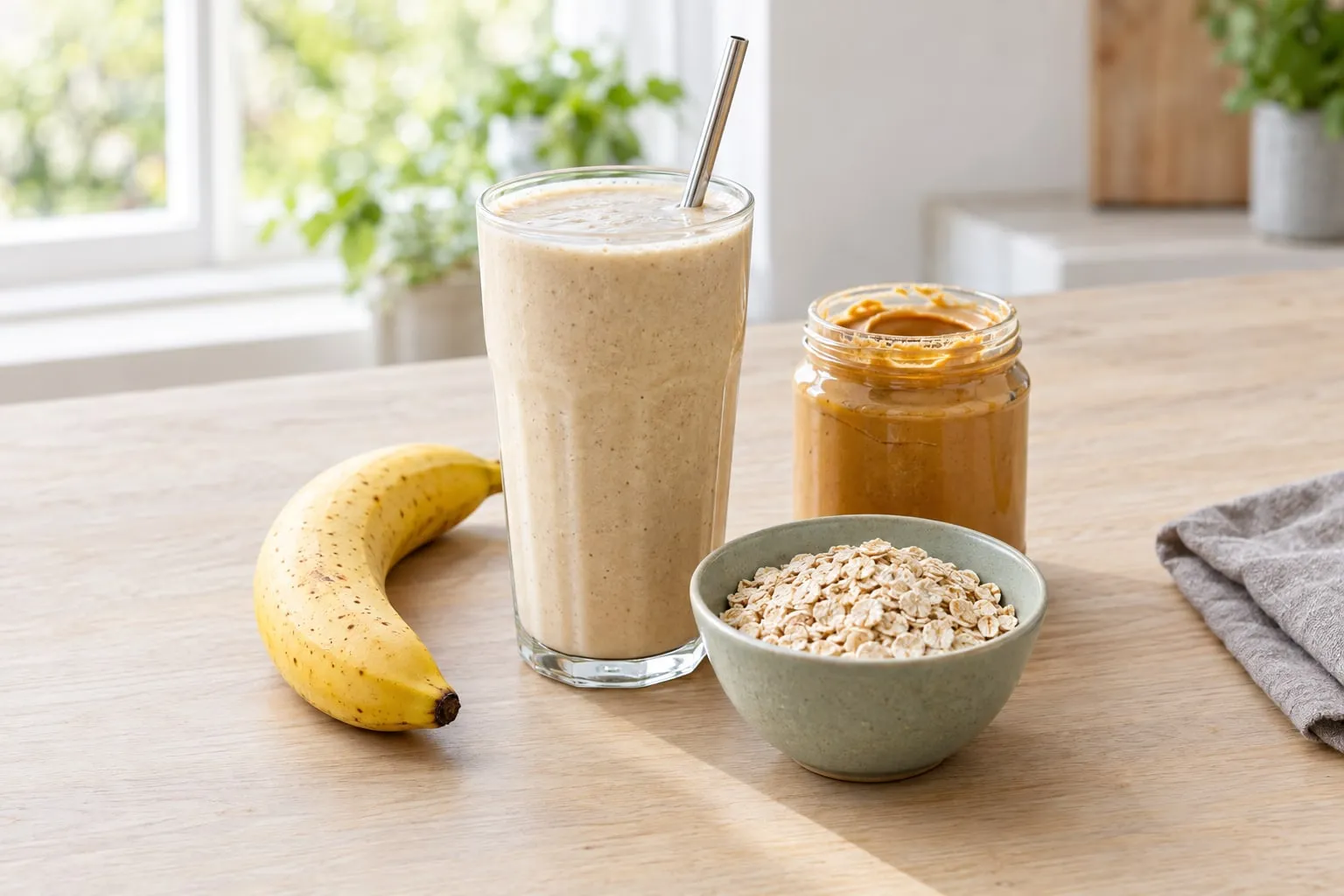
High Calorie Protein Shake
51 g protein858 kcal5 minVegetarian
A shake built for extra energy, the opposite of a light shake.
Sources
- British Nutrition Foundation – Protein information page: higher protein diets and weight loss
- McCance and Widdowson's Composition of Foods Integrated Dataset 2021 (CoFID) – Values for skimmed and semi-skimmed milk, soya drink and quark
Read our editorial policy for how figures are checked and how to report a mistake.
More protein guides
All guides
Guide
Protein Before or After a Workout?
Protein shake before or after workout: timing matters less than the day's total. A 30 g scoop of whey gives 22.5 g protein, 31.3 g with semi-skimmed milk.
Guide
How Much Protein Is in Milk?
Protein in milk: semi-skimmed has 3.5 g per 100 g, so a 200 ml glass gives 7.0 g and a pint 19.9 g. Whole, skimmed, goat's and plant drinks compared.
Guide
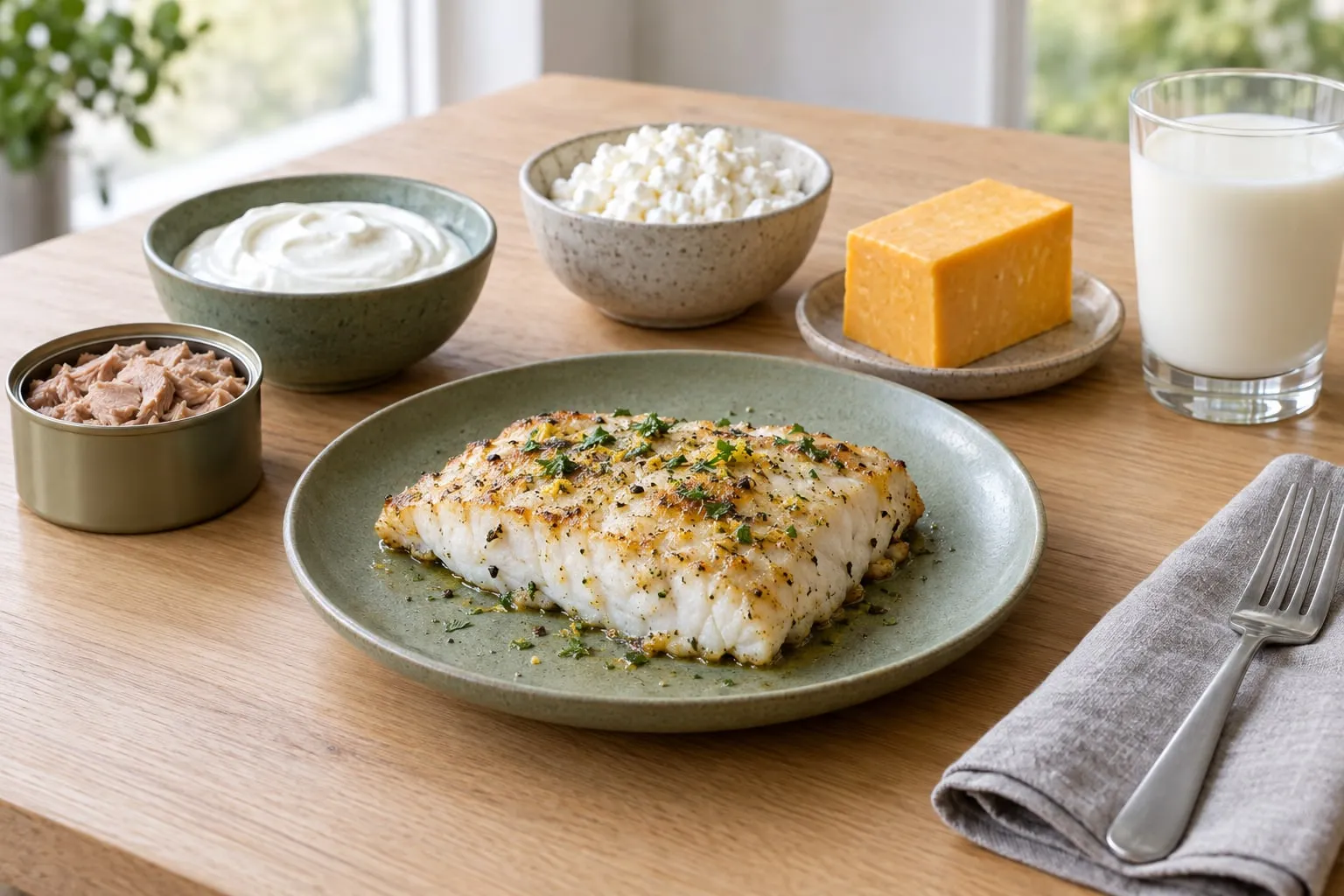
Protein for Weight Loss
Protein for weight loss in numbers: 20 g of protein costs 84 kcal from baked cod, 105 kcal from Greek yogurt and 328 kcal from Cheddar. Ranked table inside.

Guide
How Much Protein Do You Need Per Day?
How much protein do I need? The UK reference is 0.75 g per kg of body weight a day, or 52.5 g at 70 kg. See food values and a worked example day.