Method
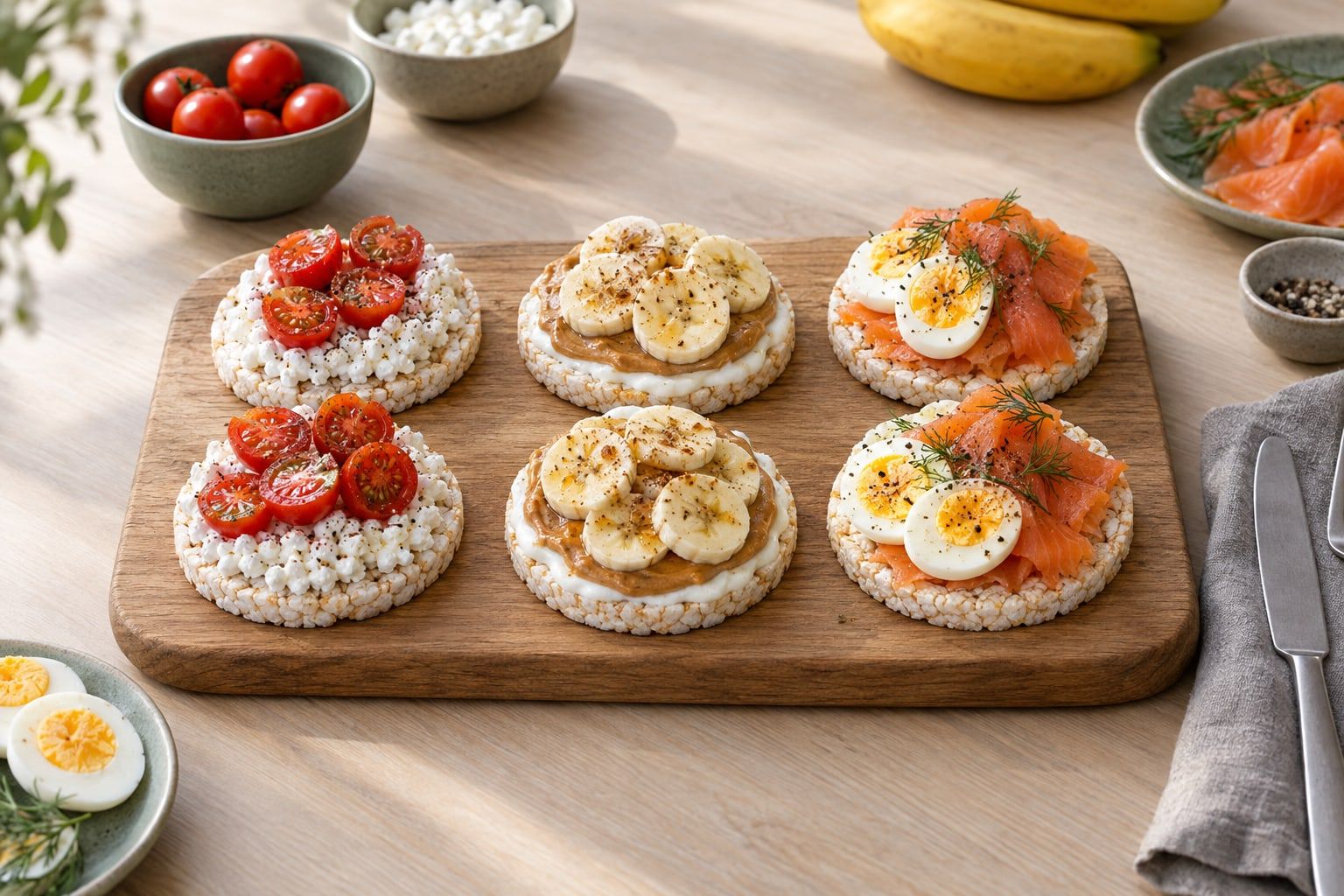
Halve the cherry tomatoes, slice the banana and slice the boiled egg. Set the rice cakes on the plate in three pairs.
Topping 1: spread the cottage cheese over the first pair of rice cakes, then add the tomatoes and a grind of black pepper.
Topping 2: spread the peanut butter over the second pair, spoon on the Greek yogurt and finish with the banana slices.
Topping 3: tear the smoked salmon over the third pair and lay the sliced egg on top with the rest of the pepper.
Serve straight away, while the rice cakes are still crisp.
How to tell it's done
- The rice cakes are still crisp when you bite them.
- The toppings sit in an even layer right to the edges, with no bare patches.
Tips for success
- Assemble just before eating
Rice cakes soak up moisture and go soft within about 10 minutes of topping. Prepare the toppings ahead and spoon them on when you are ready to eat.
- Boil the eggs the day before
A hard-boiled egg takes 10 minutes from the boil, which breaks a 5-minute snack. Cook a few at the weekend, keep them peeled in the fridge and slice one when needed.
- Spread peanut butter first
A thin layer of peanut butter acts as a barrier between the rice cake and the yogurt. The base stays crisp for longer than if the yogurt goes straight on.
- Skip extra salt
Cottage cheese and smoked salmon are both salty. A grind of black pepper adds lift without more salt.
Boost the protein
- Use 150 g cottage cheese rather than 100 g on the first topping: +4.7 g protein for that serving.
- Add a second sliced egg to the egg and salmon topping: +6.3 g protein for that serving.
- Use 100 g Greek yogurt instead of 50 g on the peanut butter topping: +5.2 g protein for that serving.
Choosing ingredients
Pick plain, unsalted rice cakes. Flavoured ones can add sugar and salt. A rice cake on its own has under 1 g protein, so the topping does the work.
For the nutrition figures, CoFID has no rice cakes, so crisp rice cereal is the nearest match. Real rice cakes are around 380 kcal and 8 g protein per 100 g, which adds about 0.4 g protein to each serving.
Choose plain cottage cheese. Reduced-fat versions have a little more protein per 100 g, and flavoured tubs add sugar.
Variations
- With reduced-fat cottage cheese
Use reduced-fat cottage cheese in the first topping. Protein is about 1.2 g higher for that serving and the energy about 35 kcal lower.
- With cucumber in place of tomato
Use 60 g sliced cucumber instead of the tomatoes. Protein is almost unchanged and the topping is crunchier.
Serve it with
- Fresh fruit
- A mug of black coffee
- A glass of semi-skimmed milk
Storage
Keep each topping in its own covered container in the fridge for up to 2 days and assemble on fresh rice cakes.
Do not freeze topped rice cakes, as the base turns soggy as soon as it thaws.
Troubleshooting
Why have the protein rice cakes gone soggy?
They were topped too early. Assemble the rice cakes within a minute or two of eating, and spread peanut butter or cottage cheese right to the edges to seal the surface.
Why do the protein rice cakes taste too salty?
Cottage cheese and smoked salmon both contain salt. Use plain, unsalted rice cakes, leave out added salt, and choose the peanut butter topping when you have already had a salty snack.
Frequently asked questions
How much protein is in these rice cakes with toppings?
A serving averages 13 g protein and 213 kcal, so 24% of the energy comes from protein. By topping, cottage cheese and tomato gives about 11 g, peanut butter and banana about 11 g, and egg and smoked salmon about 16 g.
Are rice cakes high in protein on their own?
No. A single rice cake of about 9 g has under 1 g protein, so the protein in these rice cakes comes almost entirely from the topping.
Can I make rice cake protein bars?
These are open toppings, not bars. For a pressed bar that sets in the fridge, see the no bake protein bars.
How long do protein rice cakes stay crisp?
About 10 minutes once topped. Peanut butter spread thinly over the surface slows the moisture, but assemble just before eating for the best crunch.
Made it? Rate the recipe
Read next
- Protein in Rice and PastaRice with protein: 75 g dry basmati has 6.1 g protein and 75 g dried pasta 8.5 g. Raw and cooked values, plus how high protein pasta compares.
- How Much Protein Do You Need Per Day?How much protein do I need? The UK reference is 0.75 g per kg of body weight a day, or 52.5 g at 70 kg. See food values and a worked example day.
Written by The Protein Recipes editorial team. Nutrition is calculated from the ingredient list using CoFID. Read how our recipes are made and how we correct mistakes.