Protein guide
High Protein Low Calorie Foods
Quick answer
Egg white gives the most protein for the energy, at 25.1 g protein per 100 kcal, followed by cod, prawns, tuna and chicken breast at about 23 g. Quark and Greek yogurt give 19–20 g per 100 kcal.
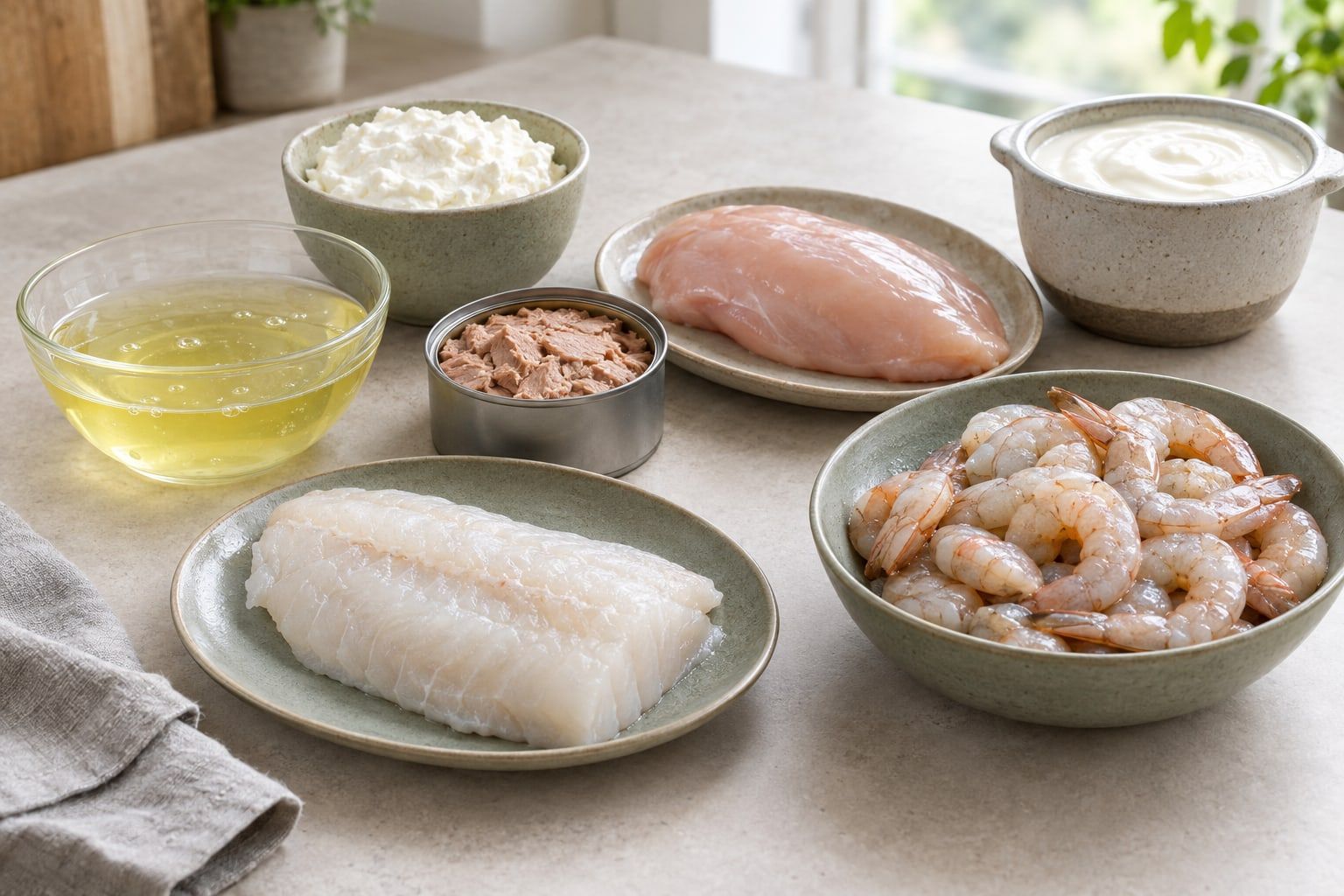
High protein low calorie foods are easiest to compare as protein per 100 kcal. Raw egg white leads with 25.1 g, then raw cod at 23.3 g, king prawns at 22.9 g, tinned tuna at 22.8 g and chicken breast at about 22.6 g.
Fat is the variable that moves the ranking. Cod, prawns and egg white contain almost none, so nearly all of their energy comes from protein. A whole egg gives 9.6 g protein per 100 kcal, because the yolk carries fat, and full-fat cottage cheese gives about 9.1 g against 15.6 g for the reduced fat version. Dairy sits in the middle, with quark at 19.7 g and strained 0% Greek yogurt at 19.1 g.
Treat the figures as a way of choosing between options rather than a target. A bar, a shake or a ready meal can be judged in seconds by dividing its protein by its calories, and a tin of tuna (25.4 g protein for 111 kcal) or a tub of quark (36.5 g for 185 kcal) makes a useful benchmark for comparison.
| Food | Protein per 100 g | Energy per 100 g | Protein per 100 kcal |
|---|---|---|---|
| Egg white, raw | 10.8 g | 43 kcal | 25.1 g |
| Cod, raw | 17.5 g | 75 kcal | 23.3 g |
| King prawns, raw | 17.6 g | 77 kcal | 22.9 g |
| Tuna in brine, drained | 24.9 g | 109 kcal | 22.8 g |
| Chicken breast fillet, raw (typical value) | 24.0 g | 106 kcal | 22.6 g |
| Turkey breast mince, raw (typical value) | 22.0 g | 105 kcal | 21.0 g |
| Quark | 14.6 g | 74 kcal | 19.7 g |
| Strained 0% Greek yogurt (typical value) | 10.3 g | 54 kcal | 19.1 g |
| Skyr, fat free (typical value) | 11.0 g | 64 kcal | 17.2 g |
| Reduced fat cottage cheese | 10.6 g | 68 kcal | 15.6 g |
Source: CoFID – McCance and Widdowson's Composition of Foods Integrated Dataset 2021 (codes 12-938, 16-372, 16-387, 16-416, 12-174, 12-550); chicken, turkey, Greek yogurt and skyr are typical values, not CoFID
| Portion | Weight | Protein | Energy |
|---|---|---|---|
| Chicken breast fillet, raw | 150 g | 36.0 g | 159 kcal |
| Cod, raw | 200 g | 35.0 g | 150 kcal |
| Tuna in brine, drained (1 tin) | about 102 g | 25.4 g | 111 kcal |
| Quark (1 tub) | 250 g | 36.5 g | 185 kcal |
| Whey protein powder (1 scoop) | 30 g | 22.5 g | 114 kcal |
| Whey with 300 ml semi-skimmed milk | 30 g + 300 ml | 33.0 g | 252 kcal |
Source: Calculated from CoFID and typical values; the scoop weight and the tin drained weight are assumptions, and whey is a typical value (75 g protein and 380 kcal per 100 g)
Which food has the most protein for the fewest calories?
Raw egg white comes first at 25.1 g protein per 100 kcal, because it is almost entirely protein and water. White fish and shellfish are close behind: raw cod gives 23.3 g protein per 100 kcal and raw king prawns 22.9 g. Tuna in brine (22.8 g), raw chicken breast (22.6 g) and turkey breast mince (21.0 g) follow. For comparison, a whole egg gives 9.6 g per 100 kcal, because the yolk adds fat.
Are dairy foods high protein and low calorie?
Several are. Quark has 14.6 g protein for 74 kcal per 100 g, which is 19.7 g per 100 kcal, and strained 0% Greek yogurt gives 19.1 g. Fat free skyr gives 17.2 g, and reduced fat cottage cheese 15.6 g. The full-fat versions have more energy for the same protein: full-fat cottage cheese has 9.4 g protein for 103 kcal per 100 g, about 9.1 g per 100 kcal. A 250 g tub of quark delivers 36.5 g protein for 185 kcal.
What is the lowest calorie protein bar?
There is no single answer, because bars vary a great deal, and the useful measure is protein per 100 kcal. A bar with 20 g protein and 200 kcal gives 10 g per 100 kcal, which is about the same as a whole egg and less than half the figure for chicken or tuna. Check the label for both numbers and divide, and compare sweeteners and fibre as well. Homemade bars made with whey, oats and a little nut butter can be tuned to the calories you want.
Can protein shakes be low calorie?
Yes, mostly because of what goes into them. A 30 g scoop of whey protein powder gives 22.5 g protein and 114 kcal when mixed with water. Mixed with 300 ml of semi-skimmed milk it gives 33.0 g and 252 kcal, because the milk adds 10.5 g protein and 138 kcal. Skimmed milk in the same amount gives the same 33.0 g for 216 kcal. A smoothie with fruit, nut butter or oats adds more energy again, so the shake is as low in calories as its ingredients.
How do you use these foods in a normal day?
Egg whites, white fish, tinned tuna and quark are the easiest to build meals around. An omelette made with whole eggs and extra whites, a cod fillet with vegetables, or a tuna salad each give 25 g or more protein for around 100–250 kcal. The NHS Eatwell Guide suggests choosing lean cuts of meat and mince and eating at least 2 portions of fish a week, one of them oily. Oily fish such as salmon has more fat and energy but still counts towards that advice.
Practical tips
- Check the protein per 100 kcal on labels
Divide the protein by the kcal and multiply by 100. Foods above 15 g per 100 kcal are the leanest sources; foods around 10 g sit nearer to whole eggs.
- Mind what the protein comes with
Sauces, oil in the pan and butter can add more calories than the protein source itself. A cod fillet with a spoonful of oil has noticeably more energy than the same fillet steamed.
- Weigh cooked foods with cooked values
Raw chicken breast has 24.0 g protein per 100 g and grilled breast 32.0 g. Using the wrong one throws off the calories as well as the protein.
Myth or fact
- Myth
Is it true that a protein bar is always lower in calories than a meal?
No. Bars range widely, and a bar with 200 kcal for 20 g protein gives 10 g per 100 kcal. A tin of tuna gives 25.4 g protein for 111 kcal.
- Myth
Is it true that low fat dairy has less protein?
No. Reduced fat cottage cheese has 10.6 g protein per 100 g against 9.4 g for the full-fat version, because the fat takes up weight without adding protein.
Frequently asked questions
What is the lowest calorie high protein food?
Egg white is the leanest at 25.1 g protein per 100 kcal. White fish and prawns follow at 23.3 g and 22.9 g, and tuna in brine at 22.8 g.
How much protein is in 100 calories of chicken?
About 22.6 g, using the typical value of 24.0 g protein and 106 kcal per 100 g of raw skinless breast fillet. A 150 g fillet gives 36.0 g protein for 159 kcal.
Are protein shakes with low calories possible?
A 30 g scoop of whey mixed with water has 22.5 g protein and 114 kcal. With 300 ml semi-skimmed milk, it comes to 33.0 g and 252 kcal.
What low calorie foods are high in protein for vegetarians?
Egg white (25.1 g per 100 kcal), quark (19.7 g) and strained 0% Greek yogurt (19.1 g) are the leanest vegetarian options. Firm tofu has 10.0 g per 100 kcal.
Recipes to try
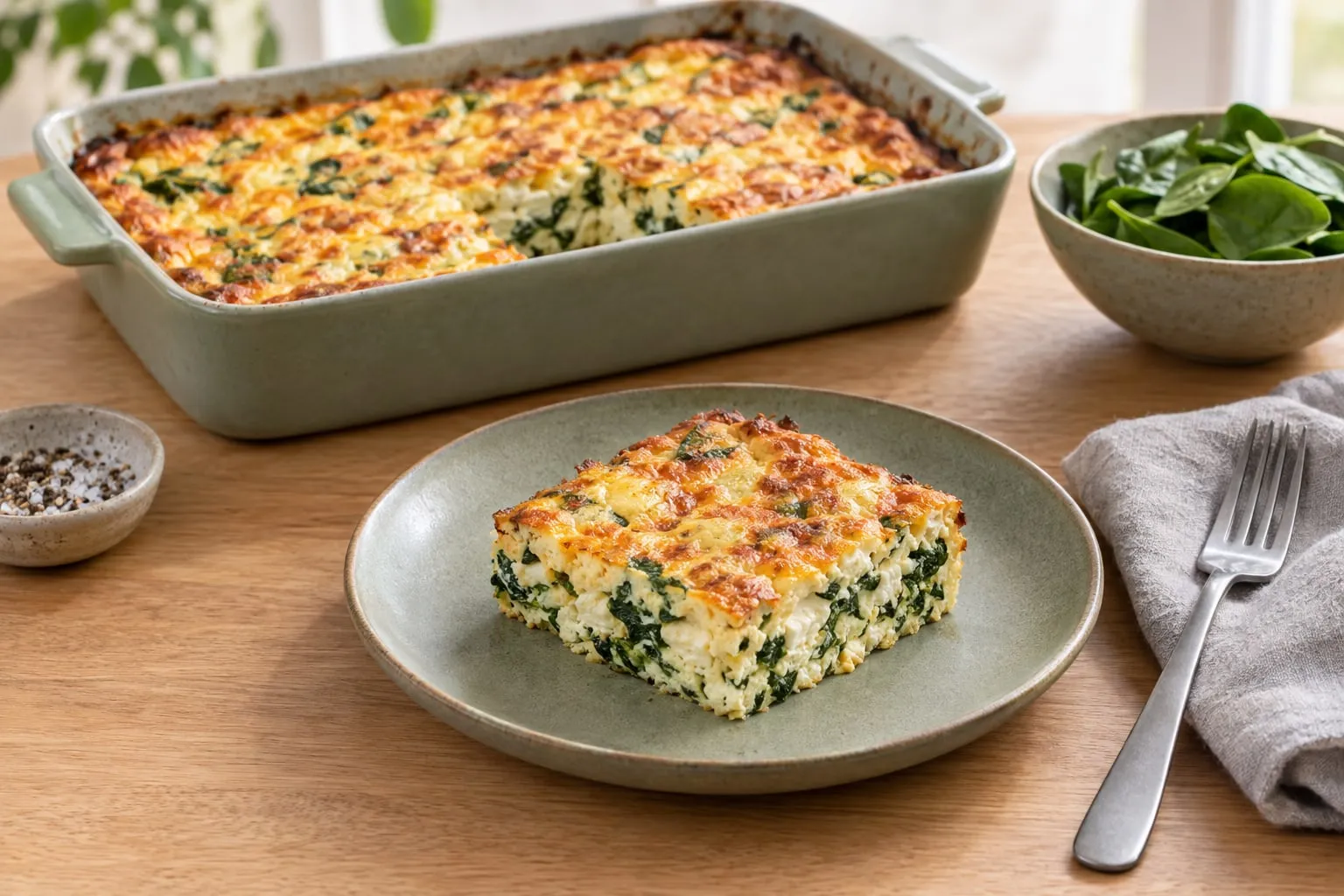
Cottage Cheese and Egg Bake
22 g protein190 kcal55 minVegetarianGluten-free
Eggs and cottage cheese baked into 6 portions of 22 g protein and 190 kcal each.
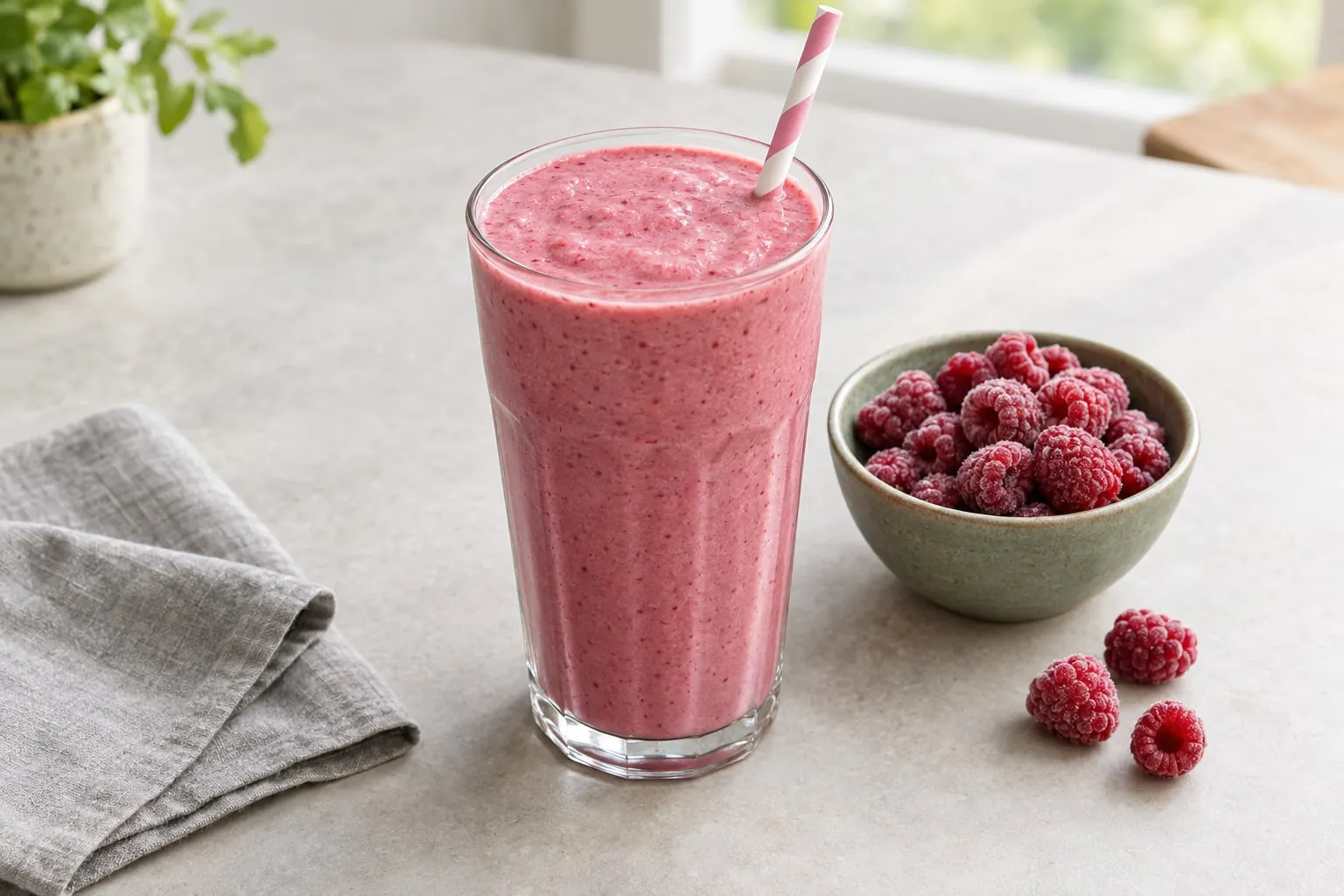
Low Calorie High Protein Smoothie
27 g protein196 kcal5 minVegetarianGluten-free
Skimmed milk, strained 0% Greek yogurt and raspberries give 27 g protein for 196 kcal per glass.
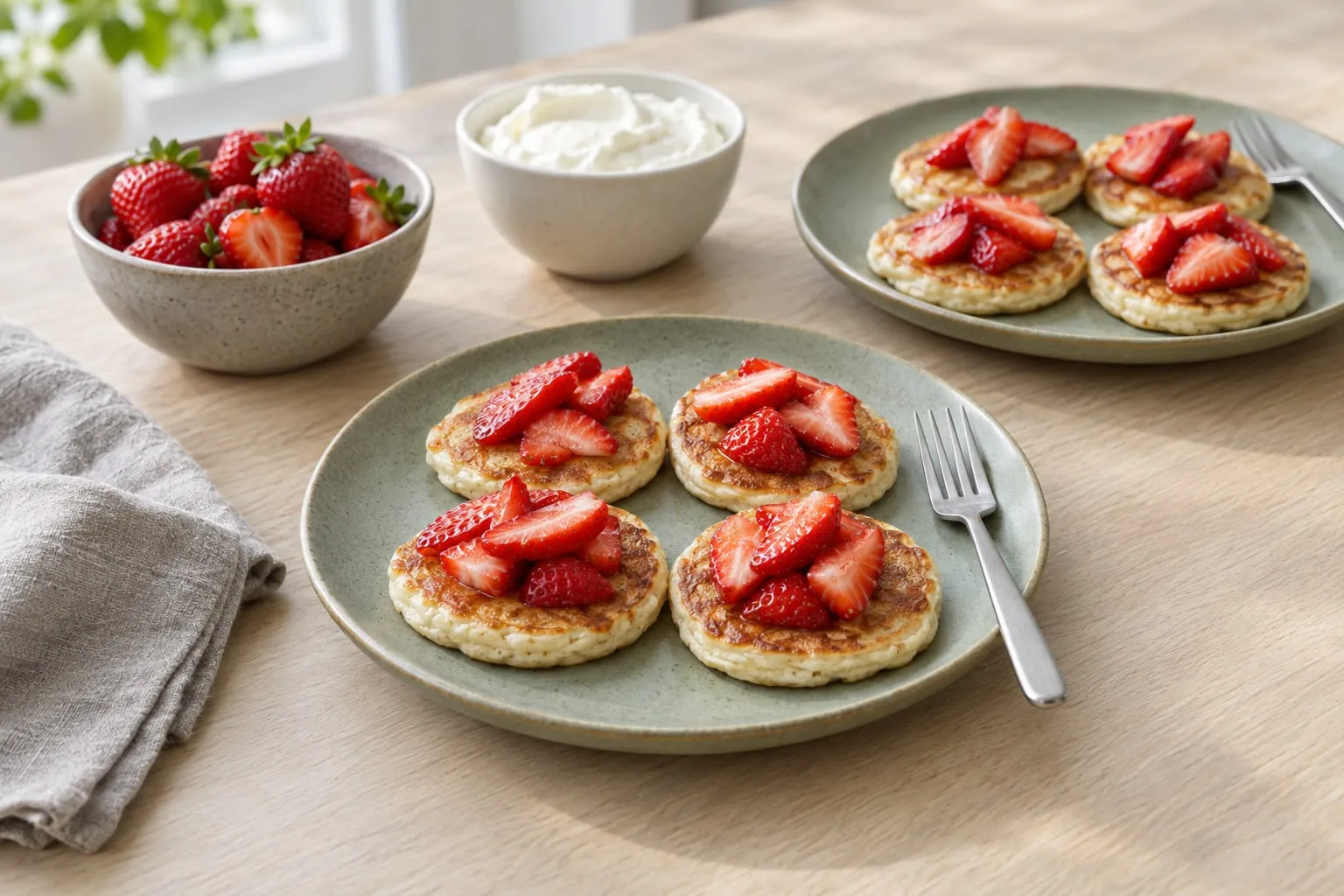
Low Calorie Protein Pancakes
26 g protein306 kcal22 minVegetarian
Quark and oat pancakes with 26 g protein and 306 kcal per serving.
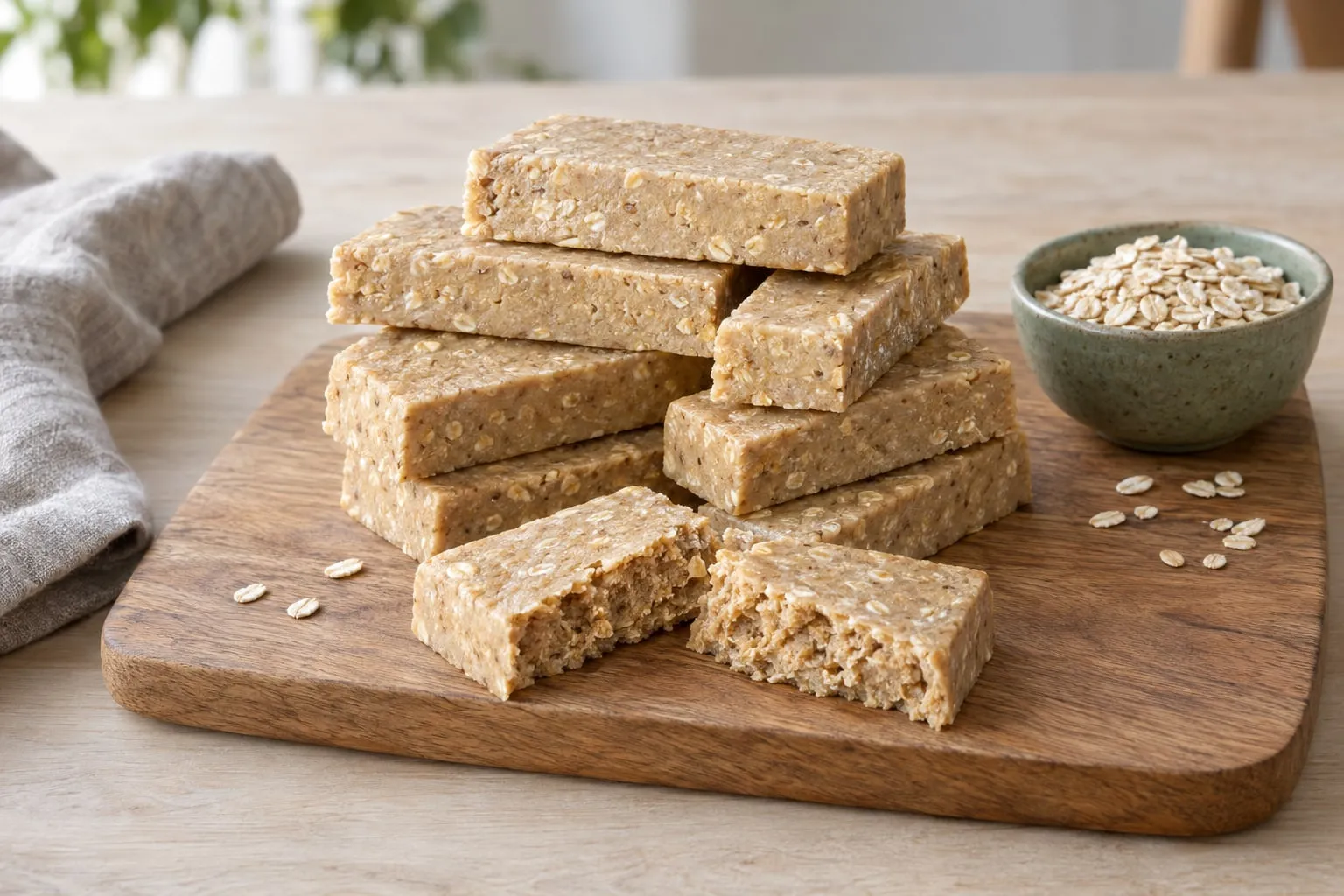
Low Calorie Protein Bars
16 g protein110 kcal3 hr 15 minVegetarian
A homemade bar with 16 g protein and 110 kcal, so the calories are under your control.
Sources
- McCance and Widdowson's Composition of Foods Integrated Dataset 2021 (CoFID) – Protein and energy values per 100 g for egg white, fish, shellfish, quark and cottage cheese
- NHS Eatwell Guide – Advice to choose lean cuts of meat and mince and to eat at least 2 portions of fish a week, one of them oily
Read our editorial policy for how figures are checked and how to report a mistake.
More protein guides
All guides
Guide
High Protein Foods: A Ranked List
High protein foods ranked by protein per 100 g and per 100 kcal: Parmesan has 36.2 g, grilled chicken 32.0 g, dried red lentils 25.6 g and egg white 10.8 g.
Guide
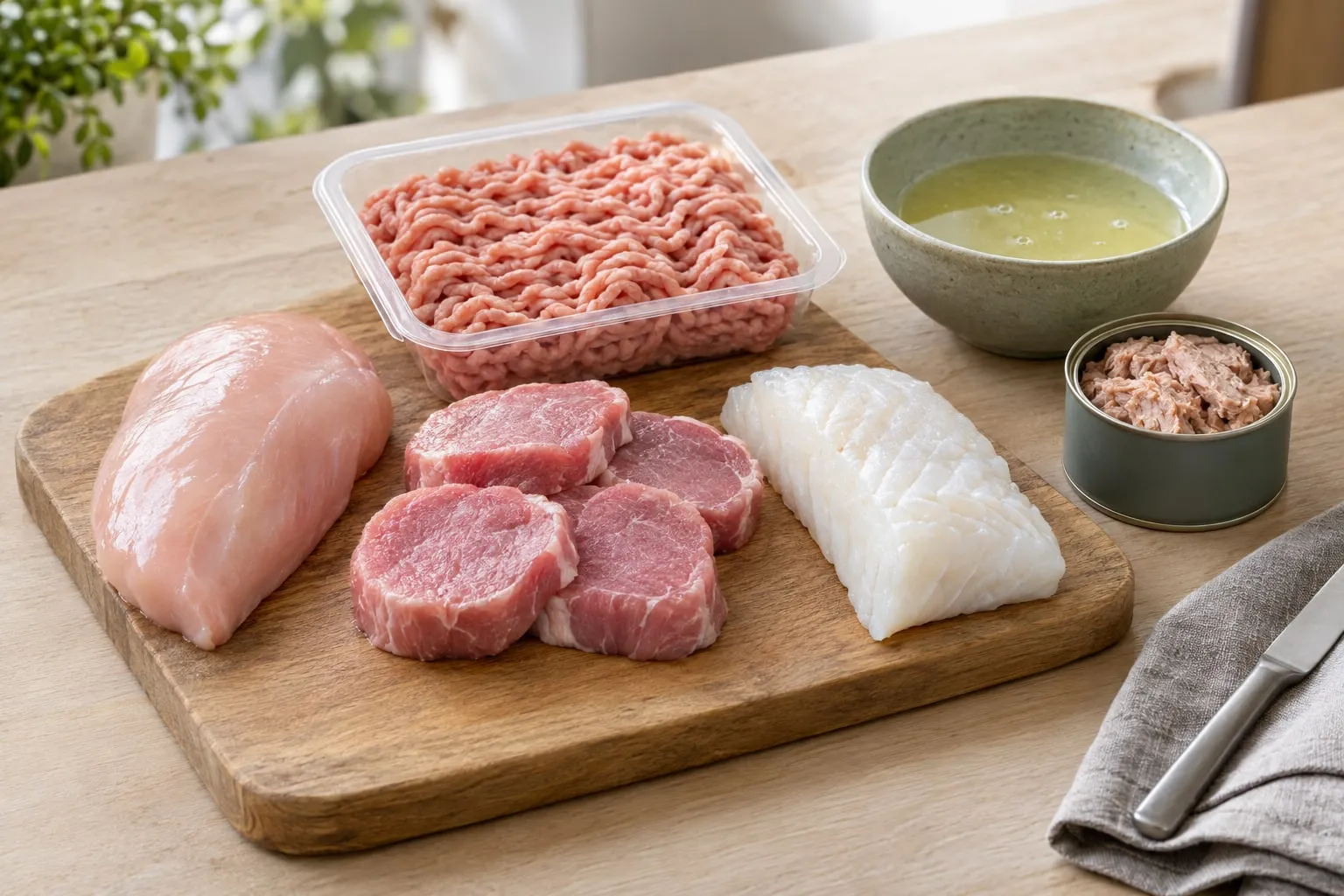
Lean Protein: Best Sources
Lean protein sources ranked by fat: raw chicken breast has 24.0 g protein and 1.1 g fat per 100 g, tuna 24.9 g and 1.0 g. Meat, fish and dairy compared.
Guide
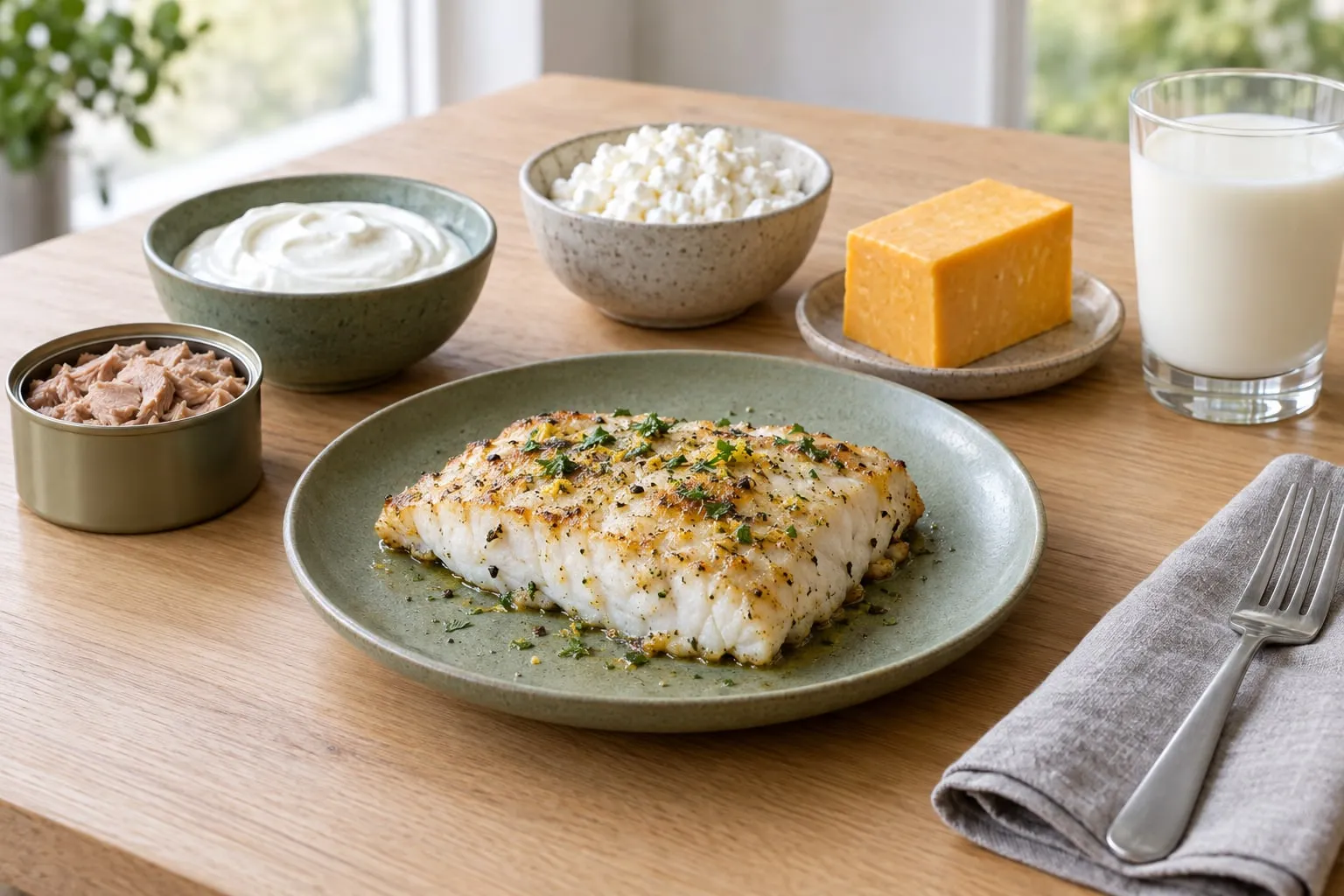
Protein for Weight Loss
Protein for weight loss in numbers: 20 g of protein costs 84 kcal from baked cod, 105 kcal from Greek yogurt and 328 kcal from Cheddar. Ranked table inside.

Guide
How Much Protein Do You Need Per Day?
How much protein do I need? The UK reference is 0.75 g per kg of body weight a day, or 52.5 g at 70 kg. See food values and a worked example day.