Method
Tap a time to start a timer.
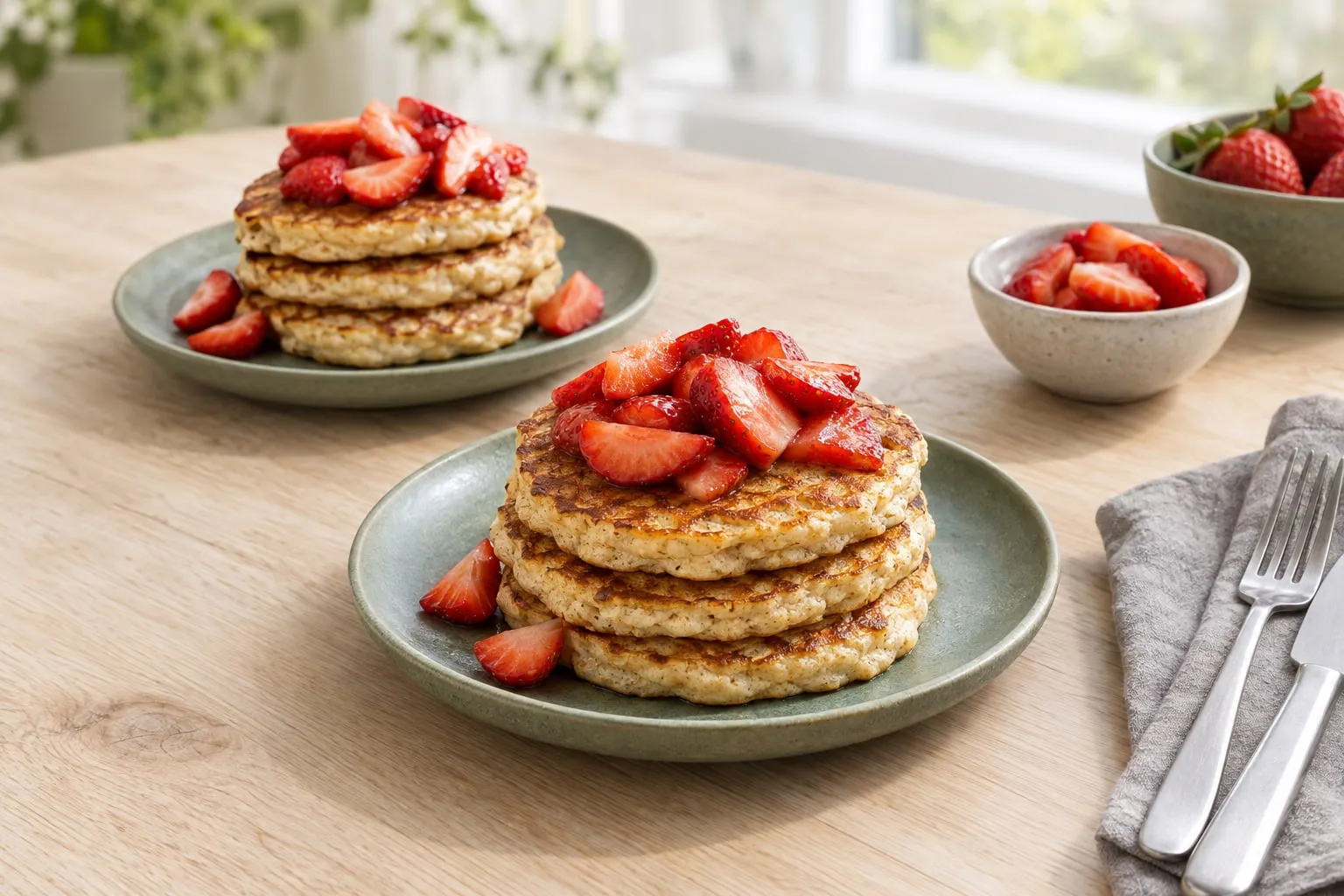
Slice the strawberries and toss them with the sweetener, then leave them to release their juices while you make the batter.
Put the quark, eggs, porridge oats, skimmed milk, baking powder and vanilla extract in the blender. Blend until smooth, then leave to stand.
Heat the frying pan over a medium-low heat and rub it with the rapeseed oil on kitchen paper.
Pour in about 4 tablespoons (55 ml) of batter per pancake, making three pancakes at a time. Cook until the edges are set and the surface is covered with bubbles.
Flip the pancakes and cook for another 2 minutes until golden, then slide them onto a plate. Cook the rest of the batter in two more batches, making eight pancakes in all.
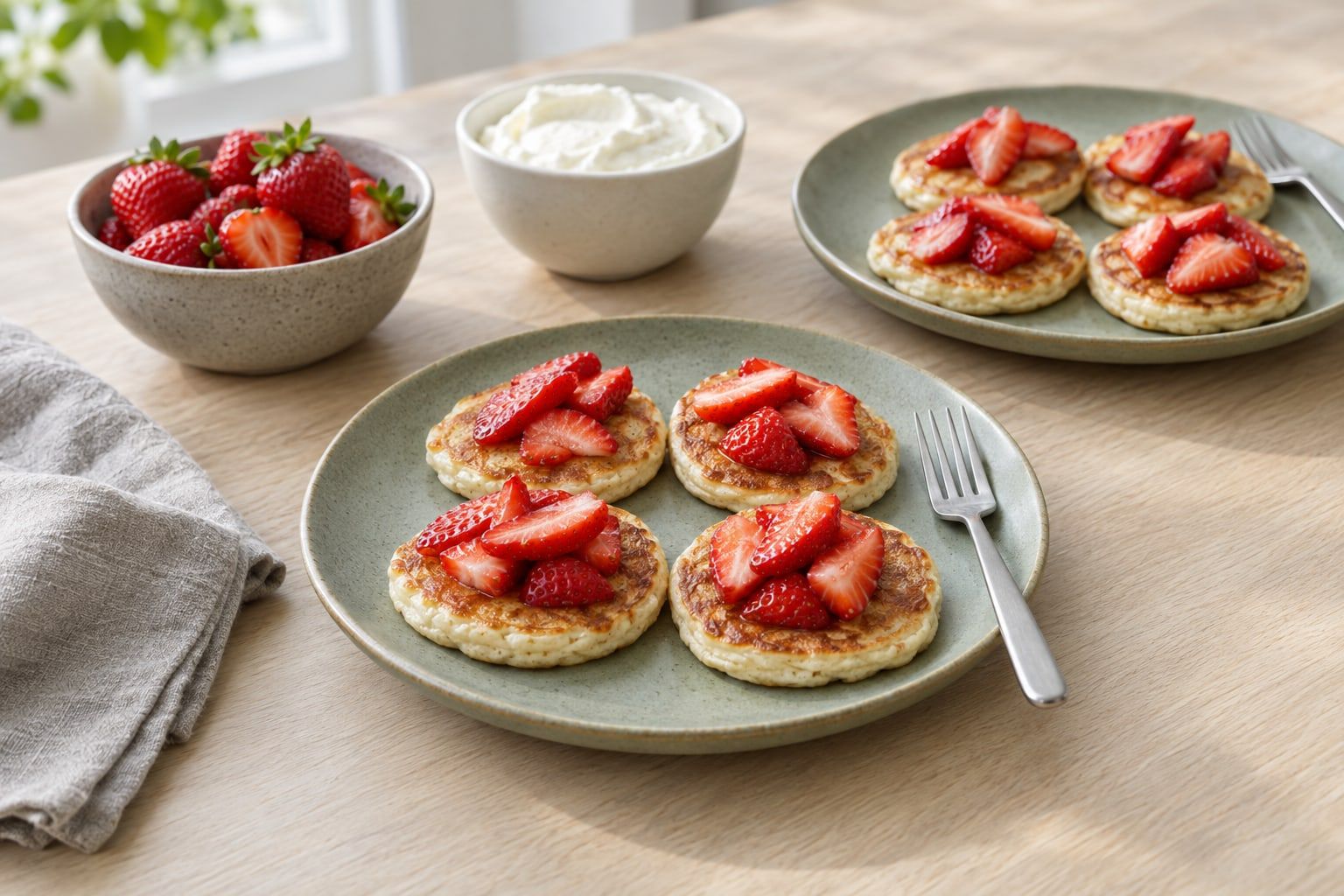
Serve four pancakes per person with half of the strawberries on each plate.
How to tell it's done
- The edges are dry and set and the surface is covered with bubbles before the pancake is turned.
- Both sides are golden brown and the pancake springs back when pressed lightly in the middle.
Tips for success
- Use a wiped pan, not a pool of oil
A teaspoon of rapeseed oil rubbed over the pan with kitchen paper is enough for the whole batch because the pan is non-stick. Pouring in more adds around 45 kcal for every extra teaspoon.
- Blend the quark in
Quark can leave small lumps if it is only whisked. A blender gives a smooth batter in 30 seconds and keeps the pancakes even.
- Keep them small
Four pancakes of about 10 cm cook through before they brown. A big pancake made from the same batter needs a longer time and stays soft in the middle.
Boost the protein
- Serve each portion with 100 g strained Greek yogurt: +10 g protein per serving, plus about 54 kcal.
- Replace the 80 ml skimmed milk with 80 g more quark: +4.4 g protein per serving, and a thicker batter.
Choosing ingredients
Quark is the protein base here, with 14.6 g protein per 100 g and no fat. It tastes slightly sour, so the vanilla and strawberries balance it.
Check that the baking powder is in date. Old powder gives flat, dense pancakes that stay doughy in the middle.
Variations
- With cinnamon
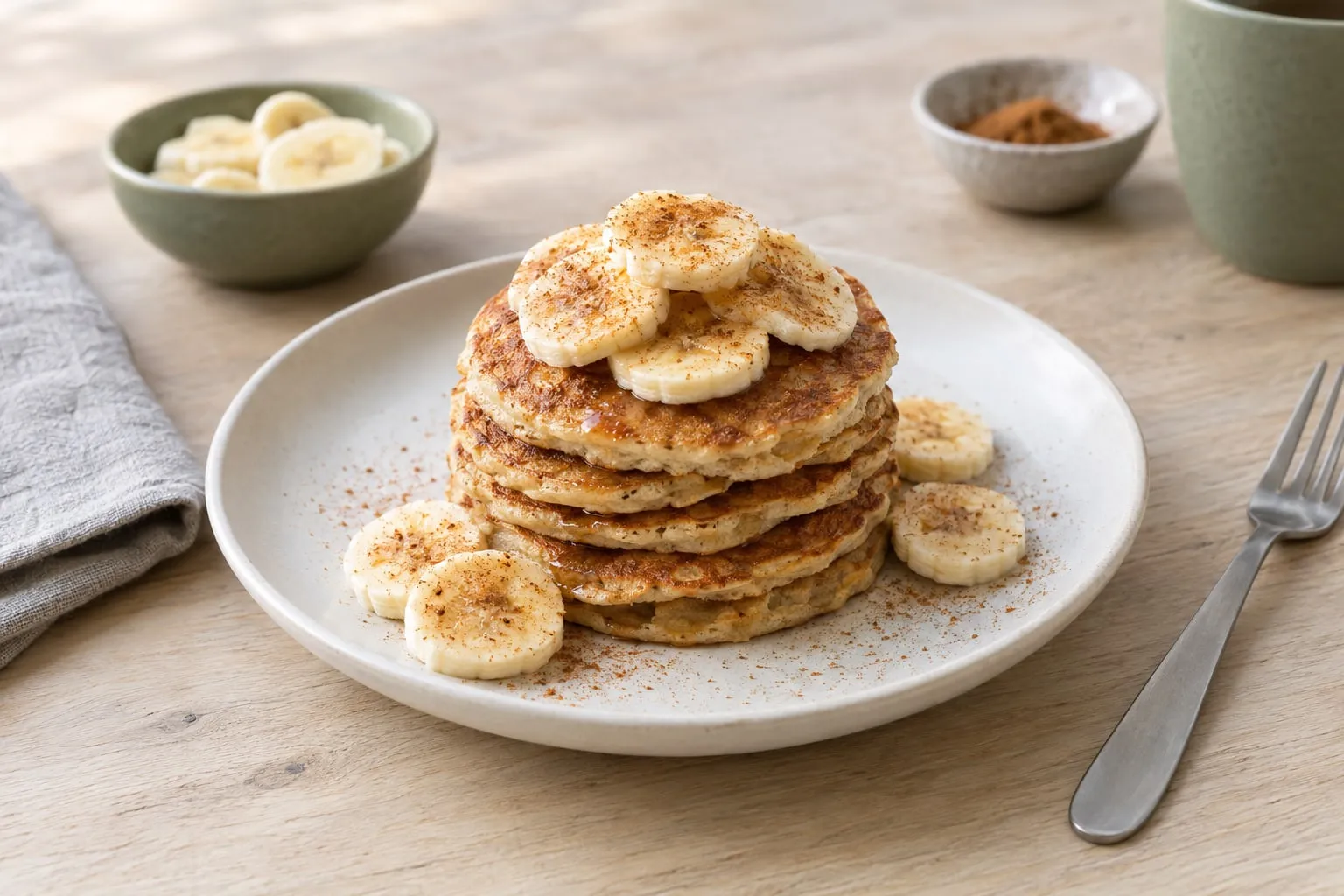
Blend 0.5 tsp ground cinnamon into the batter. It adds no calories or protein worth counting and gives the pancakes a warm flavour without any sugar.
- With maple syrup
Drizzle 1 tsp maple syrup over each portion. It adds about 18 kcal per portion and no protein.
Serve it with
- Fresh raspberries
- Strained Greek yogurt
- Black coffee or tea
Storage
Leftover low calorie protein pancakes keep for 2 days in the fridge in an airtight box. Reheat in a toaster or a dry pan.
Freeze them in a single layer for up to 2 months and toast from frozen.
Troubleshooting
Why do my low calorie protein pancakes stick to the pan?
The pan was too lightly oiled or not hot enough when the batter went in. Rub the pan again with the oil on kitchen paper between batches and let it heat for a full minute first.
Why are my low calorie protein pancakes gummy in the middle?
They were made too big or the heat was too high. Use 4 tablespoons of batter per pancake and cook over a medium-low heat for 2 minutes per side.
Frequently asked questions
How many calories are in low calorie protein pancakes?
Each portion of four pancakes with strawberries has 306 kcal and 26 g protein, so 34% of the energy comes from protein.
How do you make protein pancakes lower in calories?
Use quark and eggs in place of butter and sugar, and cook in a non-stick pan with a single teaspoon of oil for the whole batch. Syrup and butter on top add far more calories than the batter itself.
Do low calorie pancakes need protein powder?
No. The quark and eggs give the protein, and there is no powder in the recipe.
Made it? Rate the recipe
Read next
- How Much Protein Do You Need Per Day?How much protein do I need? The UK reference is 0.75 g per kg of body weight a day, or 52.5 g at 70 kg. See food values and a worked example day.
- High Protein Foods: A Ranked ListHigh protein foods ranked by protein per 100 g and per 100 kcal: Parmesan has 36.2 g, grilled chicken 32.0 g, dried red lentils 25.6 g and egg white 10.8 g.
Written by The Protein Recipes editorial team. Nutrition is calculated from the ingredient list using CoFID. Read how our recipes are made and how we correct mistakes.