Protein guide
Does Protein Make You Gain Weight?
Quick answer
Weight follows total energy over time, and protein is not special in that. A 30 g scoop of whey adds 114 kcal, 150 g of raw chicken breast about 159 kcal, and fattier protein foods add more.
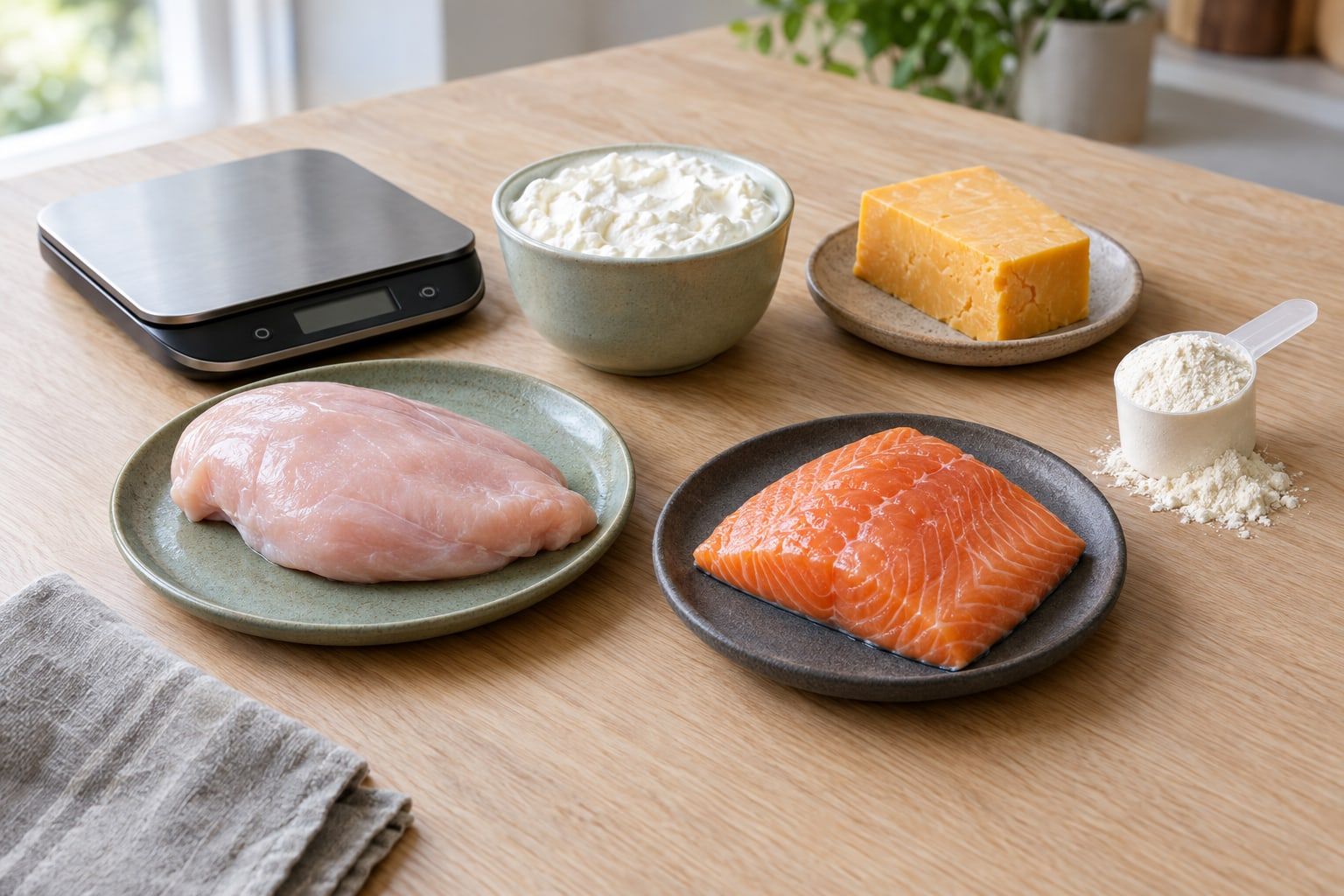
Does protein make you gain weight? Not on its own: weight follows total energy over time, and protein is one source of it. A 30 g scoop of whey adds 114 kcal, 150 g of raw chicken breast about 159 kcal and a whey shake with milk 229 kcal.
The variable that matters is what comes with the protein. Per 100 g, extra lean beef mince has 130 kcal and regular mince 225 kcal, and Cheddar has 416 kcal against about 106 kcal for chicken breast. A shake or a protein-rich meal counts as food, so an added 229 kcal on top of an unchanged diet can show on the scales, while the same shake in place of another snack may not.
For a practical check, look at the kcal as well as the grams of protein on a label, and judge weight by the weekly trend. If your weight changes without explanation or you have a medical condition, speak to your GP or a registered dietitian.
| Portion | Protein | Energy |
|---|---|---|
| 30 g whey protein powder (1 scoop) | 22.5 g | 114 kcal |
| 150 g chicken breast fillet, raw | 36.0 g | 159 kcal |
| 250 g quark | 36.5 g | 185 kcal |
| Whey shake: 30 g powder with 250 ml semi-skimmed milk | 31.3 g | 229 kcal |
Source: Whey powder (x1) and chicken breast (x10) are typical values, not CoFID entries. Quark is CoFID code 12-174 (14.6 g protein, 74 kcal per 100 g) and semi-skimmed milk is CoFID code 12-313 (3.5 g protein, 46 kcal per 100 g). 250 ml of milk is taken as 250 g
| Food | Protein | Energy | Fat |
|---|---|---|---|
| Chicken breast fillet, raw | 24.0 g | 106 kcal | 1.1 g |
| Beef mince, raw, extra lean | 21.9 g | 130 kcal | 4.2 g |
| Beef mince, raw, regular | 19.7 g | 225 kcal | 16.2 g |
| Salmon, farmed, raw | 20.4 g | 217 kcal | 15.0 g |
| Cheddar, English | 25.4 g | 416 kcal | 34.9 g |
Source: CoFID – McCance and Widdowson's Composition of Foods Integrated Dataset 2021 (codes 18-508, 18-469, 16-356, 12-346). Chicken breast is a typical value (x10), not a CoFID entry
Does protein make you gain weight?
Body weight follows the balance of energy over weeks and months, and protein is one of several sources of that energy, at about 4 kcal per gram. Eating more protein does not add weight by itself: weight rises when total energy intake stays above what the body uses, whatever the foods are. The British Nutrition Foundation explains that protein eaten beyond what the body needs is used as energy, so extra protein is counted like any other calories. A high-protein diet is also not necessarily better for losing weight than other balanced diets.
How many calories do protein foods add?
Less than most people expect. A 30 g scoop of whey has 114 kcal, 150 g of raw chicken breast about 159 kcal and 250 g of quark 185 kcal. Mixed with 250 ml of semi-skimmed milk, a whey shake reaches 229 kcal, which is about the size of a small snack. Those figures matter when they are added on top of an existing diet, because 229 kcal a day extra, with nothing else changed, is the kind of surplus that can show on the scales over months.
Why do some protein foods weigh more on the scale?
Fat is the reason. Per 100 g, Cheddar has 416 kcal, farmed salmon 217 kcal and regular beef mince 225 kcal, while extra lean beef mince has 130 kcal and chicken breast about 106 kcal. The leaner mince gives slightly more protein, 21.9 g against 19.7 g, for 95 kcal less. Salmon is not something to avoid, but its energy counts in the day's total. Checking the energy per portion is more helpful than looking only at the protein figure.
Does drinking a protein shake make you gain weight?
A shake adds energy, so whether the scales move depends on what else changes. If a shake with 229 kcal is an addition to your usual meals, total energy rises by that amount. If it replaces a snack or a meal with similar energy, the total stays close to where it was. A shake is a food with calories, not a special case, and mixing it with milk instead of water adds 115 kcal. The label tells you what a serving contains.
Does extra protein turn into muscle?
Not reliably. The British Nutrition Foundation points out that very high protein intakes do not turn into muscle in a dependable way, and that the amount needed is set by body size and activity. Resistance training is the main stimulus for muscle, and research suggests that protein intake matters alongside it. Where someone trains and eats enough, weight on the scales can rise as muscle is gained, which is a different thing from gaining fat. Eating a lot more protein without training does not guarantee muscle.
When should you speak to a professional?
If your weight changes without explanation, if you have a history of disordered eating, or if you have a condition such as kidney disease, speak to your GP or a registered dietitian before changing how much protein you eat. Children and pregnant women also have different needs from the adult figures on this page. A professional can look at your weight history, medicines and appetite, which a general page cannot, and can tell you whether a change in protein is sensible for you or whether something else is behind the change.
Practical tips
- Read the energy as well as the protein
Protein per portion tells half the story. Check the kcal per portion on the label, and for fresh foods use the per 100 g values, as the table above shows with mince and Cheddar.
- Count a shake as food
A shake made with milk can add 229 kcal. Decide whether it is replacing a snack or meal, or sitting on top of them, and adjust the rest of the day if the extra energy is not wanted.
- Look at the trend, not the day
Daily weight moves with water, salt and food in the gut. Weekly averages show what is really happening, and a big meal does not mean a gain.
Myth or fact
- Myth
Is it true that protein shakes make you put on weight?
No, not by themselves. A shake adds energy, 114 kcal for a scoop of whey and 229 kcal with 250 ml of semi-skimmed milk, and weight changes when total energy stays above what the body uses.
- Myth
Is it true that extra protein is turned into muscle?
No. Protein you do not need is used as energy, and very high intakes do not convert into muscle in a dependable way. Training and total intake decide how much muscle is built.
- Myth
Is it true that high-protein foods are always low in calories?
No. Cheddar has 416 kcal per 100 g and farmed salmon 217 kcal, against 106 kcal for chicken breast. Check the energy as well as the protein.
Frequently asked questions
Will protein make you gain weight?
Protein adds weight only when your total energy intake is higher than your body uses, in the same way as other foods. A scoop of whey has 114 kcal and 150 g of raw chicken breast about 159 kcal.
Does drinking protein make you gain weight?
A shake adds energy, so it can if it comes on top of your usual diet. A whey shake with 250 ml of semi-skimmed milk has 229 kcal, and made with water the 30 g scoop has 114 kcal.
Can you gain weight from eating too much protein?
Protein contains energy, so eating more than you need in total can lead to weight gain, as with any food. The British Nutrition Foundation notes that protein you do not need is used as energy.
Which protein foods have the fewest calories?
Raw chicken breast has about 106 kcal per 100 g and extra lean beef mince 130 kcal, with 24.0 g and 21.9 g protein. Quark has 74 kcal per 100 g and 14.6 g protein.
Do protein shakes help you gain weight or lose weight?
A shake is a source of protein and energy, not a tool for either. What happens to your weight depends on your whole diet and activity, and this page only gives the figures.
Recipes to try
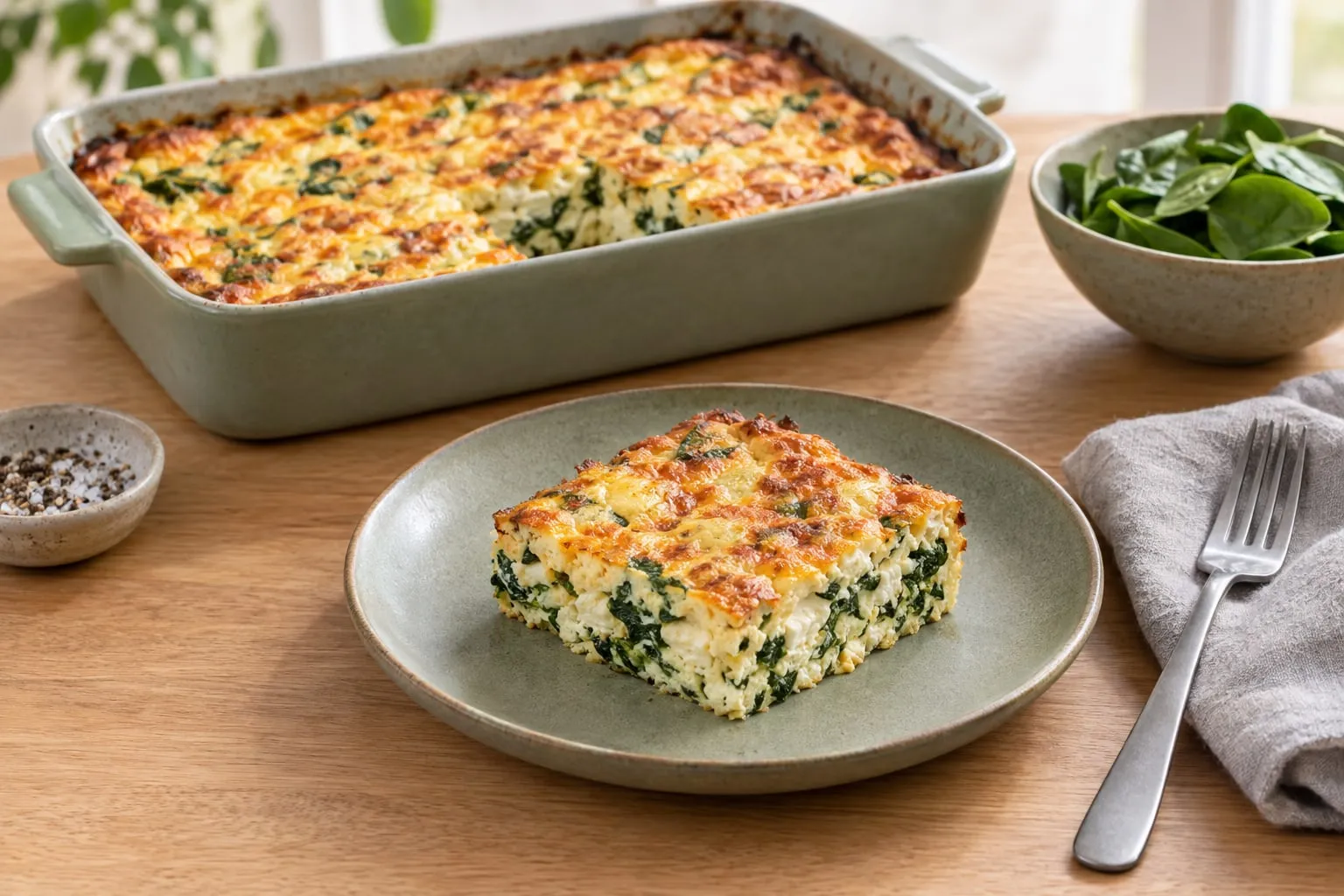
Cottage Cheese and Egg Bake
22 g protein190 kcal55 minVegetarianGluten-free
A flour-free bake with 22 g protein and 190 kcal per portion.
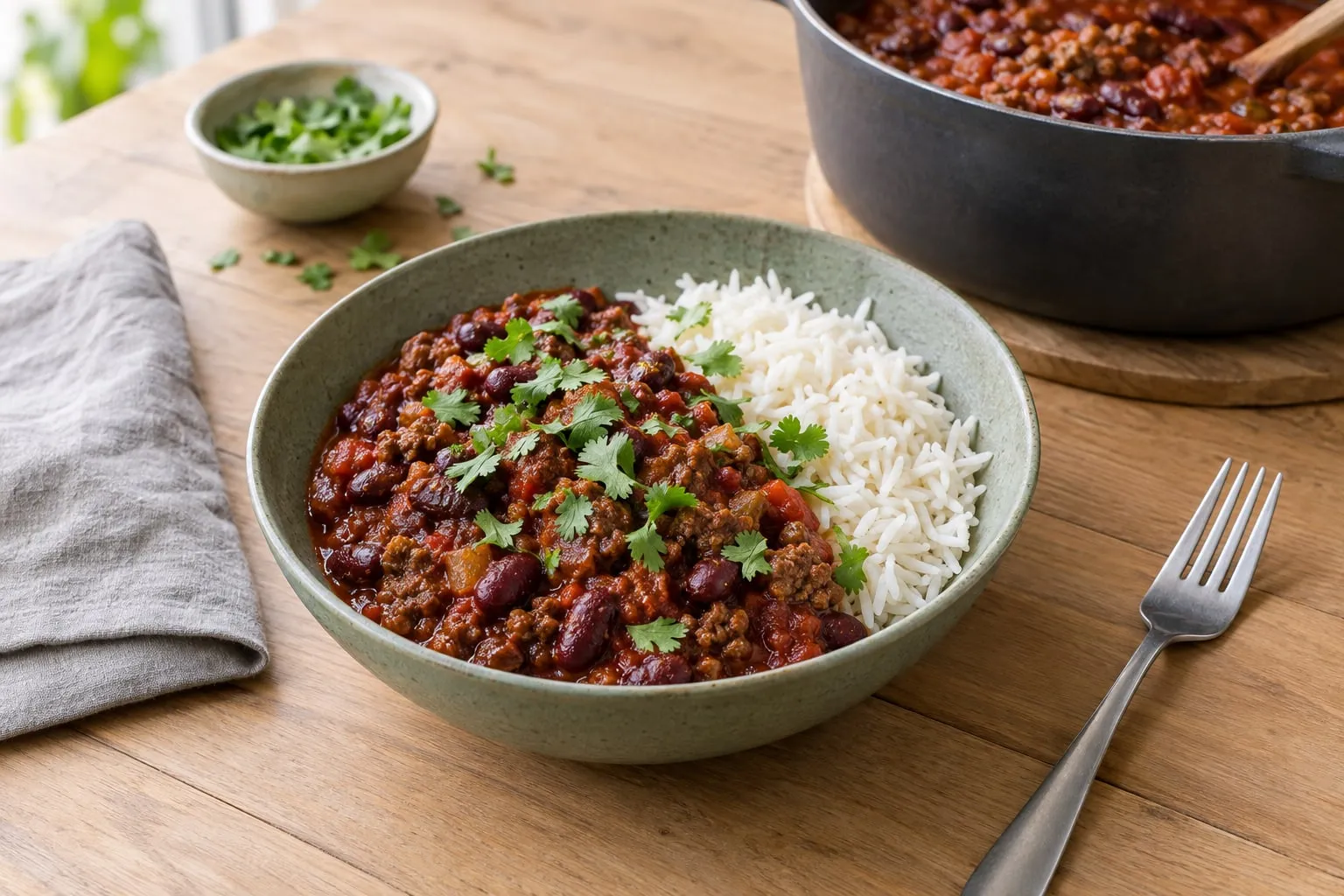
High Protein Chilli con Carne
33 g protein287 kcal1 hr 25 minGluten-freeDairy-free
A batch chilli with 33 g protein and 287 kcal per serving before rice.
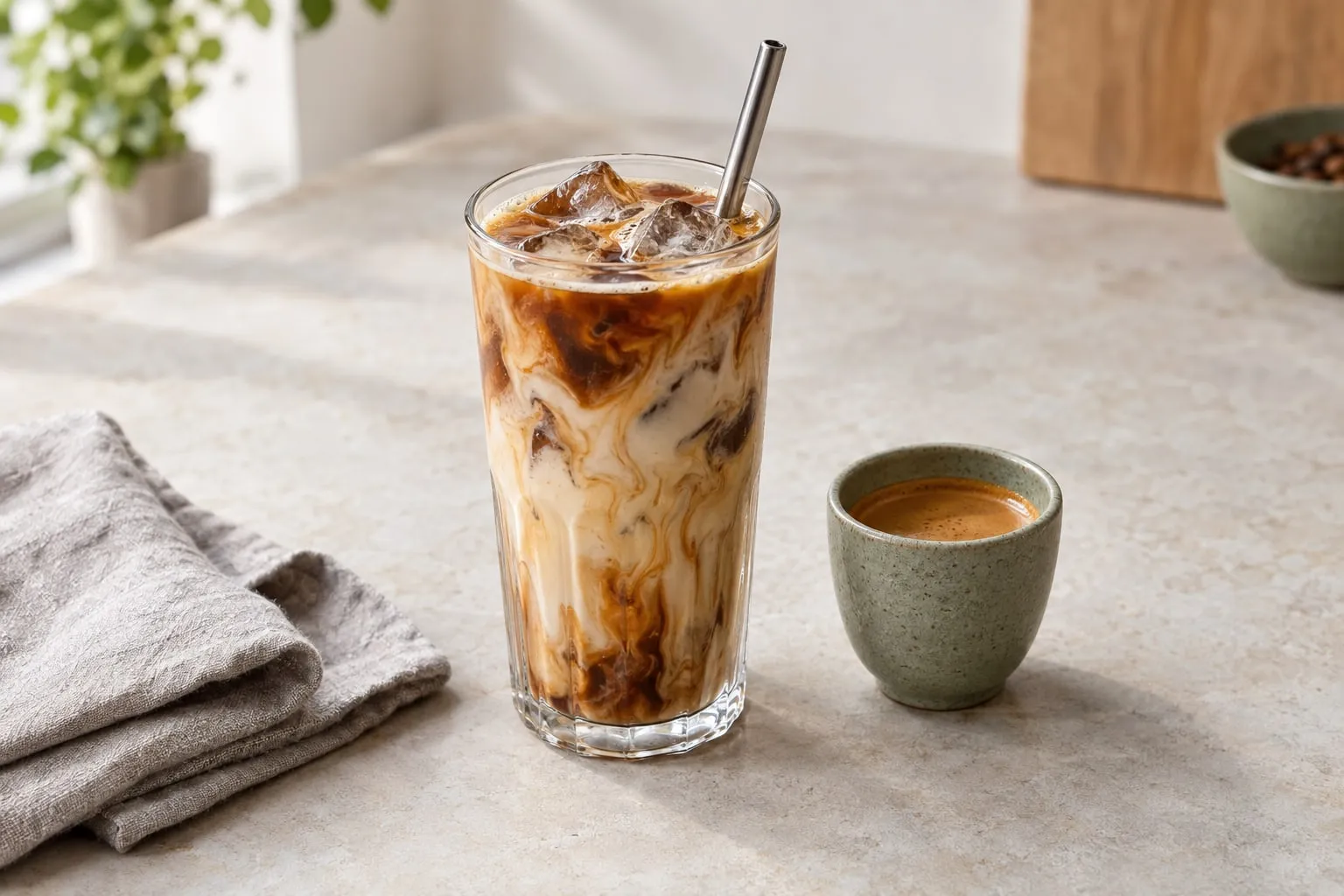
Protein Iced Coffee (Proffee)
31 g protein230 kcal7 minVegetarianGluten-free
A glass with 31 g protein and 230 kcal, with the energy listed.
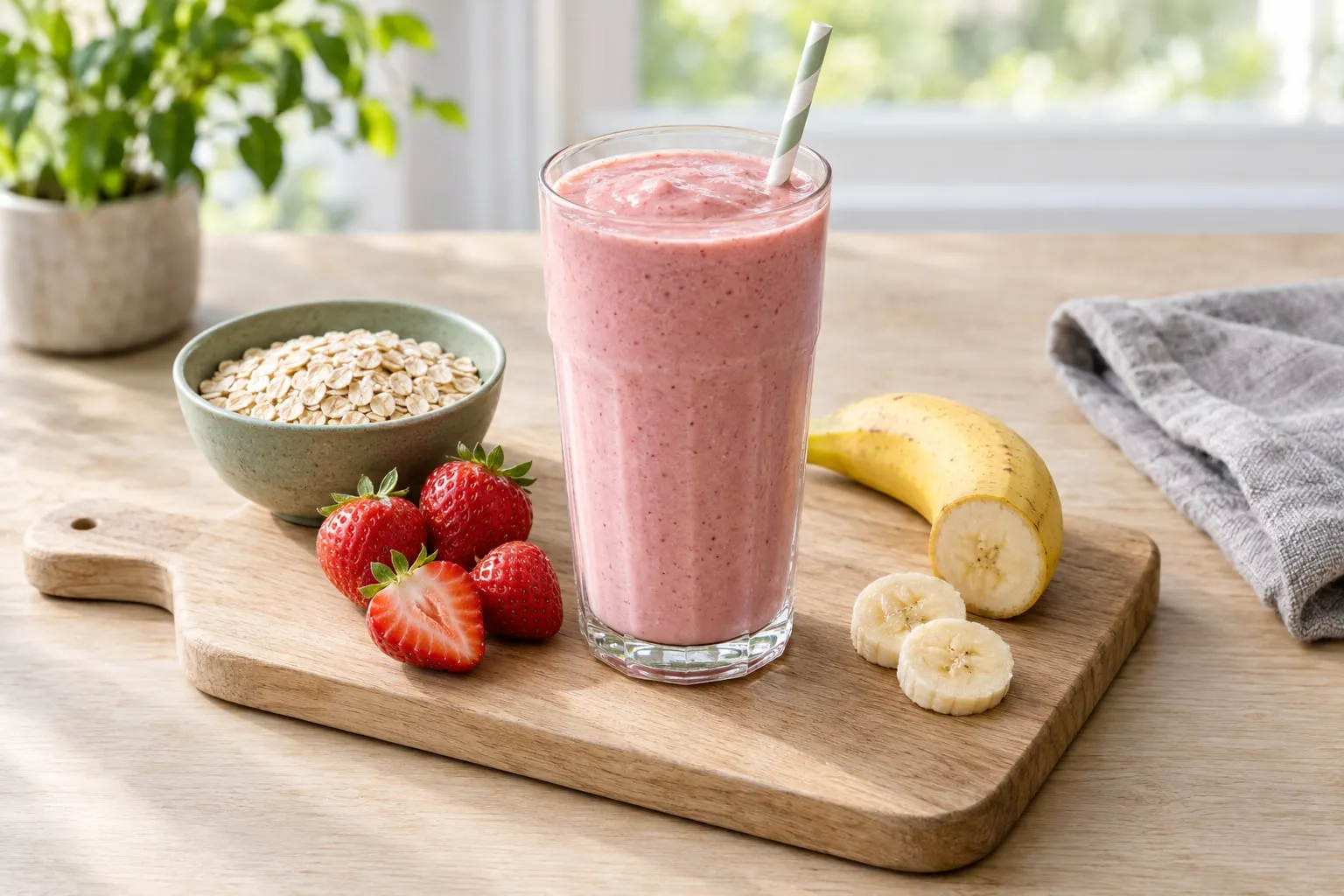
Protein Smoothie
32 g protein387 kcal5 minVegetarian
A smoothie with 32 g protein and 387 kcal per glass.
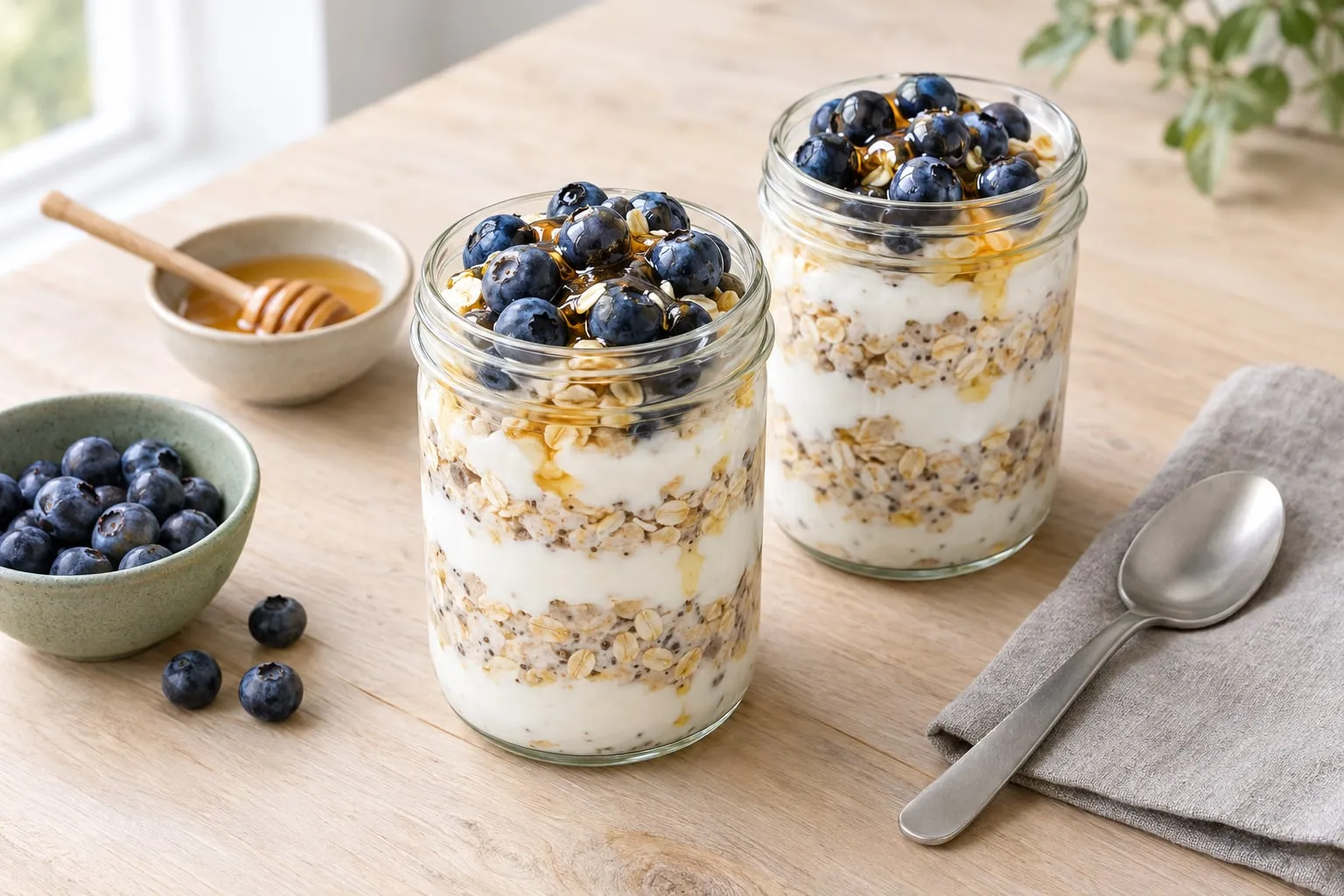
Protein Overnight Oats
26 g protein334 kcal8 hr 5 minVegetarian
Oats soaked overnight with 26 g protein per serving.
Sources
- McCance and Widdowson's Composition of Foods Integrated Dataset 2021 (CoFID) – Protein, energy and fat per 100 g for quark, mince, salmon, Cheddar and milk
- British Nutrition Foundation – Protein beyond the body's needs is used as energy; very high intakes are not reliably turned into muscle; high-protein diets are not necessarily better for weight loss
Read our editorial policy for how figures are checked and how to report a mistake.
More protein guides
All guides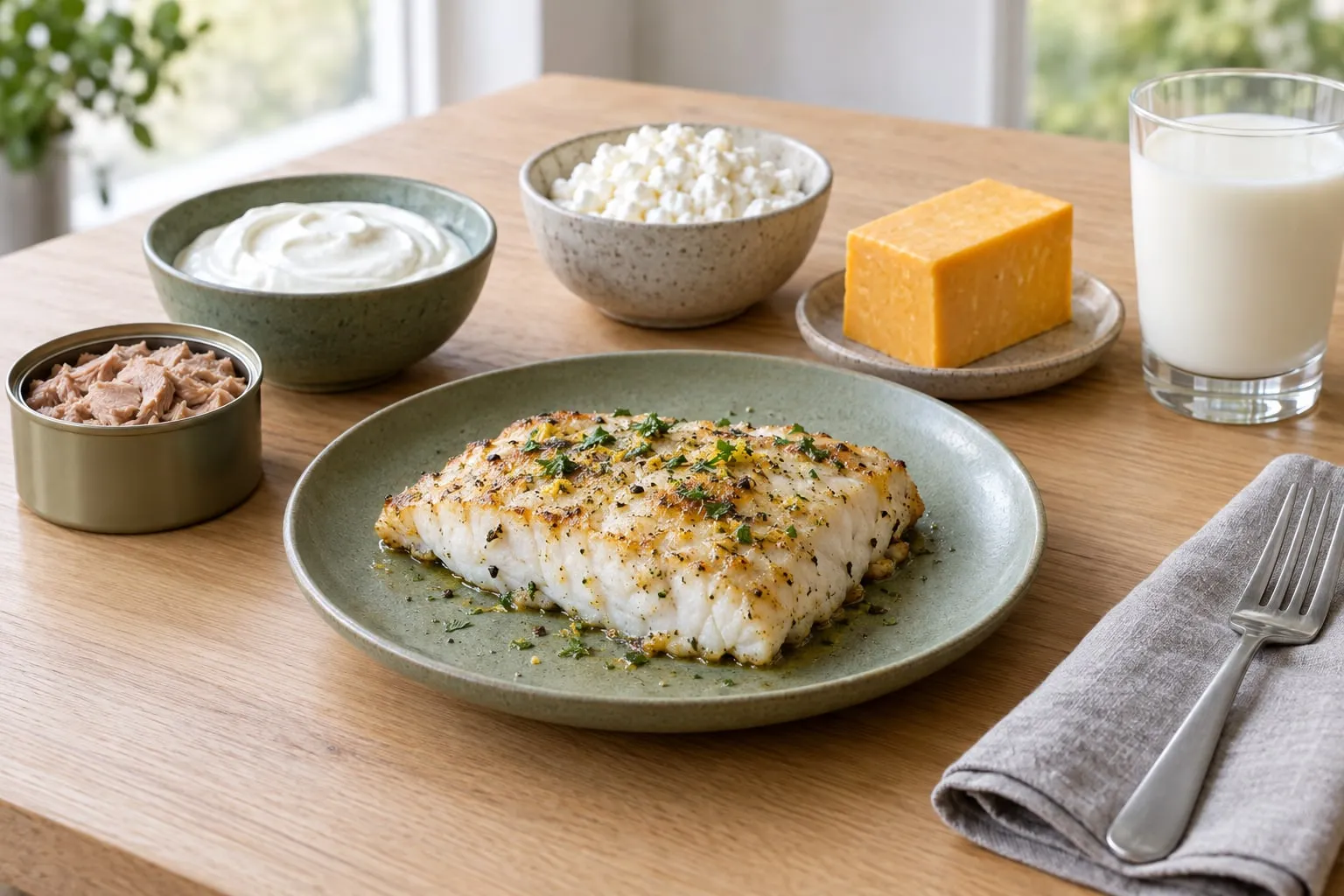
Guide
Protein for Weight Loss
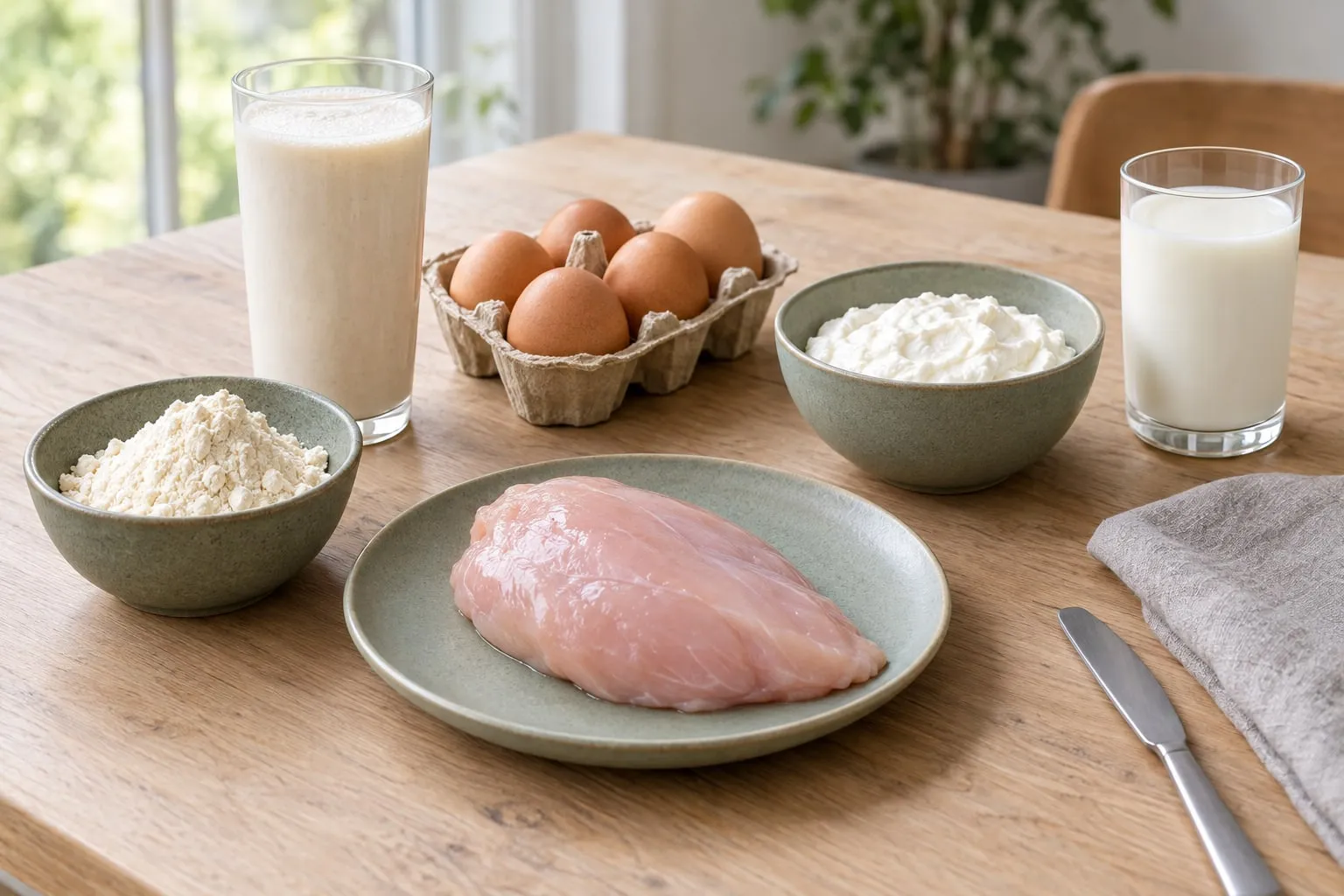
Protein for weight loss in numbers: 20 g of protein costs 84 kcal from baked cod, 105 kcal from Greek yogurt and 328 kcal from Cheddar. Ranked table inside.
Guide
How Much Protein to Build Muscle
How much protein to build muscle: research on regular training suggests 1.2–1.6 g per kg a day, 84–112 g at 70 kg, against 53 g for the UK reference intake.

Guide
How Much Protein Do You Need Per Day?
How much protein do I need? The UK reference is 0.75 g per kg of body weight a day, or 52.5 g at 70 kg. See food values and a worked example day.
Guide
Lean Protein: Best Sources
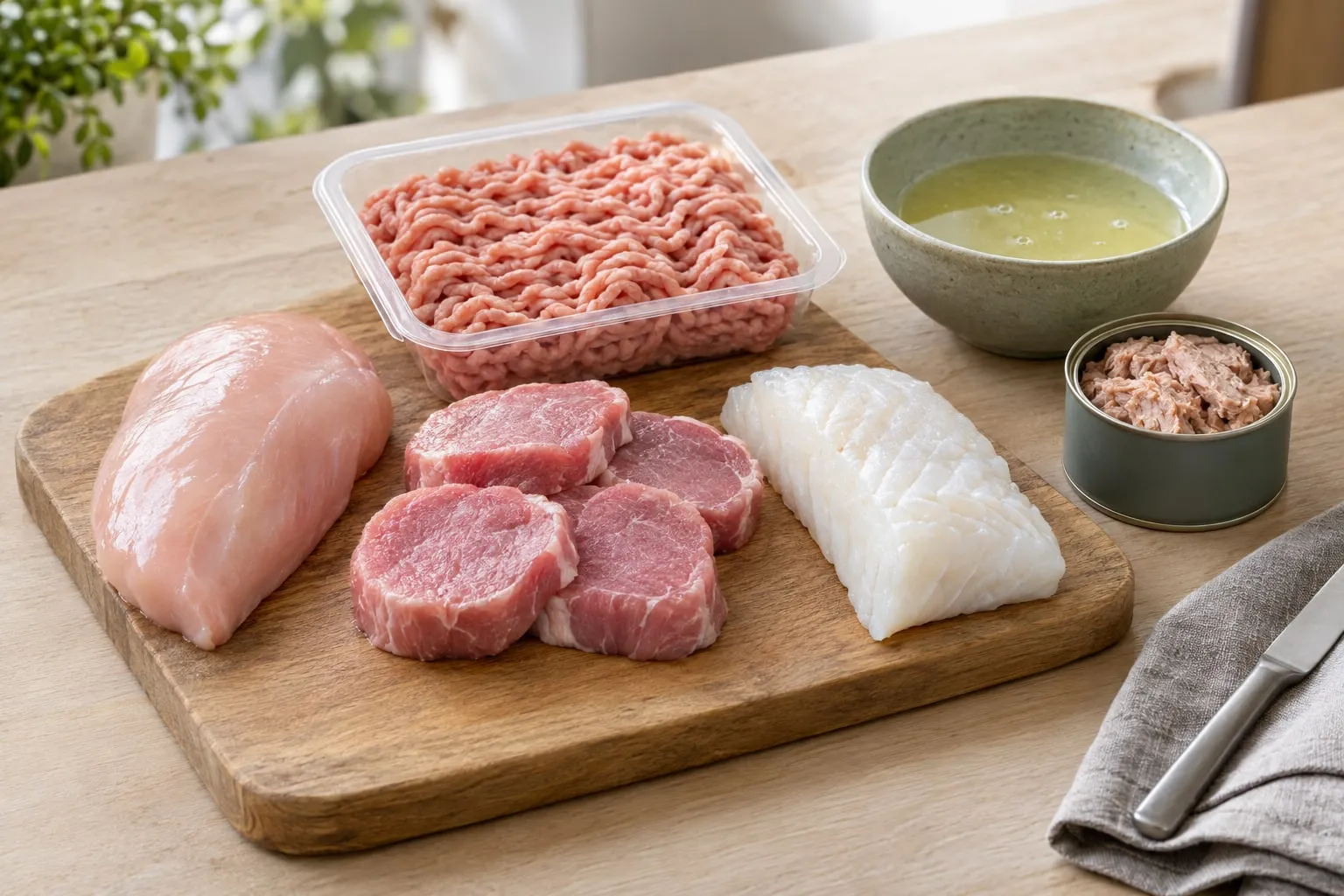
Lean protein sources ranked by fat: raw chicken breast has 24.0 g protein and 1.1 g fat per 100 g, tuna 24.9 g and 1.0 g. Meat, fish and dairy compared.