Protein guide
Protein Per 100g: Food Table
Quick answer
Dried foods lead: dried prawns have 83.1 g protein per 100 g, dried egg white 81.7 g and whey powder about 75 g. Among everyday foods, Parmesan has 36.2 g and chicken breast 24 g raw.
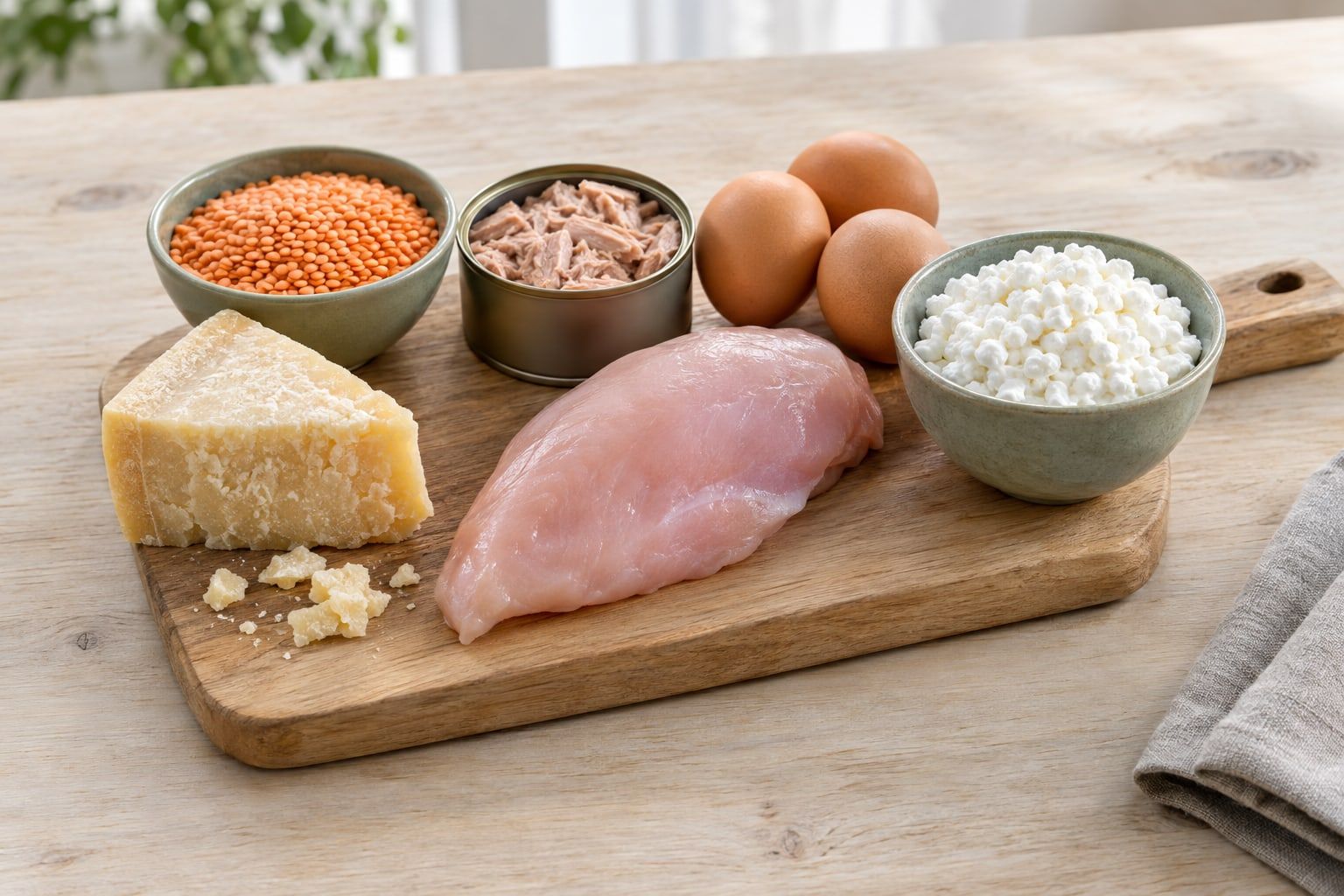
Highest protein per 100g belongs to dried foods: dried standard prawns have 83.1 g, dried egg white 81.7 g and whey protein powder about 75 g. Among everyday foods, Parmesan has 36.2 g, half-fat Cheddar 32.7 g and raw chicken breast about 24 g per 100 g.
The state of the food changes the number. Grilled chicken breast has 32.0 g per 100 g against 24 g raw, while boiled red lentils have 8.1 g against 25.6 g dried. Neither food gains or loses protein; the weight changes as water leaves or enters. Compare foods only in the same state, and use raw or dried values for raw or dried weights.
The table is a tool for comparing foods, not for planning portions. A 30 g piece of Parmesan gives 10.9 g protein, not 36.2 g. Work out the weight you eat, divide by 100 and multiply by the per 100 g figure. Black pudding, for example, has 9.1 g per 100 g raw, which is similar to cottage cheese.
| Food | Protein | Energy |
|---|---|---|
| Prawns, standard, dried | 83.1 g | 377 kcal |
| Egg white, dried | 81.7 g | 327 kcal |
| Whey protein powder (typical value) | 75 g | 380 kcal |
| Vital wheat gluten (typical value) | 75 g | 370 kcal |
| Textured vegetable protein, dried (typical value) | 50 g | 330 kcal |
Source: CoFID – McCance and Widdowson's Composition of Foods Integrated Dataset 2021 (codes 16-482, 12-960); whey, vital wheat gluten and TVP are typical values (x1, x12, x33), not CoFID
| Food | Protein | Energy |
|---|---|---|
| Parmesan | 36.2 g | 415 kcal |
| Soya beans, dried, raw | 35.9 g | 370 kcal |
| Cheddar, half fat | 32.7 g | 273 kcal |
| Peanuts, plain, unsalted | 25.8 g | 564 kcal |
| Tuna, tinned in brine, drained | 24.9 g | 109 kcal |
| Chicken breast, raw (typical value) | 24.0 g | 106 kcal |
| Tempeh | 20.7 g | 166 kcal |
| Salmon, farmed, raw | 20.4 g | 217 kcal |
| Quark | 14.6 g | 74 kcal |
| Whole egg, raw | 12.6 g | 131 kcal |
| Cottage cheese, plain | 9.4 g | 103 kcal |
Source: CoFID – McCance and Widdowson's Composition of Foods Integrated Dataset 2021 (codes 12-526, 13-115, 12-348, 14-877, 16-416, 13-118, 16-356, 12-174, 12-937, 12-539); chicken breast is a typical value (x10)
| Food | Raw or dried | Cooked |
|---|---|---|
| Chicken breast, raw or grilled without skin | 24.0 g | 32.0 g |
| Red split lentils, dried or boiled | 25.6 g | 8.1 g |
| Egg white, raw or boiled | 10.8 g | 13.0 g |
| Cod fillet, raw or baked | 17.5 g | 23.9 g |
Source: CoFID – McCance and Widdowson's Composition of Foods Integrated Dataset 2021 (codes 18-323, 13-657, 13-658, 12-938, 12-941, 16-372, 16-373); raw chicken is a typical value (x10)
Which foods have the highest protein per 100 g?
Dried foods top the list because the water has been removed. Dried standard prawns have 83.1 g protein per 100 g, dried egg white 81.7 g, whey protein powder about 75 g and vital wheat gluten about 75 g. Dried textured vegetable protein has about 50 g. These figures are for the dry product, not for the food as it is eaten, and a normal portion is much smaller than 100 g. A 30 g scoop of whey, for example, has about 22.5 g.
What is the protein per 100 g of everyday foods?
Among foods bought fresh or tinned, Parmesan has 36.2 g per 100 g and dried soya beans have 35.9 g. Half-fat Cheddar has 32.7 g, peanuts 25.8 g and drained tinned tuna 24.9 g. Raw chicken breast has 24 g, tempeh 20.7 g and farmed salmon 20.4 g. Quark has 14.6 g, a raw whole egg 12.6 g and plain cottage cheese 9.4 g. Energy varies a lot: tuna has 109 kcal for its 24.9 g, while peanuts have 564 kcal for 25.8 g.
Why do raw, cooked and dried weights give different numbers?
Protein per 100 g changes with the water content. Chicken breast grilled without skin has 32.0 g per 100 g, compared with 24 g raw, because it loses water as it cooks. Red split lentils go the other way: 25.6 g per 100 g dried but 8.1 g boiled, because they absorb water. The protein in the food has not changed in either case, only its weight has. Compare foods in the same state, and use the raw or dried weight if the figure you are using is a raw or dried one.
How much protein is in black pudding?
Raw black pudding has 9.1 g protein and 277 kcal per 100 g, and dry-fried black pudding has 10.3 g protein and 297 kcal per 100 g. The fried figure is higher per 100 g for the same reason as with chicken, since some water is lost in the pan. It is a modest protein source compared with chicken, quark or tuna, with about the same protein as plain cottage cheese.
Why is 100 g not the same as a portion?
A figure per 100 g is a way of comparing foods fairly, but it is rarely what ends up on the plate. A 30 g piece of Parmesan gives 10.9 g protein, not 36.2 g. A 150 g raw chicken breast fillet gives 36.0 g, and a medium egg of about 50 g gives 6.3 g. Work out the weight you eat and multiply, so protein per portion is the weight in grams multiplied by the per 100 g figure and divided by 100.
Practical tips
- Compare raw with raw
Use raw weights for raw foods and dried weights for dried foods. A cooked figure with a raw weight undercounts or overcounts protein.
- Check the energy as well
Tuna and raw chicken breast have almost as much protein as peanuts for far fewer calories per 100 g: 109 kcal for tuna against 564 kcal for peanuts.
- Multiply by the portion
Divide the portion weight by 100 and multiply by the per 100 g figure. 30 g of Parmesan is 30 ÷ 100 × 36.2 = 10.9 g protein.
Myth or fact
- The facts
Is it true that cooked chicken has more protein than raw chicken?
Per 100 g, yes (32.0 g grilled against 24 g raw), but only because water is lost in cooking. The breast as a whole contains the same protein.
- Partly
Is it true that whey powder is the highest protein food?
Not quite. Whey has about 75 g per 100 g, while dried prawns have 83.1 g and dried egg white 81.7 g. A normal scoop is only 30 g, which gives about 22.5 g.
Frequently asked questions
Which food has the most protein per 100 g?
Dried standard prawns have 83.1 g in the UK tables, followed by dried egg white at 81.7 g. Among everyday foods, Parmesan has 36.2 g.
How much protein is in 100 g of chicken breast?
Raw chicken breast has about 24 g protein per 100 g and grilled skinless breast has 32.0 g.
How much protein is in 100 g of cooked lentils?
Boiled red split lentils have 8.1 g per 100 g, compared with 25.6 g for dried ones, because they absorb water as they cook.
How much protein is in black pudding per 100 g?
Raw black pudding has 9.1 g and fried black pudding 10.3 g protein per 100 g.
Recipes to try
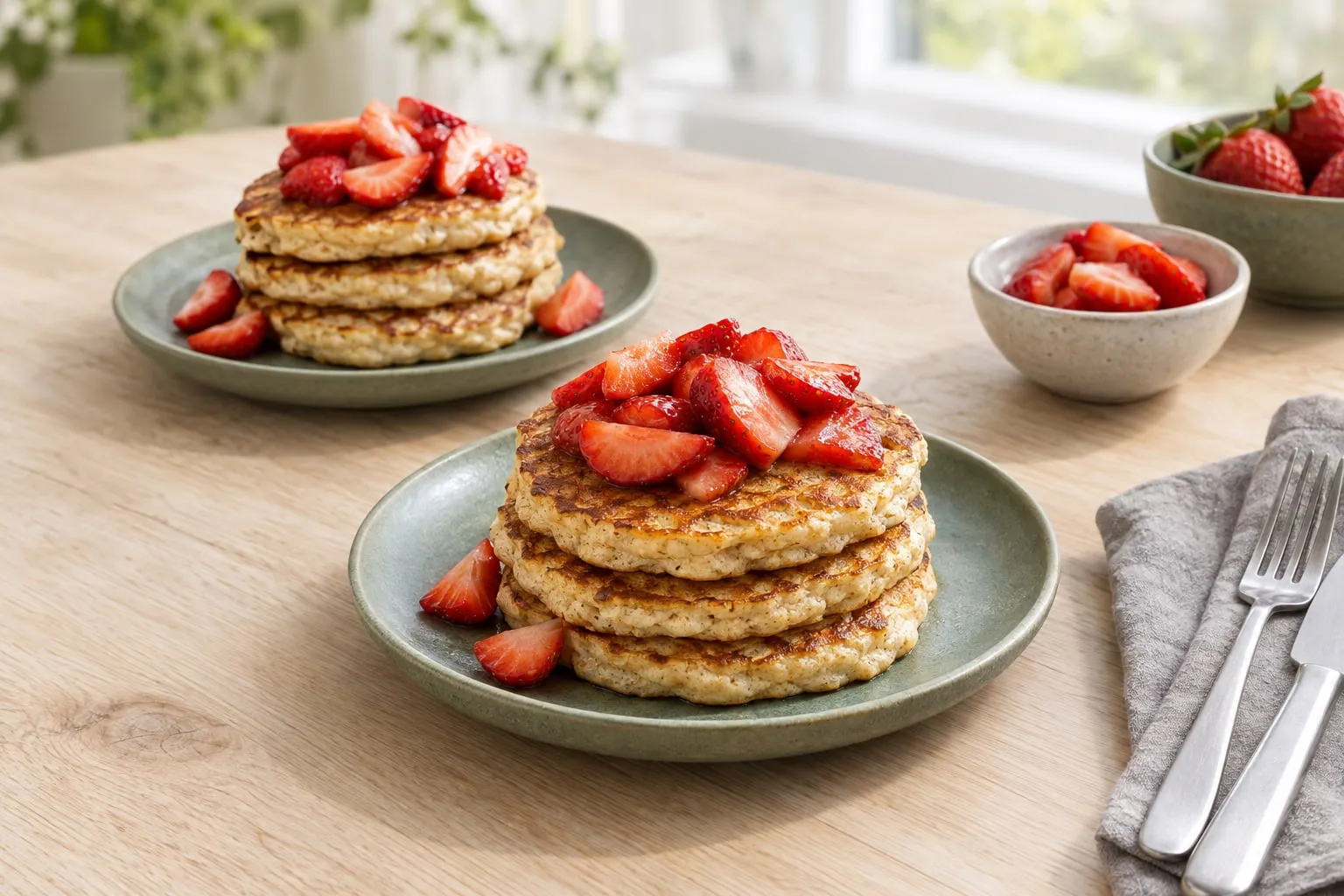
Protein Pancakes
31 g protein342 kcal25 minVegetarian
A thick pancake batter built on whey, eggs and yogurt.
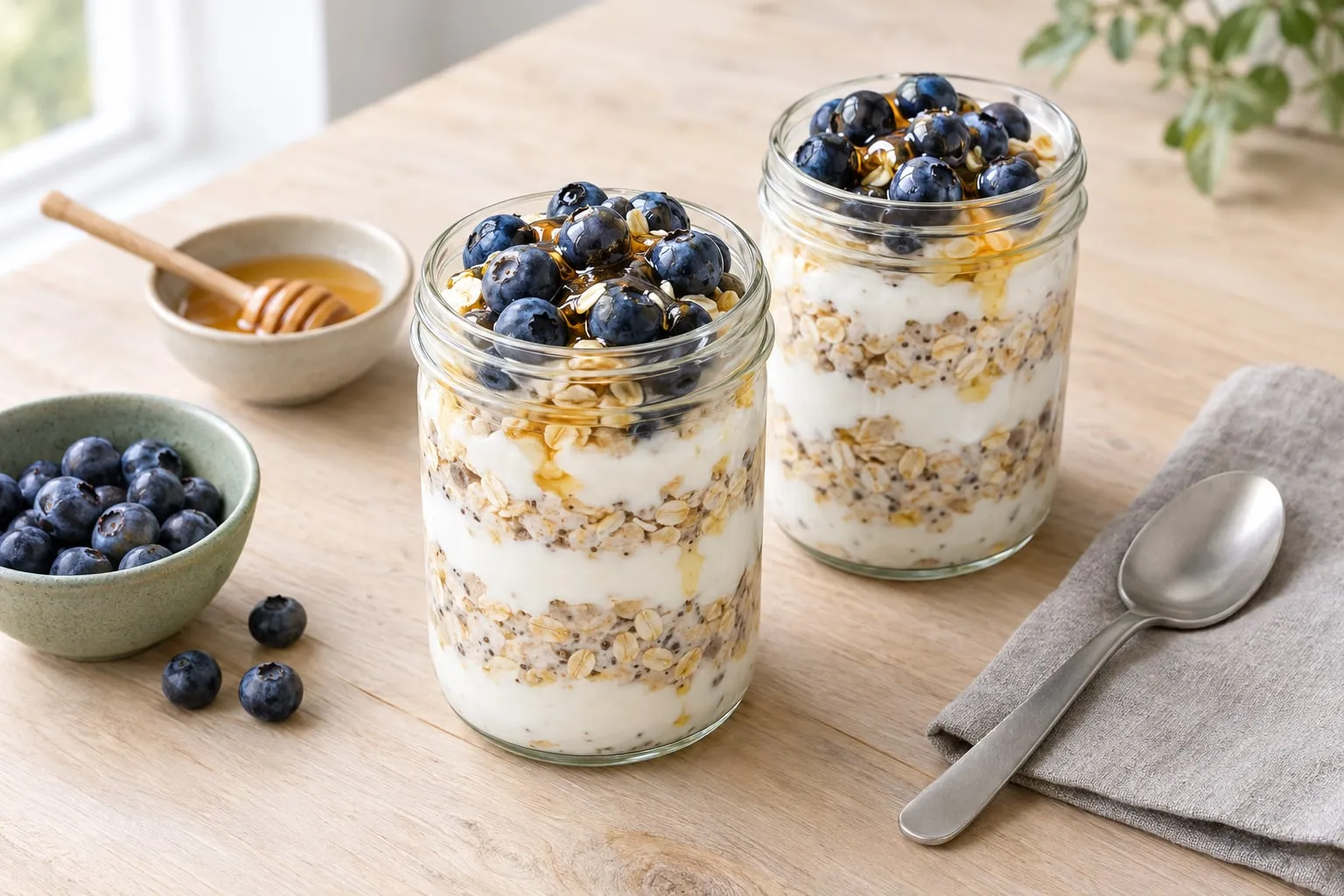
Protein Overnight Oats
26 g protein334 kcal8 hr 5 minVegetarian
Oats soaked overnight in Greek yogurt and milk.
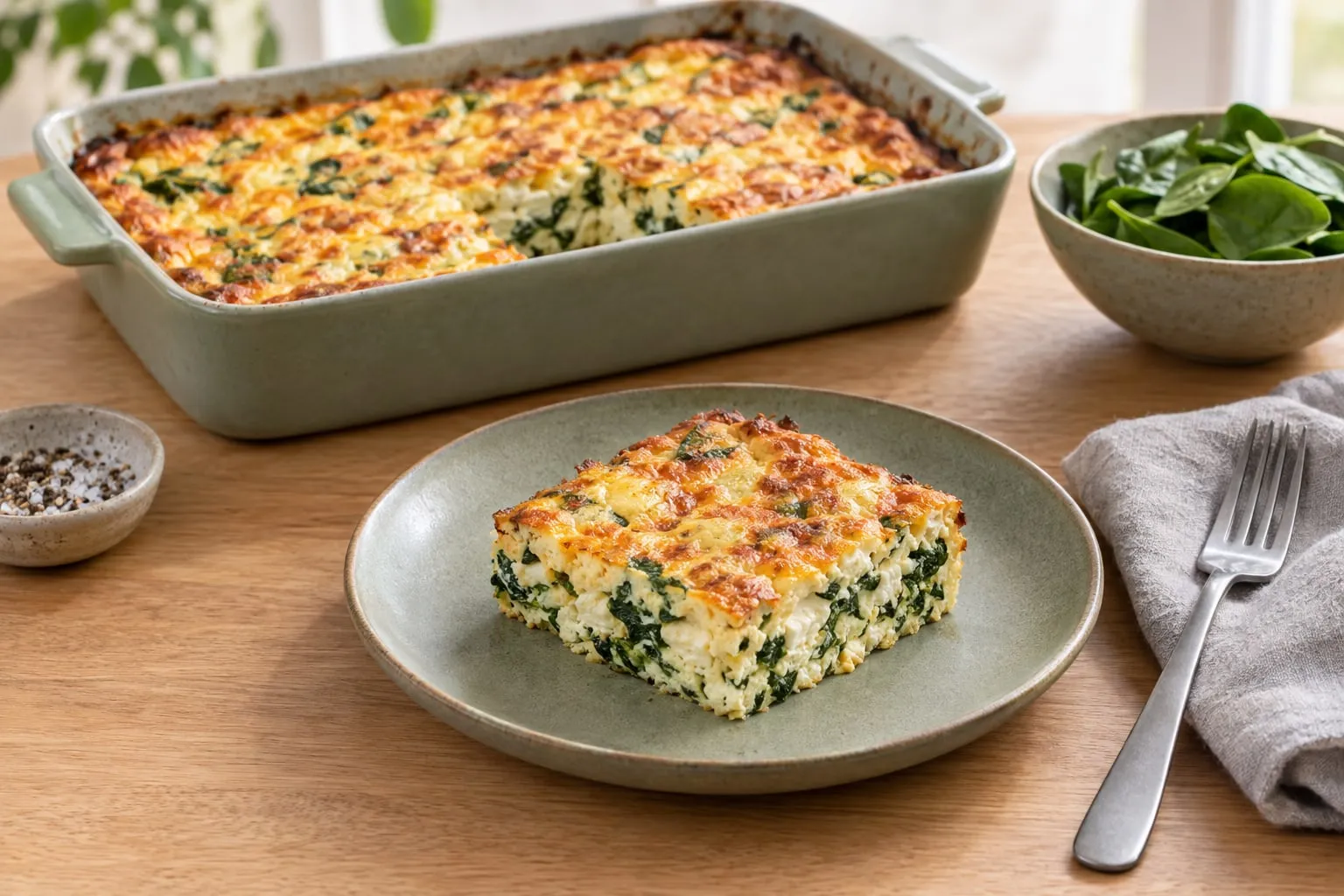
Cottage Cheese and Egg Bake
22 g protein190 kcal55 minVegetarianGluten-free
A baked breakfast of eggs and cottage cheese.
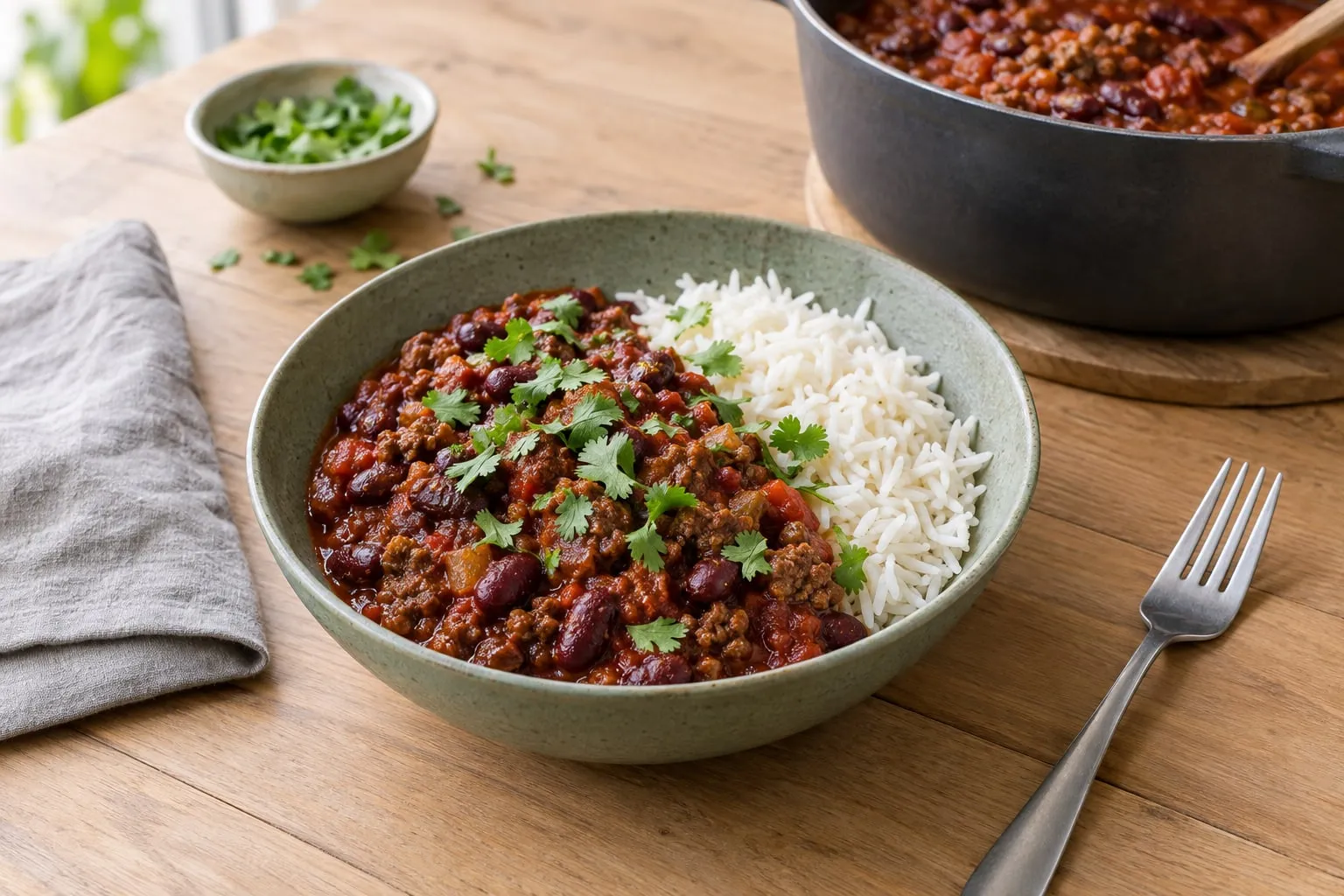
High Protein Chilli con Carne
33 g protein287 kcal1 hr 25 minGluten-freeDairy-free
Mince and beans in a one-pan dinner.
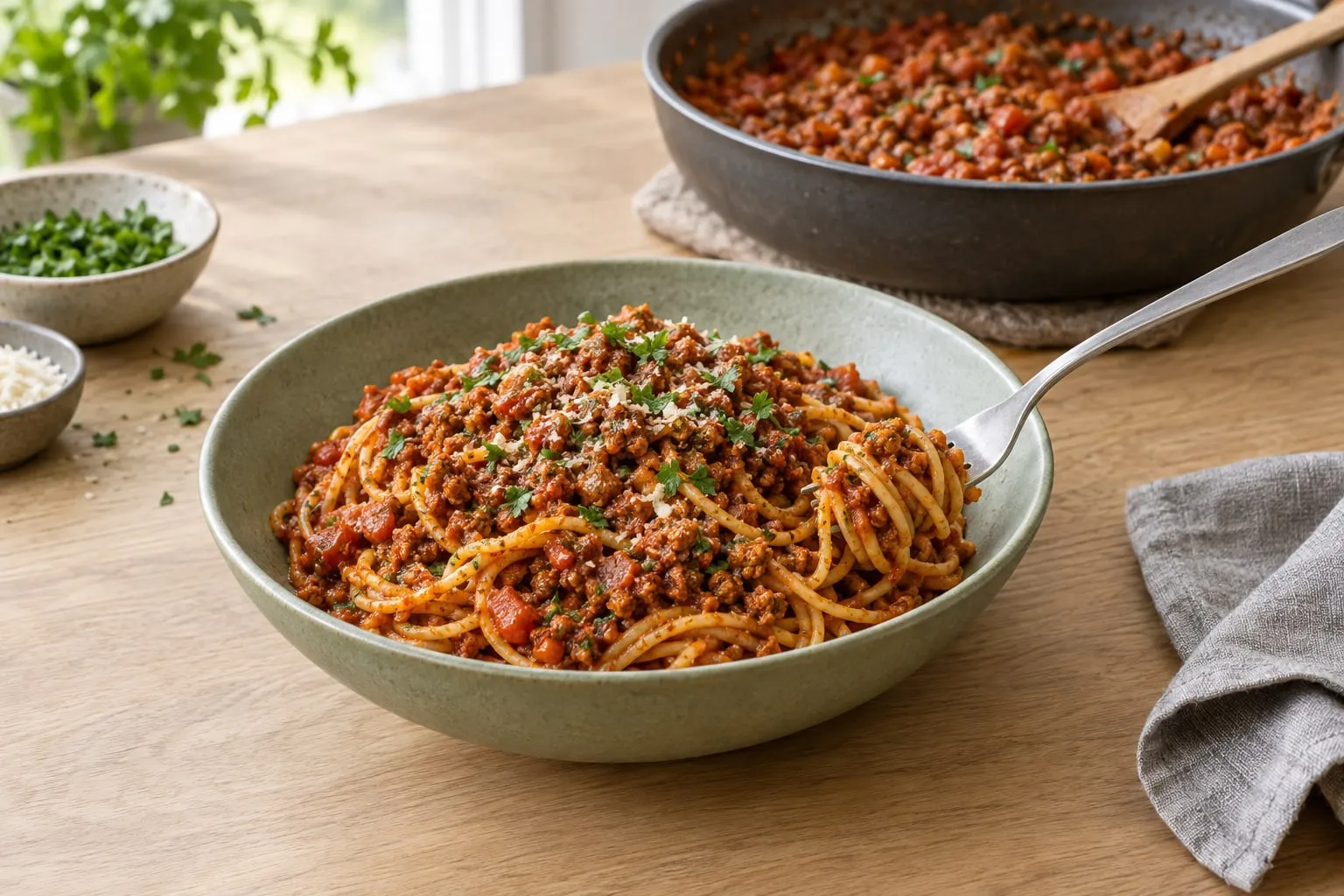
TVP Mince Bolognese
30 g protein476 kcal55 minVegetarianVegan
A mince-style sauce made with dried TVP.
Sources
- McCance and Widdowson's Composition of Foods Integrated Dataset 2021 (CoFID) – Protein and energy per 100 g for the foods listed, raw, cooked and dried
Read our editorial policy for how figures are checked and how to report a mistake.
More protein guides
All guides
Guide
High Protein Foods: A Ranked List
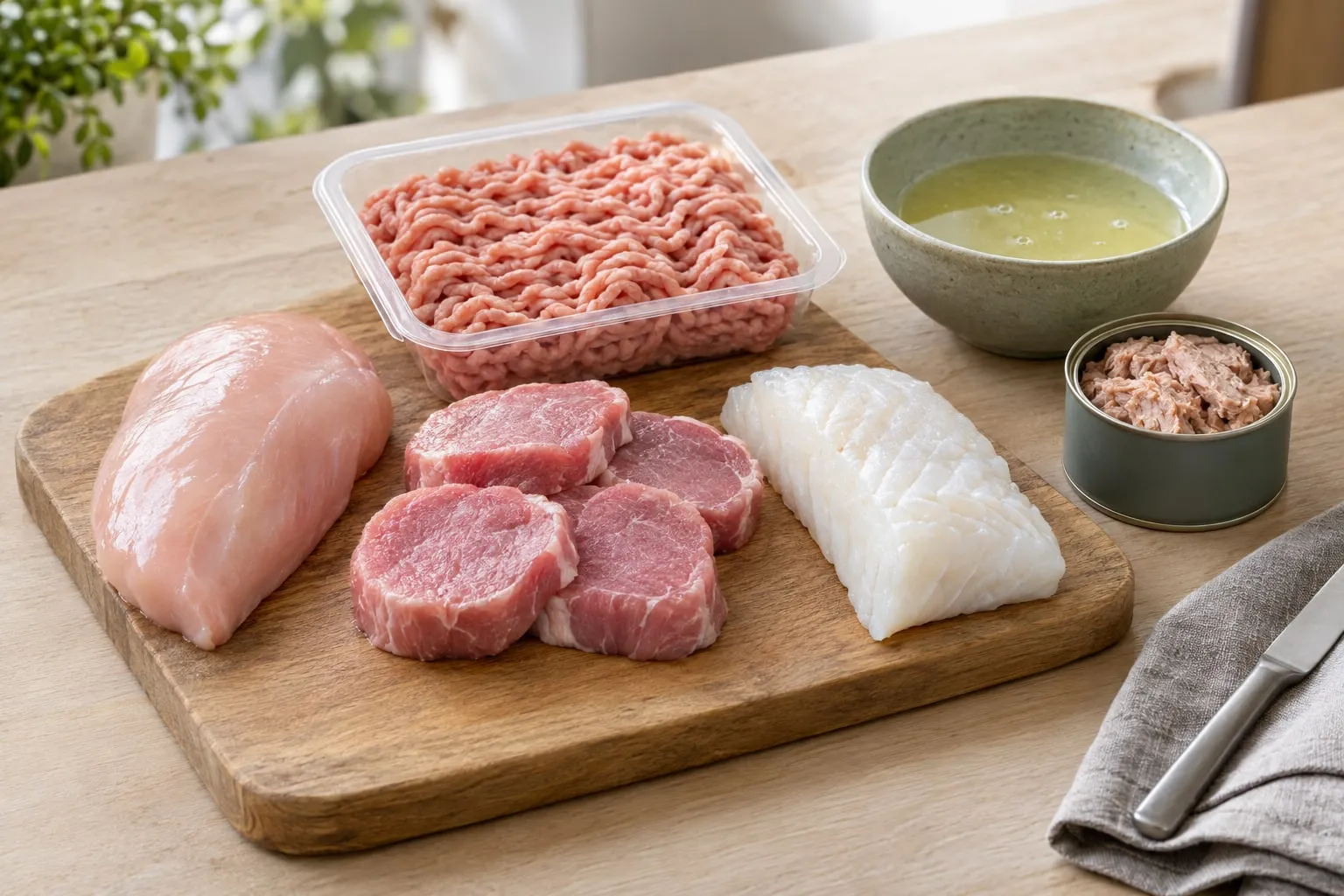
High protein foods ranked by protein per 100 g and per 100 kcal: Parmesan has 36.2 g, grilled chicken 32.0 g, dried red lentils 25.6 g and egg white 10.8 g.
Guide
Lean Protein: Best Sources
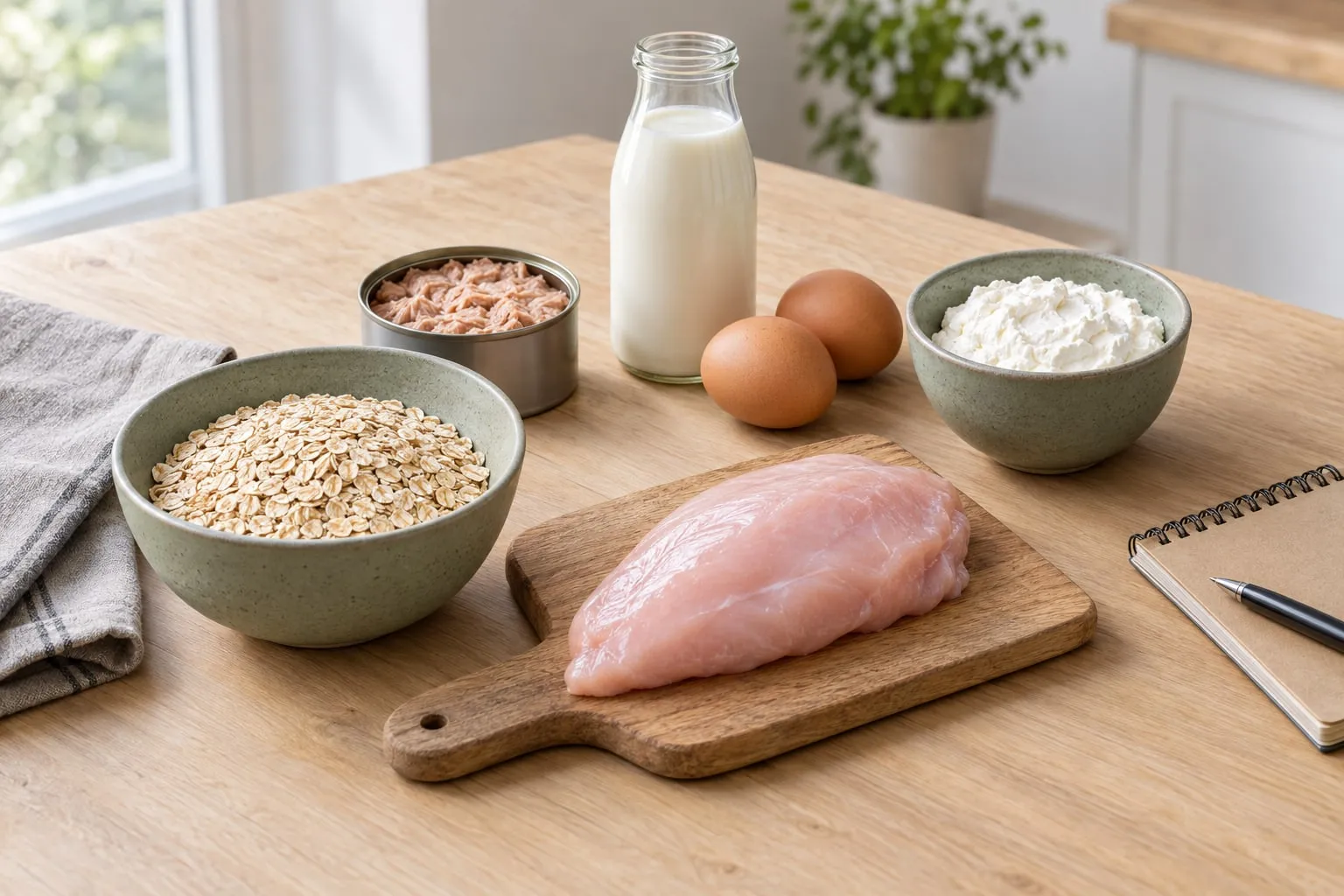
Lean protein sources ranked by fat: raw chicken breast has 24.0 g protein and 1.1 g fat per 100 g, tuna 24.9 g and 1.0 g. Meat, fish and dairy compared.
Guide
How Much Protein Do You Need Per Day?
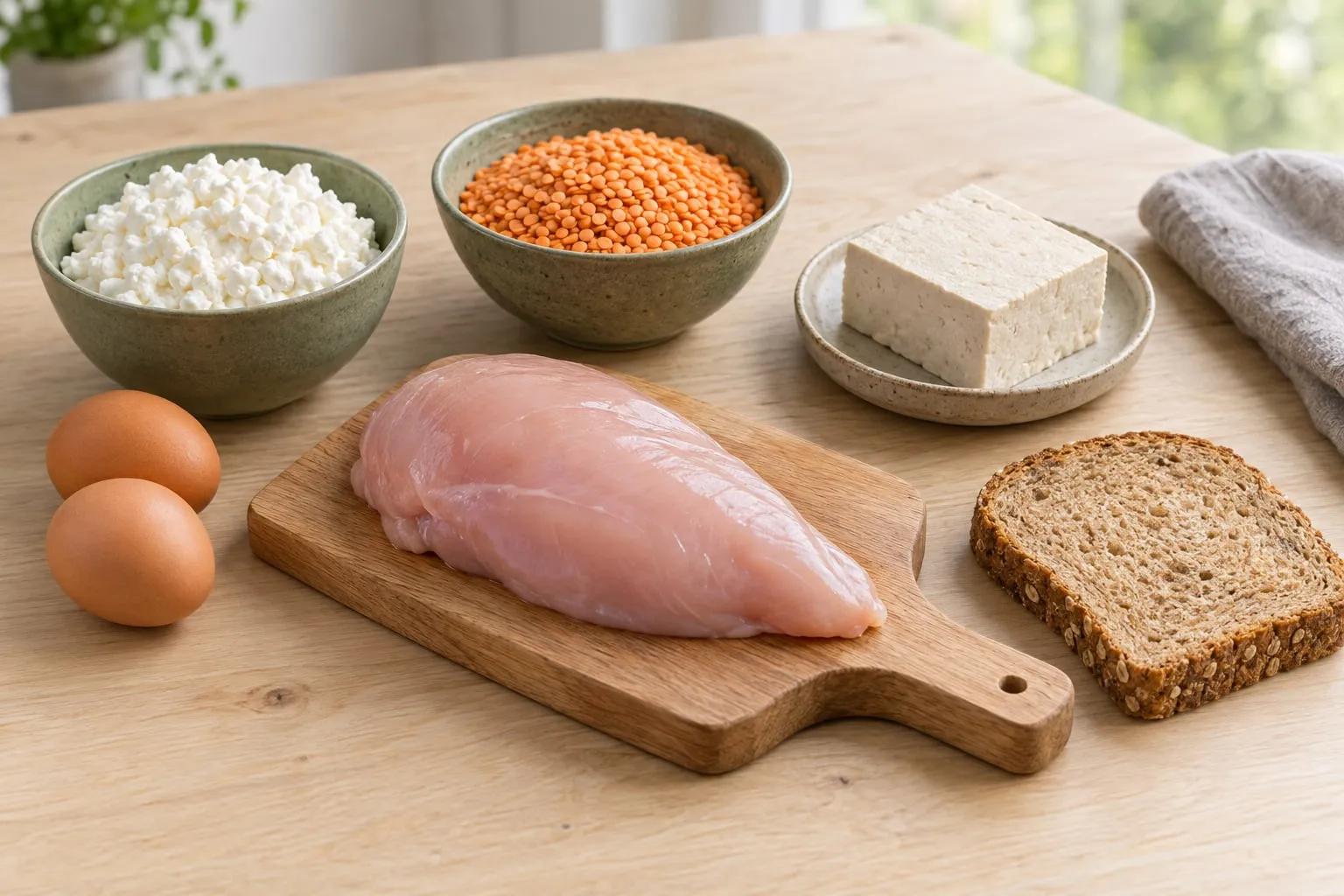
How much protein do I need? The UK reference is 0.75 g per kg of body weight a day, or 52.5 g at 70 kg. See food values and a worked example day.
Guide
What Is Protein and Why Do We Need It?
What is protein good for? It is made of amino acids, nine of them essential. See what it does, the UK 0.75 g per kg a day reference and food values.