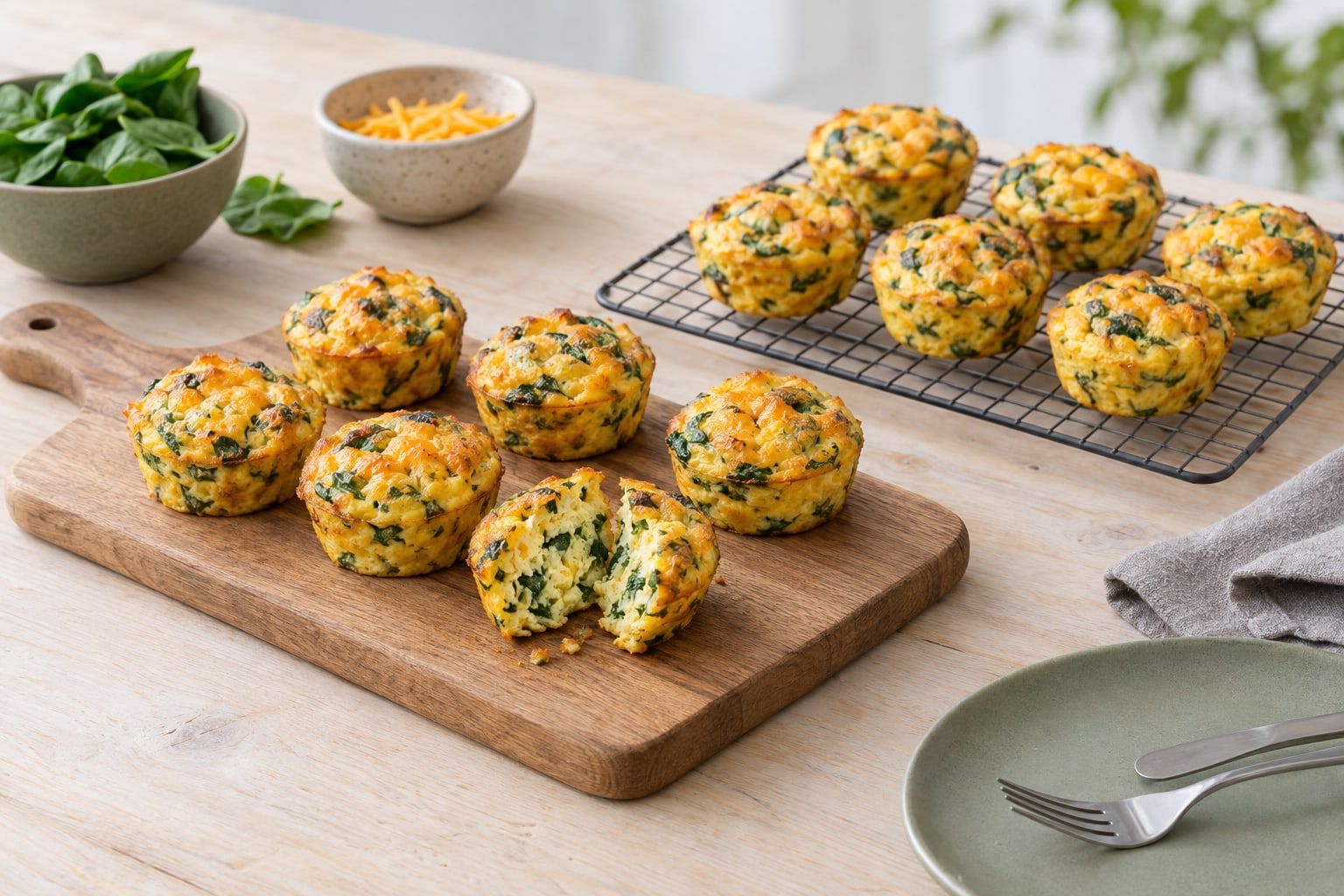
Method
Tap a time to start a timer.
Heat the oven to 180°C (160°C fan), gas 4. Brush the muffin tin holes with the rapeseed oil.
Grill the bacon on a medium-high heat until cooked through and lightly browned, turning once. Leave to cool, then chop finely.
Put the spinach in a colander and pour over boiling water from the kettle until wilted. Rinse under the cold tap, squeeze very dry in a tea towel and chop finely.
Blend the eggs and cottage cheese with the black pepper until completely smooth.
Stir the Cheddar, chopped bacon and spinach into the egg mixture. Pour into the muffin tin, filling each hole about two thirds full to make 12 muffins.
Bake on the middle shelf until the muffins are puffed, golden and set in the centre. A skewer pushed into the middle should come out clean.
Leave the muffins in the tin for 3 minutes, then run a knife round each one and lift them onto a rack. Serve three per person.
How to tell it's done
- Core temperature: 75°C in the thickest part, checked with a probe thermometer.
- The muffins are puffed, golden on top and set in the centre.
- A skewer or knife pushed into the middle comes out clean, and a food thermometer reads at least 75°C.
Tips for success
- Squeeze the spinach dry
Wet spinach makes watery muffins that weep in the tin. Wilt it with boiling water, cool it under the cold tap and squeeze it in a clean tea towel until no more liquid comes out.
- Grease the tin properly
Egg sticks to bare metal. Brush each hole of the muffin tin with the rapeseed oil, reaching up the sides, or use silicone cases.
- Fill to two thirds
The muffins puff up in the oven and settle as they cool. Filling each hole two thirds full leaves room to rise without spilling over the edge.
- Cool in the tin for 3 minutes
The muffins firm up as the steam escapes. Run a small knife round each one after 3 minutes and lift them out onto a rack.
Boost the protein
- Use 100 g half-fat Cheddar instead of 80 g: +1.6 g protein per serving.
- Replace 100 g of the cottage cheese with 100 g quark: +1 g protein per serving.
Choosing ingredients
Lean bacon loin steaks are low in fat and give 28.9 g protein per 100 g once grilled. Streaky bacon adds fat and less protein per gram.
Half-fat Cheddar keeps the fat down and has 32.7 g protein per 100 g. Mature cheese gives a stronger flavour, so a smaller amount goes further.
Reduced-fat cottage cheese blends to a smooth custard and adds protein without making the muffins greasy.
Variations
- Vegetarian with peppers
Leave out the bacon and add 80 g finely diced roasted red pepper from a jar, drained and patted dry. Protein falls to about 25 g per serving.
- Half batch
Use 4 eggs, 100 g cottage cheese and half of the other ingredients to fill 6 holes of the tin. Bake for the same time, as the muffins are the same size.
Serve it with
- Sliced tomatoes or a handful of cherry tomatoes
- A slice of wholemeal toast
- Tea or coffee
Storage
Cool the egg muffins fully, then keep them in an airtight container in the fridge for up to 3 days.
Freeze them for up to 2 months. Thaw overnight in the fridge, then microwave for 45–60 seconds until piping hot. Reheat only once.
Troubleshooting
Why are my high protein egg muffins watery?
The spinach still held water. Pour boiling water over it, rinse and squeeze it dry in a tea towel, or use 40 g instead of 60 g.
Why do my high protein egg muffins stick to the tin?
The tin was not greased well enough. Brush every hole with oil, up the sides as well, or use silicone muffin cases, and rest the muffins for 3 minutes before lifting them out.
Why are my high protein egg muffins rubbery?
They were baked too long or at too high a temperature. Check at 18 minutes and take them out as soon as the centre is set.
Frequently asked questions
How much protein is in high protein egg muffins?
Each portion of three muffins has 31 g protein and 265 kcal, so 46% of the energy comes from protein. One muffin has about 10 g protein.
Can I make high protein egg muffins without bacon?
Yes. Leave the bacon out and use 80 g diced roasted peppers or mushrooms instead. Each portion then has about 25 g protein.
How long do protein egg muffins keep?
Up to 3 days in the fridge in an airtight box, and up to 2 months in the freezer.
Made it? Rate the recipe
Read next
- How Much Protein Is in an Egg?How much protein in an egg: one medium raw egg has 6.3 g protein and 66 kcal. Values per egg, per 100 g, boiled, fried and scrambled.
- How Much Protein Is in Egg Whites?Protein in egg whites: raw egg white has 10.8 g protein per 100 g and 43 kcal. Values per white, per 100 g and compared with whole eggs and yolks.
Written by The Protein Recipes editorial team. Nutrition is calculated from the ingredient list using CoFID. Read how our recipes are made and how we correct mistakes.