Protein guide
Protein in Lentils
Quick answer
Dried red split lentils contain 25.6 g protein per 100 g and boiled ones 8.1 g, because cooking roughly triples the weight. A 75 g dry portion gives 19.2 g protein and 233 kcal.
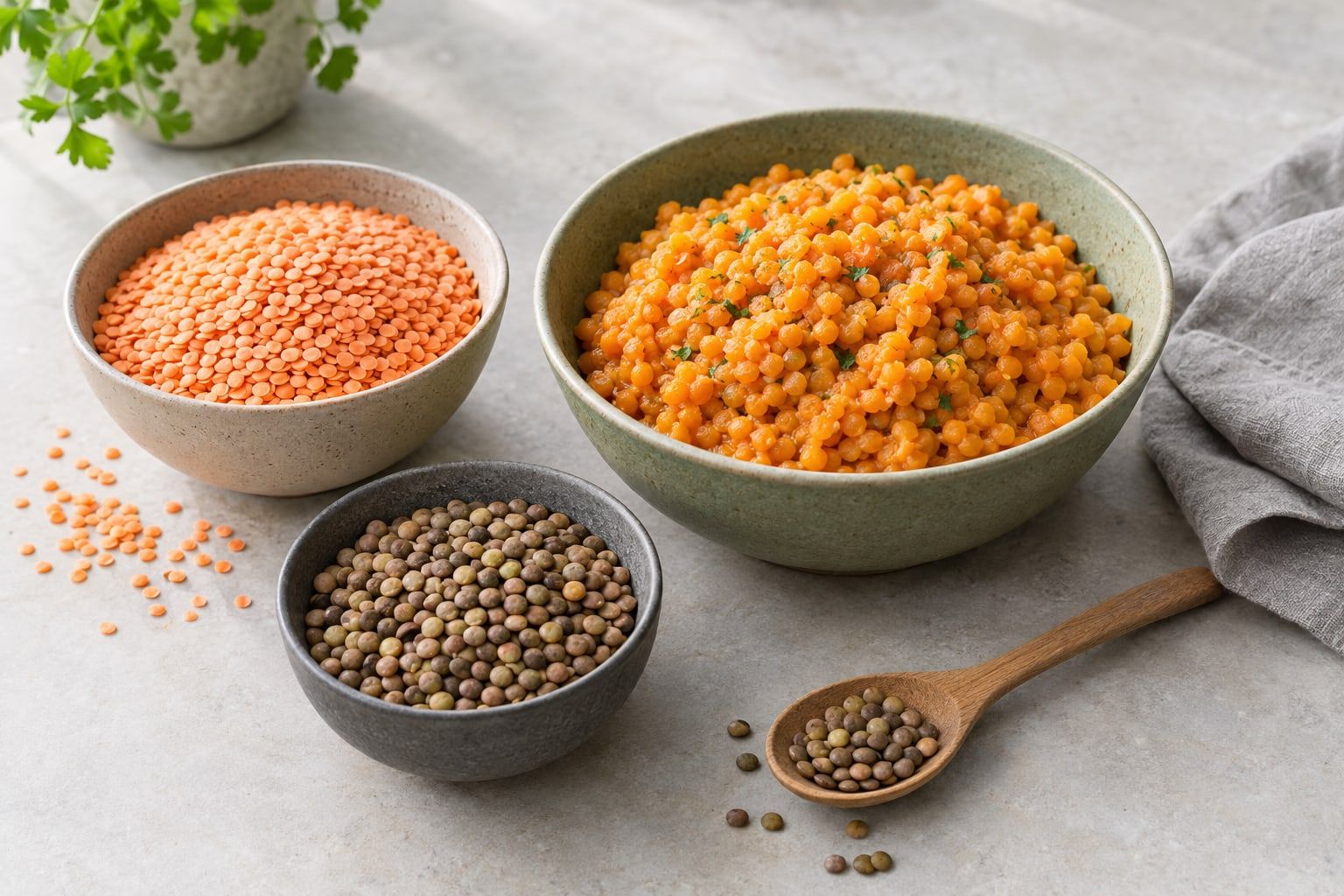
Protein lentils come down to weights: red split lentils have 25.6 g protein per 100 g dried but only 8.1 g per 100 g once boiled. The protein is the same; the lentils have absorbed water and weigh about three times as much. A 75 g dry portion gives 19.2 g protein and 233 kcal, and about a third of the energy, 32% for the boiled red kind, comes from protein.
Green and brown lentils follow the same pattern, with 24.3 g per 100 g dried and 7.8 g boiled, so the difference between the two types is small. Cooking time is where they diverge: red lentils soften in 15–20 minutes and collapse into soups and dal, while green and brown take 25–30 minutes and hold their shape. Homemade lentil soup has 5.9 g protein per 100 g, much of its weight being liquid. Tinned lentils are not in the tables used here, so use the pack label for those.
When you count, match the figure to the state you weigh. Use the dried numbers for the packet and the boiled numbers for the plate, so that 150 g of boiled red lentils gives 12.2 g protein and 153 kcal. Lentils are often served with rice or bread, but that is a choice of meal rather than a requirement, and the protein counts either way.
| Food | Protein | Energy | Fat |
|---|---|---|---|
| Red split lentils, dried, raw | 25.6 g | 311 kcal | 1.8 g |
| Red split lentils, boiled | 8.1 g | 102 kcal | 0.7 g |
| Green and brown lentils, dried, raw | 24.3 g | 297 kcal | 1.9 g |
| Green and brown lentils, boiled | 7.8 g | 92 kcal | 0.7 g |
| Lentil soup, homemade | 5.9 g | 121 kcal | 4.8 g |
Source: CoFID – McCance and Widdowson's Composition of Foods Integrated Dataset 2021 (codes 13-657, 13-658, 13-089, 13-661, 17-808)
| Portion | Weight | Protein | Energy |
|---|---|---|---|
| Red lentils, dried | 75 g | 19.2 g | 233 kcal |
| Red lentils, boiled | 150 g | 12.2 g | 153 kcal |
| Green or brown lentils, boiled | 150 g | 11.7 g | 138 kcal |
| Red lentils, boiled (5 A Day portion) | 80 g | 6.5 g | 82 kcal |
Source: Calculated from CoFID codes 13-657, 13-658 and 13-661; 150 g is assumed as a serving of cooked lentils and 80 g as the NHS 5 A Day portion
How much protein is in 100 g of lentils?
It depends on whether the lentils are dried or cooked. Red split lentils have 25.6 g protein per 100 g dried and 8.1 g per 100 g boiled. Green and brown lentils are close behind, with 24.3 g protein per 100 g dried and 7.8 g boiled. Energy follows the same pattern, at 311 kcal dried and 102 kcal boiled for red lentils. In both states protein supplies about a third of the energy, 32% for boiled red lentils, which is a high share for a plant food and why lentils are often chosen for meat-free dishes.
Why is cooked lentil protein so much lower?
Lentils absorb water as they cook, and their weight roughly triples. Red split lentils at 25.6 g protein per 100 g dry become 8.1 g per 100 g boiled, so 100 g dry gives about 315 g cooked, all carrying the same 25.6 g. Nothing is lost in the pan. The mistake to avoid is mixing the two figures, for instance weighing cooked lentils and using the dried number, which overstates the protein by about three times. Tinned lentils are not listed in the tables used here, so for those follow the figures on the label.
How much protein is in a portion of lentils?
A 75 g portion of dried red lentils, the sort of amount you might use for a pan of dal or soup, has 19.2 g protein and 233 kcal. Cooked, a 150 g serving of boiled red lentils gives 12.2 g protein and 153 kcal, and the same weight of boiled green or brown lentils gives 11.7 g and 138 kcal. An 80 g portion of boiled red lentils, the amount NHS 5 A Day guidance counts as one portion of pulses, has 6.5 g protein and 82 kcal. Homemade lentil soup has 5.9 g per 100 g, but a lot of that weight is liquid.
How long do red and green lentils take to cook?
Red split lentils need about 15–20 minutes at a simmer and break down into a soft purée, which suits soup, dal and sauces. Green and brown lentils keep their shape and take about 25–30 minutes, so they suit salads, bakes and pie fillings. The cooking time does not change the protein, only the texture. Rinse lentils in cold water first and cook them in plenty of water, then drain any extra if you want them firm. Weigh them cooked if you are counting by the finished portion, and dried if you are working from the packet.
Do lentils need to be eaten with rice for the protein to count?
No. Lentils are often served with rice, bread or pasta, but that is a matter of taste, cost and tradition rather than a requirement. The protein figures in the tables count whether lentils are eaten alone or with other foods. Protein from different plant sources adds up across the day, so a varied diet of lentils, beans, grains, nuts and seeds covers the range. If you eat only plant protein and want to plan your intake closely, speak to your GP or a registered dietitian.
Practical tips
- Weigh dry for recipes, cooked for plates
Use the dried figure when you measure lentils from the packet and the boiled figure when you weigh a cooked serving. The two give the same protein once you account for the water.
- Cook a double batch
Boiled lentils freeze well. Portion them into 150 g bags and each has about 12.2 g protein if the lentils are red.
- Use red lentils to thicken
Red split lentils collapse as they cook, so a handful stirred into a sauce or soup thickens it and adds protein without any extra cooking.
Myth or fact
- The facts
Is it true that dried lentils have three times the protein of cooked lentils?
Only per 100 g. Dried red lentils have 25.6 g per 100 g, boiled ones 8.1 g, because cooking triples the weight. The total protein in a given amount of lentils does not change.
- Myth
Is it true that green lentils have more protein than red?
No. Red split lentils have slightly more, with 25.6 g protein per 100 g dried against 24.3 g for green and brown, and 8.1 g against 7.8 g when boiled.
Frequently asked questions
How much protein is in 100 g of dried red lentils?
Dried red split lentils have 25.6 g protein and 311 kcal per 100 g.
How much protein is in 100 g of cooked lentils?
Boiled red split lentils have 8.1 g protein and 102 kcal per 100 g, and boiled green and brown lentils have 7.8 g and 92 kcal.
How much protein is in 75 g of lentils?
A 75 g portion of dried red lentils has 19.2 g protein and 233 kcal, and cooks to a large bowlful.
Are lentils high in protein?
Yes. About 32% of the energy in boiled red lentils comes from protein, and 150 g of them gives 12.2 g.
Is there protein in lentil soup?
Homemade lentil soup has 5.9 g protein and 121 kcal per 100 g, though the figure depends on the recipe and how much liquid is in it.
Recipes to try
Sources
- McCance and Widdowson's Composition of Foods Integrated Dataset 2021 (CoFID) – Values for dried and boiled red, green and brown lentils and homemade lentil soup
- NHS Eatwell Guide – Lists beans, peas and lentils among good sources of protein and gives 80 g as a portion for 5 A Day
Read our editorial policy for how figures are checked and how to report a mistake.
More protein guides
All guides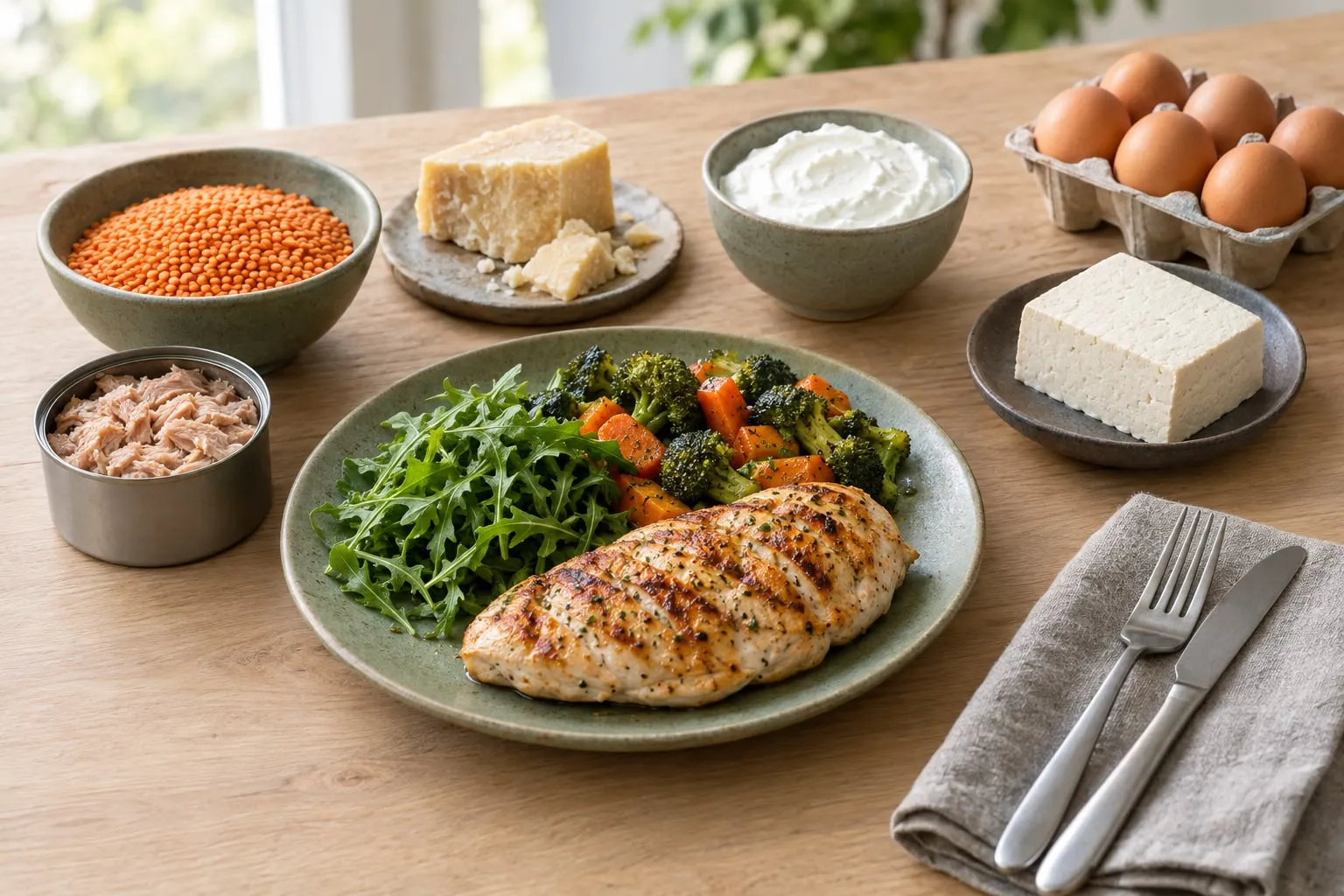
Guide
High Protein Foods: A Ranked List
High protein foods ranked by protein per 100 g and per 100 kcal: Parmesan has 36.2 g, grilled chicken 32.0 g, dried red lentils 25.6 g and egg white 10.8 g.
Guide
How Much Protein Do You Need Per Day?
How much protein do I need? The UK reference is 0.75 g per kg of body weight a day, or 52.5 g at 70 kg. See food values and a worked example day.
Guide
Protein Calculator
Protein calculator: multiply your weight in kg by 0.75 for the UK reference amount, so 70 kg gives 53 g a day. Tables for kg and stone, plus foods per 20 g.
Guide
How Much Protein to Build Muscle
How much protein to build muscle: research on regular training suggests 1.2–1.6 g per kg a day, 84–112 g at 70 kg, against 53 g for the UK reference intake.