Protein guide
High Protein Vegetables
Quick answer
Edamame beans have the most protein of any common vegetable, at 12.2 g per 100 g, followed by peas at 5.5–6.7 g and broccoli at 3.3–4.3 g. Most leafy greens and cabbages have 2–4 g per 100 g.
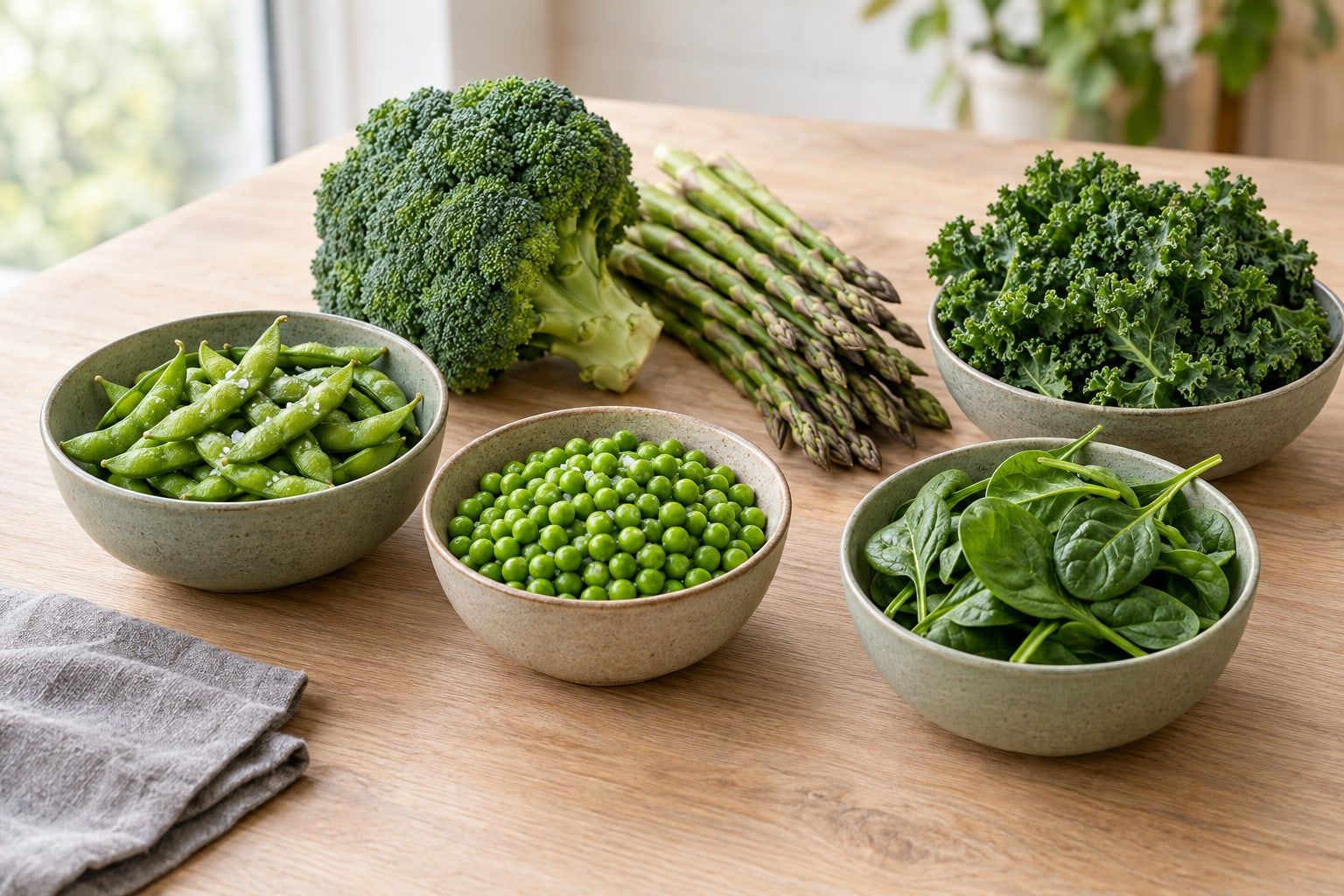
Vegetables high in protein are led by edamame beans at 12.2 g per 100 g boiled, then peas at 5.5–6.7 g and broccoli at 3.3–4.3 g. Most leafy greens, cabbages and asparagus sit between 2 g and 4 g.
Portion size changes the picture. An 80 g portion of frozen peas has 4.4 g protein, boiled broccoli 2.6 g and kale 2.7 g, so a plate of vegetables on its own is well short of a protein-rich meal. Where vegetables do stand out is protein per calorie: raw broccoli has about half of its energy from protein, because it has just 34 kcal per 100 g, and baby spinach gives 16.3 g protein per 100 kcal.
The sensible approach is to use vegetables for volume and fibre and take the protein from other foods. Peas and edamame are the useful exceptions, because they can add 4–10 g protein to a bowl of soup, noodles or salad without any extra cooking. For the rest of the plate, add lentils, cottage cheese, eggs, tuna or tofu.
| Vegetable | Protein | Energy | Protein per 100 kcal |
|---|---|---|---|
| Edamame beans, boiled | 12.2 g | 142 kcal | 8.6 g |
| Peas, boiled | 6.7 g | 79 kcal | 8.5 g |
| Peas, frozen, boiled | 5.5 g | 70 kcal | 7.9 g |
| Broccoli, raw | 4.3 g | 34 kcal | 12.6 g |
| Sweetcorn kernels, boiled | 3.6 g | 67 kcal | 5.4 g |
| Curly kale, raw | 3.4 g | 33 kcal | 10.3 g |
| Broccoli, boiled | 3.3 g | 28 kcal | 11.8 g |
| Asparagus, raw | 2.9 g | 25 kcal | 11.6 g |
| Spinach, baby, raw | 2.6 g | 16 kcal | 16.3 g |
| Mushrooms, white, raw | 1.0 g | 7 kcal | 14.3 g |
Source: CoFID – McCance and Widdowson's Composition of Foods Integrated Dataset 2021 (codes 13-667, 13-439, 13-536, 13-502, 13-508, 13-234, 13-503, 13-157, 13-521, 13-505)
| Portion of 80 g | Protein | Energy |
|---|---|---|
| Edamame beans, boiled | 9.8 g | 114 kcal |
| Peas, frozen, boiled | 4.4 g | 56 kcal |
| Broccoli, raw | 3.4 g | 27 kcal |
| Kale, raw | 2.7 g | 26 kcal |
| Broccoli, boiled | 2.6 g | 22 kcal |
| Spinach, baby, boiled | 2.6 g | 16 kcal |
Source: Calculated from CoFID values (codes 13-667, 13-536, 13-502, 13-234, 13-503, 13-550); 80 g is the portion size used for the 5 A Day advice
Which vegetable has the most protein?
Edamame beans, which are young soya beans, have the most protein of the vegetables in the UK food tables at 12.2 g per 100 g boiled. Peas come next: boiled peas have 6.7 g and frozen boiled peas 5.5 g per 100 g. Broccoli follows with 4.3 g raw and 3.3 g boiled, then sweetcorn at 3.6 g, kale at 3.4 g, asparagus at 2.9 g and baby spinach at 2.6 g. Mushrooms, at 1.0 g, are far lower.
How much protein do vegetables really give?
Less than the per 100 g figures suggest, because portions are small. An 80 g portion of frozen peas has 4.4 g protein and 56 kcal, a portion of boiled broccoli has 2.6 g and 22 kcal, and 80 g of boiled spinach has 2.6 g. To reach 20 g protein you would need about 364 g of frozen peas, 606 g of boiled broccoli or 625 g of boiled spinach. Edamame gets there with 164 g. Vegetables therefore add to the total, but they do not replace meat, fish, eggs, dairy or pulses.
Are vegetables high in protein for the calories?
Yes, in a narrow sense. Because most vegetables contain so few calories, a surprising share of their energy comes from protein: raw broccoli has 4.3 g protein for 34 kcal, which is 12.6 g per 100 kcal and about half of its energy. Baby spinach gives 16.3 g per 100 kcal. Edamame and peas come in lower, at 8.6 g and 7.9–8.5 g per 100 kcal, because they also contain fat and starch. Compare that with chicken breast at around 22 g per 100 kcal.
Does cooking change the protein in vegetables?
Cooking changes the weight, not the amount of protein. Raw broccoli has 4.3 g protein per 100 g and boiled broccoli 3.3 g, because the boiled florets take up water. Baby spinach shows the opposite effect: raw spinach has 2.6 g per 100 g and boiled has 3.2 g, because the leaves shrink as they wilt and lose water. Use the raw value for raw weights and the boiled value for cooked weights.
Which veggie protein sources work best for vegetarians?
Vegetarian meals are usually built around pulses, tofu, eggs and dairy, with vegetables on the side. Edamame sits in between, since it is both a vegetable and a pulse. Peas, sweetcorn and broccoli add volume to soups, pasta salads and curries, and the protein comes mainly from lentils, beans, cottage cheese or eggs alongside. Frozen peas and edamame are good freezer staples that cook in a few minutes.
Practical tips
- Keep frozen peas and edamame in the freezer
Both cook in a few minutes and can be stirred into soups, salads, noodle dishes and curries, adding 4–10 g protein per 80 g portion.
- Weigh vegetables the way the table does
Raw and boiled values are different, so match them to how you weigh the vegetables. Boiled broccoli has 3.3 g protein per 100 g, against 4.3 g for raw.
- Put the protein elsewhere on the plate
Add pulses, eggs, fish or cottage cheese to a plate of vegetables and the protein rises well beyond the few grams the vegetables give.
Myth or fact
- The facts
Is it true that spinach is a high protein vegetable?
Not really. Baby spinach has 2.6 g protein per 100 g raw, which is similar to asparagus. It is low in calories, so the protein per 100 kcal is high, but the portion is small.
- The facts
Is it true that you can get all your protein from vegetables?
Not in practice. Even edamame at 12.2 g per 100 g would need 164 g to give 20 g, and most other vegetables would need 450 g or more. Pulses, tofu, grains, eggs and dairy all play a larger part in meat-free diets.
Frequently asked questions
What vegetables have the most protein?
Edamame beans have 12.2 g per 100 g, boiled peas 6.7 g and raw broccoli 4.3 g. Kale, sweetcorn and asparagus each have about 3 g.
How much protein is in broccoli?
Raw broccoli has 4.3 g protein per 100 g and boiled broccoli 3.3 g. A portion of 80 g boiled has 2.6 g protein and 22 kcal.
How much protein is in peas?
Frozen peas boiled have 5.5 g protein per 100 g, so an 80 g portion has 4.4 g and 56 kcal. Boiled fresh peas have 6.7 g per 100 g.
Is there protein in veg like spinach and kale?
Yes, a little. Raw curly kale has 3.4 g per 100 g and baby spinach 2.6 g raw. An 80 g portion of raw kale gives 2.7 g protein for 26 kcal.
Which veggies are best for protein per calorie?
Baby spinach (16.3 g per 100 kcal), mushrooms (14.3 g) and raw broccoli (12.6 g) give the most protein for the energy. Their portions are small, so the totals are modest.
Recipes to try
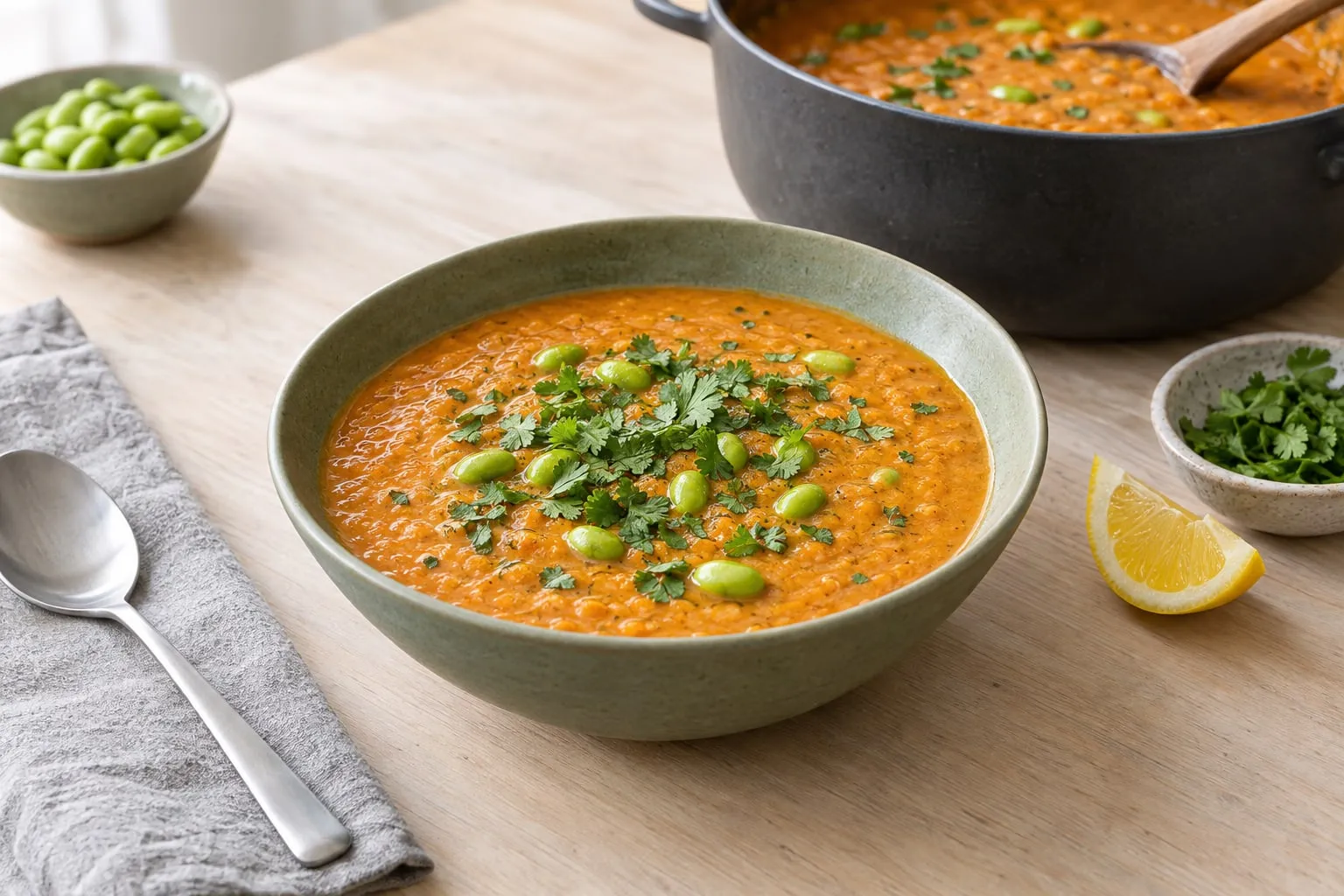
Red Lentil Soup
31 g protein448 kcal50 minVegetarianVegan
Red lentils make this soup, with vegetables adding bulk.
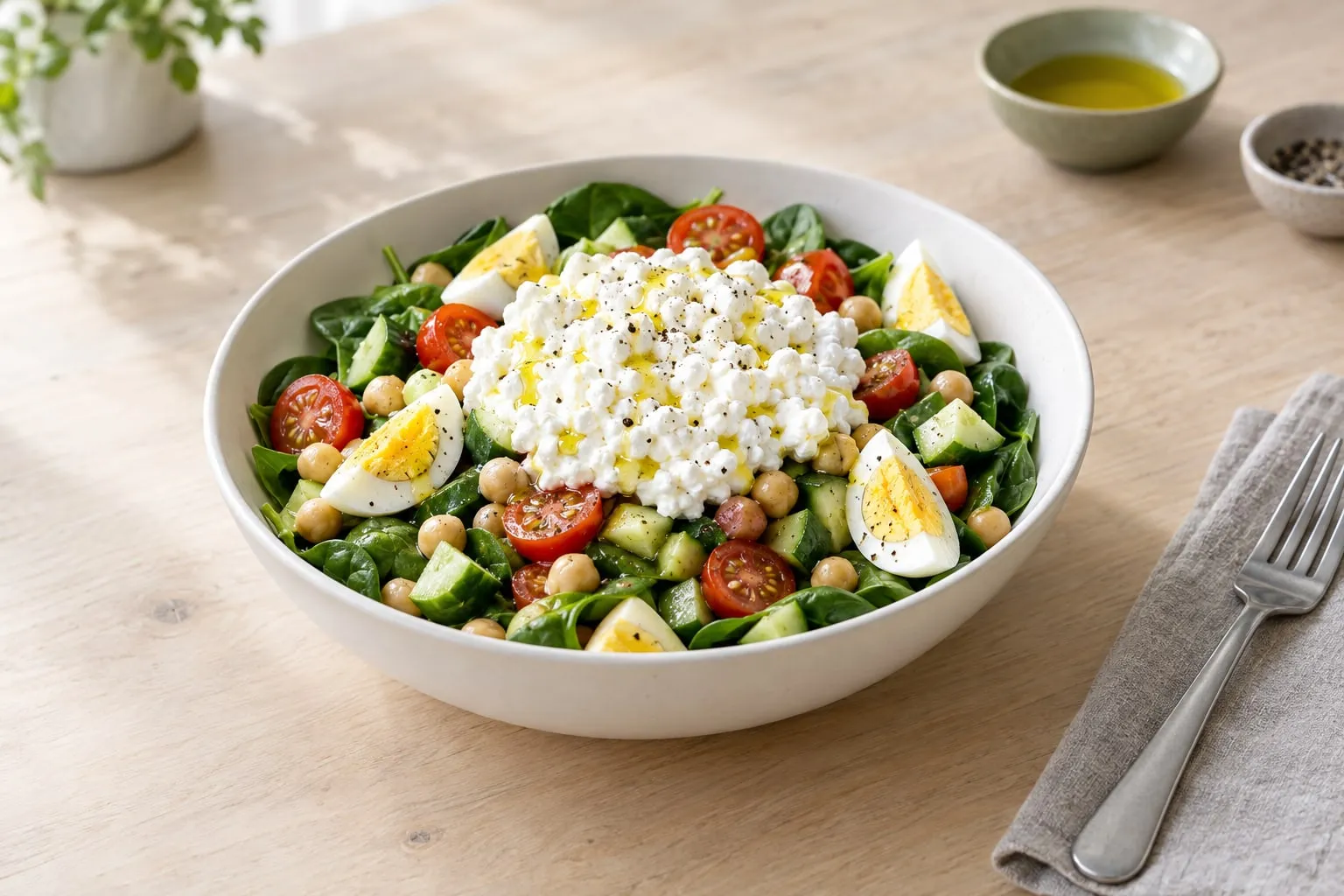
Cottage Cheese Salad
23 g protein252 kcal25 minVegetarianGluten-free
Salad vegetables topped with cottage cheese for the protein.
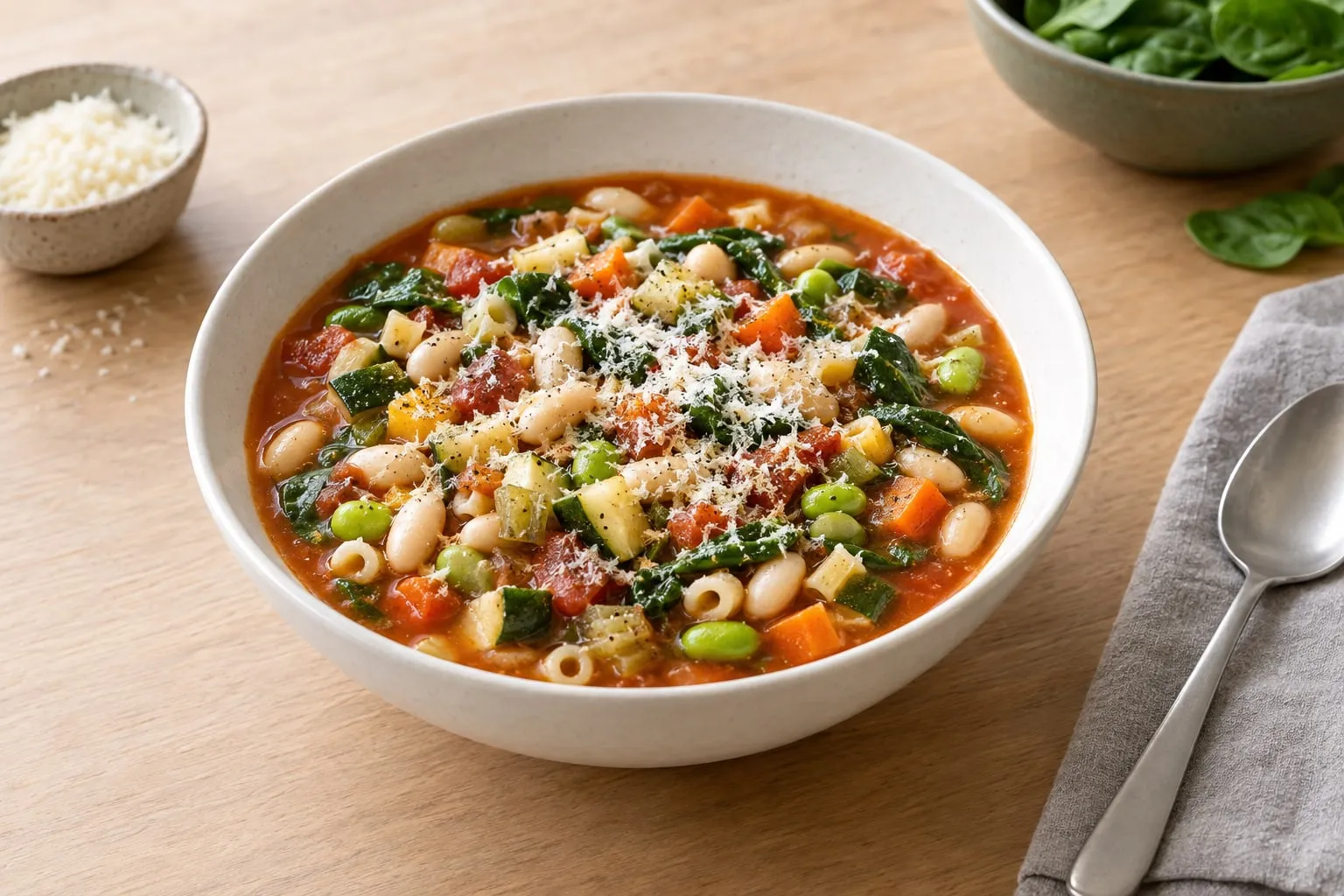
Bean Minestrone
31 g protein470 kcal50 minVegetarian
A vegetable soup with beans doing the protein work.
Sources
- McCance and Widdowson's Composition of Foods Integrated Dataset 2021 (CoFID) – Protein and energy values for raw and boiled vegetables
- NHS Eatwell Guide – Places beans, pulses, fish, eggs and meat in the protein group and sets vegetables in the fruit and vegetable group; 80 g counts as one portion for 5 A Day
Read our editorial policy for how figures are checked and how to report a mistake.
More protein guides
All guides
Guide
High Protein Foods: A Ranked List
High protein foods ranked by protein per 100 g and per 100 kcal: Parmesan has 36.2 g, grilled chicken 32.0 g, dried red lentils 25.6 g and egg white 10.8 g.

Guide
How Much Protein Do You Need Per Day?
How much protein do I need? The UK reference is 0.75 g per kg of body weight a day, or 52.5 g at 70 kg. See food values and a worked example day.
Guide
What Is Protein and Why Do We Need It?
What is protein good for? It is made of amino acids, nine of them essential. See what it does, the UK 0.75 g per kg a day reference and food values.
Guide
Lean Protein: Best Sources
Lean protein sources ranked by fat: raw chicken breast has 24.0 g protein and 1.1 g fat per 100 g, tuna 24.9 g and 1.0 g. Meat, fish and dairy compared.