Method
Tap a time to start a timer.
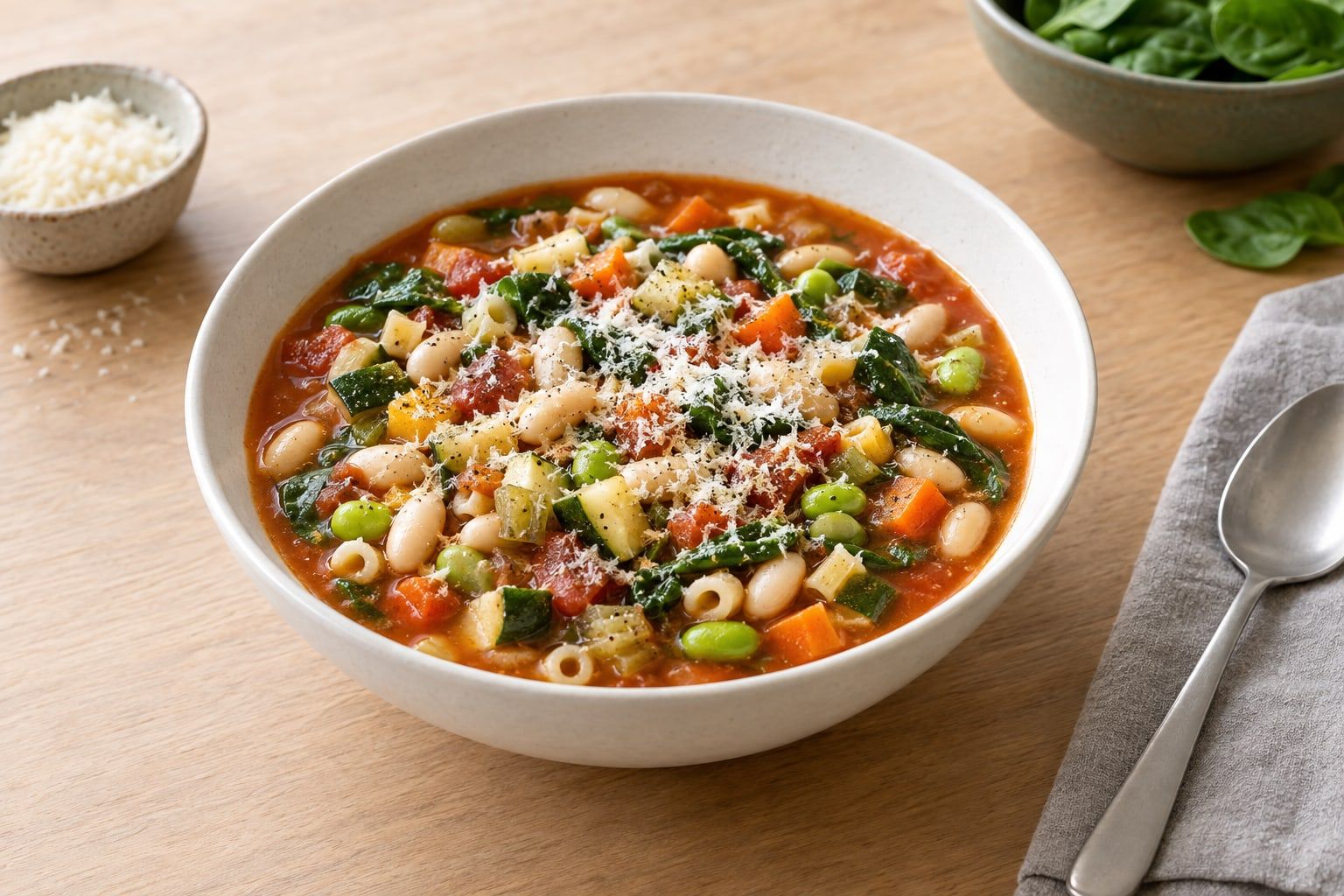
Heat the olive oil in the pan over a medium heat. Add the onion, carrots and celery and cook, stirring often, until soft.
Add the garlic and tomato purée and cook for 1 minute, stirring.
Pour in the chopped tomatoes, stock and water and add the mixed herbs. Bring to the boil, then simmer gently with the lid half on.
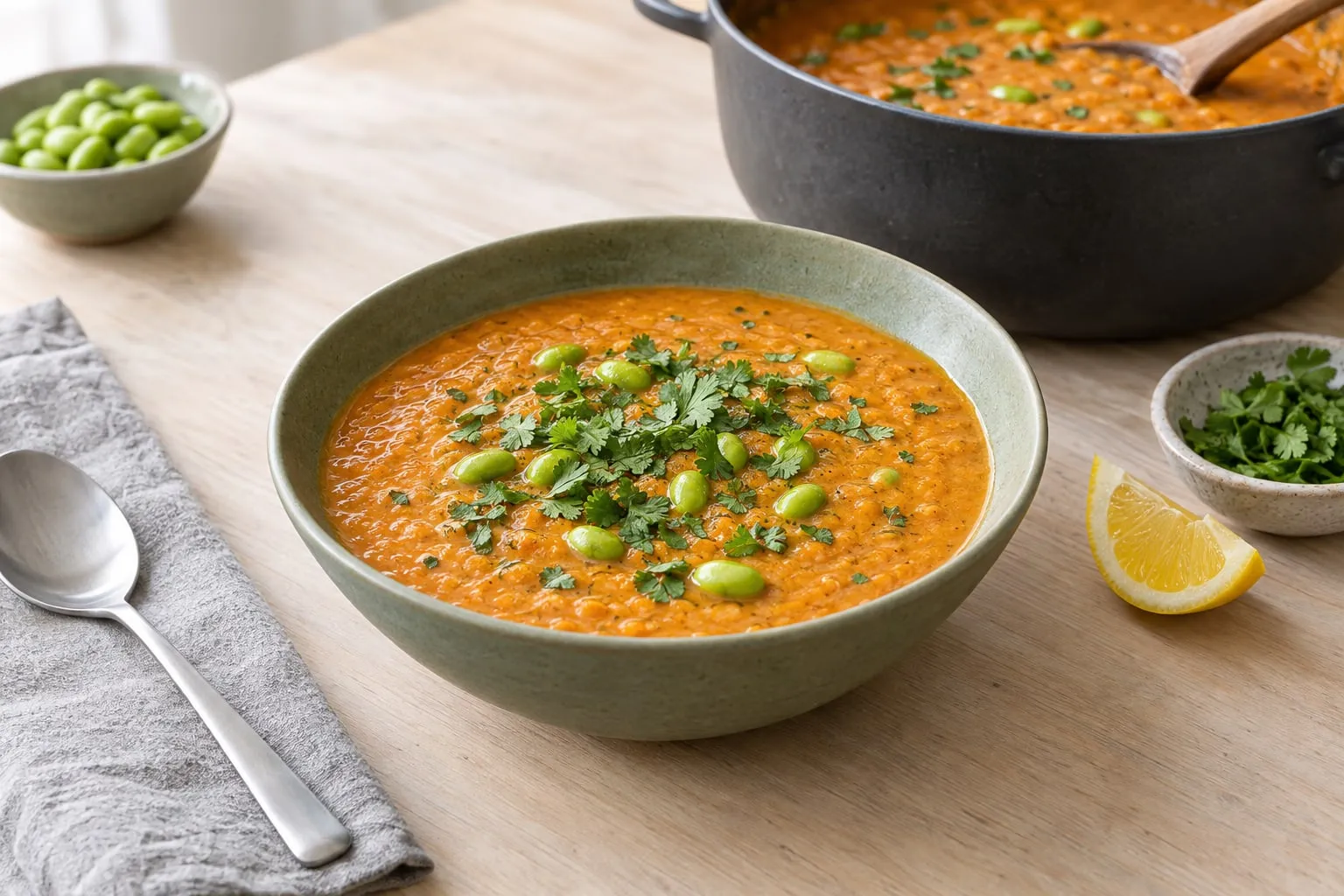
Add the drained cannellini beans, courgette, pasta and edamame beans. Simmer until the pasta is tender, stirring now and then.
Stir in the spinach until wilted. Season with black pepper and taste before adding any salt.
Ladle into four bowls and top each with 10 g of the grated vegetarian hard cheese.
How to tell it's done
- The pasta is tender but still holds its shape, and the carrots are soft.
- The soup is thick with beans and the broth has reduced slightly.
Tips for success
- Add the pasta late
Lentil or chickpea pasta softens quickly and releases starch. Add it for the last 8–10 minutes so it holds its shape, and expect it to soak up broth if the soup sits.
- Cook the soffritto slowly
Onion, carrot and celery take 8 minutes over a medium heat to turn soft and sweet. This gives the soup its base, as there is no meat or bacon.
- Use half stock, half water
Stock cubes are salty. Using 500 ml stock and 500 ml water keeps the soup well seasoned without pushing the salt over about 1.7 g per serving.
Boost the protein
- Stir in 100 g extra edamame beans: about +3 g protein per serving.
- Add 20 g more grated vegetarian hard cheese to the bowls: about +2 g protein per serving.
Choosing ingredients
Use tinned cannellini or haricot beans in water. One 400 g tin gives about 240 g drained.
Look for vegetarian hard cheese, as parmesan is made with animal rennet. Lentil or chickpea pasta shapes keep the protein high, and small shapes like macaroni work best.
Variations
- With wholewheat pasta
Use 100 g small wholewheat pasta and simmer for the time on the packet. Protein falls by about 3 g per serving.
- With cavolo nero
Replace the spinach with 100 g shredded cavolo nero, added with the beans and cooked for 8–10 minutes.
Serve it with
- Wholemeal bread
- Side salad with lemon dressing
- Garlic bread
Storage
Keep minestrone soup in an airtight container in the fridge for up to 3 days. The pasta soaks up broth, so add a splash of water when you reheat it.
Freeze the soup without the pasta for up to 3 months and cook fresh pasta when you reheat it.
Troubleshooting
Why is my minestrone soup too thick?
The pasta and beans soaked up the broth. Stir in 100–200 ml hot water or stock and heat until piping hot.
Why did the pasta go mushy in the minestrone soup?
Lentil and chickpea pasta softens fast. Add it for the last 8–10 minutes only, and cook small shapes rather than large ones.
Frequently asked questions
How much protein is in this minestrone soup?
Each of the four servings has 31 g protein and 470 kcal, so 26% of the energy comes from protein. The beans, lentil pasta, edamame and cheese all contribute.
Is minestrone soup vegetarian?
This one is, as it uses a vegetable stock cube and vegetarian hard cheese. Traditional parmesan is not vegetarian because it is made with animal rennet.
Can I freeze bean minestrone?
Yes, for up to 3 months. Freeze it without the pasta, then add freshly cooked pasta when reheating.
Made it? Rate the recipe
Read next
- High Protein VegetablesVegetables high in protein: edamame has 12.2 g per 100 g, boiled peas 6.7 g and raw broccoli 4.3 g. Table with calories and 80 g portions inside.
- Protein in Baked BeansBaked beans protein: 5.0 g per 100 g, so 10 g in half a 400 g tin and 20 g in the whole tin. Compared with kidney beans, soya beans and edamame.
- Vegetarian Protein SourcesVegetarian protein sources ranked per 100 g and per portion: dried lentils 25.6 g, tempeh 20.7 g, quark 14.6 g and eggs 12.6 g, from UK food tables.
Written by The Protein Recipes editorial team. Nutrition is calculated from the ingredient list using CoFID. Read how our recipes are made and how we correct mistakes.