Protein guide
High Protein High Fibre Foods
Quick answer
Pulses and soya lead for both nutrients. A 240 g portion of drained tinned chickpeas has 20.2 g protein and 17.0 g fibre, according to the UK food composition tables.
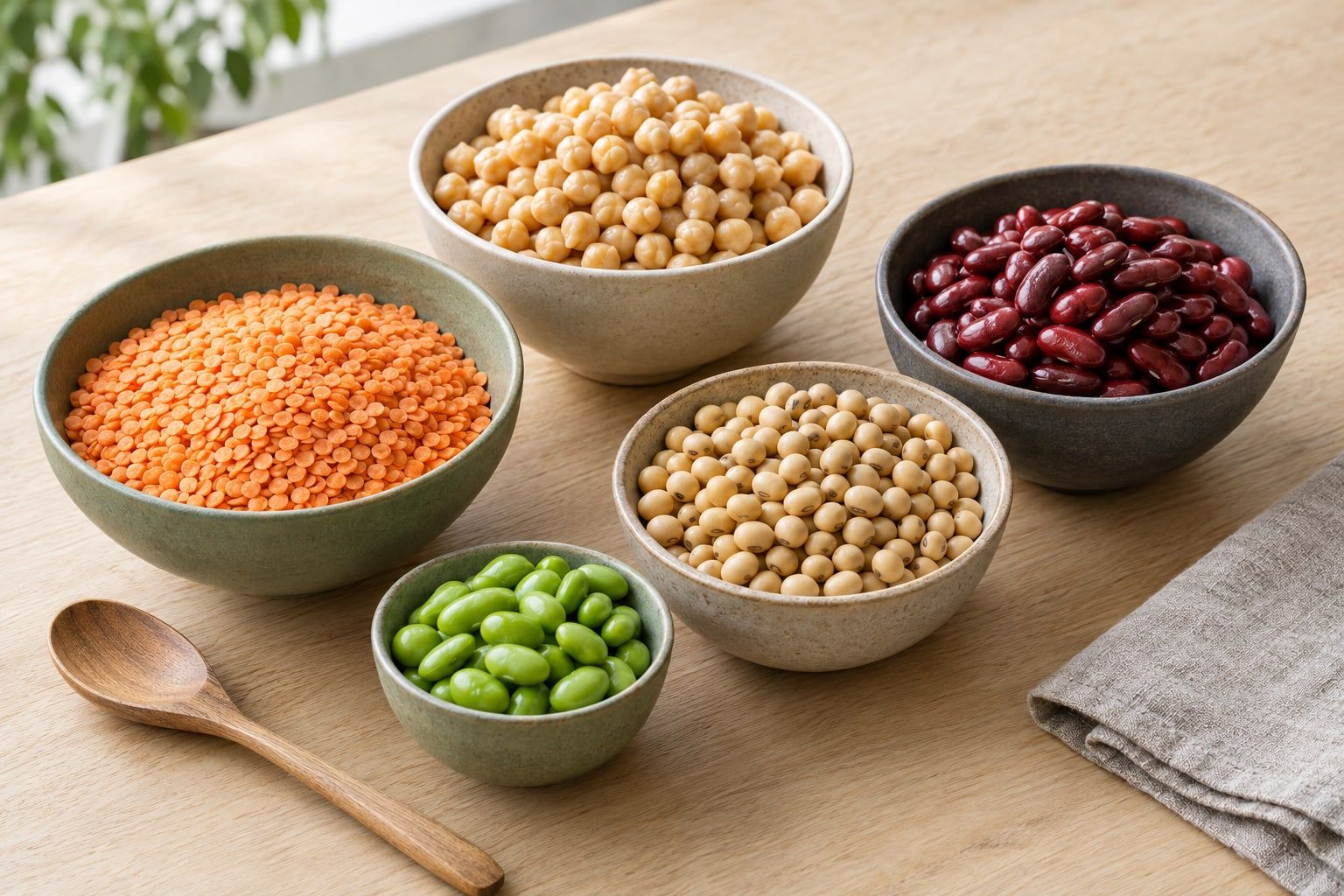
Protein foods high in fiber (fibre in UK spelling) come mostly from pulses: a 240 g portion of drained tinned chickpeas has 20.2 g protein and 17.0 g fibre, and the same weight of kidney beans gives 20.6 g protein and 16.3 g fibre. Soya, dried lentils, TVP and mycoprotein follow close behind, while meat, fish, eggs, dairy and protein powder contain little or no fibre.
The numbers depend heavily on the state of the food. Dried red lentils have 25.6 g protein and 17.4 g fibre per 100 g, but boiled red lentils have 8.1 g protein and 6.3 g fibre per 100 g because they have absorbed water. Tinned pulses are already cooked, so their values are the drained ones. A 400 g tin holds about 240 g of beans, which is the weight used in the portion table above. Wheat bran is high in fibre at 41.3 g per 100 g but adds little protein per spoonful.
In practice, the easiest meal high in protein and fibre is a chilli, curry or soup with a tin of beans, chickpeas or a handful of dried lentils, perhaps with mince or TVP for extra protein. Raise fibre gradually and drink plenty of fluid, as the NHS recommends.
| Food | Protein | Fibre |
|---|---|---|
| Soya beans, dried, raw | 35.9 g | 15.7 g |
| Red split lentils, dried, raw | 25.6 g | 17.4 g |
| Green and brown lentils, dried, raw | 24.3 g | 8.9 g |
| Textured vegetable protein (TVP), dried | 50.0 g | 15.0 g |
| Mycoprotein pieces, as purchased | 14.0 g | 8.3 g |
| Edamame beans, boiled | 12.2 g | 5.9 g |
| Kidney beans, tinned, drained | 8.6 g | 6.8 g |
| Chickpeas, tinned, drained | 8.4 g | 7.1 g |
Source: CoFID – McCance and Widdowson's Composition of Foods Integrated Dataset 2021 (codes 13-115, 13-657, 13-089, 13-574, 13-667, 13-660, 13-670); TVP is a typical value for dried TVP, not a CoFID figure
| Portion | Weight | Protein | Fibre |
|---|---|---|---|
| Tinned chickpeas, drained | 240 g (about one 400 g tin) | 20.2 g | 17.0 g |
| Tinned kidney beans, drained | 240 g (about one 400 g tin) | 20.6 g | 16.3 g |
| Red split lentils, dried | 75 g | 19.2 g | 13.1 g |
| Edamame beans, boiled | 80 g | 9.8 g | 4.7 g |
| TVP, dry | 30 g | 15.0 g | 4.5 g |
Source: Calculated from the CoFID per 100 g values (codes 13-670, 13-660, 13-657, 13-667); TVP is a typical value
Which foods are high in both protein and fibre?
Pulses and soya foods are the clearest answer. Red split lentils have 25.6 g protein and 17.4 g fibre per 100 g dried, dried soya beans have 35.9 g protein and 15.7 g fibre, and dried TVP has about 50 g protein and 15 g fibre. Tinned pulses sit lower per 100 g because they are packed in water, with 8.4 g protein and 7.1 g fibre in drained chickpeas. Mycoprotein pieces are also on the list at 14.0 g protein and 8.3 g fibre. Meat, fish, eggs, dairy and protein powders do not appear, because they contain little or no fibre.
How much protein and fibre is in a portion of beans or lentils?
A 400 g tin of chickpeas holds about 240 g of drained beans, which is 20.2 g protein and 17.0 g fibre. The same weight of kidney beans gives 20.6 g protein and 16.3 g fibre. Dried red lentils are lighter to weigh out, so 75 g dry gives 19.2 g protein and 13.1 g fibre before cooking. A smaller 80 g portion of boiled edamame beans gives 9.8 g protein and 4.7 g fibre, and 30 g of dry TVP gives 15.0 g protein and 4.5 g fibre.
What counts as a high fibre food?
The NHS uses 6 g or more of fibre per 100 g as the guide for a high fibre food, and 30 g a day as the intake for adults. By that measure chickpeas (7.1 g) and kidney beans (6.8 g) both qualify, red lentils clearly do, and boiled edamame at 5.9 g per 100 g just misses. A single portion of beans or lentils can supply roughly half of the daily 30 g.
Why do dried and cooked weights give different numbers?
Dried lentils soak up water as they cook, so the same food has a different value per 100 g at each stage. Dried red lentils have 25.6 g protein and 17.4 g fibre per 100 g, while boiled red lentils have 8.1 g protein and 6.3 g fibre per 100 g. The lentils have not lost anything: the cooked weight simply includes water. Compare dried with dried and cooked with cooked, and use the weight you actually put on the plate.
Is wheat bran a high protein food?
Wheat bran has 41.3 g fibre per 100 g, which is among the highest in the tables, but it is not a protein source in practice. A spoonful of about 10 g gives 1.5 g protein and 4.1 g fibre. Bran has little protein for the amount eaten, so beans and lentils work much better when both numbers matter in the same food.
What does a high protein, high fibre meal look like?
A bean chilli built on 240 g of drained kidney beans already provides 20.6 g protein and 16.3 g fibre from the beans alone, before any mince, TVP or cheese is added. A bowl of red lentil soup or a chickpea curry works the same way. When raising fibre, add it gradually and drink plenty of fluid, as the NHS advises.
Practical tips
- Drain and weigh tinned pulses
A 400 g tin contains roughly 240 g of beans once drained. Use the drained weight when you compare labels and tables.
- Pair pulses with a lean protein
Stir a tin of kidney beans into a chilli made with mince or TVP and the dish gives protein and fibre together. The beans bring the fibre while the mince or TVP brings extra protein.
- Build up fibre gradually
Raise fibre gradually and drink plenty of fluid, as the NHS advises, rather than adding three tins of beans in a single day.
Myth or fact
- Myth
Is it true that all high protein foods are high in fibre?
No. Chicken, fish, eggs, quark and whey protein powder all have little or no fibre. Pulses, soya, TVP and mycoprotein are the main foods that provide both.
- Myth
Is it true that wheat bran is a good protein source?
No. Wheat bran has 41.3 g fibre per 100 g, but a 10 g spoonful gives only 1.5 g protein. Pulses give far more protein for the same fibre.
Frequently asked questions
What are the best foods that are high in protein and fibre?
Dried soya beans, red lentils and TVP have the most of both per 100 g. Tinned chickpeas and kidney beans give about 20 g protein and 16–17 g fibre per 240 g drained portion.
How much fibre do adults need each day?
The NHS gives 30 g of fibre a day for adults. A 240 g portion of drained chickpeas supplies 17.0 g of it.
Is a tin of chickpeas high in protein?
A 240 g portion of drained tinned chickpeas has 20.2 g protein. That is a little less than 100 g of raw chicken breast, which has about 24 g.
What is a meal high in protein and fibre?
A bean chilli, red lentil soup or chickpea curry. With 240 g drained kidney beans, a chilli has 20.6 g protein and 16.3 g fibre from the beans alone.
Recipes to try
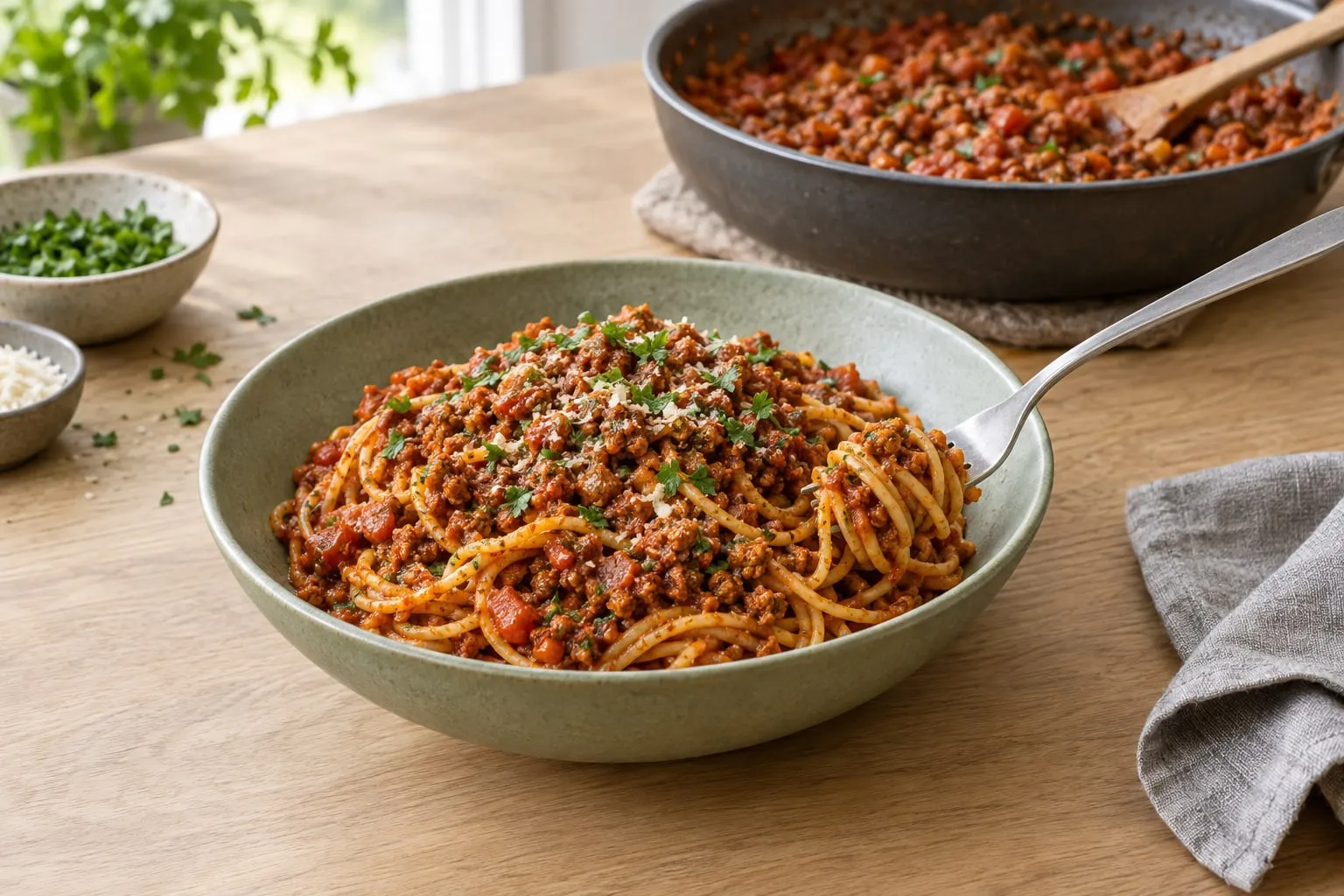
TVP Mince Bolognese
30 g protein476 kcal55 minVegetarianVegan
Dried TVP gives a mince-style sauce with both nutrients.
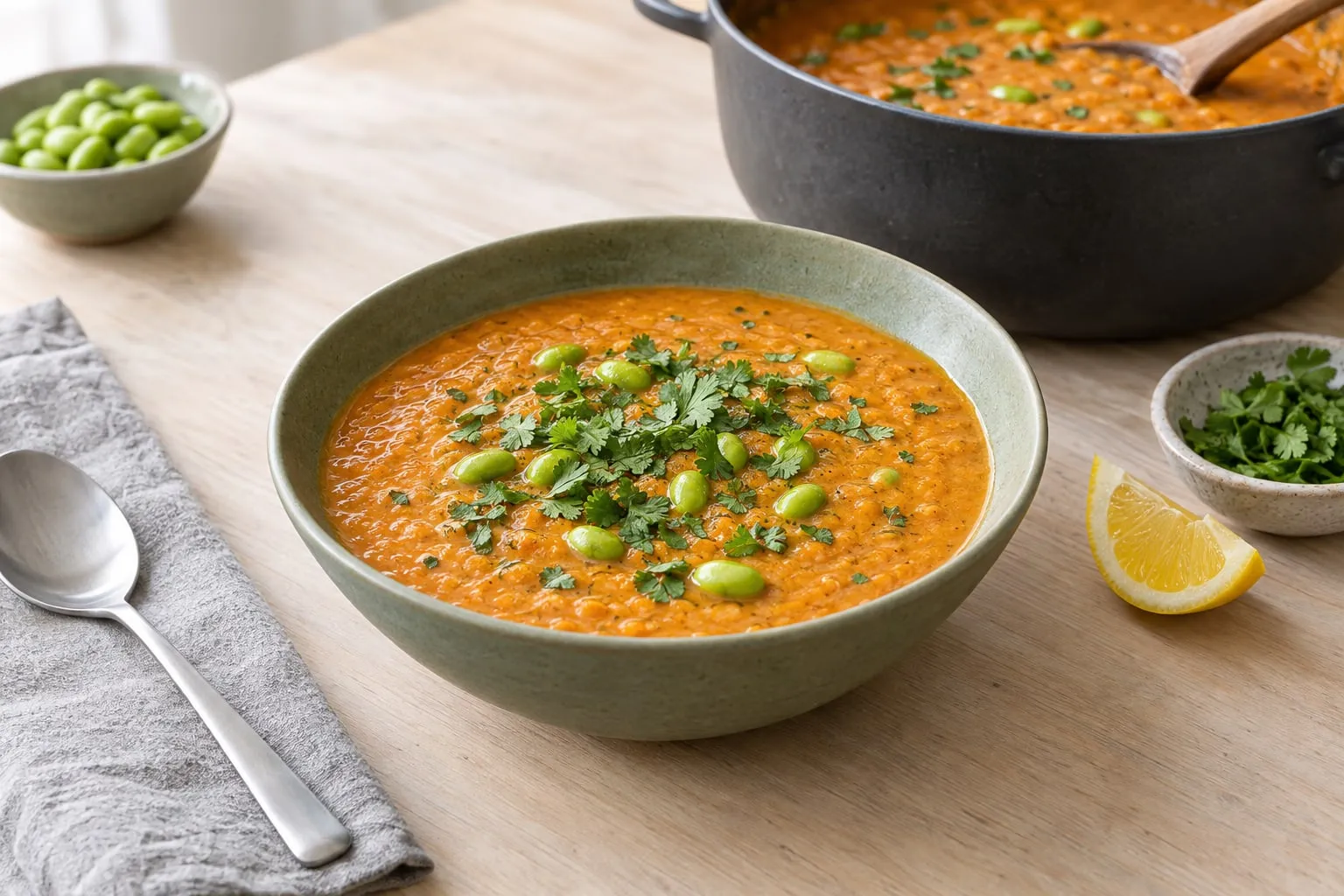
Red Lentil Soup
31 g protein448 kcal50 minVegetarianVegan
Red lentils cook down into a thick soup with plenty of fibre.
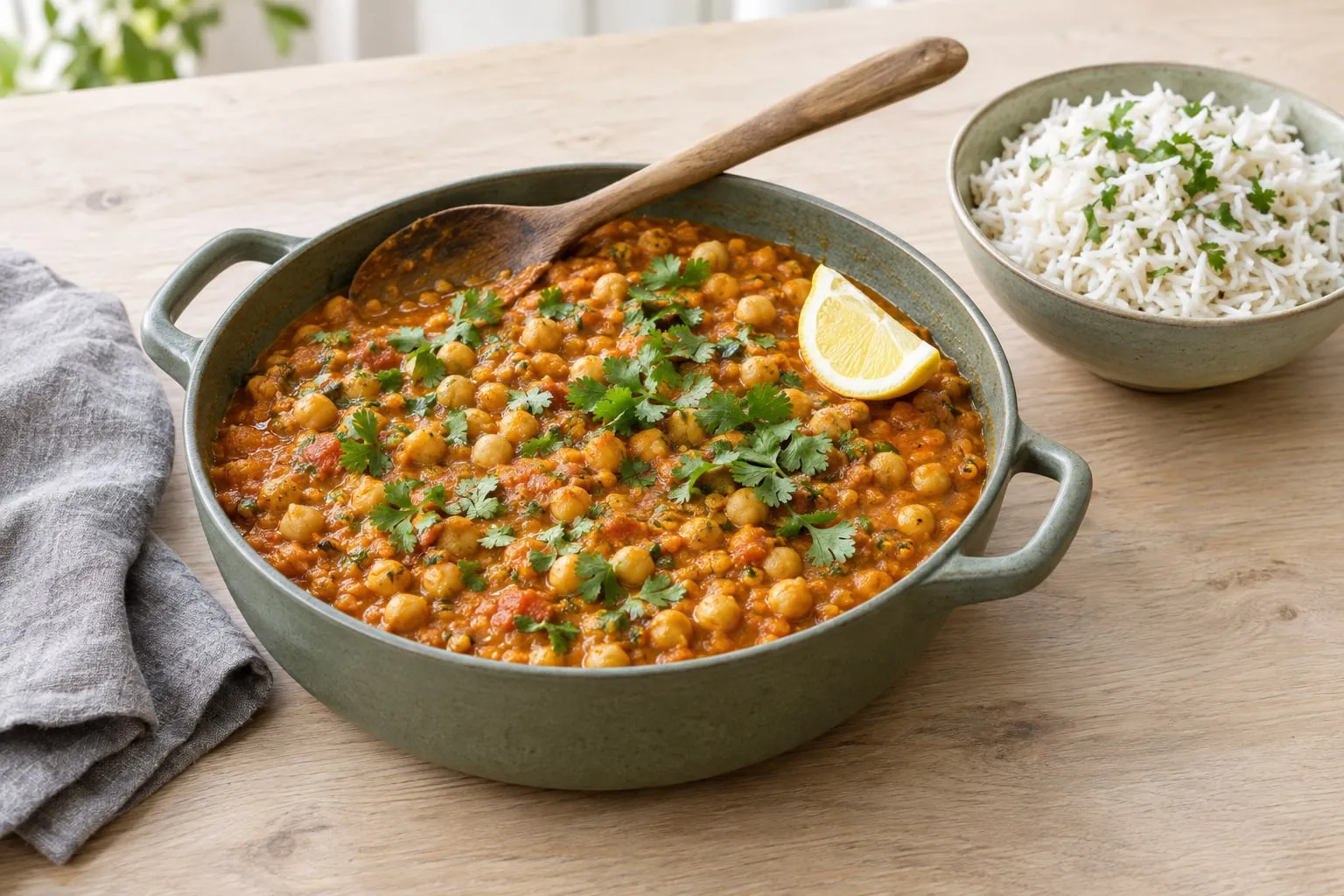
Chickpea Curry
34 g protein584 kcal50 minVegetarianVegan
Tinned chickpeas and red lentils in a tomato sauce, with 34 g protein and 27 g fibre per serving.
Sources
- McCance and Widdowson's Composition of Foods Integrated Dataset 2021 (CoFID) – Protein and fibre values for soya, lentils, tinned pulses, edamame, mycoprotein and wheat bran
- NHS – fibre and your diet – The 30 g a day figure for adults, the 6 g per 100 g guide for high fibre foods and advice to raise fibre gradually
Read our editorial policy for how figures are checked and how to report a mistake.
More protein guides
All guides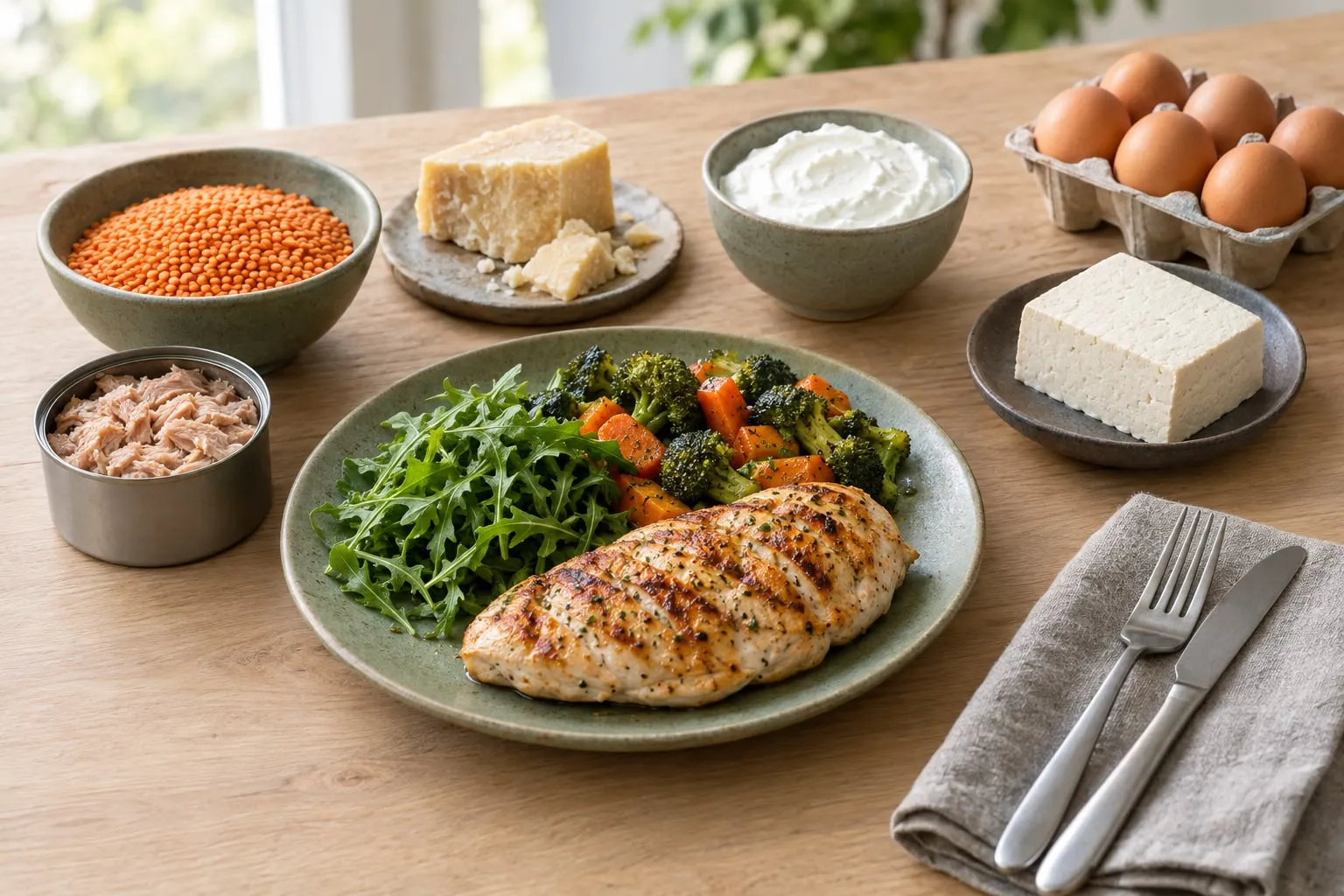
Guide
High Protein Foods: A Ranked List
High protein foods ranked by protein per 100 g and per 100 kcal: Parmesan has 36.2 g, grilled chicken 32.0 g, dried red lentils 25.6 g and egg white 10.8 g.
Guide
How Much Protein Do You Need Per Day?
How much protein do I need? The UK reference is 0.75 g per kg of body weight a day, or 52.5 g at 70 kg. See food values and a worked example day.
Guide
Lean Protein: Best Sources
Lean protein sources ranked by fat: raw chicken breast has 24.0 g protein and 1.1 g fat per 100 g, tuna 24.9 g and 1.0 g. Meat, fish and dairy compared.
Guide
Protein for Women: How Much Do You Need?
Protein for women: the UK reference is 0.75 g per kg a day, or 45 g at 60 kg. Daily amounts, food portions and what to check on a protein shake.