Protein guide
Are Protein Shakes Good for You?
Quick answer
A protein shake is a convenient source of protein, but most people do not need one. A 30 g scoop of whey gives 22.5 g protein and 114 kcal, and the UK average intake is already above the reference level.
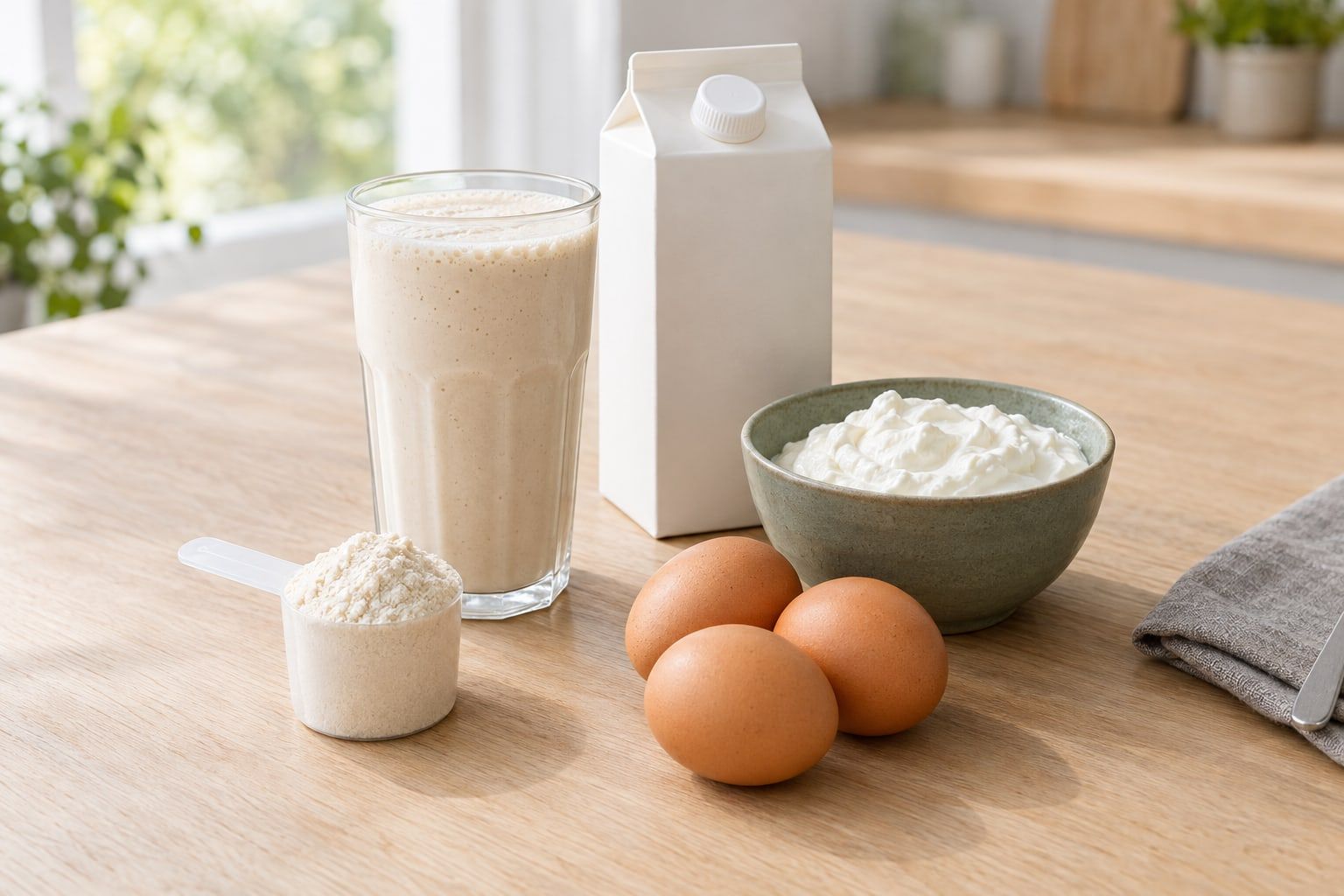
Are protein shakes good for you? A shake is a convenient way to add protein rather than a necessity: one 30 g scoop of whey gives 22.5 g protein and 114 kcal, and made with 250 ml of semi-skimmed milk it reaches 31.3 g protein and 229 kcal.
What matters is the label and the comparison. Powders vary in protein per scoop, sugar and sweeteners, and the figures on this page are typical values. The same 20 g of protein comes from 27 g of whey, 83 g of raw chicken breast, about 3 medium eggs or 137 g of quark, so whole foods and a shake are different routes to the same number. The UK average protein intake already sits above the reference of 0.75 g per kg per day, which is why most people do not need extra.
If a shake saves you time, use it as one part of a varied diet and check the serving size against the tub. A homemade version with milk, yogurt and oats gives similar protein plus fibre. Pregnancy, kidney disease and children are all cases for a word with your GP or a registered dietitian first.
| Item | Amount | Protein | Energy |
|---|---|---|---|
| Whey protein powder, 1 scoop | 30 g | 22.5 g | 114 kcal |
| Vegan pea and rice protein powder, 1 scoop | 30 g | 22.5 g | 114 kcal |
| Semi-skimmed milk | 250 ml | 8.8 g | 115 kcal |
| Whey shake made with semi-skimmed milk | 30 g powder + 250 ml milk | 31.3 g | 229 kcal |
Source: Powders are typical values (75 g protein and 380 kcal per 100 g, codes x1 and x3), not CoFID entries. Milk is CoFID code 12-313, semi-skimmed milk, with 3.5 g protein and 46 kcal per 100 g; 250 ml is taken as 250 g
| Food | Amount for 20 g protein | Energy |
|---|---|---|
| Whey protein powder (typical value) | 27 g | 101 kcal |
| Chicken breast fillet, raw (typical value) | 83 g | 88 kcal |
| Eggs, raw | 159 g, about 3 medium eggs | 208 kcal |
| Quark | 137 g | 101 kcal |
| Semi-skimmed milk | 571 ml | 263 kcal |
Source: Calculated from protein per 100 g: whey 75 g (x1), chicken 24 g (x10), eggs 12.6 g (CoFID 12-937), quark 14.6 g (CoFID 12-174) and semi-skimmed milk 3.5 g (CoFID 12-313). A medium egg is taken as about 50 g without the shell
Are protein shakes good for you?
A protein shake is a convenient way to add protein, and for most people that is all it is. It is a food product made from milk or plant protein, not something the body needs in addition to a normal diet. The British Nutrition Foundation notes that average protein intakes in the UK already sit above the reference level, which is 0.75 g per kg of body weight per day for adults. A shake can fit into a varied diet, but it neither replaces other foods nor is it necessary for most healthy adults.
How much protein is in a protein shake?
One 30 g scoop of whey or vegan pea and rice powder gives about 22.5 g protein and 114 kcal on typical label values. Mixed with 250 ml of semi-skimmed milk, a whey shake reaches 31.3 g protein and 229 kcal, because the milk adds 8.8 g protein and 115 kcal. Made with water, the shake has the powder's figures only. Powders differ, so the label on your tub matters more than these typical values, especially for flavoured products that carry added sugar or fat.
Do you need a protein shake around training?
The British Nutrition Foundation describes 20–25 g protein in a portion around exercise as appearing to be enough for most people. That is about 27 g of whey powder, 83 g of raw chicken breast, 3 medium eggs or 137 g of quark, so a meal or snack made from ordinary foods gives the same amount. A shake is faster to prepare and easy to carry, which explains its popularity in gym bags, but timing the protein within a narrow window is not required.
Who might find a protein shake useful?
A shake is a practical option for people with little time for breakfast, for vegetarians and vegans who find high-protein foods harder to come by, for active people with higher daily needs and for anyone with a small appetite who struggles to eat enough. In those cases it is a convenience, not a requirement. Anyone who already reaches the reference intake from meals gains little from adding a shake on top, and it also adds calories that count towards the day's total.
What should you check on the label?
Look at the protein per serving, the serving size, the sugar and the sweeteners. Some flavoured shakes and ready-to-drink bottles carry added sugar, and others use sweeteners, so the energy per serving can differ by a wide margin. Check the allergen list, since whey is milk and many powders contain soya. Whey has a smooth texture, casein thickens more and vegan blends are often a little grainier. Choose the one that suits your diet and taste.
When should you speak to a professional?
People who are pregnant or breastfeeding, who have kidney disease or another long-term condition, or who are buying a product for a child should speak to their GP or a registered dietitian before using protein shakes. The same applies to anyone following a medical diet. General advice on a web page cannot allow for medicines, test results and personal circumstances, and a professional can.
Practical tips
- Compare per 20 g protein
Divide 20 by the protein per 100 g to see how much of a product gives 20 g protein, then compare prices and calories on that basis. A scoop of powder, a tub of quark and a carton of milk are easy to compare this way.
- Check the serving size
Some tubs quote protein for a 40 g or 25 g scoop. Compare like with like, use the scoop provided and level it off, because a heaped scoop holds noticeably more powder than a level one.
- Make your own shake from foods
Blend milk, yogurt and oats or fruit for a shake based on whole foods, which adds fibre and calcium and needs no powder. The recipes below show how.
Myth or fact
- Myth
Is it true that protein shakes are only for gym-goers?
No. Anyone can drink one, and many people use them as a quick breakfast or snack. They are a convenient source of protein rather than something only trainers need, and most people can reach their protein from food.
- Myth
Is it true that the body can only absorb 30 g protein in one shake?
No. The body digests and absorbs much more than 30 g protein in a meal. Research suggests that around 20–25 g in a portion appears sufficient for muscle protein synthesis after exercise, but that is not an upper limit on absorption.
- The facts
Is it true that a protein shake replaces a meal?
Not by default. A whey shake made with milk has 229 kcal, which is a snack-sized amount, and it lacks the variety of a meal. A shake can stand in for a meal only if it provides enough energy and nutrients for you.
Frequently asked questions
How much protein is in a protein shake?
A shake with one 30 g scoop of whey in water has about 22.5 g protein and 114 kcal. Made with 250 ml of semi-skimmed milk, it has 31.3 g protein and 229 kcal.
Is it OK to have a protein shake every day?
For most healthy adults a daily shake fits into a varied diet, as long as total protein and calories suit your needs. Check the label for added sugar and sweeteners. People with kidney disease, who are pregnant or who have another condition should speak to their GP or a registered dietitian first.
Are vegan protein shakes as good as whey?
On typical label values a 30 g scoop of vegan pea and rice powder gives the same 22.5 g protein and 114 kcal as whey. Vegan blends tend to be grainier and need a little more liquid, while whey mixes smoother.
Is it better to get protein from food than from shakes?
Food gives protein together with other nutrients and is usually enough. A shake is quicker and easier to carry, and works well when meals are hard to fit in. About 3 medium eggs or 137 g of quark give 20 g protein too.
How much protein is in the shakes you make at home?
A homemade shake with milk, yogurt and fruit can give a similar amount to a powder-based one, depending on the ingredients. The smoothie recipe linked below has 32 g protein per glass.
Recipes to try
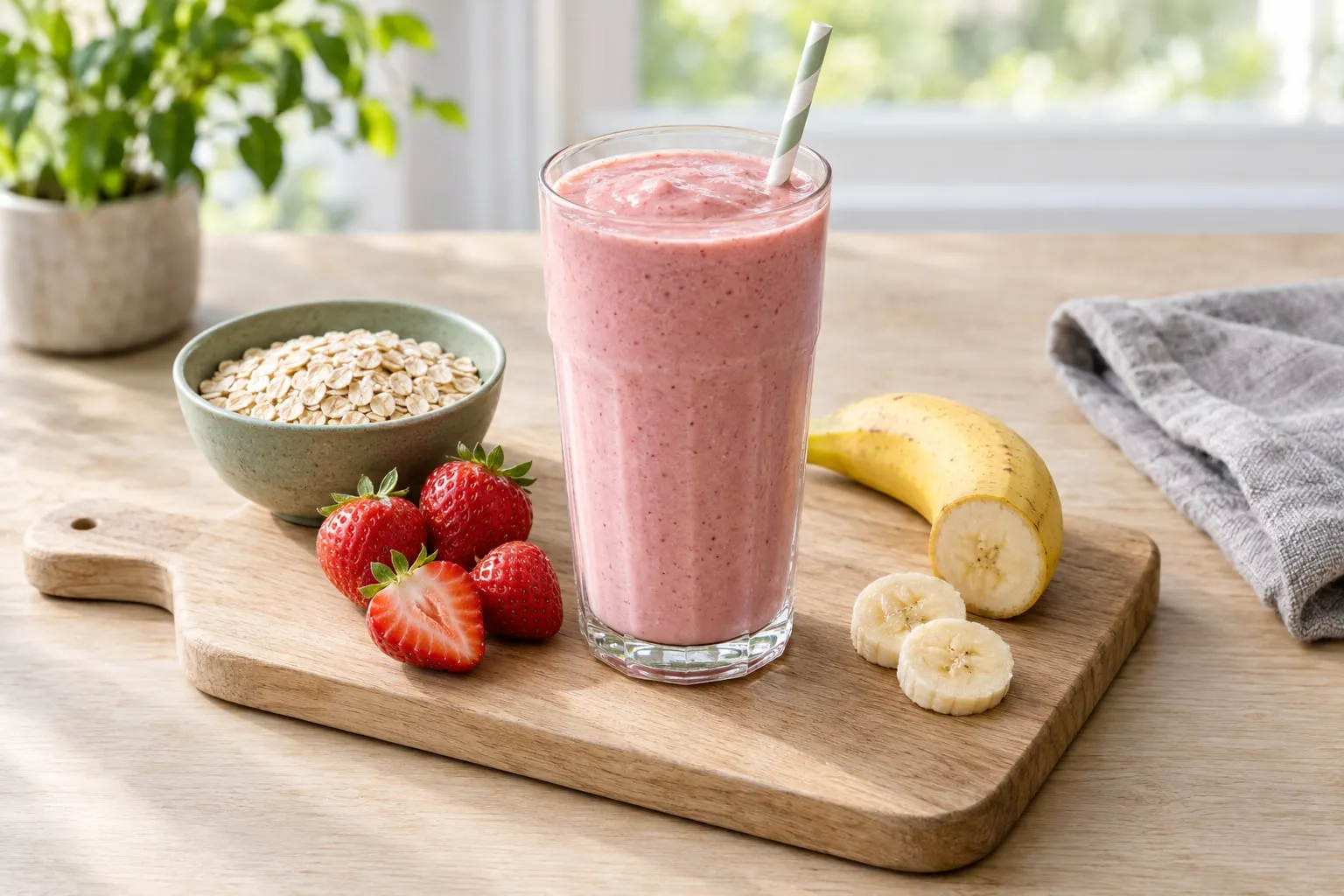
Protein Smoothie
32 g protein387 kcal5 minVegetarian
A glass with 32 g protein from yogurt, milk and oats, as an alternative to a powder-only shake.
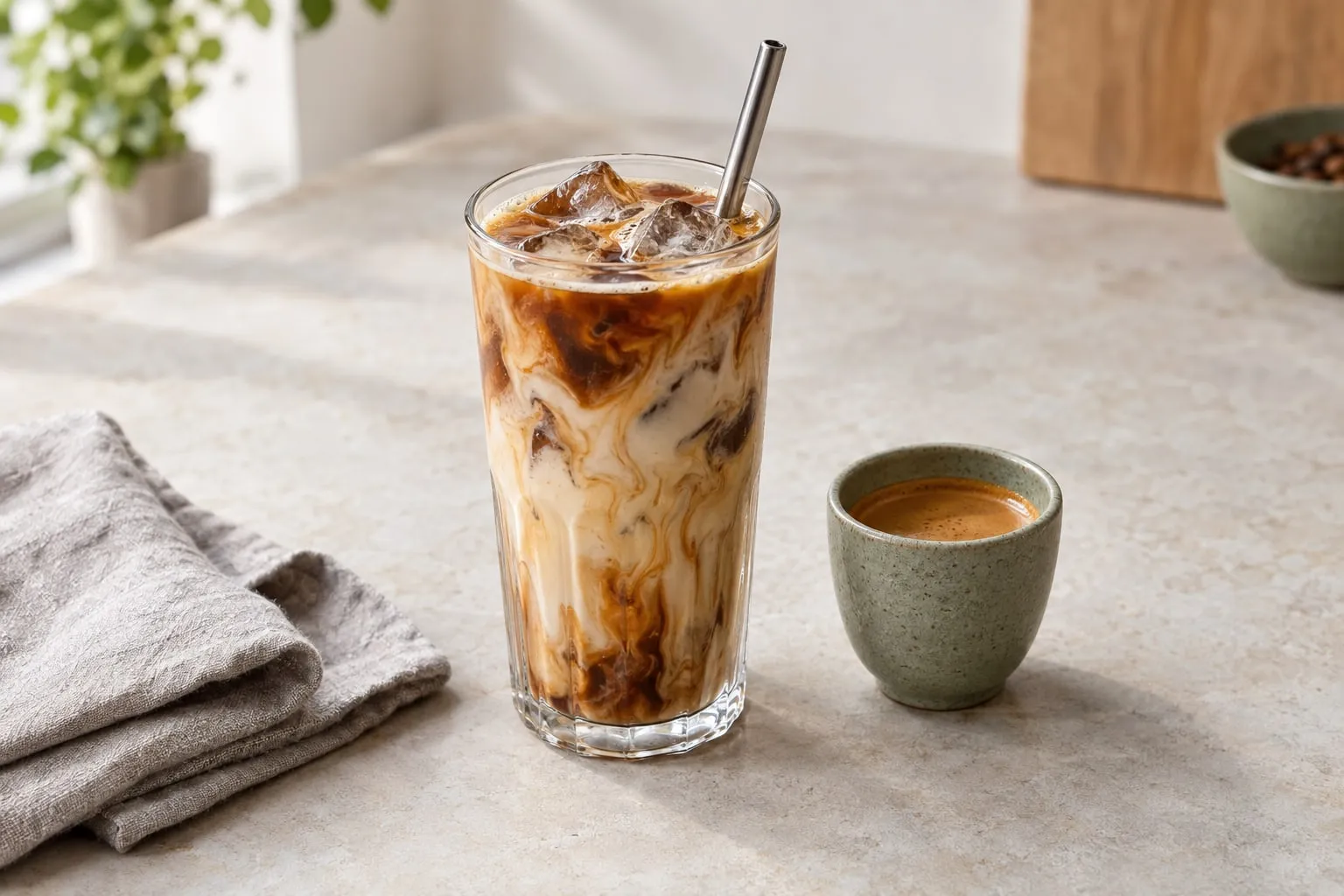
Protein Iced Coffee (Proffee)
31 g protein230 kcal7 minVegetarianGluten-free
Espresso, cold milk and one scoop of whey give 31 g protein per glass.
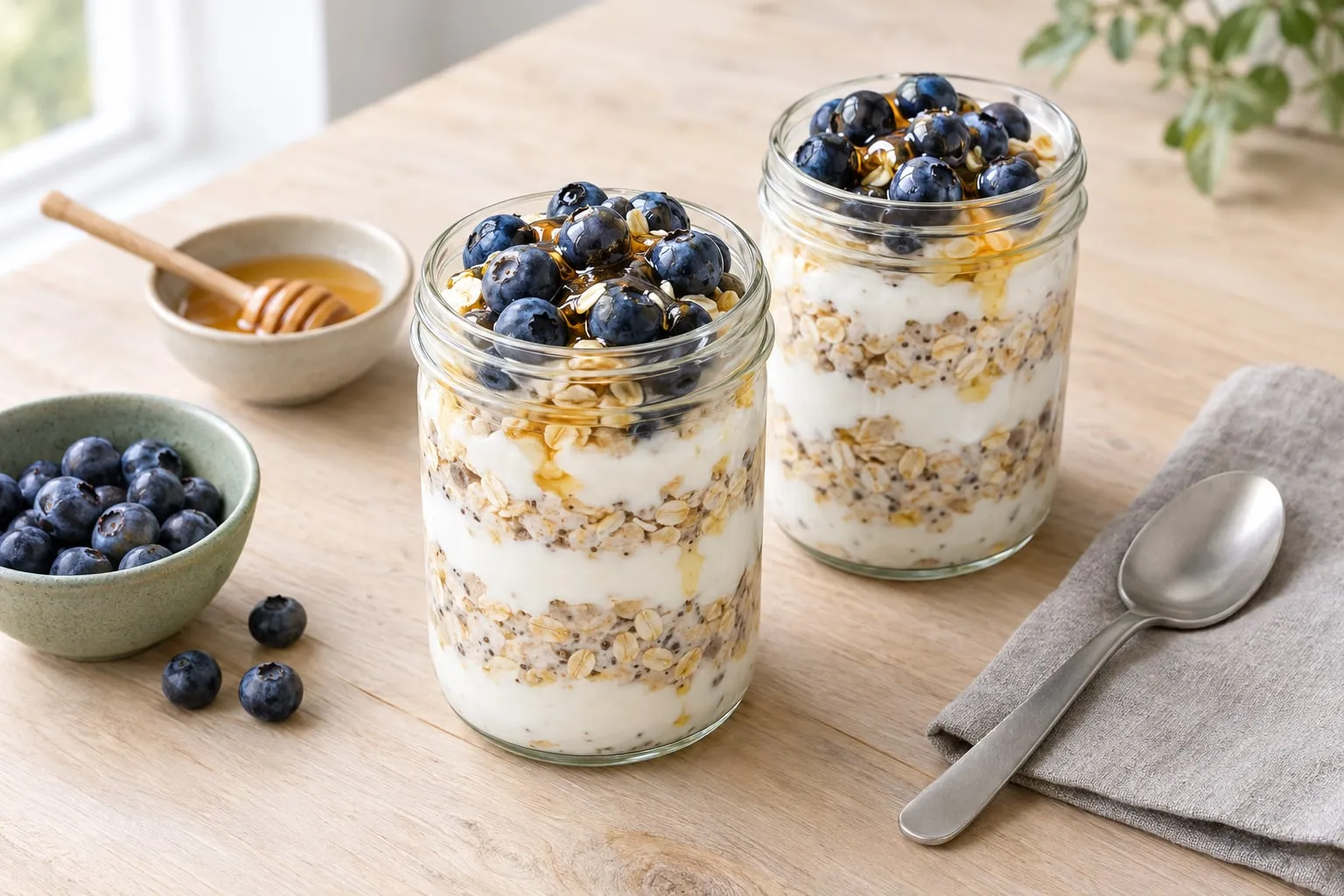
Protein Overnight Oats
26 g protein334 kcal8 hr 5 minVegetarian
Oats soaked in milk and yogurt with 26 g protein per serving, a spoonable alternative.
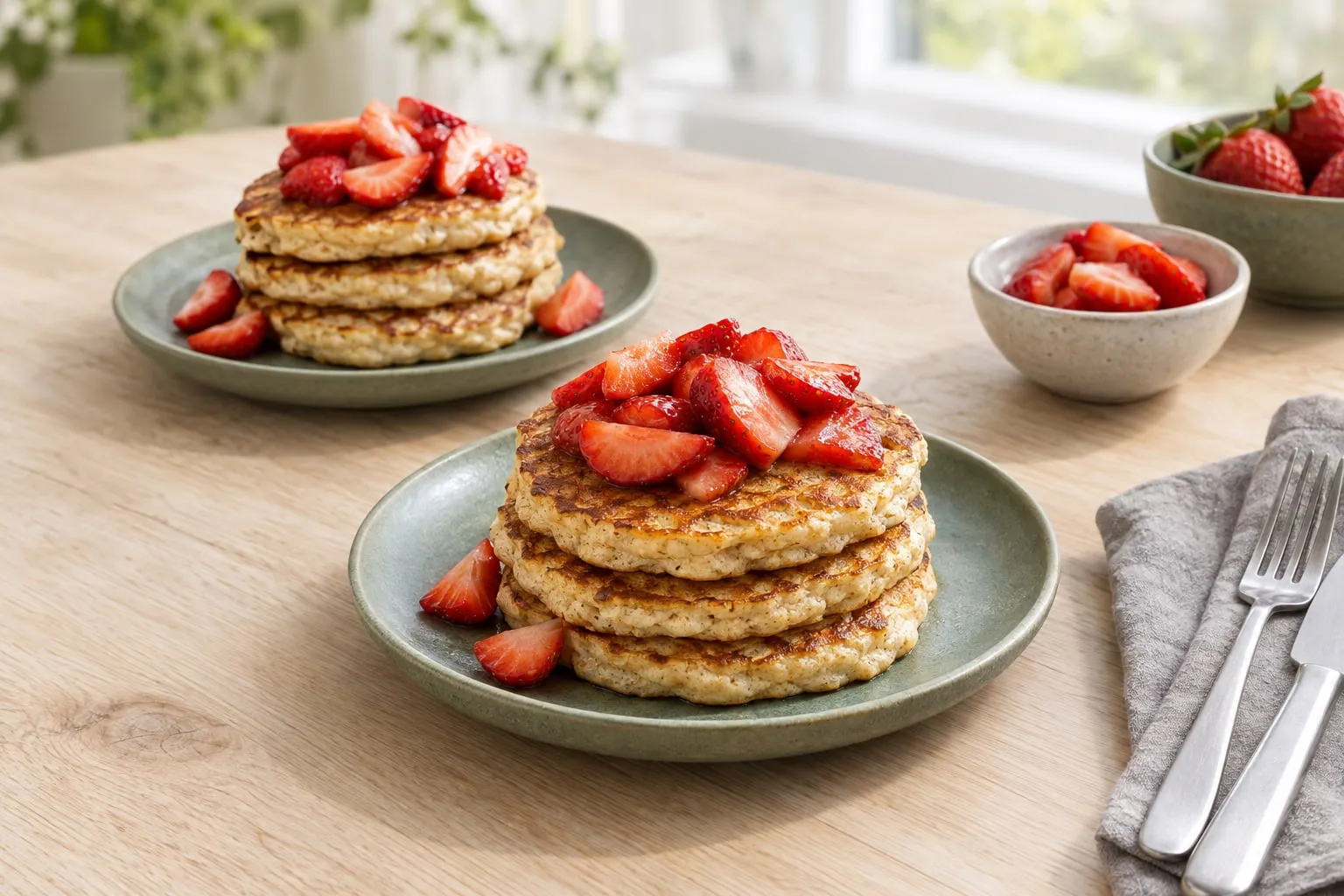
Protein Pancakes
31 g protein342 kcal25 minVegetarian
Breakfast pancakes with 31 g protein per serving from eggs and Greek yogurt.
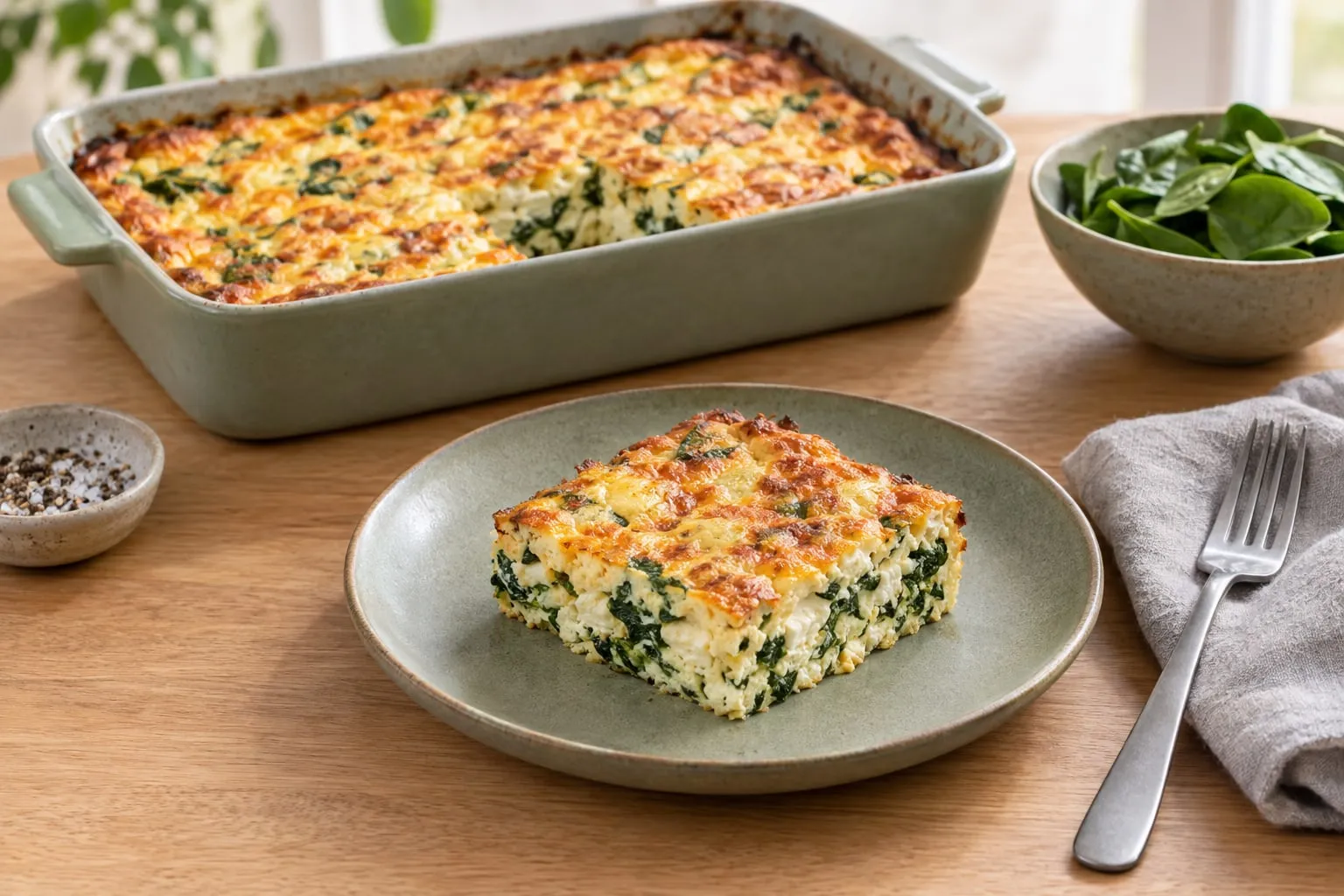
Cottage Cheese and Egg Bake
22 g protein190 kcal55 minVegetarianGluten-free
A flour-free bake that gives 22 g protein per portion, for a food-first option.
Sources
- McCance and Widdowson's Composition of Foods Integrated Dataset 2021 (CoFID) – Protein and energy per 100 g for milk, eggs and quark
- British Nutrition Foundation – Protein intakes in the UK, and the 20–25 g protein per portion range around exercise
Read our editorial policy for how figures are checked and how to report a mistake.
More protein guides
All guides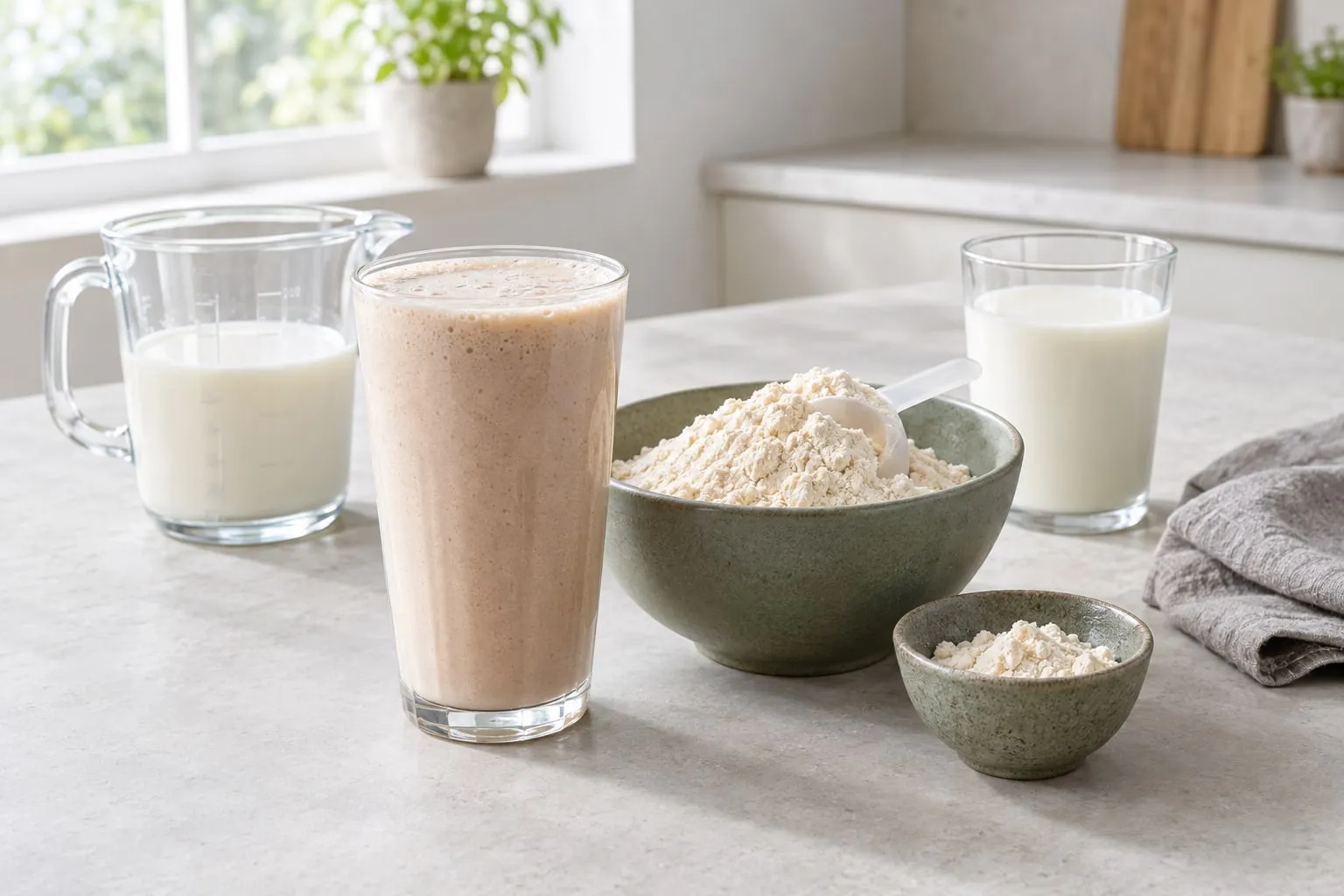
Guide
Do Protein Shakes Help You Lose Weight?
Protein shake for weight loss: a shake adds calories like any food. 30 g whey with water has 22.5 g protein and 114 kcal, with semi-skimmed milk 229 kcal.

Guide
How Much Protein Do You Need Per Day?
How much protein do I need? The UK reference is 0.75 g per kg of body weight a day, or 52.5 g at 70 kg. See food values and a worked example day.
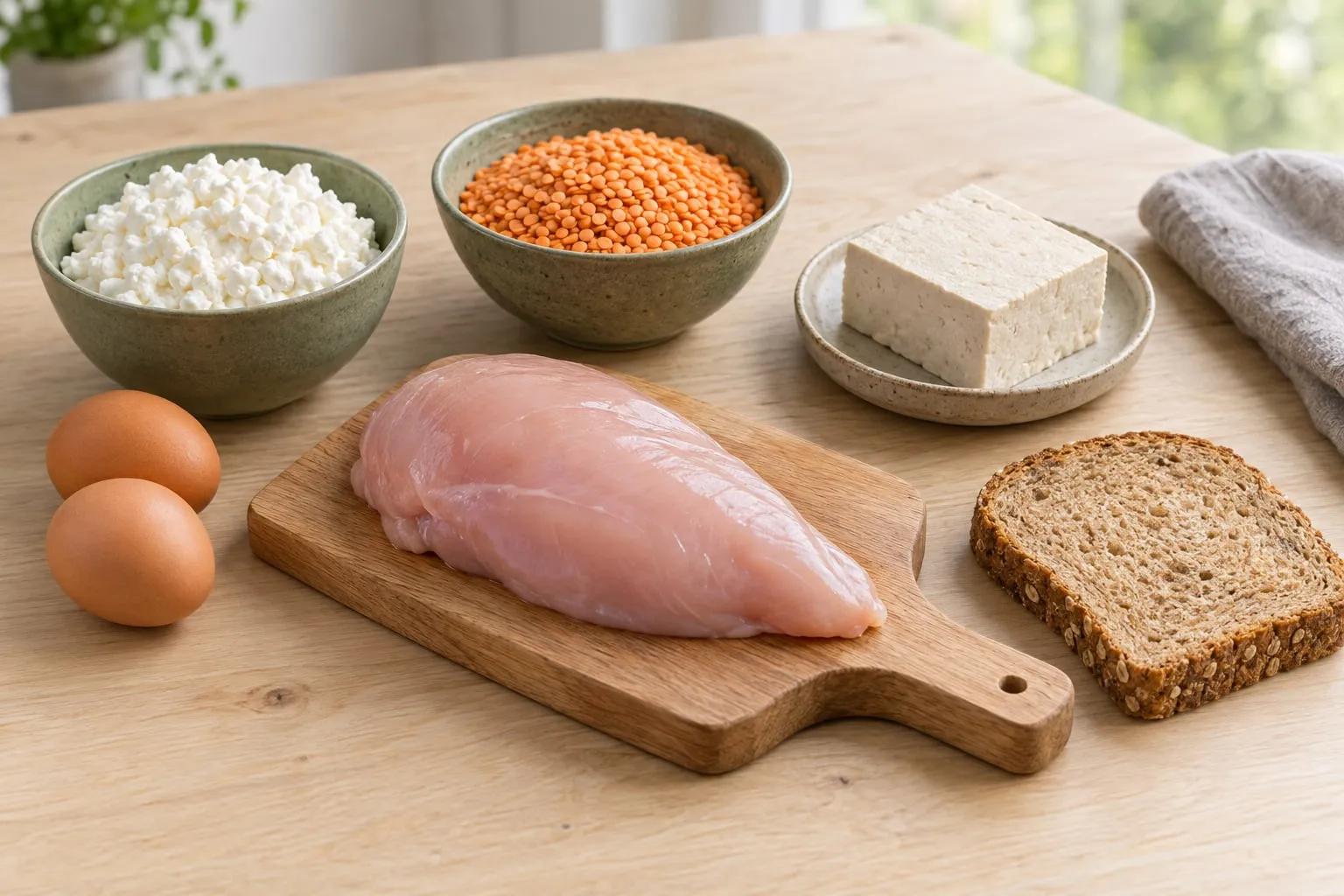
Guide
What Is Protein and Why Do We Need It?
What is protein good for? It is made of amino acids, nine of them essential. See what it does, the UK 0.75 g per kg a day reference and food values.

Guide
High Protein Foods: A Ranked List
High protein foods ranked by protein per 100 g and per 100 kcal: Parmesan has 36.2 g, grilled chicken 32.0 g, dried red lentils 25.6 g and egg white 10.8 g.